The Basket of Apples
by Paul Cézanne
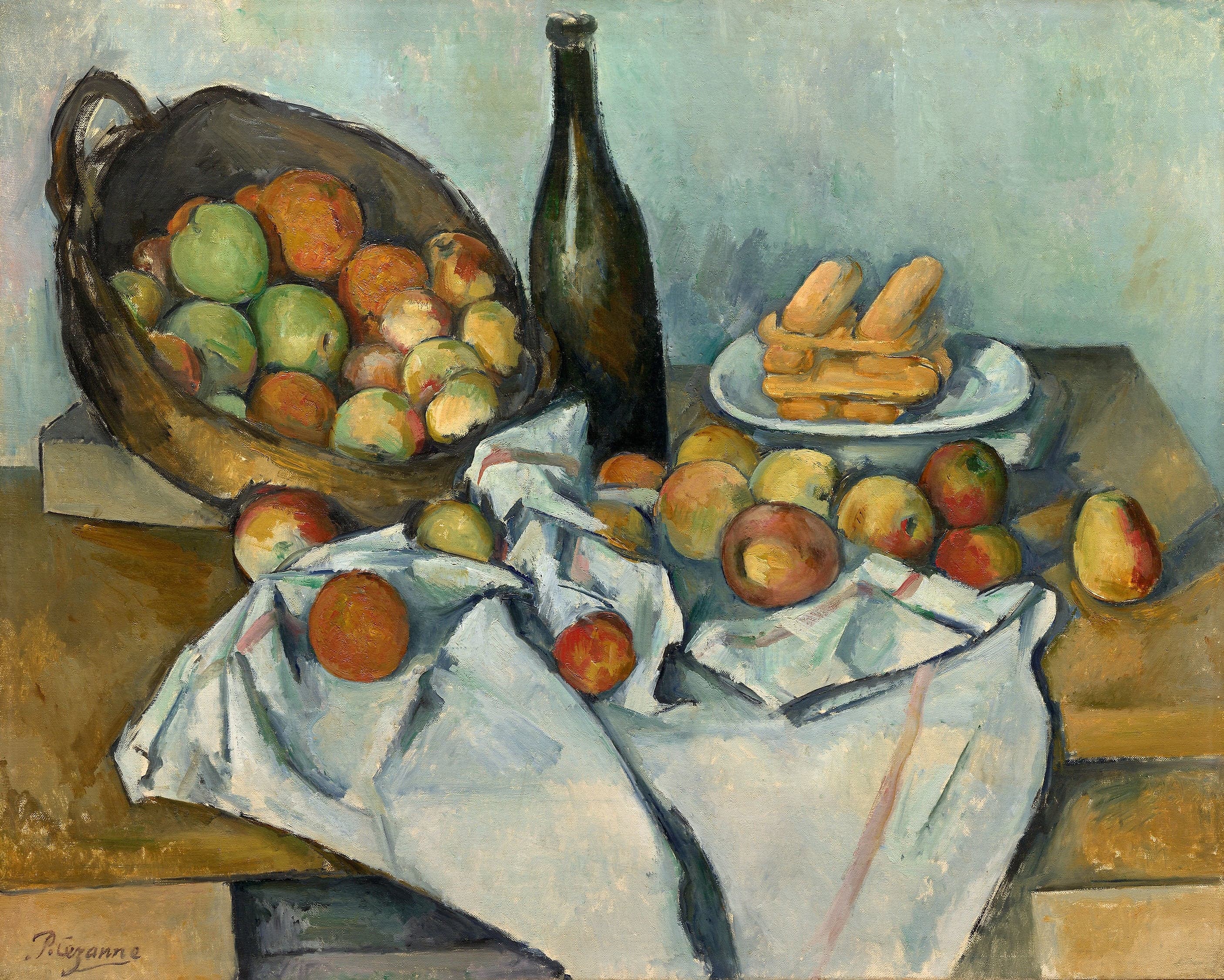
A basket of apples tips forward on a table, next to a bottle, a plate of biscuits and a white cloth. The table is the reason people remember the picture: its front edge is lower on the right of the cloth than on the left, and the two halves do not belong to the same table. Paul Cézanne painted it around 1893, and it has been at the Art Institute of Chicago since 1926.
- c. 1893
- Oil on canvas
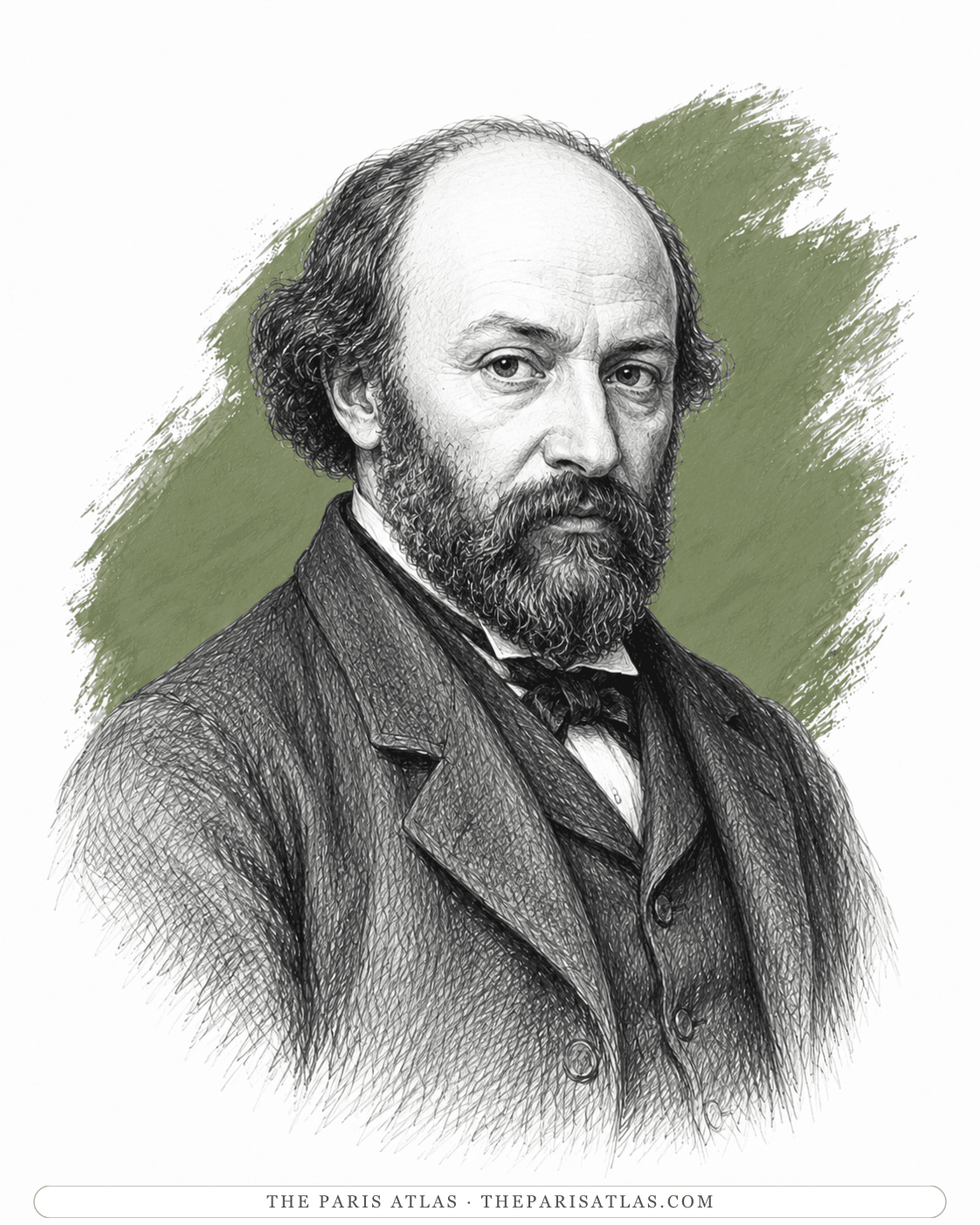
About Paul Cézanne
What the painting shows
A wicker basket, propped up at one end on a small block of wood, tilts forward and spills apples onto a table. A dark bottle stands behind it. To the right there is a plate stacked with small biscuits, and a heavy white cloth is bunched between them, falling over the table's front edge.
Now look at the table. The dark line of its edge runs along the bottom left, disappears behind the cloth, and comes out on the right noticeably lower and at a different angle. The plate of biscuits is drawn as if seen from above, while the bottle is seen from the side and leans slightly. The basket is tipping at an angle no real basket would hold.
None of this is a mistake. Cézanne assembled the objects from several points of view at once and let the picture hold them together rather than forcing them into one consistent view. The canvas is 65 by 80 centimetres, about twenty-five by thirty-one inches.
Why the crooked table mattered
A conventional still life fixes one viewpoint and keeps it. Cézanne treats each object as something to be studied from wherever it is best understood, then works out the relations between them on the canvas. The result looks stable while being, in strict perspective terms, impossible.
That habit is the reason the Cubists later claimed him. Georges Braque and Pablo Picasso took the idea of showing an object from more than one angle at once and pushed it much further after 1907. Cézanne died in 1906 without seeing it.
How Chicago got it
The painting came to the Art Institute of Chicago in 1926 in the Helen Birch Bartlett Memorial Collection, the gift that also brought Georges Seurat's A Sunday on La Grande Jatte to the museum. Its accession number is 1926.252 and it hangs in Gallery 248.
The Art Institute treats it as open access: the museum designates its photograph of the painting public domain and allows commercial reuse.
Close reading
Reading the work, detail by detail
The painting is famous for a table that does not line up, but the mismatch is only visible once you follow the edge across. Close views take it in order: the basket that should fall and does not, the two ends of the table edge, the plate seen from a different height, and the cloth that hides the join.
1.A basket tipped past falling
The basket is tilted far enough that the fruit should be on the floor. Cézanne holds it there by balancing it against the bottle above and the cloth below, so the eye accepts an angle the body knows is impossible.
2.A pale wedge holding the basket up
A plain grey block props the basket at its steep angle. It is the one piece of stagecraft Cézanne leaves visible — the evidence that this is an arrangement built on a table rather than a scene come upon.
3.The bottle is not upright
Set a ruler against the neck and it leans. Cézanne tips it very slightly out of true so that it answers the diagonal of the basket instead of cutting across it. Almost nobody notices, which is the point.
4.The plate is seen from higher up
The bottle is seen from the side, at eye level. The plate is seen from well above, its rim opened into a broad ellipse so the biscuits stack visibly inside. Two viewpoints, one canvas, and no attempt to reconcile them.
5.The table edge comes out lower
Follow the front edge of the table from the left of the picture and it disappears behind the cloth. It comes out on the right lower down and at a different angle. The two halves cannot belong to the same table, and the cloth is where the join is hidden.
6.Cloth folded like sheet metal
The folds are cut into flat planes with hard edges, more like folded card than linen. Cézanne uses the cloth as a set of surfaces to turn light on, and it takes up more of the canvas than any of the fruit.
Timeline
c. 1893
Painted, probably at the Jas de Bouffan near Aix-en-Provence.
1926
Enters the Art Institute of Chicago in the Helen Birch Bartlett Memorial Collection, as accession 1926.252.
1907
Cézanne's memorial retrospective at the Salon d'Automne in Paris, a year after his death, puts work like this in front of Braque and Picasso.
Where to see it
Art Institute of Chicago
111 South Michigan Avenue, Chicago, IL 60603, United States
Displays and loans can change. Check whether this work is on view before making a special trip.
Plan your visit on the museum’s official website (opens in a new tab)Frequently asked questions
Where is The Basket of Apples?
The Art Institute of Chicago, in Gallery 248. Its accession number is 1926.252 and it belongs to the Helen Birch Bartlett Memorial Collection, which came to the museum in 1926.
Why is the table crooked in The Basket of Apples?
Because Cézanne painted the objects from more than one viewpoint and did not reconcile them. The table's front edge sits lower and at a different angle on the right of the white cloth than on the left, the plate of biscuits is seen from above, and the bottle is seen from the side. He balanced the picture by eye rather than by perspective.
What is in The Basket of Apples?
A wicker basket of apples propped on a block of wood and tipping forward, a dark bottle, a plate of small biscuits, more apples loose on the table, and a heavy white cloth bunched between them.
How big is The Basket of Apples?
65 by 80 centimetres, roughly twenty-five by thirty-one inches. Framed it measures 88 by 104.2 centimetres.
Why did the Cubists care about The Basket of Apples?
Because of the multiple viewpoints. Showing one arrangement from several angles at once, and letting the canvas rather than perspective hold it together, is the idea Georges Braque and Pablo Picasso took much further from 1907 onward. Cézanne died in 1906.
Can I reuse the image of The Basket of Apples?
Yes. Cézanne died in 1906, so the painting is out of copyright, and the Art Institute of Chicago designates its photograph of it public domain under its open-access programme, including for commercial use.
More by Paul Cézanne
If you like Paul Cézanne
Explore painters from the same movements and circles.
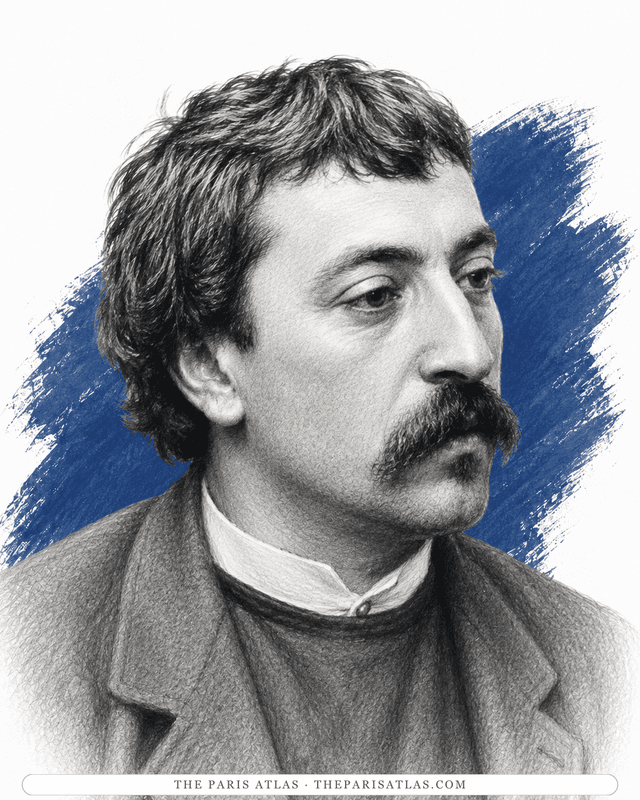
Paul Gauguin
Stockbroker turned painter who came into art through Camille Pissarro, showed with the Impressionists, and left Europe for Polynesia.
View artist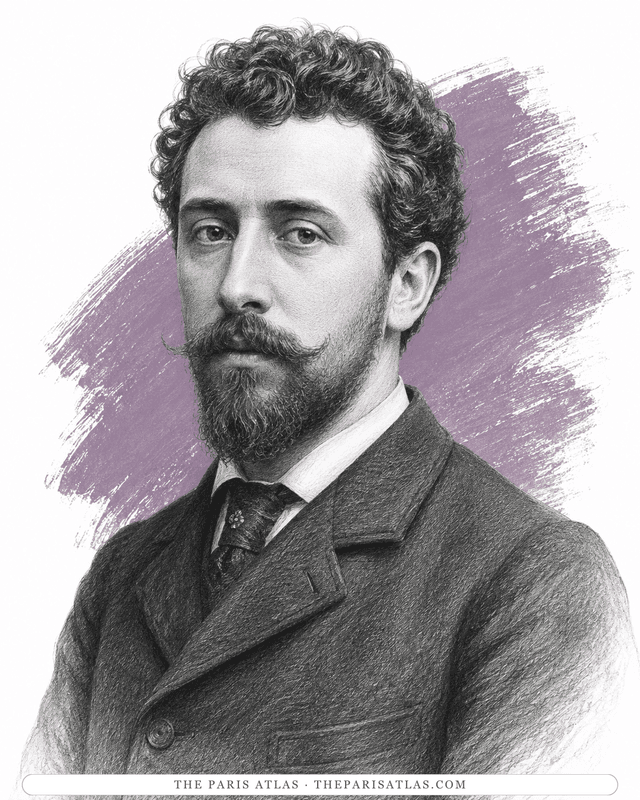
Georges Seurat
Parisian painter who built pictures from small dots of pure colour on optical principle, co-founded the Salon des Indépendants, and detonated the last Impressionist exhibition of 1886 with A Sunday on La Grande Jatte. He died at thirty-one.
View artist
Georges Braque
The Le Havre house-painter's son who invented Cubism in Montmartre with the Spanish painter Pablo Picasso between 1908 and 1914 — the quieter half of the most consequential partnership in modern art — and who invented papier collé, the pasted-paper picture, in September 1912. He was given a French state funeral in 1963.
View artist
References
The sources below include collection records, catalogues, scholarly research, and primary materials that informed this page. They document The Basket of Apples, its making, and its place in cultural history.


1Paul Cezanne, The Basket of Apples, c. 1893 (1926.252)
WebsiteArt Institute of ChicagoUsed forWeb source consulted for documented facts and historical context presented on the The Basket of Apples page.
2The Basket of Apples — Paul Cézanne
WebsiteArt Institute of Chicago — collection text on Google Arts & CultureUsed forWeb source consulted for documented facts and historical context presented on the The Basket of Apples page.
3Cézanne: The Artist's Artist
WebsiteArt Institute of ChicagoUsed forWeb source consulted for documented facts and historical context presented on the The Basket of Apples page.
4Paul Cézanne (1839–1906)
WebsiteThe Metropolitan Museum of ArtUsed forWeb source consulted for documented facts and historical context presented on the The Basket of Apples page.
These references provide the documented foundation for this work's history and interpretation. Claim-level citations remain attached to the specific claims they support.
 Explore more resources