The Paris AtlasCharting the artists, works, and places worth returning to.
  • Painter
· French · 1859–1891

Georges Seurat

Parisian painter who built pictures from small dots of pure colour on optical principle, co-founded the Salon des Indépendants, and detonated the last Impressionist exhibition of 1886 with A Sunday on La Grande Jatte. He died at thirty-one.

In images

Details

Lived
1859–1891
Born
1859
Birthplace
Paris
Died
1891
Place of death
Paris
Nationality
French
Roles
Painter

About Georges Seurat

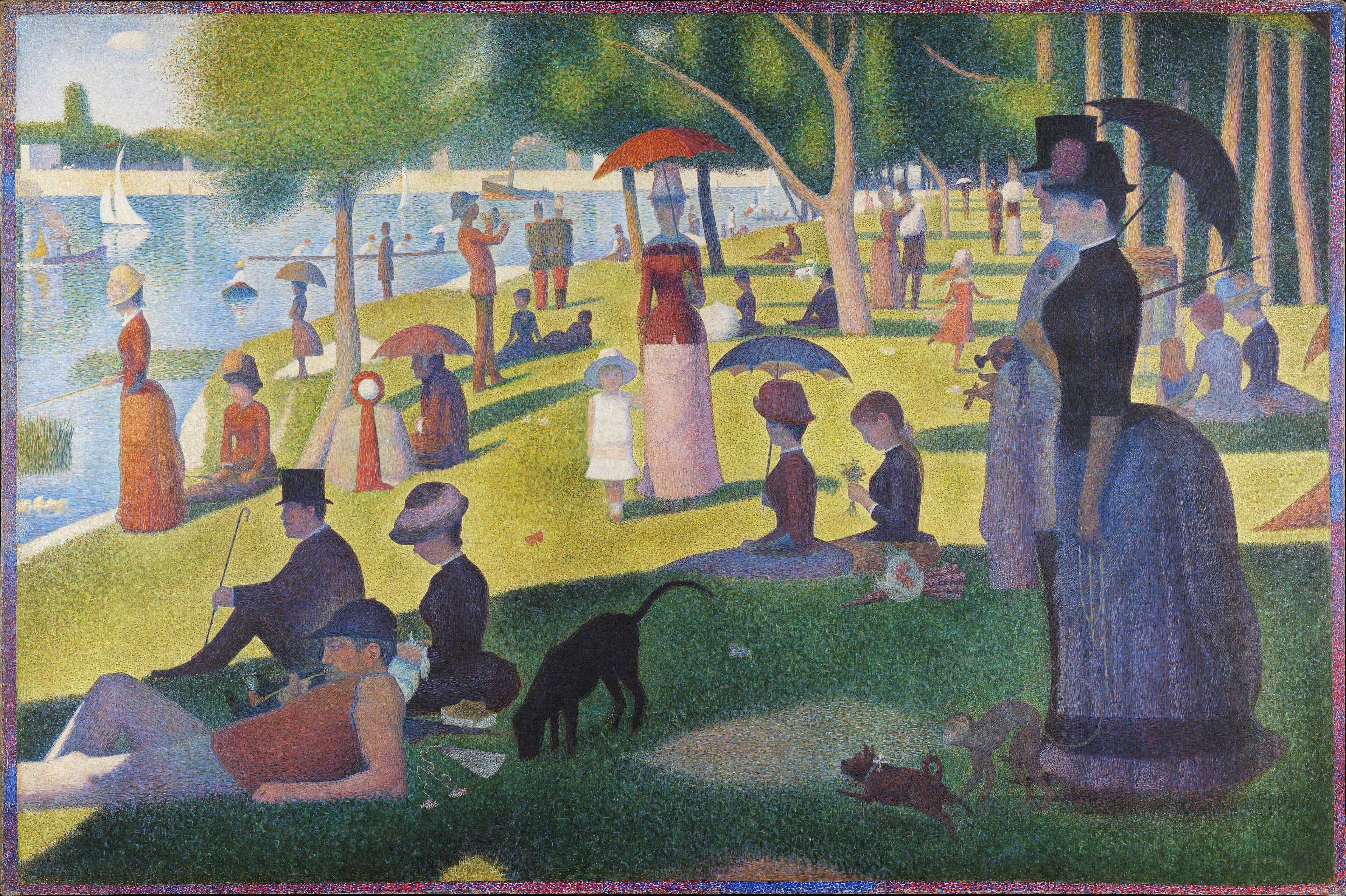
Georges Seurat spent two years putting roughly 220,000 dots of paint on one canvas, and the canvas ended an era. A Sunday on La Grande Jatte — three metres of Parisians taking the sun on an island in the Seine at Neuilly — hung at the eighth and final Impressionist exhibition in May 1886, and its cold, systematic shimmer announced that Impressionism's improvised eye now had a scientific rival. Critics named the rival Neo-Impressionism; the technique, pointillism.

He was Paris born and Paris trained, a taciturn and methodical man who worked from colour theory — Michel Eugène Chevreul's contrast studies, Ogden Rood's optics — and kept his private life so private that even his closest friends learned of his companion and infant son only at his deathbed. He died at thirty-one, cause never settled; his son died two weeks later of the same illness.

Trained academic, turned scientist

Seurat was born on 2 December 1859 in Paris to a comfortable legal family, and trained conventionally at the École des Beaux-Arts under Henri Lehmann, a pupil of Ingres. The drawing discipline stayed with him — his charcoal drawings are among the century's finest — but the doctrine did not. What replaced it was reading: Chevreul's law of simultaneous contrast of colours, Ogden Rood's Modern Chromatics, the idea that a painter could compose colour the way a musician composes intervals, by rule.[1]

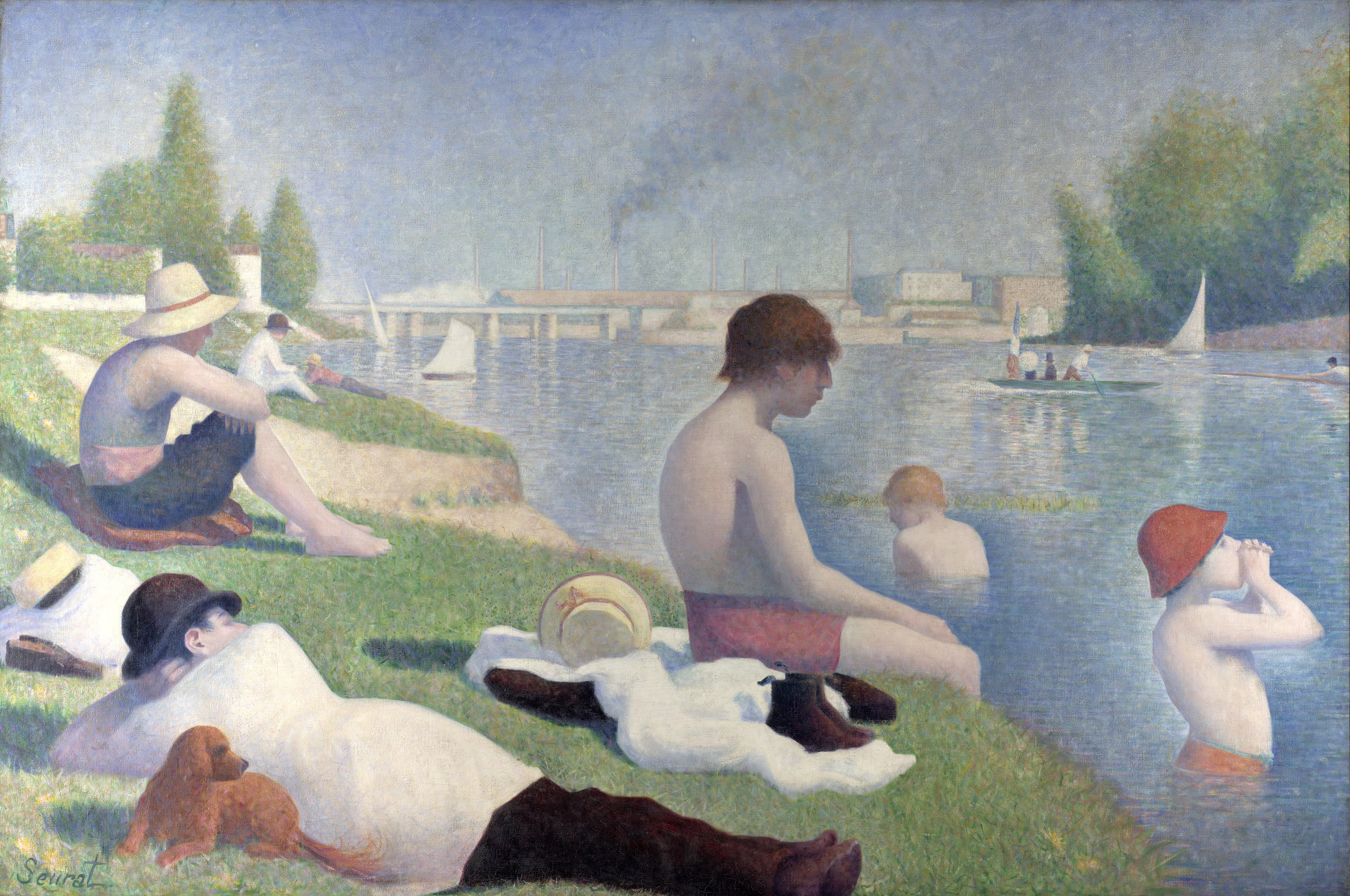
The first great test was Bathers at Asnières, finished in 1884 when he was twenty-four: working men resting on the riverbank at a factory suburb, monumental as a fresco, the water and haze already built from separated strokes. The Salon jury rejected it. Seurat's answer was organizational as much as artistic — that summer he helped found the Société des Artistes Indépendants, the no-jury exhibiting body where he met Paul Signac, the nineteen-year-old who became his lieutenant, defender and fellow theorist.[2]

Bathers at Asnières, 1884 — rejected by the Salon, shown with the Indépendants. The factories of Clichy smoke across the river. (Georges Seurat (National Gallery, London), via Wikimedia Commons · Public domain)

Two years, one island

From 1884 to 1886 Seurat worked on the picture facing Bathers across the same stretch of river: the île de la Grande Jatte, the long island in the Seine at Neuilly where Parisians promenaded on Sundays. He made over sixty preparatory studies on the island, then built the final three-metre canvas in the studio, dot beside dot of pure colour, each chosen so the mixing would happen in the viewer's eye rather than on the palette.[3]

A Sunday on La Grande Jatte — 1884. Shown at the final Impressionist exhibition in May 1886; now the Art Institute of Chicago's most famous painting. (Georges Seurat (Art Institute of Chicago), via Wikimedia Commons · Public domain)

Hung in May 1886 at the eighth Impressionist exhibition — admitted at Camille Pissarro's insistence, over older members' objections — La Grande Jatte split the movement it appeared in. Degas was dismissive, Monet and Renoir stayed away from the show, and the critic Félix Fénéon coined 'Neo-Impressionism' for what Seurat, Signac and the converted Pissarro were doing. The picture's frozen, frieze-like Sunday — forty-eight figures, three dogs, a monkey on a leash — has been reproduced, parodied and pilgrimaged to ever since.[4]

A short, hidden life

Seurat produced six more large canvases on the same principles — the Models, the Circus Sideshow's gaslit dusk, the unfinished Circus — and summered on the Channel coast painting harbours of great stillness. He theorized constantly and confided almost nothing: friends learned only after his death that he had been living with Madeleine Knobloch, an artists' model he painted once, and that they had a son, Pierre-Georges, born in February 1890.

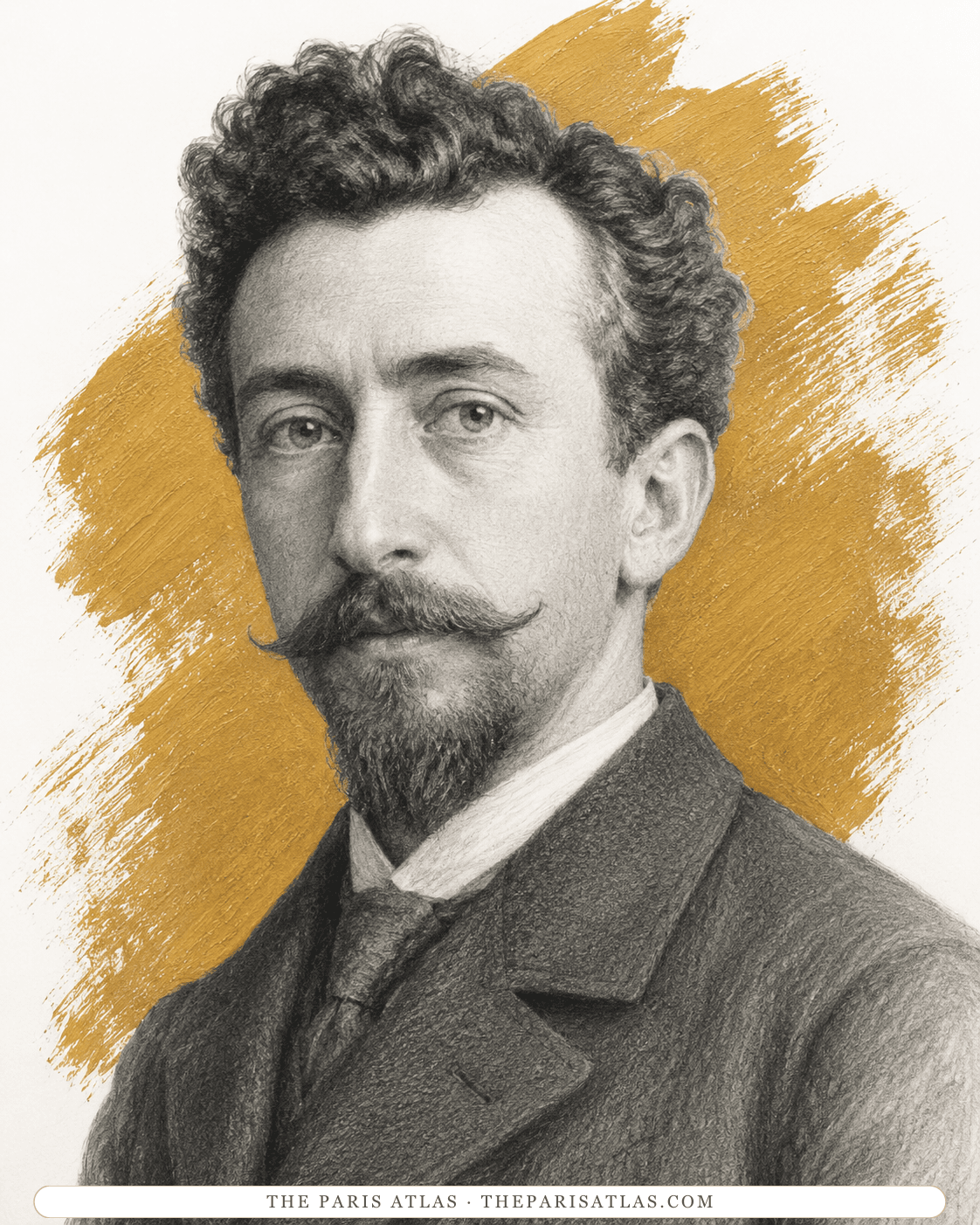
Seurat in 1888. Almost no photographs of him exist. (Photographer unknown, via Wikimedia Commons · Public domain)

In late March 1891 he fell suddenly ill — the diagnosis has never been settled; meningitis, diphtheria and infectious angina have all been proposed — and died in Paris on 29 March 1891, aged thirty-one. His son died of the same illness two weeks later. Bathers at Asnières hangs in the National Gallery in London; La Grande Jatte, which left France in 1924, is the Art Institute of Chicago's most famous possession and, by the museum's charter with its donor, can never be lent.[1]

What he called it

Seurat did not call his method pointillism. The word was coined by hostile critics and he disliked it, because it describes the surface of the paint rather than the reason for it.

His own terms were chromoluminarism and divisionism. The point was never that the dots are small. It was that colours are kept apart on the canvas and allowed to combine in the eye instead of on the palette, which he believed produced a more luminous result than mixing ever could. He worked from Michel Eugène Chevreul on simultaneous contrast and Ogden Rood on optics, and treated the whole thing as applied science.[2]

Seurat also refused to let a frame interrupt the optical mixing. From about 1888 he painted borders directly onto his canvases in complementary dots, and later painted the frames themselves, so that the picture would not be forced back into an ordinary gilt rectangle.[3]

The Indépendants

Seurat was one of the founders of the Société des Artistes Indépendants in 1884, set up by artists whose work the official Salon had refused.

Its rule was that there would be no jury and no prizes, and that anyone who paid the subscription could hang. Bathers at Asnières, rejected by the Salon that year, was shown in the Indépendants' first exhibition.[1]

Paul Signac was a fellow founder, and the two of them worked out the method together. The society outlasted everyone involved in starting it and still exists. For the generation after Seurat it was the practical route to an audience: Van Gogh, Rousseau, Matisse and the Cubists all showed there without asking anyone's permission.

The last canvases

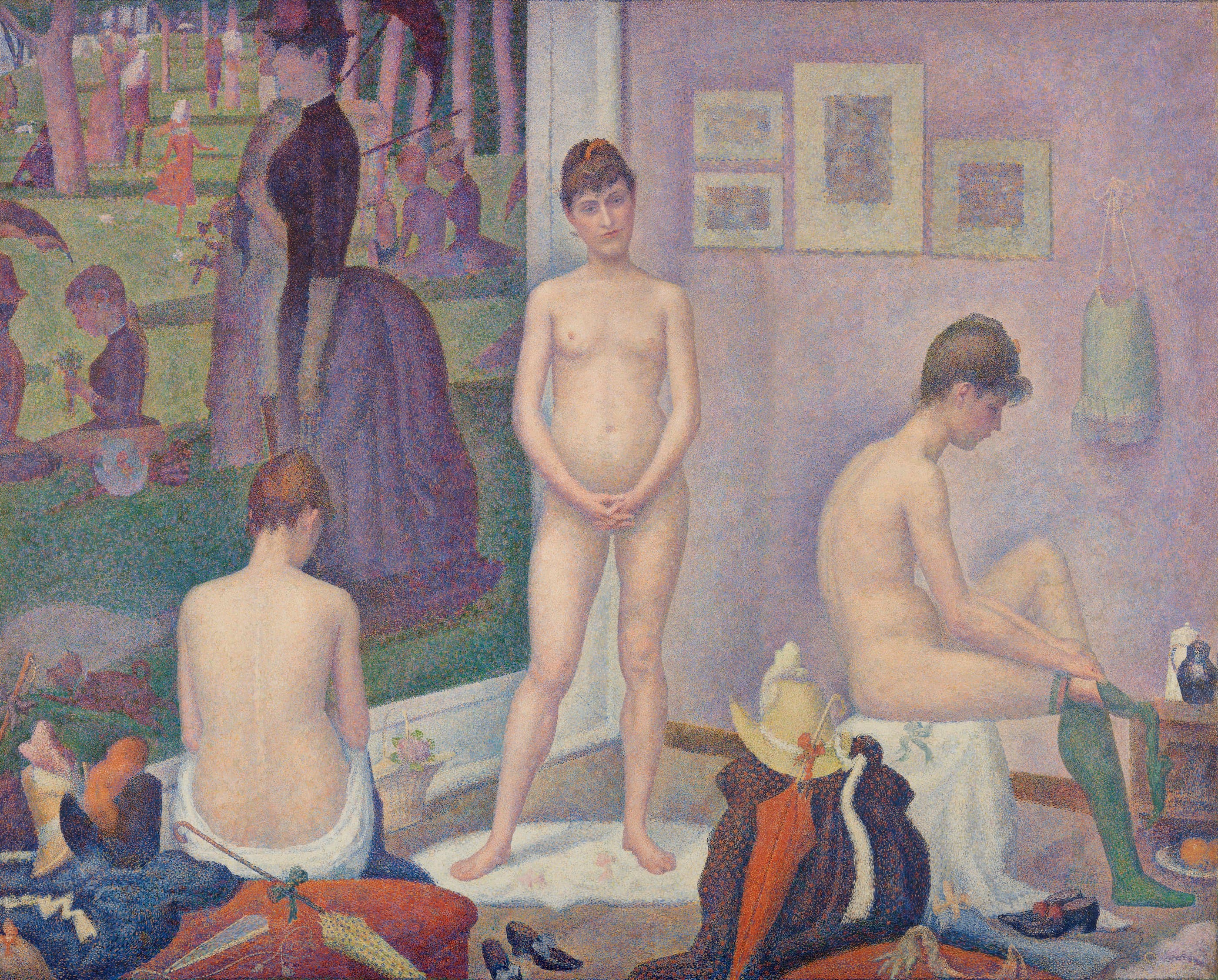
Seurat's late pictures turn away from daylight. The Models, finished in 1888, puts three nude women in his own studio with the Grande Jatte hanging on the wall behind them. It is both a joke about scale and an answer to critics who said his method could not handle a body.

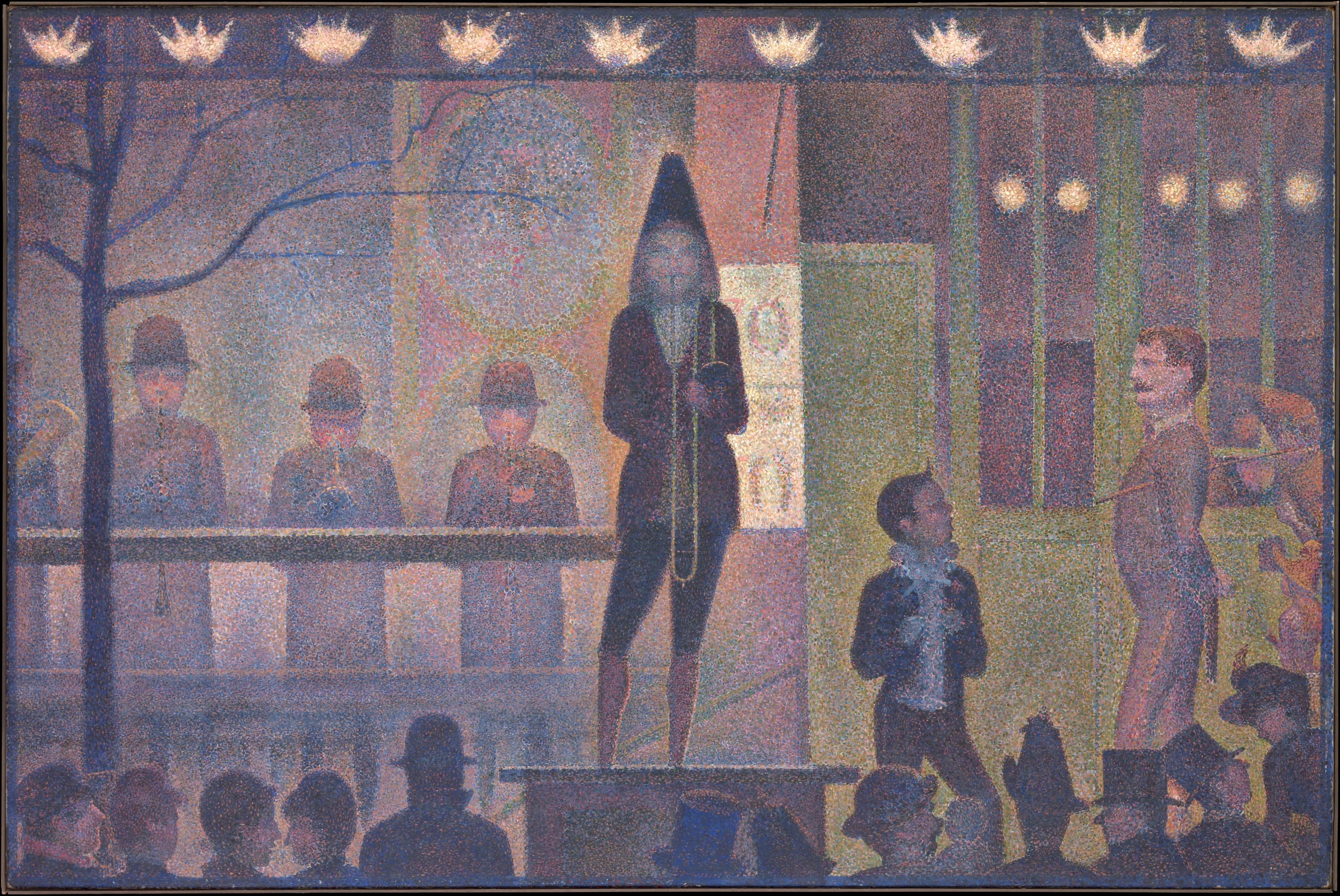
Circus Sideshow, painted in 1887 and 1888, is his first night scene: a trombonist and a line of musicians under a row of nine gas jets that light them from above, in front of a crowd of silhouettes. Le Chahut, in 1890, takes the raised legs of a dance-hall kick line and builds the whole composition out of rising diagonals, because he had come to believe that upward lines produce cheerfulness and downward ones sadness.

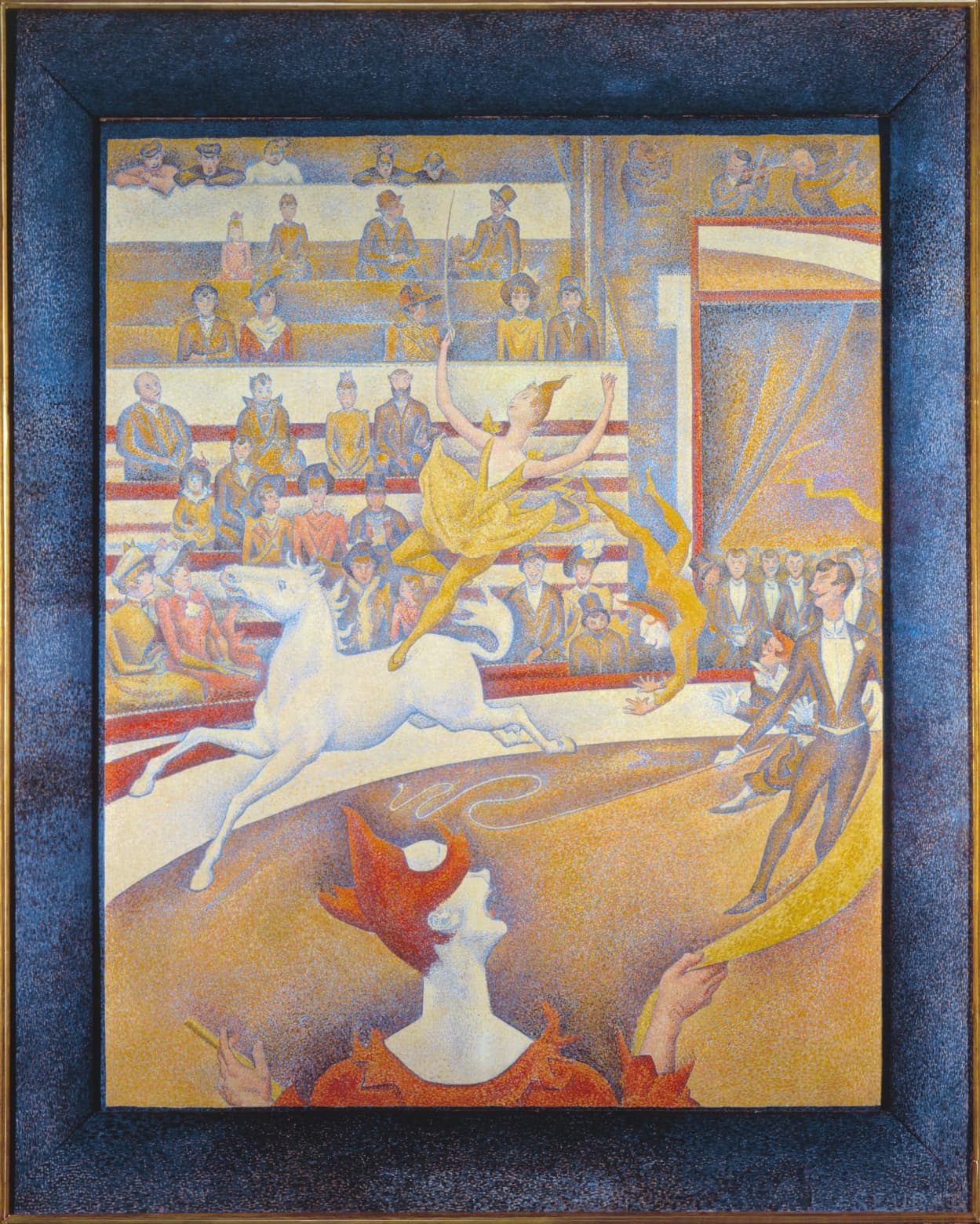
The Circus, begun in 1890, was still on the easel when he died. It hung unfinished at the Indépendants in the spring of 1891 while he was dying, and it is now at the Musée d'Orsay.[2]

Madeleine Knobloch

Seurat kept his private life so thoroughly hidden that his closest friends learned of it only as he was dying.

From about 1889 he lived with Madeleine Knobloch, a model, who appears in Young Woman Powdering Herself, his only known portrait. Their son, named Pierre-Georges, was born in February 1890. Seurat registered the birth but told nobody, and he introduced Madeleine and the child to his mother only days before his death.

He died on 29 March 1891, at thirty-one, of an illness that has never been settled. The boy caught the same thing and died two weeks later. Madeleine was pregnant again; that child died in infancy too, and she died in poverty about ten years afterwards.[1]

Life events

  1. 1859

    Born in Paris on 2 December.

    — Daniel Catton Rich (ed.), Seurat: Paintings and Drawings — exhibition catalogue (1958)

  2. 1878

    Enters the École des Beaux-Arts under Henri Lehmann, a pupil of Ingres.

    — Daniel Catton Rich (ed.), Seurat: Paintings and Drawings — exhibition catalogue (1958); John Rewald, Seurat: A Biography (1990)

  3. 1884

    The Salon rejects Bathers at Asnières; he shows it with the new Groupe des Artistes Indépendants instead and helps found the no-jury Société des Artistes Indépendants, where he meets Paul Signac.

    Bathers at Asnières, 1884 (National Gallery, London) — rejected by the Salon, shown at the first Indépendants exhibition instead. The factories of Clichy smoke across the river. (Georges Seurat (National Gallery, London), via Wikimedia Commons)

    — Daniel Catton Rich (ed.), Seurat: Paintings and Drawings — exhibition catalogue (1958)

  4. 1884

    Helps found the Société des Artistes Indépendants, which has no jury and no prizes, and shows Bathers at Asnières in its first exhibition.

    Bathers at Asnières, 1884 (National Gallery, London) — rejected by the Salon, shown at the first Indépendants exhibition instead. The factories of Clichy smoke across the river. (Georges Seurat (National Gallery, London), via Wikimedia Commons)
  5. 1885

    Begins painting borders directly onto his canvases in complementary dots, and later paints the frames.

  6. 1886

    A Sunday on La Grande Jatte hangs at the eighth and last Impressionist exhibition in May; Félix Fénéon coins 'Neo-Impressionism' for the new school.

    A Sunday on La Grande Jatte — 1884, painted 1884–86 (Art Institute of Chicago). Three metres wide and built dot by dot; the island is in the Seine at Neuilly. (Georges Seurat (Art Institute of Chicago), via Wikimedia Commons)

    — Daniel Catton Rich (ed.), Seurat: Paintings and Drawings — exhibition catalogue (1958); A Sunday on La Grande Jatte — 1884 (Georges Seurat) — Art Institute of Chicago

  7. 1888

    Paints The Models, putting three nude women in his studio with the Grande Jatte on the wall behind them, and Circus Sideshow, his first night scene.

  8. 1889

    Begins living with the model Madeleine Knobloch, telling almost nobody.

  9. 1890

    His son Pierre-Georges is born on 16 February to Madeleine Knobloch — a household he kept secret from even his closest friends.

    — John Rewald, Seurat: A Biography (1990)

  10. 1890

    Their son Pierre-Georges is born in February. Seurat registers the birth and keeps it secret.

  11. 1890

    Paints Le Chahut, building a dance-hall kick line out of rising diagonals, and begins The Circus.

  12. 1891

    Dies suddenly in Paris on 29 March, aged thirty-one, of an illness never conclusively diagnosed. His son dies two weeks later.

    — Daniel Catton Rich (ed.), Seurat: Paintings and Drawings — exhibition catalogue (1958); John Rewald, Seurat: A Biography (1990)

  13. 1891

    Introduces Madeleine and the child to his mother days before his death on 29 March. The boy dies two weeks later.

  14. 1924

    La Grande Jatte is bought for the Art Institute of Chicago, which under the terms of the bequest never lends it.

    — A Sunday on La Grande Jatte — 1884 (Georges Seurat) — Art Institute of Chicago

Selected works

Cataloged from the holding institutions' records. Reproductions appear only where the rights are verified.

Paintings

Seurat's A Sunday on La Grande Jatte: a large crowd in Sunday dress sits and strolls beneath trees beside the Seine, with parasols, dogs, boats, and a monkey rendered in divided color

Artwork reproduction

Painting · Pointillism

A Sunday on La Grande Jatte

1884–1886; painted border 1888–1889 · Oil on canvas

Georges Seurat turns a Sunday crowd on a Seine island into a monumental, meticulously ordered scene. Developed over two years and revised as his divided-color method took shape, A Sunday on La Grande Jatte became the defining image of Neo-Impressionism when it appeared at the final Impressionist exhibition in 1886.
Art Institute of Chicago

Georges Seurat, A Sunday on La Grande Jatte, 1884–1886; painted border 1888–1889. Art Institute of Chicago. Image: public domain.

Seurat's Bathers at Asnières: men and boys rest beside the Seine in hazy light while boats cross the river and factory chimneys rise beyond them

Artwork reproduction

Painting · Pointillism

Bathers at Asnières

1884; reworked circa 1886–1887 · Oil on canvas

Georges Seurat gives working men and boys resting beside the Seine the scale and stillness of a monumental history painting. Made before his mature pointillist technique was fully established, the canvas shows how careful drawing, modern subject matter, and experiments with separated color came together in his first major composition.

The National Gallery, London

Georges Seurat, Bathers at Asnières, 1884; reworked circa 1886–1887. The National Gallery, London. Image: public domain.

Georges Seurat's nocturnal Pointillist circus sideshow with musicians on a raised platform and a dark crowd gathered below

Artwork reproduction

Painting · Pointillism

Circus Sideshow

1887–1888 · Oil on canvas

Georges Seurat applies his divided-color method to a nighttime attraction outside the Circus Corvi in eastern Paris. Musicians perform under artificial lights while an audience waits in shadow, turning the sales pitch of a fairground sideshow into a remarkably still and ordered modern spectacle.

The Metropolitan Museum of Art

Georges Seurat, Circus Sideshow, 1887–1888. The Metropolitan Museum of Art. Image: public domain.

Georges Seurat's Pointillist circus scene with a white horse, acrobat, ringmaster, clown, and tiered audience

Artwork reproduction

Painting · Pointillism

The Circus

1891 · Oil on canvas

Georges Seurat turns a circus act into a tightly controlled experiment in motion, line, and color. A horsewoman races around the ring while acrobats spring through the air and spectators sit in rigid rows—the final, unfinished large painting of an artist who died only days after exhibiting it in 1891.

Musée d'Orsay

Georges Seurat, The Circus, 1891. Musée d'Orsay. Image: public domain.

A large studio scene. On the left, part of a painted park with strolling figures hangs on the wall. Three nude young women pose in the room: one seen from behind on the left, one standing and facing us in the middle, one seated in profile on the right pulling on a green stocking. Hats, parasols, coats and shoes lie heaped on the floor, and framed pictures and a pale green garment hang on the lilac wall

Artwork reproduction

Painting · Pointillism

Models (Poseuses)

1886–1888 · Oil on canvas

Three young women undress, pose and dress again in a corner of Georges Seurat's studio in Paris. Behind them hangs part of his huge painting A Sunday on La Grande Jatte. Georges Seurat painted Models between 1886 and 1888, in tiny dots of colour, to show that his method could paint the nude. The Barnes Foundation in Philadelphia owns it.

Barnes Foundation

Georges Seurat, Models (Poseuses), 1886–1888. Barnes Foundation. Image: public domain.

People Georges Seurat Knew

Relationships with other people, with sources for each connection.

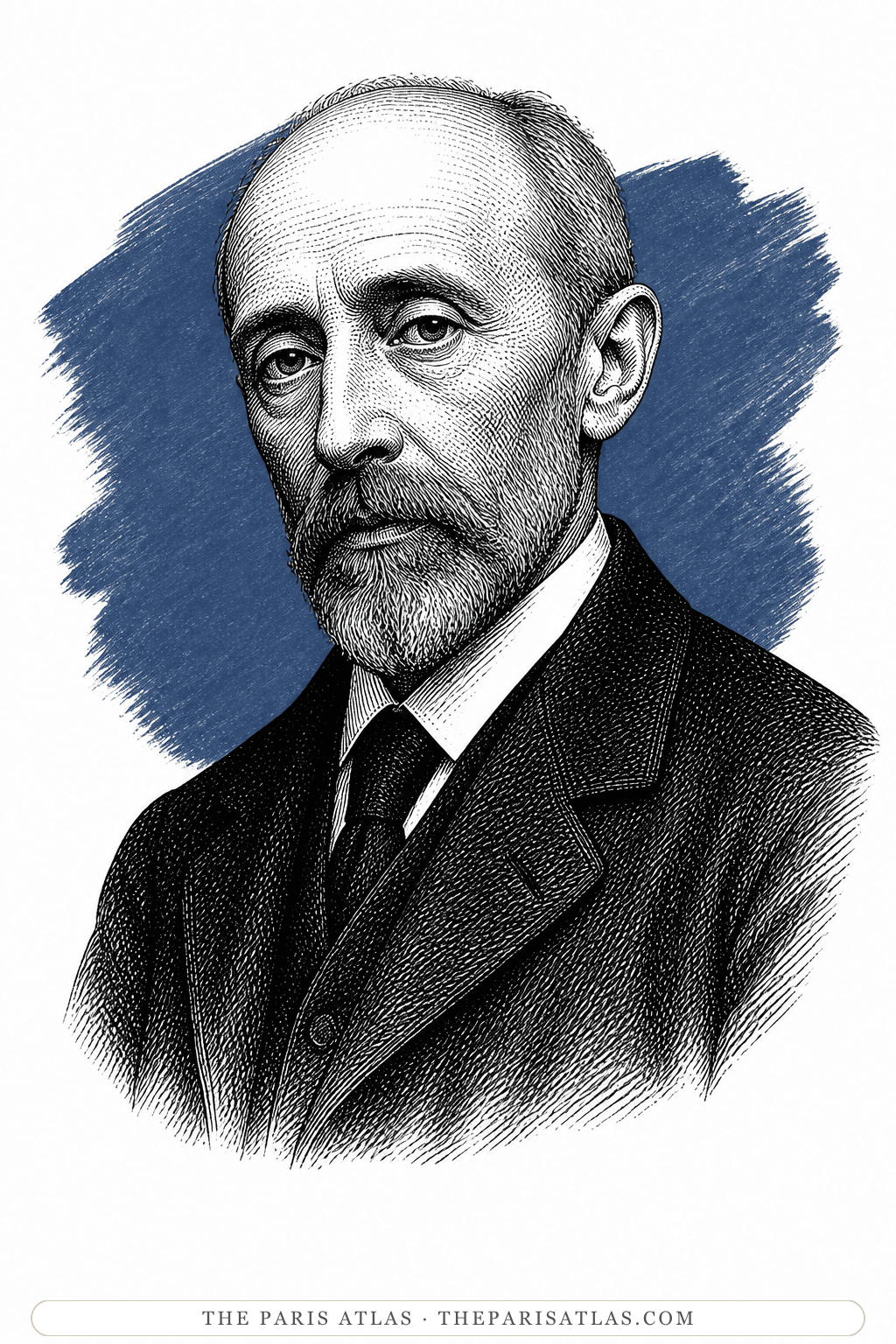
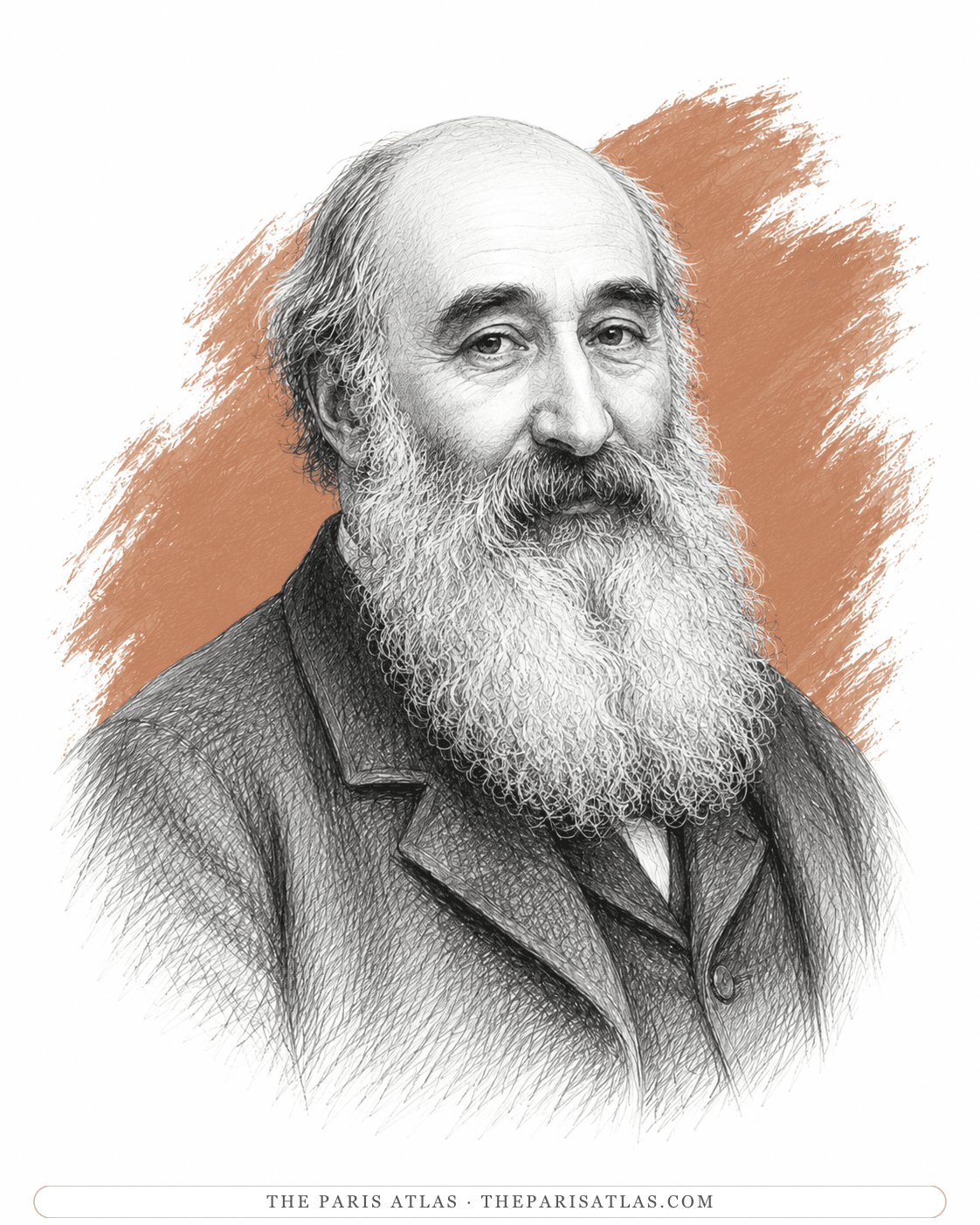
Illustrated portrait of Paul Signac

Paul Signac

  • Painter

Met · 1884

Met founding the Societe des Artistes Independants in 1884, after the Salon rejected Bathers at Asnieres. Signac became Seurat's closest ally and, after his death in 1891, the chief theorist and defender of Neo-Impressionism.

— Daniel Catton Rich (ed.), Seurat: Paintings and Drawings — exhibition catalogue (1958); John Rewald, Seurat: A Biography (1990)

Collaborated with

They met in 1884 and made Neo-Impressionism together: pictures assembled from separated strokes according to contemporary theories of optical mixing. Signac was the organiser and the movement's writer.

— Hommage à Camille Pissarro (1830–1903)

Illustrated portrait of Odilon Redon

Odilon Redon

  • Painter
  • Printer

Met · 1884

Both were founders of the Societe des Artistes Independants in 1884 - Redon presiding, Seurat showing the Salon-rejected Bathers at Asnieres at its first exhibition.

— Douglas W. Druick et al., Odilon Redon: Prince of Dreams, 1840–1916 — exhibition catalogue (1994); Daniel Catton Rich (ed.), Seurat: Paintings and Drawings — exhibition catalogue (1958)

Who Inspired Georges Seurat

People whose work inspired Georges Seurat. They did not necessarily meet or know one another.

Illustrated portrait of Camille Pissarro

Camille Pissarro

The influence ran mostly the other way. Pissarro was in his mid-fifties when he took up the divided brushwork Seurat and Signac were developing, and he showed alongside them; what he gave back was the standing of a founding Impressionist willing to be taught.

— Camille Pissarro — collection record; Hommage à Camille Pissarro (1830–1903)

Movements

The artistic and literary currents this life ran through.

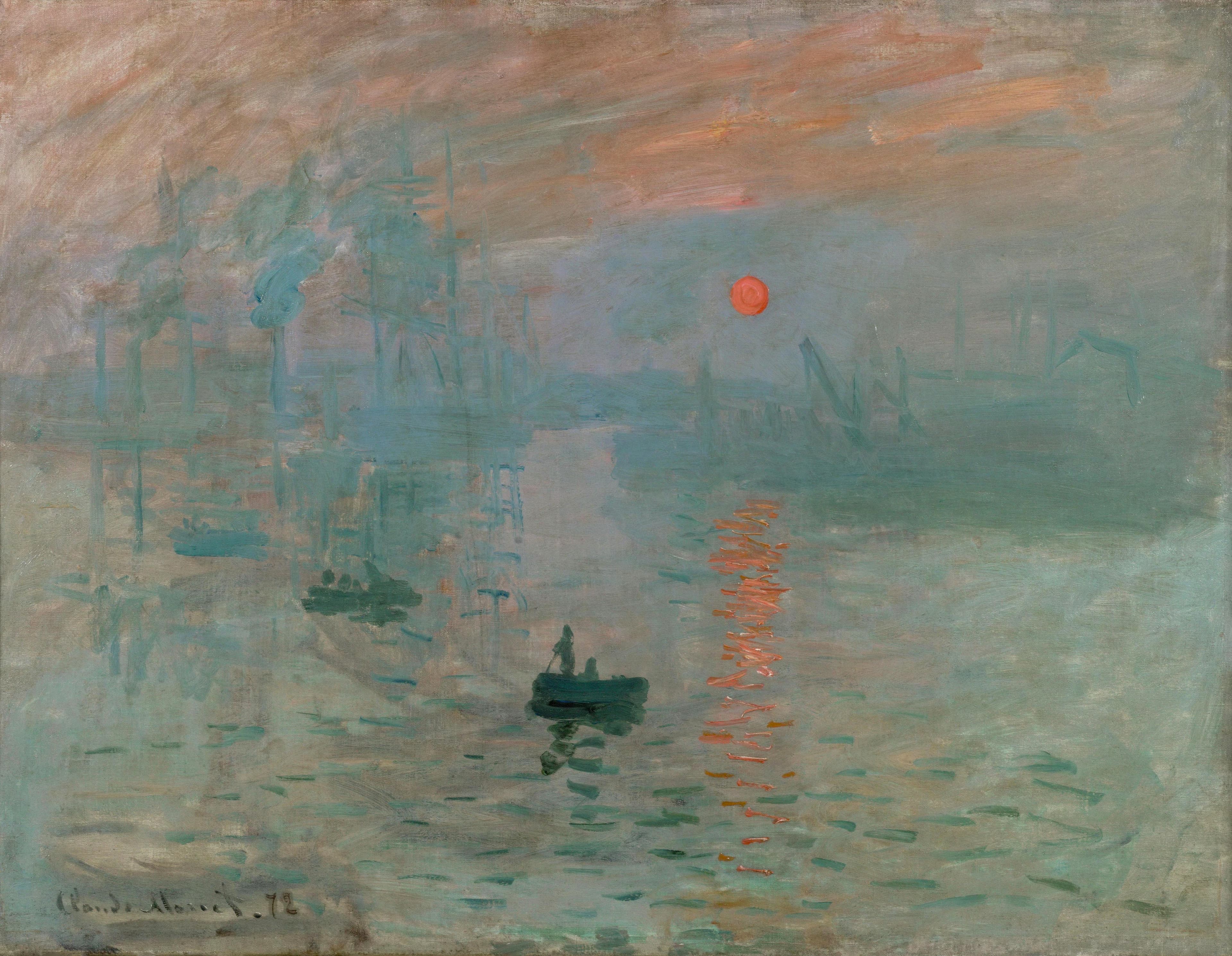
An orange sun over a hazy blue-grey harbor, small boats in the foreground, painted in loose broken strokes

Art movement · 1874–1886

Impressionism

Showed at exactly one Impressionist exhibition - the eighth and last, in May 1886, admitted at Pissarro's insistence - and La Grande Jatte's systematic dots split the movement on the way out. The critics' name for what came next, Neo-Impressionism, dates from that show.

— Daniel Catton Rich (ed.), Seurat: Paintings and Drawings — exhibition catalogue (1958); A Sunday on La Grande Jatte — 1884 (Georges Seurat) — Art Institute of Chicago

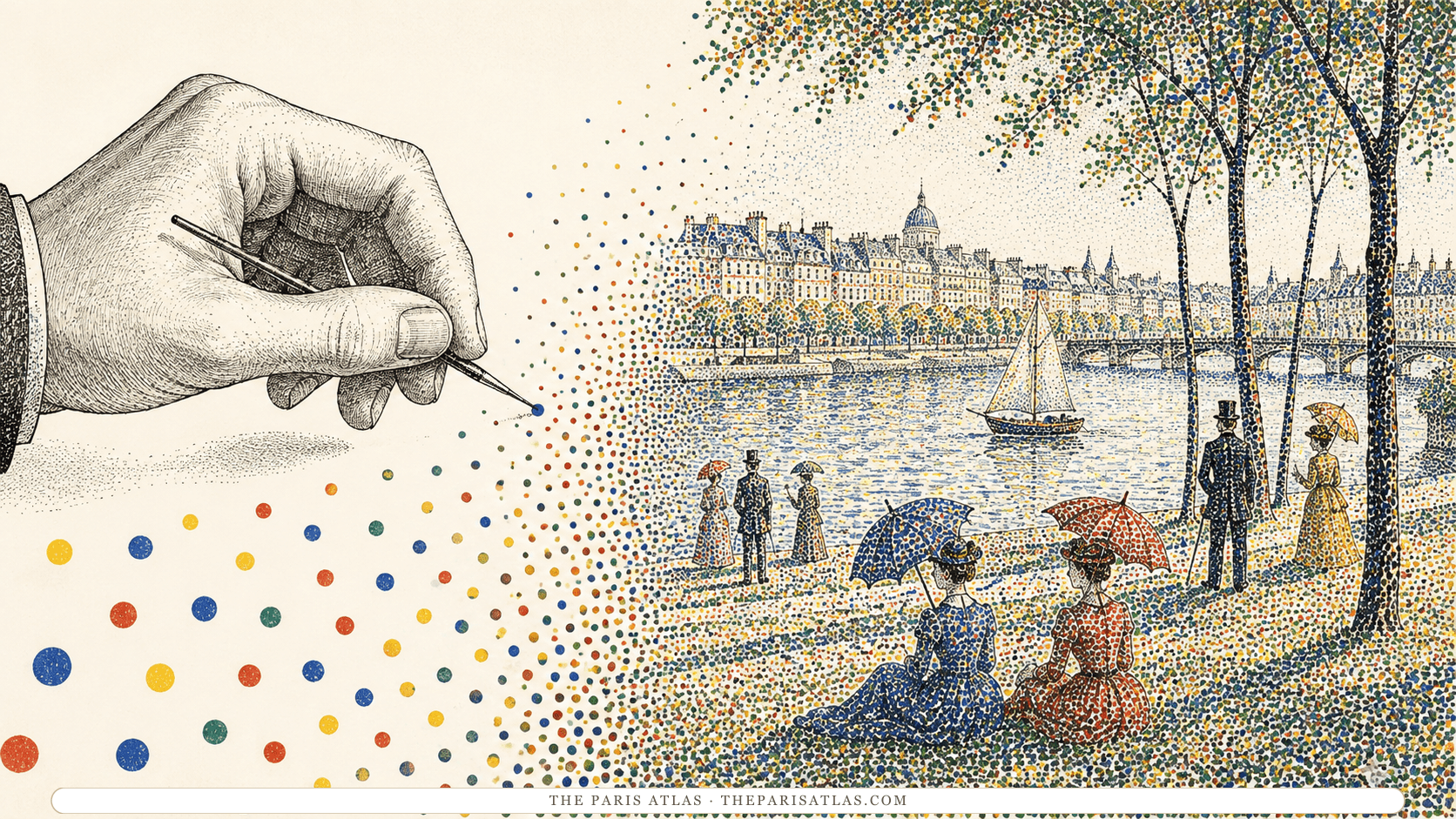
Engraved painter's hand placing a colored dot as separated blue, red, yellow, and green marks resolve into a Seine-side scene with trees, parasols, and a sailboat

Painting technique and movement · 1886–circa 1906

Pointillism

Invented the divided-colour method and unveiled it with A Sunday on La Grande Jatte at the final Impressionist exhibition of 1886.

— Georges Seurat (1859–1891) and Neo-Impressionism; Georges Seurat — Encyclopaedia Britannica

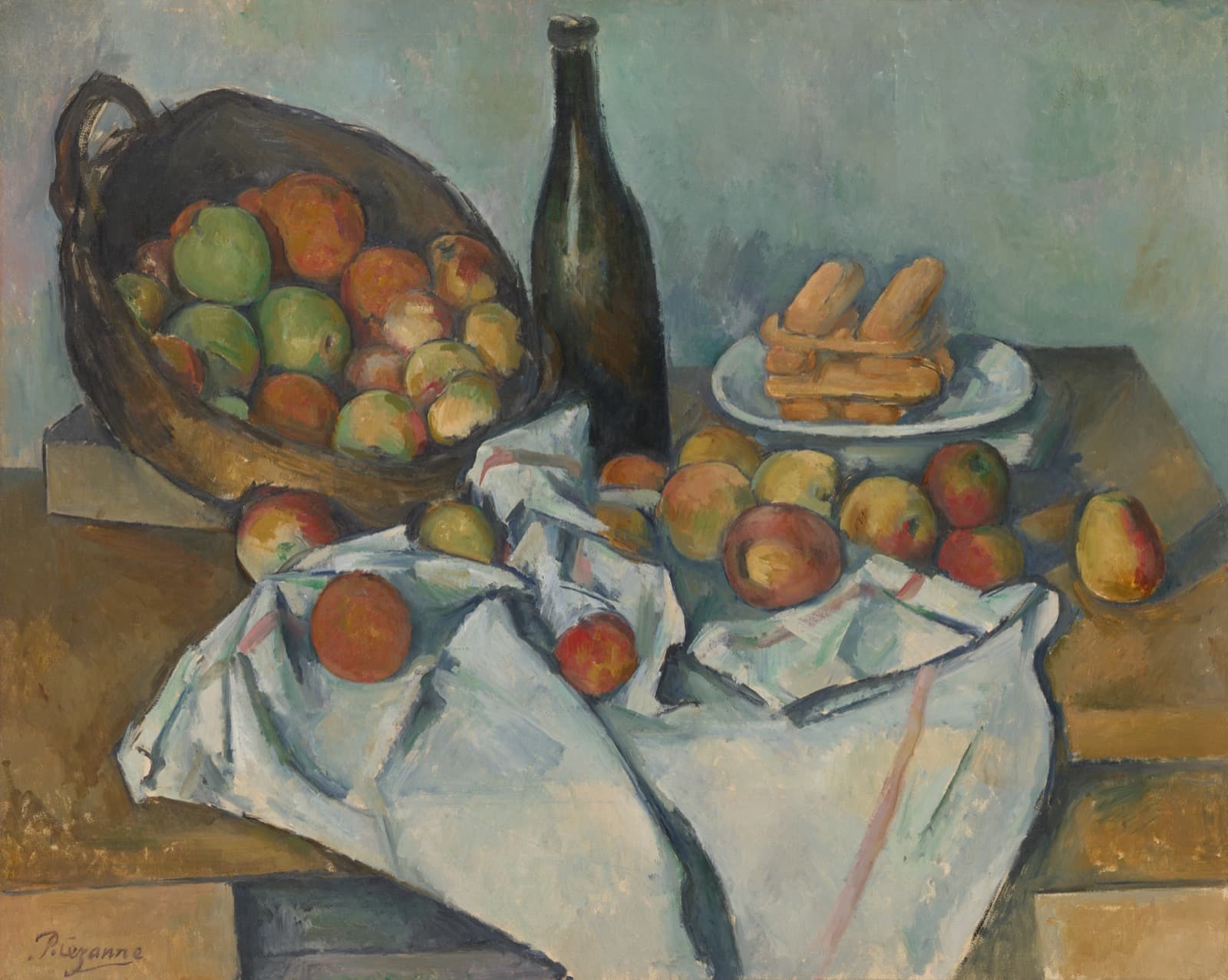
A still life on a table. A wicker basket tips up on a wooden block at the left, spilling red and green apples. A dark green wine bottle stands behind it, leaning slightly. At the right a white plate holds a stack of pale finger biscuits. A rumpled white cloth runs across the table with more apples on it, and the edge of the table on the left does not line up with the edge on the right.

Art movement · circa 1886–1905

Post-Impressionism

One of the four painters Tate names as Post-Impressionist. He applied a scientific method to Impressionist light and colour, producing Neo-Impressionism and Divisionism, and was among the founders of the Societe des Artistes Independants in 1884.

— Post-Impressionism (art term); Histoire du Salon des Independants

Questions about Georges Seurat

What is pointillism?

Seurat's technique of building a picture from small separate dots of pure colour, placed so they mix in the viewer's eye instead of on the palette. He derived it from colour science — Michel Eugène Chevreul's contrast laws and Ogden Rood's optics — and preferred the terms divisionism or chromo-luminarism; 'pointillism' began as critics' mockery and stuck.

Where is A Sunday on La Grande Jatte?

The Art Institute of Chicago, which acquired it in 1924 and, under the terms of the bequest, never lends it — to see the painting you go to Chicago. The island itself, the île de la Grande Jatte, is real: it sits in the Seine at Neuilly-sur-Seine, just west of Paris, and can be walked today.

Why was La Grande Jatte controversial in 1886?

It hung at the eighth and final Impressionist exhibition and read as a manifesto against its hosts: where Impressionism caught the moment freehand, Seurat's three-metre Sunday was frozen, systematic and built by rule, dot by dot over two years. Degas was dismissive and Monet and Renoir kept their distance from the show; the critic Félix Fénéon named the new school Neo-Impressionism.

How did Georges Seurat die?

Suddenly, in Paris on 29 March 1891, at thirty-one — the cause was never settled; meningitis, diphtheria and infectious angina have all been proposed. His infant son Pierre-Georges died of the same illness two weeks later. Only at the deathbed did most of Seurat's friends learn that the intensely private painter had a companion, Madeleine Knobloch, and a child at all.

What else did Seurat paint besides La Grande Jatte?

Six more large canvases on the same optical principles — Bathers at Asnières (National Gallery, London), the Models, Circus Sideshow's gaslit queue (Metropolitan Museum), Le Chahut and the unfinished Circus (Musée d'Orsay) — plus the still Channel-coast harbours he painted each summer and several hundred charcoal drawings that many critics rank with the paintings.

Did Seurat call his technique pointillism?

No. The word was coined by hostile critics and he disliked it, because it describes the surface rather than the reason for it. He called the method chromoluminarism, or divisionism. Colours are kept apart on the canvas so they combine in the eye rather than on the palette, which he believed gave a more luminous result.

Why do Seurat's paintings have painted borders?

Because he did not want a gilt frame interrupting the optical effect. From about 1888 he painted borders directly onto his canvases in complementary dots, and later painted the frames themselves.

What was the Société des Artistes Indépendants?

An exhibiting society Seurat helped found in 1884 for artists the official Salon had refused. It had no jury and no prizes, and anyone who paid the subscription could hang. Paul Signac was a fellow founder. Van Gogh, Rousseau, Matisse and the Cubists all later showed there, and the society still exists.

Did Seurat have a family?

Yes, and he hid it. From about 1889 he lived with the model Madeleine Knobloch, and their son Pierre-Georges was born in February 1890. He registered the birth but told nobody, introducing them to his mother only days before he died on 29 March 1891. The boy died of the same illness two weeks later.

Connections and Sources

Georges Seurat’s connections to people, places, and works, with the sources behind each one.

Associated with · 1886

Impressionism

Showed at exactly one Impressionist exhibition - the eighth and last, in May 1886, admitted at Pissarro's insistence - and La Grande Jatte's systematic dots split the movement on the way out. The critics' name for what came next, Neo-Impressionism, dates from that show.

— Daniel Catton Rich (ed.), Seurat: Paintings and Drawings — exhibition catalogue (1958); A Sunday on La Grande Jatte — 1884 (Georges Seurat) — Art Institute of Chicago

Met · 1884

Paul Signac

Met founding the Societe des Artistes Independants in 1884, after the Salon rejected Bathers at Asnieres. Signac became Seurat's closest ally and, after his death in 1891, the chief theorist and defender of Neo-Impressionism.

— Daniel Catton Rich (ed.), Seurat: Paintings and Drawings — exhibition catalogue (1958); John Rewald, Seurat: A Biography (1990)

Associated with

Pointillism

Invented the divided-colour method and unveiled it with A Sunday on La Grande Jatte at the final Impressionist exhibition of 1886.

— Georges Seurat (1859–1891) and Neo-Impressionism; Georges Seurat — Encyclopaedia Britannica

Associated with · 1886

Post-Impressionism

One of the four painters Tate names as Post-Impressionist. He applied a scientific method to Impressionist light and colour, producing Neo-Impressionism and Divisionism, and was among the founders of the Societe des Artistes Independants in 1884.

— Post-Impressionism (art term); Histoire du Salon des Independants

Collaborated with

Paul Signac

They met in 1884 and made Neo-Impressionism together: pictures assembled from separated strokes according to contemporary theories of optical mixing. Signac was the organiser and the movement's writer.

— Hommage à Camille Pissarro (1830–1903)

Influenced by

Camille Pissarro

The influence ran mostly the other way. Pissarro was in his mid-fifties when he took up the divided brushwork Seurat and Signac were developing, and he showed alongside them; what he gave back was the standing of a founding Impressionist willing to be taught.

— Camille Pissarro — collection record; Hommage à Camille Pissarro (1830–1903)

Met · 1884

Odilon Redon

Both were founders of the Societe des Artistes Independants in 1884 - Redon presiding, Seurat showing the Salon-rejected Bathers at Asnieres at its first exhibition.

— Douglas W. Druick et al., Odilon Redon: Prince of Dreams, 1840–1916 — exhibition catalogue (1994); Daniel Catton Rich (ed.), Seurat: Paintings and Drawings — exhibition catalogue (1958)

References

References

The sources below include biographies, scholarly essays, interviews, and primary materials that informed this page. They reflect both the historical record and ongoing critical conversations about Georges Seurat and their work.

  1. 1abcdSeurat: A Biography

    Biography
    Harry N. Abrams, 1990
    Used for

    Biographical evidence used to verify chronology, relationships, and historical context connected to Georges Seurat.

  2. 2abcSeurat: Paintings and Drawings — exhibition catalogue

    Exhibition catalogue
    The Art Institute of Chicago / The Museum of Modern Art, 1958
    Used for

    Catalogue scholarship used to verify attribution, provenance, chronology, and interpretive context for Georges Seurat.

    View source
  1. 3abA Sunday on La Grande Jatte — 1884 (Georges Seurat) — Art Institute of Chicago

    Website
    Art Institute of Chicago
    Used for

    Web source consulted for documented facts and historical context presented on the Georges Seurat page.

    View source
  2. 4↑A Sunday on La Grande Jatte — 1884 (Georges Seurat) — Art Institute of Chicago

    Website
    Art Institute of Chicago
    Used for

    Web source consulted for documented facts and historical context presented on the Georges Seurat page.

    View source
i
Why these sources are here

These references anchor the page in the documented record and in the scholarly conversations around Georges Seurat. Every claim on this page traces back to one or more of the works listed here.

Explore more resources