The Paris AtlasCharting the artists, works, and places worth returning to.
  • Painter
  • Printer
· French · 1840–1916

Odilon Redon

Symbolist who spent twenty years drawing in black — smiling spiders, floating eyes, charcoal creatures he called his noirs — then turned around 1890 to some of the most saturated colour in French art. The Surrealists later claimed him as an ancestor.

In images

Details

Lived
1840–1916
Born
1840
Birthplace
Bordeaux
Died
1916
Place of death
Paris
Nationality
French
Roles
PainterPrinter

About Odilon Redon

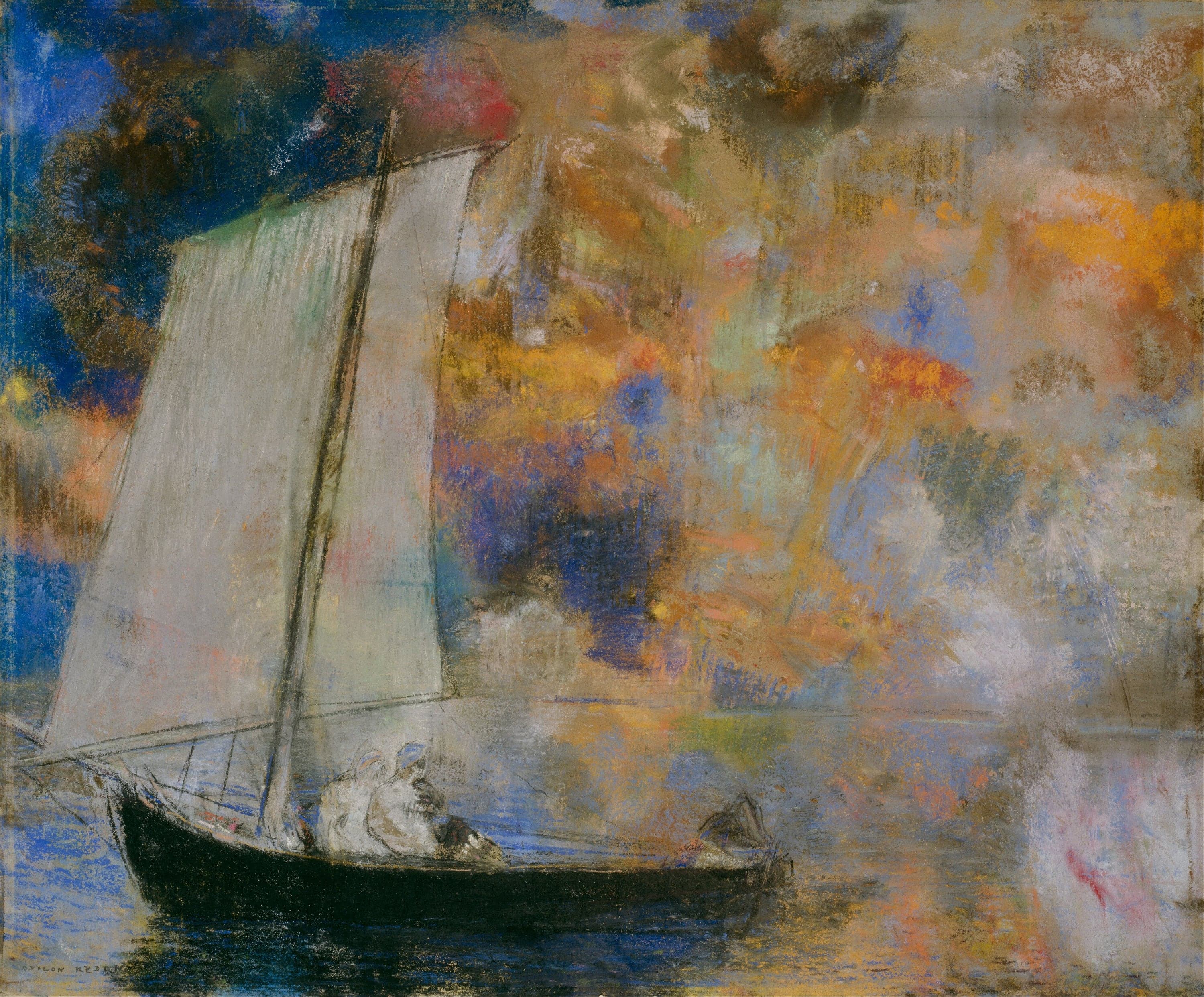
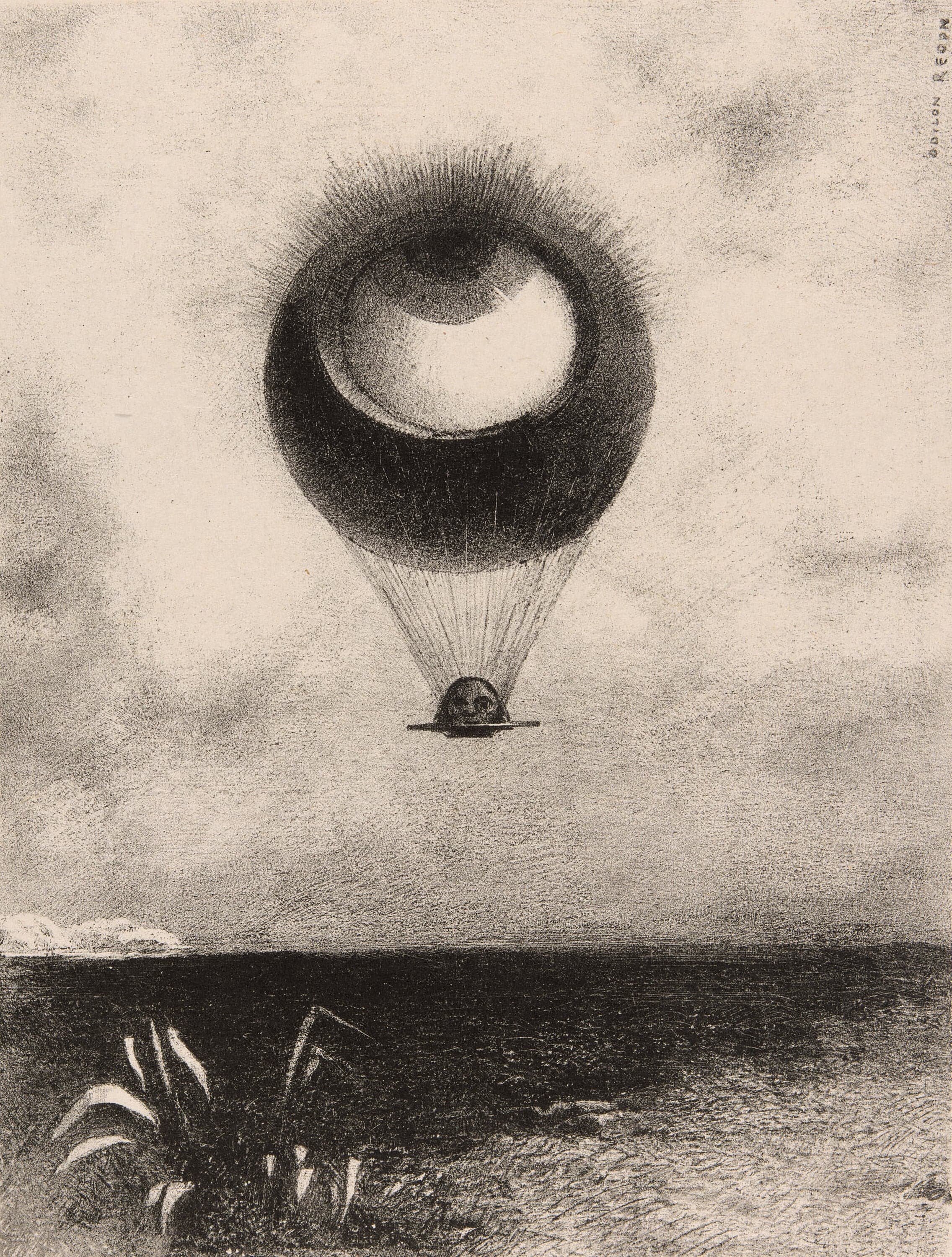
Odilon Redon had two careers in one lifetime, split at the colour line. For twenty years he worked almost only in charcoal and lithography — the noirs, he called them: a spider with a human grin, an eye rising like a balloon, severed heads adrift — images he said were meant 'to place the logic of the visible at the service of the invisible.' Then, around 1890, the black lifted, and the last twenty-five years poured out pastels and oils of flowers, chariots and one shy Cyclops in colour that painters are still borrowing.

Like Gustave Moreau, he was made famous by a novel: Joris-Karl Huysmans's À rebours of 1884, whose hero collects Redon's drawings as furniture for a private dream. That same year Redon helped lead the new no-jury Salon des Indépendants — the exhibiting home of Georges Seurat — and by the end of the century the Nabis, a brotherhood of young painters, treated him as a master. The Surrealists, later, claimed him as an ancestor. He died in Paris in 1916.

The noirs

Redon was born on 20 April 1840 in Bordeaux and spent a sickly, solitary childhood on the family estate at Peyrelebade in the Médoc, whose bare vines and grey light he later named as the ground of everything. His training was a sequence of misfits — he failed under the academic Jean-Léon Gérôme — until the eccentric etcher Rodolphe Bresdin in Bordeaux taught him printmaking, and Henri Fantin-Latour later showed him lithography.

The Smiling Spider, 1887 lithograph. The noirs ran on nightmares delivered deadpan. (Odilon Redon, via Wikimedia Commons · Public domain)

From the 1870s, settled in Paris, he built an art of charcoal and lithographic black: the album Dans le Rêve in 1879, then a decade of plates and drawings — the grinning spider, the eye-balloon, plant-headed men, heads floating free. He insisted the creatures obeyed their own logic, drawn from close study of the visible and then released from it. The public mostly did not notice; the writers did.

Fame by novel, 1884

In 1884 Joris-Karl Huysmans published À rebours, whose aesthete hero des Esseintes decorates his retreat with Redon's drawings — and the obscure printmaker of nightmares became the Decadence's house artist overnight, as the same novel was making Gustave Moreau's Salomes into icons. The same year, Redon presided over the founding of the Société des Artistes Indépendants, the no-jury salon where Georges Seurat showed his huge Bathers — so it was Redon, the shy visionary, who improbably chaired the room where Seurat's Neo-Impressionism was born.

Then, colour

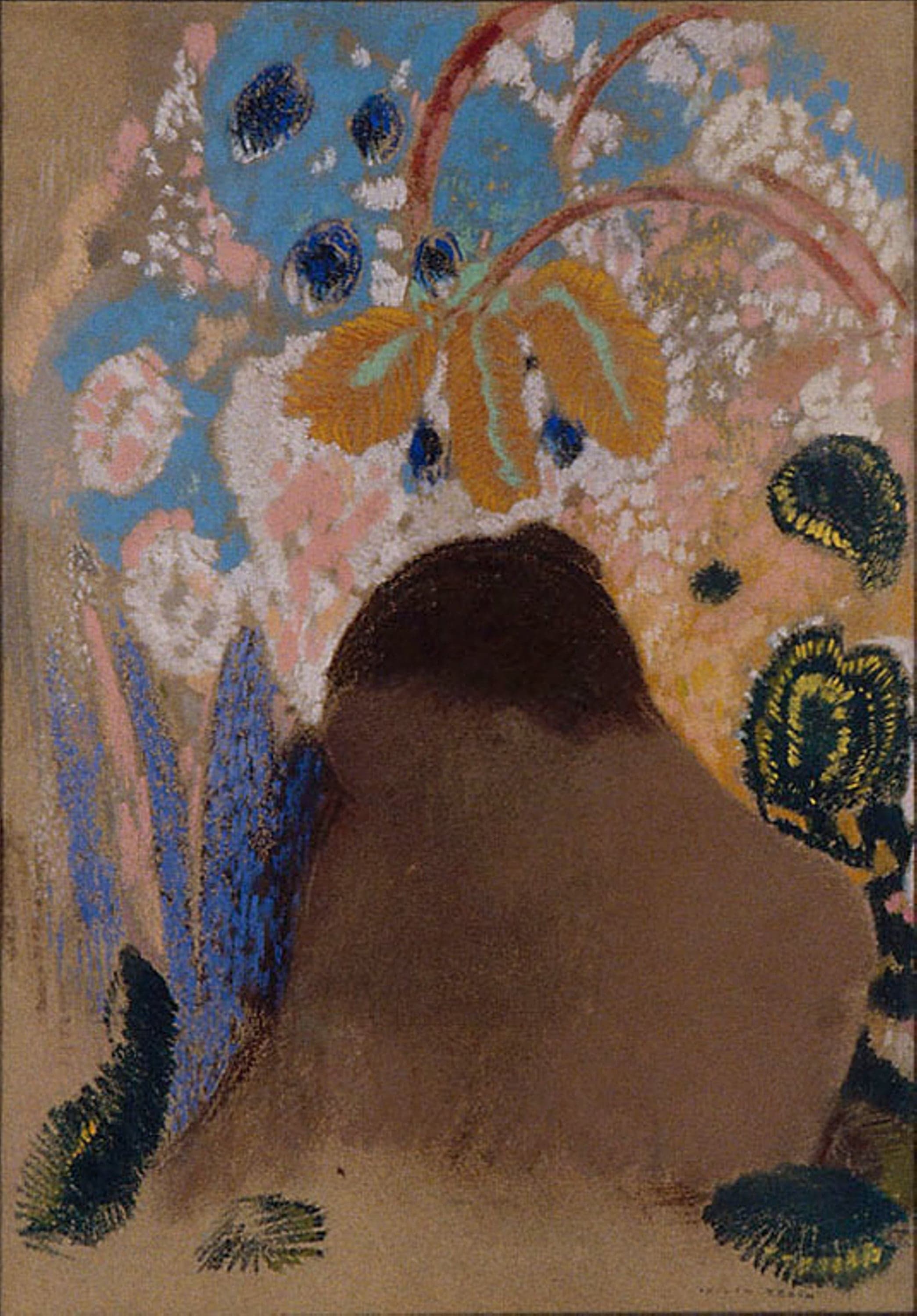
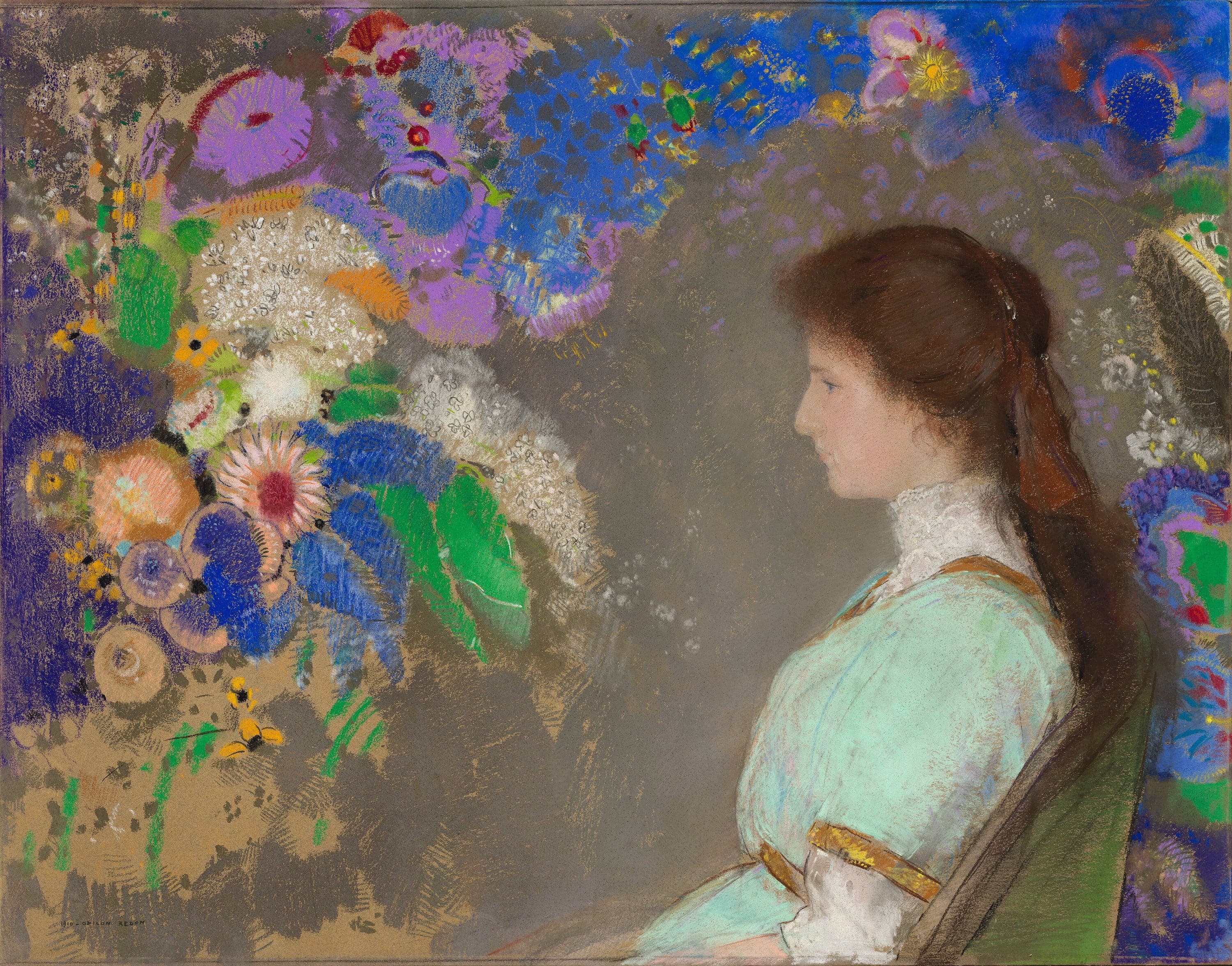
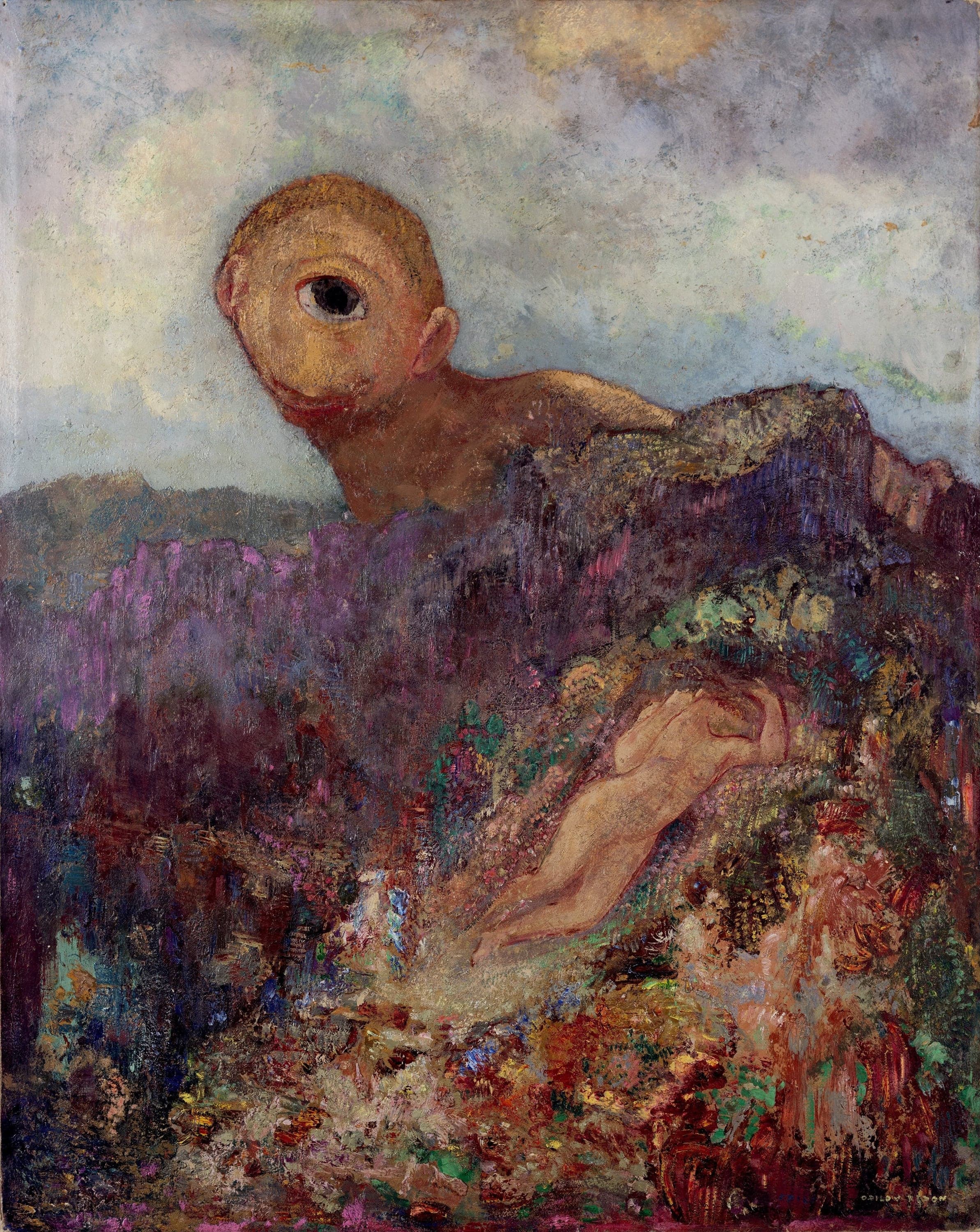
Around 1890 the black began to lift — biographers point to a lifting of family grief, with his son Arï, born in 1889, surviving infancy where a first child had died, and to a loosening of his religious torments — and by 1900 Redon had abandoned the noirs entirely. What replaced them reversed the polarity: pastels and oils of flower bouquets that seem lit from inside, mythologies in violet and gold, Buddha under jewelled trees, and The Cyclops, the one-eyed monster grown gentle, peering over a flowering hill at a sleeping nymph.

The Cyclops, c. 1914 — the last years' colour, the monster gone shy. (Odilon Redon (Kröller-Müller Museum), via Wikimedia Commons · Public domain)

The honours arrived with the colour: the Légion d'honneur in 1903, a room of his own in 1904 at the Salon d'Automne — Paris's big new annual exhibition — the largest single representation of any artist at New York's Armory Show in 1913. The Nabis — Bonnard, Vuillard, Denis — sat at his feet; the Surrealists later filed his floating heads and eyes among their ancestors. He died in Paris on 6 July 1916, while his son was at the front.

Life events

  1. 1840

    Born in Bordeaux on 20 April; raised solitary at the Peyrelebade estate in the Médoc.

    Odilon Redon — Wikipedia

  2. 1863

    The etcher Rodolphe Bresdin takes him on in Bordeaux — the training that sticks, after Gérôme's studio did not.

    Odilon Redon — Wikipedia

  3. 1879

    Publishes Dans le Rêve, the first lithograph album of the noirs.

    Odilon Redon — Wikipedia

  4. 1884

    Huysmans's À rebours makes the noirs famous, and Redon presides over the founding of the no-jury Salon des Indépendants.

    Odilon Redon — Wikipedia

  5. 1887

    The Smiling Spider lithograph.

    The Smiling Spider, 1887 lithograph — one of the noirs, the charcoal-and-ink creatures that made Redon the collected secret of the Decadent writers. (Odilon Redon, via Wikimedia Commons)

    Odilon Redon — Wikipedia

  6. 1890

    The turn: colour begins to replace the noirs, and after about 1900 the black is gone entirely.

    Odilon Redon — Wikipedia

  7. 1904

    A room of his own at the Salon d'Automne; the Légion d'honneur had come the year before.

    Odilon Redon — Wikipedia

  8. 1913

    The largest single representation of any artist at New York's Armory Show.

    Odilon Redon — Wikipedia

  9. 1916

    Dies in Paris on 6 July, aged seventy-six.

    Odilon Redon — Wikipedia

People they knew

Documented connections — every one carries its source.

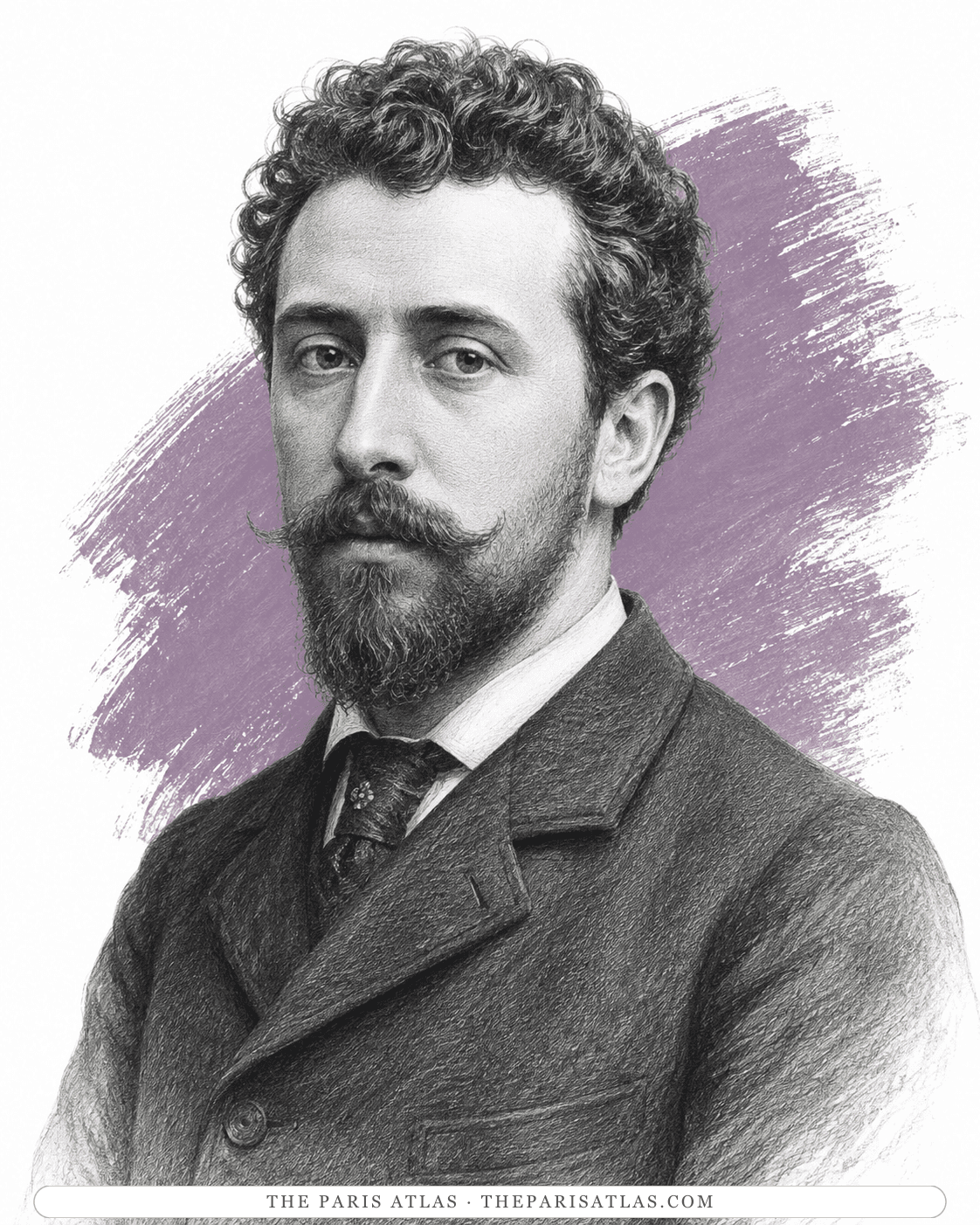
Illustrated portrait of Georges Seurat

Georges Seurat

  • Painter

Met · 1884

Both were founders of the Societe des Artistes Independants in 1884 - Redon presiding, Seurat showing the Salon-rejected Bathers at Asnieres at its first exhibition.

Odilon Redon — Wikipedia; Georges Seurat — Wikipedia

Questions about Odilon Redon

What are Odilon Redon's noirs?

The all-black works — charcoal drawings and lithographs — that occupied him almost exclusively from the 1870s to about 1890: a spider with a human grin, an eye floating upward like a balloon, plant-headed figures, drifting severed heads. Redon said they put 'the logic of the visible at the service of the invisible.' He then abandoned black entirely for the saturated pastels and oils of his last twenty-five years.

How did Redon become famous?

Through a novel. Joris-Karl Huysmans's À rebours (1884) gave its decadent hero a collection of Redon's drawings, and the obscure Bordeaux printmaker became the Decadent generation's discovery overnight — the same book that fixed Gustave Moreau's Salomes at the centre of the era's imagination. Broad official recognition waited for the colour years: the Légion d'honneur in 1903 and a dedicated room at the 1904 Salon d'Automne.

Why did Redon switch from black to colour?

Around 1890 the noirs gave way to pastel and oil, and after about 1900 he never worked in black again. Biographers connect the change to his life easing — his son Arï, born in 1889, survived where a first child had not — and to a loosening of the griefs the noirs had carried. Whatever the cause, the late flower pieces, mythologies and The Cyclops are among the most intense colour in French painting.

Was Redon a Symbolist?

He is one of the two painters the label fits best, with Gustave Moreau — an art of suggestion, dream and inner logic rather than observed fact, prized by exactly the writers who invented Symbolism. Redon put it in his own terms: his drawings 'inspire, and are not to be defined.' The Surrealists later claimed him as an ancestor, which is why his eye-balloons keep appearing in histories of their movement.

Where can you see Redon's work?

The Musée d'Orsay in Paris holds the major French collection, including noirs and the decorative panels from the château de Domecy; the Art Institute of Chicago and MoMA hold strong groups, the Kröller-Müller Museum in the Netherlands has The Cyclops, and his lithograph albums surface in print rooms everywhere.

Sourced claims

Every connection the graph holds for Odilon, with the evidence behind it.

Met · 1884

Georges Seurat

Both were founders of the Societe des Artistes Independants in 1884 - Redon presiding, Seurat showing the Salon-rejected Bathers at Asnieres at its first exhibition.

Odilon Redon — Wikipedia; Georges Seurat — Wikipedia

References

References

The sources below include biographies, scholarly essays, interviews, and primary materials that informed this page. They reflect both the historical record and ongoing critical conversations about Odilon Redon and his work.

  1. 1Odilon Redon — Wikipedia

    Wikipedia
    View source
    i
    Why these sources are here

    These references anchor the page in the documented record and in the scholarly conversations around Odilon Redon. Every claim on this page traces back to one or more of the works listed here.

    Explore more resources