The Paris AtlasCharting the artists, works, and places worth returning to.

Painting technique and movement · Paris · 1886–circa 1906

Pointillism

Painting rebuilt from dots of pure colour — Seurat's scientific answer to Impressionism.

Colour mixed in the eye, not on the palette

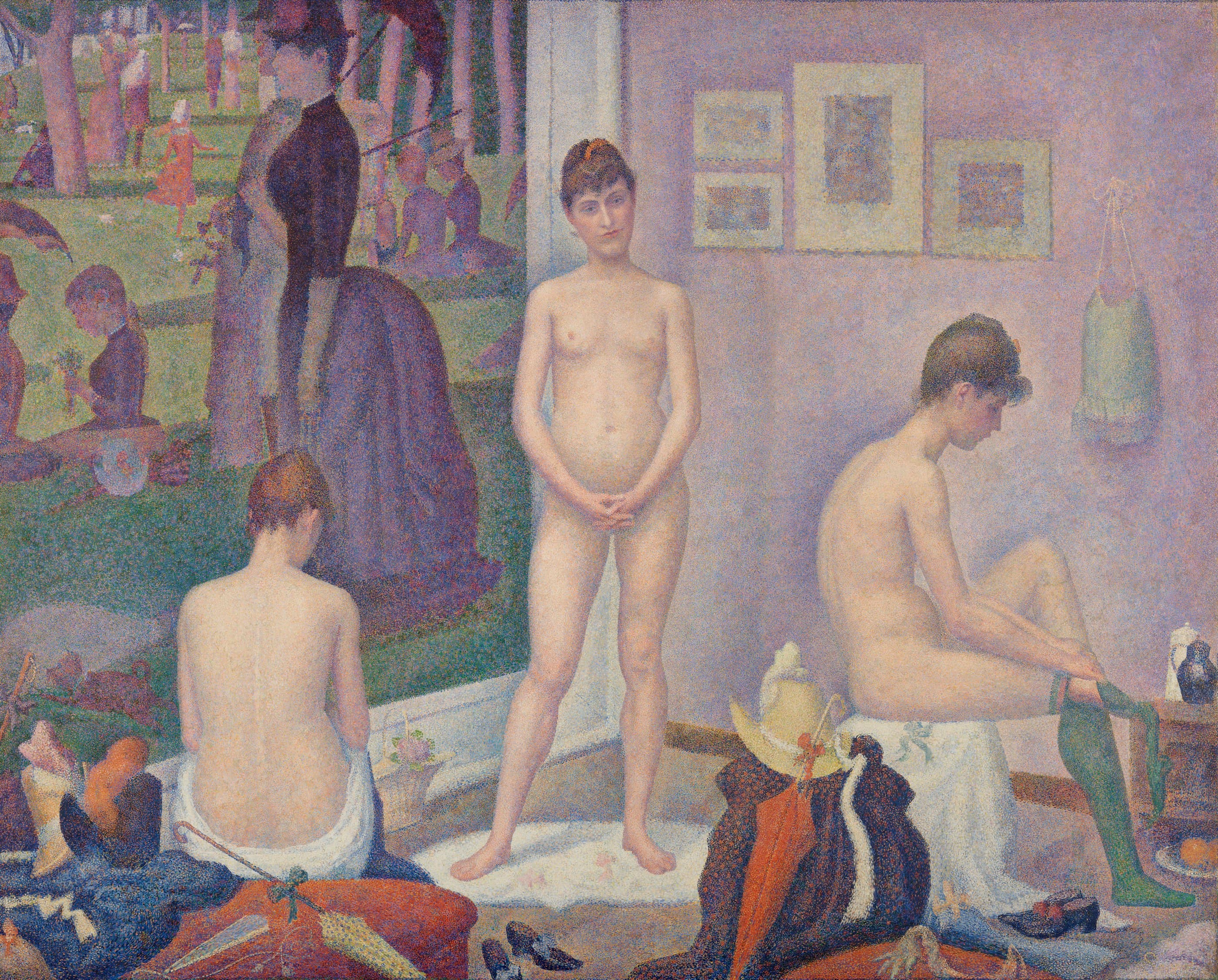
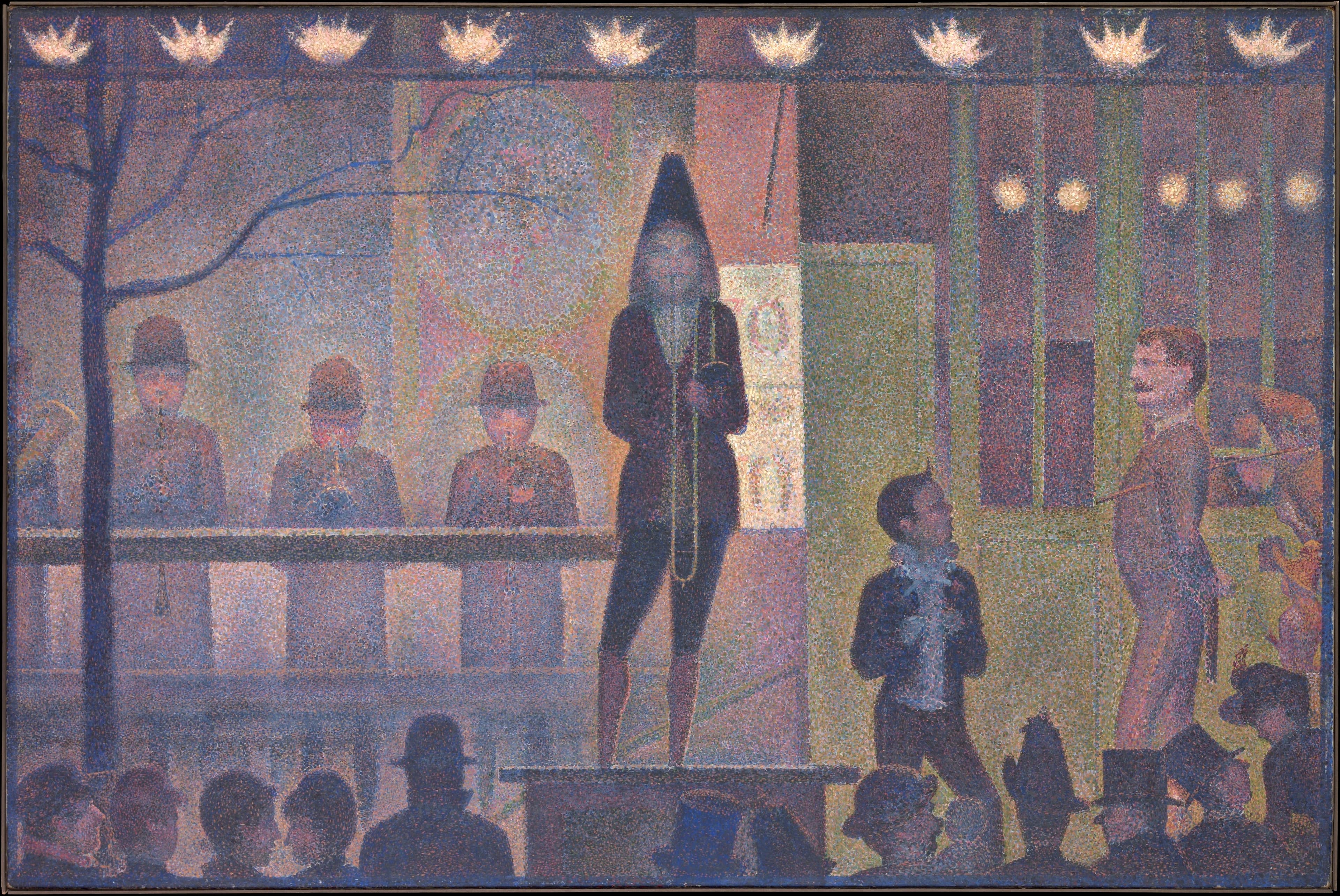
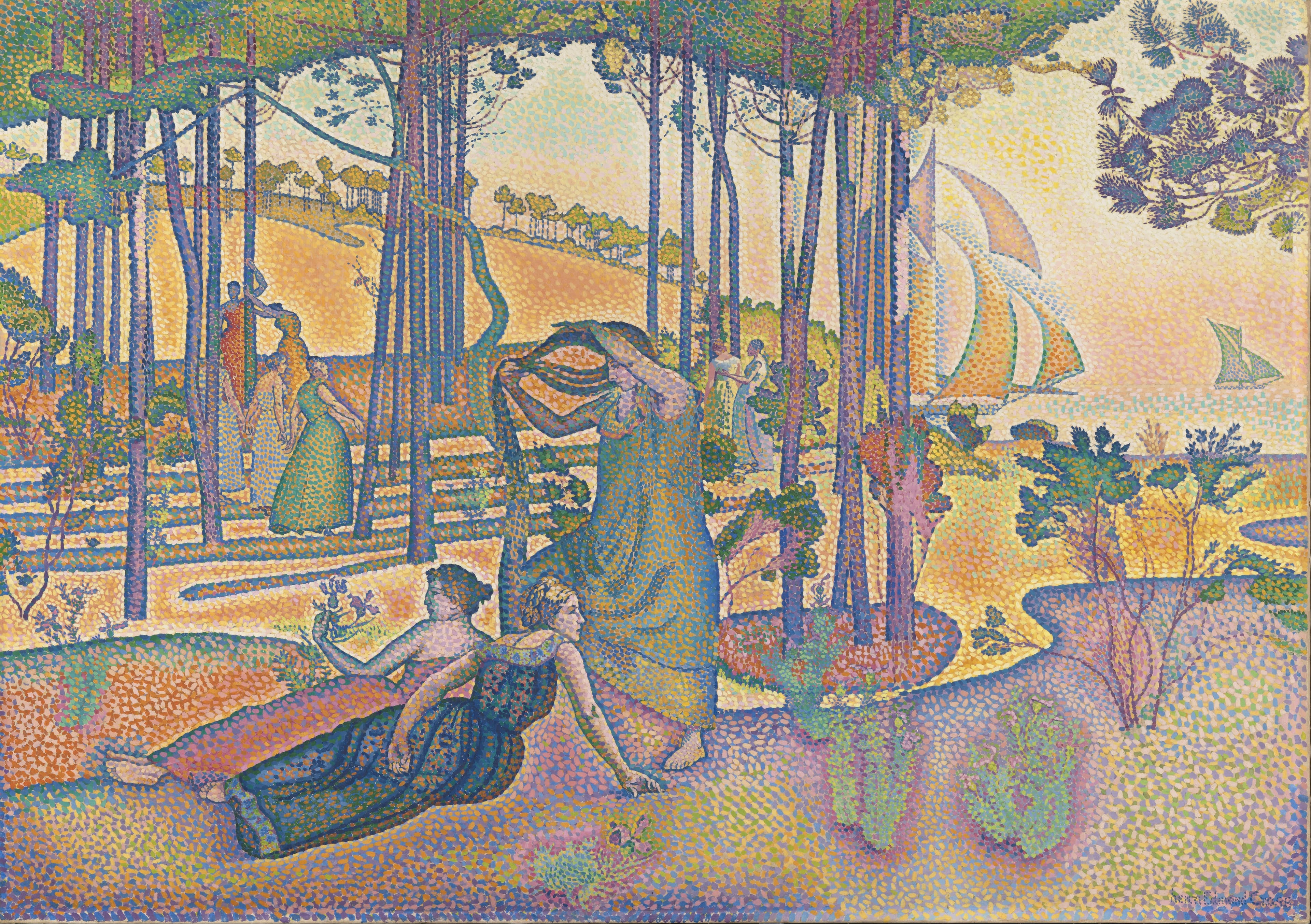
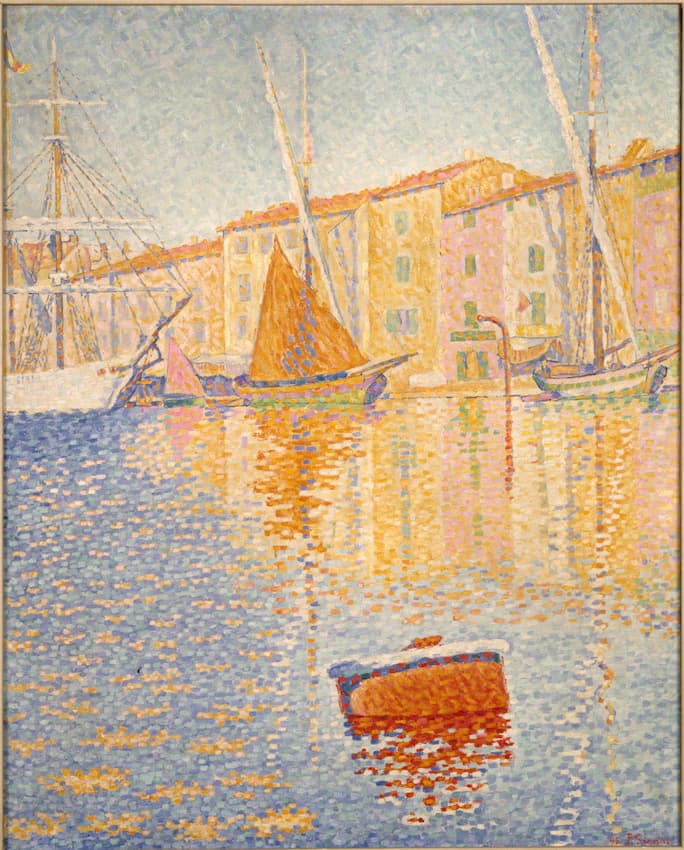
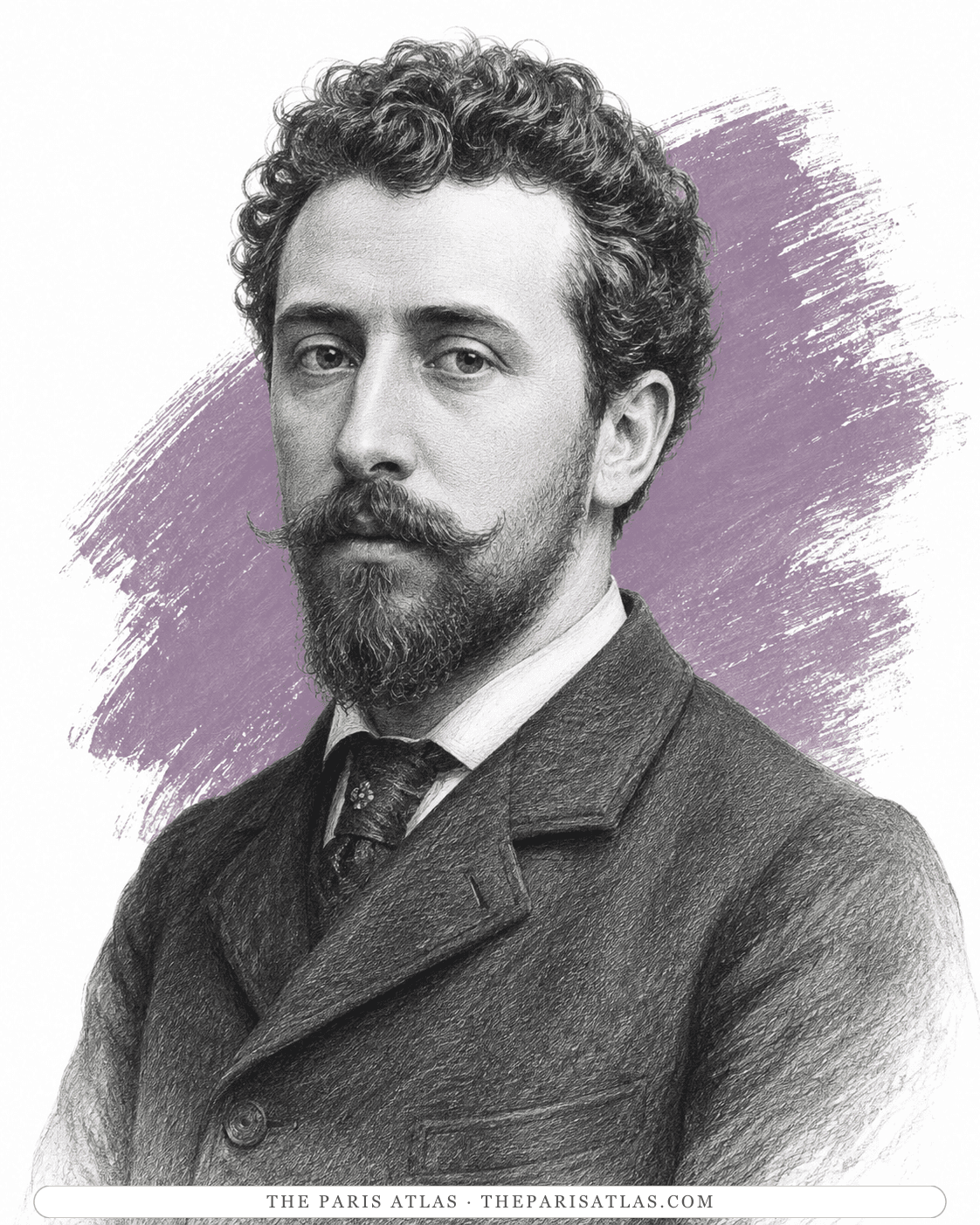
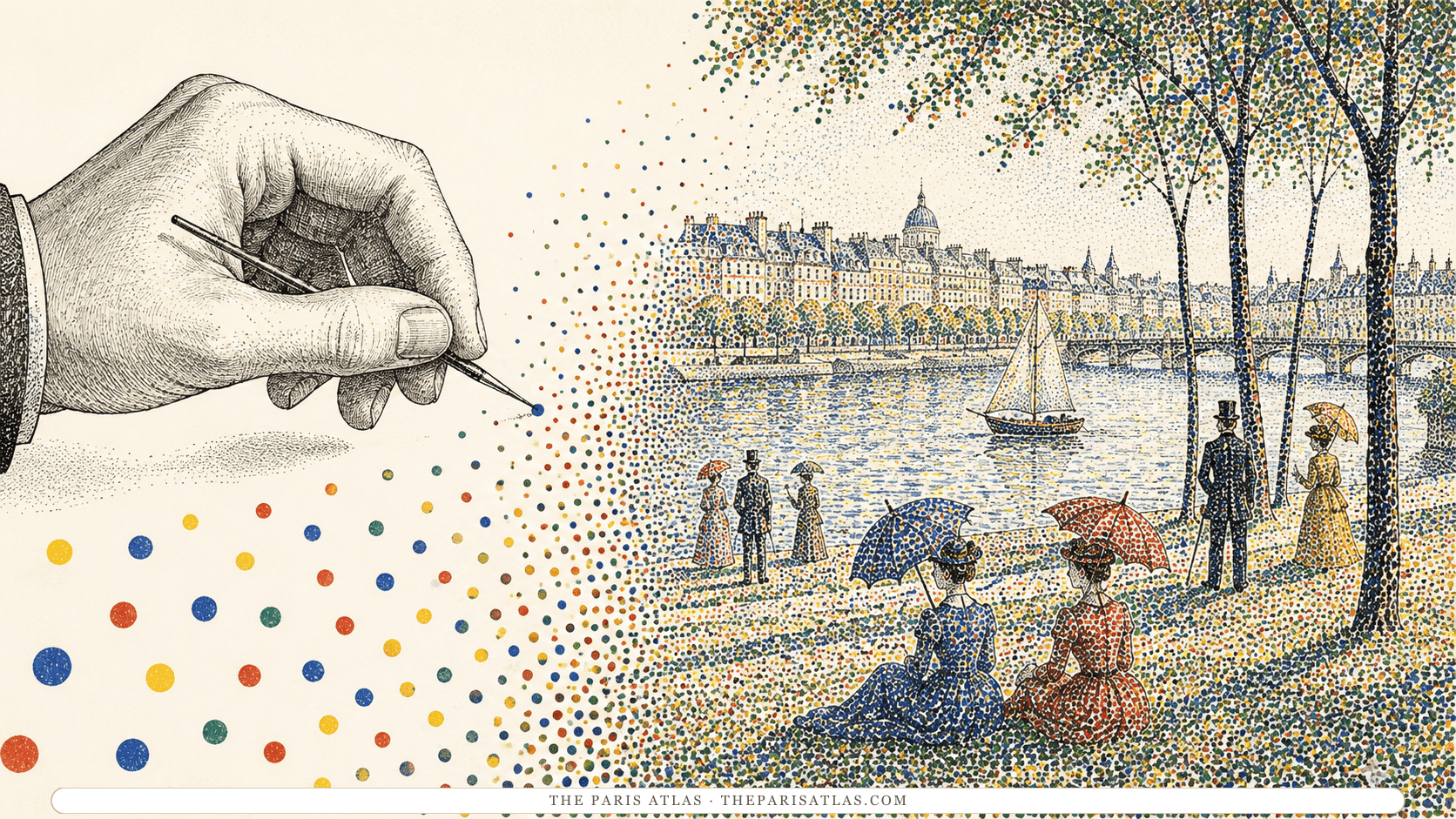
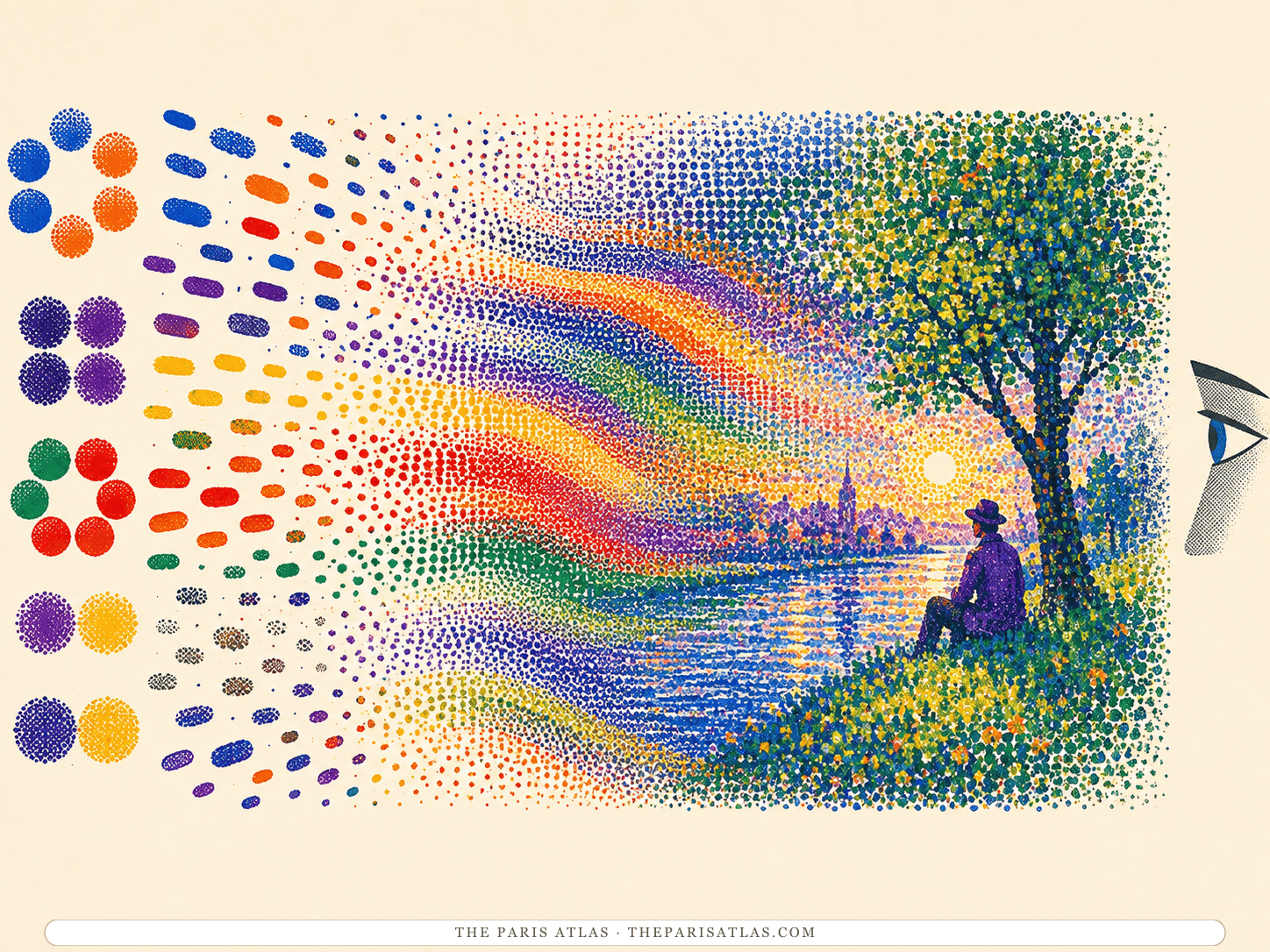
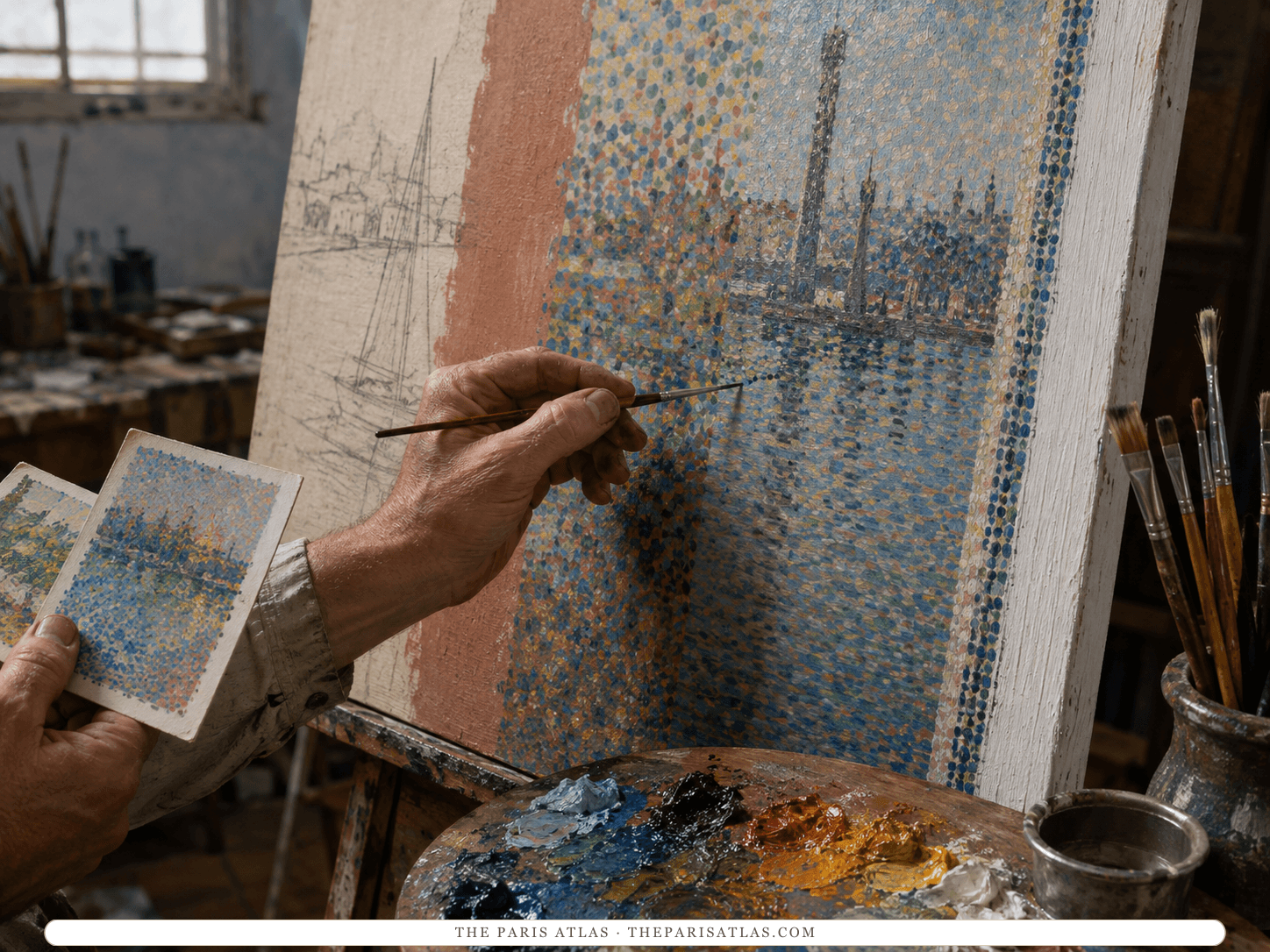
Pointillism is painting in small, separate touches of pure colour, placed side by side so that the mixing happens in the viewer's eye rather than on the palette. Georges Seurat worked the method out in Paris in the mid-1880s from the colour science of his day, wanting to give Impressionism's shimmer a rational, repeatable foundation.

The names were argued over from the start. Critics coined pointillism for the dots themselves, half mockingly; Seurat and his circle preferred Divisionism, for the principle of divided colour, and the critic Félix Fénéon named the wider movement Neo-Impressionism in 1886. In everyday use, the dots won: pointillism is the word that stuck.

1886: La Grande Jatte at the last Impressionist exhibition

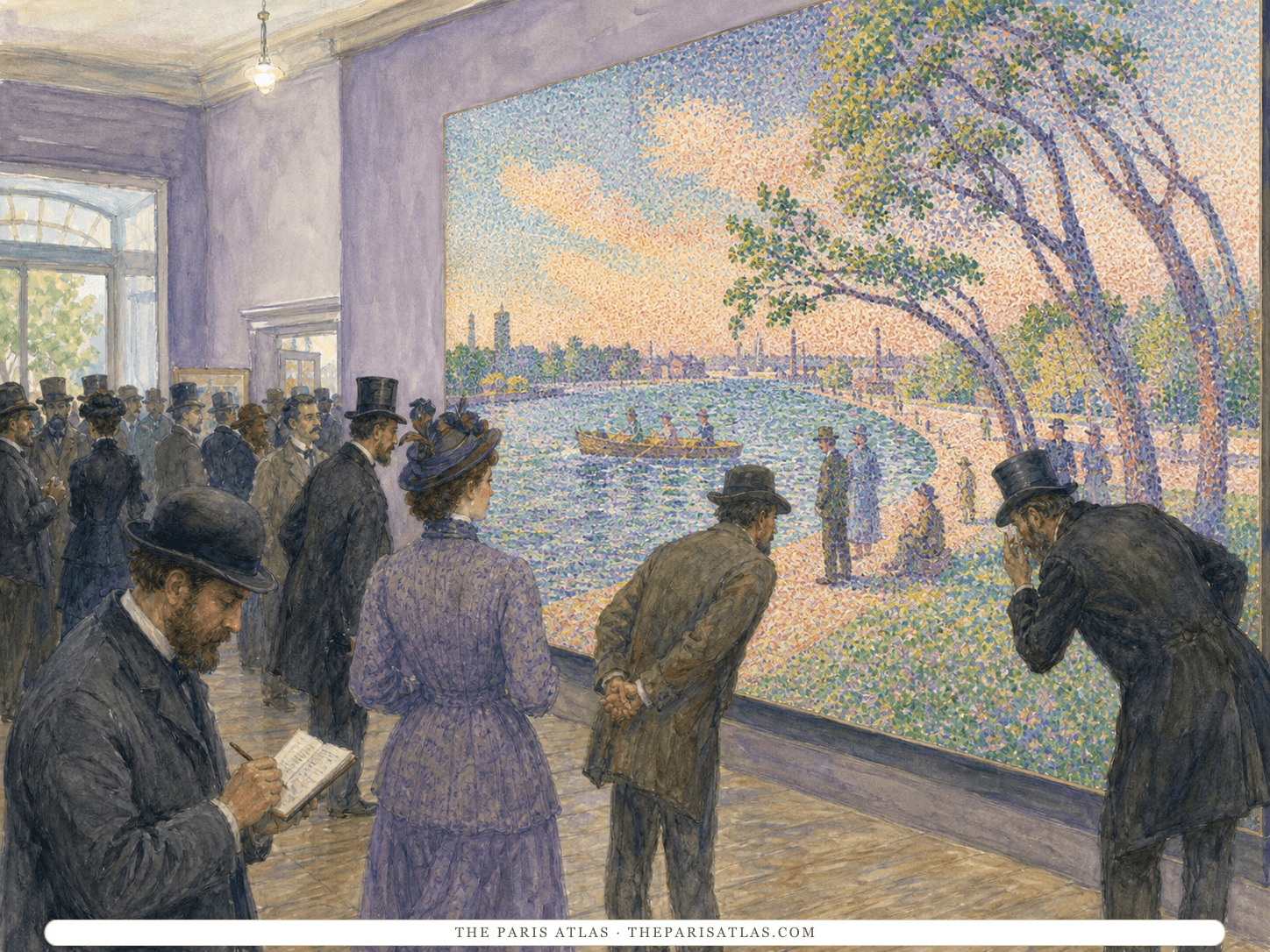
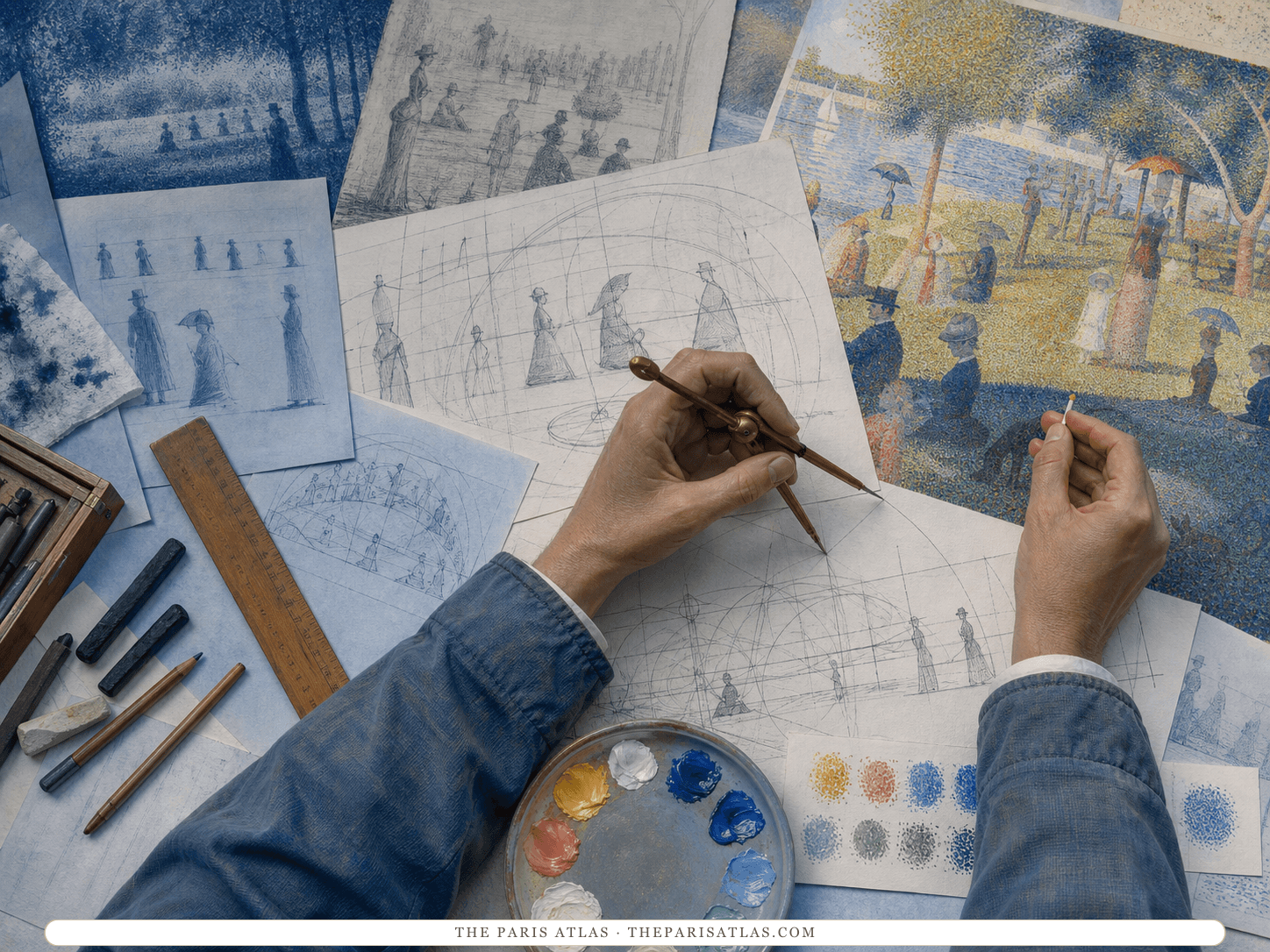
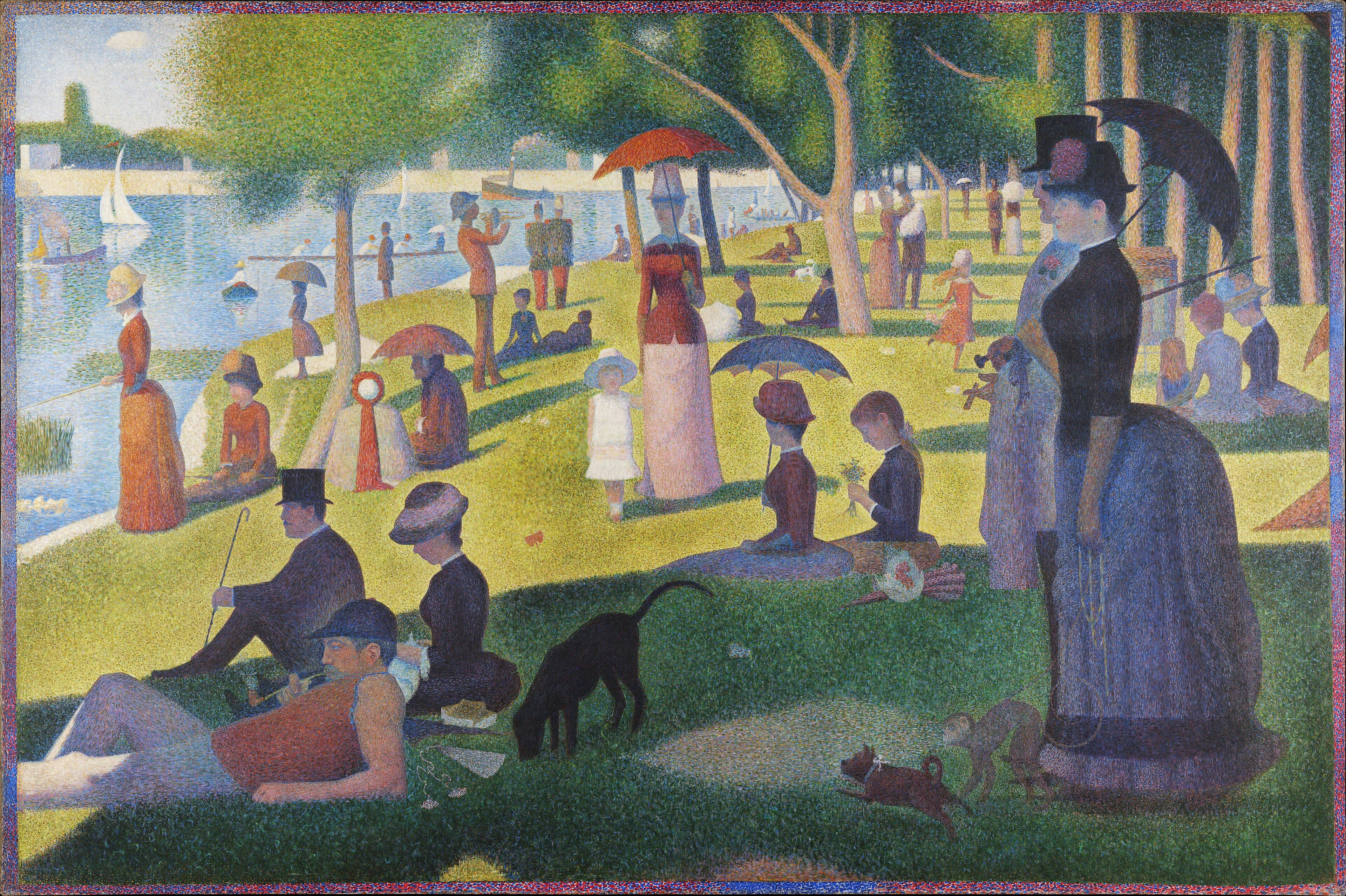
The manifesto picture was A Sunday on La Grande Jatte — Seurat's two-by-three-metre canvas of Parisians at leisure on an island in the Seine, built from millions of dots over two years. Camille Pissarro, a convert to the method, pushed Seurat and Paul Signac into the eighth and final Impressionist exhibition in May 1886, where the painting hung in its own room and split the critics.

The old Impressionists saw a mechanical heresy; younger painters saw a system they could learn. Signac became the movement's organizer and propagandist, and for a decade the dot spread through the Paris independents' salons.

A short movement with a long afterlife

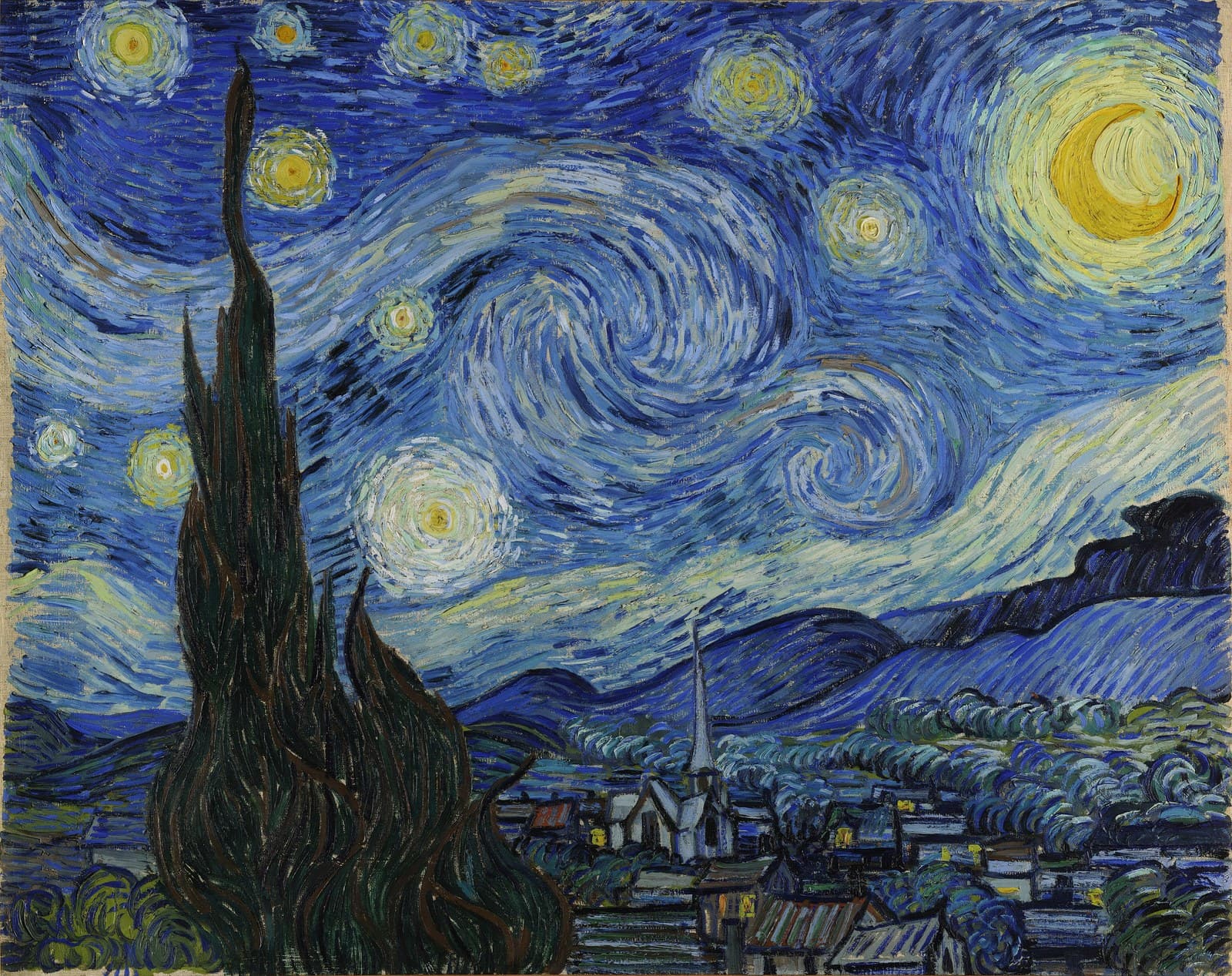
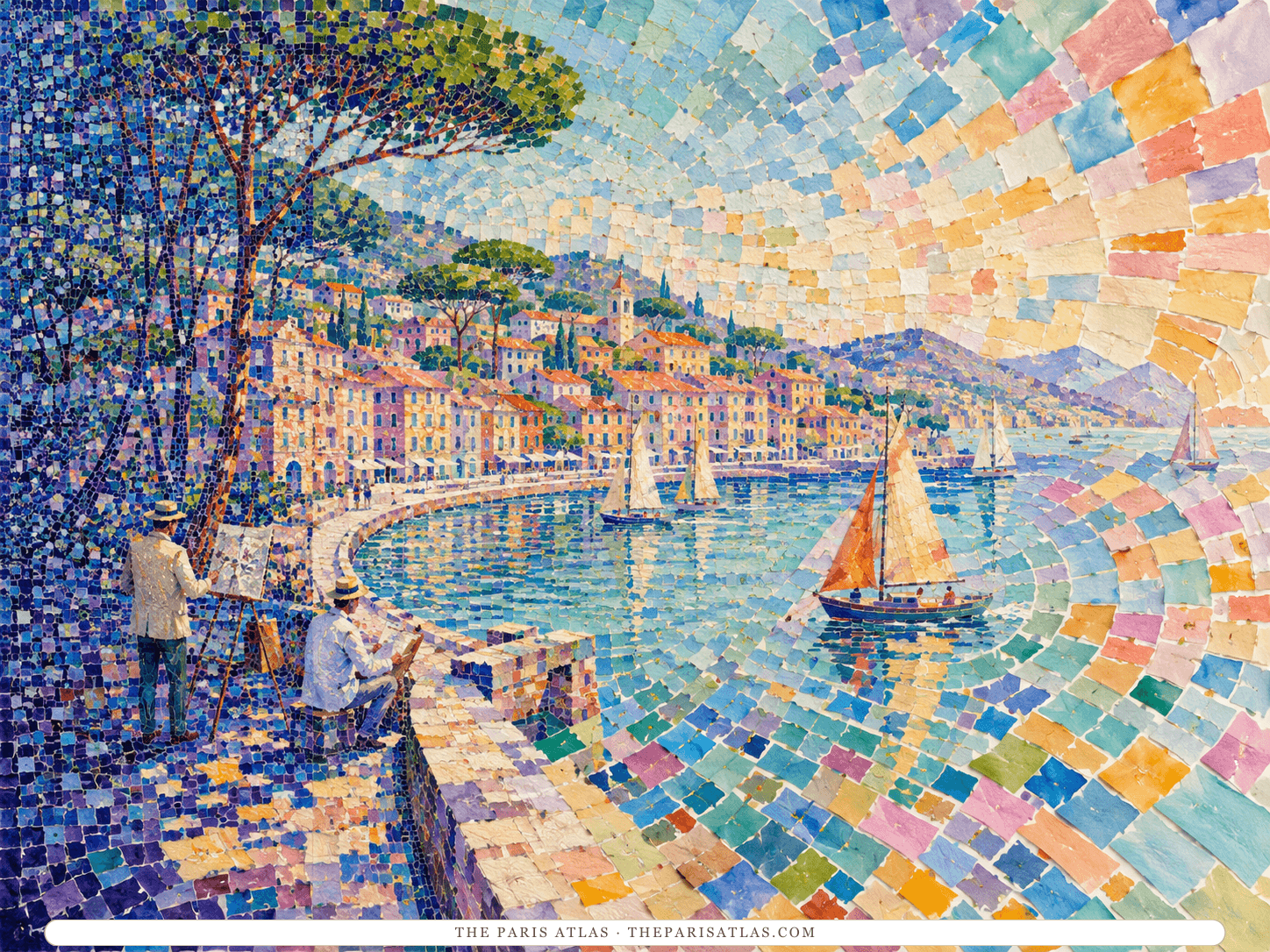
Seurat died suddenly in 1891, at thirty-one, and strict pointillism faded within a decade; even Signac loosened the dot into broader mosaic strokes. But the idea that colour could be built from separated units of pure pigment ran forward: Henri Matisse painted a pointillist summer beside Signac at Saint-Tropez in 1904, Vincent van Gogh had already absorbed the broken stroke in his Paris years, and the Fauves' liberated colour of 1905 starts from the dot.

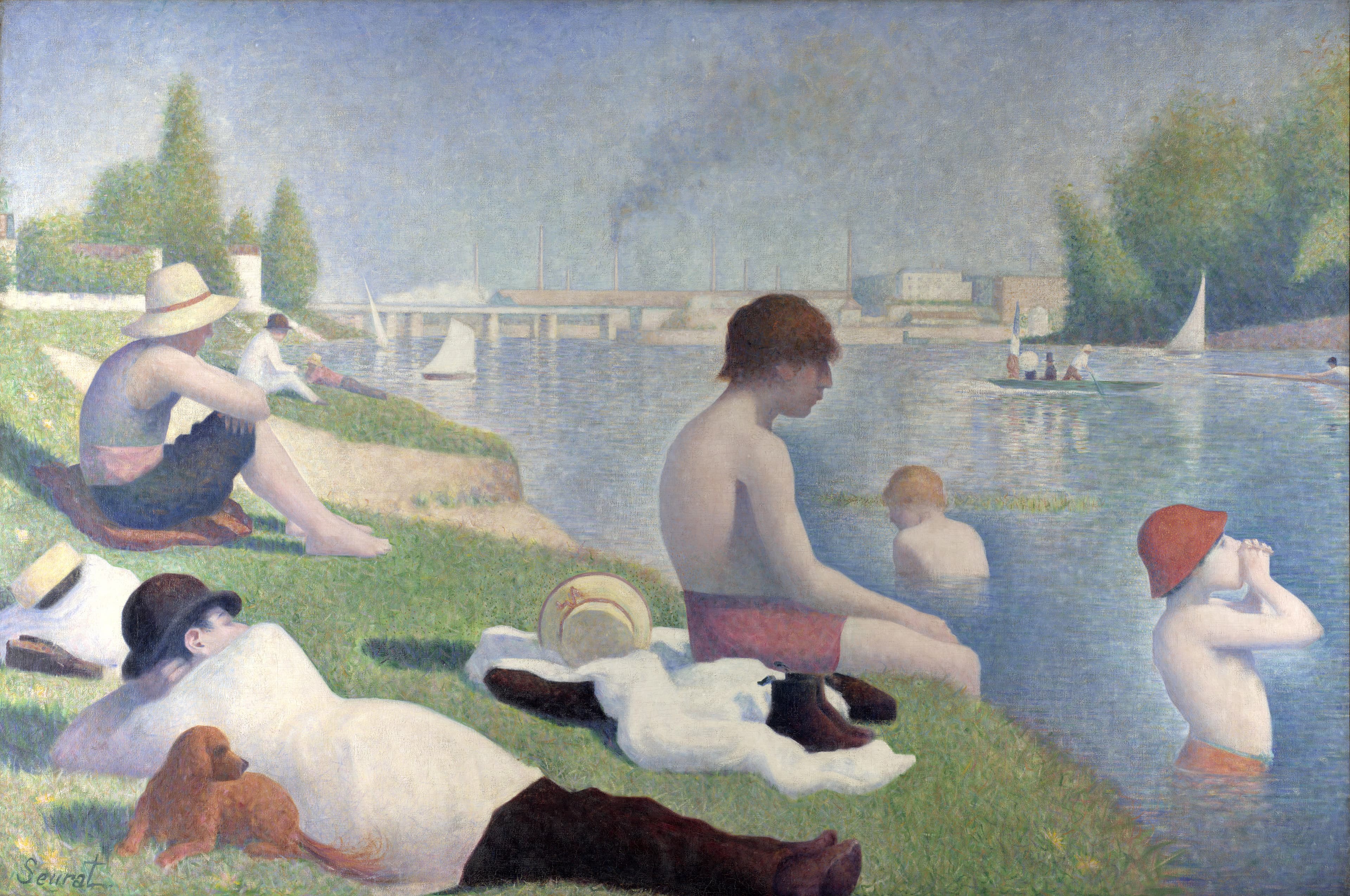
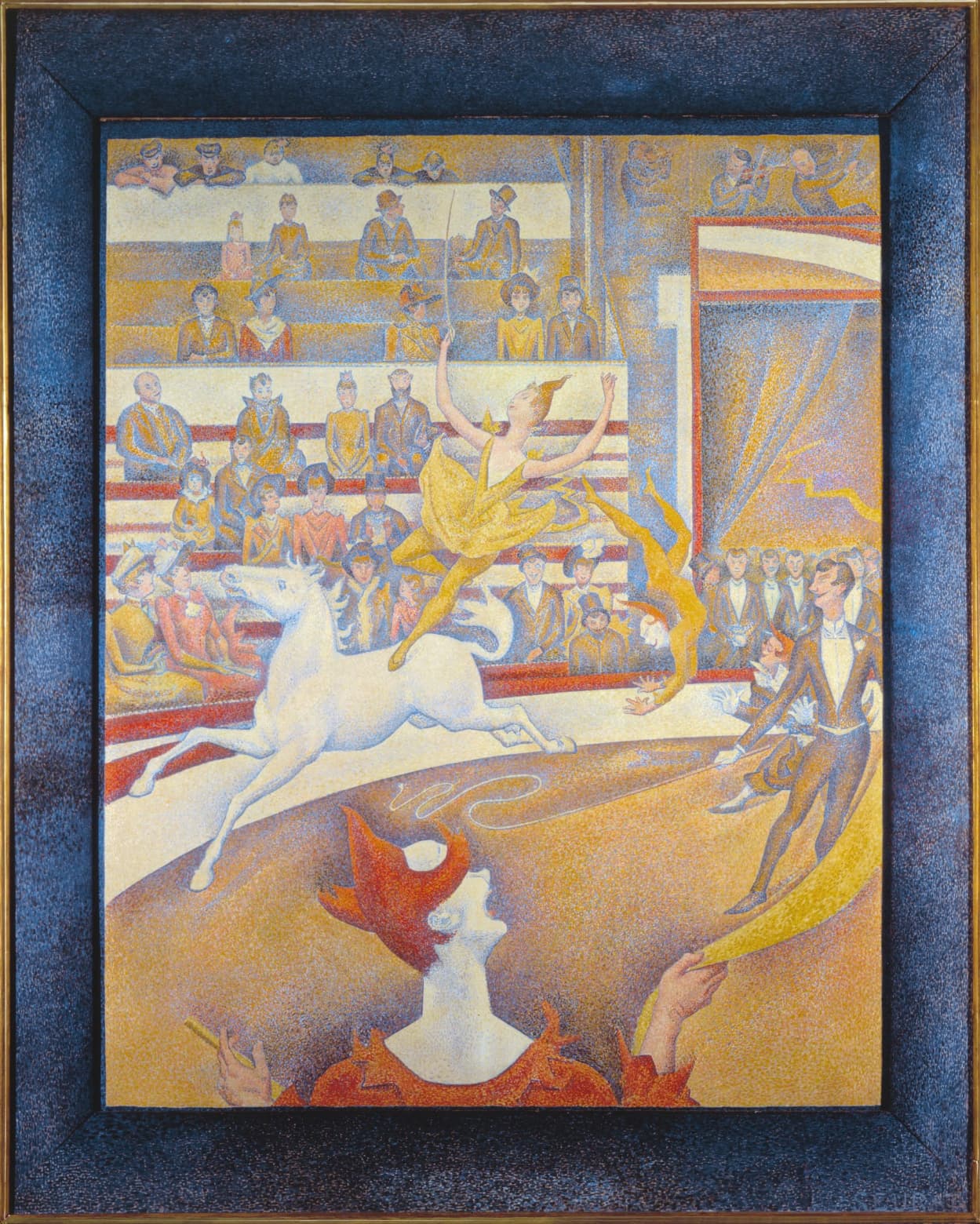
The famous canvases live mostly outside France: La Grande Jatte at the Art Institute of Chicago, Bathers at Asnières at the National Gallery in London. The Musée d'Orsay in Paris holds Seurat's The Circus and a strong Signac group.

Follow it through the atlas

Timeline

  1. 1884

    Georges Seurat shows Bathers at Asnières and begins A Sunday on La Grande Jatte, working out the divided-colour method.

  2. 1886

    La Grande Jatte hangs at the eighth and final Impressionist exhibition in May; the critic Félix Fénéon names the movement Neo-Impressionism.

  3. 1891

    Seurat dies suddenly at thirty-one; Paul Signac becomes the movement's organizer and voice.

  4. 1904

    Henri Matisse paints a pointillist summer beside Signac at Saint-Tropez, a step on the road to Fauvism.

Pointillism: frequently asked questions

What is pointillism?

A painting technique in which small, separate dots of pure colour sit side by side, so the blending happens in the viewer's eye rather than on the palette. Georges Seurat developed it in Paris in the mid-1880s as a systematic, science-based successor to Impressionism.

Who invented pointillism?

Georges Seurat, working in Paris from about 1884, with Paul Signac as his closest ally and the movement's great promoter after Seurat's early death in 1891. The critic Félix Fénéon named the broader movement Neo-Impressionism in 1886.

What is the most famous pointillist painting?

A Sunday on La Grande Jatte (1884–86), Seurat's mural-sized scene of Parisians on a Seine island, first shown at the final Impressionist exhibition in May 1886 and now at the Art Institute of Chicago.

What is the difference between pointillism and divisionism?

Divisionism is the principle — dividing colour into separate pure touches for the eye to mix. Pointillism is the most literal version of it, using dots. Seurat's circle preferred to speak of Divisionism or Neo-Impressionism; pointillism began as the critics' word and became everyone's.

Where can I see pointillist paintings in Paris?

The Musée d'Orsay holds Seurat's The Circus and paintings by Paul Signac and their circle. The two most famous Seurats are abroad: La Grande Jatte in Chicago and Bathers at Asnières in London.

References

References

The sources below include histories, manifestos, scholarly research, and primary materials that informed this page. They document Pointillism, its development, and the artists and works associated with it.

  1. 1A Sunday on La Grande Jatte — 1884

    Website
    Encyclopaedia Britannica
    Used for

    Web source consulted for documented facts and historical context presented on the Pointillism page.

    View source
  2. 2Georges Seurat — overview

    Website
    The Art Story
    Used for

    Web source consulted for documented facts and historical context presented on the Pointillism page.

    View source
  1. 3Georges Seurat (1859–1891) and Neo-Impressionism

    Website
    The Metropolitan Museum of Art
    Used for

    Web source consulted for documented facts and historical context presented on the Pointillism page.

    View source
  2. 4Georges Seurat — Encyclopaedia Britannica

    Website
    Encyclopaedia Britannica
    Used for

    Web source consulted for documented facts and historical context presented on the Pointillism page.

    View source
i
Why these sources are here

These references provide the documented foundation for this movement's history and interpretation. Claim-level citations remain attached to the specific claims they support.

Explore more resources