

Tropic of Cancer
Miller’s autobiographical freedom carried into another American generation.
Read our take
by Jack Kerouac
Jack Kerouac turns highways, jazz, friendship, poverty, and restless movement across America into the defining Beat novel.
Sal Paradise follows Dean Moriarty across America through cheap rooms, jazz clubs, friendships, women, drinking, exhilaration, boredom, and irresponsible decisions. The novel makes a disorderly autobiographical life feel immediate through the momentum of its voice.
A young writer repeatedly crosses the United States with his charismatic friend, pursuing experience, movement, and the ecstatic promise of whatever comes next.
Sal’s first departure exposes the distance between imagining a journey and making one. The continuous red line of Route 6 promises an America he can cross by following a single idea; at Bear Mountain, rain and absent traffic undo that confidence. His unsuitable shoes make the failure bodily rather than merely geographical. Strangers supply the practical advice his map cannot, and getting west requires returning to New York. The episode makes freedom dependent on money, other people and the willingness to abandon an attractive plan.
The hotel interrupts the apparent certainty that movement will reveal who Sal is. For a few seconds, the familiar self disappears while the room’s sounds and cracked ceiling remain sharply present. He explicitly distinguishes this estrangement from fear. His explanation places youth in the East and a possible future in the West, turning geography into a tentative account of personal change. Yet he offers that connection as a possibility, not a diagnosis: the remembered sensation exceeds the explanation he can give it.
The scene’s compositional history also complicates the impression of effortless spontaneity. Reviewing the New York Public Library’s Kerouac exhibition, Jordan Zinovich compares early drafts that begin with the Des Moines awakening: one emphasizes wonder, another fear. The scroll moves the incident further into the journey. Those revisions show a writer testing both emotional emphasis and narrative placement. Read with that history in mind, Sal’s moment of disorientation is not simply experience poured onto paper; its apparent immediacy is also an effect of literary decisions.
Kerouac shares Miller’s sense that friends, appetites, bad decisions, and restless movement can go straight onto the page.
Sal’s admiration for Dean is tested by the demands and disappointments of traveling together.
The restless first-person narration makes changes of pace and mood part of the experience of crossing the country.
1951
Kerouac types the scroll draft in April, drawing on his cross-country journeys.
1957
Viking publishes the revised novel in September.
2007
The original scroll text is published, allowing readers to compare the draft with the familiar novel.

Miller’s autobiographical freedom carried into another American generation.
Read our take
Another young writer building literature from hunger, pride, and self-invention.
Read our take
A fellow Beat landmark that tears much further away from ordinary narrative.
Read our takeSal Paradise narrates the novel. His friendship with Dean Moriarty and their travels provide its main thread.
It is an autobiographical novel, not a straightforward memoir. Kerouac transforms experiences and acquaintances into the fictional lives of Sal, Dean, and the people they meet.
The novel moves across America rather than staying in one city. Rooms, roads, jazz clubs, and temporary stopping places shape its unsettled life.
No. Exhilaration sits beside boredom, exhaustion, irresponsible choices, and damage to relationships. The costs of the travelers’ behavior remain part of the story.
Its voice gives travel and conversation a strong sense of momentum. The attraction lies as much in how Sal tells an episode as in where the travelers go.
Explore authors with a similar voice, perspective, and influence.
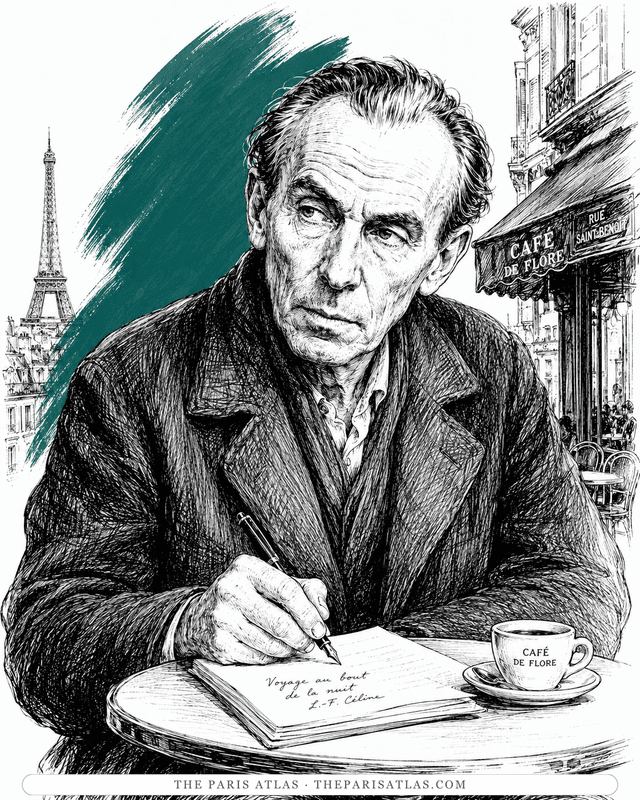
The doctor of the Paris slums who wrote the century's blackest, funniest novel — and changed the sound of French prose.
View author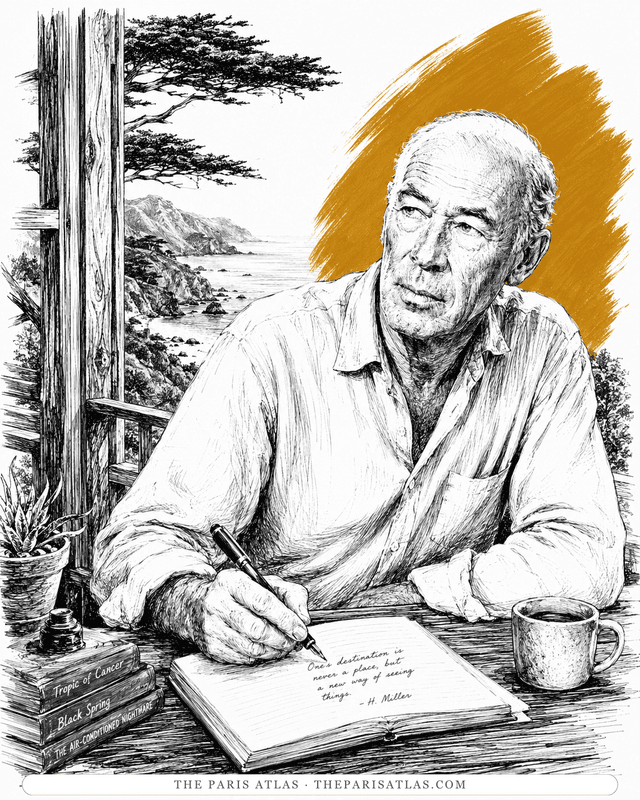
The Brooklyn dropout who arrived in Paris broke at thirty-eight and wrote the exuberant, banned books that ended American censorship.
View author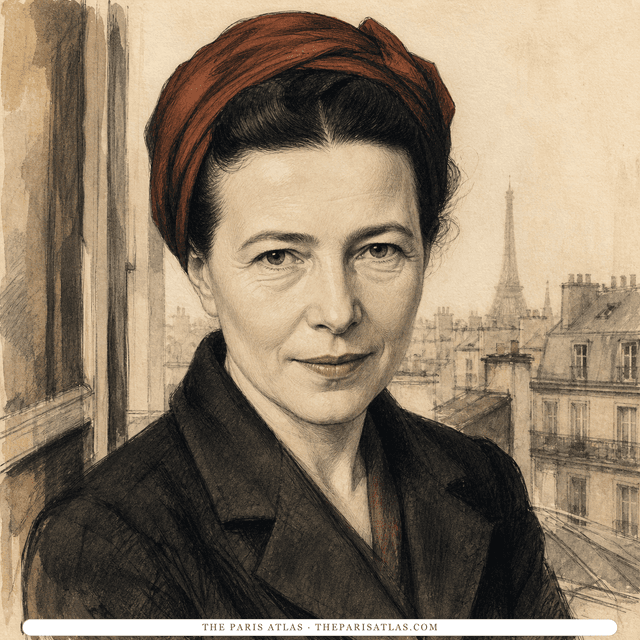
French writer and philosopher whose novels, memoirs, and social analysis examined freedom, gender, responsibility, aging, and the material conditions that shape a life.
View authorThe sources below include the primary text, editions, scholarship, archival materials, and other records that informed this page. They document On the Road, its publication, and its place in literary history.


Primary source for the novel and its publication record.

Publisher record for a Penguin edition and its bibliographic details.
Library of Congress context for the first edition and the novel’s cultural influence.
Museum-library catalog record for the first English edition.
Web source consulted for documented facts and historical context presented on the On the Road page.
Web source consulted for documented facts and historical context presented on the On the Road page.
Primary text included as part of the documented record for On the Road.
Contemporary reporting or criticism used to document the historical reception and context of On the Road.
The primary text is the baseline reference for every book page. Additional references document publication history, interpretation, and historical context where that evidence is available.
 Explore more resources