
On the Road
The book that made Kerouac famous, and the fame that Big Sur is trying to escape.
Read our takeBig Sur
Jack Kerouac
by Jack Kerouac
Three years after On the Road made him famous, Jack Kerouac hides in a friend's cabin on the California coast to dry out, and his mind comes apart there.
Big Sur is Jack Kerouac's novel about 1960, the year fame and drink wore him down.[1][2] His stand-in, Jack Duluoz, goes back and forth between wild binges in San Francisco and a lonely cabin on the coast, where he hopes to clear his head.[3] The real cabin belonged to the poet Lawrence Ferlinghetti and stood in Bixby Canyon.[2] Kerouac wrote the book in ten days. Farrar, Straus and Cudahy published it in New York in 1962.[1][4]
The novel opens with a hangover. Church bells are playing a sad tune in the skid row of San Francisco, and Jack Duluoz wakes up groaning after another night of drinking.[5] He was supposed to slip into town quietly. Instead he got drunk, went out to North Beach and saw everybody.[5]
The plan had been simple. His friend Lorenzo Monsanto, a famous writer, would drive him in secret to a cabin in the Big Sur woods. There he would spend six weeks alone, chopping wood, drawing water, writing, sleeping and hiking.[5][6] The whole book is about how far the plan goes wrong.
Duluoz calls himself the King of the Beatniks.[7] He is famous now, and the cabin is where he hides from that public self. He finds that the solitude does not work.[7] Only nature seems to steady him.[3]
Jack Duluoz wakes up hungover in San Francisco. He had meant to arrive in secret and go straight to his friend Lorenzo Monsanto's cabin in the Big Sur woods, but he has already gone out drinking in North Beach.[5]
At the cabin he looks for peace in nature, away from his fame as King of the Beatniks.[7][3] The solitude does not hold. He drifts back to San Francisco, returns to the cabin with friends, and goes back to the city again.[7]
Old friends come and go, among them Cody Pomeray, the novel's version of Neal Cassady.[8] Each trip between the city and the coast is wilder than the last.[7]
On a last, frantic trip to Big Sur, Duluoz cracks up. He is with his girlfriend and another couple, and her attempts to talk him round with Beat slogans only make it worse.
He comes through it. At the very end the hero recovers, though Wiegand wished the novel had carried him further. The book closes with Sea, the long poem about the sound of the waves at Big Sur.
In 1960 Kerouac took a train west to California. He was headed for the poet Lawrence Ferlinghetti's isolated cabin in Bixby Canyon, on the Big Sur coast, and he stayed about six weeks. He had been struggling with fame and with alcohol since On the Road came out in 1957, and he wanted a place to dry out.
He found the place magical at first. NPR's 2009 report quotes his descriptions of a single flower nodding on a cliff, a knot in a redwood like the face of Zeus, and zigzag bugs in the creek pools. But he felt cut off in the cabin. His biographer Joyce Johnson, who had once been his girlfriend, told NPR that he was always safest when he was in transit.
In the novel the cabin belongs to Lorenzo Monsanto. The Library of America lists Ferlinghetti among the thinly disguised poets in the book, with Lew Welch, Philip Whalen and Michael McClure. Neal Cassady is there too, as Cody Pomeray.
William Wiegand reviewed Big Sur for The New York Times in September 1962. He traced its shape as a series of trips, each more frantic than the one before. Duluoz goes to the cabin, drifts back to San Francisco, and returns to the cabin with friends. Then he goes back to the city again. Last comes a final, desperate trip to Big Sur.
On that last stay Duluoz breaks down. He is with his girlfriend and another couple. The Library of America calls the breakdown nightmarish and says Kerouac describes it without flinching. Wiegand thought the best scenes were the ones where the girlfriend tries to bring Duluoz round with secondhand Beat talk, which only pushes him closer to the edge.
Wiegand saw the book as a turn in Kerouac's work. On the Road and The Dharma Bums had argued for a way of living. In Big Sur the hero cracks up while doing the things he likes best, among his closest friends. Wiegand called it Kerouac's grittiest novel so far. Penguin quotes that line in its description of the book today.
Big Sur is a California book, but France is already on Kerouac's mind. His family believed it came down from a noble Breton ancestor. Penguin's 2020 article on that family story points out that Duluoz is itself a Breton name. At one point in Big Sur, Duluoz shouts at the Pacific that he is a Breton.
The book ends with a long poem called Sea, printed as an appendix. Its full title is Sea: Sounds of the Pacific Ocean at Big Sur. The poem tries to write down the noise of the waves on the rocks. Penguin notes that the poem is full of Breton sounds, such as "Ker plotsch" and "Kerarc'h".
Three years after Big Sur came out, Kerouac went to Paris and Brittany to look for that ancestor. The trip became his novel Satori in Paris. Gallimard published Jean Autret's French translation of Big Sur in Paris in 1966, the year after that trip.
In 2009 the director Curt Worden made a documentary, One Fast Move or I'm Gone: Kerouac's Big Sur. Tom Waits, John Ventimiglia and Patti Smith are among the artists who read Kerouac's words in it.
In 2011 the Guardian reported that Michael Polish was filming the novel. The French-American actor Jean-Marc Barr played Jack Duluoz, and Josh Lucas played Cody Pomeray. Kate Bosworth, Radha Mitchell and Anthony Edwards were also in the cast.
The church is blowing a sad windblown "Kathleen" on the bells in the skid row slums as I wake up all woebegone and goopy, groaning from another drinking bout
Fish in the sea / Speak in Breton / My name is Lebris / De Keroack.
The same voice, three years into fame, turned on itself. William Wiegand called it Kerouac's grittiest novel in 1962.
Kerouac writes closely about the canyon, the redwoods and the creek pools. Nature is the one thing that steadies Duluoz.
The Library of America calls it a frank self-portrait of a man whose mind comes undone in the middle of great natural beauty.
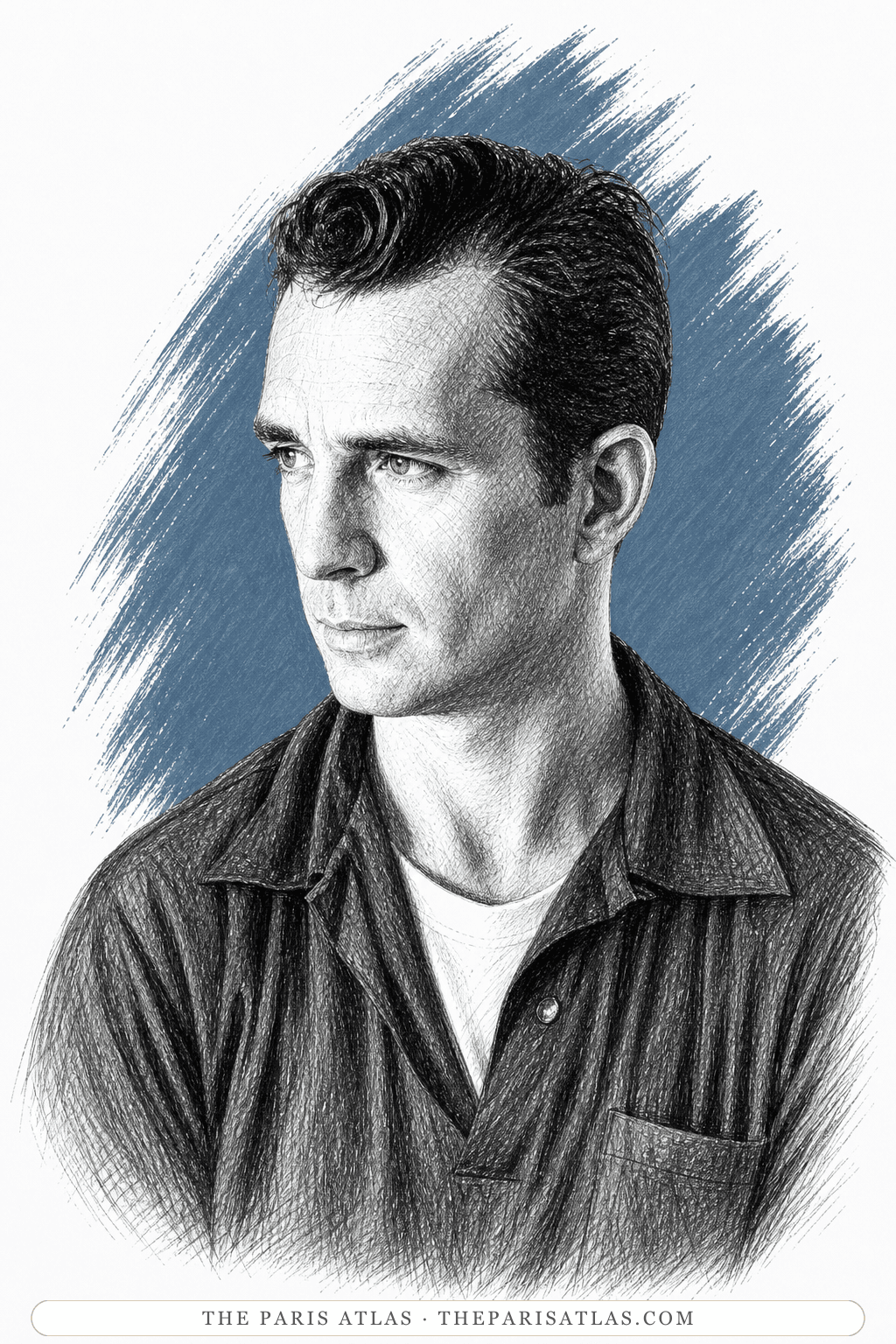
The narrator, a famous writer who calls himself the King of the Beatniks and hides in a cabin on the coast to escape his fame and his drinking. Kerouac's stand-in.

Duluoz's old friend. The novel's version of Neal Cassady, under the name Kerouac also gave him in Visions of Cody.
A famous writer friend who lends Duluoz his cabin in the Big Sur woods. In real life the cabin belonged to the poet Lawrence Ferlinghetti.
1957
On the Road makes Kerouac famous. His struggle with fame and alcohol follows.
1960
Kerouac takes the train to California and stays about six weeks at Lawrence Ferlinghetti's cabin in Bixby Canyon, Big Sur.
1962
Farrar, Straus and Cudahy publishes Big Sur in New York, after Kerouac writes it in ten days. William Wiegand reviews it in The New York Times on 16 September.
1965
Kerouac goes to Paris and Brittany to look for the Breton ancestor he boasts of in Big Sur.
1966
Gallimard publishes Jean Autret's French translation in Paris.
2009
Curt Worden's documentary One Fast Move or I'm Gone: Kerouac's Big Sur is released.
2011
Michael Polish begins filming Big Sur, with Jean-Marc Barr as Jack Duluoz.


The book that made Kerouac famous, and the fame that Big Sur is trying to escape.
Read our takeThe Dharma Bums
Jack Kerouac
Ray Smith found peace alone on a mountain in 1956. Jack Duluoz tries the same thing on the coast in 1960, and it fails.
Read our takeSatori in Paris
Jack Kerouac
The Breton ancestry that Duluoz shouts about at the Pacific becomes the whole subject of Kerouac's trip to Paris and Brittany in 1965.
Read our take
Henry Miller's 1957 book about living on the same coast from 1944, as a place of peace rather than collapse.
Read our takeA famous writer, Jack Duluoz, trying to escape fame and drink in a friend's cabin on the California coast. He moves back and forth between the cabin and binges in San Francisco. On his last stay at the cabin he has a breakdown.
Yes, under changed names. Kerouac stayed about six weeks in Lawrence Ferlinghetti's cabin in Bixby Canyon in 1960. The Library of America calls the book a frank self-portrait, with thinly disguised poets including Ferlinghetti, Lew Welch, Philip Whalen and Michael McClure.
Neal Cassady, under the name Kerouac also used for him in Visions of Cody. The Guardian called Cody a substitute for Cassady when the film was cast in 2011.
In Bixby Canyon, on the Big Sur coast of California. The cabin belonged to the poet Lawrence Ferlinghetti. In the novel it is Lorenzo Monsanto's cabin.
Ten days, according to the Library of America. The book came out in New York in 1962, from Farrar, Straus and Cudahy.
Yes. Michael Polish adapted the novel. The Guardian reported in April 2011 that filming was under way, with Jean-Marc Barr as Jack Duluoz and Josh Lucas as Cody Pomeray. Curt Worden also directed a 2009 documentary, One Fast Move or I'm Gone: Kerouac's Big Sur.
Sea: Sounds of the Pacific Ocean at Big Sur, printed as an appendix. Kerouac tries to write down the sound of the waves, and some of the sounds come out as Breton-looking words.
Explore authors with a similar voice, perspective, and influence.
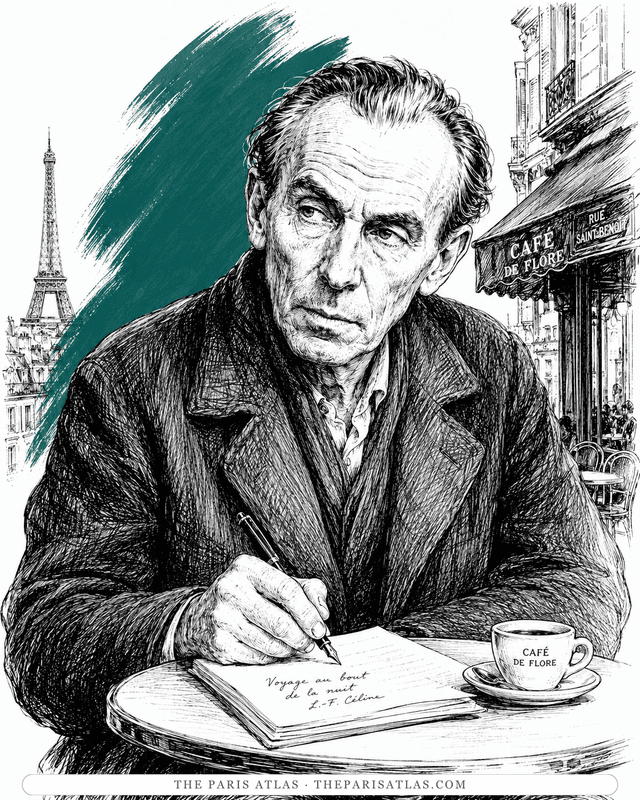
The doctor of the Paris slums who wrote the century's blackest, funniest novel — and changed the sound of French prose.
View author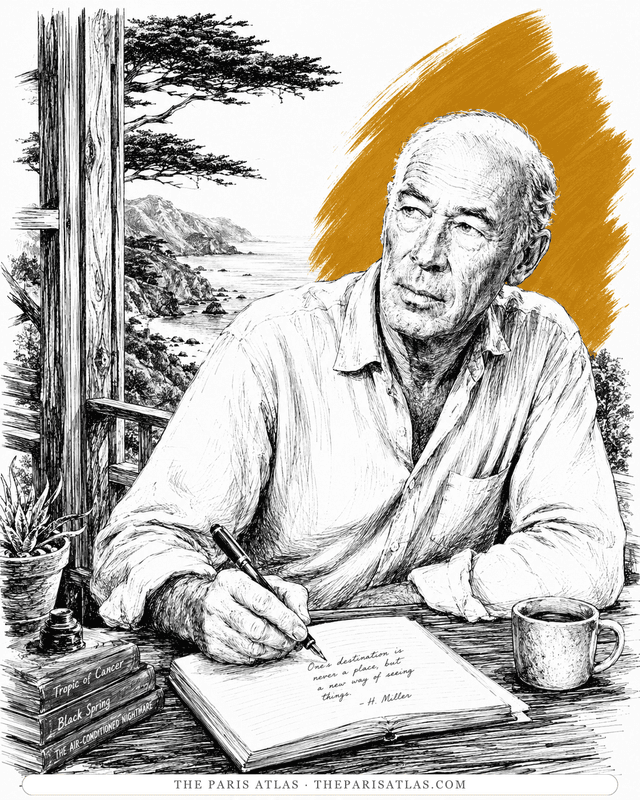
The Brooklyn dropout who arrived in Paris broke at thirty-eight and wrote the exuberant, banned books that ended American censorship.
View author
French writer and philosopher whose novels, memoirs, and social analysis examined freedom, gender, responsibility, aging, and the material conditions that shape a life.
View authorThe sources below include the primary text, editions, scholarship, archival materials, and other records that informed this page. They document Big Sur, its publication, and its place in literary history.


Library of Congress record for the Farrar, Straus and Cudahy first edition: New York, 1962, 241 pages.
Scan of the Penguin 1992 edition, searched inside to confirm the name Lorenzo Monsanto and the title of the appendix poem.
The Guardian on Michael Polish's film and its cast, and on Cody Pomeray as Neal Cassady.

Publisher's description and the Penguin 1992 paperback, ISBN 9780140168129.
Penguin's article on Kerouac's Breton ancestry, which quotes the Sea poem and Duluoz's cry that he is a Breton.
Bibliothèque nationale de France record for the first French edition, Paris, 1966.
The primary text represented by this page, used for descriptions of the work’s contents and for any quoted passages shown here.
The primary text is the baseline reference for every book page. Additional references document publication history, interpretation, and historical context where that evidence is available.
 Explore more resources