The Red Buoy
by Paul Signac
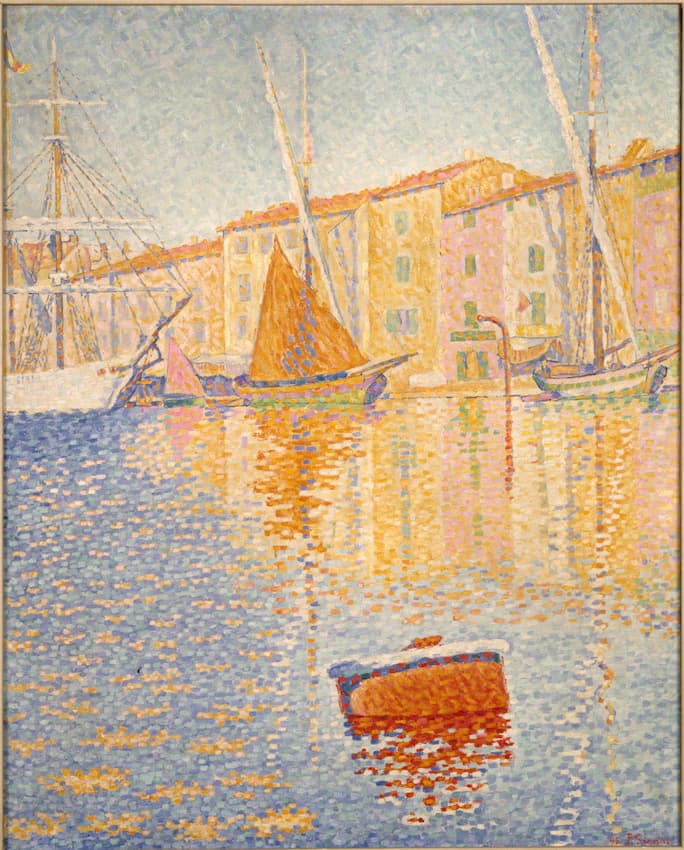
Paul Signac's 1895 view of the fishing port at Saint-Tropez, organized around a red-orange buoy against pale blue water. It belongs to the Musée d'Orsay but is not currently on display.
- 1895
- Oil on canvas
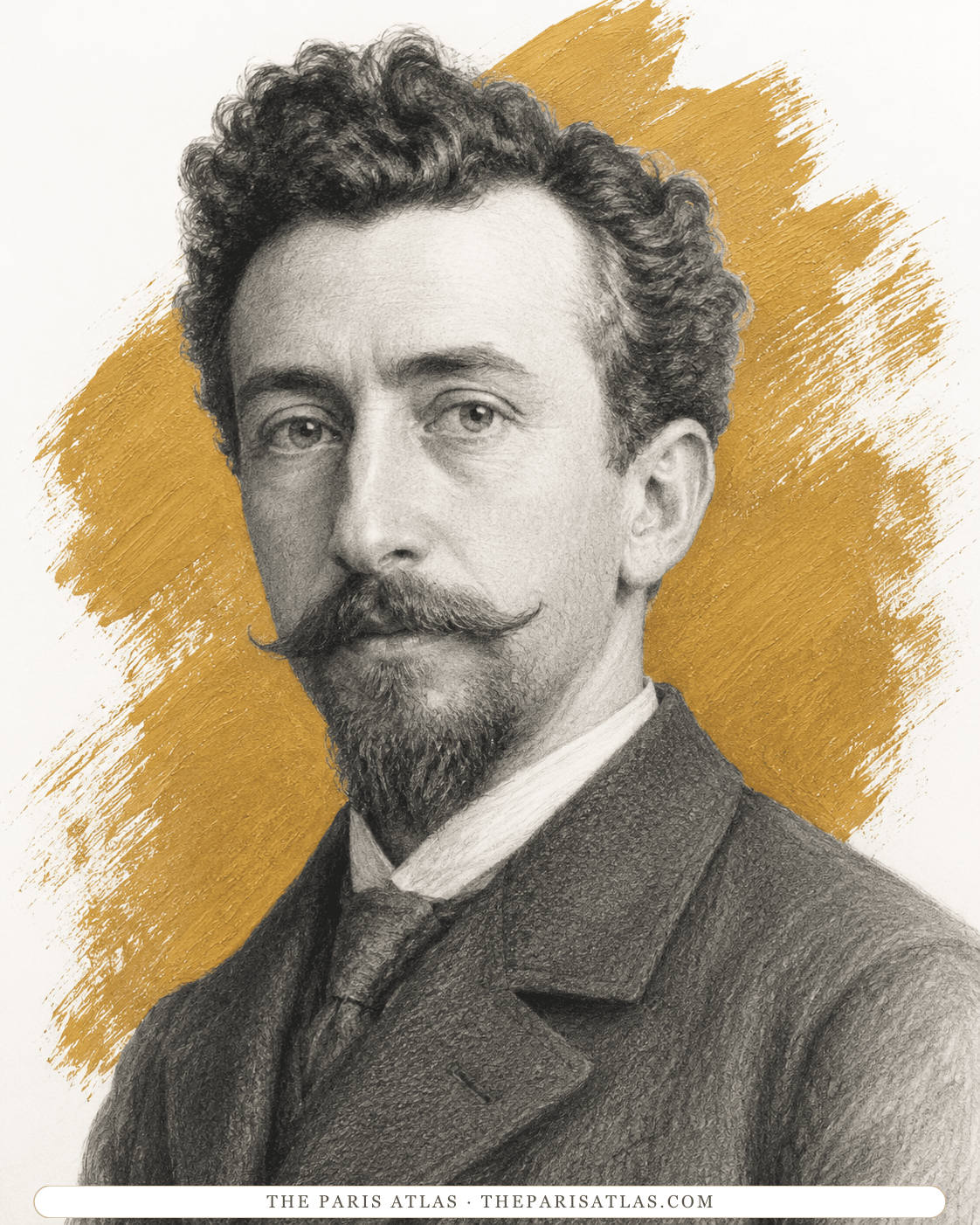
About Paul Signac
What the painting shows
Pale blue water fills most of the canvas. A red-orange buoy floats close to the viewer, while moored sailboats, narrow masts and a line of warm-colored buildings mark the harbor beyond. Reflections carry oranges and pinks from the waterfront down into the blue.
The composition makes one small object control a much larger view. The buoy is darker than the surrounding water and sits in complementary opposition to it, so the eye finds that red-orange shape first and then travels outward through the boats, reflections and quay.
Saint-Tropez before the resort
Signac discovered Saint-Tropez in 1892 while sailing his yacht Olympia. The town was still a small fishing port, not yet the international resort it later became. Harbor life gave a painter who was also an experienced sailor an endlessly changing structure of hulls, masts, buildings, water and reflected light.
Artists soon followed. Henri-Edmond Cross was already living nearby, and Matisse, Derain and Marquet would later work in the region. The Red Buoy records the harbor at the beginning of that transformation, when it was becoming an artistic center but had not yet become a fashionable destination.
How the red buoy organizes the color
The buoy is not simply a realistic detail included because it happened to be there. Red-orange and pale blue are complementary colors, and their opposition gives the small form an unusual visual force. Its dark value strengthens the contrast further.
The surrounding reflections repeat the same warm-and-cool exchange on a larger scale. Orange house fronts enter the blue water as broken vertical bands, reducing the apparent expanse of the harbor and tying the distant shore to the foreground. Color is doing the work that conventional outlines might otherwise do.
A harbor rebuilt in the studio
Neo-Impressionism was more deliberate than a quick first impression. Signac made studies from nature and developed the oil painting in the studio, where he could adjust the proportion and placement of each color across the whole canvas.
The surface remains Divisionist because distinct strokes of color interact instead of being blended into continuous modeling. Yet the marks have grown larger and freer than the strict, tiny dots associated with the movement's first years. The Red Buoy belongs to the moment when Signac kept the system of divided color but loosened its handwriting.
Where the painting is now
The painting belonged to Dr Pierre Hébert until 1957, when he donated it to the French national museums with a reserved right of use. It was assigned to the Louvre in 1973, shown through the Jeu de Paume, and allocated to the Musée d'Orsay in 1977. Its accession number is RF 1957 12.
The Musée d'Orsay remains the holding institution, but its current object page says the work is not presently exhibited. That distinction matters for visitors: a museum can own a painting without having it on the wall on the day you arrive.
Close reading
Reading the work, detail by detail
Signac makes a small harbor marker govern an entire field of water, boats, buildings, and reflections. These six views move from the distant quay through the moored vessels and divided color on the water to the red-orange buoy that gives the painting its title and visual center.
1.The waterfront is built from warm vertical planes
The houses form a compact wall of cream, gold, and pink behind the boats. Green shutters and narrow seams break that wall into separate units, while the high roofline gives the harbor a steady boundary before its colors descend into the water.
2.Masts draw a second structure across the sky
Thin verticals, diagonals, and crossbars overlap without becoming a single solid shape. They identify the port as a working harbor and give the pale sky a linear rhythm that answers the upright edges of the buildings.
3.The orange sailboat connects quay and water
The triangular sail carries the waterfront's warm color into the middle of the harbor. Its hull, rigging, and angled mast also interrupt the painting's horizontal bands, giving the distant half of the composition a clear point of activity.
4.The narrow boat makes depth measurable
This boat sits farther back and turns almost parallel to the quay. Its smaller hull and overlap with the waterfront give the harbor depth without conventional modeling, while green and orange strokes keep it tied to the painting's color system.
5.Reflections become a field of separate color
Short horizontal touches never merge into a smooth mirror image. Warm strokes descend from the buildings through pale blue water, so the eye reads both individual marks and a wavering reflection. This is Divisionism working as structure, not decoration added afterward.
6.The buoy concentrates the whole composition
The buoy is small, but its dark red-orange body sits against a much larger area of pale blue, a strong complementary contrast. Red marks continue below it as a broken reflection, fixing the eye in the foreground before it travels back toward the port.
Timeline
1892
Signac reaches Saint-Tropez aboard his yacht Olympia and begins making the port a central subject.
1895
Paints The Red Buoy in oil, working in the studio from observations and studies made at the harbor.
1896
Shows the painting at the third exhibition of La Libre Esthétique in Brussels.
1897
Exhibits it at the thirteenth Salon de la Société des Artistes Indépendants in Paris.
1957
Dr Pierre Hébert donates the painting to the French national museums with a reserved right of use; it receives accession number RF 1957 12.
1973–1977
The painting is assigned to the Louvre in 1973, displayed at the Jeu de Paume, and allocated to the Musée d'Orsay in 1977.
2021–2022
Appears in the Musée d'Orsay exhibition Signac collectionneur.
Where to see it
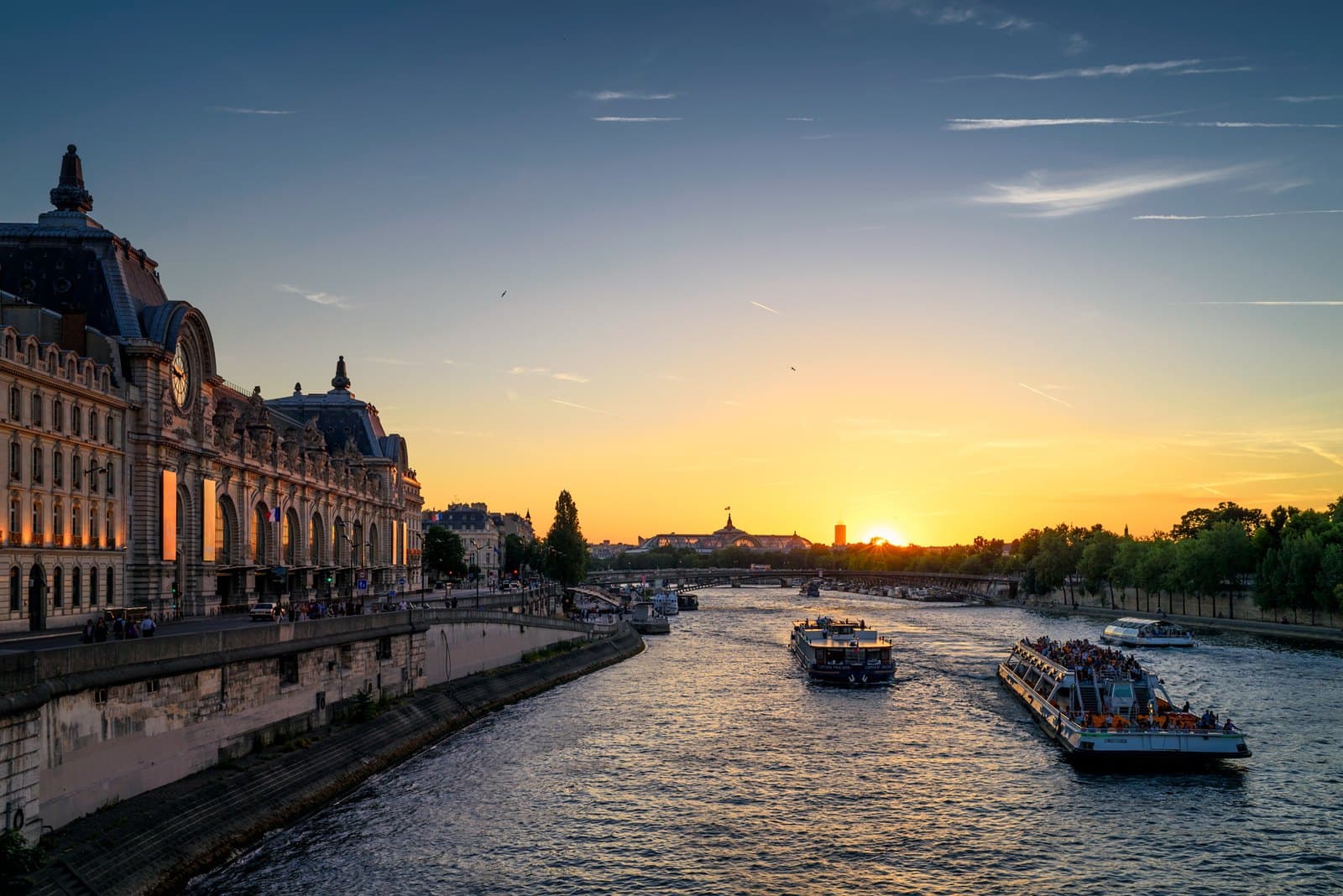
Musée d'Orsay, Paris
Esplanade Valéry Giscard d’Estaing, 75007 Paris, France
The museum currently lists this painting as not on display. Check the official object record before making a special visit.
Plan your visitFrequently asked questions
Who painted The Red Buoy?
Paul Signac painted The Red Buoy in 1895. He was a French Neo-Impressionist, co-founder of the movement with Georges Seurat, a theorist of divided color and an enthusiastic sailor who repeatedly painted ports.
What does The Red Buoy show?
It shows the harbor at Saint-Tropez, with a red-orange buoy floating in pale blue water before sailboats, masts and warm-colored buildings. Their reflections break the water into bands of blue, orange and pink.
Why is the buoy so noticeable?
It is both darker than the surrounding water and red-orange against pale blue, a complementary color contrast. Signac uses that small form as the painting's focal point and repeats warm colors in the reflections behind it.
Is The Red Buoy Pointillist?
It is a Divisionist or Neo-Impressionist painting, but its brushwork has moved away from strict tiny dots. Signac kept colors in distinct touches while making the marks larger and more flexible than those in the movement's earliest paintings.
Did Signac paint The Red Buoy outdoors?
Not as a finished oil painted directly in front of the harbor. The Musée d'Orsay explains that Signac made studies from nature and then constructed his Neo-Impressionist canvases in the studio, where he could organize the color relationships deliberately.
Where is The Red Buoy?
It belongs to the Musée d'Orsay in Paris, accession number RF 1957 12. The museum's current object record says it is not presently on display, so visitors should check before traveling specifically to see it.
How large is The Red Buoy?
The canvas measures 81.2 by 65 centimeters without its frame. The Musée d'Orsay records it as oil on canvas and dates it to 1895.
More by Paul Signac
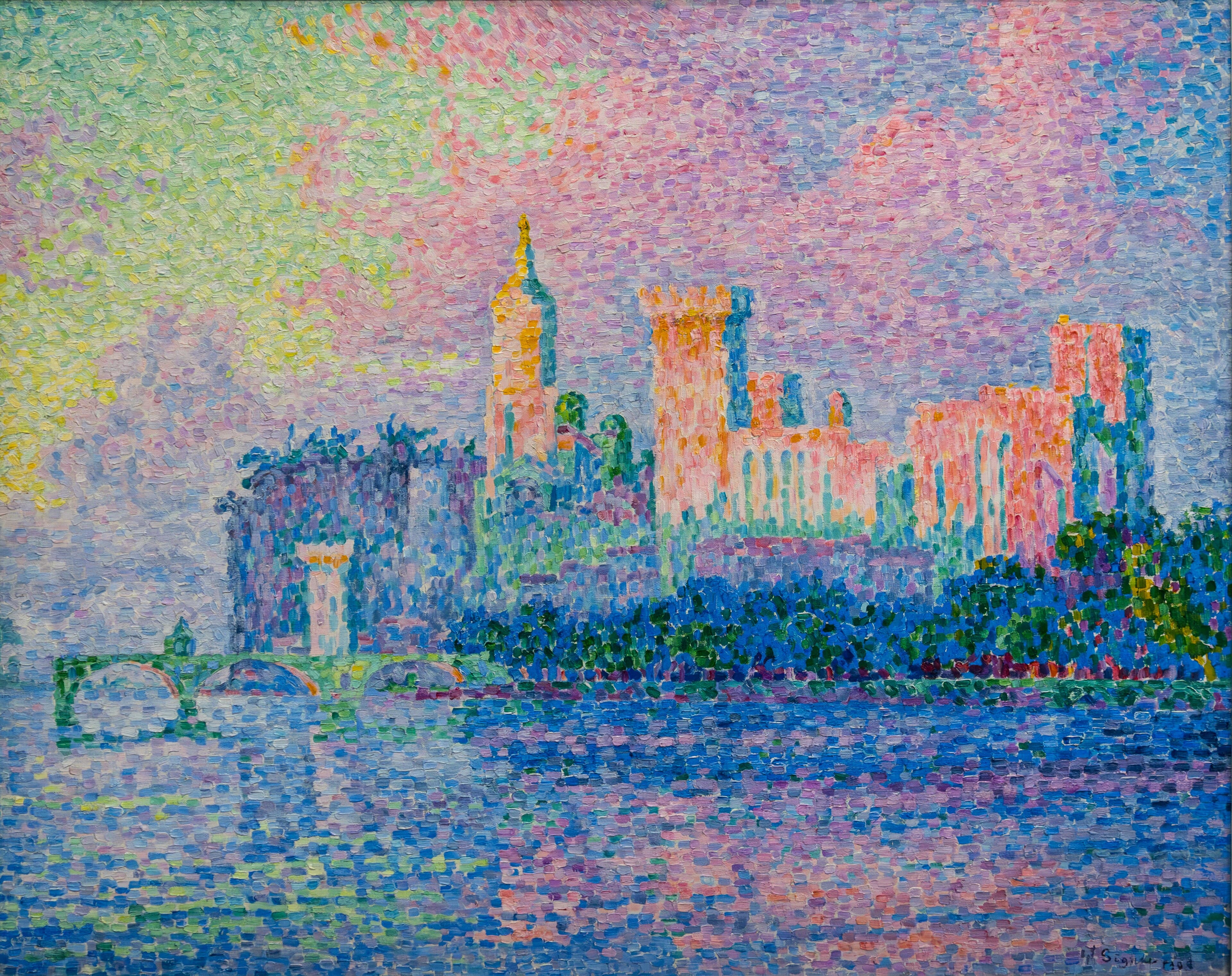
If you like Paul Signac
Explore painters from the same movements and circles.
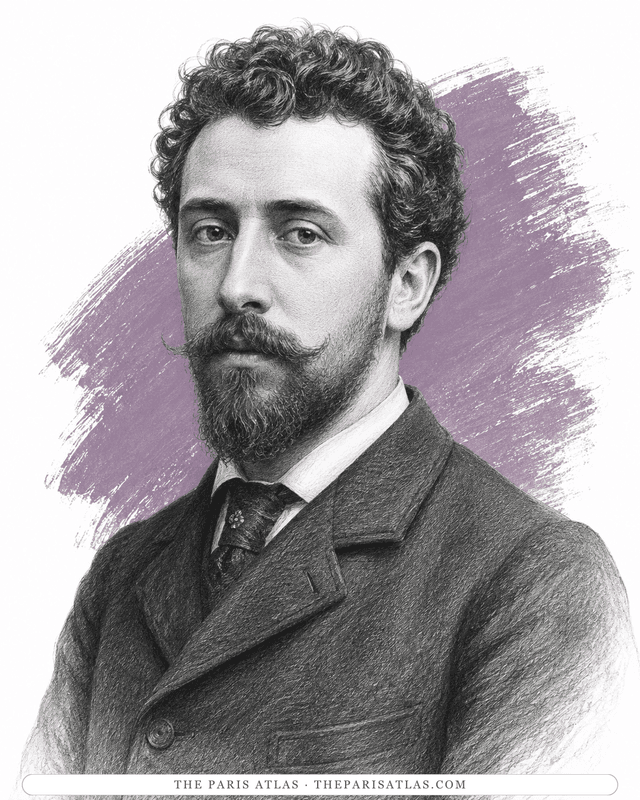
Georges Seurat
Parisian painter who built pictures from small dots of pure colour on optical principle, co-founded the Salon des Indépendants, and detonated the last Impressionist exhibition of 1886 with A Sunday on La Grande Jatte. He died at thirty-one.
View artist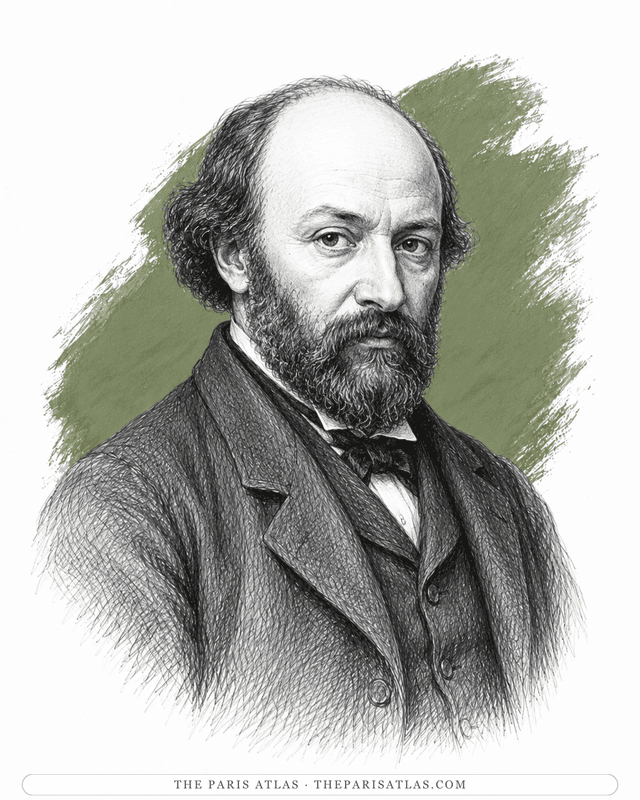
Paul Cézanne
Painter between Impressionism and everything after — shown in the independents' exhibitions, emulated by the Cubists, and present at the Orangerie through 15 works in the Walter-Guillaume collection.
View artist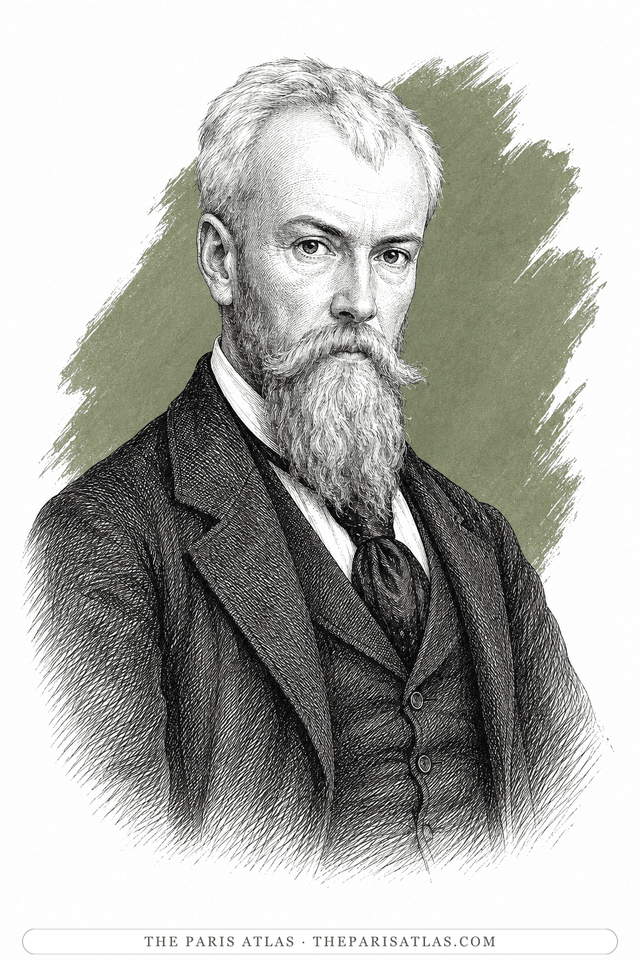
Henri-Edmond Cross
French Neo-Impressionist who carried divided colour to the Mediterranean, enlarged the dot into a bright mosaic-like stroke, and influenced the young Henri Matisse.
View artist
References
The sources below include collection records, catalogues, scholarly research, and primary materials that informed this page. They document The Red Buoy, its making, and its place in cultural history.


1Saint-Tropez. La Bouée rouge (Paul Signac)
WebsiteMusée d'OrsayUsed forWeb source consulted for documented facts and historical context presented on the The Red Buoy page.
2Paul Signac
WebsiteMusée d'OrsayUsed forWeb source consulted for documented facts and historical context presented on the The Red Buoy page.
3Paul Signac (1863–1935)
WebsiteMusée d'OrsayUsed forWeb source consulted for documented facts and historical context presented on the The Red Buoy page.
4Georges Seurat (1859–1891) and Neo-Impressionism
WebsiteThe Metropolitan Museum of ArtUsed forWeb source consulted for documented facts and historical context presented on the The Red Buoy page.
These references provide the documented foundation for this work's history and interpretation. Claim-level citations remain attached to the specific claims they support.
 Explore more resources