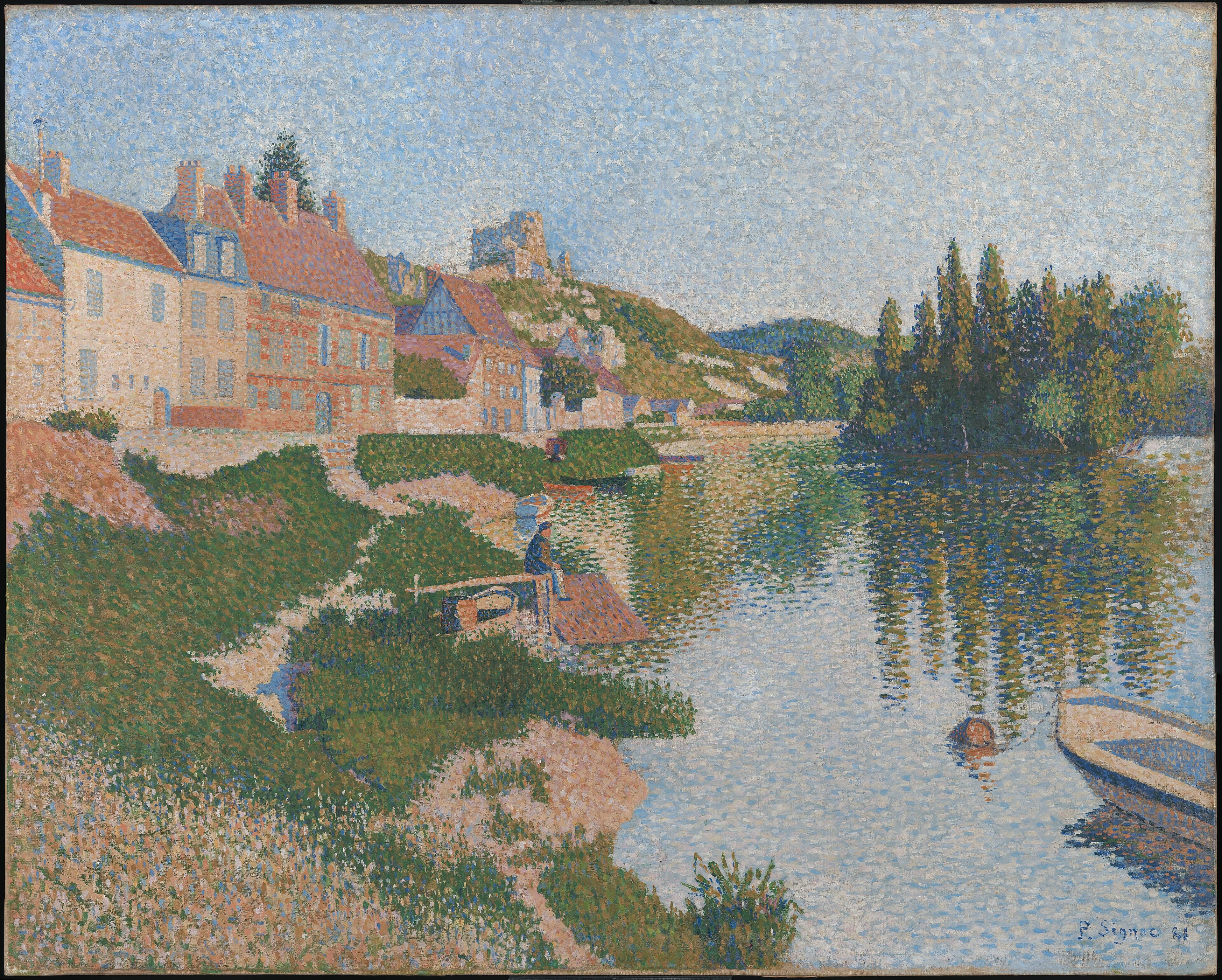
Les Andelys. The Riverbank
by Paul Signac
The Seine runs across the lower half of the canvas at Les Andelys in Normandy, with the village houses along the left bank and the ruined keep of Château Gaillard on the chalk hill behind. Paul Signac spent the summer of 1886 there and brought back ten canvases. He kept the painting in his own studio until he died, and the Musée d'Orsay acquired it in 1996.
- 1886
- Oil on canvas
- Musée d'OrsayParis, France
About Paul Signac
What the painting shows
A row of houses runs along the left bank: cream stucco walls, a red brick front, orange-red tiled roofs. The ground in front of them falls to the water in bands of green and pale pink. A man in a blue smock sits on a moored boat with a broad salmon-coloured roof, about a third of the way in from the left edge.
The Seine occupies the right half. Poplars on the far bank throw long reflections into it. A pale boat is drawn up at the lower right corner, and a round orange float rides on the water just left of it. On the hill above the village stands the broken keep of Château Gaillard, the castle Richard I built above the river in the 1190s.
The canvas is 65.3 by 81.5 centimetres. Signac signed and dated it at the lower right: P. Signac 86.
The summer that settled the method
1886 was the year the method arrived in public. Georges Seurat showed A Sunday on La Grande Jatte at the eighth and last Impressionist exhibition in May, with Signac and Camille Pissarro hanging alongside him in the same room. Félix Fénéon reviewed that room and gave the tendency its name.
Signac left for Les Andelys immediately afterwards and worked there through the summer. The pictures he brought back are the first in which he applies divided colour to a whole landscape without falling back on Impressionist habits. The Musée d'Orsay's canvas is one of them.
He showed it the following spring at the Salon de la Société des Artistes Indépendants, in the Pavillon de la Ville de Paris, as number 450. He had helped found that society three years earlier, in 1884, precisely so that painters could exhibit without a jury.
How the surface is made
The touches are not uniform dots. In the sky they are short flicks and commas of cornflower blue, cream, warm grey and pale ochre, laid loosely enough that the canvas weave shows through in almost every square centimetre. On the water they change shape: flattened horizontal ovals, strung into vertical columns where the poplars reflect.
The colour is built by juxtaposition rather than mixture. The brick house carries green touches inside its vermilion. The shadowed faces of the ruined keep are painted in cobalt blue, not in brown. The pale boat's shadow is a band of blue with orange dots set into it, and the same orange returns in the float beside it.
The near bank carries the largest and driest marks in the picture, teardrop strokes of green, apricot, blue and cream pointing downhill. Signac was twenty-two when he painted it, and the handwriting is still settling.
A painting he did not sell
The Musée d'Orsay's provenance shows the canvas going to Héloïse Signac, the painter's mother, as a gift from her son. It returned to him: by 1911 it was in his own collection, in his studio, and it appears in the inventory taken after his death in 1935 as number 28.
It then passed into a private collection and stayed there until 1996, when the French state accepted it as a dation in payment of inheritance duties and assigned it to the Musée d'Orsay. Its accession number is RF 1996 6.
Close reading
Reading the work, detail by detail
Paul Signac was twenty-two in the summer of 1886 and had just watched Georges Seurat's method go public. Eleven close views follow what his brush was actually doing that summer: a mark that changes shape from the sky to the water to the near bank, shadows painted in blue rather than brown, and a weave of bare canvas left showing through almost everywhere.
1.The sky is made of flicks, not dots
The touches here are short commas and flicks, some horizontal and some diagonal, in cornflower blue, cream, warm grey and pale ochre. They are laid loosely enough that the canvas weave shows through between them. Nothing in this passage is a circular dot.
2.The ruined keep, with its shadows painted blue
Richard I's keep is built from buff, ochre and cream touches. The shadowed faces are cobalt blue laid straight onto the stone, not grey or brown. Green dots mark the scrub on the hill and pale lilac the bare chalk, so the hill is warm and cool at once.
3.A cream wall built from four colours
The wall that reads as plain cream is cream, pale pink, buff and pale blue in very small closely packed touches, with occasional yellow. The windows are solid slabs of cerulean built from blue and pale green, given no drawn frame at all.
4.Green inside the brick
The brick front is not a red mass. Vermilion-orange touches alternate with pale green and blue-grey in a loose checkerboard, and the green sits inside the red rather than beside it. That opposition is doing the work an outline or a shadow would normally do.
5.A back built from blue with green in it
The seated figure's back is a dense mass of ultramarine and cobalt with green and orange strokes worked into its edges. His head is a small patch of orange-pink under a dark blue cap. He is the only person in the picture and Signac gives him no features.
6.The salmon roof and its diagonal ranks
The wide sloped roof beside the figure is salmon and terracotta laid in diagonal ranks, with lilac, violet and cobalt strokes running through it. It is the largest single colour area in the left half, and the blue inside it keeps it from reading as flat.
7.Pink in the poplars
The trees are small ovals of ochre-gold, mid-green and ultramarine, with rose-pink touches scattered through the foliage and near-black accents at the crowns. The blue is the shadow. The pink is the complement of the green and appears nowhere the eye would expect it.
8.Horizontal ovals stacked into vertical columns
The touches change shape in the water: flattened horizontal ovals, distinctly wider than tall. Signac then stacks them into vertical columns, so the mark says water surface and the arrangement says reflection. Ultramarine, olive-gold and dark green dominate, with pale pink and white-grey between.
9.Orange dropped into the boat's blue shadow
The drawn-up boat has a cream and buff hull with a strong cobalt band of shadow along its side. Orange touches are set directly into that blue, and the same pairing repeats in the reflection below the hull. Nothing here is mixed on the palette.
10.A small round float and its trail
A round terracotta-orange float rides the water with a dark blue shadow beneath it. Below the float a short trail of orange and blue touches runs down as its reflection. It is a small object and the warmest note in the right half of the canvas.
11.The largest and driest marks in the picture
The foreground carries teardrop strokes pointing downhill, in green, apricot, cobalt, cream and pale lilac. They are the biggest touches on the canvas and the thinnest paint, so the weave reads strongly through them. From across a room the passage reads as sandy ground.
Timeline
1884
Helps found the Société des Artistes Indépendants, which exhibits without a jury.
May 1886
Shows alongside Georges Seurat and Camille Pissarro at the eighth Impressionist exhibition, where Félix Fénéon names the tendency Neo-Impressionism.
Summer 1886
Works at Les Andelys on the Seine and paints this canvas, signing it P. Signac 86.
1887
Exhibits it at the Salon de la Société des Artistes Indépendants, Pavillon de la Ville de Paris, as number 450.
by 1911
The painting is back in Signac's own collection in his studio, having been given to his mother, Héloïse Signac.
1935
Listed as number 28 in the inventory taken after the painter's death.
1996
Accepted by the French state as a dation in payment of inheritance duties and assigned to the Musée d'Orsay as RF 1996 6.
2004
Shown at the Art Institute of Chicago in Seurat and the Making of "La Grande Jatte" as number 119.
Where to see it
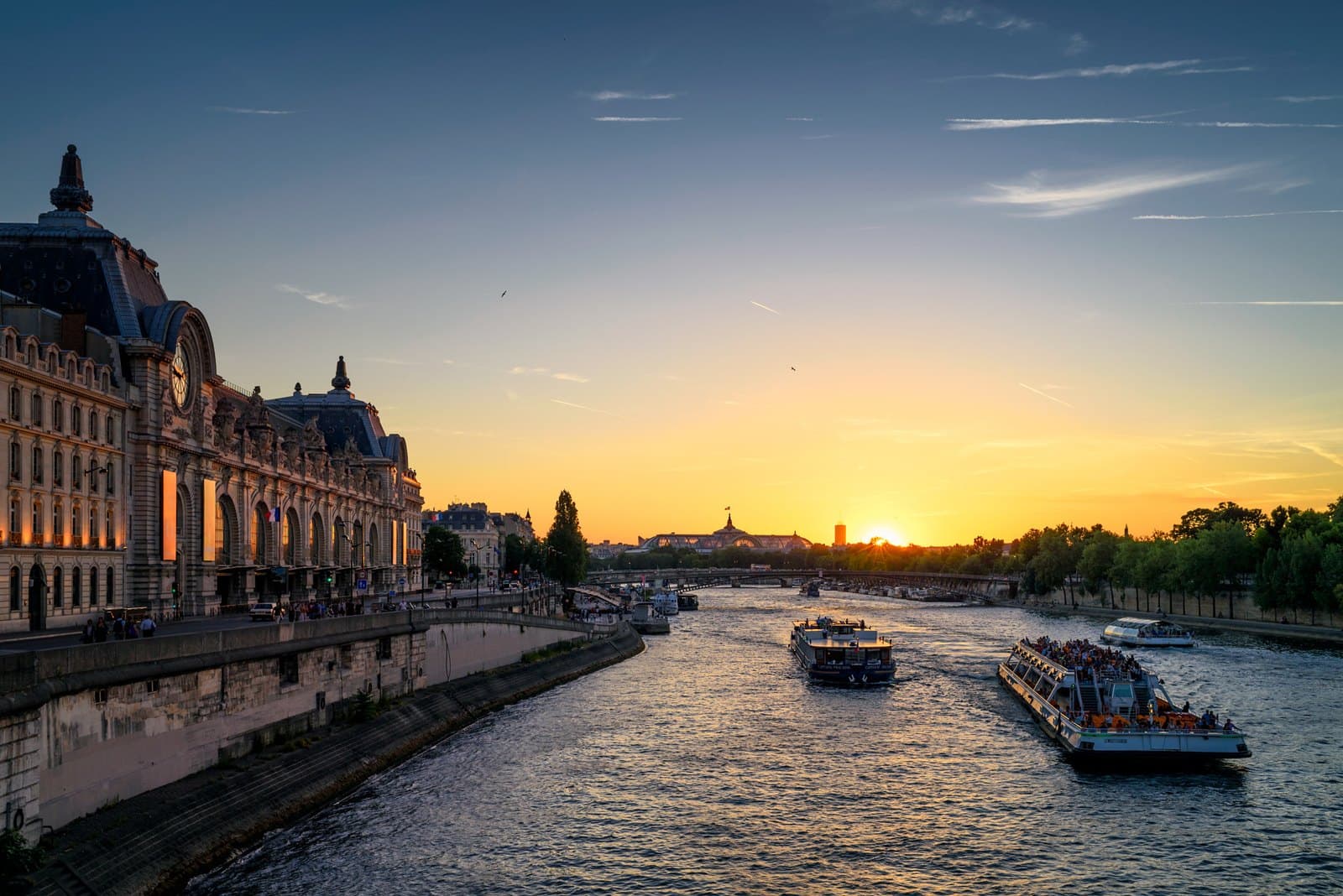
Musée d'Orsay
Esplanade Valéry Giscard d’Estaing, 75007 Paris, France
Displays rotate at the Musée d'Orsay. Check the museum's object record before travelling specifically to see it.
Plan your visitFrequently asked questions
Where is Les Andelys. La Berge?
The Musée d'Orsay in Paris, accession number RF 1996 6. The museum acquired it in 1996 as a dation, a payment of inheritance duties made in works of art rather than cash.
What does Les Andelys. La Berge show?
The bank of the Seine at Les Andelys in Normandy. Village houses line the left bank, a man in a blue smock sits on a moored boat, poplars reflect in the water, and the ruined keep of Château Gaillard stands on the chalk hill above.
Why does 1886 matter for this painting?
It is the year Neo-Impressionism became public. Georges Seurat showed A Sunday on La Grande Jatte in May, Félix Fénéon named the tendency in his review, and Paul Signac went straight to Les Andelys and applied divided colour to a whole landscape for a summer.
Is Les Andelys. La Berge painted in dots?
Not in even, circular dots. Close to the canvas the sky is made of short flicks and commas, the water of flattened horizontal ovals, and the near bank of large teardrop strokes. The colours stay separate, but the shape of the mark changes from passage to passage.
How big is Les Andelys. La Berge?
65.3 by 81.5 centimetres, roughly 26 by 32 inches. The Musée d'Orsay records it as oil on canvas, signed and dated at the lower right: P. Signac 86.
Did Paul Signac sell this painting?
No. He gave it to his mother, Héloïse Signac, and it came back to him. It was in his studio by 1911 and was still in the family inventory when he died in 1935. It reached a public collection only in 1996.
Where was it first exhibited?
At the Salon de la Société des Artistes Indépendants in the Pavillon de la Ville de Paris in 1887, as number 450. Signac had helped found the society in 1884 so that painters could show without submitting to a jury.
More by Paul Signac
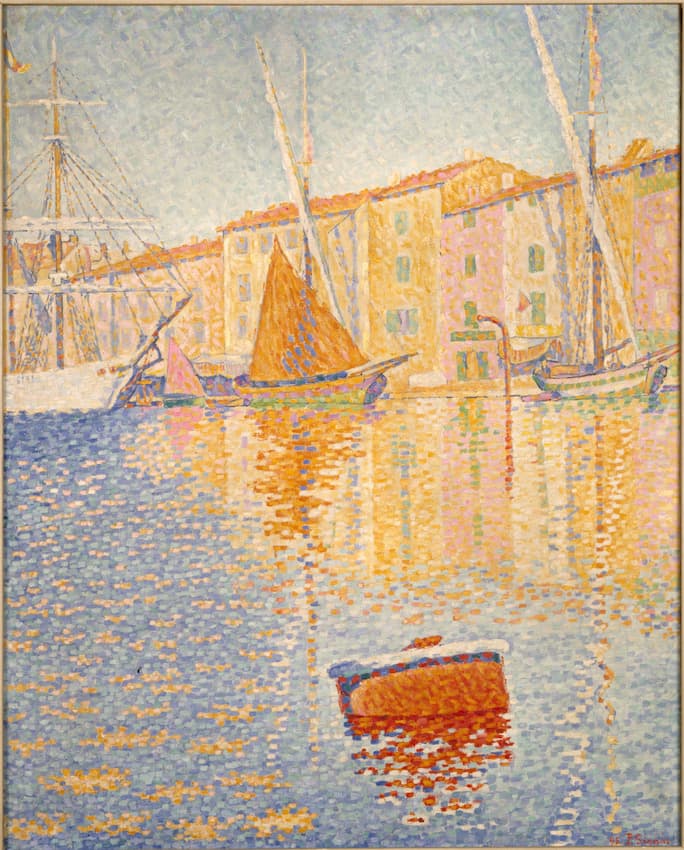
If you like Paul Signac
Explore painters from the same movements and circles.
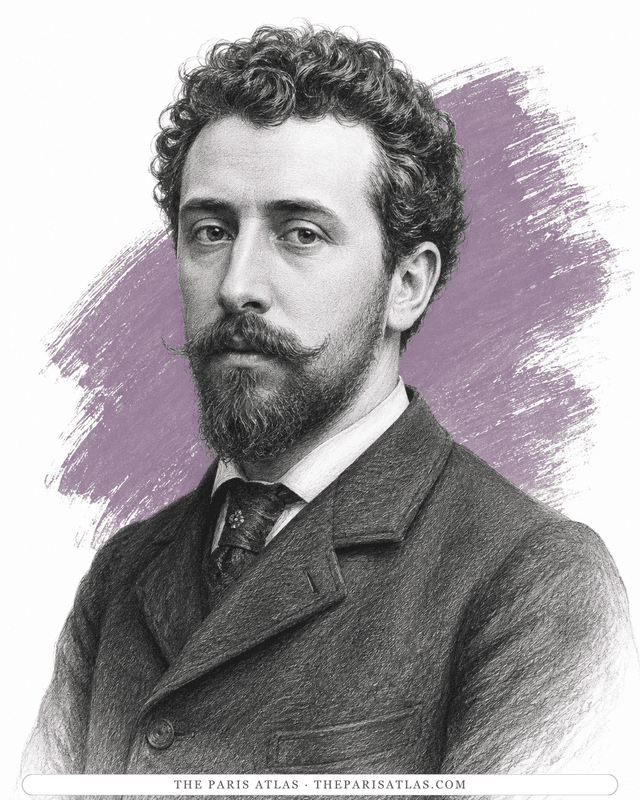
Georges Seurat
Parisian painter who built pictures from small dots of pure colour on optical principle, co-founded the Salon des Indépendants, and detonated the last Impressionist exhibition of 1886 with A Sunday on La Grande Jatte. He died at thirty-one.
View artist
Paul Cézanne
Painter between Impressionism and everything after — shown in the independents' exhibitions, emulated by the Cubists, and present at the Orangerie through 15 works in the Walter-Guillaume collection.
View artist
Henri-Edmond Cross
French Neo-Impressionist who carried divided colour to the Mediterranean, enlarged the dot into a bright mosaic-like stroke, and influenced the young Henri Matisse.
View artist
References
The sources below include collection records, catalogues, scholarly research, and primary materials that informed this page. They document Les Andelys. The Riverbank, its making, and its place in cultural history.


1Les Andelys. La Berge (Paul Signac)
WebsiteMusée d'OrsayUsed forWeb source consulted for documented facts and historical context presented on the Les Andelys. The Riverbank page.
2Paul Signac
WebsiteMusée d'OrsayUsed forWeb source consulted for documented facts and historical context presented on the Les Andelys. The Riverbank page.
3Georges Seurat (1859–1891) and Neo-Impressionism
WebsiteThe Metropolitan Museum of ArtUsed forWeb source consulted for documented facts and historical context presented on the Les Andelys. The Riverbank page.
4The founding of the Société des Artistes Indépendants
WebsiteSociété des Artistes Indépendants — “Notre histoire”Used forWeb source consulted for documented facts and historical context presented on the Les Andelys. The Riverbank page.

5D'Eugène Delacroix au néo-impressionnisme
NonfictionWikisource, 1911Used forPublished analysis and historical context used in preparing the Les Andelys. The Riverbank page.
These references provide the documented foundation for this work's history and interpretation. Claim-level citations remain attached to the specific claims they support.
 Explore more resources