A Sunday on La Grande Jatte
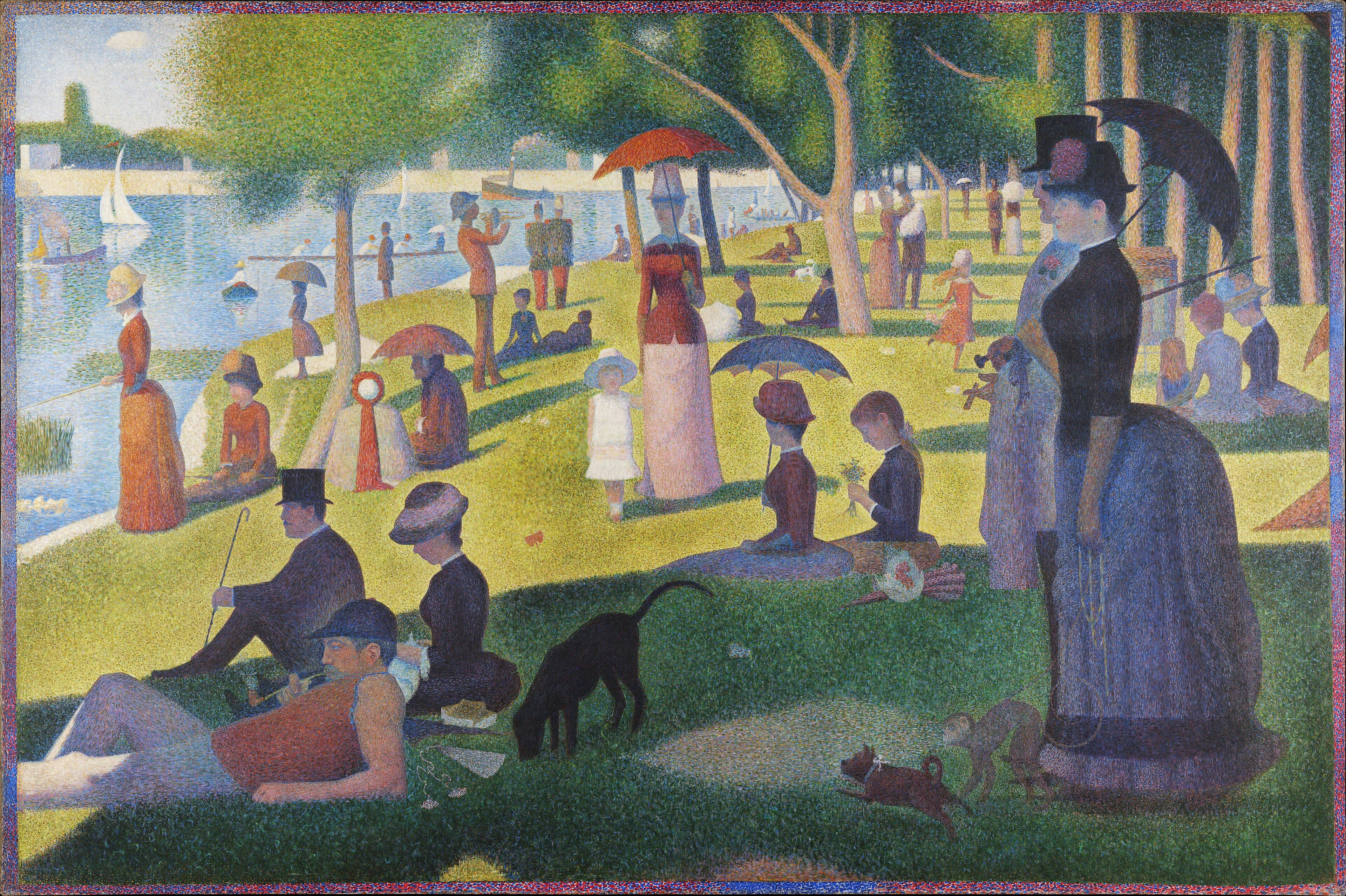
Georges Seurat turns a Sunday crowd on a Seine island into a monumental, meticulously ordered scene. Developed over two years and revised as his divided-color method took shape, A Sunday on La Grande Jatte became the defining image of Neo-Impressionism when it appeared at the final Impressionist exhibition in 1886.
- 1884–1886; painted border 1888–1889
- Oil on canvas
About Georges Seurat
What the painting shows
Dozens of people spend a Sunday afternoon on the grassy tip of La Grande Jatte, an island in the Seine just beyond the Paris city limits. Some stroll, some sit or recline, soldiers stand together, children stay near adults, and sailboats move across the bright strip of river at the left. Most of the figures face sideways or straight ahead, as if arranged across a stage.
The largest pair stands at the right edge: a top-hatted man beside a woman holding a parasol and leading a small monkey. Elsewhere, dogs wander, a woman fishes, and a child in white looks directly out of the painting. The details suggest ordinary recreation, but the rigid poses and measured spacing make the crowd feel ceremonial rather than casual.
A modern crowd arranged like a stage production
The Art Institute describes Seurat's process in theatrical terms. He studied individual figures in drawings and painted panels, then selected and repositioned them for the final canvas as if casting a production. The museum counts forty-eight people, three dogs, and eight boats in the finished picture, but the painting does not explain who these people are or how they relate to one another.
That absence of a clear plot is deliberate and productive. The gathering includes differences of age, dress, occupation, and social performance, yet everyone is held in the same unusually stable order. The scene can be read as affectionate, comic, critical, or unsettling; the surviving evidence does not reduce its social meaning to one approved interpretation.
Two years of preparation, revision, and divided color
Seurat began the project in May 1884 and prepared it through an extraordinary body of work. The Art Institute records approximately twenty-eight drawings, twenty-eight painted panels, and three larger canvases connected with the composition. These studies show him testing the landscape, trying out figures, changing their outlines, and repeatedly adjusting the crowd.
The finished surface was not produced by filling a complete drawing with uniform dots from one corner to the other. Seurat first worked with broader and more horizontal strokes. When he returned to the canvas in late 1885, he introduced smaller dabs, dashes, and lines shaped by his developing ideas about contrast and divided color. Earlier decisions remain underneath the later campaign.
The painting that announced Neo-Impressionism
A planned 1885 exhibition of the Salon des Indépendants was canceled, delaying the painting's public debut. Camille Pissarro then helped bring Seurat and Paul Signac into the eighth and final Impressionist exhibition, which opened in Paris in May 1886. La Grande Jatte confronted the older group's quick, individual brushwork with a large, methodical construction that viewers could examine as a system.
The response was divisive, but the rupture made the painting historically decisive. Later in 1886, the critic Félix Fénéon used the term Neo-Impressionism for the new direction. Pointillism describes the conspicuous small marks; Neo-Impressionism better names the wider movement that grew around divided color, disciplined structure, and a claim to build on Impressionism by different means.
The border is part of the painting
In 1888–1889, Seurat added a field of colored marks around the scene. This painted border is not a later decorative frame chosen by a museum. It belongs to the canvas and extends the picture's color relationships to its edge.
The border also clarifies Seurat's belief that a color changes according to what surrounds it. Rather than treating the wall and frame as neutral, he designed the transition out of the image. The Art Institute notes that the painted edge was intended to work with a white wooden frame, making the viewing conditions part of the composition.
How La Grande Jatte came to Chicago
Frederic Clay Bartlett purchased La Grande Jatte in 1924 and placed it on loan at the Art Institute of Chicago. In 1926, the painting entered the museum as part of the Helen Birch Bartlett Memorial Collection. The collection commemorated Bartlett's wife and became an important early public home for modern European art in the United States.
The painting is accession number 1926.224 and one of the Art Institute's best-known works. Its live object page supplies the collection record; visitors should check that page for current display information rather than assume that any work is permanently on view.
Close reading
Reading the work, detail by detail
La Grande Jatte contains a crowd, but Seurat makes every small encounter feel separately staged. These details follow the painting from the river at the left through its scattered groups to the monumental couple and monkey at the right.
1.The open river gives the crowd room to breathe
Small sails and hulls move through a bright strip of water before the park begins. Their diagonals provide one of the few easy kinds of motion in a picture whose people have been made unusually upright and still.
2.A reclining man anchors the shaded foreground
His extended body follows the riverbank and opens the long procession of figures. Although the pose suggests ease, its firm outline and careful placement make relaxation look composed rather than accidental.
3.Small figures turn the lawn into a promenade
Adults, children, and a dog occupy separate pockets of sun between the larger foreground bodies. Their repeated verticals and profiles make the park read as a social display even when no two figures share an obvious story.
4.One child looks straight out at us
Most adults turn sideways, but the child faces the viewer and interrupts their procession. Her pale dress catches the light, making a small, direct gaze the visual hinge between the left and right halves of the crowd.
5.A parasol joins shadow, color, and posture
The round canopy repeats the tree shade while its handle reinforces the vertical pose below it. Seurat uses an ordinary accessory as a geometric device, binding the figure to the larger pattern of trunks, bodies, and pools of light.
6.The foreground couple closes the procession
The pair is cut by the edge yet dominates the scene through scale, strict profiles, and dark clothing. The small monkey adds an eccentric curve at their feet, but the painting does not settle the many social meanings later attached to it.
Timeline
May 1884
Seurat begins the large canvas and an extended campaign of drawings, panels, and compositional studies.
1885
A planned Salon des Indépendants exhibition is canceled; Seurat sets the canvas aside, then resumes it in October with smaller divided-color marks and revised figures.
May 1886
A Sunday on La Grande Jatte makes its public debut at the eighth and final Impressionist exhibition in Paris.
1888–1889
Seurat adds the painted dotted border, designed to mediate between the scene and a white frame.
1924
Frederic Clay Bartlett buys the painting and places it on loan at the Art Institute of Chicago.
1926
The painting enters the Art Institute as part of the Helen Birch Bartlett Memorial Collection, accession number 1926.224.
Where to see it
Art Institute of Chicago
111 South Michigan Avenue, Chicago, IL 60603, United States
Collection locations and gallery displays can change. Check the official object record before making a special visit.
Plan your visit on the museum’s official website (opens in a new tab)Frequently asked questions
Where is A Sunday on La Grande Jatte?
The painting is in the Art Institute of Chicago, accession number 1926.224, in the Helen Birch Bartlett Memorial Collection. Check the museum's live object page for current gallery information before visiting.
When did Seurat paint A Sunday on La Grande Jatte?
Seurat developed the main picture from 1884 to 1886, then added its painted border in 1888–1889. Those dates reflect separate campaigns of work rather than one continuous application of dots.
Is A Sunday on La Grande Jatte made entirely of dots?
No. Technical and preparatory evidence shows multiple layers and kinds of marks, including broader horizontal strokes beneath later dabs, dashes, and dots. The famous surface records a changing method, not one mechanical recipe.
How many people are in A Sunday on La Grande Jatte?
The Art Institute's account counts forty-eight people, along with three dogs and eight boats. The exact count is less important than Seurat's careful placement of each figure within the larger rhythm of the crowd.
Why is there a monkey in A Sunday on La Grande Jatte?
The monkey belongs to the fashionably dressed woman at the right and helps make her silhouette memorable. Some scholars have proposed social or sexual associations for pet monkeys in nineteenth-century imagery, but the painting itself does not settle one definitive meaning.
Was A Sunday on La Grande Jatte shown with the Impressionists?
Yes. It debuted at the eighth and final Impressionist exhibition in May 1886 after Camille Pissarro supported the inclusion of Seurat and Signac. Its method looked so different from the older group's painting that it helped announce what Félix Fénéon soon called Neo-Impressionism.
Why did Seurat paint a border around La Grande Jatte?
He used the colored border to control how the colors at the edge of the scene met their surroundings. Added in 1888–1889, it extends his study of contrast beyond the pictured park and makes the act of framing part of the work.
More by Georges Seurat
If you like Georges Seurat
Explore painters from the same movements and circles.
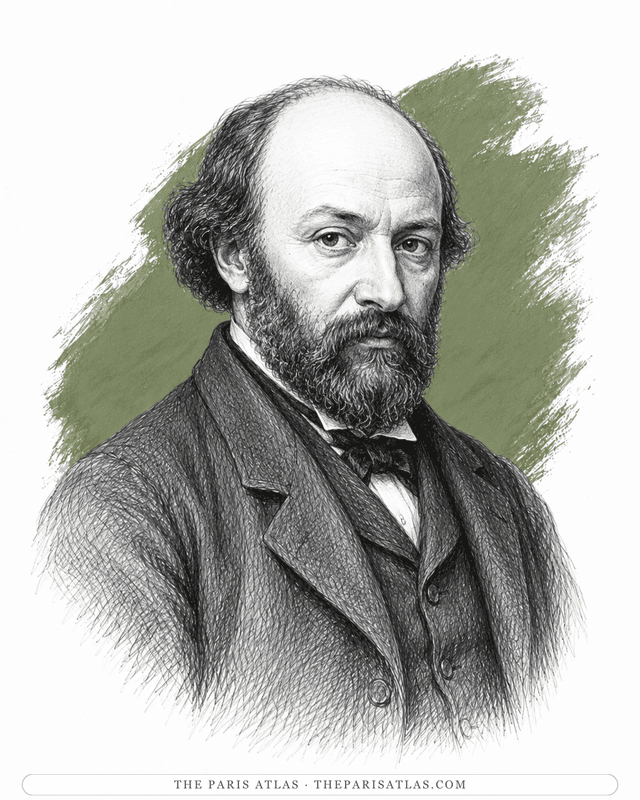
Paul Cézanne
Painter between Impressionism and everything after — shown in the independents' exhibitions, emulated by the Cubists, and present at the Orangerie through 15 works in the Walter-Guillaume collection.
View artist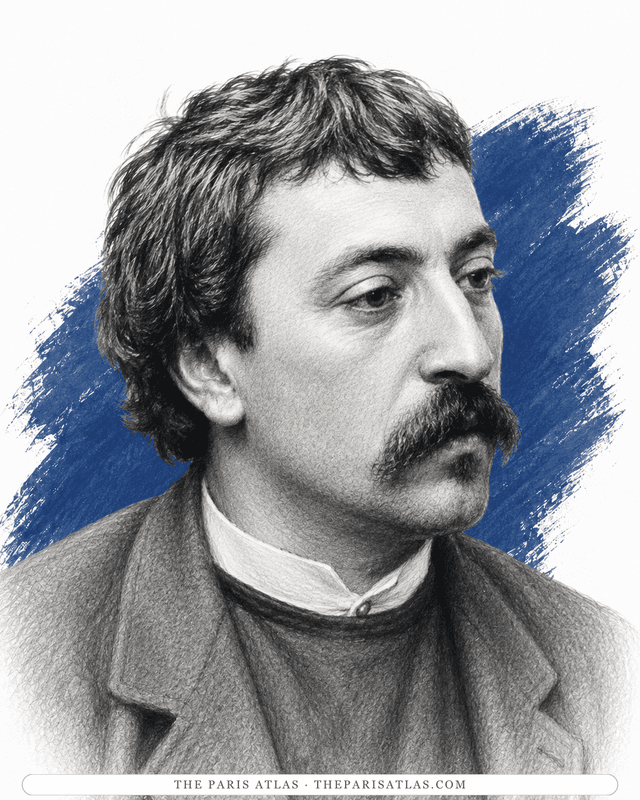
Paul Gauguin
Stockbroker turned painter who came into art through Camille Pissarro, showed with the Impressionists, and left Europe for Polynesia.
View artist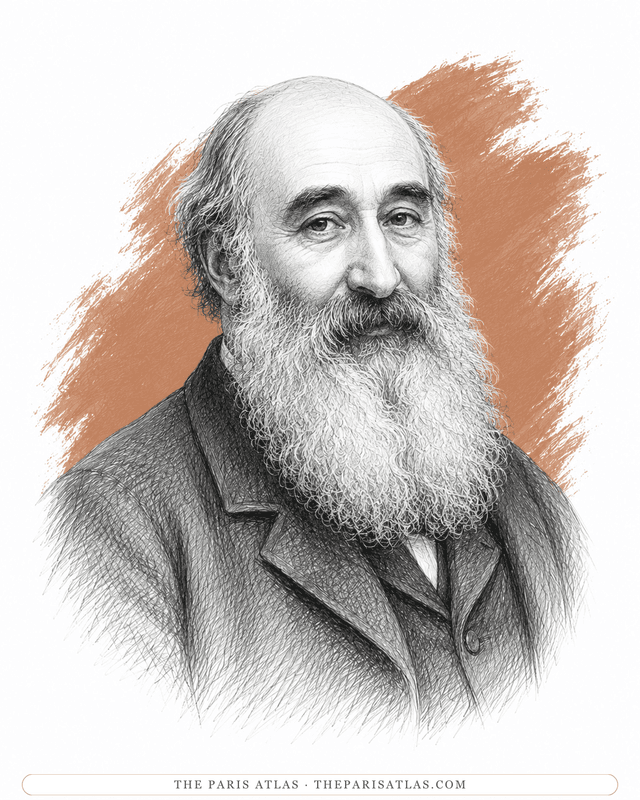
Camille Pissarro
The eldest of the Impressionists and the only painter to show in all eight of the group's exhibitions, 1874 to 1886.
View artist
References
The sources below include collection records, catalogues, scholarly research, and primary materials that informed this page. They document A Sunday on La Grande Jatte, its making, and its place in cultural history.


1A Sunday on La Grande Jatte — 1884 (Georges Seurat) — Art Institute of Chicago
WebsiteArt Institute of ChicagoUsed forWeb source consulted for documented facts and historical context presented on the A Sunday on La Grande Jatte page.
2Seurat and the Making of La Grande Jatte
WebsiteArt Institute of ChicagoUsed forWeb source consulted for documented facts and historical context presented on the A Sunday on La Grande Jatte page.
3Georges Seurat (1859–1891) and Neo-Impressionism
WebsiteThe Metropolitan Museum of ArtUsed forWeb source consulted for documented facts and historical context presented on the A Sunday on La Grande Jatte page.
4Seurat's Painting Practice: Theory, Development and Technology
WebsiteThe National Gallery, London, 2003Used forWeb source consulted for documented facts and historical context presented on the A Sunday on La Grande Jatte page.

5Seurat: Paintings and Drawings — exhibition catalogue
Exhibition catalogueThe Art Institute of Chicago / The Museum of Modern Art, 1958Used forCatalogue scholarship used to verify attribution, provenance, chronology, and interpretive context for A Sunday on La Grande Jatte.
These references provide the documented foundation for this work's history and interpretation. Claim-level citations remain attached to the specific claims they support.
 Explore more resources