Circus Sideshow
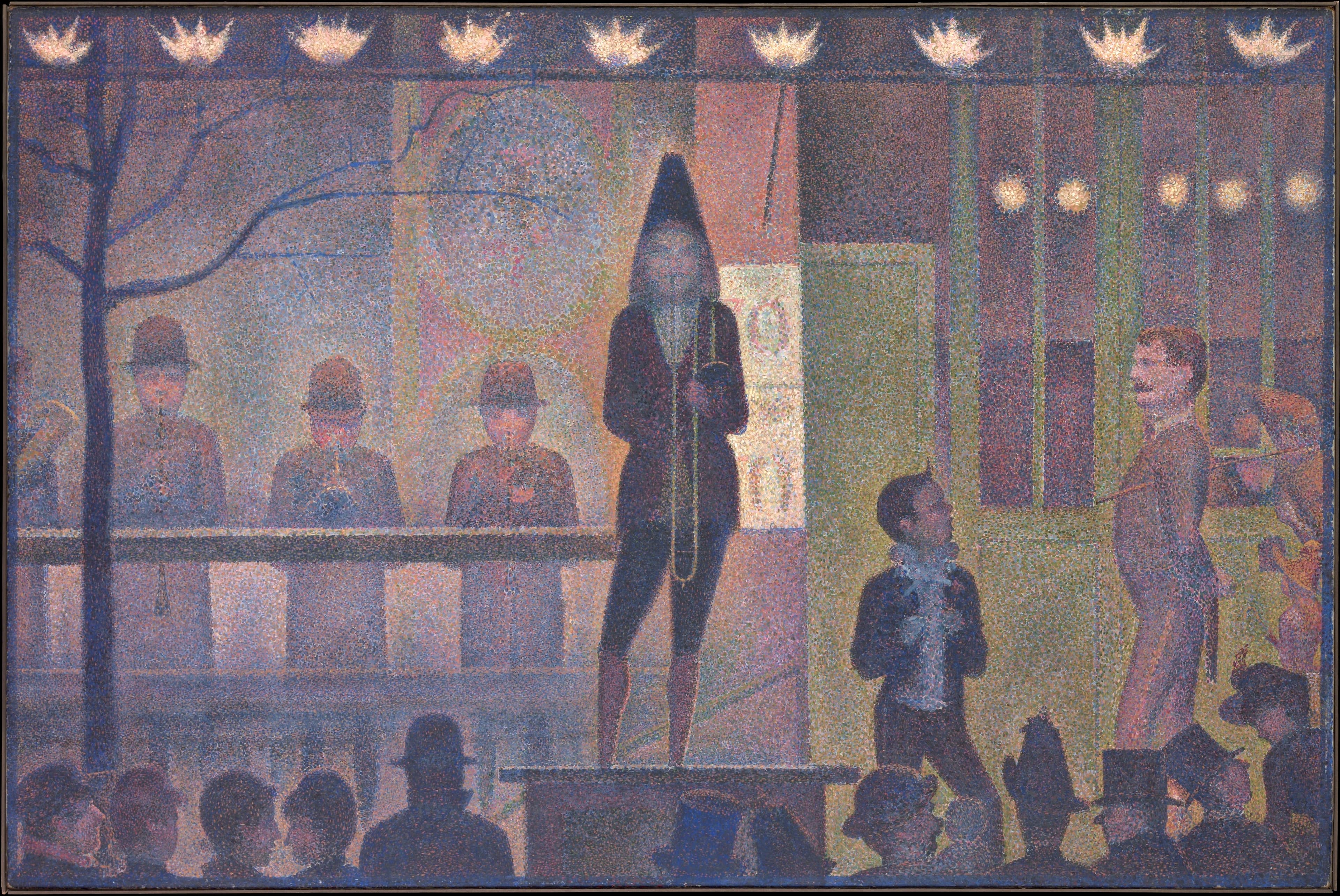
Georges Seurat applies his divided-color method to a nighttime attraction outside the Circus Corvi in eastern Paris. Musicians perform under artificial lights while an audience waits in shadow, turning the sales pitch of a fairground sideshow into a remarkably still and ordered modern spectacle.
- 1887–1888
- Oil on canvas
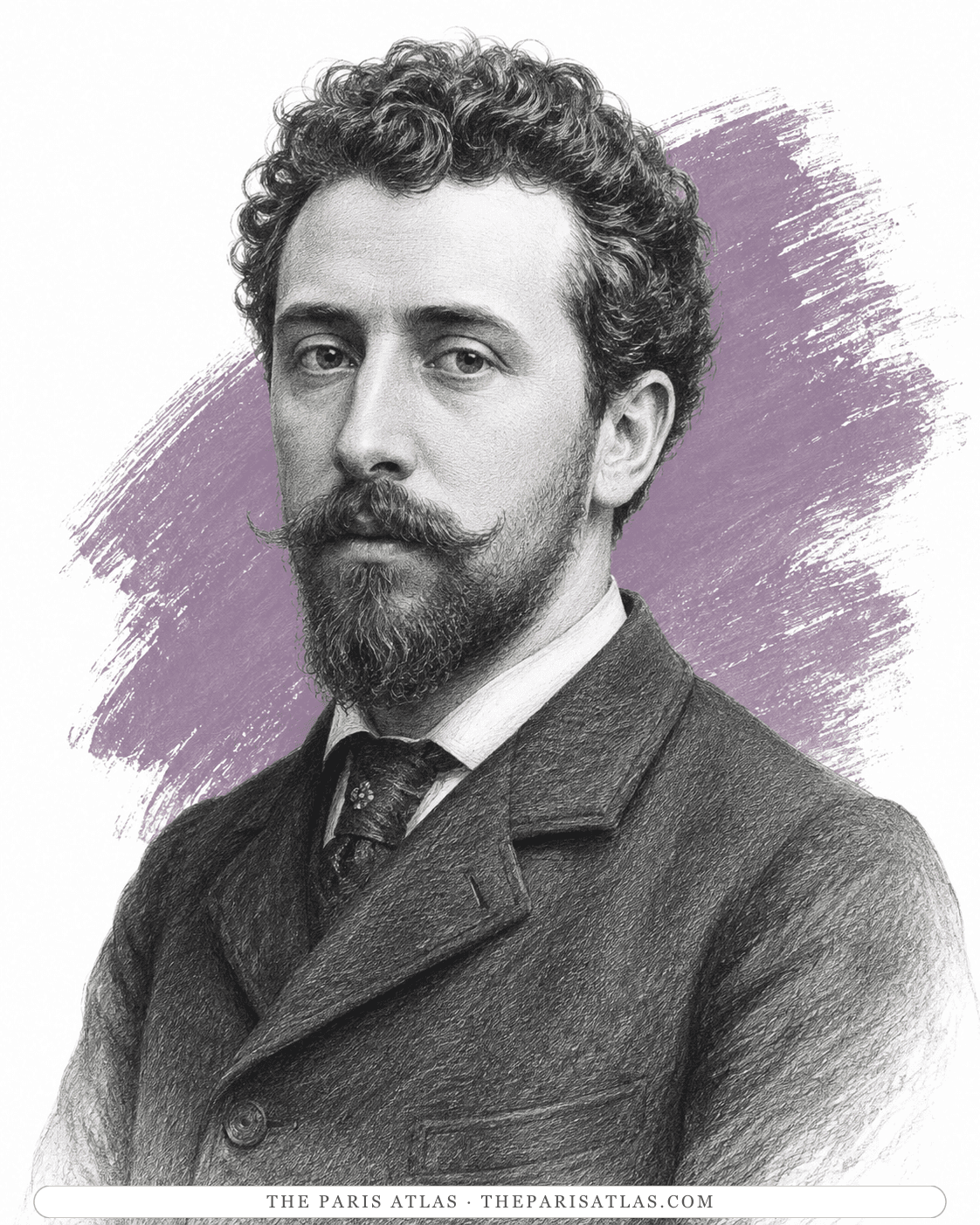
About Georges Seurat
What the painting shows
A row of musicians performs on a raised platform at night. At the center, a trombonist stands in profile beneath a line of gaslights. Other players sit or stand beside him, and the sharply lit edge of the platform separates their stage from the darker crowd below.
The audience is shown mostly as hats, heads, and shoulders. At the far right, figures climb steps toward the ticket booth. The arrangement is easy to read once its purpose is known: this is a free performance outside the tent, designed to attract passersby and persuade them to buy admission to the circus inside.
The Circus Corvi at the Gingerbread Fair
The Metropolitan Museum of Art identifies the event as the parade, or sideshow, of the Circus Corvi at the annual Gingerbread Fair around the place de la Nation in eastern Paris. Seurat observed the fair in spring 1887. Popular entertainment was not a timeless subject here; it belonged to a specific commercial event in the expanding modern city.
The word parade can be misleading in English because no procession crosses the canvas. In this setting, it means the display presented outside a fairground booth or circus. The performers offer a sample of the entertainment, the crowd gathers without paying, and the staircase leads potential customers toward the box office.
Pointillism after dark
Circus Sideshow was Seurat's first nocturnal painting and his first major treatment of popular entertainment. Instead of sunlight breaking over a riverbank, he studied the limited glow of artificial light. The musicians appear exposed under the lamps while the spectators remain compressed into a dim band.
The divided touches do not make the scene sparkle like a festival. Muted blue, orange, and yellow marks create a veiled atmosphere, and the repeated horizontal bars hold almost every figure in place. Seurat used a method associated with optical brightness to produce distance, silence, and controlled suspense.
A transaction divided into two zones
The composition splits the event into the people selling attention and the people deciding whether to pay for more. Above, the performers are individually legible and strongly illuminated. Below, the public becomes a darker collective body. The central trombonist faces across the picture rather than out toward us, making the performance feel oddly self-contained.
That separation supports more than one interpretation. The crowd may be captivated, sceptical, or simply waiting; the performers may be lively in reality even though Seurat's design makes them still. What is certain is the commercial structure: the music is a public invitation, and the stairs at the right turn looking into buying.
Night outside, daylight inside
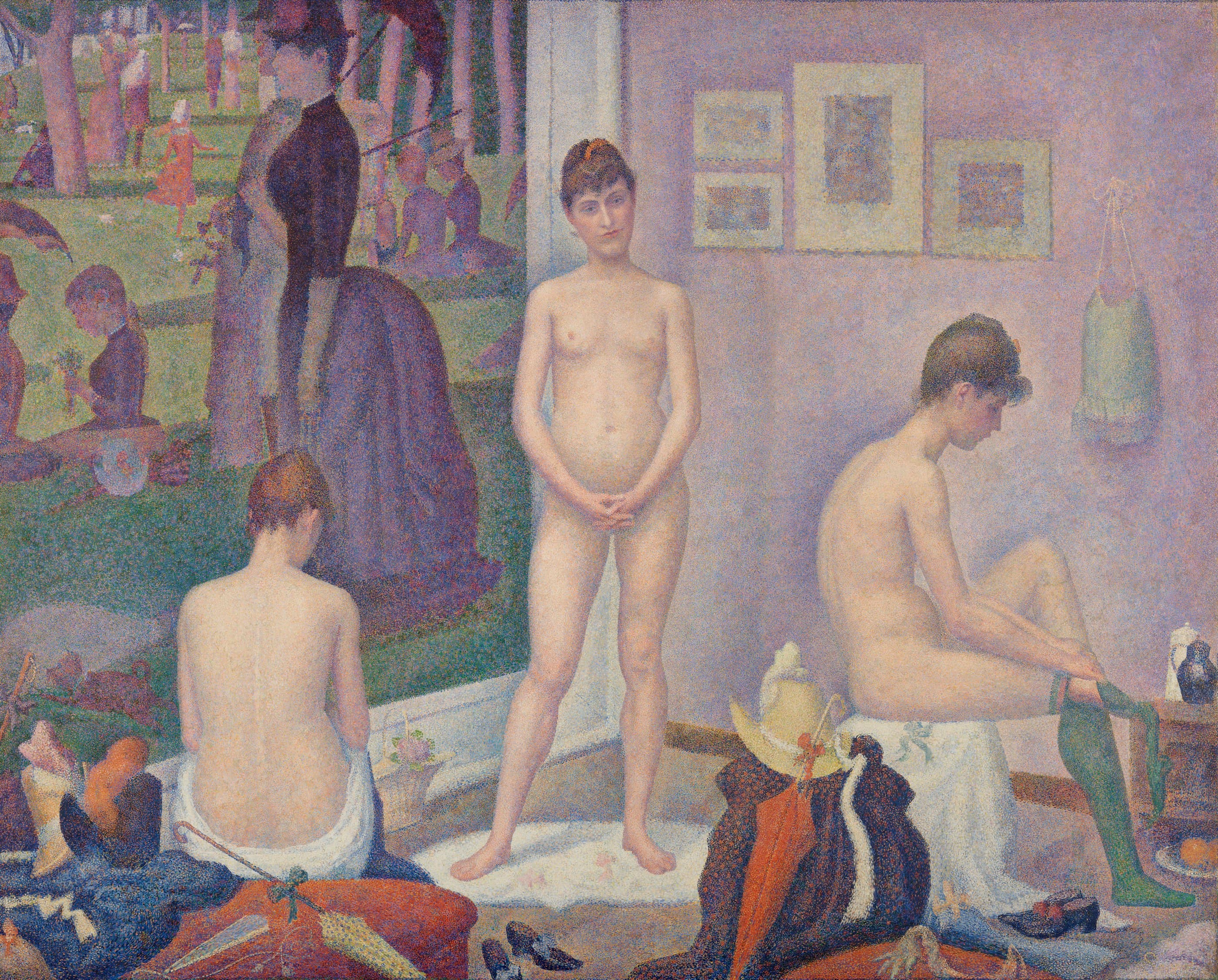
Seurat exhibited Circus Sideshow at the Salon des Indépendants in 1888 alongside Models, his large studio interior now in the Barnes Foundation. The Metropolitan Museum emphasizes the contrast: an outdoor nocturne under artificial light appeared beside an indoor daylight scene.
The pairing demonstrated that divided color was not restricted to sunny parks and rivers. Seurat could reorganize the same underlying concern—how neighboring tones and measured marks shape perception—for very different light, spaces, and forms of modern life.
Where the painting is now
Circus Sideshow entered the Metropolitan Museum of Art through the bequest of Stephen C. Clark in 1960. Its object number is 61.101.17. The Met's object page identifies the painting as public domain and gives current display information, which should be checked before planning a visit.
In 2017, the Met organized an exhibition around the painting and more than one hundred related works and documents. That wider context placed Seurat's scene within the nineteenth-century history of fairs, itinerant circuses, popular prints, and artists' repeated fascination with the public performance used to sell a private show.
Close reading
Reading the work, detail by detail
Circus Sideshow turns a free fairground sales pitch into a hushed study of artificial light. Six details separate the lamps, musicians, ticket route, performers, and audience that Seurat stacked into distinct bands.
1.Gaslights establish the nocturnal rhythm
Ten pale flames repeat across the dark upper band before any performer appears. Their regular spacing turns illumination into structure and announces that this is a modern night scene built around artificial rather than natural light.
2.The seated musicians nearly dissolve into atmosphere
Hats, faces, instruments, and the rail emerge from closely valued blue, orange, and violet touches. Seurat makes the band visible without breaking the veiled light that separates this outdoor platform from ordinary daylight.
3.The trombonist becomes a vertical instrument
His pointed hat, long body, and extended trombone stack into one narrow upright shape. Instead of recording musical motion, Seurat locks performer and instrument into the rigid geometry of the platform.
4.The stairs turn attention into admission
The steps and upright booth openings clarify the business behind the performance. Spectators can watch the parade for free, then move upward to the box office and pay for the show inside.
5.A second musician breaks the central stillness
The sideways instrument, bent arms, and exposed face create a compact knot of activity against the booth. The figure's warmer light distinguishes live performance from the nearly anonymous spectators below.
6.The audience becomes one dark collective body
Individual faces disappear while hats repeat along the lower edge like a second, irregular railing. Seurat shows the people selling attention above and the mass of potential customers below without telling us what anyone in the crowd decides.
Timeline
Spring 1887
Seurat observes the Circus Corvi sideshow at the annual Gingerbread Fair around the place de la Nation in eastern Paris.
1887–1888
He develops the nighttime scene in divided color, making his first nocturnal painting and first major picture of popular entertainment.
1888
Circus Sideshow appears at the Salon des Indépendants alongside Models, pairing outdoor artificial light with an indoor daylight scene.
1960–1961
Stephen C. Clark bequeaths the painting to the Metropolitan Museum of Art, where it receives object number 61.101.17.
2017
The Met organizes Seurat's Circus Sideshow, an exhibition placing the painting among more than one hundred works and documents about the sideshow tradition.
Where to see it
The Metropolitan Museum of Art
1000 Fifth Avenue, New York, NY 10028, United States
Collection locations and gallery displays can change. Check the official object record before making a special visit.
Plan your visit on the museum’s official website (opens in a new tab)Frequently asked questions
Where is Circus Sideshow by Seurat?
Circus Sideshow is in the Metropolitan Museum of Art in New York, object number 61.101.17. Check the museum's live object page for its current gallery before visiting.
What is happening in Circus Sideshow?
Musicians are giving a free outdoor performance to attract customers to the Circus Corvi. The spectators at the right can climb the stairs to the box office and pay to enter the circus tent.
Where did Seurat see this sideshow?
He saw the Circus Corvi at the annual Gingerbread Fair around the place de la Nation in eastern Paris in spring 1887. The setting is a specific urban fairground, not an imaginary circus.
Why is Circus Sideshow important in Seurat's career?
It was his first nocturnal painting and his first major work devoted to popular entertainment. It showed that his divided-color method could address artificial light and commercial spectacle as well as daylight beside the Seine.
Why is Circus Sideshow also called Parade de cirque?
Parade de cirque is its French title. Here parade means the sample performance staged outside the tent to draw a crowd, not a procession moving through the streets.
What painting did Seurat exhibit beside Circus Sideshow?
He exhibited Models beside it at the 1888 Salon des Indépendants. The indoor daylight of Models and the outdoor artificial light of Circus Sideshow demonstrated the range of his method.
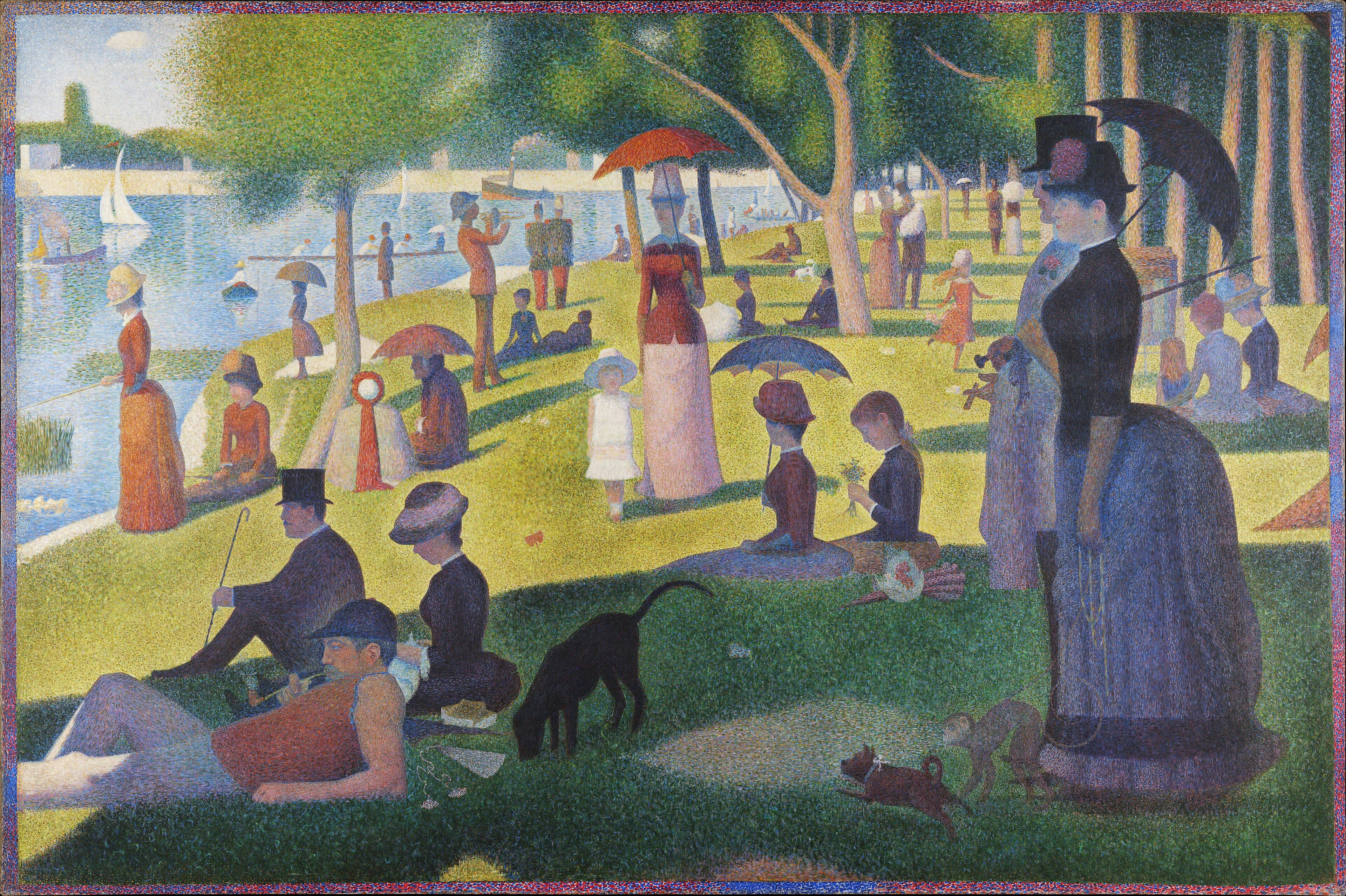
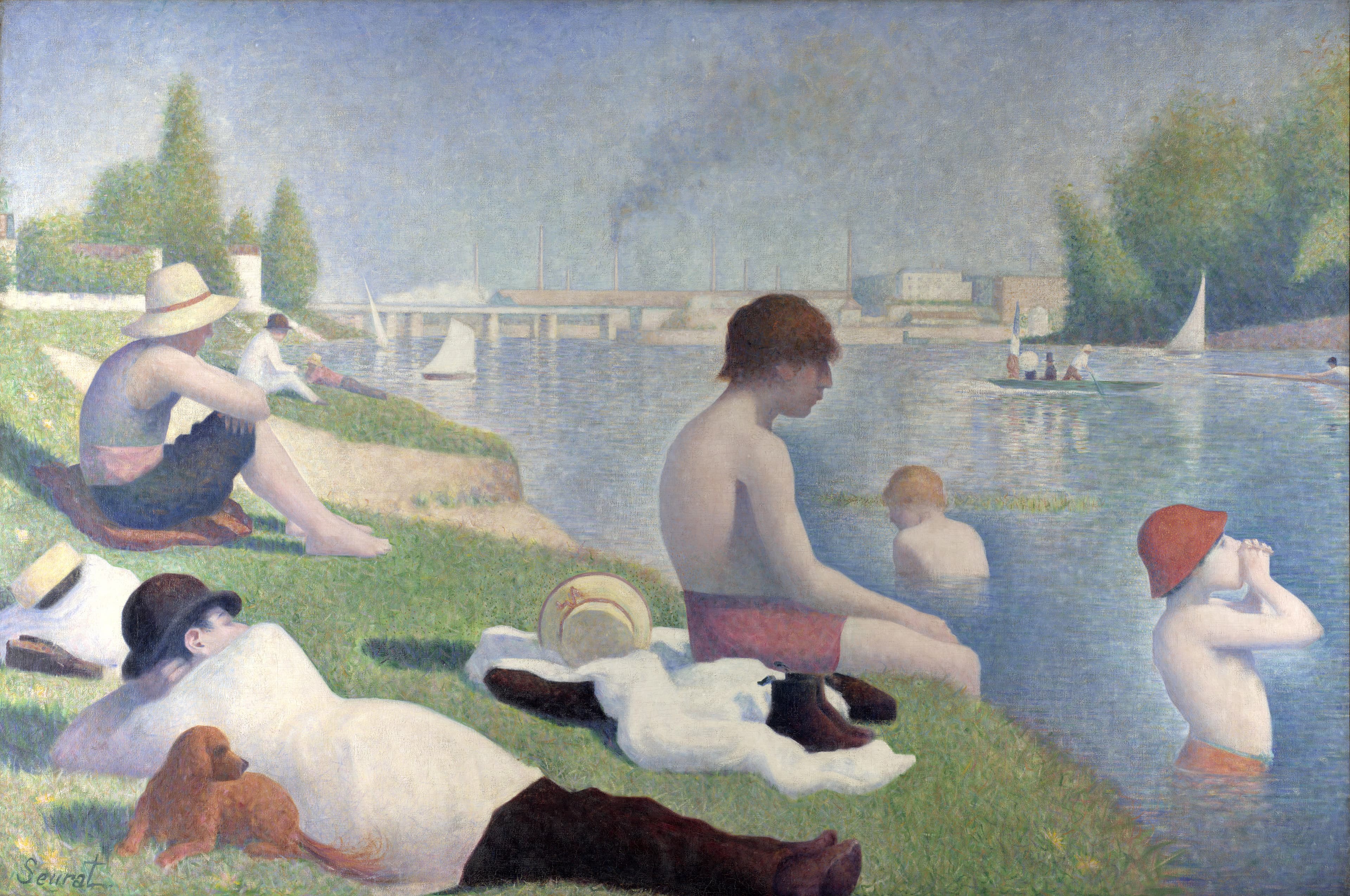
More by Georges Seurat
If you like Georges Seurat
Explore painters from the same movements and circles.
Paul Cézanne
Painter between Impressionism and everything after — shown in the independents' exhibitions, emulated by the Cubists, and present at the Orangerie through 15 works in the Walter-Guillaume collection.
View artist
Paul Gauguin
Stockbroker turned painter who came into art through Camille Pissarro, showed with the Impressionists, and left Europe for Polynesia.
View artist
Camille Pissarro
The eldest of the Impressionists and the only painter to show in all eight of the group's exhibitions, 1874 to 1886.
View artist
References
The sources below include collection records, catalogues, scholarly research, and primary materials that informed this page. They document Circus Sideshow, its making, and its place in cultural history.


1Circus Sideshow (Parade de cirque) — Georges Seurat
WebsiteThe Metropolitan Museum of ArtUsed forWeb source consulted for documented facts and historical context presented on the Circus Sideshow page.
2Seurat's Circus Sideshow
WebsiteThe Metropolitan Museum of ArtUsed forWeb source consulted for documented facts and historical context presented on the Circus Sideshow page.
3Georges Seurat (1859–1891) and Neo-Impressionism
WebsiteThe Metropolitan Museum of ArtUsed forWeb source consulted for documented facts and historical context presented on the Circus Sideshow page.

4Seurat: Paintings and Drawings — exhibition catalogue
Exhibition catalogueThe Art Institute of Chicago / The Museum of Modern Art, 1958Used forCatalogue scholarship used to verify attribution, provenance, chronology, and interpretive context for Circus Sideshow.
5Seurat: A Biography
BiographyHarry N. Abrams, 1990Used forBiographical evidence used to verify chronology, relationships, and historical context connected to Circus Sideshow.
These references provide the documented foundation for this work's history and interpretation. Claim-level citations remain attached to the specific claims they support.
 Explore more resources