The Musicians
by Caravaggio
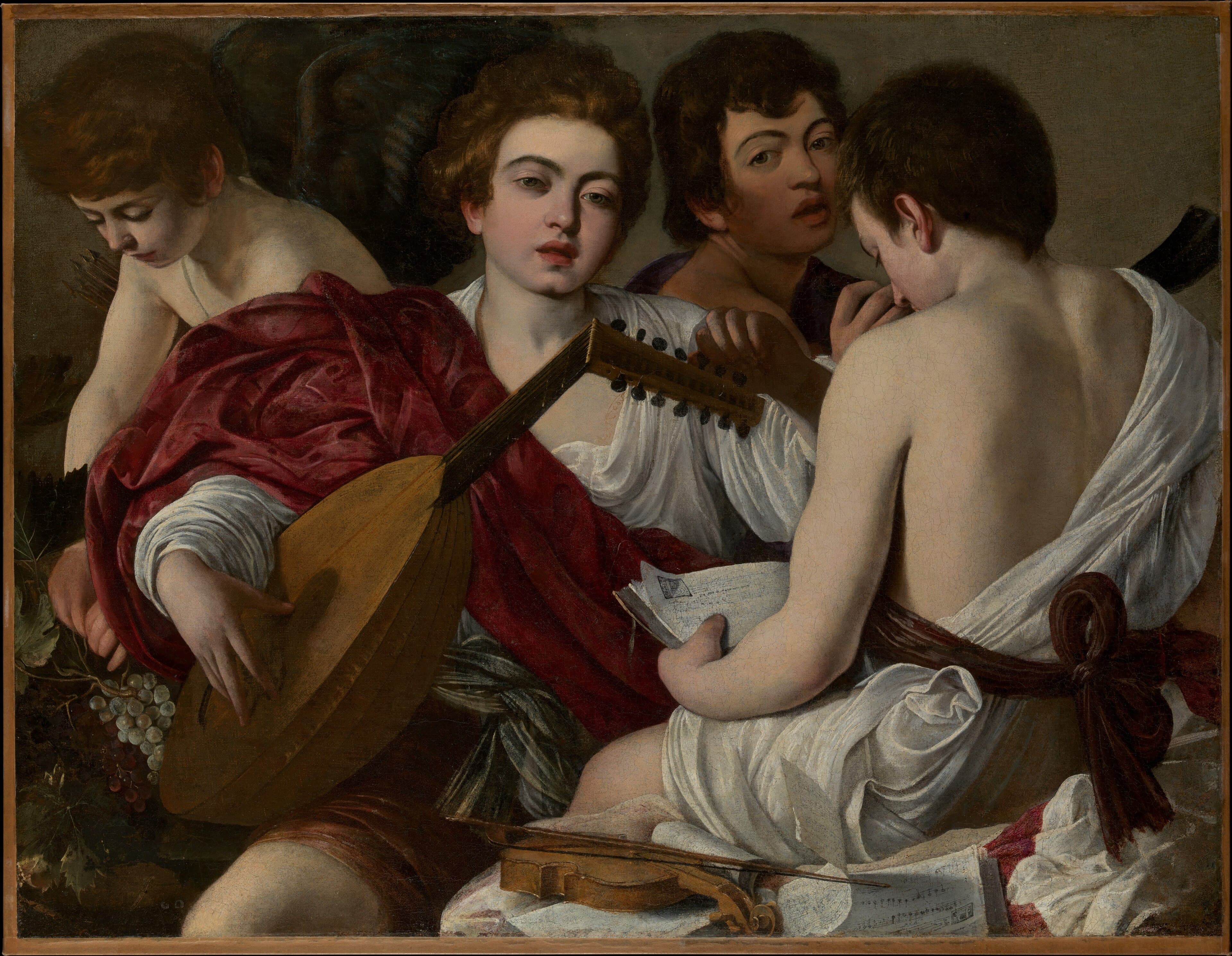
Four youths crowd into a shallow space with a lute, a violin, a horn and sheets of written music, and one of them carries a sheaf of arrows. Michelangelo Merisi da Caravaggio painted it in 1597, during the years he lived in Cardinal Francesco Maria del Monte's household. The Metropolitan Museum of Art holds it as 52.81.
- 1597
- Oil on canvas
About Caravaggio
Overview
The Musicians is an oil painting by Michelangelo Merisi da Caravaggio, dated by the Metropolitan Museum of Art to 1597 and measuring 92.1 by 118.4 centimetres. Four young men are packed into a shallow space against a plain grey-brown wall, with instruments and written music in front of them.
It belongs to the years when Caravaggio was living in the household of Cardinal Francesco Maria del Monte, who had taken him in two years earlier. The pictures of that period are music, fruit, boys and card games rather than altarpieces.
Who Is in It
The four figures overlap so tightly that no two heads are on the same plane. At the far left a boy is seen almost in profile with his head bowed and his eyes cast down. A sheaf of arrows stands behind his shoulder, four of the barbed heads catching the light. Grapes and vine leaves are heaped at his side. The arrows and the grapes identify him as Cupid rather than a musician.
Next to him a youth in crimson drapery over a white shirt plays the lute and looks straight out at the viewer. Behind them a dark-haired boy has his mouth open, mid-note, and also looks directly out.
The fourth is turned away completely. Caravaggio painted him from behind, bare-backed, with a white drape slipping from his shoulder and a dark red sash knotted into a large bow at his waist. His head is bent over an open part-book, and only the edge of his cheek is visible.
The Instruments
The lute is the clearest object in the painting. Its pear-shaped body shows the separate staves of its back, its neck runs up to the right, and the pegbox is bent sharply back. The player's right hand is over the lower soundboard with the fingers spread to pluck.
A violin lies on its side in the foreground with its bow resting diagonally across it, both of them on loose sheets of music. The music is written out: ruled staves and inked notes are visible on the sheets and on the page of the open part-book, which carries a decorated block initial in its top corner.
At the right edge, behind the turned boy's shoulder, a dark curved horn stands against the wall. It is the only instrument nobody is holding.
A Picture Made for a Room
The National Gallery in London records that Cardinal Francesco Maria del Monte recognised Caravaggio's talent and took him into his household in 1595, and that the cardinal's connections brought the first public commissions. The Musicians was painted in the middle of that arrangement.
Nothing in it is devotional and nothing in it is public. It is a cabinet picture: half-length figures at close range, an interior subject, and an audience of one household. The scale of the church work came later.
The State of the Surface
The paint surface carries a pronounced craquelure across almost its whole area. The cracking is easy to see in the flesh of the shoulders and backs, where it runs in a fine net, and in the pale wall behind the heads.
Some passages are also thin. The arrows behind Cupid's shoulder are the clearest case: the shafts have worn down toward the dark ground, and the heads read more faintly than the hands and faces around them.
In New York
The Metropolitan Museum of Art bought the painting with the Rogers Fund in 1952 and records it as accession number 52.81. It hangs in Gallery 620.
The museum places the painting in the public domain and publishes its image under a Creative Commons Zero dedication, so reproductions of it carry no reuse conditions.
Close reading
Reading the work, detail by detail
Four boys, three instruments and a heap of written music are pressed into a space barely deep enough for them. Caravaggio painted it for a cardinal's household rather than a church, and the close views show a picture about performance: sheet music, tuning pegs, and one figure who is not a musician at all.
1.The lute's back is built from staves
The lute's body is pear-shaped and its back is built from separate wooden staves, each one drawn as a curved band. The player's right hand is over the lower soundboard with the fingers spread to pluck. His sleeve is white and pushed up, and crimson drapery fills the space behind.
2.A violin on its side with the bow across it
A violin lies on its side at the front of the picture with the bow resting diagonally across it. Both rest on loose sheets of music. The staves are ruled and the notes are inked in, so the sheets read as actual parts rather than as blank paper. Nobody is holding either object.
3.Arrows mark the boy at the far left
Behind the shoulder of the boy at the far left stands a sheaf of arrows. Four of the barbed heads catch the light against the dark ground. The shafts behind them have worn thin toward the ground beneath. The arrows, with the grapes below, mark him as Cupid rather than a member of the group.
4.Pale grapes and dark grapes
Two bunches of grapes are heaped at the lower left beside the lute, with vine leaves around them. One bunch is pale green and painted translucent, so the light passes through the individual grapes. The other is dark red going to purple. They sit in the darkest corner of the canvas.
5.The lute player looks straight out
The lute player has auburn curling hair and a white shirt slipping off one shoulder. He looks directly out of the painting with his lips parted. He is the only one of the four who both plays an instrument and meets the viewer's eye.
6.The boy behind is singing
The dark-haired boy at the back has his mouth open mid-note and his eyes turned out toward the viewer. A dark purple drape covers his shoulder. He holds no instrument, which leaves the voice as his part. His head is wedged between the lutenist's hair and the fourth boy's shoulder.
7.A dark red sash in a looped bow
The boy in the foreground is painted from behind, bare to the waist, with a white drape falling from his shoulder. A dark red sash is wound round his waist and tied in a large looped bow. Caravaggio gave the most careful drawing in that corner to a knot of cloth.
8.A row of black tuning pegs
The lute's pegbox is bent sharply back from the neck and carries a row of black tuning pegs down both sides. A hand is closed over the strings just below it, stopping them against the fingerboard. The instrument is shown in use rather than laid out as a prop.
9.An open part-book with a printed initial
The fourth boy holds an open part-book in the crook of his arm. The pages carry ruled staves and written notes, and a small decorated block initial sits in the upper corner of the left-hand page. The book is a single part, not a score, so the four of them are reading different pages.
10.A horn nobody is holding
A dark curved horn stands against the pale wall at the extreme right edge, behind the bent head of the boy in the foreground. A thin highlight runs along its upper edge. It is the one instrument in the painting that nobody has picked up.
Timeline
1595
Cardinal Francesco Maria del Monte takes Caravaggio into his household in Rome.
1597
Caravaggio paints The Musicians, a half-length cabinet picture of four youths with a lute, a violin, a horn and written music.
1952
The Metropolitan Museum of Art acquires the painting with the Rogers Fund. It is accession number 52.81.
Where to see it
The Metropolitan Museum of Art, New York
1000 Fifth Avenue, New York, NY 10028, United States
Hung in Gallery 620.
Plan your visit on the museum’s official website (opens in a new tab)Frequently asked questions
Where is Caravaggio's The Musicians?
The Metropolitan Museum of Art in New York, as accession number 52.81, in Gallery 620. The museum bought it with the Rogers Fund in 1952.
Who are the four figures in The Musicians?
Four young men crowded into a shallow space. One plays a lute and looks out at the viewer, one sings with his mouth open, and one is turned away from us reading an open part-book. The fourth, at the far left, carries a sheaf of arrows and sits beside a heap of grapes, which identifies him as Cupid rather than a player.
What instruments appear in The Musicians?
A lute, played by the youth in crimson; a violin lying on its side in the foreground with its bow across it; and a dark curved horn standing at the right edge that nobody is holding. Sheets of written music with ruled staves and inked notes lie under the violin, and one boy holds an open part-book.
How big is The Musicians?
The Metropolitan Museum of Art gives it as 92.1 by 118.4 centimetres in oil on canvas, or 36 1/4 by 46 5/8 inches. It is a half-length cabinet picture rather than an altarpiece.
When did Caravaggio paint The Musicians?
In 1597, according to the Metropolitan Museum of Art. That places it two years after Cardinal Francesco Maria del Monte took Caravaggio into his household in 1595, and two years before the Contarelli Chapel commission that made his public reputation.
Can The Musicians be reproduced freely?
Yes. Caravaggio died in 1610, so the painting itself is out of copyright worldwide, and the Metropolitan Museum of Art publishes its photograph of the work under a Creative Commons Zero dedication. Neither the painting nor the museum's image carries reuse conditions.
More by Caravaggio
If you like Caravaggio
Explore painters from the same movements and circles.
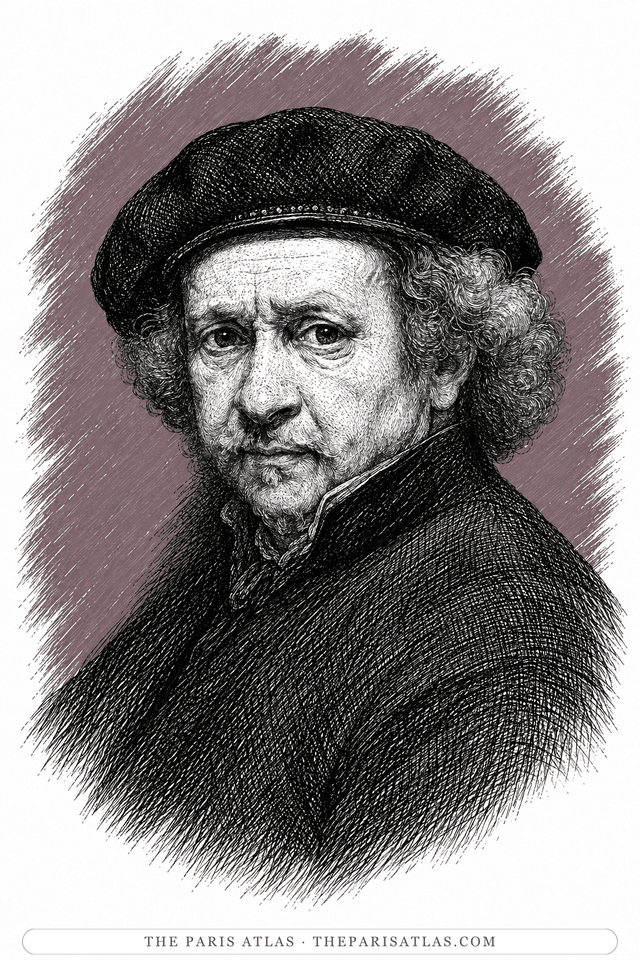
Rembrandt van Rijn
Dutch painter and etcher who worked in Leiden and Amsterdam and never traveled outside the Dutch Republic. He made about 300 etchings and roughly eighty self-portraits, trained some twenty-five painters, and was declared insolvent in 1656.
View artist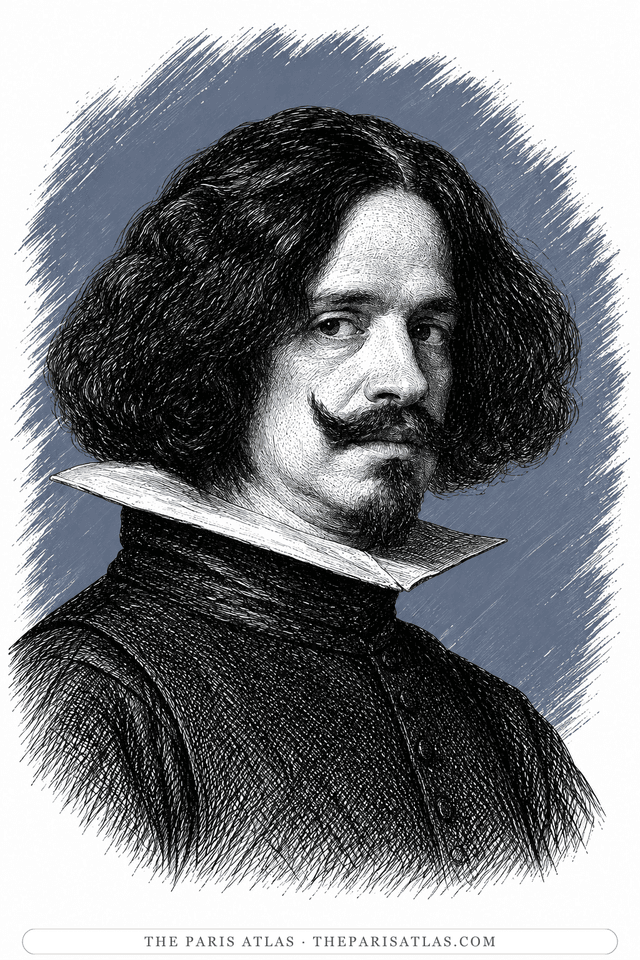
Diego Velázquez
Spanish painter who spent thirty-seven years in the household of Philip IV, painting the king, his family and the dwarfs and jesters of the palace, and who ended his career as the official responsible for housing and moving the court.
View artist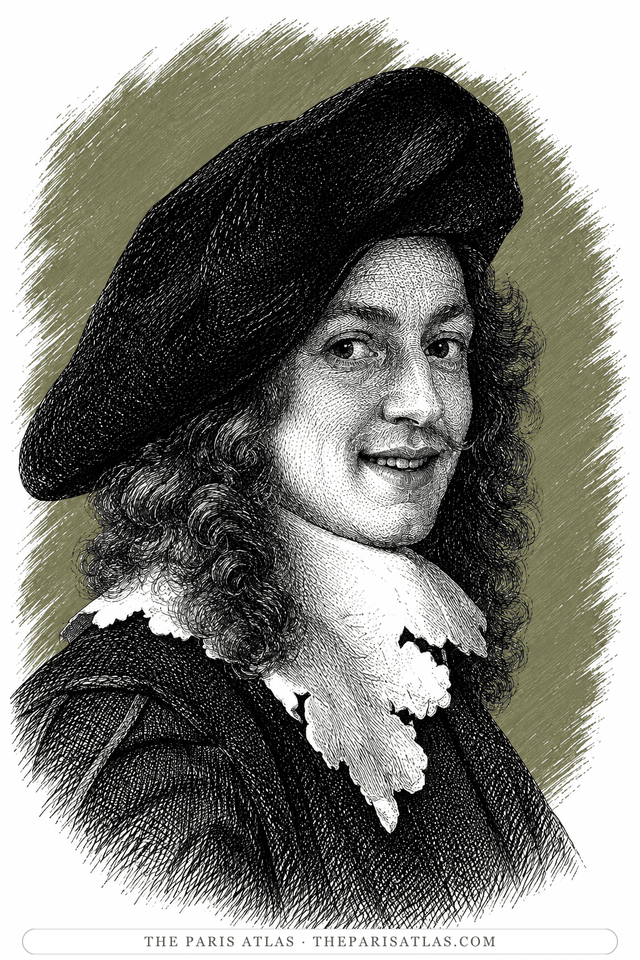
Johannes Vermeer
Dutch painter who worked in Delft and left fewer than forty paintings, most of them small scenes of one or two people in a quiet room lit from a window. Girl with a Pearl Earring, The Milkmaid and View of Delft are the best known.
View artist
References
The sources below include collection records, catalogues, scholarly research, and primary materials that informed this page. They document The Musicians, its making, and its place in cultural history.


1Baroque Rome
WebsiteThe Metropolitan Museum of ArtUsed forJean Sorabella on Baroque Rome, the cardinals' households that commissioned cabinet pictures, and Caravaggio's use of a single light source.
2Caravaggio, The Musicians (52.81) — collection record
WebsiteThe Metropolitan Museum of ArtUsed forThe museum's record: the 1597 date, oil on canvas at 92.1 by 118.4 cm, the Rogers Fund purchase of 1952, accession number 52.81, Gallery 620, and the public-domain status of the work.
3Michelangelo Merisi da Caravaggio (1571–1610)
WebsiteThe National Gallery, LondonUsed forThe National Gallery on Cardinal Francesco Maria del Monte recognising Caravaggio in 1595 and taking him into his household, and on the commissions that followed from the cardinal's connections.
4Caravaggio (Michelangelo Merisi) (1571–1610) and His Followers
WebsiteThe Metropolitan Museum of ArtUsed forKeith Christiansen on Del Monte housing and promoting Caravaggio, and on the half-length pictures of the Del Monte years.
These references provide the documented foundation for this work's history and interpretation. Claim-level citations remain attached to the specific claims they support.
 Explore more resources