The Fortune Teller
by Caravaggio
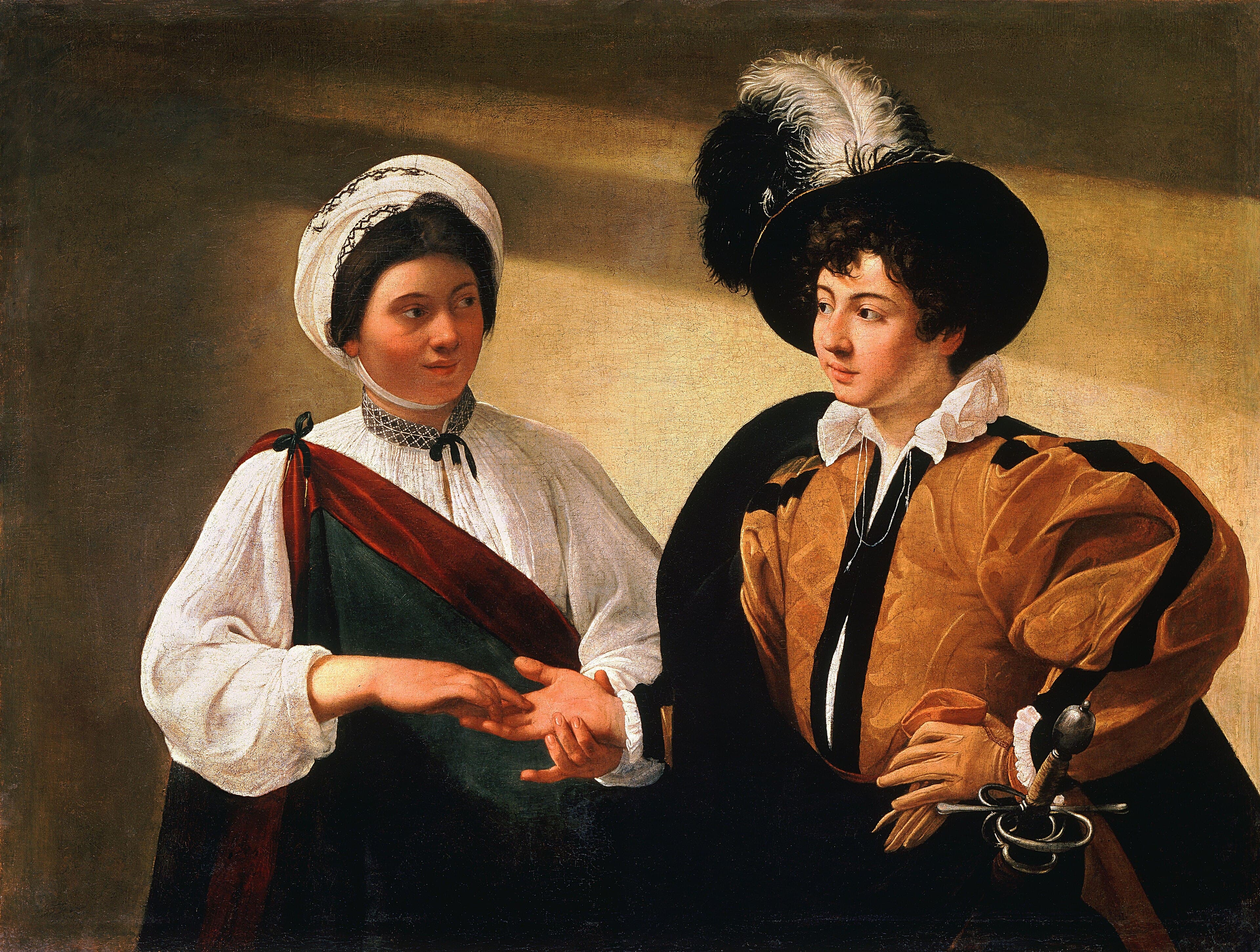
A young woman in a white headwrap holds a richly dressed boy's open palm and reads it, and the two of them look at each other rather than at the hand. The Louvre titles it La diseuse de bonne aventure and dates it to about 1595 to 1598. Caravaggio painted the composition twice; the second version is in Rome.
- circa 1595–1598
- Oil on canvas (transferred)
About Caravaggio
Overview
The Fortune Teller is an oil painting by Michelangelo Merisi da Caravaggio, dated by the Musée du Louvre to about 1595 to 1598. Two half-length figures fill a canvas 99 by 131 centimetres. A young woman holds a young man's right hand palm upward and traces it while he watches her face.
The picture belongs to the years when Caravaggio was working for Cardinal Francesco Maria del Monte, who took him into his household in 1595. It is one of the pictures of ordinary Roman street life that he made before the church commissions began.
What Happens in the Picture
The woman is dressed plainly. A white cloth is wound in thick coils round her head, with a dark embroidered zigzag worked along the edge nearest her face. Her blouse is white with full sleeves, crossed by a dark red sash over a green bodice. Her cheeks are flushed and she is half smiling with her lips closed.
The young man is dressed expensively. He wears a wide black hat carrying black and white ostrich plumes, a white ruff at the throat, and an ochre doublet slashed and banded with black velvet. A rapier hangs at his side with a swept hilt: an ovoid pommel, a grip bound in wound cord, a straight crossbar with knobbed ends, and looped guard bars beneath it.
His gloved hand rests at his hip, and the limp empty fingers of a second glove hang below it. The two of them look at each other steadily. Neither of them looks at the hand being read.
The setting is nothing at all: a plain olive-brown wall crossed by a broad diagonal band of paler ochre. Caravaggio gave the scene no room, no window and no furniture.
The Hands
The centre of the canvas is a knot of hands, and it is painted more carefully than either face. The young man's right hand is open and slack, palm upward, the fingers relaxed and spread. The woman's right hand comes across from the left and cradles it from beneath. Her fingers curl round and work at the base of his fingers.
The gesture is the subject. She is being paid for a reading, and both of her hands are occupied with his while his attention is on her face. Caravaggio sets the exchange up so that the viewer watches the hands and the boy does not.
Two Versions
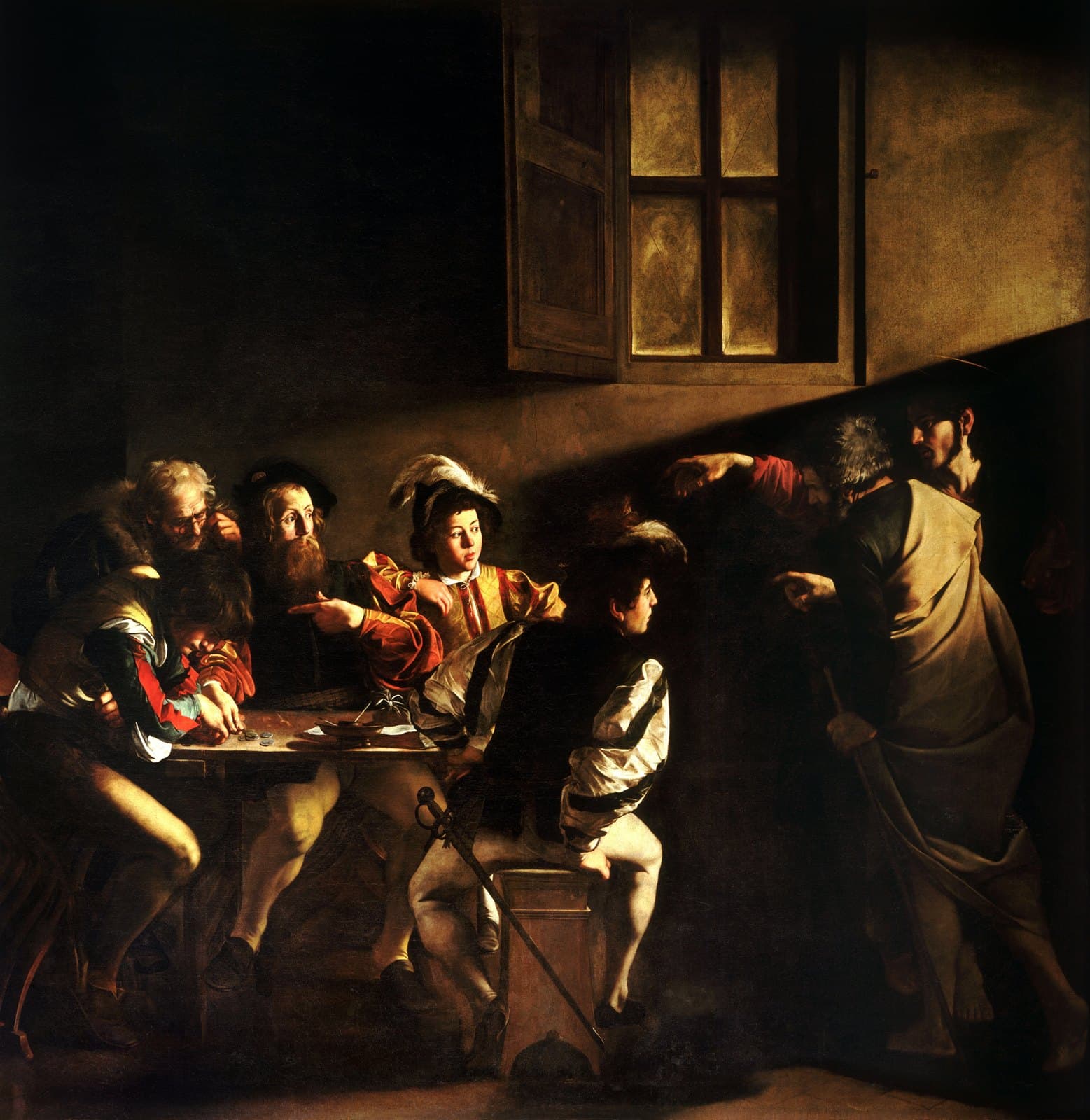
Caravaggio painted this composition twice. The Louvre's record notes a second Caravaggio of a closely related composition in the Pinacoteca Capitolina in Rome, which it traces to Cardinal Francesco Maria del Monte's collection.
The Capitoline Museums hold that second version as La Buona Ventura, Inv. PC 131, and date it to 1596 to 1597. It is oil on canvas at 115 by 150 centimetres, so it is the larger of the two by some margin. The Capitoline record gives its origin as the Pio collection, and hangs it in the Hall of Saint Petronilla.
The two are not copies of one another in the ordinary sense. They are the same idea painted again, which Caravaggio did more than once in his career.
A Transferred Canvas
The Louvre states the medium as oil on canvas with a transfer. The paint layer was lifted from its original support at some point and laid onto a new one, a treatment used on old paintings whose canvas had decayed.
A transfer is invasive and it leaves traces. It is one reason the surface reads the way it does, with a fine, even craquelure spread across the flesh and the pale ground.
How It Reached Paris
The Louvre records the painting with Alessandro Vittrici in Rome, then with the Doria-Pamphili family. Prince Camillo Pamphili gave it to Louis XIV in 1665. It appears in the royal inventory of 1683 as number 189.
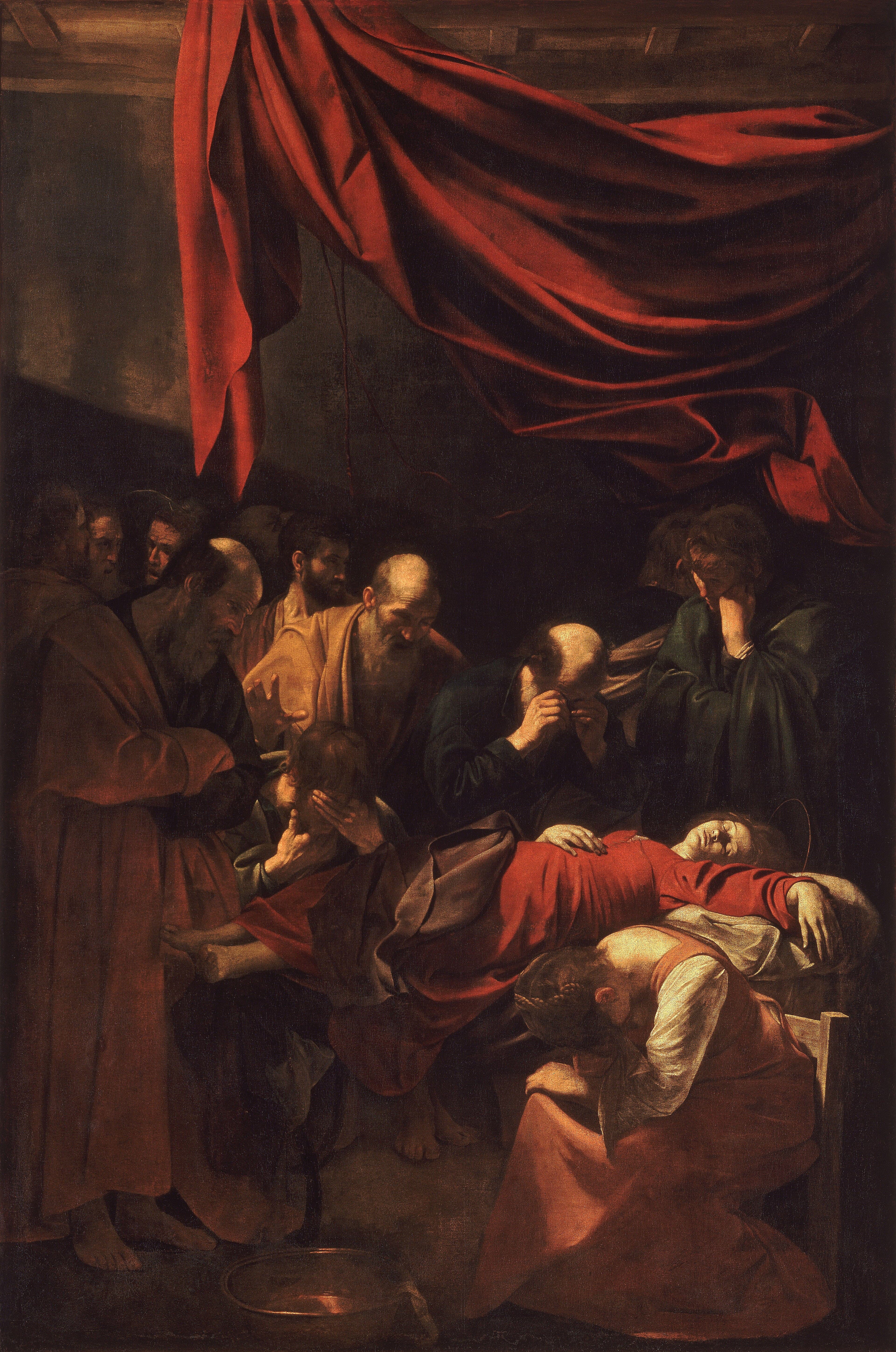
It came to France as a diplomatic gift rather than a purchase, some thirty years before Caravaggio's Death of the Virgin was bought for the same crown. Both now hang in Room 712 of the Grande Galerie, in the Denon wing.
Close reading
Reading the work, detail by detail
Two people look at each other and four hands do the work. Caravaggio put the transaction at the centre of the canvas and painted the hands more carefully than either face. The background is a bare wall with one diagonal band of light on it, so there is nothing else to look at.
1.Her hands are on his, and he is not watching
His right hand is open and slack, palm up, the fingers spread and unresisting. Her hand comes across from the left, cradles it from below, and her fingers curl in at the base of his. Both wrists show white cuffs. The hands are the sharpest painting in the picture, and neither face is turned toward them.
2.A white cloth wound in coils
White cloth is wound round her head in thick coils, and a dark zigzag is embroidered along the edge nearest her face. Her hair shows dark beneath it. Her eyes are turned sideways toward the young man, her cheeks are flushed, and her mouth is closed in a slight smile.
3.Black plumes and one white one
The hat is wide-brimmed and black, loaded with black ostrich plumes and one tall white one standing above them. His dark hair curls out under the brim. The hat alone takes up as much canvas as the woman's whole head and shoulders.
4.A rapier hilt and a second glove
His gloved hand rests at his hip, and the empty fingers of a second glove hang limp beneath it. Beside them is the rapier: a dark ovoid pommel, a grip bound in wound cord, a straight crossbar with knobbed ends, and looped guard rings curving below. It is an expensive weapon on a boy who is not using either hand.
5.Fine cords hang from his collar
A stiff white ruff sits at his throat above the ochre doublet. Two fine pale cords hang loose down his chest from the collar, ending in small tips. They are the ties of the shirt, painted as slack threads rather than tidied away.
6.A dark red sash over green
A dark red sash crosses her shoulder over a green bodice and is fastened with a black ribbon bow. Beneath it the blouse is plain white with full gathers. At her throat a dark lattice-patterned collar is tied with two black ribbons. Her clothes are ordinary and carefully described.
7.The only thing behind them is light
The wall behind the two figures is bare olive-brown, crossed by one broad diagonal band of paler ochre running down from the upper left. There is no window, no furniture and no horizon. The band tells the viewer where the light enters and nothing else.
8.Her sleeve is pushed back to the elbow
The white sleeve is full and gathered, pushed back clear of the elbow so the forearm is bare to the light. The arm reaches right across the picture toward the young man's hand. Caravaggio lit the forearm as brightly as either face.
9.The doublet is banded in black velvet
The doublet is ochre silk banded with broad strips of black velvet, and the upper sleeve is padded and slashed so the black shows through in regular bars. A black cloak hangs behind it. The fabric is painted with more attention than the wall, the floor or the space they stand in, because the clothes are the point of him.
Timeline
1595
Cardinal Francesco Maria del Monte takes Caravaggio into his household in Rome.
circa 1595–1598
Caravaggio paints The Fortune Teller. He paints the composition a second time; that version is now in the Pinacoteca Capitolina in Rome.
1665
Prince Camillo Pamphili gives the painting to Louis XIV. It enters the French royal collection.
1683
The painting is listed in the royal inventory as number 189.
Where to see it
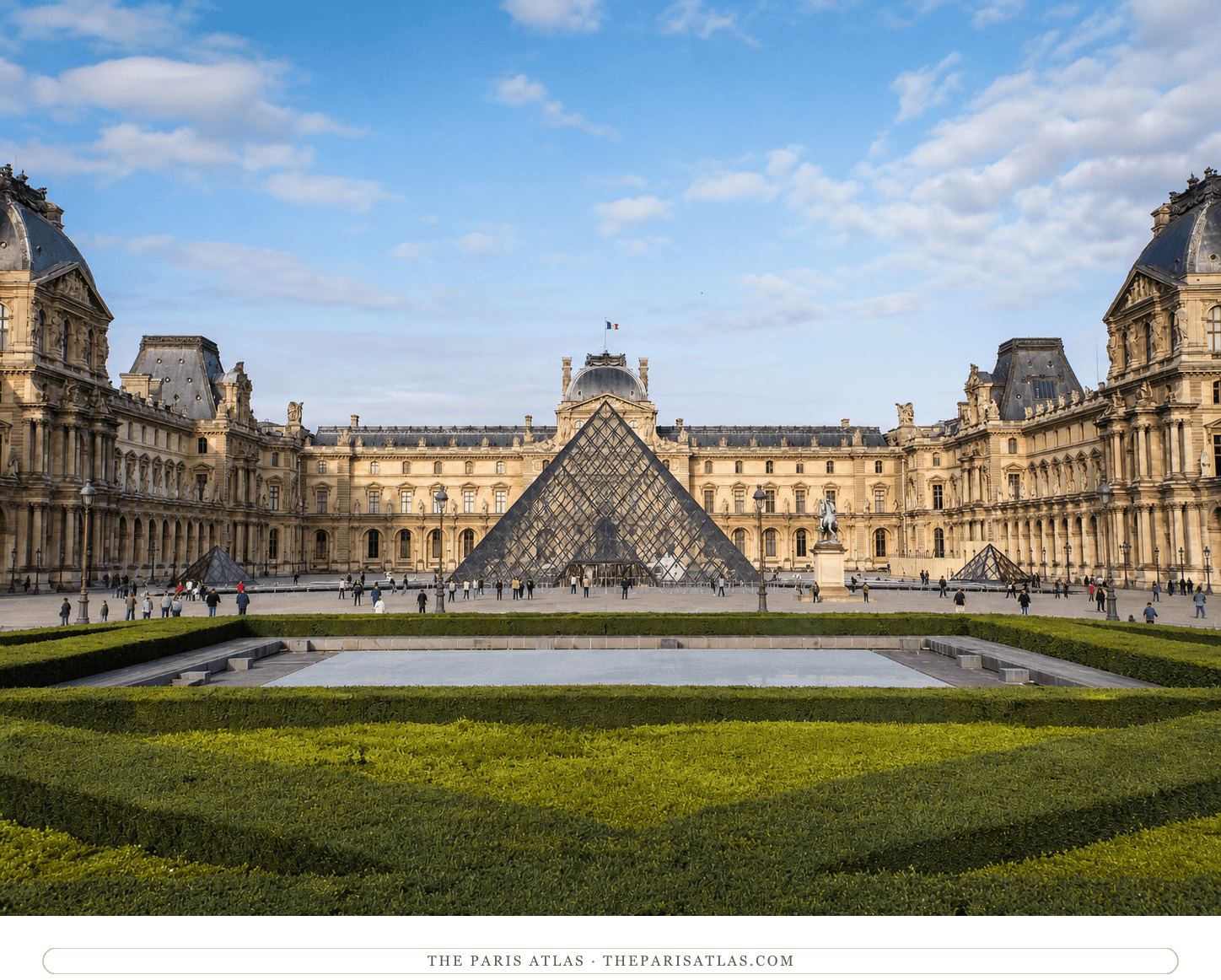
Musée du Louvre, Paris
Rue de Rivoli, 75001 Paris, France
Displays and loans can change. Check whether this work is on view before making a special trip.
Plan your visitFrequently asked questions
Where is Caravaggio's The Fortune Teller?
The Musée du Louvre in Paris, as INV 55. It hangs in Room 712 of the Grande Galerie, in the Denon wing on level 1, in the same room as Caravaggio's The Death of the Virgin.
What is happening in The Fortune Teller?
A young woman is reading a richly dressed young man's palm. She holds his open right hand from beneath with her fingers curled round the base of his, and the two of them look at each other rather than at the hand. He wears a plumed hat, a ruff and a rapier; she wears a white headwrap and a plain blouse.
Are there two versions of The Fortune Teller?
Yes. Caravaggio painted the composition twice. The Louvre holds one, and its record notes a second Caravaggio of a closely related composition in the Pinacoteca Capitolina in Rome, which came from Cardinal Francesco Maria del Monte's collection.
How big is The Fortune Teller?
It measures 99 by 131 centimetres in oil on canvas, so roughly 3 feet 3 inches high by 4 feet 4 inches wide. The Louvre gives the dimensions as 0.99 metres by 1.31 metres.
When did Caravaggio paint The Fortune Teller?
The Louvre dates it to about 1595 to 1598, in the last quarter of the sixteenth century. That places it in the years after Cardinal Francesco Maria del Monte took Caravaggio into his household in 1595.
How did The Fortune Teller get to the Louvre?
As a gift. The Louvre records it with Alessandro Vittrici in Rome and then with the Doria-Pamphili family, and states that Prince Camillo Pamphili gave it to Louis XIV in 1665. It is listed in the royal inventory of 1683 as number 189.
More by Caravaggio
If you like Caravaggio
Explore painters from the same movements and circles.
Rembrandt van Rijn
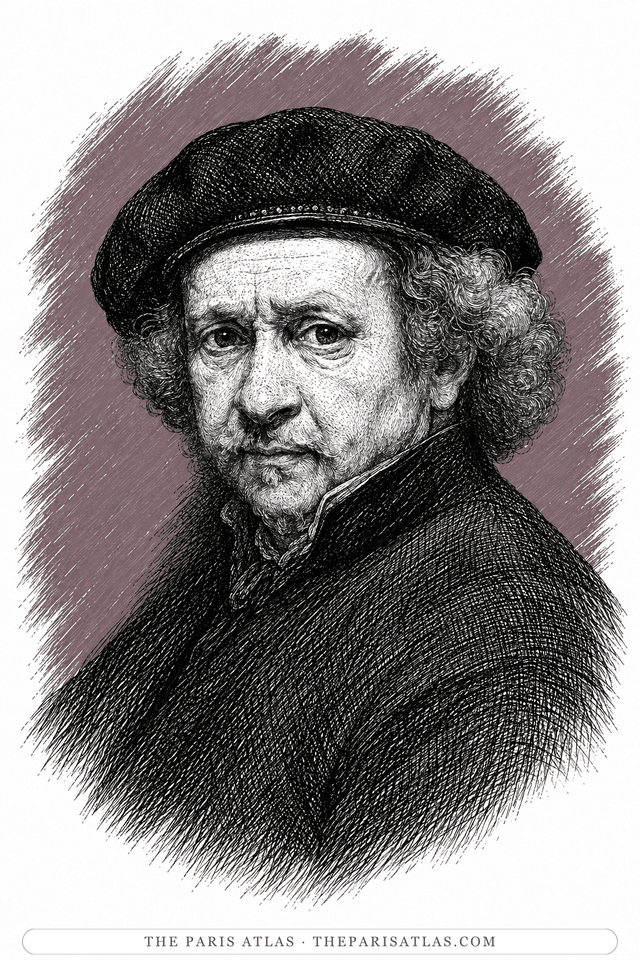
Dutch painter and etcher who worked in Leiden and Amsterdam and never traveled outside the Dutch Republic. He made about 300 etchings and roughly eighty self-portraits, trained some twenty-five painters, and was declared insolvent in 1656.
View artist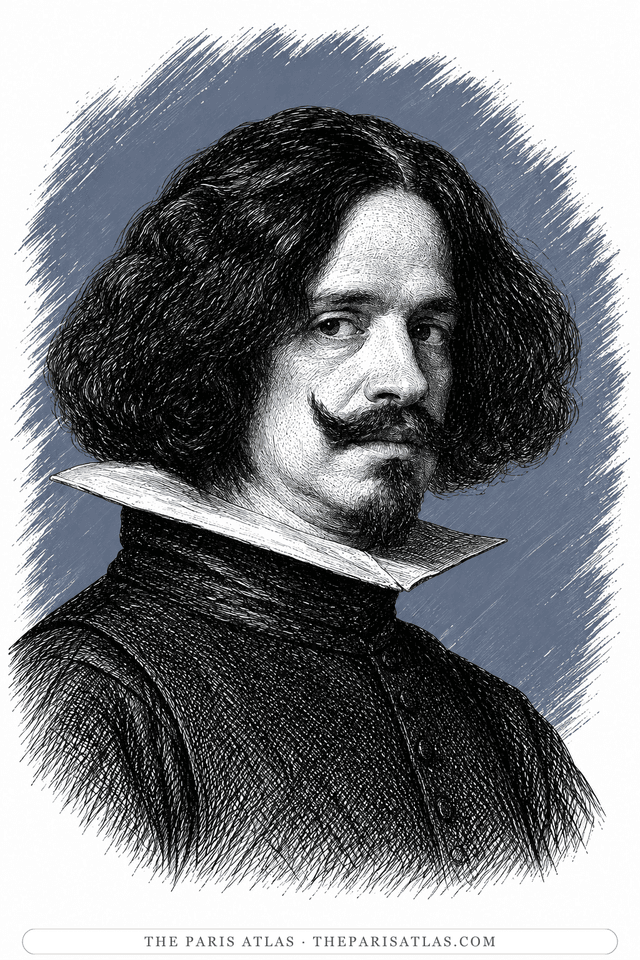
Diego Velázquez
Spanish painter who spent thirty-seven years in the household of Philip IV, painting the king, his family and the dwarfs and jesters of the palace, and who ended his career as the official responsible for housing and moving the court.
View artist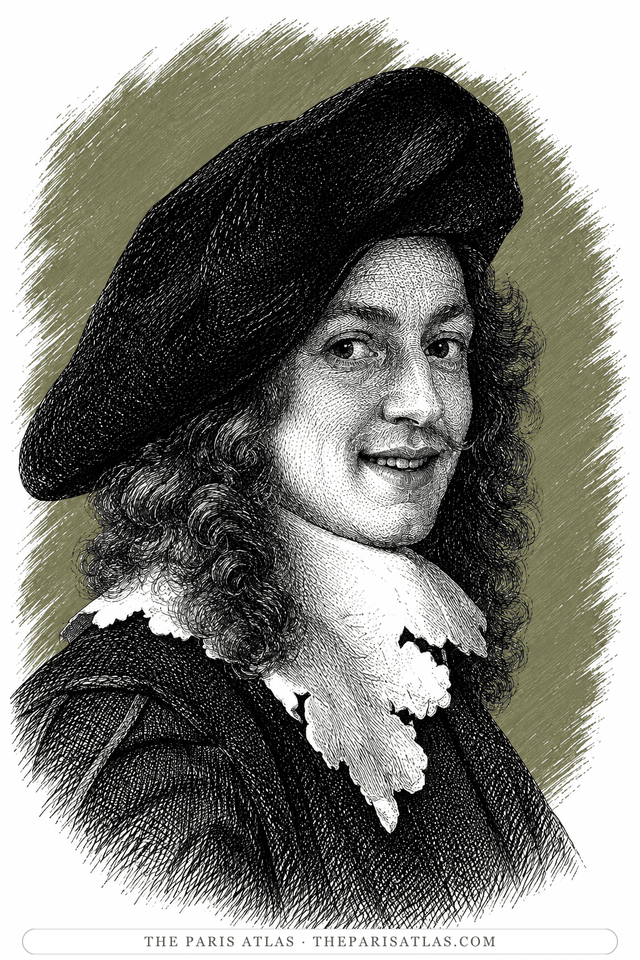
Johannes Vermeer
Dutch painter who worked in Delft and left fewer than forty paintings, most of them small scenes of one or two people in a quiet room lit from a window. Girl with a Pearl Earring, The Milkmaid and View of Delft are the best known.
View artist
References
The sources below include collection records, catalogues, scholarly research, and primary materials that informed this page. They document The Fortune Teller, its making, and its place in cultural history.

1Caravaggio, La Buona Ventura (Inv. PC 131) — collection record
WebsiteMusei Capitolini, RomeUsed forThe Capitoline Museums' record for the second version, La Buona Ventura: the date of 1596 to 1597, oil on canvas at 115 by 150 cm, the Pio collection as its origin, and its display in the Hall of Saint Petronilla.
2Caravaggio (Michelangelo Merisi) (1571–1610) and His Followers
WebsiteThe Metropolitan Museum of ArtUsed forKeith Christiansen on Cardinal Francesco Maria del Monte housing and promoting Caravaggio, and on the half-length pictures made in that household.
3Caravaggio, La Diseuse de bonne aventure — collection record
WebsiteMusée du LouvreUsed forThe Louvre's record: the title La diseuse de bonne aventure, the date of about 1595 to 1598, oil on canvas with a transfer at 0.99 by 1.31 metres, Room 712 in the Denon wing, the related version in the Pinacoteca Capitolina from Del Monte's collection, and the ownership chain from Alessandro Vittrici and the Doria-Pamphili to Camillo Pamphili's gift to Louis XIV in 1665.
4Michelangelo Merisi da Caravaggio (1571–1610)
WebsiteThe National Gallery, LondonUsed forThe National Gallery on Cardinal Francesco Maria del Monte recognising Caravaggio and taking him into his household in 1595, and on the public commissions that followed.
These references provide the documented foundation for this work's history and interpretation. Claim-level citations remain attached to the specific claims they support.
 Explore more resources