The Death of the Virgin
by Caravaggio
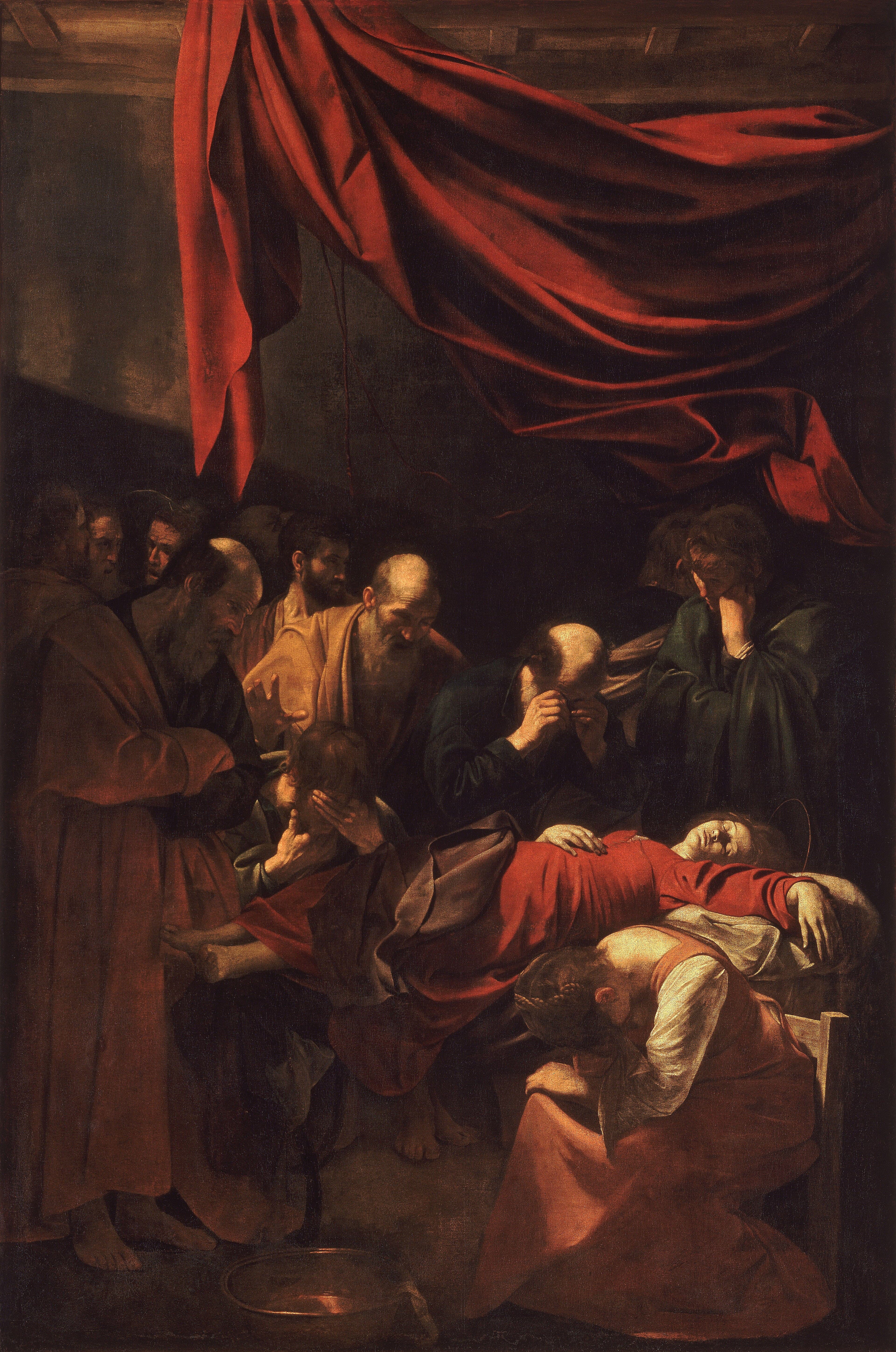
A dead woman lies on a plank in a bare room, her feet uncovered and her stomach distended under a red dress, while a dozen men stand round her and one woman sits bent double in front. The Louvre calls it La Mort de la Vierge and dates it to about 1601 to 1606. The church that commissioned it refused to hang it.
- circa 1601–1606
- Oil on canvas
About Caravaggio
Overview
The Death of the Virgin is an oil painting by Michelangelo Merisi da Caravaggio, made for the church of Santa Maria della Scala in Trastevere, Rome. The Louvre records the commission as Laerzio Cherubini's and dates the work to about 1601 to 1606. It measures 369 by 245 centimetres, the largest canvas Caravaggio painted for a Roman church outside the Contarelli Chapel.
The subject is the death of the mother of Christ. Caravaggio treated it as a death in a room rather than an assumption into heaven. The painting hangs in the Musée du Louvre as INV 54, in the Grande Galerie of the Denon wing.
The Commission and the Refusal
Laerzio Cherubini, a Roman lawyer, commissioned the altarpiece for his chapel in Santa Maria della Scala in 1601. The Louvre's object history records that Caravaggio finished it at the end of 1605 or the beginning of 1606, and that the clergy of the church then refused it. The painting never hung above the altar it was made for.
The refusal is the documented fact; the reasons given at the time are less firmly recorded than the outcome. What the canvas shows is plain enough to explain the discomfort. The Virgin is laid out as a corpse, with no vision above her and no angels, and her feet are bare and uncovered. A single hairline arc of gold above her head is the only mark of sanctity in the painting.
The story that Caravaggio used the body of a drowned woman as his model circulates in the early lives of the painter. It is repeated often and verified rarely, and the Louvre's record does not carry it.
What the Painting Shows
The Virgin lies on a low plank, her head to the right, her body in a red dress. Her right hand has been laid flat on her chest and her left arm has fallen away from her side. Her feet stick out bare at the left, below the hem. Her face is turned up, the mouth slightly open, the skin drained.
Around her stand the apostles, most of them bald or grey, most of them barefoot. One presses the heel of his hand into his eye. Another holds his head. A man in green at the right has covered his face entirely. Nobody gestures toward heaven and nobody points.
In the foreground a woman sits doubled over on a low chair, her face hidden completely, her hair coiled in a braid at the back of her head. She is usually identified as Mary Magdalene. On the floor beside her stands a shallow metal basin, empty, the only object in the room.
Above all of them hangs an enormous red curtain, swagged across the top third of the canvas and held by a cord. It takes up more of the picture than the dead woman does.
Where the Light Comes From
The light enters high from the left and crosses the room on a downward slant. It catches the red curtain first, then the bald crowns of the apostles, then the Virgin's face and her bare feet. Everything it misses goes to brown and black, including most of the back wall and the floor.
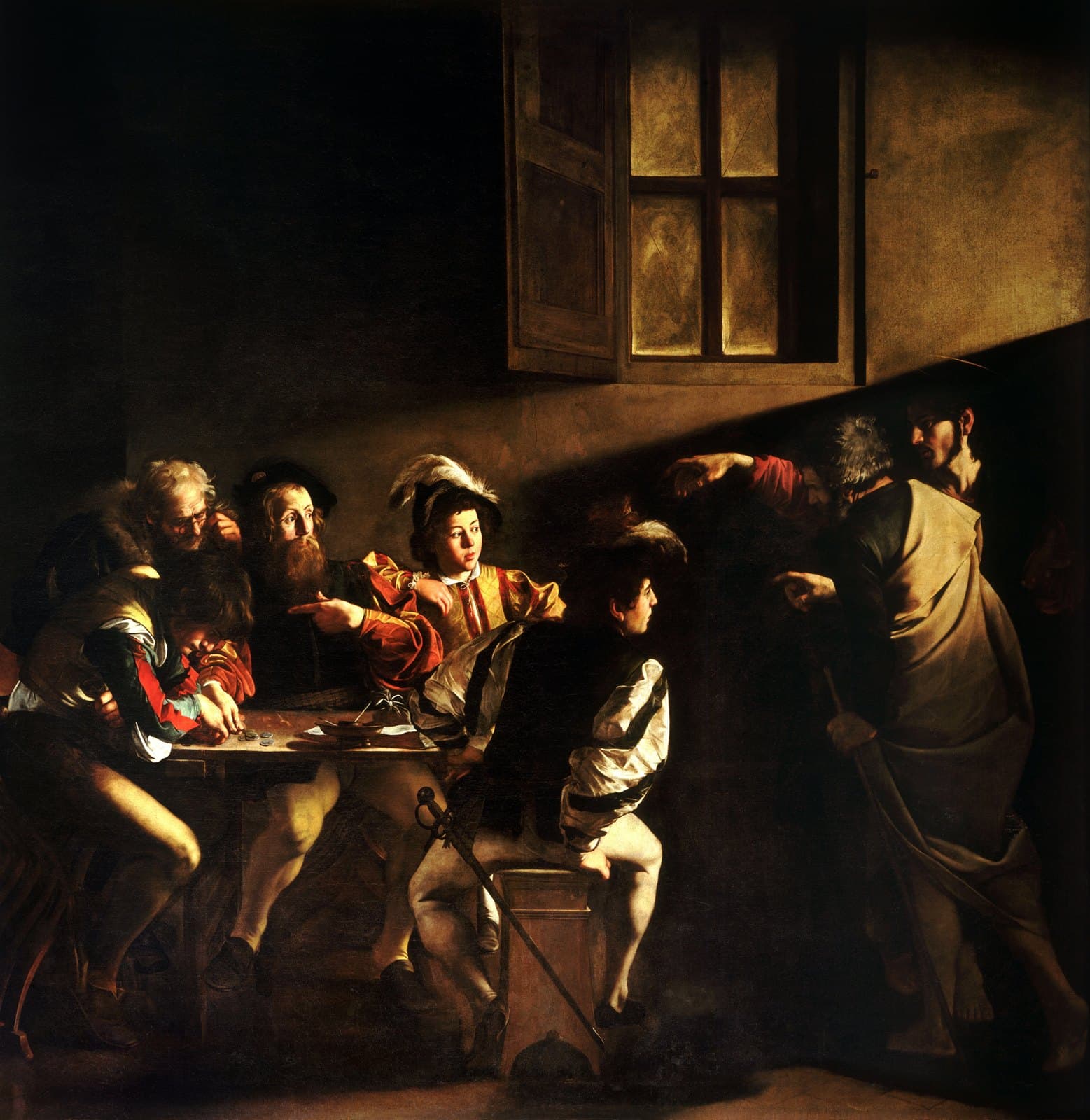
The effect is that of a room with one window rather than of a sacred event lit from within. Caravaggio used the same device in the Contarelli Chapel pictures of 1599 to 1600, where a single raking beam does the work of organising a crowd.
From a Refused Altarpiece to the French Crown
The Louvre traces the painting's route in an unbroken line. After the refusal it entered the collection of Ferdinando Gonzaga, Duke of Mantua, in 1607, within about a year of being turned down. In 1627 it belonged to Charles I, King of England, Scotland and Ireland, in London.
It passed next to Everhard Jabach, the Cologne-born banker and collector in Paris. Jabach sold it to Louis XIV in 1671, and it appears in the royal inventory of 1683 as number 193. A painting a parish rejected was bought within a lifetime by two kings.
The Louvre holds it today as INV 54, with MR 104 as a second inventory number from the Musée Royal. Its mode of acquisition is recorded as the former royal collection.
Seeing It Now
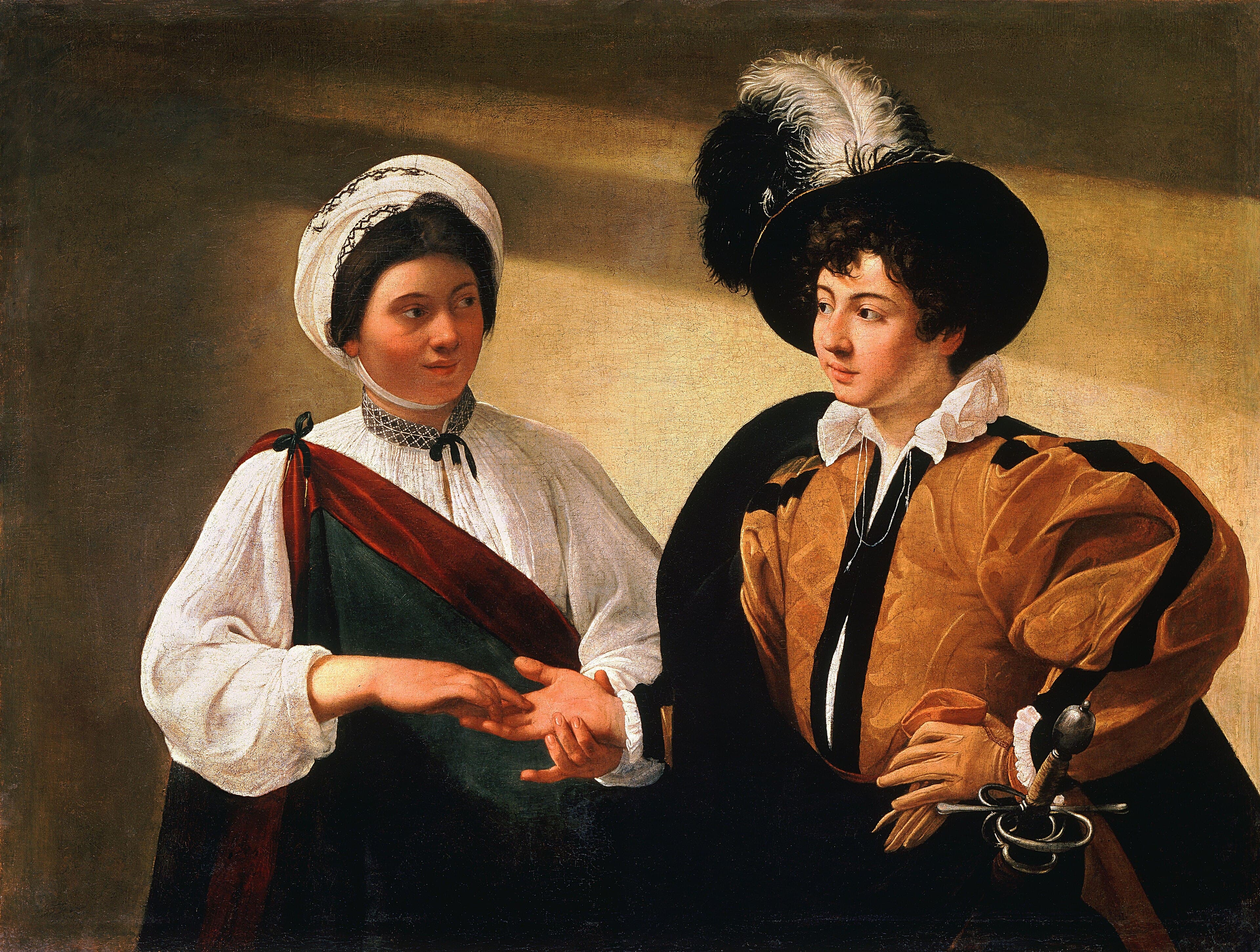
The painting hangs in Room 712 of the Grande Galerie, in the Denon wing on level 1, alongside the Louvre's other Caravaggio canvases. The Fortune Teller is in the same room.
Its scale matters in the room. At 369 centimetres high the dead woman is above eye level, and the red curtain fills the space over a standing viewer's head.
Close reading
Reading the work, detail by detail
Michelangelo Merisi da Caravaggio gave a church a dead woman in a red dress and almost nothing else. There is no sky, no vision and no gold beyond a single hairline arc above her head. Working across the canvas in close view shows how much of it is taken up by a hanging curtain, and how little by anything holy.
1.A red curtain takes the top third
The curtain is swagged from the upper left across to the right, hanging in deep folds of dark red. Above it are plain wooden beams. It occupies roughly the top third of a canvas 369 centimetres high, more space than the dead woman gets, and it is the first thing the light from the left strikes.
2.One thin gold line above her head
Her face is turned up and lit directly. The eyes are nearly shut, the mouth is slightly open, the skin is drained to grey. Behind her hair a single fine gold line arcs through the dark. It is drawn no thicker than a wire, and it is the only mark of sanctity anywhere in the painting.
3.Her hand has been placed, not folded
The right hand lies flat on the red dress at her chest, the fingers slightly parted. It is not clasped and it holds nothing. Somebody has laid it there. Below it the body swells into a rounded mass under the cloth, and the dress is creased where it has been pulled across her.
4.The other arm has fallen away
Her left arm runs out to the right and the hand hangs off the end, open and slack, the fingers drooping. White undercloth shows below the red. Nothing supports the arm and nobody has arranged it. Caravaggio painted the one gesture a body makes on its own.
5.Her feet are bare and uncovered
Both feet come out bare from under the hem at the left end of the board, lit from above so the soles and toes are fully described. The red drapery has been folded back off them rather than drawn over them. A standing mourner's robe fills the space behind.
6.One empty basin on the floor
A shallow metal basin stands on the bare floor at the front of the picture, seen at a steep angle and holding nothing. A thin highlight runs round part of its rim. It is the only object in the room apart from the board, the chair and the curtain.
7.Her face is hidden completely
The woman in the foreground, usually identified as Mary Magdalene, is bent so far forward that her face cannot be seen at all. Her hair is wound into a braided coil at the back of her head. The large white sleeve is the brightest cloth in the lower half of the canvas. Her grief is carried by a back and a neck.
8.An apostle presses both hands to his face
A bald apostle bends forward over the body and presses both hands against his eyes. His head catches the light on the crown while his face stays in shadow. Around him other heads are turned down or away. Not one figure in the painting looks upward.
9.The man in green has covered his face
At the right of the crowd a man in a green robe has brought his hand up flat against his cheek and temple. It covers most of his face. He is one of the few figures still standing upright, and he has chosen not to look.
10.The crowd is old men, packed tight
The heads at the upper left are packed against one another with no space between them. Most are bald or balding, most are grey-bearded, and all of them are turned down or inward toward the body. Caravaggio painted working men's heads and lit them from the same window as the curtain.
Timeline
1601
Laerzio Cherubini commissions the altarpiece for his chapel in the church of Santa Maria della Scala in Trastevere, Rome.
1605–1606
Caravaggio finishes the painting at the end of 1605 or the beginning of 1606. The clergy of Santa Maria della Scala refuse it.
1607
The painting enters the collection of Ferdinando Gonzaga, Duke of Mantua.
1627
It is in London, in the collection of Charles I, King of England, Scotland and Ireland.
1671
Everhard Jabach sells it to Louis XIV in Paris. It is listed in the royal inventory of 1683 as number 193.
Where to see it
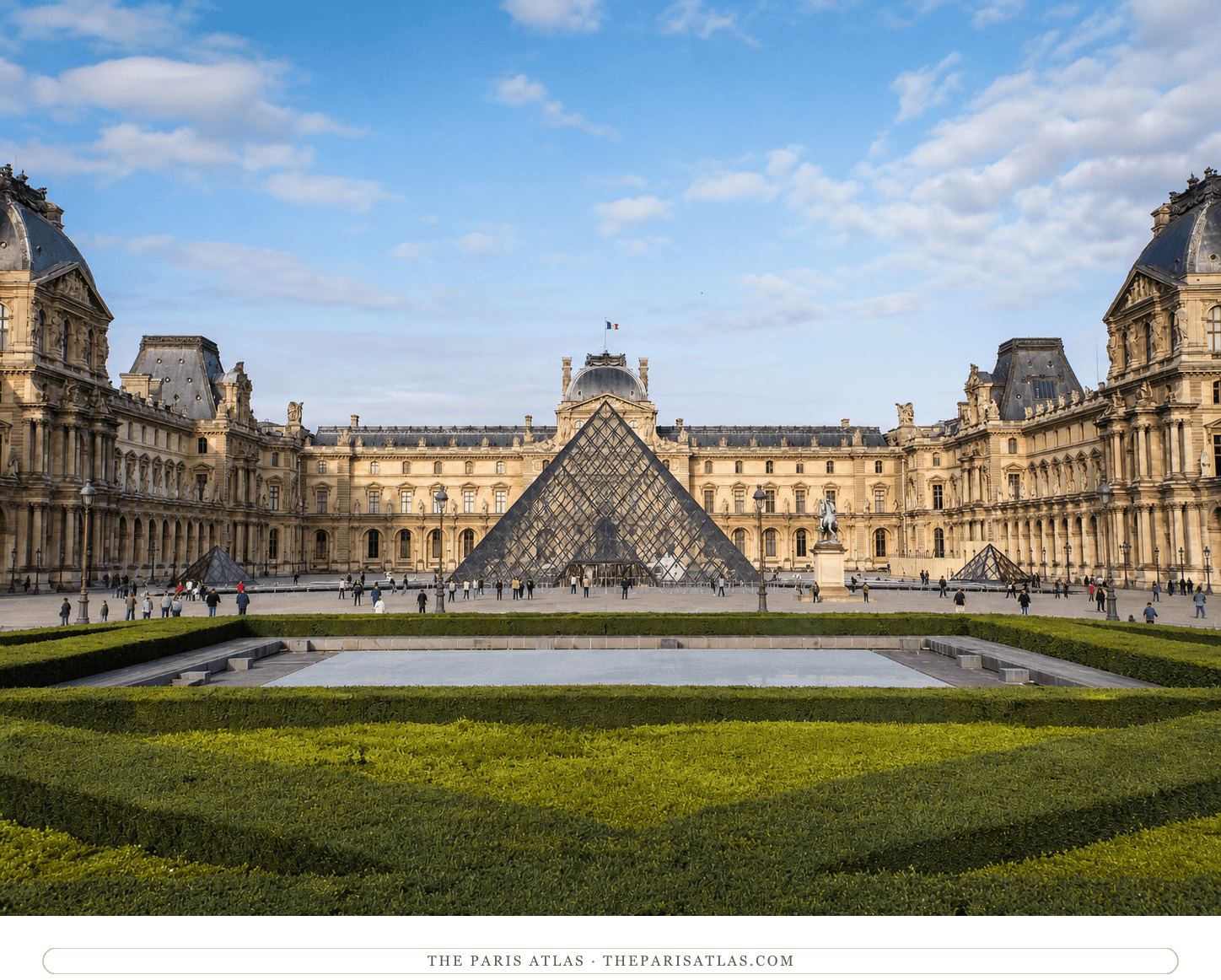
Musée du Louvre, Paris
Rue de Rivoli, 75001 Paris, France
Displays and loans can change. Check whether this work is on view before making a special trip.
Plan your visitFrequently asked questions
Where is The Death of the Virgin?
The Musée du Louvre in Paris, as INV 54. It hangs in Room 712 of the Grande Galerie, in the Denon wing on level 1, in the same room as Caravaggio's The Fortune Teller.
Why was The Death of the Virgin rejected?
The Louvre records that the clergy of Santa Maria della Scala refused the finished painting, without setting out their reasons. The canvas gives the Virgin no vision, no angels and no ascent, shows her stomach distended under the red dress, and leaves her feet uncovered. A thin gold arc above her head is the only sign of sanctity.
How big is The Death of the Virgin?
It measures 369 by 245 centimetres in oil on canvas, so roughly 12 feet 1 inch high by 8 feet wide. The Louvre states the dimensions as 3.69 metres by 2.45 metres.
Who is the woman sitting in front of the body?
She is usually identified as Mary Magdalene. Caravaggio painted her bent right over on a low chair with her face completely hidden, her hair coiled in a braid at the back of her head. No part of her expression is visible.
How did a rejected altarpiece reach the Louvre?
Through two royal collections. The Louvre records it with Ferdinando Gonzaga, Duke of Mantua, in 1607, then with Charles I in London in 1627, then with the Paris collector Everhard Jabach, who sold it to Louis XIV in 1671. It appears in the royal inventory of 1683 as number 193.
When did Caravaggio paint The Death of the Virgin?
The Louvre dates it to about 1601 to 1606. Laerzio Cherubini commissioned it in 1601, and the Louvre records the painting as finished at the end of 1605 or the beginning of 1606.
More by Caravaggio
If you like Caravaggio
Explore painters from the same movements and circles.
Rembrandt van Rijn
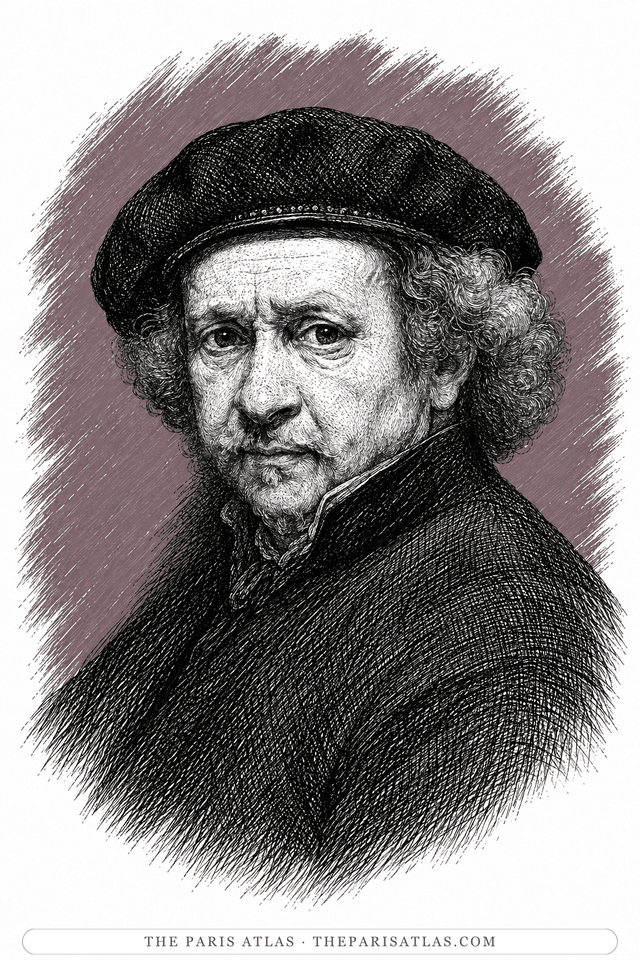
Dutch painter and etcher who worked in Leiden and Amsterdam and never traveled outside the Dutch Republic. He made about 300 etchings and roughly eighty self-portraits, trained some twenty-five painters, and was declared insolvent in 1656.
View artist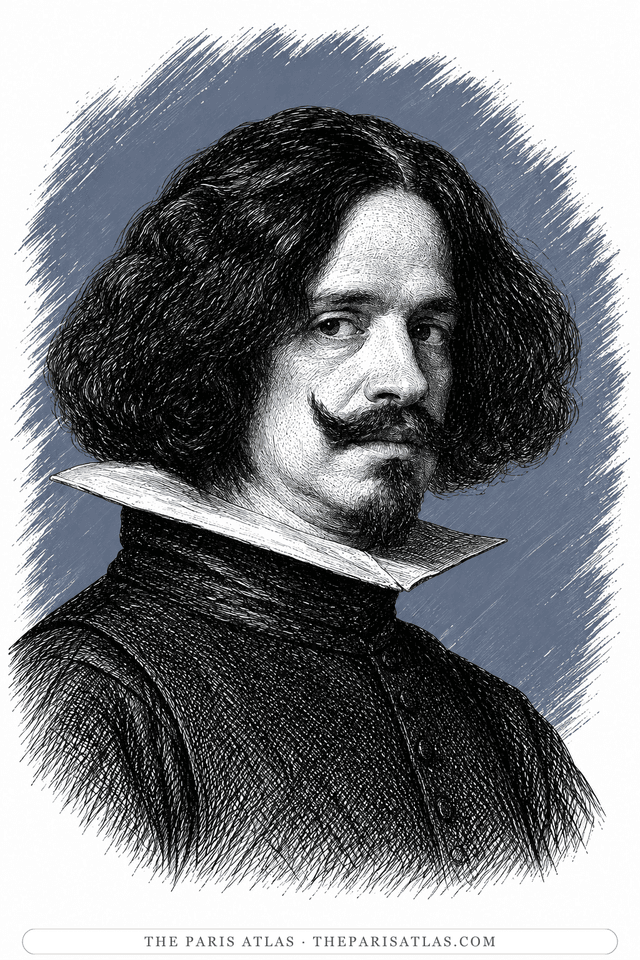
Diego Velázquez
Spanish painter who spent thirty-seven years in the household of Philip IV, painting the king, his family and the dwarfs and jesters of the palace, and who ended his career as the official responsible for housing and moving the court.
View artist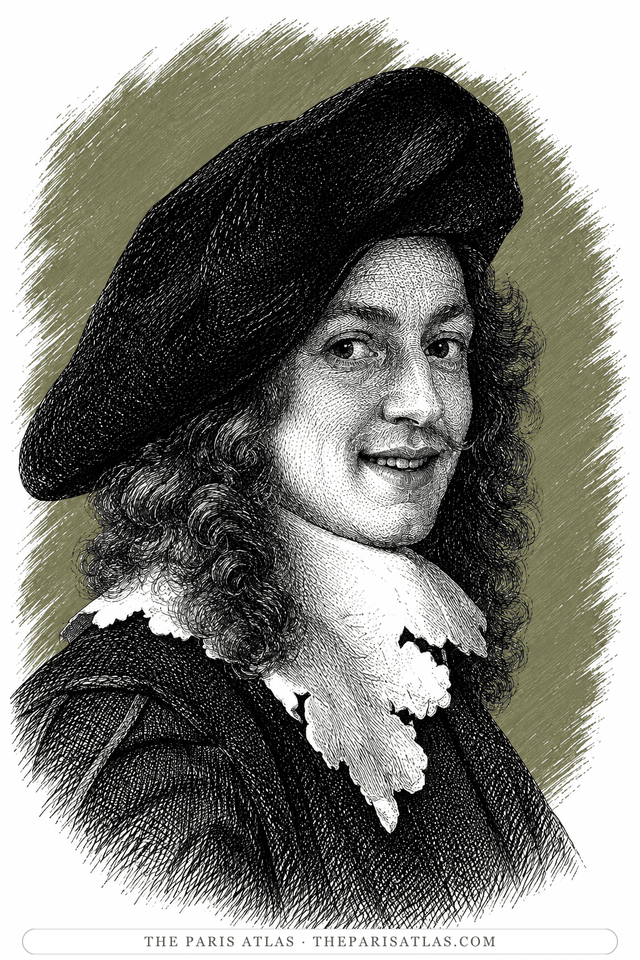
Johannes Vermeer
Dutch painter who worked in Delft and left fewer than forty paintings, most of them small scenes of one or two people in a quiet room lit from a window. Girl with a Pearl Earring, The Milkmaid and View of Delft are the best known.
View artist
References
The sources below include collection records, catalogues, scholarly research, and primary materials that informed this page. They document The Death of the Virgin, its making, and its place in cultural history.

1Caravaggio (Michelangelo Merisi) (1571–1610) and His Followers
WebsiteThe Metropolitan Museum of ArtUsed forKeith Christiansen on Caravaggio's Roman patrons and on the church commissions that followed Del Monte's support.
2Baroque Rome
WebsiteThe Metropolitan Museum of ArtUsed forJean Sorabella on painting for Roman churches around 1600, and on the demands the reformed church made of altarpieces.
3Caravaggio, La Mort de la Vierge — collection record
WebsiteMusée du LouvreUsed forThe Louvre's record: the title La Mort de la Vierge, the date of about 1601 to 1606, oil on canvas at 3.69 by 2.45 metres, Room 712 in the Denon wing, and the object history from Cherubini's commission and the clergy's refusal through Mantua, Charles I and Jabach to Louis XIV in 1671.
4Michelangelo Merisi da Caravaggio (1571–1610)
WebsiteThe National Gallery, LondonUsed forThe National Gallery on Caravaggio's Roman career, the patronage that carried it, and the 1606 killing that ended his time in the city.
These references provide the documented foundation for this work's history and interpretation. Claim-level citations remain attached to the specific claims they support.
 Explore more resources