Parade
by Jean Cocteau, Erik Satie, Pablo Picasso
The one-act ballet that dragged the avant-garde onto the popular stage: Cocteau's scenario, Satie's score with its typewriter and siren, and Picasso's Cubist curtain, sets, and costumes for Diaghilev's Ballets Russes — premiered in Paris in May 1917 to a scandalized house. In his program note, Guillaume Apollinaire described it as 'a kind of surrealism' — the word's first prominent appearance in print, and the name André Breton's movement later adopted. The Rome working trip also gave Picasso his first long look at the antique, helping initiate the classical turn that became the Return to Order.
- 1917
- Ballet réaliste in one scene
The people who made this work
The collaboration
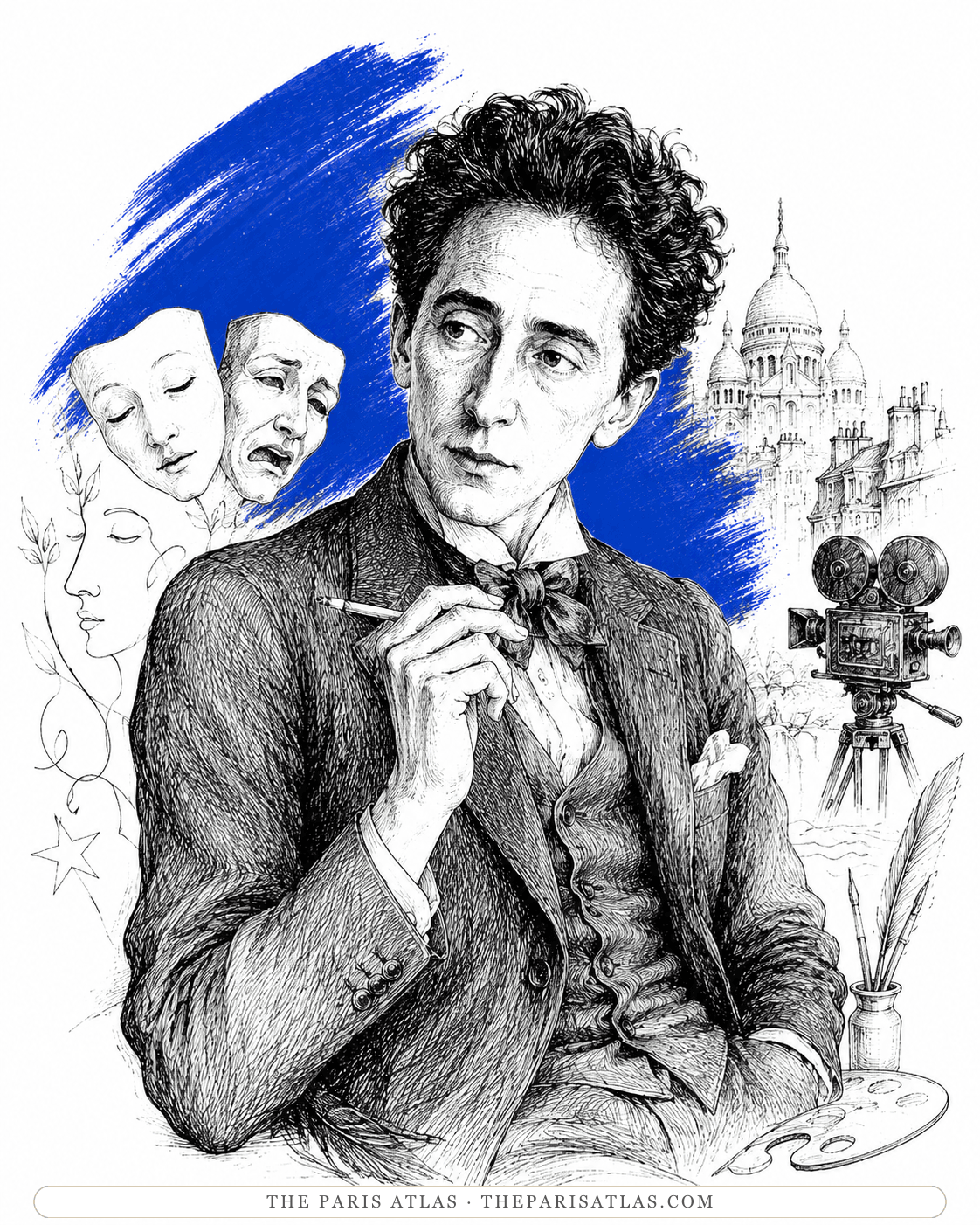
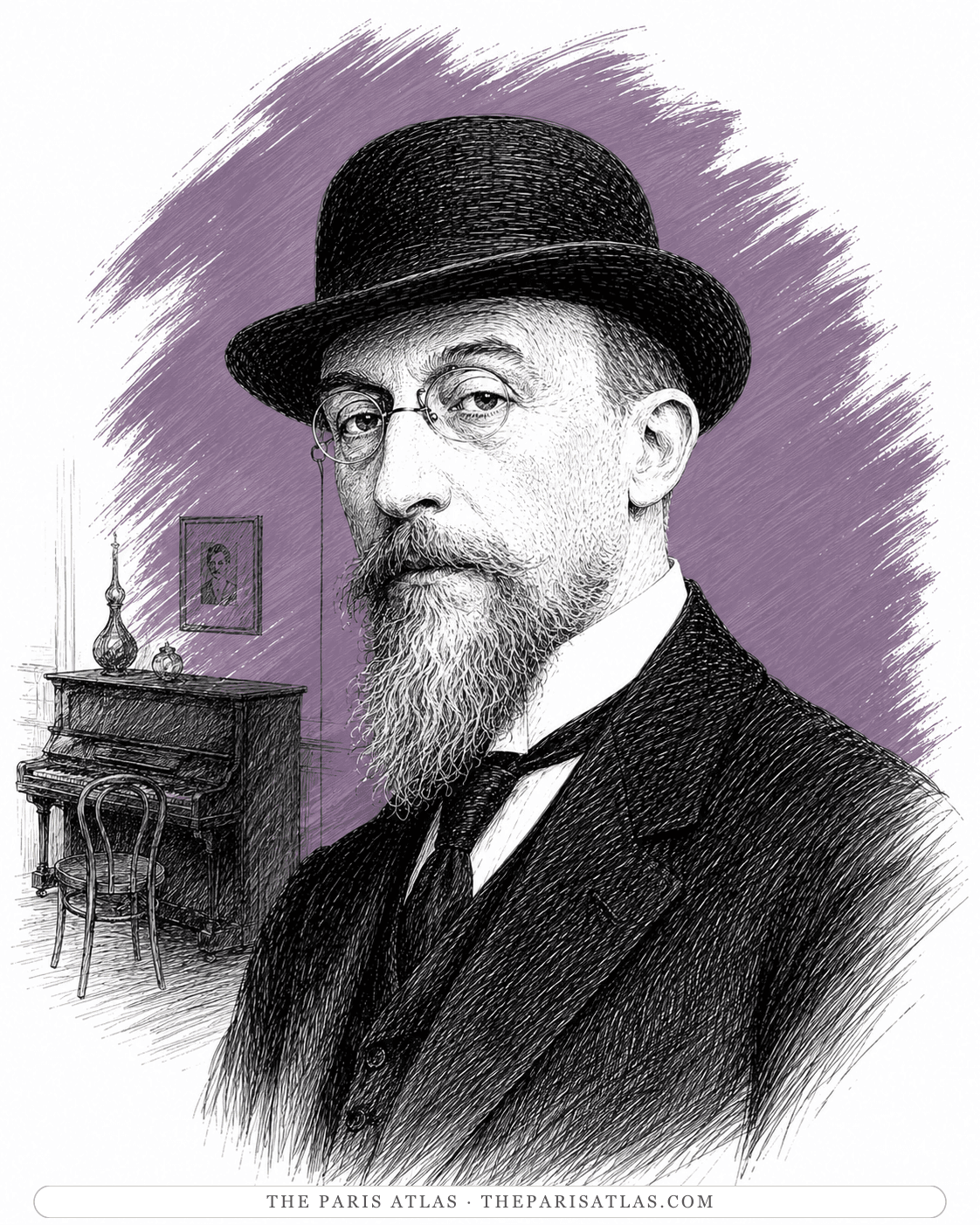
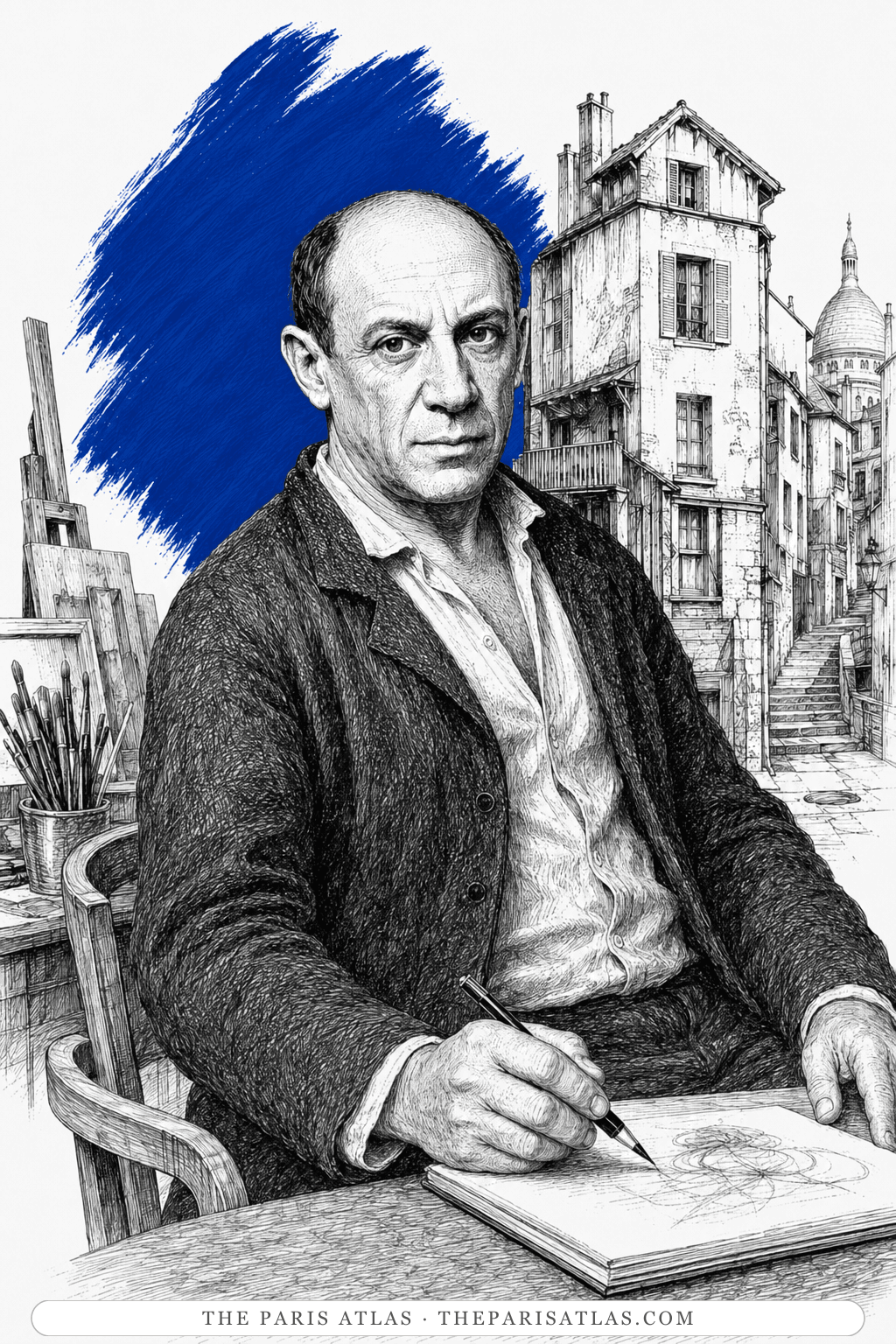
Parade put four kinds of modern artist on one stage at once. Jean Cocteau wrote the scenario, Erik Satie the score, Pablo Picasso designed the curtain, sets and costumes, and Léonide Massine made the choreography — all of it produced by Serge Diaghilev for the Ballets Russes. It is our clearest single node for how the Paris avant-garde actually worked: not alone, but in rooms together.
The thin plot is a sideshow. Outside a Paris fairground theatre, circus performers — a Chinese conjuror, a little American girl, acrobats — put on a teaser, a parade, to lure an audience inside for the real show that never comes.
Satie's score, with a typewriter in it
Satie scored the ballet for orchestra and then added noises: a typewriter, a pistol, a steamship whistle, a siren. The everyday machine sounds were Cocteau's idea as much as Satie's, and they are the point — the ballet drags the noise of the modern street onto the ballet stage, where it had no business being.
Picasso's Cubist stage
Picasso built the look. The managers who herd the performers wore towering Cubist constructions of cardboard and cloth, several feet taller than the dancers inside them, so that Cubism walked and moved in front of a paying audience for the first time. The huge painted drop curtain, by contrast, was gentle and figurative — harlequins and a winged horse — as if to let the audience in before the shock.
Designing it took Picasso to Rome in 1917, where he saw the antique at first hand. That trip is usually credited with starting the classical turn that became his Return to Order, so Parade sits at a hinge in his own work as well.
The scandal, and the birth of a word
It premiered at the Théâtre du Châtelet on 18 May 1917, in the middle of the war, and the house was scandalised — some of it taking the machine noises and the Cubist managers as an insult. The programme carried a note by Guillaume Apollinaire that called the piece a kind of sur-réalisme.
That is the word's first prominent appearance in print. André Breton's movement would take the name Surrealism seven years later and give it a different meaning, but it surfaced here, in a programme for a ballet about a sideshow.
Close reading
Reading the work, detail by detail
The page's verified reproduction is Satie's autograph title page, not a surviving view of Picasso's stage design. Read closely, it makes the ballet's collaborative construction visible before a note is heard or a curtain rises.
1.The title is surrounded by collaborators
The page does not present a solitary composer's work. Cocteau's scenario, Picasso's curtain and designs, and Massine's choreography enter the object as part of its identity. Collaboration is written into the title itself.
2.The score begins inside the apparatus of a manuscript
Ruled staves meet quick handwritten notes and instructions. The contrast between mechanical lines and irregular hand anticipates the ballet's collision of formal music with typewriter, siren, and street noise.
3.Corrections preserve the work as process
Crossings-out and additions resist the polish of a printed score. They show a work still being negotiated—the most honest surviving visual counterpart to a ballet made by several strong, competing imaginations.
Timeline
1917
Created for Diaghilev's Ballets Russes — Cocteau's scenario, Satie's score, Picasso's Cubist curtain, sets and costumes, Léonide Massine's choreography. The Rome working trip gave Picasso his first long look at the antique.
18 May 1917
Premiered at the Théâtre du Châtelet in Paris, to a scandalized house.
1917
In his program note, Guillaume Apollinaire called it “a kind of surrealism” — the word's first prominent appearance in print, and the name André Breton's movement later took.
Frequently asked questions
What is Parade?
A one-act ballet of 1917 made for Diaghilev's Ballets Russes, with a scenario by Jean Cocteau, a score by Erik Satie, curtain, sets and costumes by Pablo Picasso, and choreography by Léonide Massine. It put the Paris avant-garde on a single popular stage.
Why was it a scandal?
Satie's score included typewriters, a siren and a pistol, and Picasso's managers were towering Cubist constructions. Premiered in wartime Paris in May 1917, it struck much of the audience as a provocation.
Is it true the word 'surrealism' comes from Parade?
The word's first prominent appearance in print is Guillaume Apollinaire's programme note for Parade, which calls the piece a kind of sur-réalisme. André Breton's movement adopted the name seven years later, with a different meaning.
What did Picasso contribute?
The whole visual world of the ballet: a large figurative drop curtain, the sets, and the costumes — including Cubist manager-figures several feet taller than the dancers wearing them. Designing it took him to Rome, which helped begin his classical turn.
Who choreographed and produced it?
Léonide Massine choreographed it; Serge Diaghilev produced it for the Ballets Russes. It premiered at the Théâtre du Châtelet in Paris on 18 May 1917.
Where can I see the original?
Satie's autograph manuscript is held by the Bibliothèque nationale de France, whose Gallica scan is the source of the image on this page.
More by Jean Cocteau
If you like Jean Cocteau
Explore dancers and composers from the same movements and circles.
Paul Bowles
American novelist and composer whose expatriate fiction explores dislocation, unstable intimacy, fatalism, and North Africa.
View artist
Jean Dubuffet
French painter, sculptor, writer and theorist who rejected conventional ideas of beauty, championed the work he called Art Brut, and turned rough materials, graffiti-like figures and eventually entire rooms into a sustained challenge to cultural authority.
View artist
Jean-Jacques Rousseau
The Geneva-born writer who arrived in Paris in 1742 with a new system for writing down music, earned his living copying other people's scores by the page, and then wrote the books — The Social Contract, Émile, the Confessions — that got him chased out of France and, sixteen years after his death, carried into the Panthéon by the Revolution.
View artist
In images
References
The sources below include collection records, catalogues, scholarly research, and primary materials that informed this page. They document Parade, its making, and its place in cultural history.


1Erik Satie, Parade — autograph manuscript (BnF Gallica, btv1b10462747r)
ArchiveUsed forArchival evidence used to document the historical record connected to Parade.

2Picasso
BiographyLibrairie Stock, 1923Used forBiographical evidence used to verify chronology, relationships, and historical context connected to Parade.
3Erik Satie — Documents concerning Parade
WebsiteThe Metropolitan Museum of ArtUsed forWeb source consulted for documented facts and historical context presented on the Parade page.
4Parades
WebsitePhilharmonie de ParisUsed forWeb source consulted for documented facts and historical context presented on the Parade page.
These references provide the documented foundation for this work's history and interpretation. Claim-level citations remain attached to the specific claims they support.
 Explore more resources