Depicts · 1923
Pablo Picasso
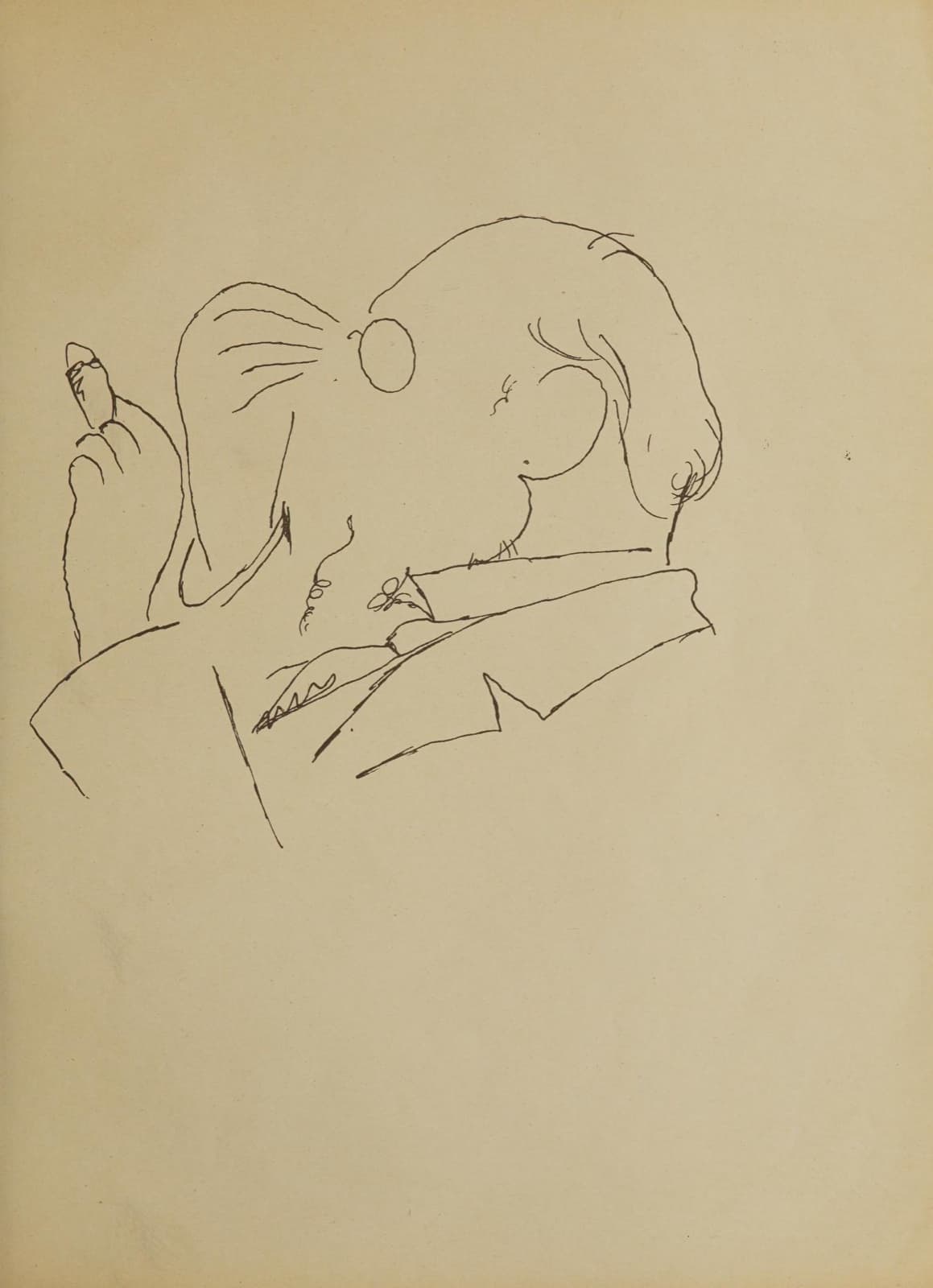
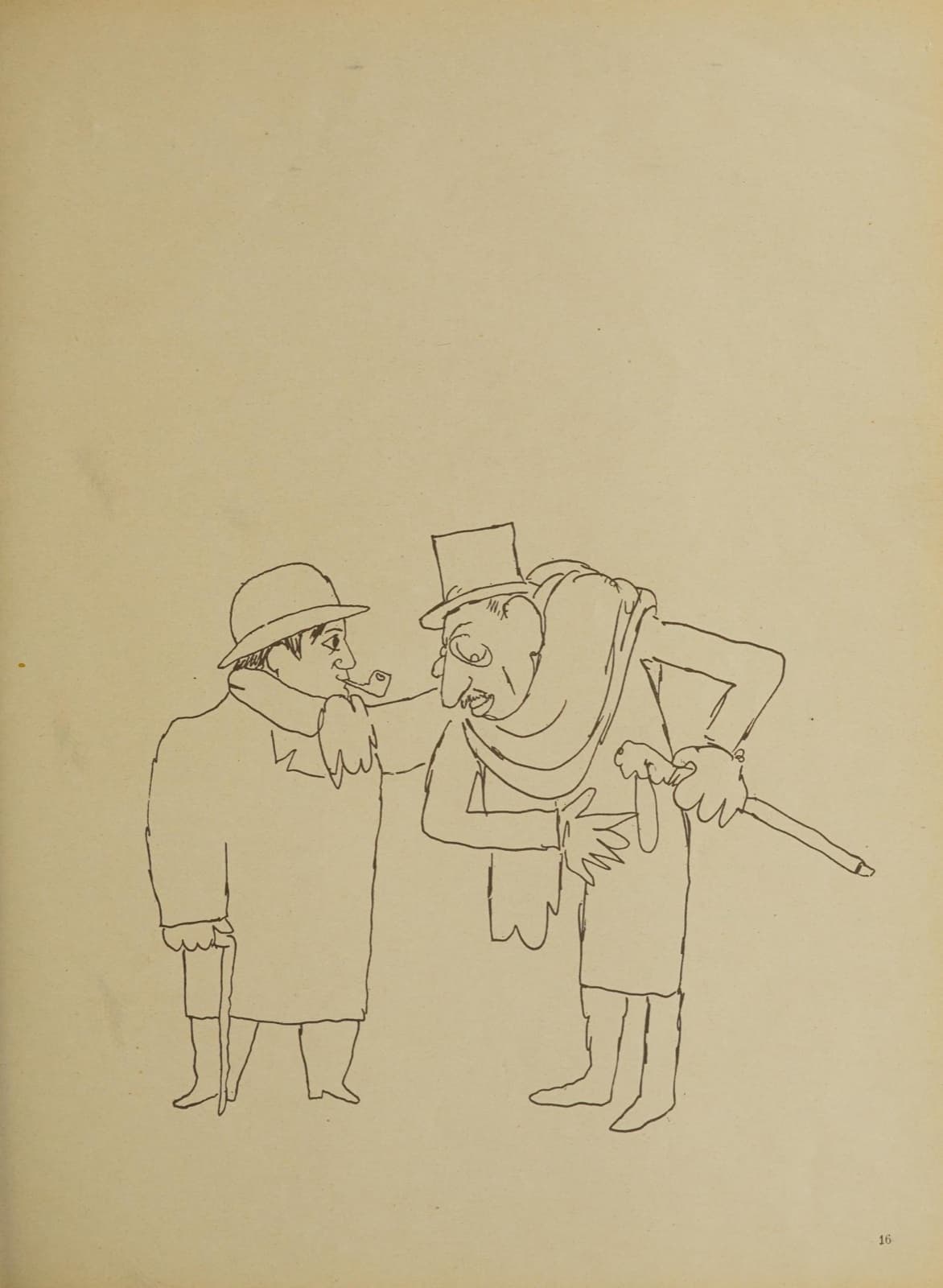
Captioned 'P. Picasso — Igor Stravinsky' in the album — Picasso in the bowler with his pipe, Stravinsky leaning in under the top hat.
by Jean Cocteau
Picasso in his bowler, pipe clamped; Stravinsky monocled under a top hat, bowing into the conversation — two revolutions of the Ballets Russes years caught gossiping in Cocteau's single wandering line.
Two men leaning toward each other in conversation. On one side Picasso in a bowler hat, a pipe clamped in his mouth; on the other Igor Stravinsky, monocled under a top hat, bowing slightly in. Cocteau catches them mid-exchange in a single wandering line, the way you would remember two people talking rather than the way a camera would freeze them.
The joke of the pairing is that both men had already broken their art in half. Picasso had taken painting apart into Cubism; Stravinsky had detonated music with The Rite of Spring in 1913, in a Paris theatre, to a riot. Cocteau knew both through the Ballets Russes years, and drew them not as monuments but as two acquaintances caught talking shop.
The drawing is plate 120 of Dessins, Cocteau's album of line drawings published by Librairie Stock in Paris in 1923 and dedicated to Picasso — so the man in the bowler hat is also the book's dedicatee. Published before 1930, the plate is in the United States public domain and can be shown in full; Cocteau died in 1963, so it stays under copyright in Europe until 2033.
Close reading
Cocteau draws Picasso and Stravinsky as two acquaintances leaning into talk rather than two monuments of modern art. The details show costume, gesture, and a wandering line making intellectual exchange look social and immediate.
1.Picasso's bowler and pipe establish one compact profile
Hat brim, nose, pipe, and chin lock together in a compressed sequence. A few attributes make the sitter recognizable while preserving the speed of a remembered encounter.
2.Stravinsky answers with top hat and monocle
The taller hat and fine monocle distinguish the composer immediately. His forward inclination makes the two profiles active partners rather than separate caricatures.
3.The empty interval becomes conversation
No speech is written between them, but both poses aim toward the same narrow gap. Cocteau lets untouched paper hold the exchange that gives the double portrait its subject.
4.Two hats distinguish the sitters before their faces do
The rounded bowler and tall top hat create contrasting silhouettes. Cocteau turns recognizable clothing into visual shorthand, allowing the two profiles to remain extremely economical.
5.Each profile is built from a different rhythm
Picasso's features gather into heavier compact curves, while Stravinsky's extend through sharper nose and chin lines. The differences preserve two personalities within one restrained graphic language.
6.The caption completes the identification
The two names remove any doubt left by the abbreviated faces. Image and text work together like a magazine caricature designed for readers who know the cultural figures being introduced.
1923
Published in the same album Cocteau dedicated to Picasso — his double portrait of Picasso and Igor Stravinsky, two revolutions of the Ballets Russes years.
Published in Dessins (Librairie Stock, 1923)
This is a published reproduction, not a confirmed museum display. A public viewing address for the original has not been listed.
Pablo Picasso in a bowler hat with a pipe, and the composer Igor Stravinsky in a top hat and monocle, leaning toward each other in conversation. Jean Cocteau drew both in his continuous line.
He knew both through the Ballets Russes years, and the pairing is pointed: Picasso had broken painting into Cubism, Stravinsky had broken music with The Rite of Spring in 1913. Cocteau draws two revolutions as two men gossiping.
Cocteau's 1923 album of drawings, published by Librairie Stock and dedicated to Picasso — who is one of the two figures in this very plate, number 120.
The book was published in 1923 and is in the United States public domain. Cocteau died in 1963, so the drawing remains under copyright in the European Union until 2033.
Not yet as his own page. He is named here and is a candidate for a record; Picasso, the other figure, already has one.
Depicts · 1923
Captioned 'P. Picasso — Igor Stravinsky' in the album — Picasso in the bowler with his pipe, Stravinsky leaning in under the top hat.
Explore painters from the same movements and circles.
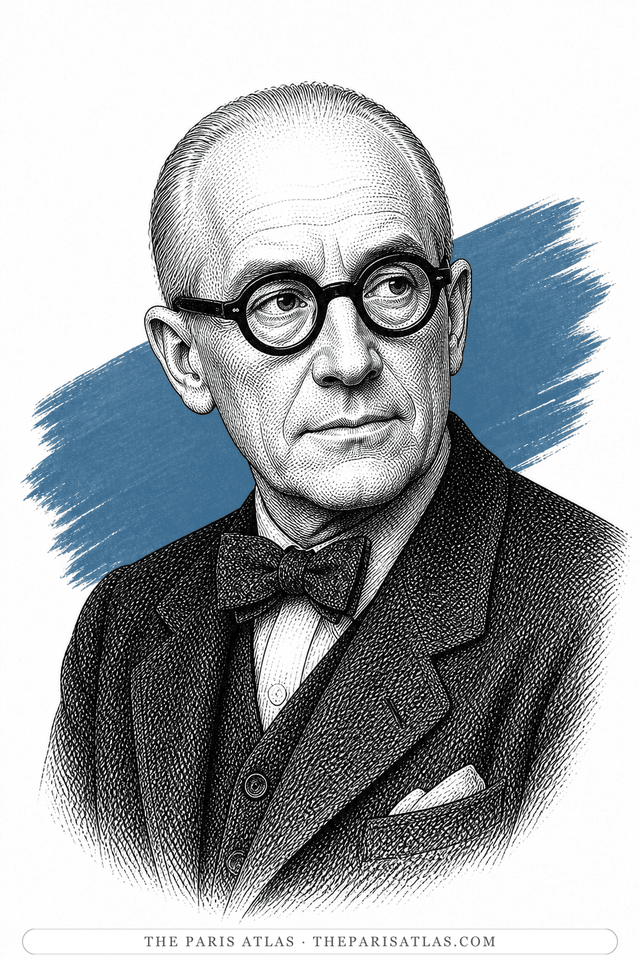
Swiss-born architect who arrived in Paris in 1917 as the painter Charles-Édouard Jeanneret, took the name Le Corbusier in 1920, and ran one atelier — his studio — at 35 rue de Sèvres for four decades. In 1925 he proposed demolishing much of the Right Bank of central Paris and replacing it with sixty-storey towers. Paris refused; the rest of the world adopted the idea after 1945.
View artist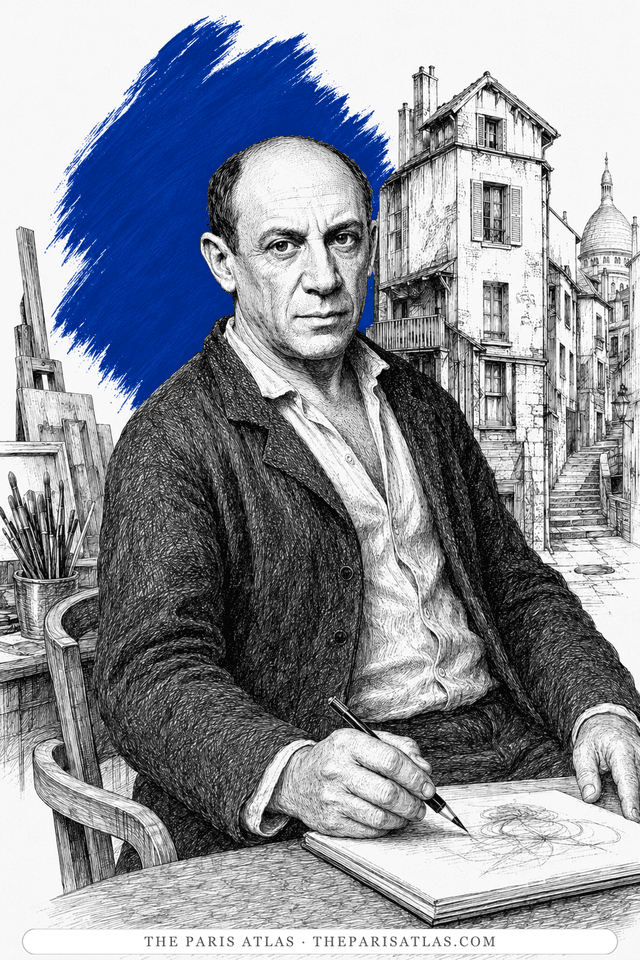
The painter whose canvases papered the walls of 27 rue de Fleurus before the writers arrived — the salon's resident modern master.
View artist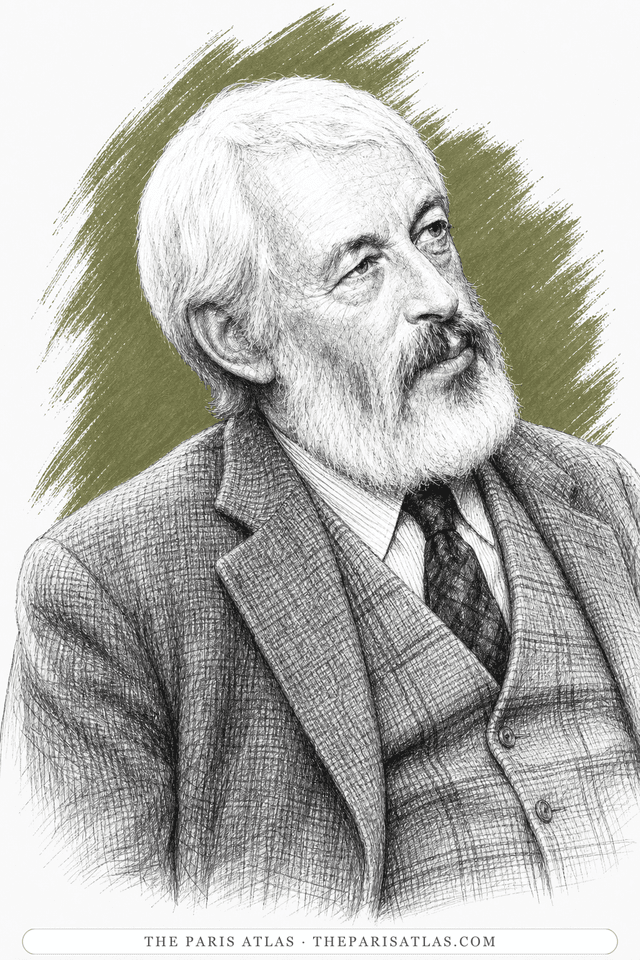
American-born Irish novelist, playwright and painter whose scandalous comic debut The Ginger Man was first published by Olympia Press in Paris after repeated rejection in Britain and America.
View artistThe sources below include collection records, catalogues, scholarly research, and primary materials that informed this page. They document P. Picasso — Igor Stravinsky, its making, and its place in cultural history.


Archival evidence used to document the historical record connected to P. Picasso — Igor Stravinsky.
Used to place P. Picasso — Igor Stravinsky within Jean Cocteau's documented oeuvre and verify its period, medium, or institutional context.

Used to cross-check artist chronology and the work's relationship to Jean Cocteau's wider practice.
Used for an additional museum or scholarly perspective on P. Picasso — Igor Stravinsky's history and interpretation.
These references provide the documented foundation for this work's history and interpretation. Claim-level citations remain attached to the specific claims they support.
 Explore more resources