Responds to · 1950
The Blood of a Poet
The middle film of Cocteau's Orphic cycle returns to the earlier film's mirror, threshold, repeated death, and poet under trial, then gives those private images a narrative engine.
by Jean Cocteau
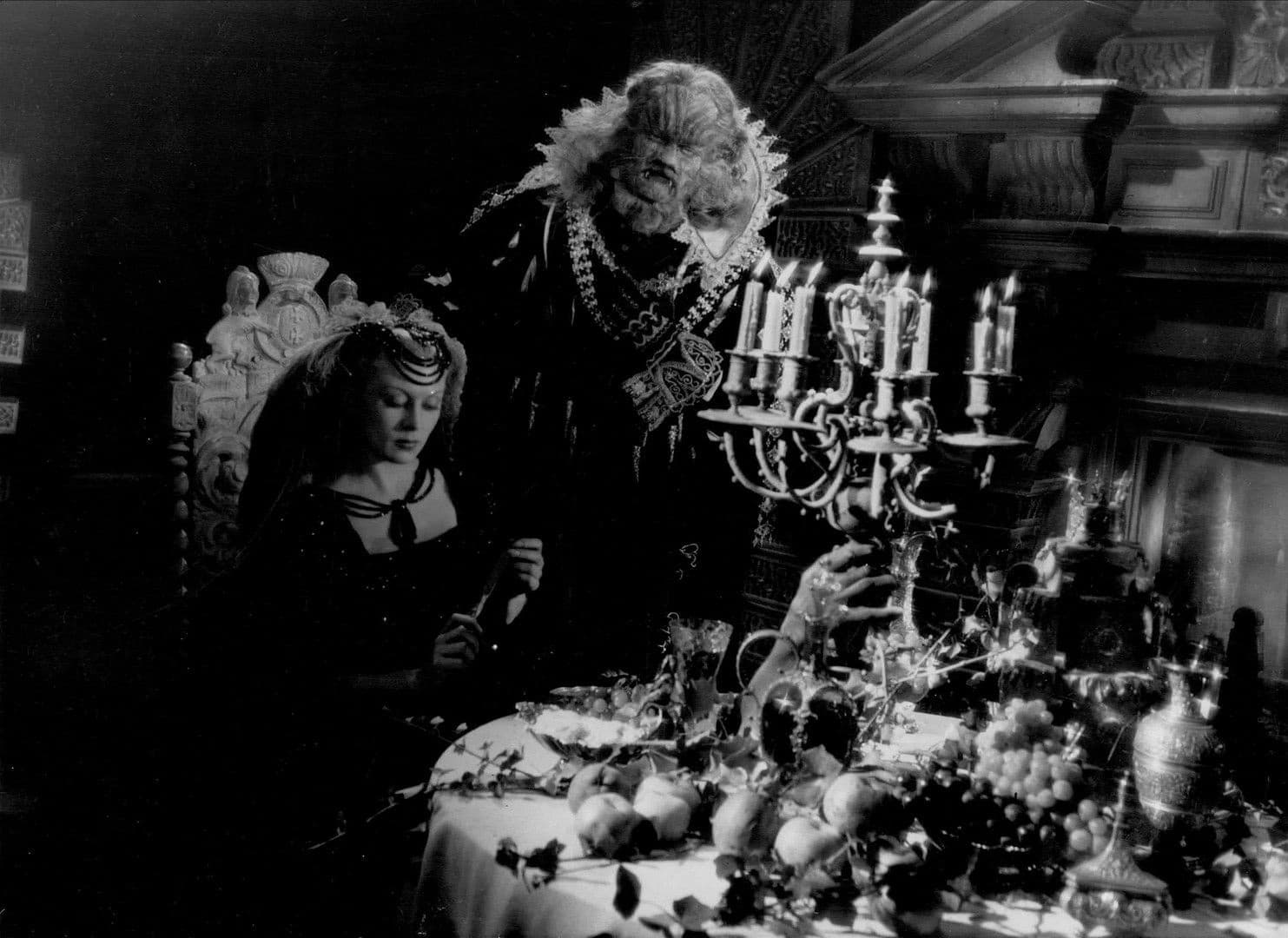
Jean Cocteau turns the Orpheus myth into a postwar Paris dream: a famous poet, a Rolls-Royce, coded radio poems, motorcycle messengers, and a mirror that opens when touched with the right hands. It is the middle film of Cocteau's Orphic trilogy and the one where his private symbols become a story with the pull of a thriller.
At the Café des Poètes in Saint-Germain-des-Prés, Orphée is famous enough to be hated. The younger poets mock him. He knows they are right to be impatient with him, which makes their impatience worse.
Then Cégeste arrives, all beauty and provocation, with a severe woman everyone calls the Princess. A fight breaks out. Two motorcycle couriers run Cégeste down in the street. The Princess orders his body into her Rolls-Royce and tells Orphée to come with her.
The ordinary world starts to loosen in the car. The radio sends out strings of numbers and clipped sentences, part military code and part found poem. At the Princess's house, Cégeste gets up from the dead and follows her through a mirror. Orphée wakes outside with Heurtebise, the chauffeur, unable to prove what he has seen and unable to stop wanting more.
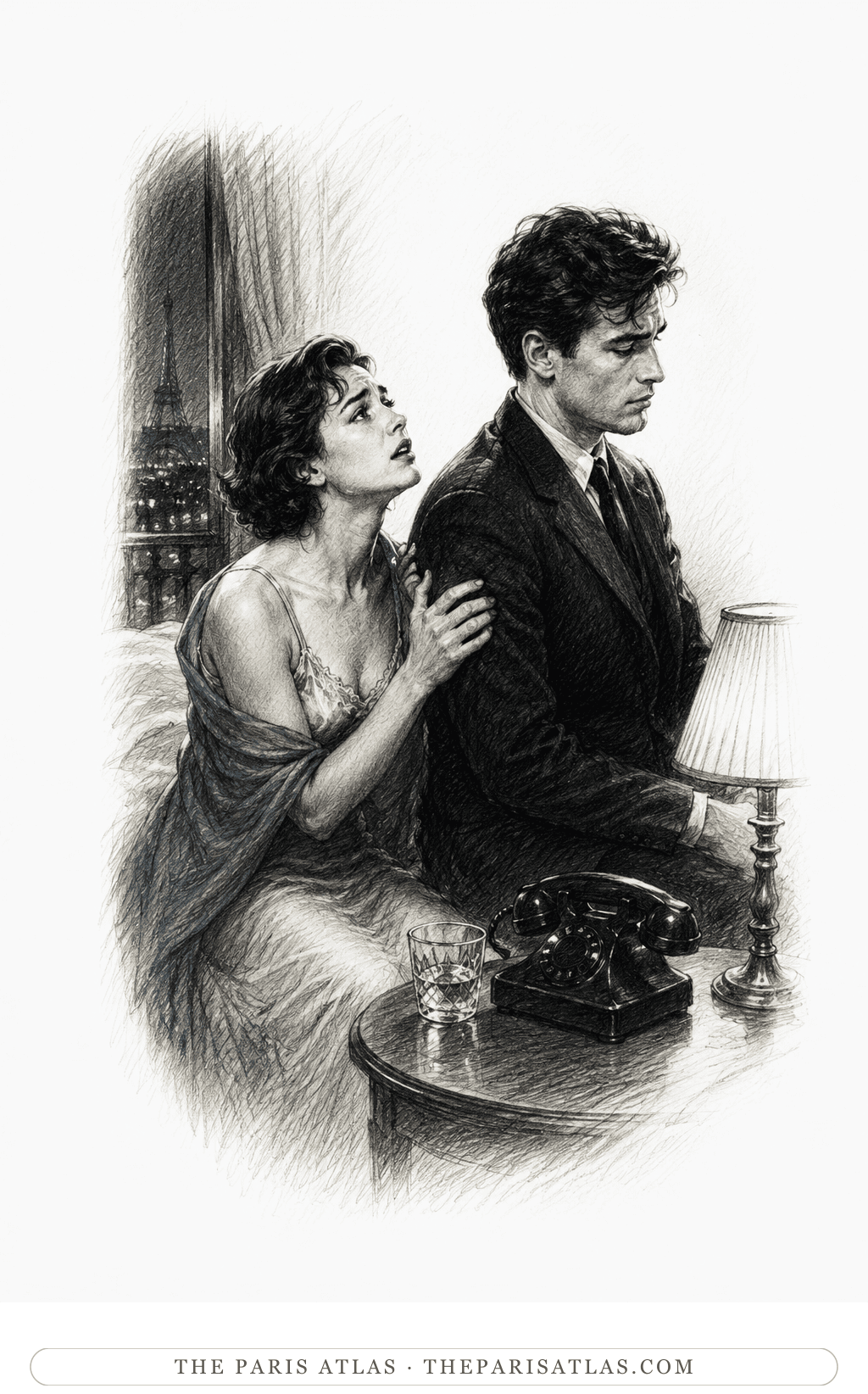
Back home, Eurydice waits. She is pregnant; her husband is elsewhere even when he is in the room. Orphée sits in the Rolls, taking dictation from the radio and convincing himself he has found pure poetry. Heurtebise watches Eurydice and falls in love. The Princess watches Orphée from the other side of sleep and falls in love too.
That is the engine. Everyone loves the wrong person, or loves at the wrong temperature, and death itself has to file the paperwork.
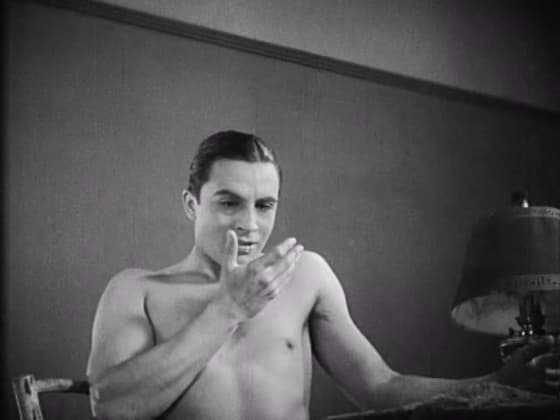
The Princess has Eurydice killed by her motorcycle couriers. Heurtebise tells Orphée what has happened and gives him the film's strangest equipment: a pair of rubber gloves, needed to pass through a mirror.
Together they enter the Zone, Cocteau's borderland between life and death. The place has no marble gate, no mythological river, no grand throne room. It has ruined walls, wind, corridors, officials, desks, and people waiting their turn. The afterlife is less like a kingdom than an occupied administration that has survived into peacetime.
The Princess and Heurtebise are tried because they have interfered with human lives for personal reasons. The judges return Eurydice, but with a rule borrowed from the old myth and made meaner: Orphée must never look at her again.
A heroic command becomes a household trap. A mirror on the wall, a turn across a room, a rearview glance in a car, any ordinary movement can separate the couple again. Eventually Orphée sees Eurydice in the rearview mirror, and she disappears.
Soon after, the young poets who think he stole Cégeste's messages confront him. Orphée is killed and returns to the Zone. This time he meets the Princess as a dead man.
Cocteau refuses the expected tragic ending. The Princess chooses Orphée's life over her own happiness. With Heurtebise's help, she sends him backward through time. Orphée and Eurydice wake at home, reconciled, expecting their child, and unaware of what has happened.
The household is repaired. The two figures who repaired it walk toward punishment.
Orpheus and Eurydice
In the familiar Greek story, Orpheus is the musician whose song persuades the underworld to release Eurydice. He may lead her back to life if he does not look back before they reach the upper world. He looks. She is lost. Later, the Maenads tear him apart.
Cocteau keeps the load-bearing parts: the poet, the dead wife, the descent, the forbidden look, the violent followers. Nearly everything else changes.
The changes are not decorative updates. Cocteau treats myth as a machine that can be rebuilt from whatever a century has lying around: radios, mirrors, motorcycles, bureaucracy, celebrity, and the recent memory of war.
“Mirrors are the doors through which Death comes and goes.”
Cocteau makes the line tactile. His characters do not vanish into fog. They press their hands against a surface that first resists, then gives way.
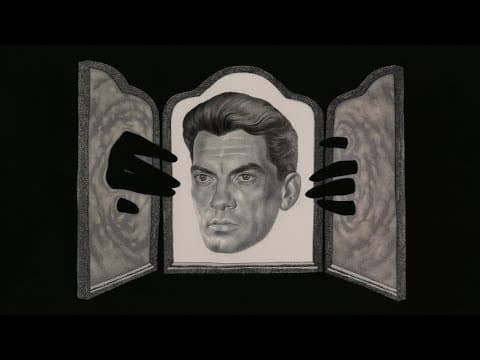
The mirror had already appeared in The Blood of a Poet, where it behaved like a liquid wound in the room. In Orphée, it becomes the film's whole grammar. A mirror is the daily place where aging shows up. It is also where a person becomes an image, which matters for a poet terrified that his public reflection has replaced his living gift.
For cinema, the joke is even sharper. The screen is a luminous rectangle that repeats life, reverses it, and lets us see a world we cannot enter.
The effects are practical and frank. Reverse motion makes gloves peel themselves onto hands. Negative images turn ordinary roads into strange matter. Superimpositions and matched cuts move bodies across thresholds. Rotated sets make walls act like floors. For the close shots of hands entering the mirror, accounts describe a reflective liquid surface, often identified as mercury, which belongs firmly in the category of historical effect and not household experiment.
The handmade quality is not a limitation. It is the reason the border feels alive.
The Zone was filmed among the damaged buildings of the Saint-Cyr military academy. The ruins matter. Cocteau's underworld is not antique or subterranean; it looks like history still standing in the open air.
That context also changes the radio. In France in 1950, strings of numbers and odd phrases sent through static could recall the BBC's wartime messages personnels, coded broadcasts used to reach Resistance networks. Orphée turns that language of secrecy into a poetry channel from nowhere.
The film never decodes the messages for us. They may be poems from the dead, bait from the Princess, Cégeste's work, or empty combinations that Orphée fills with his own hunger.
Inspiration and theft arrive on the same frequency.
Calling the Princess Death is useful shorthand, but Cocteau was more exact. She is Orphée's death, one agent inside a larger order. He made a similar distinction with Heurtebise, resisting the easy label of angel.
That difference explains the tribunal. The Princess can command couriers and cross mirrors, but she is not sovereign. She has superiors. She can break rules. She can be judged.
María Casarès plays her as command under pressure. The Princess is ceremonial, jealous, brittle, and wounded. Love does not make her human. It makes her willing to give up the one thing immortals keep and humans keep failing to hold: memory.
“When I make a film, it is a sleep in which I am dreaming.”
The myth gives Orphée its shape. Artistic panic gives it pressure.
Orphée has reached the dangerous middle of a career. He is famous, married, envied, and no longer sure that any new line is truly his. Cégeste and the café youth represent the generation that thinks he is finished. The radio offers escape from slow work: poems appear complete, mysterious, and already marked by death.
This is not a flattering portrait. Orphée neglects Eurydice, mistakes compulsion for vocation, and writes down words that may belong to a dead younger poet. His chase after pure poetry is tangled with vanity. It is also tangled with the wish to skip ordinary life, which is where Eurydice keeps waiting.
The marriage comedy is not a detour. It is the test he keeps failing.
It is tempting to decode every figure as a hidden person from Cocteau's life. The film is better if that context is used as a lens, not a key.
Cocteau lived and worked inside queer artistic circles, and his bond with Jean Marais was a central fact of French cultural life. Orphée places male beauty, rivalry, adoption, mentorship, forbidden attachment, and artistic succession inside a heterosexual marriage plot without smoothing them into one tidy confession.
The most moving couple may be the one the plot refuses to grant: the Princess and Heurtebise. Each understands desire as something that cannot be kept. Their final act is to restore Orphée and Eurydice, then leave the happiness they have made.
That is a hard kind of authorship: writing the ending from which you disappear.
Cocteau called Orphée realistic. That sounds odd only if realism means ordinary probability. The film is realistic about inner life: vanity, boredom, erotic distraction, artistic fear, marital hurt, the way a person can be saved and not deserve it.[1]
Its marvels are anchored in things anyone can recognize. Radios. Rearview mirrors. Rubber gloves. Motorcycles. Courtrooms. Uniforms. Passports. A living room where two married people cannot look at each other without disaster.[2]
The impossible has office hours.
Orphée sits between the prewar avant-garde and postwar film modernism. It keeps the handmade transformations of The Blood of a Poet, but gives them the momentum of a thriller and the recognizable streets of a postwar city.[3]
Inside Cocteau's Orphic trilogy, it is the expansive middle panel. The Blood of a Poet opens the private mirror. Orphée drives through it. Testament of Orpheus brings Cocteau himself on screen to wander through the mythology he built.[4]
The film's later life runs through cinephile Paris and beyond it: the Cinémathèque generation, the New Wave's affection for Cocteau's impossible procedures, and Philip Glass's 1993 opera Orphée, which treats the film itself, including its dialogue and timing, as source material.[5]
At Venice in 1950, Orphée won the International Film Critics' Prize. That matters less than the image everyone remembers: gloved hands pressing into a mirror and finding that the solid world has been waiting to yield.[6]
The ending is not a reset that says nothing happened. The Princess and Heurtebise deliberately send Orphée backward through time. He and Eurydice return to ordinary life without remembering the Zone, but their rescue is real.
For Orphée, it is grace without knowledge. He gets his wife, his unborn child, and his life back. He does not get to turn the underworld into a poem.
For the Princess, love means accepting erasure from the beloved's mind. For Heurtebise, fidelity means returning Eurydice to a marriage where he has no place.
Cocteau reverses the ancient myth twice. First he moves the fatal look from the climb out of Hades into daily life. Then he lets the underworld undo the look, at a cost the mortal couple will never see.[7]
c. 1887-1893
Rodin models and carves Orpheus and Eurydice, one of many modern artworks drawn to the fatal backward look.
1925
Cocteau's stage play Orphée premieres, already moving the ancient myth into a modern setting.
1930
The Blood of a Poet opens the mirror-threshold that Orphée will later turn into a full underworld route.
1945-1946
Cocteau directs Beauty and the Beast with Jean Marais, proving the practical magic he will refine in Orphée.
1949
Principal photography on Orphée takes place in postwar France.
1950
Orphée is released and wins the International Film Critics' Prize at Venice.
1960
Testament of Orpheus completes Cocteau's Orphic trilogy, with Cocteau himself before the camera.
1993
Philip Glass premieres Orphée, the first work in his Cocteau trilogy of operas.
2008
A restored Orphée is presented in Cannes Classics.
Orphée follows a famous Parisian poet who becomes obsessed with coded radio messages and with a Princess connected to death. After his wife Eurydice is killed, he crosses through a mirror into the Zone to retrieve her.
It is a modern adaptation, not a straight retelling. Cocteau keeps the descent, Eurydice, the forbidden look, and the poet's violent followers, but changes the lyre into a radio and the underworld into a bureaucratic Zone.
She is often called Death, but Cocteau described her more precisely as Orphée's own death, one figure inside a larger supernatural order. The tribunal scenes show that she has power but not final authority.
The film never gives one fixed answer. The messages suggest wartime code, automatic poetry, communication with the dead, and Orphée's own desire for inspiration without ordinary labor.
Mirrors are the film's passages between the living world and the Zone. They also carry the film's ideas about aging, self-image, cinema, and the artist's wish to enter the world of images.
Cocteau used practical techniques: reverse motion, negative images, matched cuts, superimposition, rotated sets, and a reflective liquid surface for the close shots of hands entering the mirror. The historical liquid effect is often identified as mercury and should not be replicated.
The Zone is the borderland between life and death. Cocteau filmed it among the damaged buildings of Saint-Cyr, so the underworld carries the texture of wartime France rather than ancient mythology.
It is Cocteau's version of the mythic command not to look back while leading Eurydice from the underworld. By extending the rule into their home, the film turns a heroic test into an almost impossible marriage condition.
The Princess sacrifices her claim on Orphée and sends him backward through time. Orphée and Eurydice return to ordinary life without memory of the underworld, while the Princess and Heurtebise face punishment.
It is often described that way because of its dream transitions, mirrors, and coded messages. Cocteau resisted simple labels and called the film realistic, meaning realistic to his inner logic rather than to everyday probability.
Yes. It is the middle film of Cocteau's Orphic trilogy: The Blood of a Poet (1930), Orphée (1950), and Testament of Orpheus (1960).
Use an authorized distributor or availability service. Criterion and BFI are the best-known institutional references; random complete-film uploads should not be treated as public-domain copies.
BFI restoration trailer for Orphée
Mark Kermode on Orphée for the BFI
Responds to · 1950
The middle film of Cocteau's Orphic cycle returns to the earlier film's mirror, threshold, repeated death, and poet under trial, then gives those private images a narrative engine.
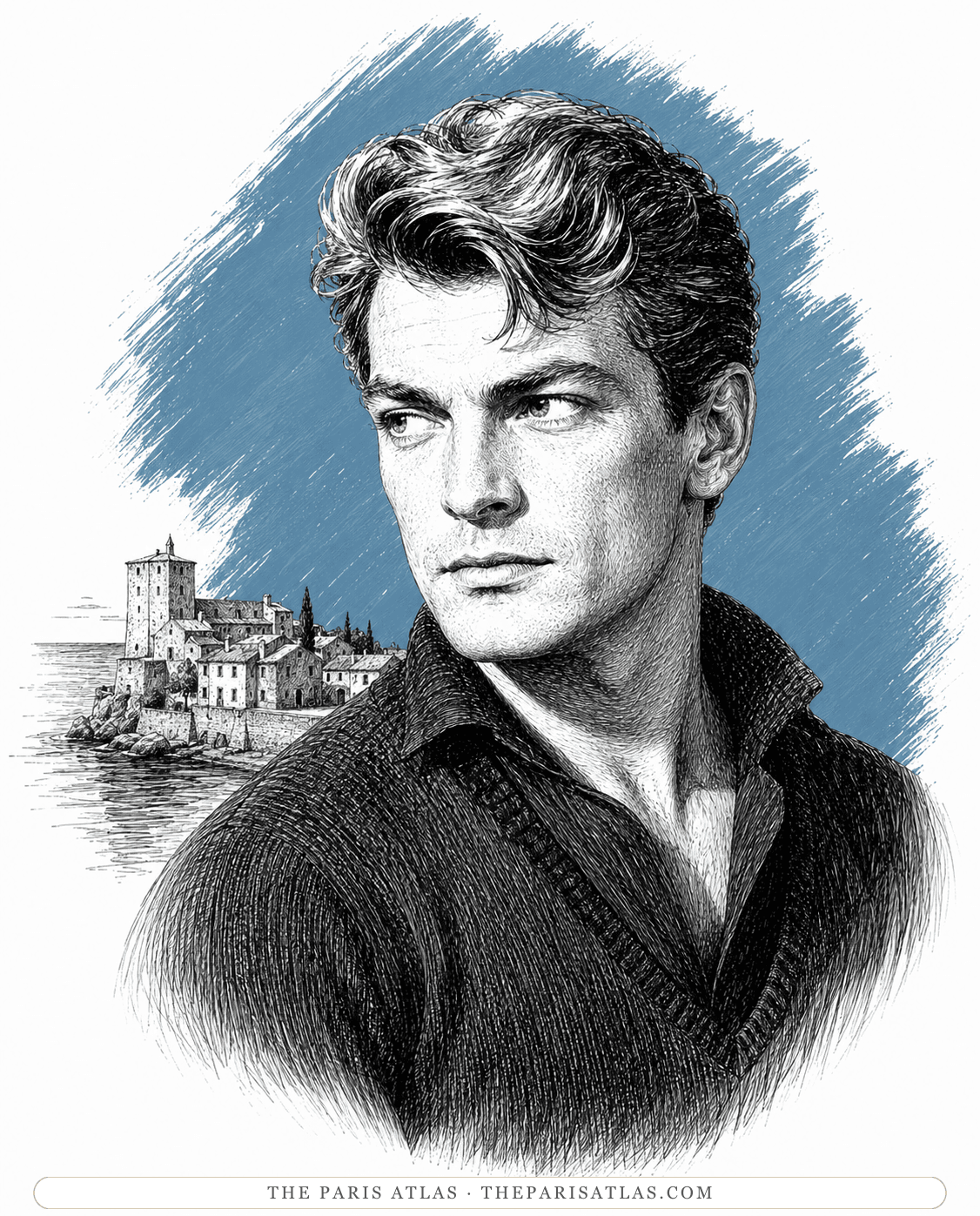
Explore directors from the same movements and circles.
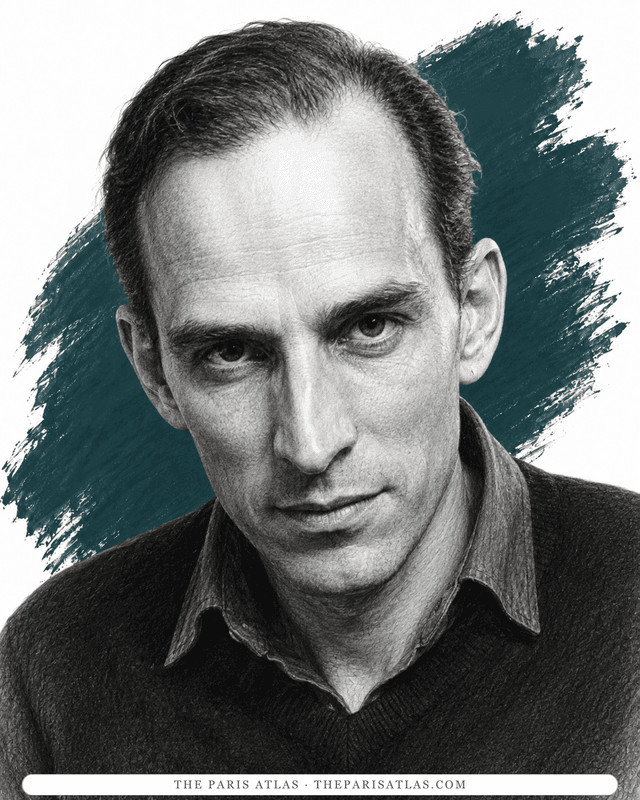
Swedish director of The Seventh Seal, Persona and Fanny and Alexander, whose sixty films put questions of faith, death and marriage on screen. James Baldwin profiled him in Nobody Knows My Name.
View artist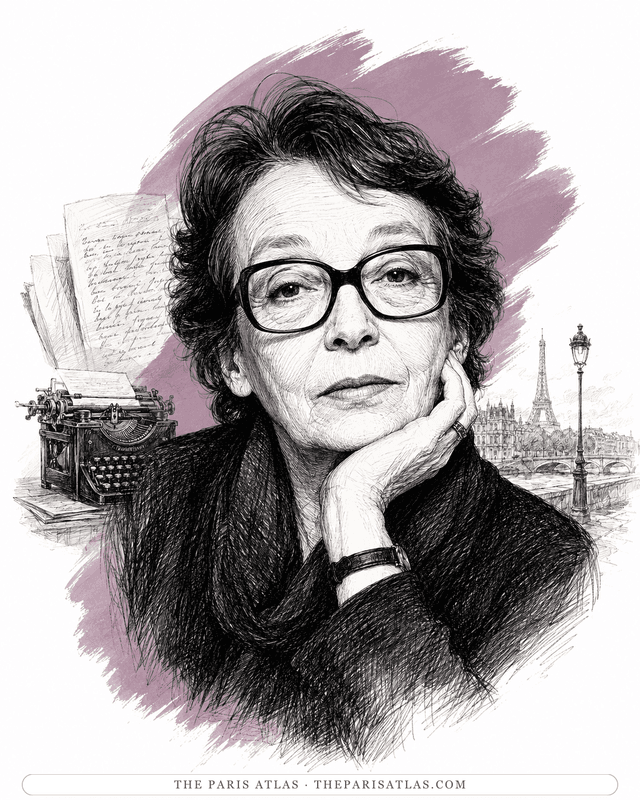
French novelist and screenwriter, later a director in her own right; her screenplay for Alain Resnais's Hiroshima mon amour (1959) carried the New Wave into literature and earned an Academy Award nomination.
View artist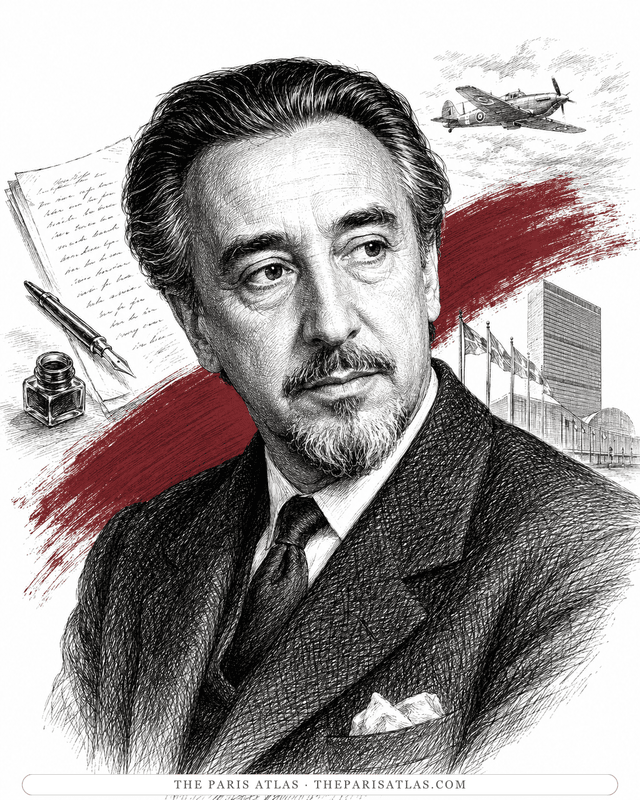
Novelist, diplomat, and the only writer to win the Prix Goncourt twice — once under his own name and once under a pseudonym. Jean Seberg's husband from 1962 to 1970.
View artistThe sources below include collection records, catalogues, scholarly research, and primary materials that informed this page. They document Orphée, its making, and its place in cultural history.

Published analysis and historical context used in preparing the Orphée page.

Web source consulted for documented facts and historical context presented on the Orphée page.
Web source consulted for documented facts and historical context presented on the Orphée page.
Web source consulted for documented facts and historical context presented on the Orphée page.
Published analysis and historical context used in preparing the Orphée page.
Web source consulted for documented facts and historical context presented on the Orphée page.
Web source consulted for documented facts and historical context presented on the Orphée page.
Web source consulted for documented facts and historical context presented on the Orphée page.
Web source consulted for documented facts and historical context presented on the Orphée page.
Web source consulted for documented facts and historical context presented on the Orphée page.
These references provide the documented foundation for this work's history and interpretation. Claim-level citations remain attached to the specific claims they support.
 Explore more resources