The Paris AtlasCharting the artists, works, and places worth returning to.
  • Author
  • Poet
  • Critic
  • Editor
· French · 1896–1966

André Breton

Wrote the Surrealist manifestos and decided who belonged to the movement. Dalí joined in 1929 and was expelled ten years later, by which time Breton had renamed him Avida Dollars.

1 book on our shelves

In images

Details

Lived
1896–1966
Born
19 February 1896
Birthplace
Tinchebray, Orne, Normandy
Died
28 September 1966 · aged 70
Place of death
Paris, France
Nationality
French
Married
Simone Kahn · 1921–1931Jacqueline Lamba · 1934–1943Elisa Bindhoff · 1945–1966
Roles
AuthorPoetCriticEditor

About André Breton

André Breton wrote the manifestos of Surrealism and directed the movement from its founding in 1924 until his death in 1966. A French poet and critic trained in medicine, he took the word surréalisme from Guillaume Apollinaire, who had coined it in 1917, and took it up when he organized the movement seven years later. He gave Surrealism a doctrine, a bureau, journals, and a membership he controlled personally — and from a studio on the rue Fontaine, a headquarters that outlasted every quarrel.

The wards

Breton was born on 19 February 1896 in Tinchebray, a small town in Normandy, the only child of a policeman and a former seamstress. He was studying medicine in Paris when the First World War interrupted, and the army put the training to use: in 1915 he was assigned to a neurological ward in Nantes, where he met Jacques Vaché, a wounded admirer of Alfred Jarry whose contempt for established art marked him deeply. In 1916 he moved to the psychiatric center at Saint-Dizier, treating shell-shocked soldiers with the new psychoanalytic methods and reading the psychiatric literature, Sigmund Freud included.

What he heard there — men speaking without editing themselves — became the basis of everything he did afterwards.

Littérature, Dada, and the Manifesto

André Breton photographed by Henri Manuel in 1927, three years after the first Surrealist Manifesto. (Henri Manuel · Public domain)

In 1919 Breton founded the magazine Littérature with Louis Aragon and Philippe Soupault. That spring he and Soupault wrote Les Champs magnétiques, published in 1920 — the first sustained experiment in automatic writing, composed at speed to outrun the censoring mind. When Tristan Tzara arrived in Paris in 1920, Breton joined forces with Dada; the alliance ended in personal quarrels between the two men, and Breton came out of Dada with a movement of his own to build.

The Manifesto of Surrealism appeared on 15 October 1924, published by Éditions du Sagittaire. It defined Surrealism as "pure psychic automatism" and gave the movement its method: automatic writing, dream transcription, and the belief that the marvelous is available to anyone who stops supervising their own mind. The movement's enthusiasms reached back before its founding. The Surrealists took Musidora — above all the black-clad Irma Vep of Louis Feuillade's serial Les Vampires — as their tenth muse, and Breton and Aragon paid homage to her in their play Le Trésor des Jésuites in 1929.

The administration

He also gave it an administration. The Bureau of Surrealist Research kept public hours, the journals came out on schedule, and membership was granted and revoked by Breton personally, with trials. Robert Desnos was crowned the movement's prophet in the first Manifesto and expelled in the second, published in December 1929. The joke that Breton was the pope of Surrealism described the arrangement accurately.

Salvador Dalí is the fullest case. Gala Dalí, whom Breton knew through Paul Éluard's circle, used the painter's notes on his paranoiac-critical method to persuade Breton of his importance in 1929. Dalí was tried before the group in 1934 over his politics and expelled in 1939, and Breton coined the anagram Avida Dollars for him; the two attacked each other in print for decades afterward.

Not every long relationship ended in a tribunal. Marcel Duchamp remained a friend for life, and the two designed Surrealist exhibitions together — Duchamp hung twelve hundred coal sacks over the 1938 international exhibition in Paris, and strung a mile of string through the 1942 show in New York.

42 rue Fontaine

On 1 January 1922 Breton moved into a studio at 42 rue Fontaine, near Pigalle, and it remained his address for the rest of his life. The collection he assembled there grew past five thousand items — modern paintings, drawings, sculpture, photographs, books, manuscripts, and Oceanic and popular art. Money troubles forced him and Paul Éluard to auction their holdings in 1931; he rebuilt. A wall of the studio is preserved at the Centre Pompidou.

The book most tied to his Paris is Nadja, published in 1928, Breton's account of his encounter with a woman he met on the street who was later confined to a psychiatric institution. It is written from life, and it carried the Surrealist conviction that the city itself, walked attentively, produces the marvelous.

Politics, exile, and return

Breton joined the French Communist Party in 1927 and was expelled in 1933; he remained on the revolutionary left while rejecting Moscow's control of art. In 1938 he traveled to Mexico, met Leon Trotsky, and drafted with him the manifesto Towards a Free Revolutionary Art, published under the names of Breton and the painter Diego Rivera.

When the Second World War came he served in the medical corps, and the Vichy government banned his writings. He escaped to the United States in 1941 with the help of Varian Fry's rescue network. In New York he worked as a radio announcer for the Voice of America's French broadcasts, edited the Surrealist magazine VVV with Marcel Duchamp and Max Ernst, and organized the 1942 exhibition First Papers of Surrealism with Duchamp. In exile he met Elisa Bindhoff, the Chilean woman who became his third wife in 1945.

He returned to Paris in 1946 and gathered a second Surrealist group around new reviews and exhibitions. He ran Surrealism until he died, by which time its images had long since escaped him. Breton died in Paris on 28 September 1966, at seventy, and is buried in the Batignolles cemetery under a five-word epitaph.

I seek the gold of time

Je cherche l'or du temps

Epitaph on André Breton's grave, Batignolles cemetery, Paris

Life events

  1. 1896

    Born on 19 February in Tinchebray, Normandy, the only child of a policeman and a former seamstress.

  2. 1916

    Serving as a medical auxiliary, he treats shell-shocked soldiers at the psychiatric center of Saint-Dizier, after a neurological ward in Nantes where he met Jacques Vaché.

  3. 1919

    Founds the magazine Littérature with Louis Aragon and Philippe Soupault, and writes Les Champs magnétiques with Soupault, the first book of automatic writing, published the next year.

  4. 1922

    Moves into the studio at 42 rue Fontaine on 1 January; it remains his address for life.

  5. 1924

    The Manifesto of Surrealism is published on 15 October, and the Bureau of Surrealist Research opens its doors.

  6. 1927

    Joins the French Communist Party; he is expelled in 1933.

    André Breton photographed by Henri Manuel in 1927, three years after the first Surrealist Manifesto. (Henri Manuel)
  7. 1928

    Nadja, his book about a woman met on the street who was later institutionalized, is published.

  8. 1934

    Marries the painter Jacqueline Lamba, mother of his daughter Aube, and puts Salvador Dalí on trial before the group; Dalí is expelled in 1939.

  9. 1938

    Meets Leon Trotsky in Mexico and drafts Towards a Free Revolutionary Art with him; in Paris, Marcel Duchamp hangs twelve hundred coal sacks over the international Surrealist exhibition.

  10. 1941

    Escapes occupied France for New York with the help of Varian Fry's network; there he edits VVV and works for the Voice of America's French broadcasts.

  11. 1946

    Returns to Paris and rebuilds a Surrealist group around new reviews and exhibitions.

  12. 1966

    Dies in Paris on 28 September, at seventy. He is buried in the Batignolles cemetery under the epitaph 'Je cherche l'or du temps' — I seek the gold of time.

People they knew

Documented connections — every one carries its source.

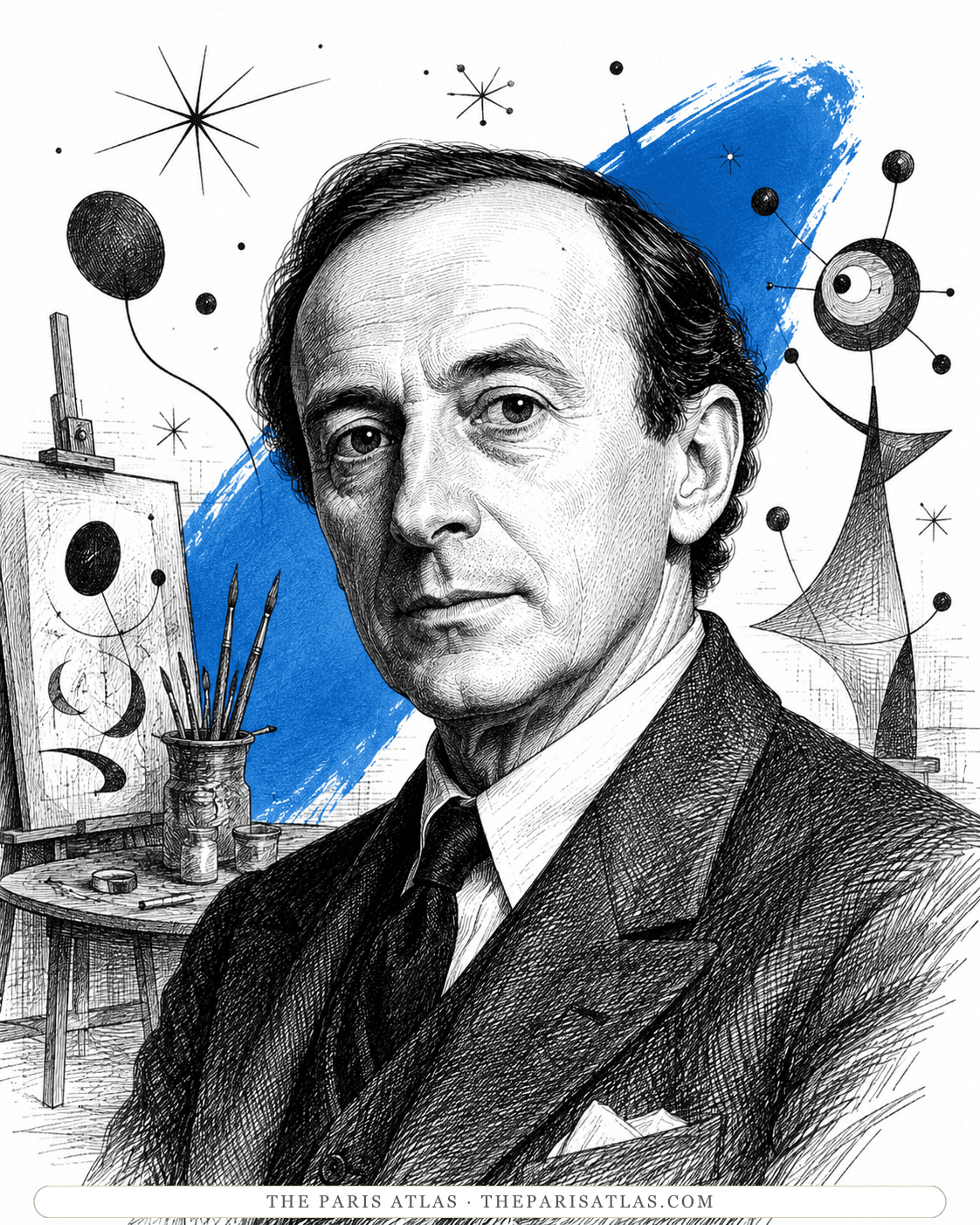
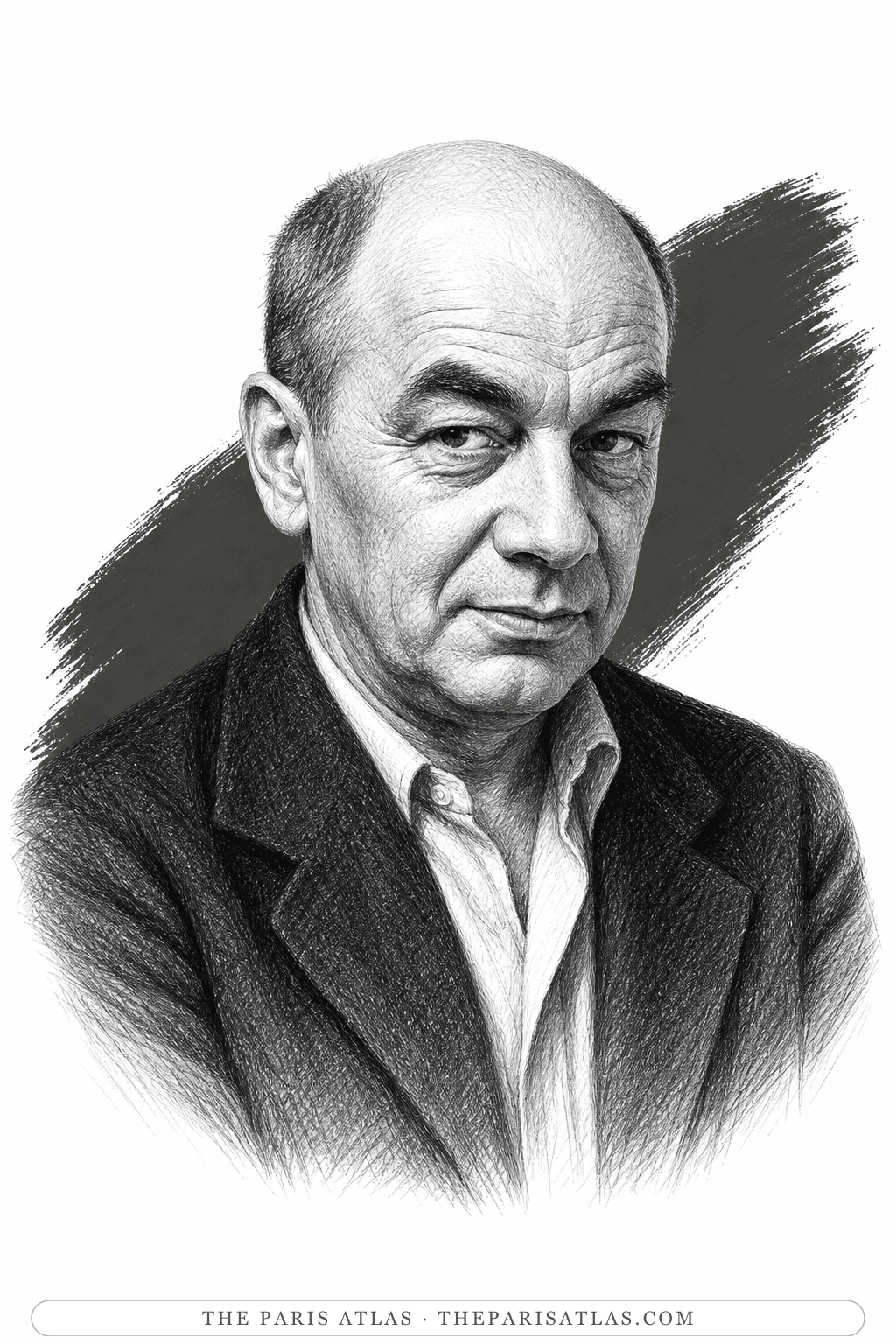
Illustrated portrait of Joan Miró

Joan Miró

  • Painter
  • Sculptor

Met · 1925

Breton met Miró during a visit to the studio at 45 rue Blomet in 1925, the year of the first Surrealist group exhibition. Miró showed with the group from that exhibition on while declining to submit to its discipline.

Joan Miró — Biography

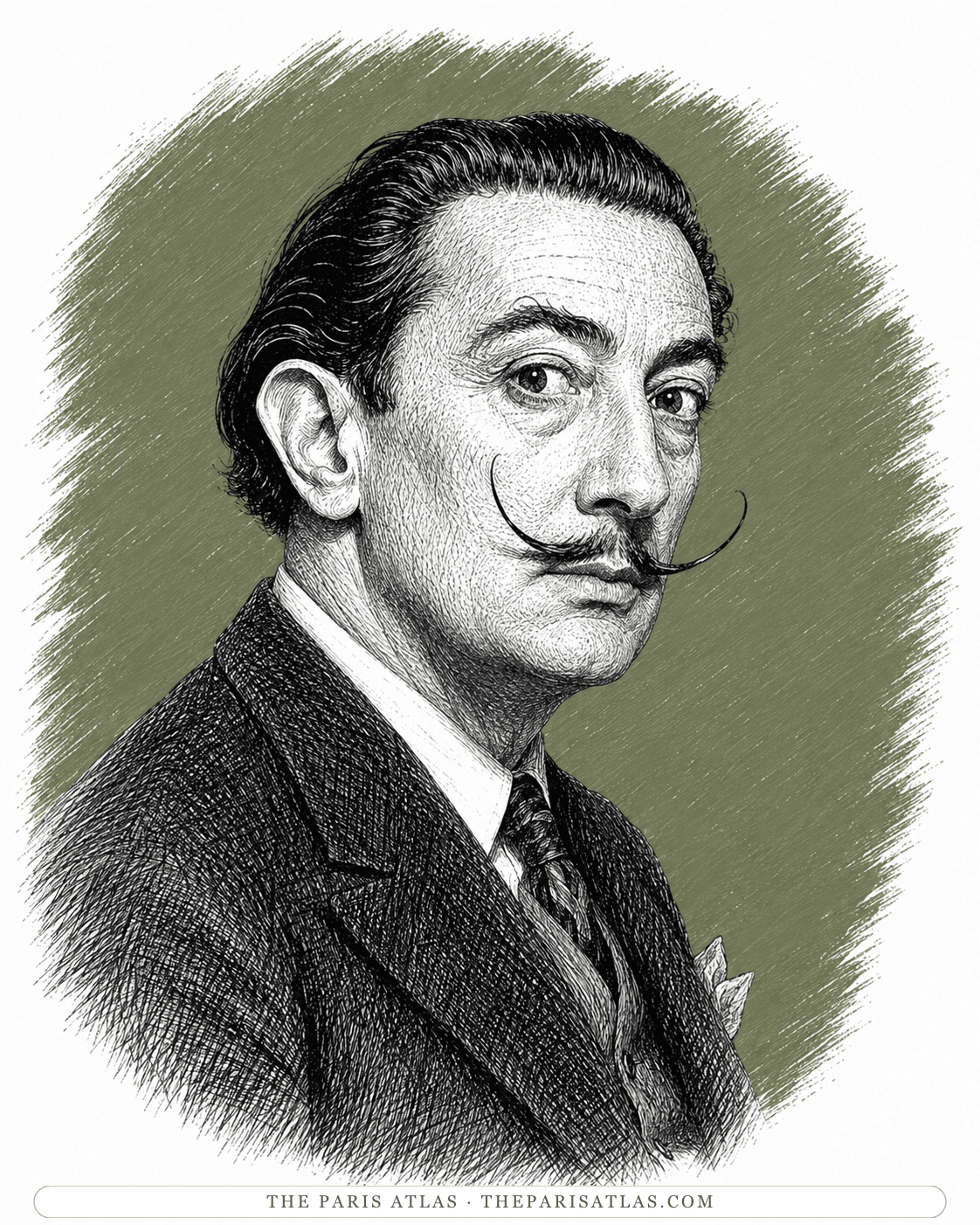
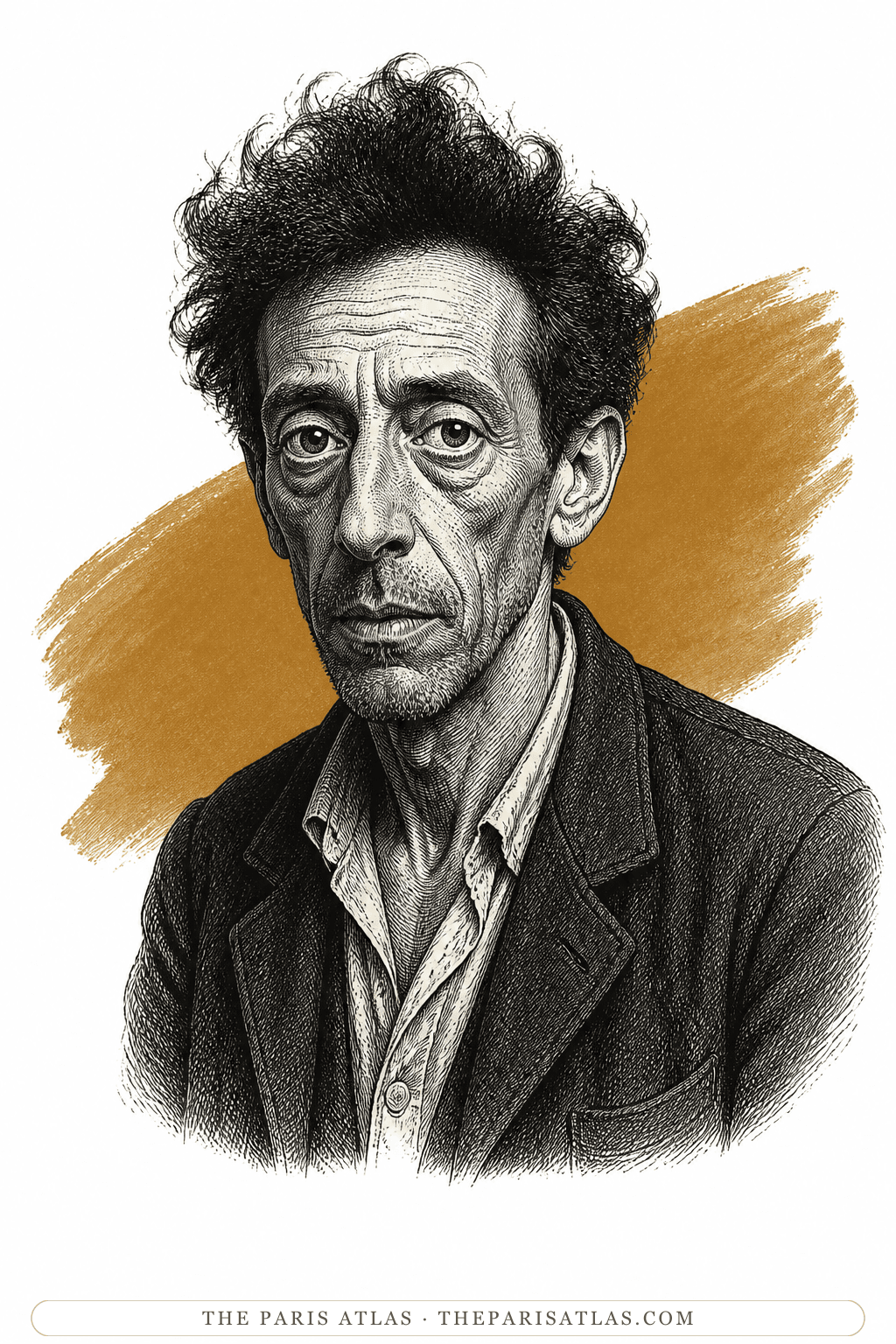
Illustrated portrait of Salvador Dalí

Salvador Dalí

  • Painter
  • Filmmaker
  • Sculptor

Clashed with · 1934–1939

Breton put Dalí on trial before the group in 1934 over his politics, expelled him in 1939, and coined the anagram Avida Dollars for him. The two went on attacking each other in print for decades.

Ian Gibson, The Shameful Life of Salvador Dalí (1997)

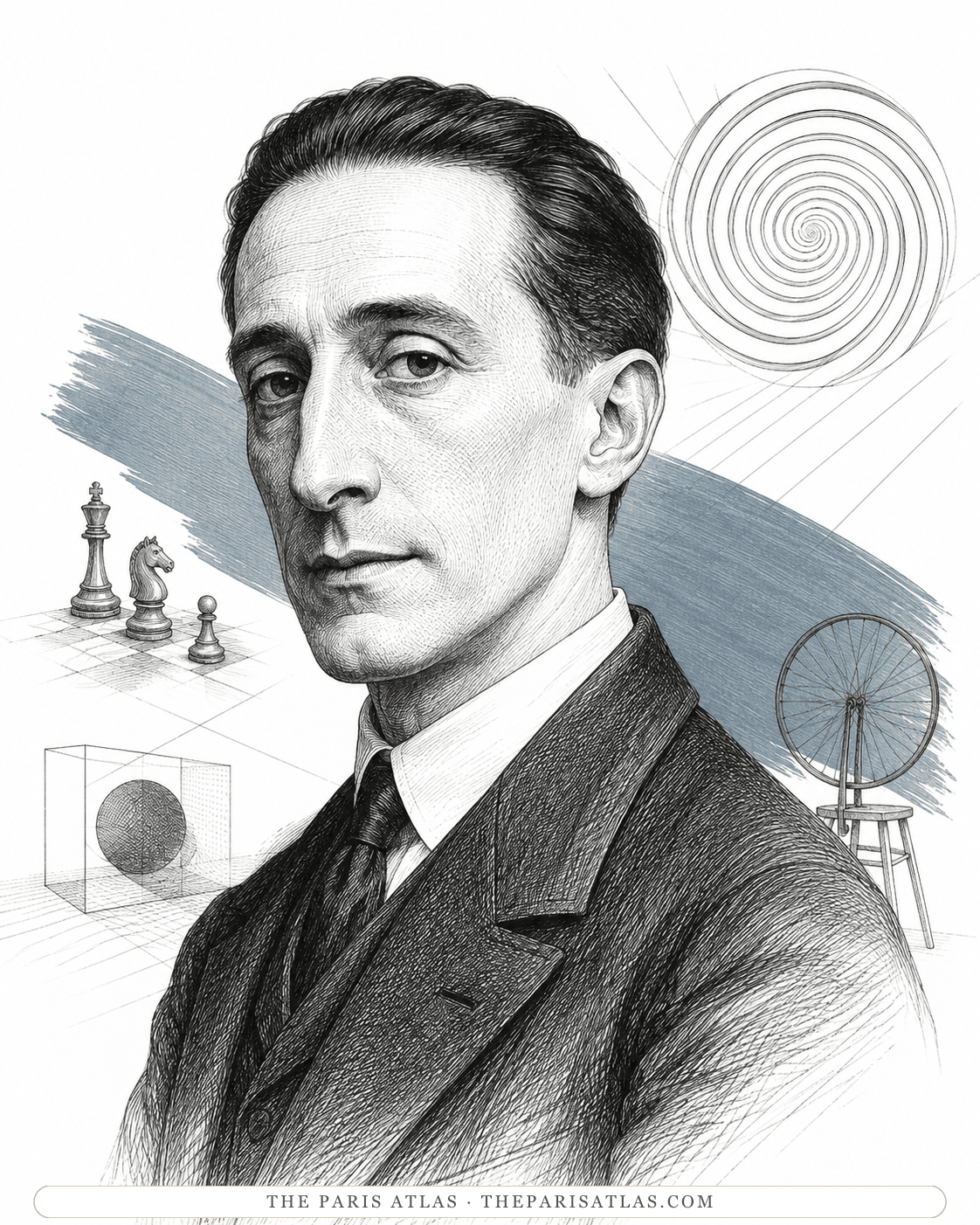
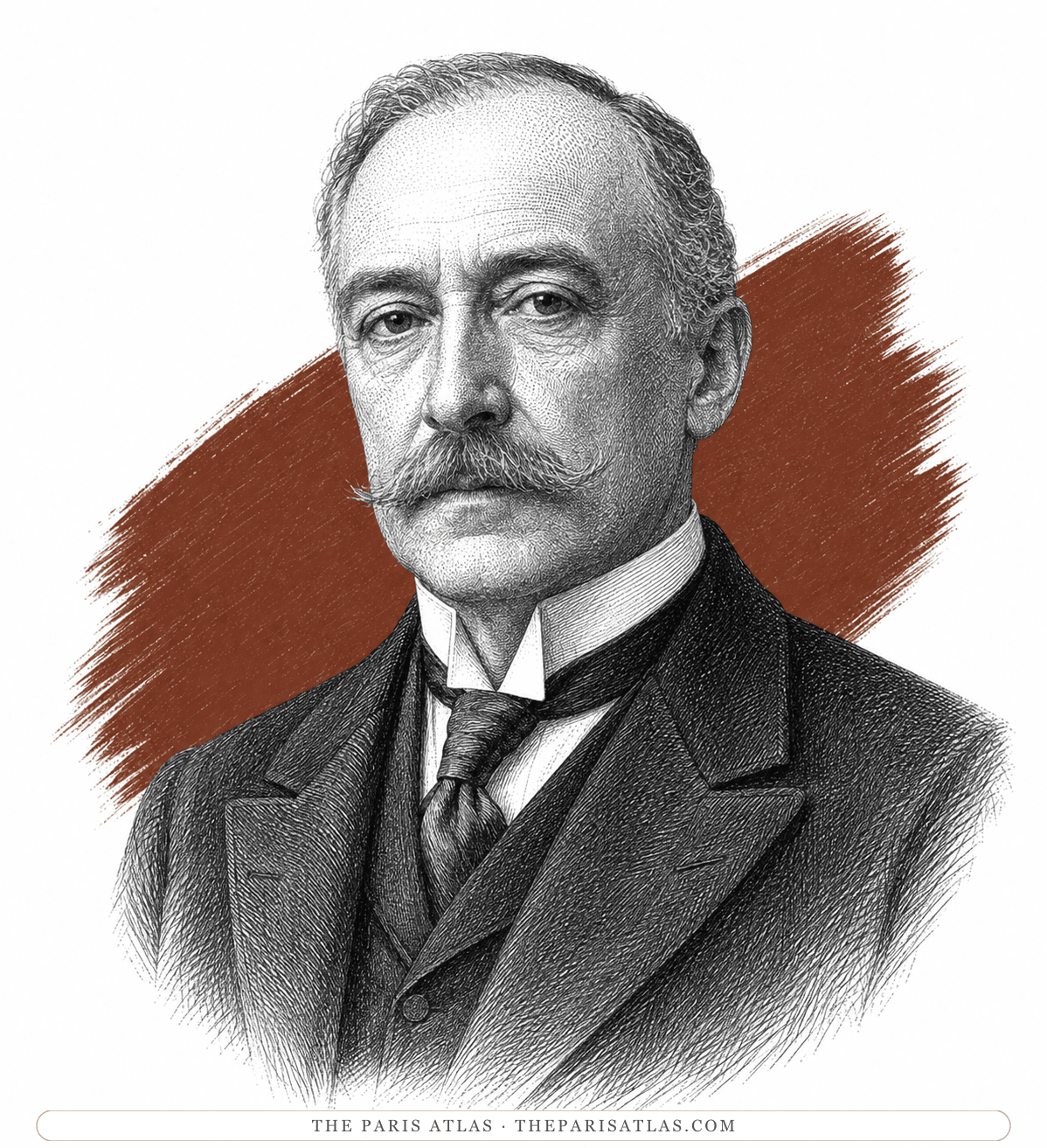
Illustrated portrait of Marcel Duchamp

Marcel Duchamp

  • Painter
  • Sculptor
  • Filmmaker

Collaborated with

Duchamp and Breton were lifelong friends who designed Surrealist exhibitions together, Duchamp providing the installations — the twelve hundred coal sacks hung over the 1938 Paris show and the mile of string strung through the 1942 New York exhibition.

Calvin Tomkins, Duchamp: A Biography (1996)

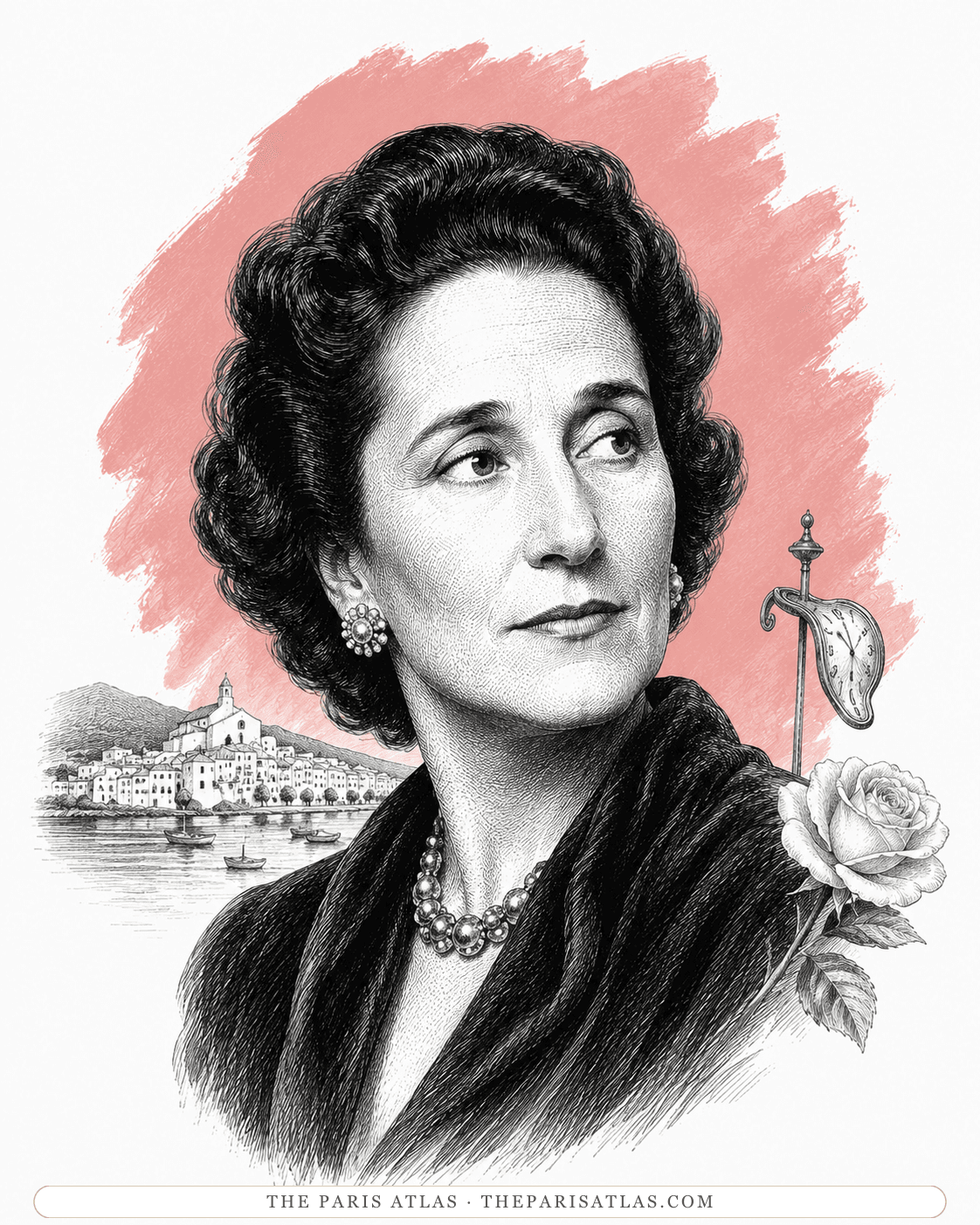
Illustrated portrait of Gala Dalí

Gala Dalí

  • Artists' model
  • Muse
  • Agent

Met

Gala knew Breton through Éluard's Surrealist circle. The Dalí Museum credits her with using Dalí's notes on the paranoiac-critical method to persuade Breton of the painter's importance in 1929.

Estrella de Diego, Gala Salvador Dalí: A Room of One's Own in Púbol (2018), pp. 2–5; The Dalí Museum, St. Petersburg — Gala Dalí, 1929

Who they drew from

Influence running inward — the writers and artists whose work fed theirs. Admiration is not acquaintance; these edges claim neither a meeting nor a friendship.

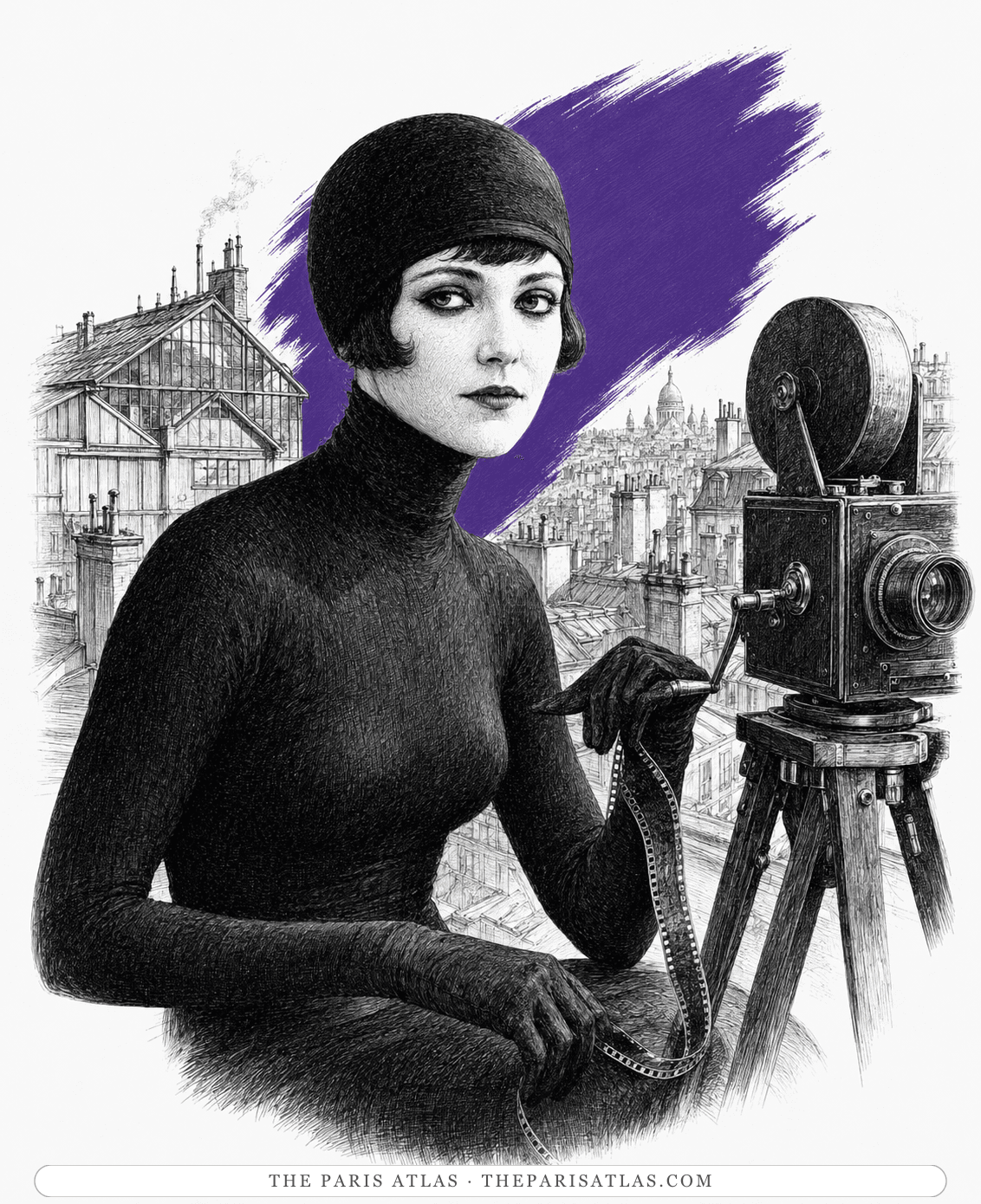
Illustrated portrait of Musidora

Musidora

The Surrealists took Musidora — above all the black-clad Irma Vep of Feuillade's Les Vampires — as their 'tenth muse'; Breton and Aragon paid homage to her in Le Trésor des Jésuites (1929). Connects silent serial cinema to the Surrealist circle without routing through the Cinémathèque.

La Cinémathèque française — Musidora sur le web

Movements

The artistic and literary currents this life ran through.

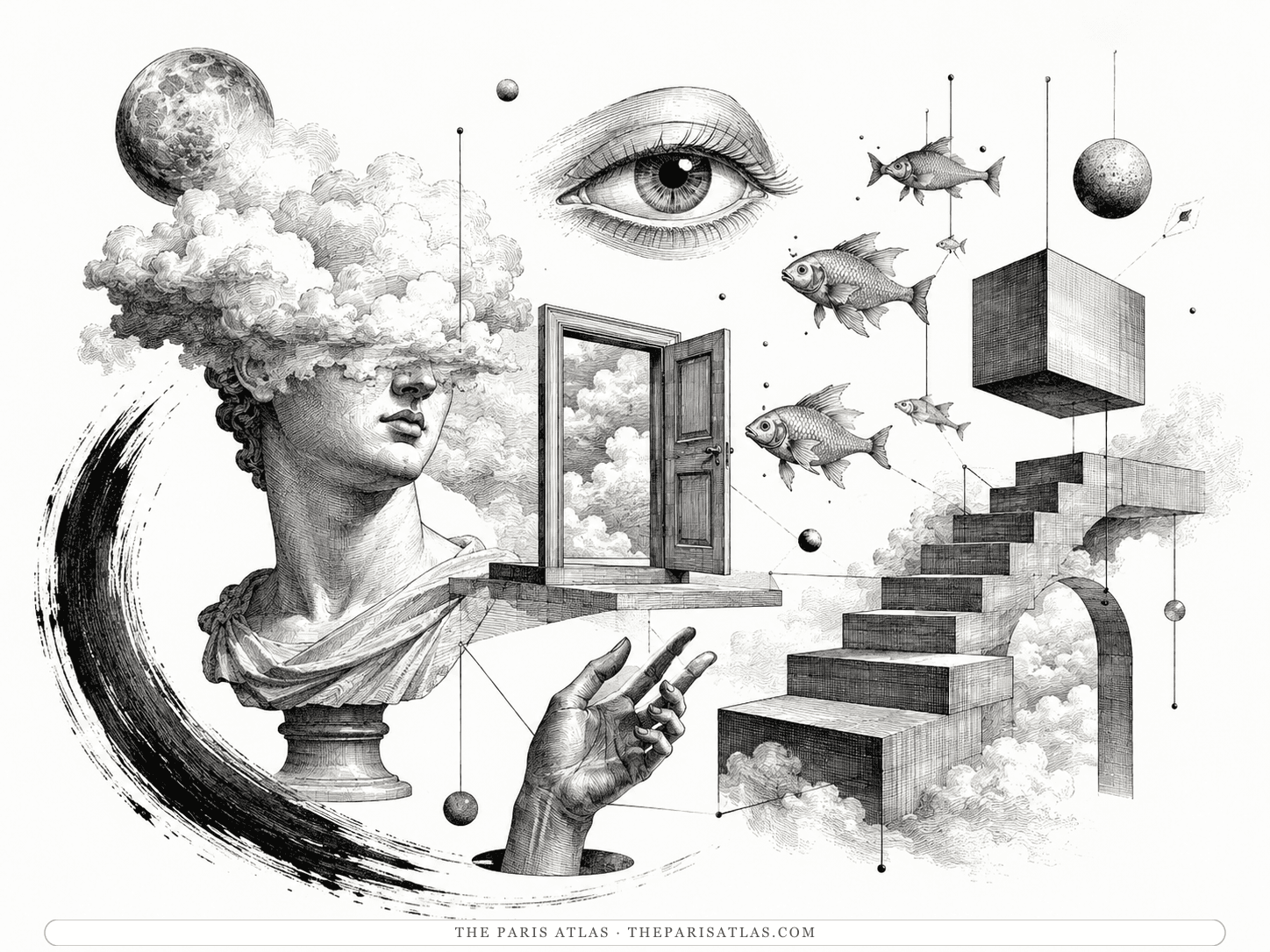
Pen-and-ink dream collage — a classical bust with clouds for eyes, a floating eye, a door opening onto sky, fish swimming through air, and an impossible staircase

Art & literary movement · 1924–1966

Surrealism

Breton wrote the Manifesto of Surrealism in 1924 and ran the movement until his death in 1966, admissions and expulsions included. The joke that he was its pope described the administration accurately.

Encyclopaedia Britannica — Surrealism; MoMA — Surrealism (collection term)

Books by André Breton

Cover of Nadja by André Breton

Memoir & autofiction

A chance encounter becomes a map of 1920s Paris, Surrealist wonder and the danger of turning another person into a symbol.

4.2

Guides featuring André Breton

Take them with you.

Questions about André Breton

Who was André Breton?

A French poet and critic, born in Normandy in 1896, who founded Surrealism and led it for four decades. He wrote the Manifesto of Surrealism in 1924, the book Nadja in 1928, and controlled the movement's membership personally until his death in Paris in 1966.

What is the Surrealist Manifesto?

The founding document of Surrealism, written by André Breton and published in Paris on 15 October 1924. It defined Surrealism as pure psychic automatism — thought expressed without control by reason — and proposed automatic writing and dreams as its instruments. Breton took the word itself from the poet Guillaume Apollinaire, who had coined it in 1917. A second manifesto followed in 1929.

Why was André Breton called the Pope of Surrealism?

Because he ran the movement like an institution with himself at its head. Membership was granted and revoked by Breton personally, sometimes after formal trials before the group: Robert Desnos was praised in the first Manifesto and expelled after the second, and Salvador Dalí was tried in 1934 and expelled in 1939. The nickname was a joke about that authority, and it stuck.

What happened between André Breton and Salvador Dalí?

Dalí joined the Surrealists in 1929, after Gala Dalí used his notes on the paranoiac-critical method to persuade Breton of his importance, and Breton put him on trial before the group in 1934 over his politics. The expulsion came in 1939, and Breton coined the anagram Avida Dollars for him. The two attacked each other in print for decades.

Where did André Breton live in Paris?

At 42 rue Fontaine, near Pigalle, from 1 January 1922 until his death in 1966. The studio held his collection of more than five thousand paintings, drawings, photographs, manuscripts, and Oceanic and popular art. One wall of it is preserved at the Centre Pompidou.

How did André Breton die?

He died in Paris on 28 September 1966, at the age of seventy. He is buried in the Batignolles cemetery in the 17th arrondissement, and his gravestone carries the epitaph he chose from his own writing: 'Je cherche l'or du temps' — I seek the gold of time.

Sourced claims

Every connection the graph holds for André, with the evidence behind it.

Associated with · 1924–1966

Surrealism

Breton wrote the Manifesto of Surrealism in 1924 and ran the movement until his death in 1966, admissions and expulsions included. The joke that he was its pope described the administration accurately.

Encyclopaedia Britannica — Surrealism; MoMA — Surrealism (collection term)

Met · 1925

Joan Miró

Breton met Miró during a visit to the studio at 45 rue Blomet in 1925, the year of the first Surrealist group exhibition. Miró showed with the group from that exhibition on while declining to submit to its discipline.

Joan Miró — Biography

Clashed with · 1934–1939

Salvador Dalí

Breton put Dalí on trial before the group in 1934 over his politics, expelled him in 1939, and coined the anagram Avida Dollars for him. The two went on attacking each other in print for decades.

Ian Gibson, The Shameful Life of Salvador Dalí (1997)

Collaborated with

Marcel Duchamp

Duchamp and Breton were lifelong friends who designed Surrealist exhibitions together, Duchamp providing the installations — the twelve hundred coal sacks hung over the 1938 Paris show and the mile of string strung through the 1942 New York exhibition.

Calvin Tomkins, Duchamp: A Biography (1996)

Influenced by

Musidora

The Surrealists took Musidora — above all the black-clad Irma Vep of Feuillade's Les Vampires — as their 'tenth muse'; Breton and Aragon paid homage to her in Le Trésor des Jésuites (1929). Connects silent serial cinema to the Surrealist circle without routing through the Cinémathèque.

La Cinémathèque française — Musidora sur le web

Met

Gala Dalí

Gala knew Breton through Éluard's Surrealist circle. The Dalí Museum credits her with using Dalí's notes on the paranoiac-critical method to persuade Breton of the painter's importance in 1929.

Estrella de Diego, Gala Salvador Dalí: A Room of One's Own in Púbol (2018), pp. 2–5; The Dalí Museum, St. Petersburg — Gala Dalí, 1929