The Paris AtlasCharting the artists, works, and places worth returning to.
  • Painter
  • Sculptor
· Spanish · 1893–1983

Joan Miró

Catalan painter and sculptor. He came to Paris in 1920, took a studio at 45 rue Blomet beside André Masson's, and spent the next sixty years turning the family farm at Mont-roig into a language of floating signs.

In images

Details

Lived
1893–1983
Born
20 April 1893
Birthplace
Barcelona, Catalonia
Died
25 December 1983 · aged 90
Place of death
Palma de Mallorca
Nationality
Spanish
Married
Pilar Juncosa · 1929–1983
Roles
PainterSculptor
Also known as
Joan Miró i Ferrà

About Joan Miró

Who was Joan Miró?

Joan Miró was a Catalan painter, sculptor and ceramicist whose flat grounds, primary colours and floating signs became one of the most recognizable visual languages of the twentieth century. He is closely associated with Surrealism, showed in the movement's first group exhibition, and never fully belonged to it.

The shape of his career is a shuttle. He arrived in Paris in 1920 carrying a subject with him: his family's farm at Mont-roig, a village in rural Tarragona whose animals, tools, crops and night sky he had been painting in obsessive detail. In Paris he lived among poets rather than painters, and over four years the farm's inventory compressed into signs. For the rest of his life he moved between France and Catalonia, building that language, attacking it, and rebuilding it in paint, clay, bronze and finally architecture.

He was also a connector. Ernest Hemingway bought his 1921–22 painting The Farm. André Breton came to his studio in 1925, the year of the first Surrealist group exhibition. And it was Miró who brought his own dealer to Figueres to look at a younger Catalan's work and mentioned him to Pablo Picasso, which is why Salvador Dalí reached Paris introduced rather than unknown.

Barcelona, an office job, and a fever

Joan Miró i Ferrà was born on 20 April 1893 at 4 Passatge del Crèdit in Barcelona. His father was a silversmith and watchmaker; his mother came from a family of cabinetmakers in Palma de Mallorca. Craft was the family trade on both sides, and Miró never much respected the line between fine and applied art.

From 1907 he studied at La Llotja, the Barcelona art school, under Modest Urgell and Josep Pascó, while also enrolled at commercial school. In 1910 he took the path his parents preferred and became an accounts clerk. It went badly. In 1911 he caught typhoid fever and was sent to convalesce at the farmhouse his parents had recently bought at Mont-roig, in the countryside south of Tarragona.

The fever ended the office career and started everything else. In 1912 he committed to painting and entered Francesc Galí's art school, where his classmates included Josep Llorens Artigas, a potter who would matter enormously to him thirty years later. Mont-roig became the fixed point of his life: the place he returned to every year, and the landscape that supplied nearly every image he ever painted. From 1916 the dealer Josep Dalmau, the man who connected Barcelona's small avant-garde to Paris, began supporting his work.

45 rue Blomet

Miró made his first trip to Paris in 1920, to visit Pablo Picasso. From 1921 he kept a studio at 45 rue Blomet, in the fifteenth arrondissement, working there during the academic terms and returning to Mont-roig for the rest of each year. The rhythm held for the whole decade: Paris for the world, Catalonia for the work.

His neighbour at rue Blomet was the painter André Masson, and Masson's studio was a gathering place for young writers. Through him Miró met Michel Leiris, and probably Antonin Artaud, Robert Desnos, Paul Éluard, Georges Limbour and Raymond Queneau. The company mattered. Miró's transformation happened among poets, not painters, and it happened before Surrealism existed as a movement: André Breton did not publish the first Surrealist manifesto until 1924.

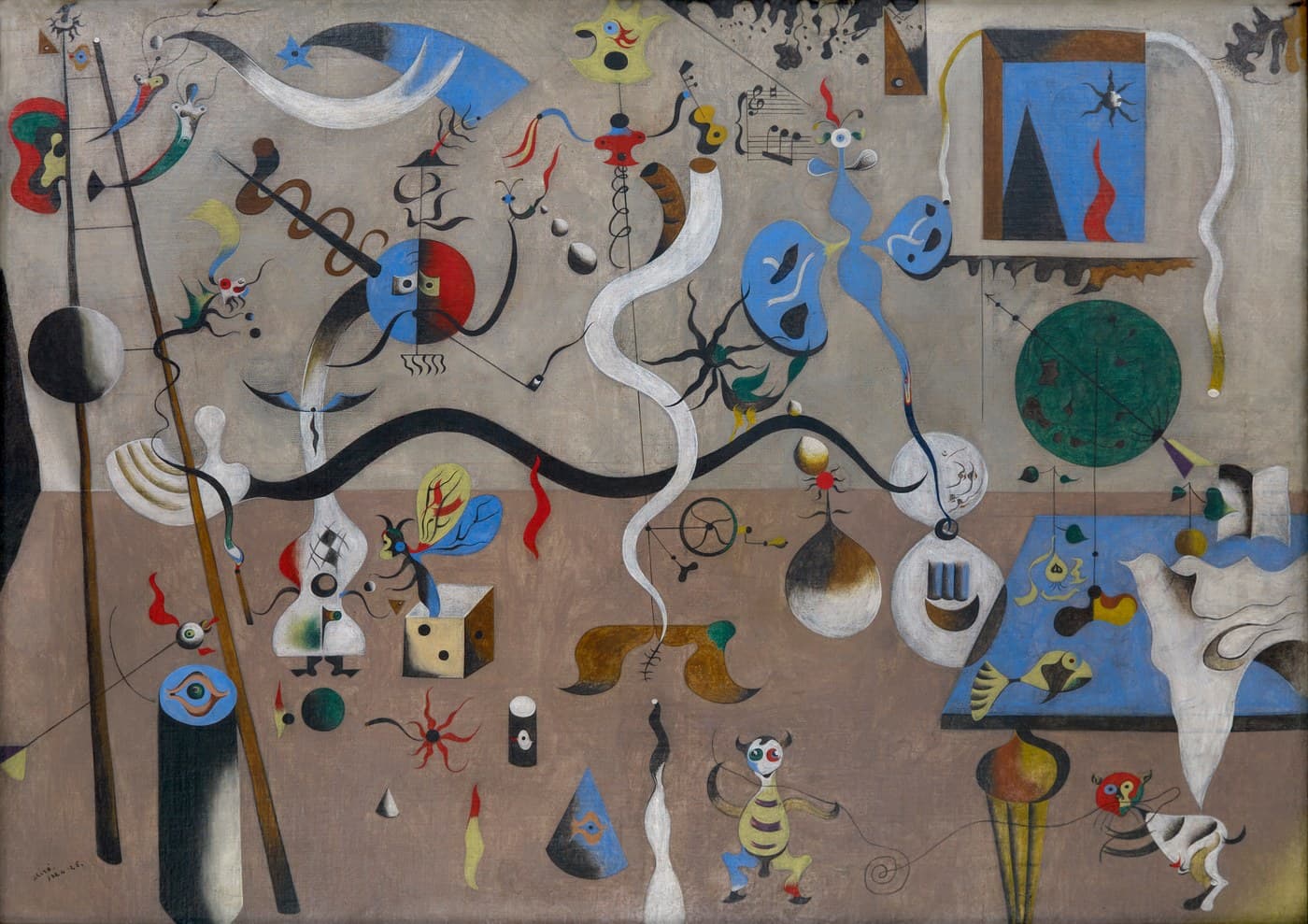
Breton met Miró on a visit to the rue Blomet studio in 1925, the same year Miró had his first solo exhibition at Galerie Pierre and showed in the first Surrealist group exhibition there. He took part in the movement's exhibitions without accepting its discipline, a distance he kept for the rest of his life.

Harlequin's Carnival, 1924–25, painted at the height of the rue Blomet years (Albright-Knox Art Gallery, Buffalo). (Joan Miró (Albright-Knox Art Gallery), via Wikimedia · Public domain (US))

The Farm, and the writer who rolled dice for it

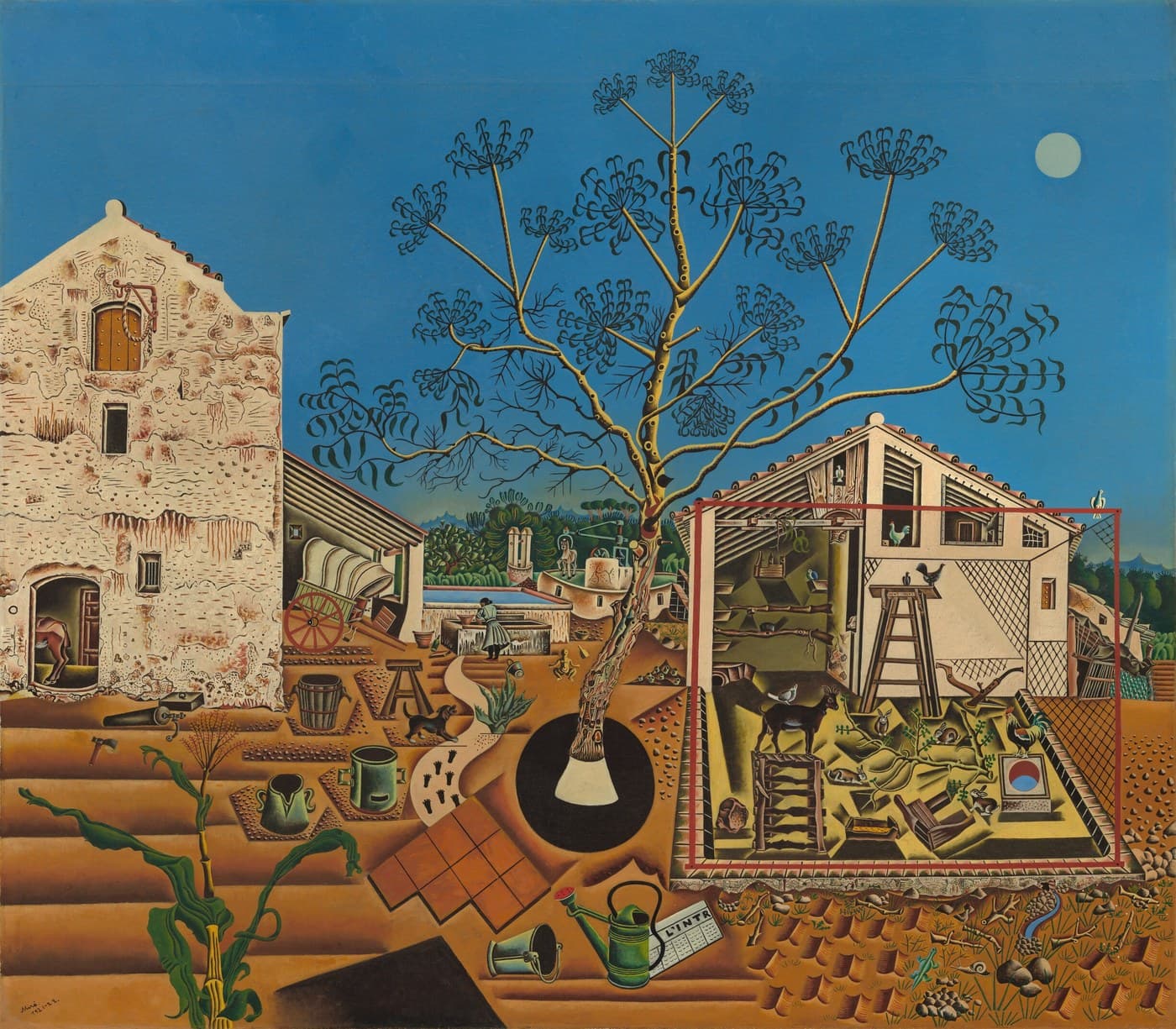
Between 1921 and 1922 Miró painted The Farm, an exhaustive inventory of the Mont-roig property: the animals in the shed, the donkey at the millstone, the crops, the tools, a watering can standing on a newspaper. The National Gallery of Art, which now owns it, describes a scene where everything looks ordinary at first glance and then will not stay that way.

The Farm, 1921–22. Painted between Mont-roig and Paris, bought by Hemingway on the roll of a die, bequeathed to the National Gallery of Art by his widow in 1987. (Joan Miró (National Gallery of Art), via Wikimedia · Public domain (US))

Ernest Hemingway wanted it. By his own account, published in Cahiers d'Art in 1934, the poet Evan Shipman had persuaded Galerie Pierre to put a price on the painting, thought better of it the same day, and decided Hemingway should have it instead; the two rolled dice for the right to buy it. Hemingway won and paid the gallery in monthly installments. The Gallery's provenance records the Hemingways owning The Farm by 9 November 1925.

The painting's afterlife followed the marriage. When Hemingway and his first wife Hadley Richardson divided their possessions before their divorce in 1926, The Farm went to Hadley. Hemingway borrowed it back for a Miró exhibition at the Pierre Matisse Gallery in New York in January 1935, and the painting later passed to his fourth wife, Mary Welsh Hemingway, who bequeathed it to the National Gallery of Art in Washington in 1987. It hangs there today.

From inventory to sign

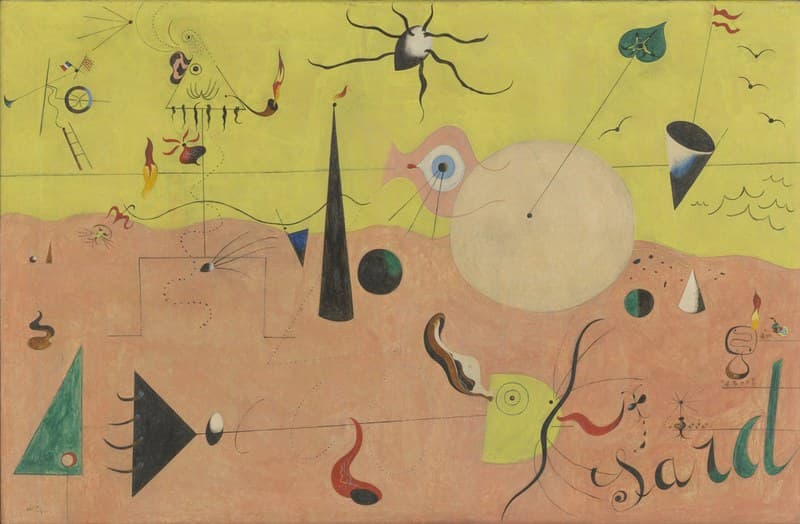
What happened next is visible in a single painting. The Hunter (Catalan Landscape), begun at Mont-roig in July 1923 and finished in the winter of 1924, shows the same countryside as The Farm with almost everything removed. The hunter is a stick figure with a triangular head, a pipe and a floating heart, holding a rabbit and a smoking gun; he stands for Miró. In the foreground Miró wrote the fragment "sard", short for the sardana, Catalonia's national dance, in the broken-word manner of the Dada and Surrealist poetry he had been reading at rue Blomet.

The Hunter (Catalan Landscape), 1923–24 (Museum of Modern Art). The farm reduced to signs; the hunter with pipe and gun stands for Miró. (Joan Miró (Museum of Modern Art) — © Successió Miró / ARS / ADAGP · Fair use)

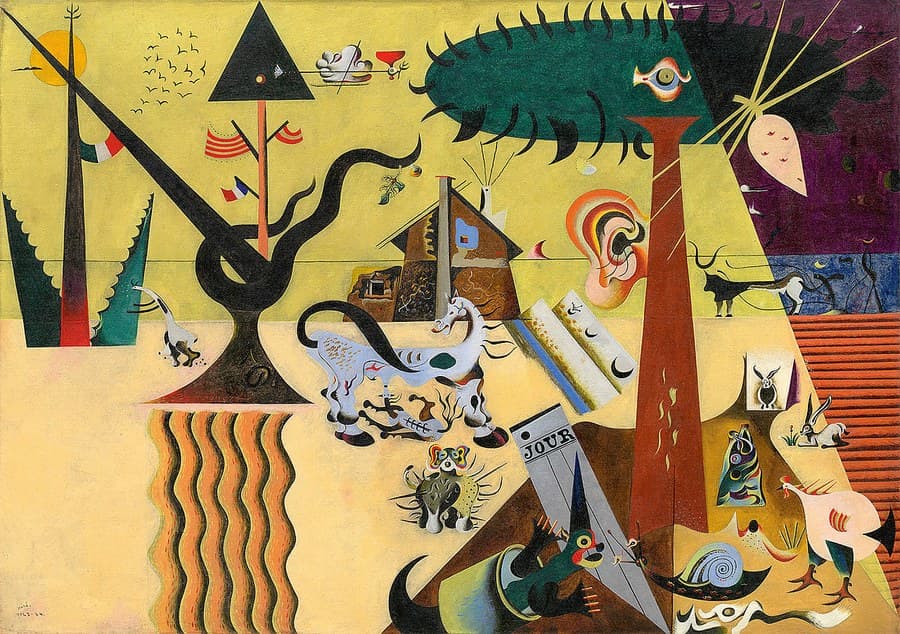
The Tilled Field, begun at Mont-roig across the same seasons, shows the change midway: still recognizably the farm, already sprouting emblems, a tree growing an ear and an eye. The Fundació Joan Miró counts these Mont-roig canvases as the turning point of his art.

The Tilled Field, 1923–24. The farm halfway to becoming a vocabulary. (Joan Miró, via Wikimedia · Public domain (US))

The Museum of Modern Art, which bought The Hunter in 1936, treats it as the hinge of his career: the point where the real and the imaginary, image and text, began operating together in a way that would characterize his work for the next sixty years. The farm had become a vocabulary.

Cité des Fusains, a marriage, and America

In 1926 Miró moved across the river to 22 rue Tourlaque in the Cité des Fusains, a Montmartre colony of artists' studios where his neighbours included Max Ernst and Hans Arp. That year Sergei Diaghilev commissioned Miró and Ernst together to design the sets and costumes for the Ballets Russes production of Romeo and Juliet.

In 1929 he married Pilar Juncosa in Palma de Mallorca; their daughter Maria Dolors was born in Barcelona the following year. The domestic record corrects the myth of Miró as a childlike improviser. Through the thirties he ran a disciplined international career, and in 1934 the New York dealer Pierre Matisse, son of the painter Henri Matisse, signed a contract to represent him in the United States.

Miró in Barcelona in June 1935, photographed by Carl Van Vechten. Until the Civil War he still divided each year between Catalonia and Paris. (Carl Van Vechten — Library of Congress, via Wikimedia Commons · Public domain)

The war years

When the Spanish Civil War began in 1936, Miró was working from the family home at 4 Passatge del Crèdit. He stayed in France rather than return, and by 1937 was living in an apartment at 98 boulevard Auguste-Blanqui in Paris. That year the Spanish Republic's pavilion at the Paris International Exposition carried his large mural The Reaper (Catalan Peasant in Revolt): the stick-figure peasant of the early landscapes, now raised as a wartime image for a government fighting for its life.

In 1939 the family rented a house at Varengeville-sur-Mer on the Normandy coast, and in January 1940, as the wider war closed in, Miró began a series of small gouaches of birds, women and stars. German bombing reached Normandy that May and the family fled south into Spain. He carried the series with him, continued it in Palma, and finished the twenty-third and last sheet at Mont-roig in September 1941. The series became known as the Constellations: two years of war on the ground, and none of it in the pictures.

The Beautiful Bird Revealing the Unknown to a Pair of Lovers, from the Constellation series, 1941 (Museum of Modern Art). (Joan Miró (Museum of Modern Art) — © Successió Miró / ARS / ADAGP · Fair use)

Spain again, while New York made the case

The same year the Constellations ended at Mont-roig, the Museum of Modern Art in New York staged his first major retrospective, organized by James Johnson Sweeney. The timing defines the second half of his life: while Miró lived quietly in Franco's Spain, back at 4 Passatge del Crèdit from 1942, his international standing was being built an ocean away.

  • 1944 — first ceramics with Josep Llorens Artigas, his classmate from Galí's school thirty years earlier, and the fifty lithographs of the Barcelona Series
  • 1946 — first bronze sculptures
  • 1947 — first trip to the United States, with a mural commission for the Terrace Plaza Hotel in Cincinnati and printmaking at Stanley William Hayter's Atelier 17
  • 1948 — first solo exhibition at Galerie Maeght in Paris, with Aimé Maeght becoming his French dealer

After the war the work widened out of painting altogether, into clay, bronze and the printing press.

Miró with Carlo Cardazzo, the Venetian gallerist and publisher who showed his work in Italy. Undated beyond Cardazzo's death in 1963. (Photographer unknown, via Wikimedia Commons · Public domain)

Earth and fire: Gallifa, Palma, UNESCO

Between 1954 and 1955, working with Artigas at Gallifa, Miró produced more than two hundred ceramic pieces, and then stopped painting entirely until 1959. In 1956 he moved permanently to Palma de Mallorca and commissioned the architect Josep Lluís Sert, a friend since 1932, to design him the large studio he had wanted all his life.

In 1958 the two ceramic walls he made with Artigas for the UNESCO headquarters in Paris were unveiled, and won him the Guggenheim International Award. The man who had arrived in 1920 as an unknown Catalan visiting Picasso was now part of the permanent fabric of Paris. A ceramic mural for Harvard followed in 1959, and in 1966 he visited Japan for the first time and met the poet Shūzō Takiguchi, who had written one of the earliest books on his work.

The foundation, and the end

In 1972 the Fundació Joan Miró was legally constituted in Barcelona, a centre for the study of contemporary art housed in a building designed, once again, by Sert. It opened to the public in 1975. The young painter had depended on dealers to reach the world. The old one built the institution himself.

Miró at eighty-five, sitting for the sculptor Joaquim Ros i Sabaté, 1978. (Víctor Perea Ros, CC BY-SA 4.0, via Wikimedia Commons · CC BY-SA 4.0)

In 1982 his monumental sculpture Woman and Bird was installed in Barcelona on the former site of the city slaughterhouse, in a park that now carries his name. Joan Miró died in Palma de Mallorca on 25 December 1983, at ninety, and was buried four days later in Montjuïc cemetery in Barcelona.

Life events

  1. 1893

    Born Joan Miró i Ferrà on 20 April at 4 Passatge del Crèdit, Barcelona, to a silversmith father and a mother from a Palma cabinet-making family.

    Joan Miró — Biography

  2. 1911

    Working as an accounts clerk, he catches typhoid fever and convalesces at the family's newly bought farmhouse at Mont-roig. The next year he commits to painting and enters Francesc Galí's school.

    Joan Miró — Biography

  3. 1920

    First trip to Paris, to visit Pablo Picasso.

    Joan Miró — Biography

  4. 1921

    Takes the studio at 45 rue Blomet, next to André Masson, working there in term time and at Mont-roig the rest of the year. Paints The Farm through 1922.

    Joan Miró, The Farm, 1921–22 (National Gallery of Art, Washington; gift of Mary Hemingway). The Mont-roig property in exhaustive inventory — the painting Hemingway won on a dice roll and kept for life. (Joan Miró (National Gallery of Art), via Wikimedia)

    Joan Miró — Biography; The Farm, Joan Miró, 1921–1922 (object page with provenance)

  5. 1923–1924

    Paints The Hunter (Catalan Landscape) at Mont-roig: the farm compressed into signs, with the written fragment "sard" for the sardana.

    Joan Miró, The Hunter (Catalan Landscape), Montroig, July 1923–winter 1924 (Museum of Modern Art, New York). © Successió Miró / ARS, New York / ADAGP, Paris; shown under fair use for editorial commentary. (Joan Miró (Museum of Modern Art) — © Successió Miró / ARS / ADAGP)

    The Hunter (Catalan Landscape), Joan Miró, Montroig, July 1923–winter 1924

  6. 1925

    First solo exhibition at Galerie Pierre; André Breton visits the rue Blomet studio; Ernest Hemingway buys The Farm, paying Galerie Pierre in monthly installments after winning a dice roll against Evan Shipman.

    Joan Miró — Biography; The Farm, Joan Miró, 1921–1922 (object page with provenance)

  7. 1926

    Moves to 22 rue Tourlaque in the Cité des Fusains, near Max Ernst and Hans Arp, and designs the Ballets Russes production of Romeo and Juliet with Ernst for Sergei Diaghilev.

    Joan Miró — Biography

  8. 1929

    Marries Pilar Juncosa in Palma de Mallorca. Their daughter Maria Dolors is born in Barcelona the following year.

    Joan Miró — Biography

  9. 1934

    Pierre Matisse becomes his dealer in the United States by contract.

    Joan Miró — Biography

  10. 1937

    Living at 98 boulevard Auguste-Blanqui in Paris after the outbreak of the Spanish Civil War, he paints The Reaper (Catalan Peasant in Revolt) for the Spanish Republic's pavilion at the Paris International Exposition.

    Joan Miró — Biography

  11. 1940–1941

    Begins the Constellations gouaches at Varengeville-sur-Mer in January 1940, flees the German advance to Spain in May, and completes the twenty-three sheets at Mont-roig in September 1941 — the year of his first MoMA retrospective, organized by James Johnson Sweeney.

    Joan Miró, The Beautiful Bird Revealing the Unknown to a Pair of Lovers, from the Constellation series, 1941 (Museum of Modern Art, New York). © Successió Miró / ARS, New York / ADAGP, Paris; shown under fair use for editorial commentary. (Joan Miró (Museum of Modern Art) — © Successió Miró / ARS / ADAGP)

    Joan Miró — Biography

  12. 1944

    First ceramics with Josep Llorens Artigas; the Barcelona Series of fifty lithographs is published.

    Joan Miró — Biography

  13. 1956

    Moves permanently to Palma de Mallorca, into a studio designed by Josep Lluís Sert.

    Joan Miró — Biography

  14. 1958

    The ceramic walls made with Artigas for the UNESCO headquarters in Paris are unveiled and win the Guggenheim International Award.

    Joan Miró — Biography

  15. 1975

    The Fundació Joan Miró, legally constituted in 1972 and housed in a building by Sert, opens to the public in Barcelona.

    Joan Miró — Biography

  16. 1983

    Dies in Palma de Mallorca on 25 December, aged ninety, and is buried on 29 December in Montjuïc cemetery, Barcelona.

    Joan Miró — Biography

People they knew

Documented connections — every one carries its source.

Illustrated portrait of Ernest Hemingway

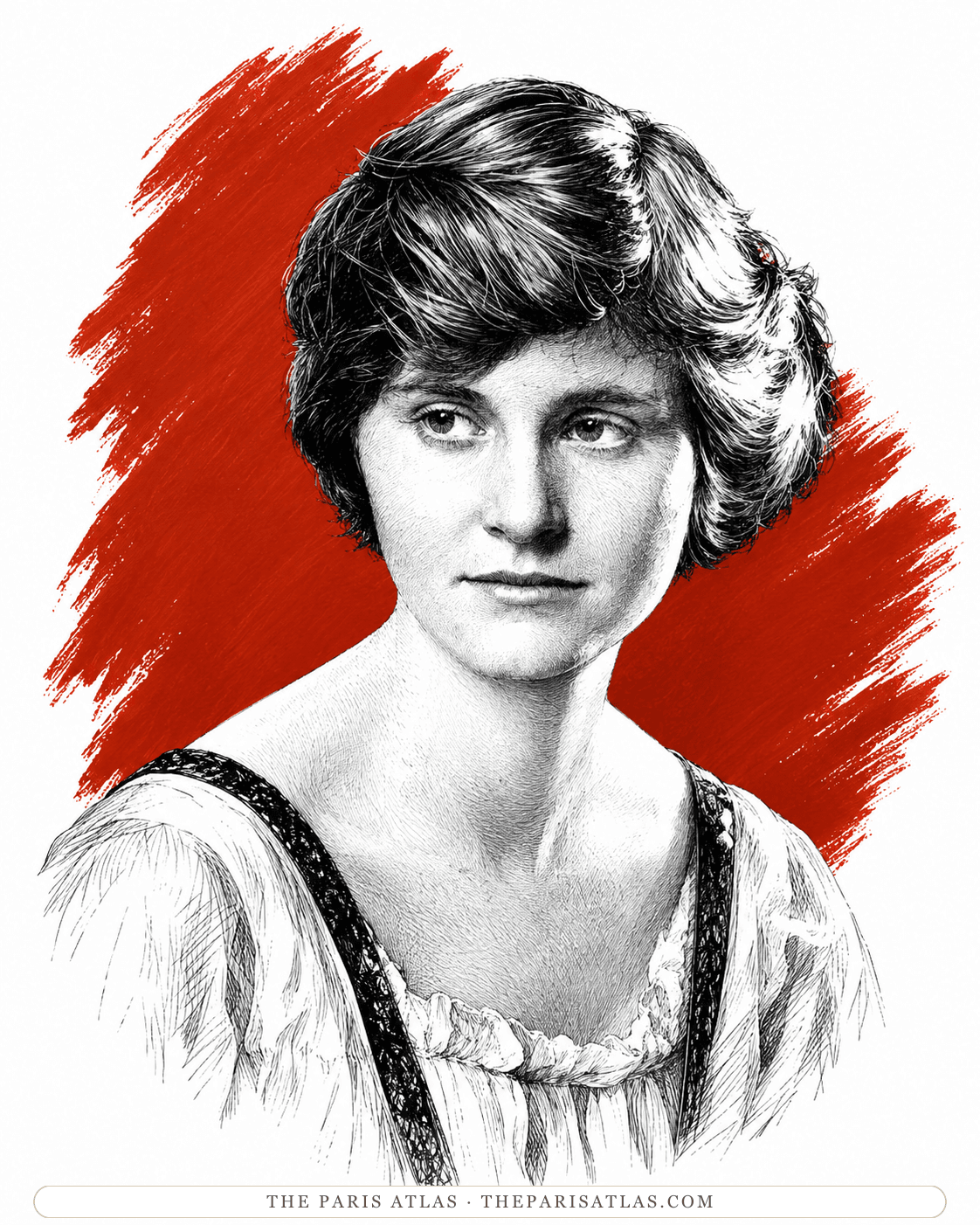
Ernest Hemingway

  • Author
  • Journalist

Met · 1925

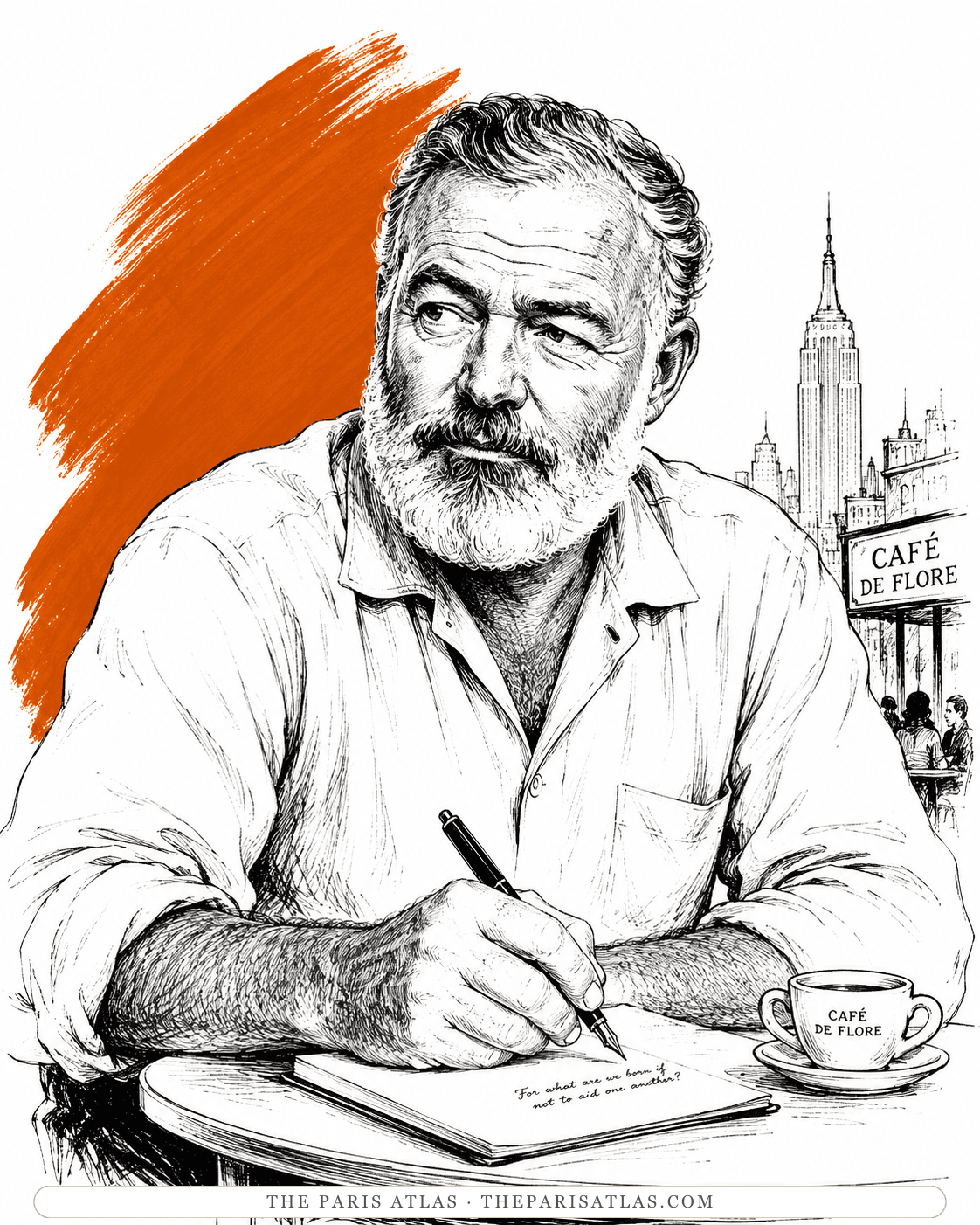
Hemingway bought Miró's The Farm from Galerie Pierre in 1925 — by his own 1934 account after rolling dice with the poet Evan Shipman for the right to buy it — and the National Gallery of Art's provenance records the Hemingways owning it by 9 November 1925.

The Farm, Joan Miró, 1921–1922 (object page with provenance); Joan Miró — Biography

Illustrated portrait of Pablo Picasso

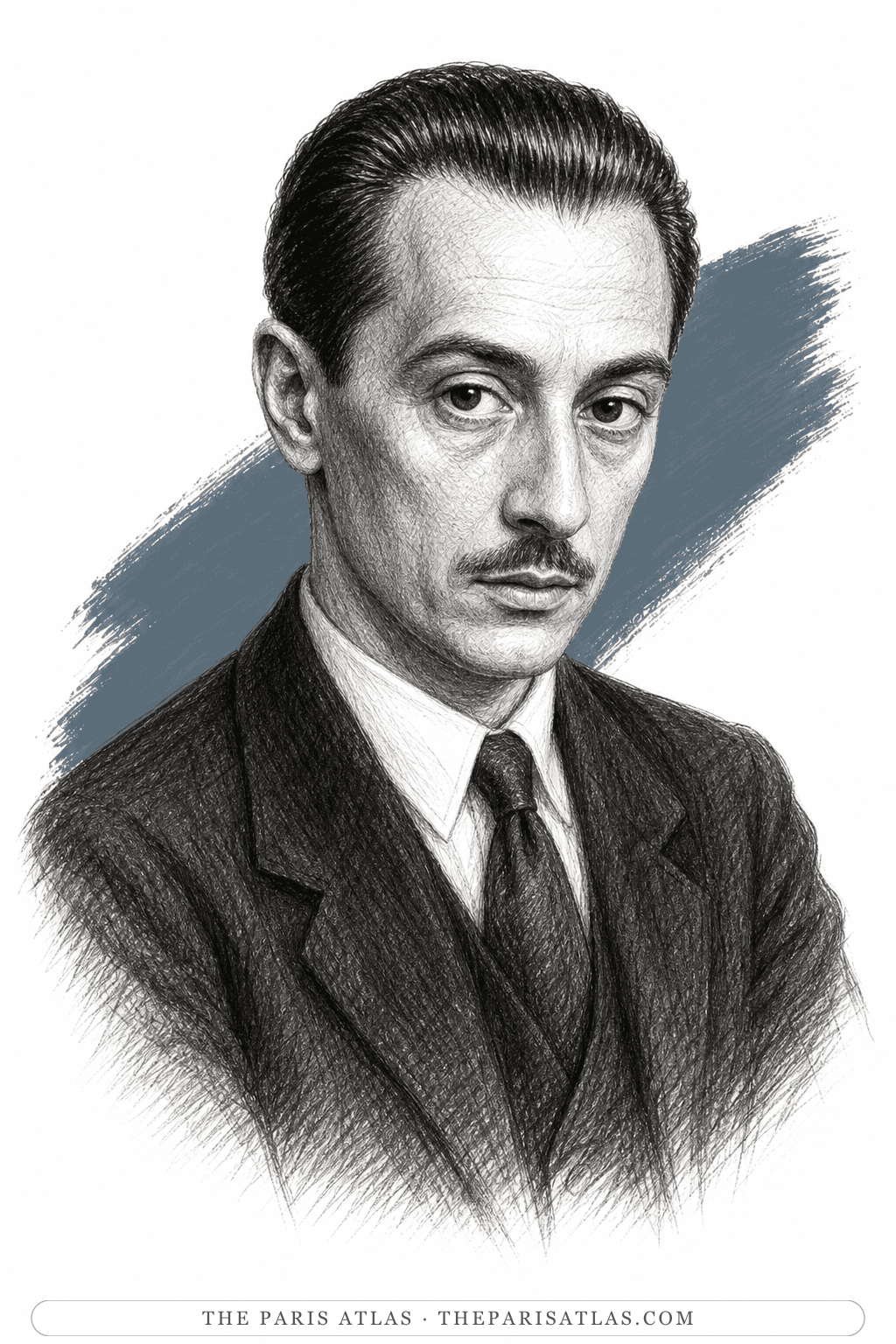
Pablo Picasso

  • Painter
  • Sculptor

Met · 1920

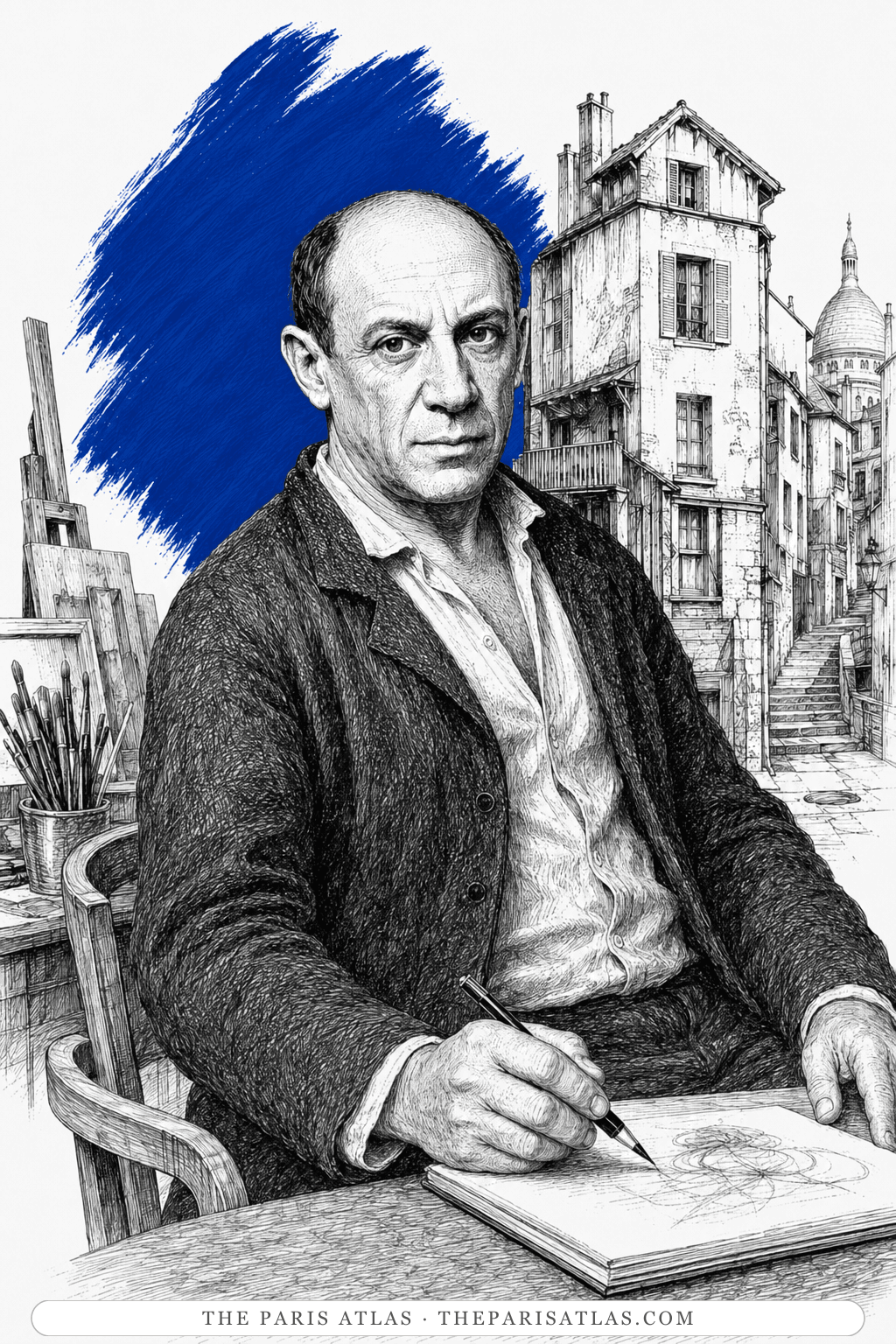
Miró's first trip to Paris, in 1920, was made to visit Picasso. The older Catalan remained a fixed point of his Paris world; six years later Miró was the one talking to Picasso about a still-unknown Dalí.

Joan Miró — Biography

Illustrated portrait of Salvador Dalí

Salvador Dalí

  • Painter
  • Filmmaker
  • Sculptor

Met · 1926

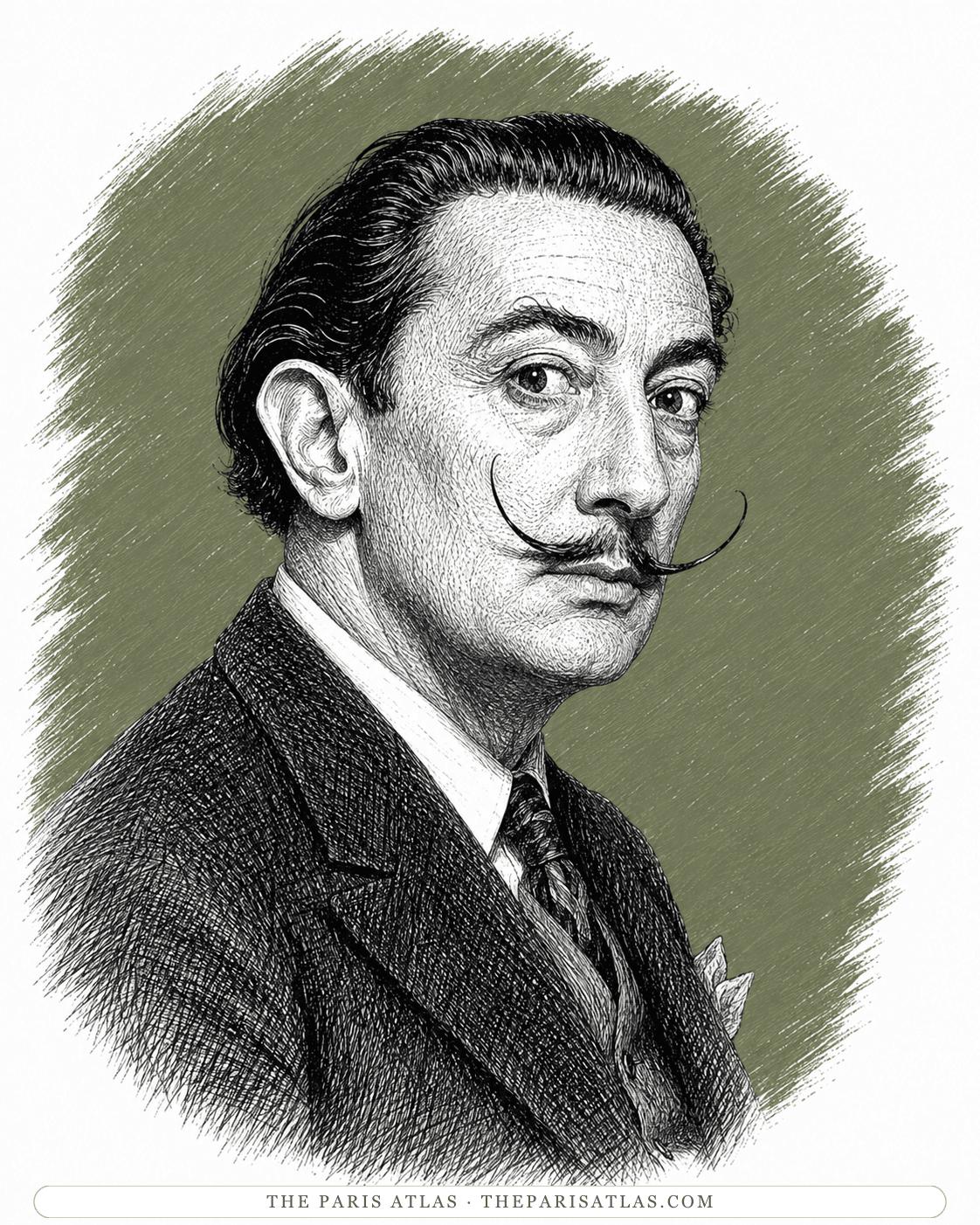
Miró was a decade ahead of him and already with the Surrealists. He brought his own Paris dealer to Figueres to look at Dalí's work and spoke about him to Picasso, which is why Dalí arrived in Paris introduced rather than unknown.

Ian Gibson, The Shameful Life of Salvador Dalí (1997)

Illustrated portrait of André Breton

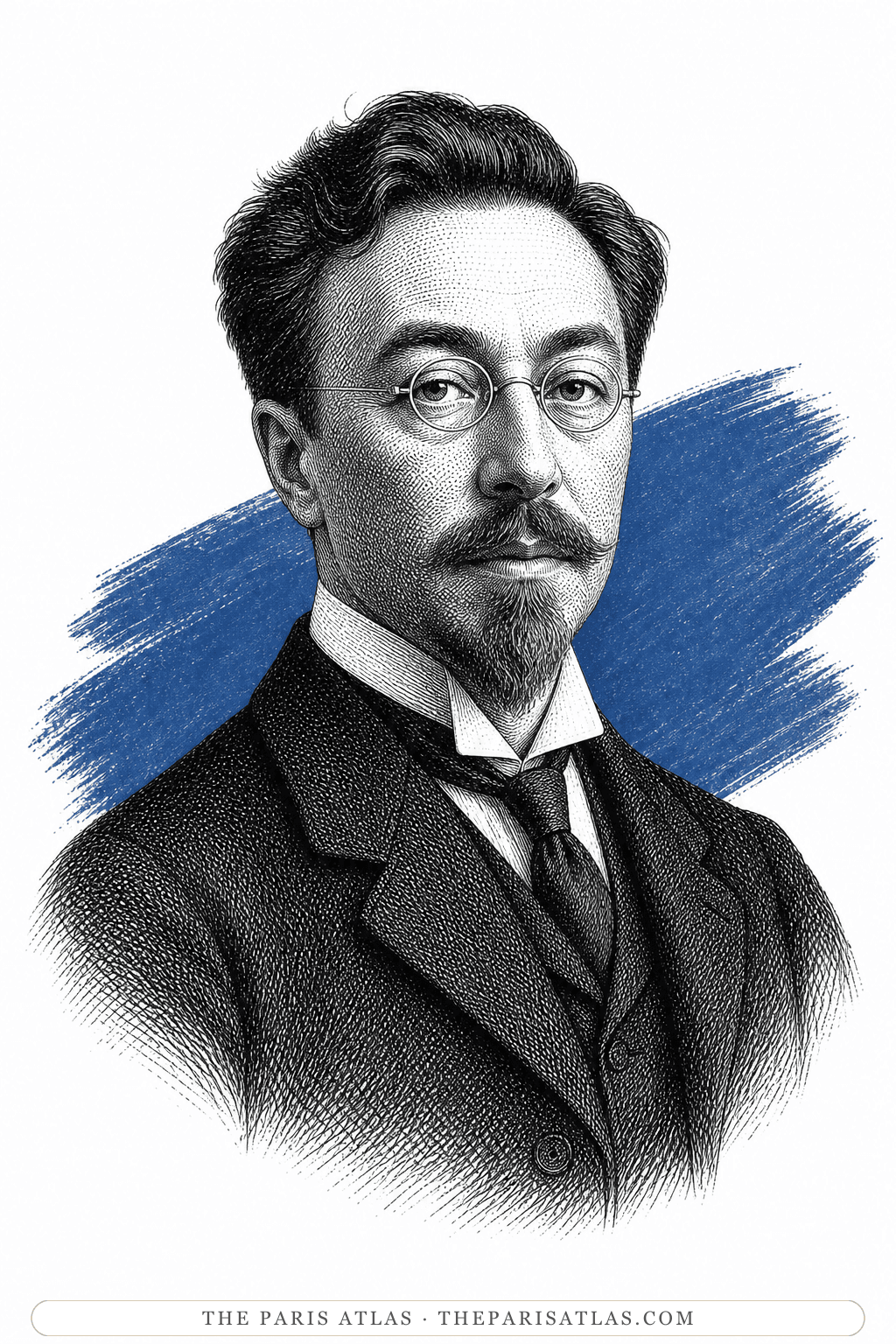
André Breton

  • Author
  • Poet
  • Critic
  • +1

Met · 1925

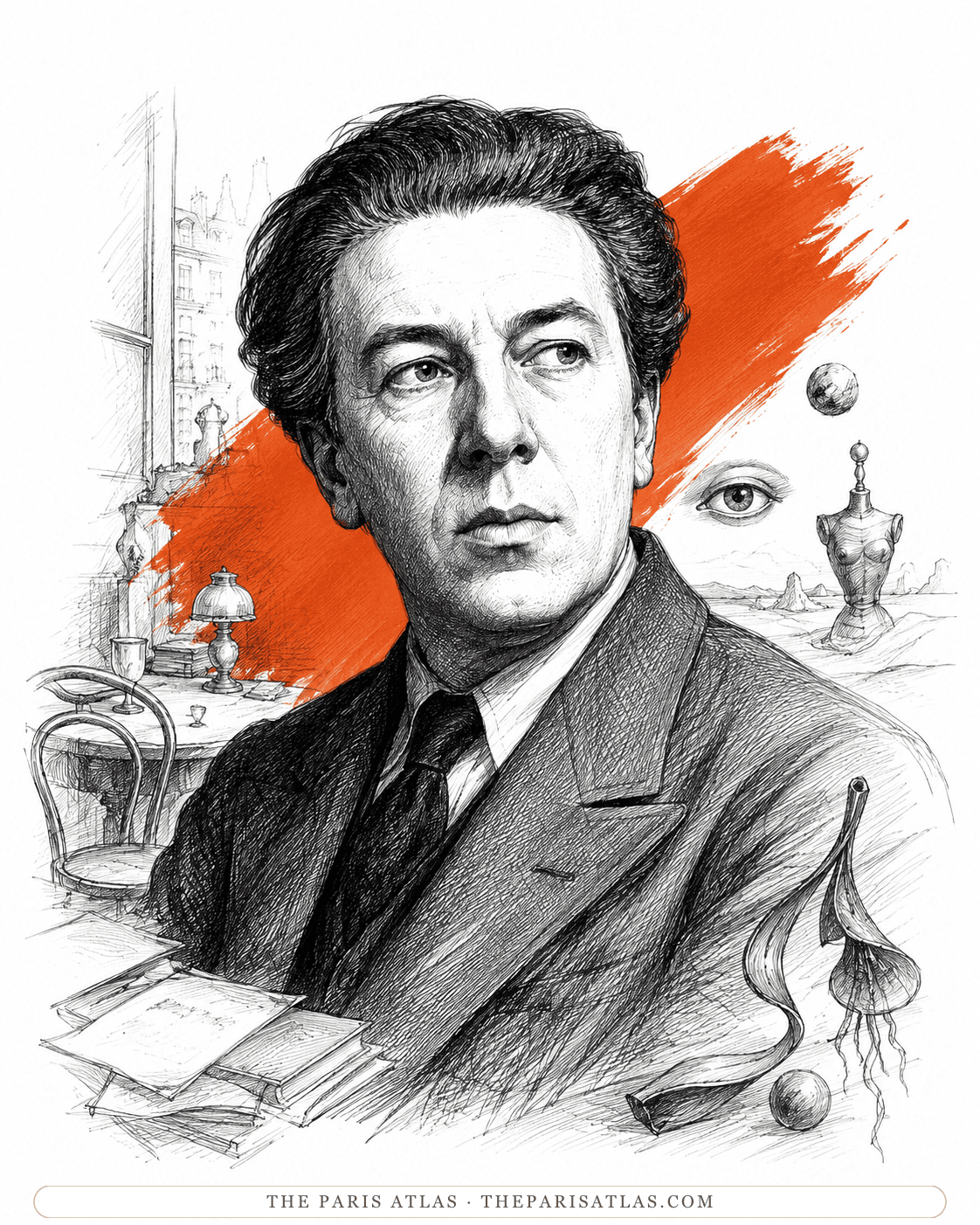
Breton met Miró during a visit to the studio at 45 rue Blomet in 1925, the year of the first Surrealist group exhibition. Miró showed with the group from that exhibition on while declining to submit to its discipline.

Joan Miró — Biography

Movements

The artistic and literary currents this life ran through.

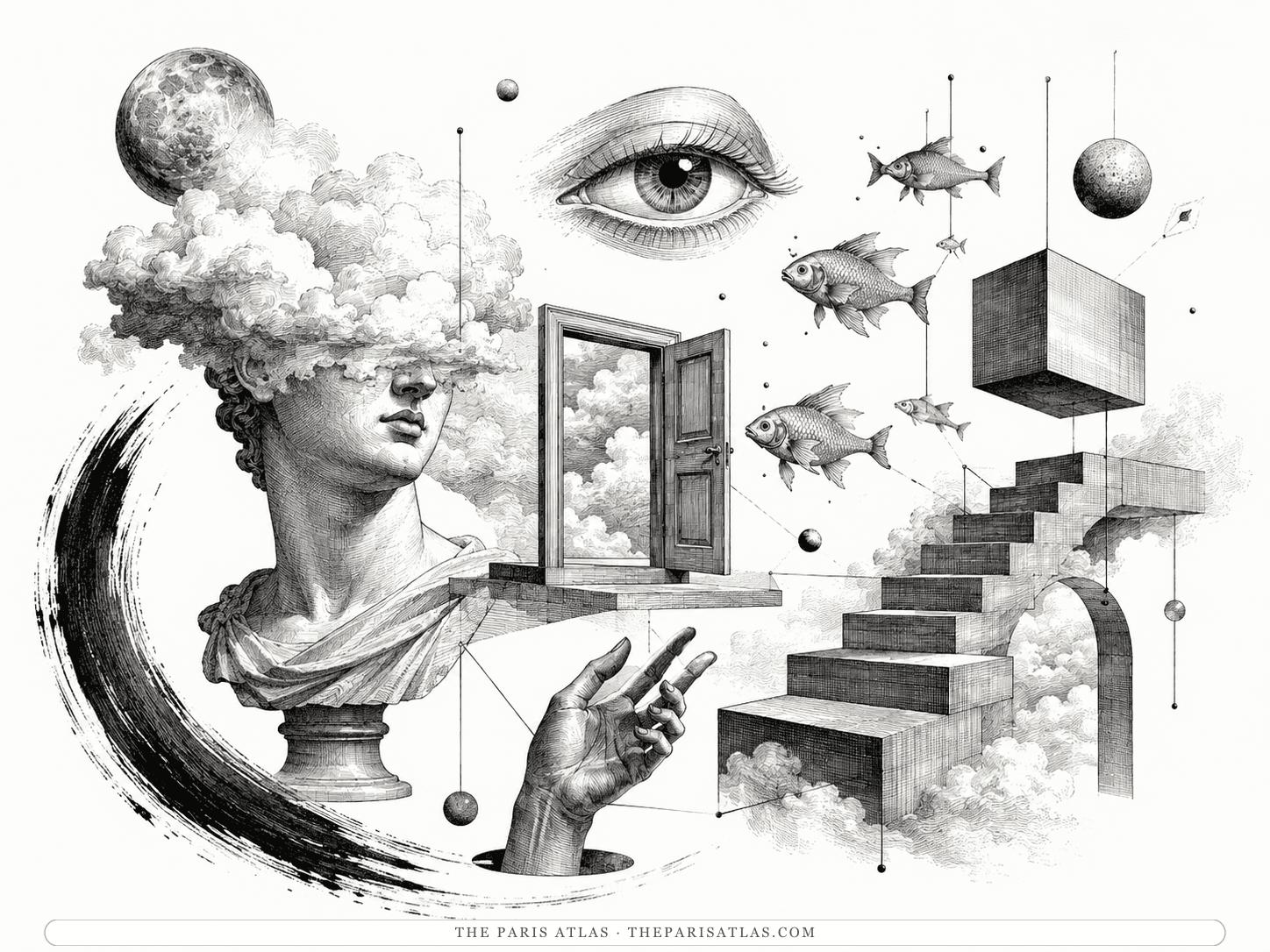
Pen-and-ink dream collage — a classical bust with clouds for eyes, a floating eye, a door opening onto sky, fish swimming through air, and an impossible staircase

Art & literary movement · 1924–1966

Surrealism

Miró showed with the Surrealists from their first group exhibition in 1925 and signed some of the manifestos, while declining to be governed by the group.

MoMA — Surrealism (collection term); Encyclopaedia Britannica — Surrealism

Questions about Joan Miró

What is Joan Miró best known for?

A visual language of flat grounds, strong primary colours and floating signs: birds, women, stars, ladders and eyes. The Farm (1921–22) is his great early inventory of the family farm at Mont-roig; The Hunter (Catalan Landscape) (1923–24) shows that inventory compressing into signs; the Constellations gouaches (1940–41) are the language at its most refined. He also made ceramics, bronzes, prints and monumental public works.

Was Joan Miró a Surrealist?

He showed in the first Surrealist group exhibition at Galerie Pierre in 1925 and André Breton met him at his rue Blomet studio that year, but he never submitted to the movement's discipline. His mature language formed among the poets of the rue Blomet circle before the 1924 manifesto existed, which is why he reads as a founder who declined membership rather than a follower.

What is the story of Hemingway and The Farm?

Ernest Hemingway bought The Farm from Galerie Pierre in 1925. By his own account, published in Cahiers d'Art in 1934, the poet Evan Shipman had first arranged to buy it, changed his mind, and the two rolled dice for it; Hemingway won and paid in monthly installments. In the 1926 divorce settlement the painting went to his first wife Hadley Richardson; it later passed to his fourth wife Mary Welsh Hemingway, who bequeathed it to the National Gallery of Art in Washington in 1987.

Where did Joan Miró live in Paris?

At 45 rue Blomet in the fifteenth arrondissement from 1921 to 1925, next door to André Masson, working there in term time and at Mont-roig the rest of the year. In 1926 he moved to 22 rue Tourlaque in the Cité des Fusains in Montmartre, near Max Ernst and Hans Arp, and in 1937, during the Spanish Civil War, he lived at 98 boulevard Auguste-Blanqui.

What are Miró's Constellations?

A series of twenty-three small gouaches of birds, women and stars, begun at Varengeville-sur-Mer in Normandy in January 1940. When German bombing reached Normandy that May, Miró fled with his family to Spain, continued the series in Palma, and completed it at Mont-roig in September 1941.

Where can you see Joan Miró's work?

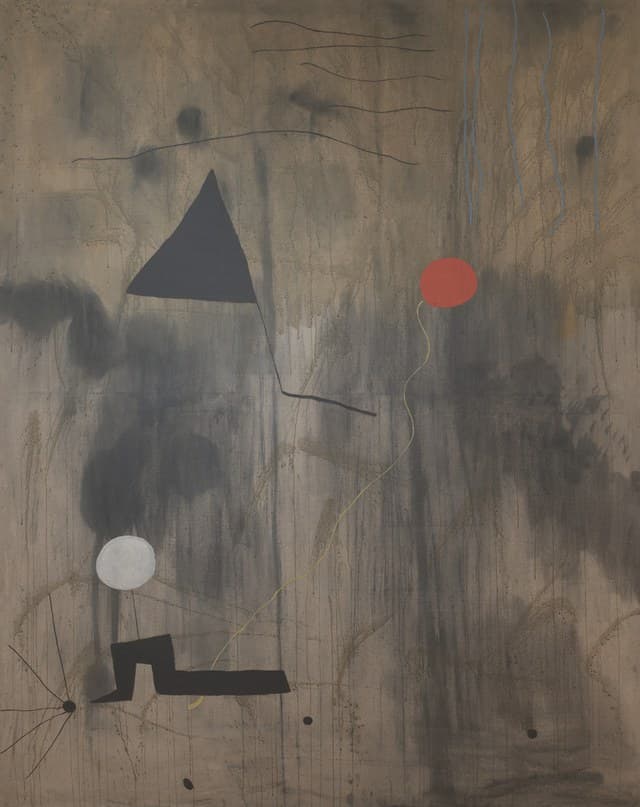
The Fundació Joan Miró in Barcelona, which he founded in 1972 in a building by Josep Lluís Sert, holds the largest collection. The Farm is at the National Gallery of Art in Washington; The Hunter (Catalan Landscape) and The Birth of the World are at the Museum of Modern Art in New York; the ceramic walls made with Josep Llorens Artigas are at the UNESCO headquarters in Paris; and Woman and Bird stands in the Parc de Joan Miró in Barcelona.

Sourced claims

Every connection the graph holds for Joan, with the evidence behind it.

Associated with · 1924

Surrealism

Miró showed with the Surrealists from their first group exhibition in 1925 and signed some of the manifestos, while declining to be governed by the group.

MoMA — Surrealism (collection term); Encyclopaedia Britannica — Surrealism

Met · 1925

Ernest Hemingway

Hemingway bought Miró's The Farm from Galerie Pierre in 1925 — by his own 1934 account after rolling dice with the poet Evan Shipman for the right to buy it — and the National Gallery of Art's provenance records the Hemingways owning it by 9 November 1925.

The Farm, Joan Miró, 1921–1922 (object page with provenance); Joan Miró — Biography

Met · 1920

Pablo Picasso

Miró's first trip to Paris, in 1920, was made to visit Picasso. The older Catalan remained a fixed point of his Paris world; six years later Miró was the one talking to Picasso about a still-unknown Dalí.

Joan Miró — Biography

Met · 1926

Salvador Dalí

Miró was a decade ahead of him and already with the Surrealists. He brought his own Paris dealer to Figueres to look at Dalí's work and spoke about him to Picasso, which is why Dalí arrived in Paris introduced rather than unknown.

Ian Gibson, The Shameful Life of Salvador Dalí (1997)

Met · 1925

André Breton

Breton met Miró during a visit to the studio at 45 rue Blomet in 1925, the year of the first Surrealist group exhibition. Miró showed with the group from that exhibition on while declining to submit to its discipline.

Joan Miró — Biography