The Paris AtlasCharting the artists, works, and places worth returning to.
  • Painter
· French-American · 1900–1955

Yves Tanguy

Paris-born Surrealist painter whose sharply rendered biomorphic landscapes joined meticulous technique to scenes without ordinary scale or geography.

In images

Details

Lived
1900–1955
Born
5 January 1900
Birthplace
Paris, France
Birth name
Raymond Georges Yves Tanguy
Died
15 January 1955 · aged 55
Place of death
Woodbury, Connecticut
Nationality
French-American
Profession
Surrealist painter
Major works
Mama, Papa Is Wounded! (1927), Indefinite Divisibility (1942), Nombres imaginaires (1954)
Married
Jeannette Ducrocq · 1927–1938Kay Sage · 1940–1955
Roles
Painter

About Yves Tanguy

A self-taught painter in Paris

Yves Tanguy was born in Paris in 1900 and spent part of his childhood in Brittany. After merchant-marine voyages and military service, he returned to Paris without formal art training. Seeing a painting by Giorgio de Chirico helped persuade him to become a painter.

Meeting André Breton

Tanguy met André Breton in Paris in 1925 and joined the Surrealist group. He participated in its exhibitions and collective activities while developing one of its most recognizable pictorial worlds.

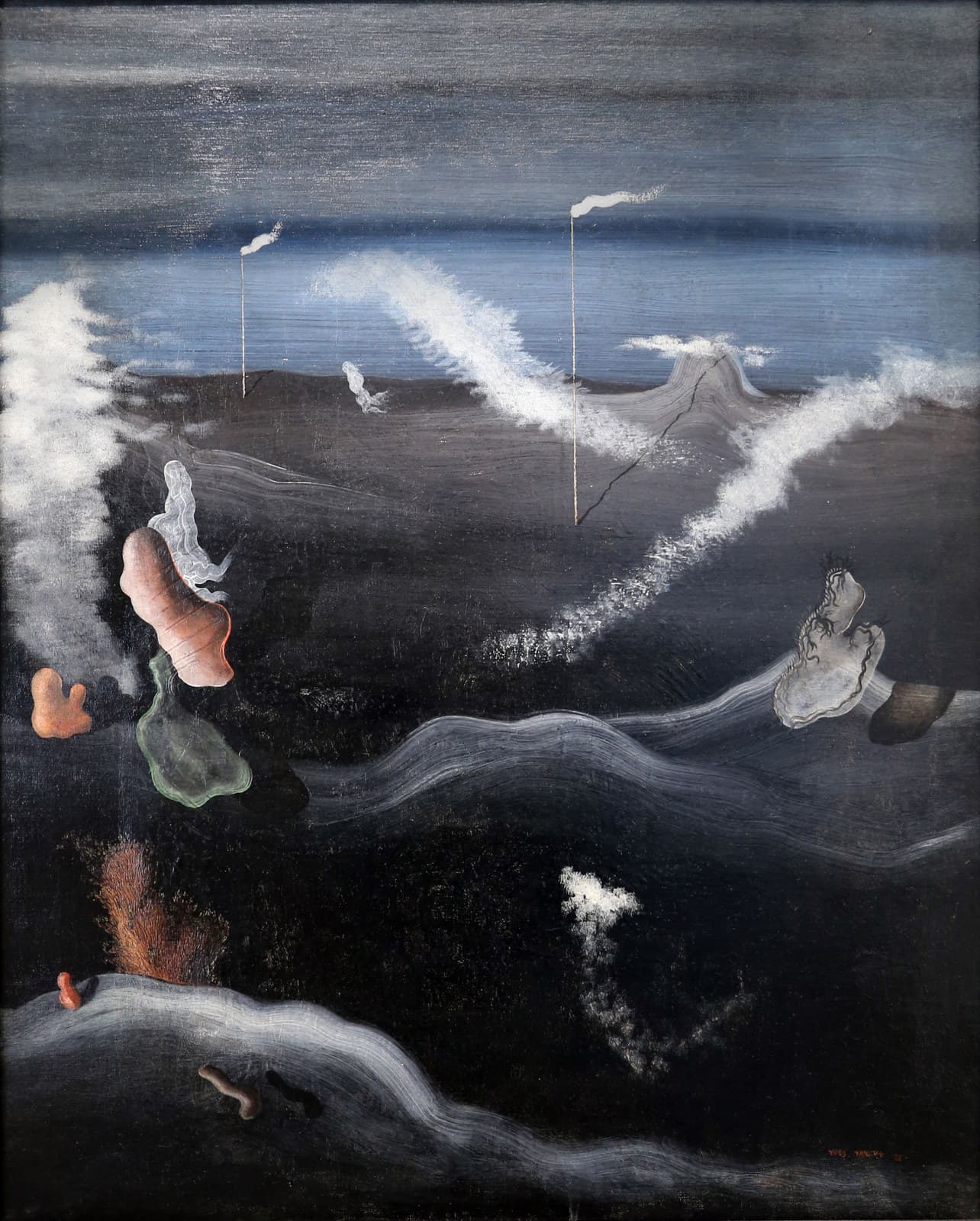
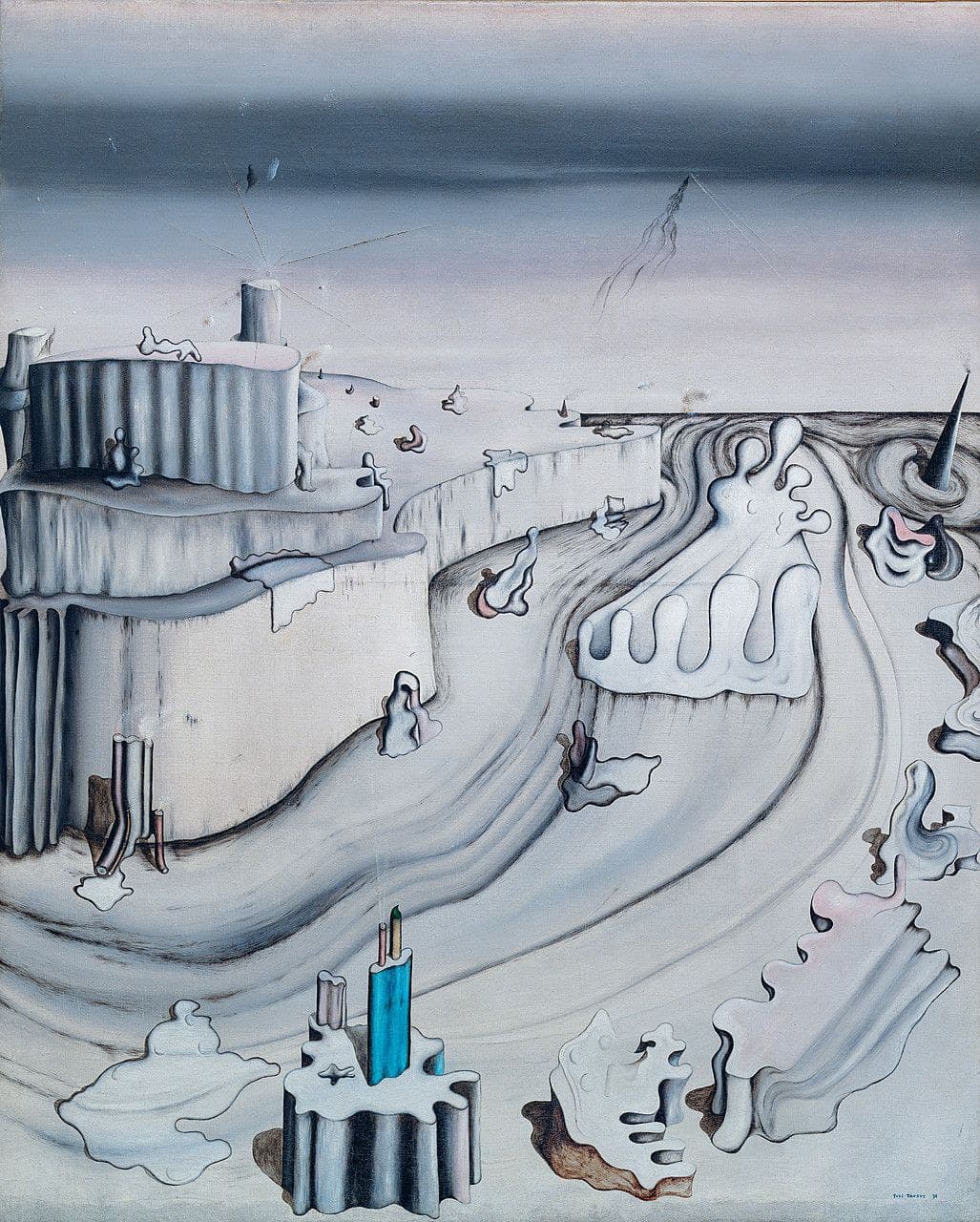
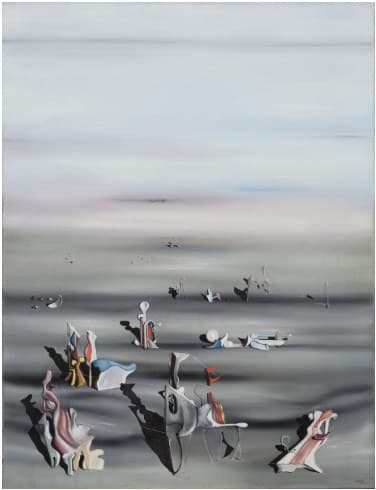
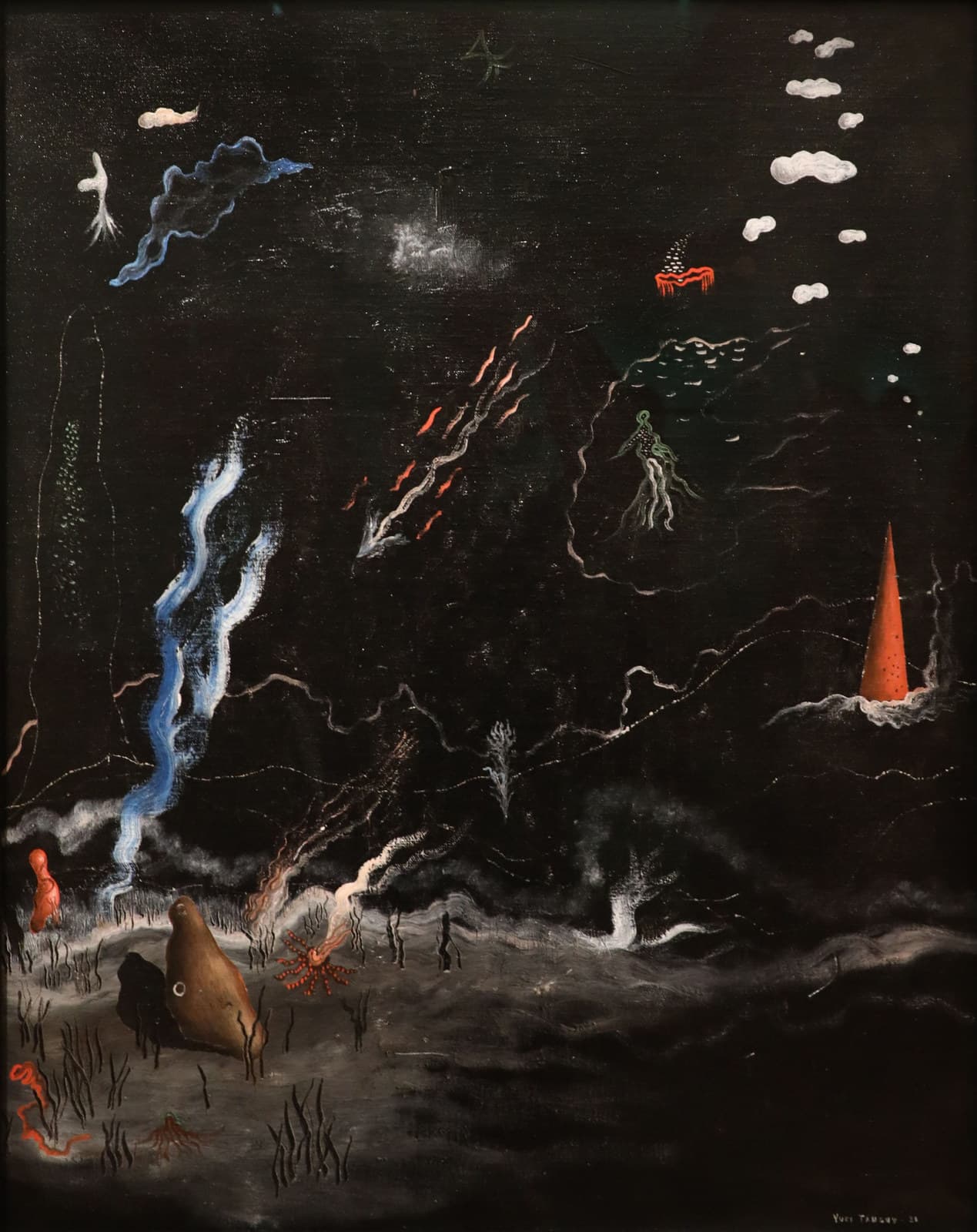
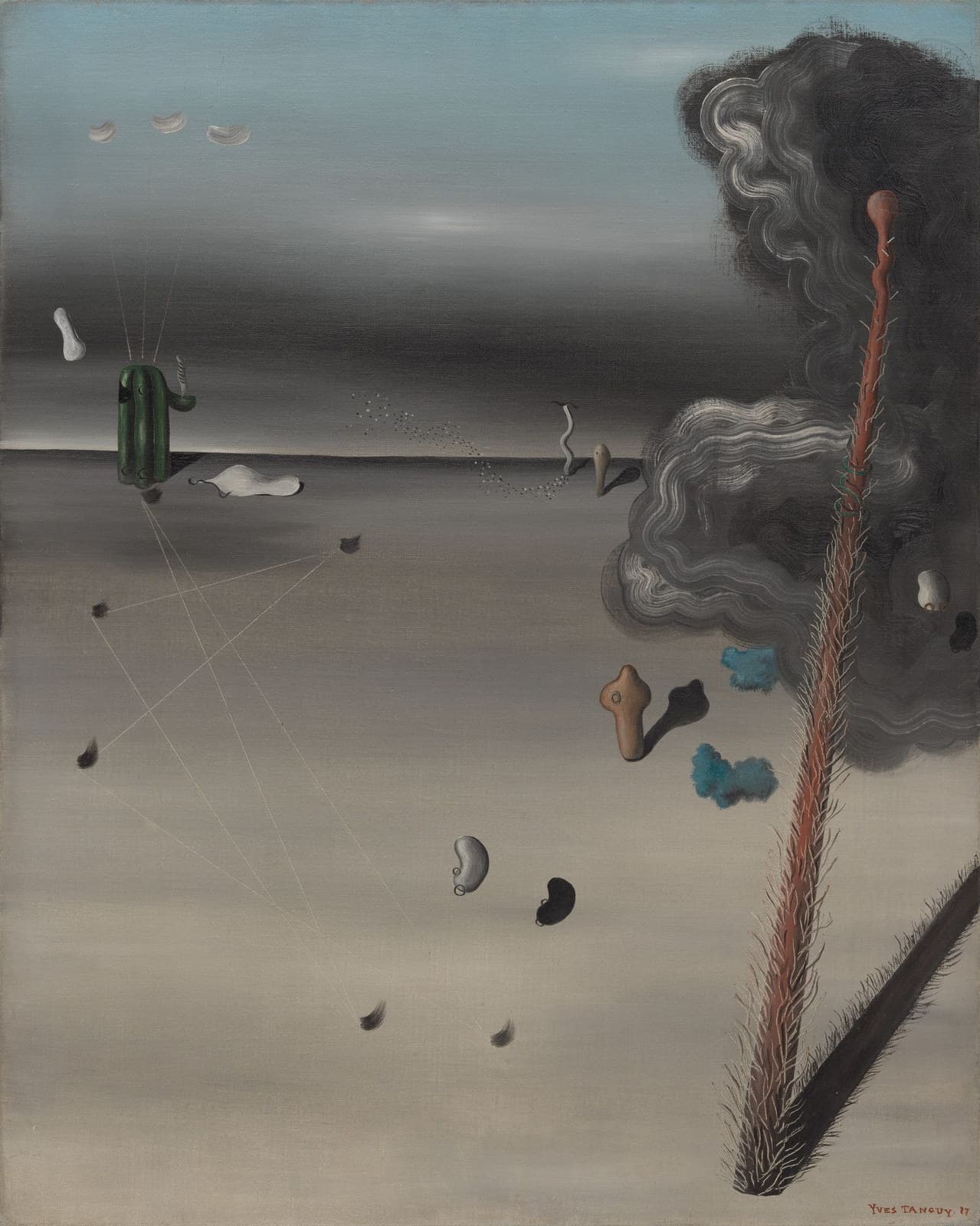
His paintings place smooth stones, bones, organs, machines, and nameless objects in deep landscapes with low horizons. The forms appear precise enough to touch, but their scale and function remain uncertain.

From Paris to Connecticut

Tanguy left France for the United States in 1939 with the American painter Kay Sage, whom he married the following year. They settled in Connecticut, where both continued to paint and where displaced European artists gathered during the war.

He became an American citizen in 1948 and died in Connecticut in 1955. The mature landscapes changed in size and density after emigration, but the method and imagery had been formed within the Paris Surrealist circle.

Life events

  1. 1900

    Born in Paris.

    Selections from the Pierre and Maria-Gaetana Matisse Collection (2004)

  2. 1925–1929

    Meets André Breton in Paris, joins the Surrealist group, and experiments with automatic techniques and machine-made images.

    Tanguy's photobooth self-portrait around 1929, made in the years when the Paris Surrealist group used automatic games and machines as creative tools. (Yves Tanguy, Centre Pompidou)

    Selections from the Pierre and Maria-Gaetana Matisse Collection (2004)

  3. 1939

    Leaves France for the United States with Kay Sage.

    Selections from the Pierre and Maria-Gaetana Matisse Collection (2004)

  4. 1940

    Marries Kay Sage and settles in Connecticut.

    Selections from the Pierre and Maria-Gaetana Matisse Collection (2004)

  5. 1948

    Becomes an American citizen.

    Selections from the Pierre and Maria-Gaetana Matisse Collection (2004)

  6. 1954

    Paints Nombres imaginaires, one of the last precisely modeled landscapes of his American period.

    Nombres imaginaires (1954), a late example of Tanguy's precisely modeled, unlocatable landscapes. (Yves Tanguy)

    Yves Tanguy

  7. 1955

    Dies in Woodbury, Connecticut.

    Selections from the Pierre and Maria-Gaetana Matisse Collection (2004)

People they knew

Documented connections — every one carries its source.

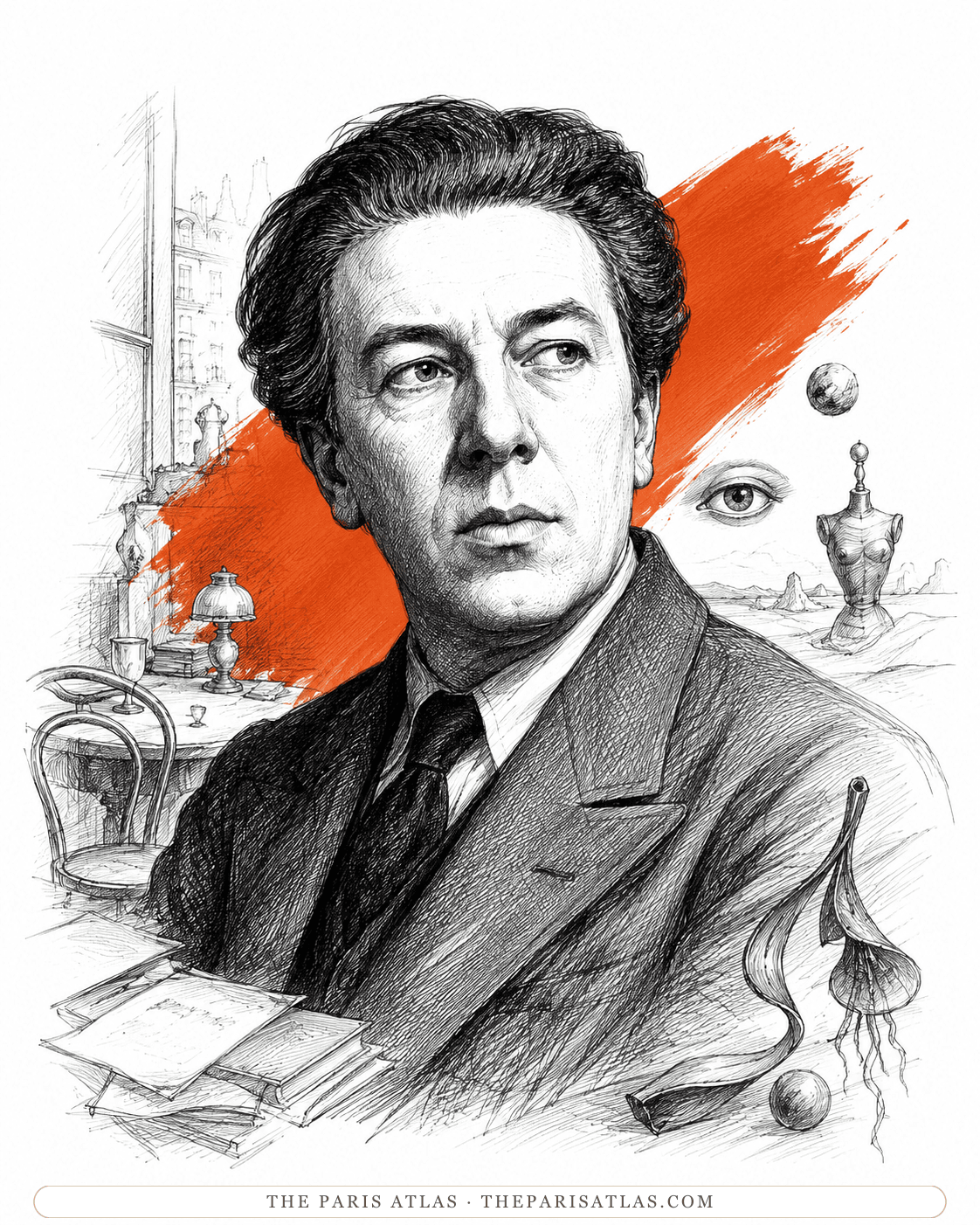
Illustrated portrait of André Breton

André Breton

  • Author
  • Poet
  • Critic
  • +1

Met · 1925

Tanguy met Breton in Paris in 1925 and joined the Surrealist group led by him.

Selections from the Pierre and Maria-Gaetana Matisse Collection (2004)

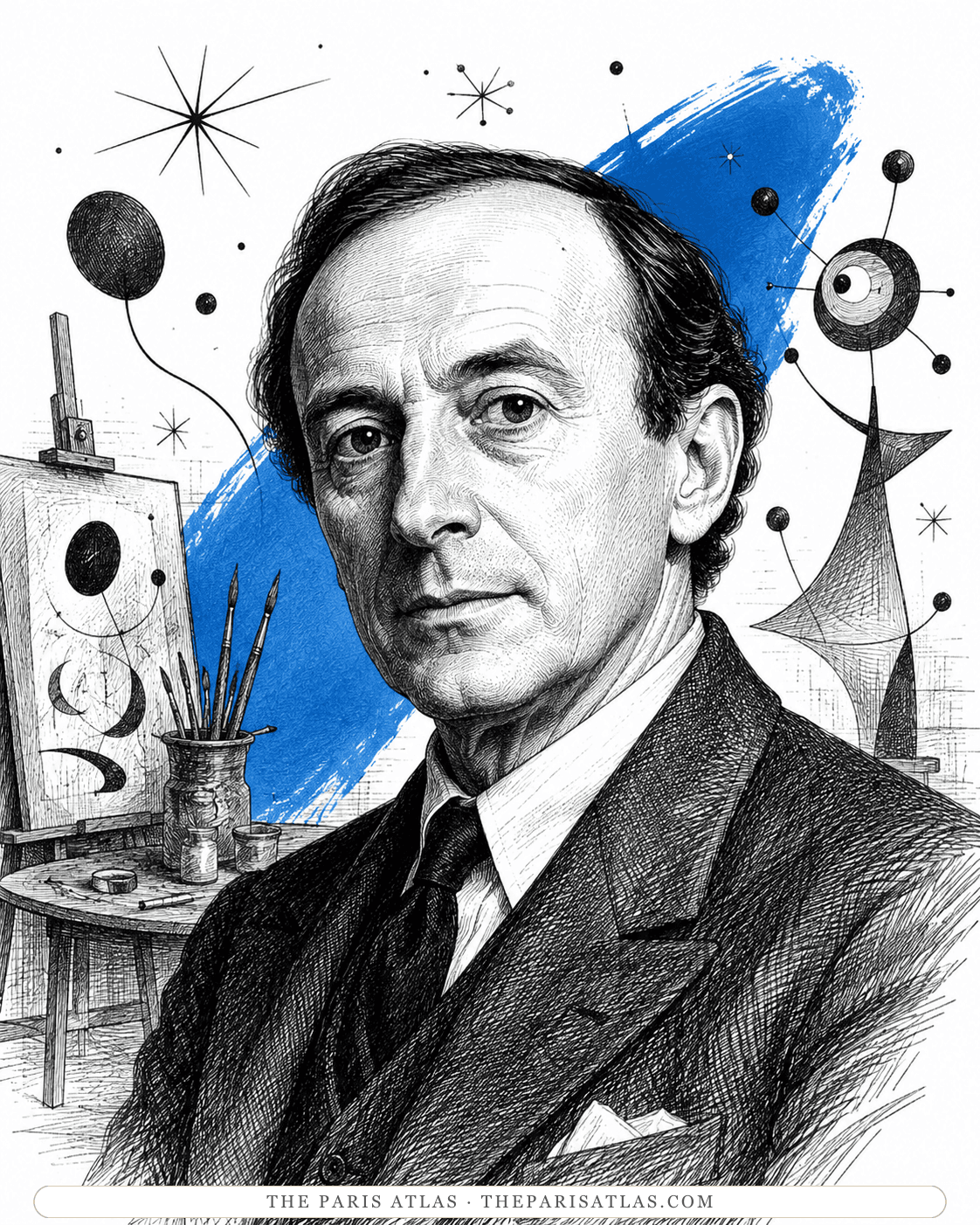
Illustrated portrait of Joan Miró

Joan Miró

  • Painter
  • Sculptor

Collaborated with · 1925

Tanguy and Miró jointly made an exquisite-corpse drawing with Man Ray and Max Morise in Paris in 1926–1927.

Cadavre Exquis with Yves Tanguy, Joan Miró, Max Morise, Man Ray

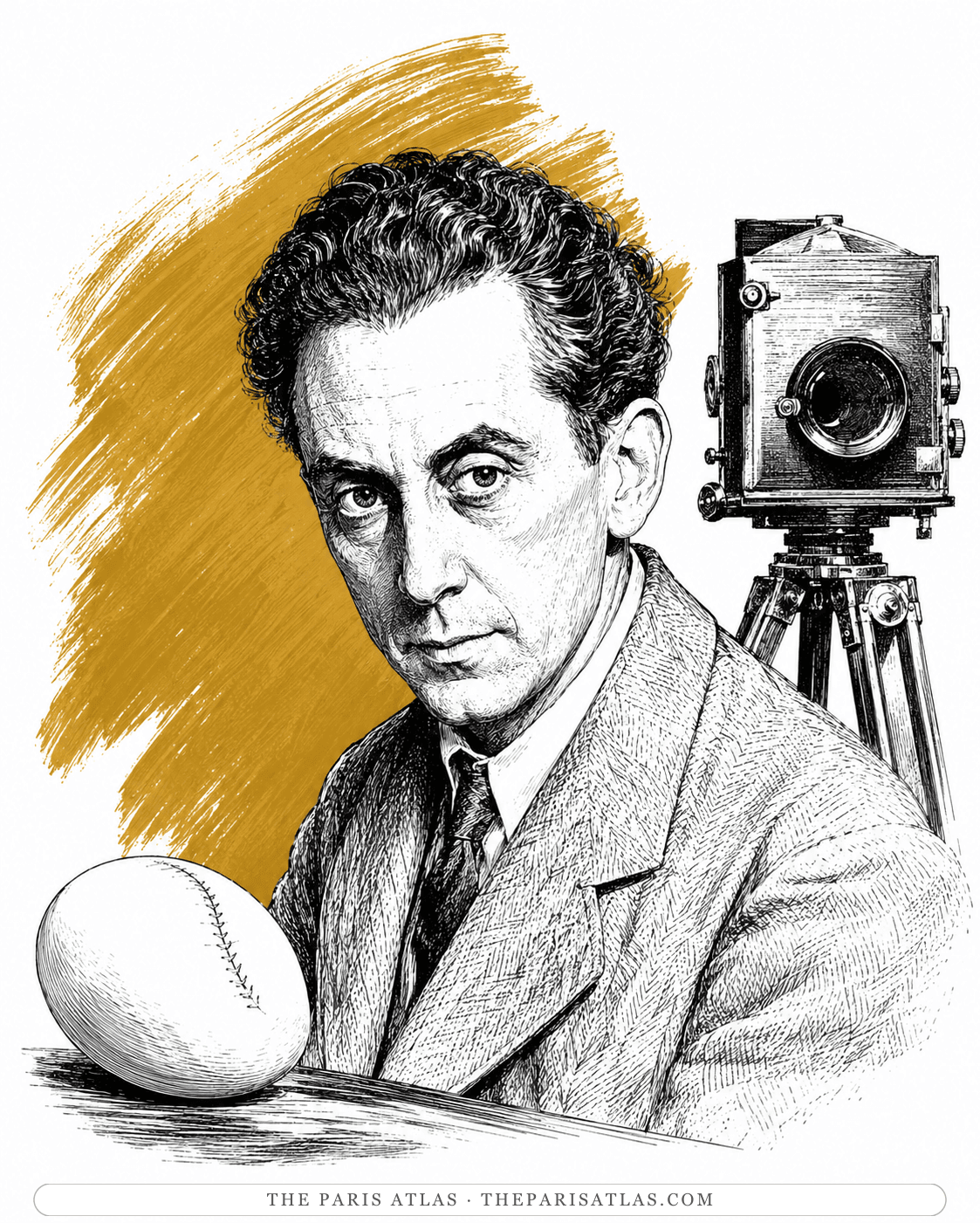
Illustrated portrait of Man Ray

Man Ray

  • Photographer
  • Painter
  • Filmmaker

Collaborated with · 1925

Tanguy and Man Ray jointly made an exquisite-corpse drawing with Joan Miró and Max Morise in Paris in 1926–1927.

Cadavre Exquis with Yves Tanguy, Joan Miró, Max Morise, Man Ray

Sourced claims

Every connection the graph holds for Yves, with the evidence behind it.

Met · 1925

André Breton

Tanguy met Breton in Paris in 1925 and joined the Surrealist group led by him.

Selections from the Pierre and Maria-Gaetana Matisse Collection (2004)

Collaborated with · 1925

Joan Miró

Tanguy and Miró jointly made an exquisite-corpse drawing with Man Ray and Max Morise in Paris in 1926–1927.

Cadavre Exquis with Yves Tanguy, Joan Miró, Max Morise, Man Ray

Collaborated with · 1925

Man Ray

Tanguy and Man Ray jointly made an exquisite-corpse drawing with Joan Miró and Max Morise in Paris in 1926–1927.

Cadavre Exquis with Yves Tanguy, Joan Miró, Max Morise, Man Ray

References

References

The sources below include biographies, scholarly essays, interviews, and primary materials that informed this page. They reflect both the historical record and ongoing critical conversations about Yves Tanguy and their work.

  1. 1Selections from the Pierre and Maria-Gaetana Matisse Collection

    Exhibition catalogue
    The Metropolitan Museum of Art, 2004
    Used for

    Catalogue scholarship used to verify attribution, provenance, chronology, and interpretive context for Yves Tanguy.

    View source
  2. 2Yves Tanguy

    Website
    The Museum of Modern Art
    Used for

    Web source consulted for documented facts and historical context presented on the Yves Tanguy page.

    View source
  3. 3Yves Tanguy

    Exhibition catalogue
    The Museum of Modern Art
    Used for

    Catalogue scholarship used to verify attribution, provenance, chronology, and interpretive context for Yves Tanguy.

    View source
  1. 4Yves Tanguy

    Website
    National Galleries of Scotland
    Used for

    Web source consulted for documented facts and historical context presented on the Yves Tanguy page.

    View source
  2. 5Cadavre Exquis with Yves Tanguy, Joan Miró, Max Morise, Man Ray

    Website
    The Museum of Modern Art
    Used for

    Web source consulted for documented facts and historical context presented on the Yves Tanguy page.

    View source
i
Why these sources are here

These references anchor the page in the documented record and in the scholarly conversations around Yves Tanguy. Every claim on this page traces back to one or more of the works listed here.

Explore more resources