The Paris AtlasCharting the artists, works, and places worth returning to.
  • Painter
  • Sculptor
· German · 1891–1976

Max Ernst

German painter who entered France without papers in 1922 on Paul Éluard's passport, helped found Surrealism, and kept inventing techniques for it — frottage, grattage, the collage novel. Twice a war's enemy: a German artilleryman in the first, an interned 'undesirable foreigner' in the second.

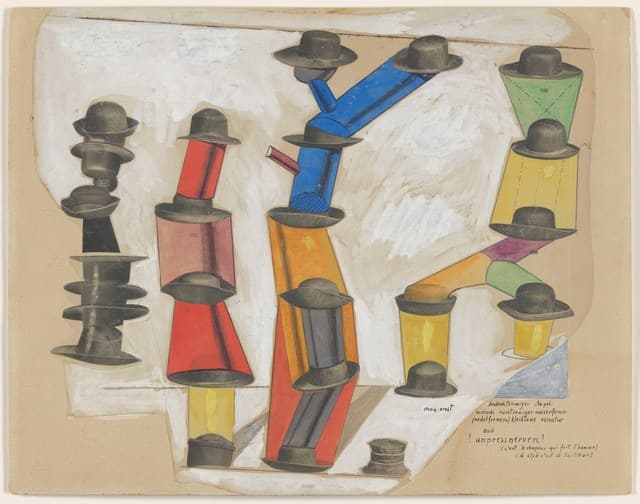
In images

Details

Lived
1891–1976
Born
1891
Birthplace
Brühl, Germany
Died
1976
Place of death
Paris
Nationality
German
Married
Luise Straus · 1918–1927Marie-Berthe Aurenche · 1927–1942Peggy Guggenheim · 1942–1946Dorothea Tanning · 1946–1976
Roles
PainterSculptor

About Max Ernst

Max Ernst's first Paris exhibition opened without him. At Au Sans Pareil on 2 May 1921, the Dada circle celebrated on the pavement — Philippe Soupault up a ladder with a bicycle, André Breton in the doorway — while Ernst, a German national refused a visa three years after the war, stayed in Cologne. The next year he solved the border his own way, entering France without papers on Paul Éluard's passport, and moving in with Éluard and his wife Gala — a ménage à trois the three of them kept for two years.

In Paris he became Surrealism's chief inventor of means: frottage, the pencil rubbing of floorboards and leaves that let images arrive by accident; grattage, its scraped-paint cousin; and the collage novel, cut and pasted from Victorian engravings. A 'degenerate' artist to the Nazis and an enemy alien to wartime France, he was interned at the Camp des Milles, escaped to America in 1941 with Peggy Guggenheim's and Varian Fry's help, and came back for good in 1953. He died in Paris in 1976, on the eve of his eighty-fifth birthday, and is buried at Père Lachaise.

Killed 1914, resurrected 1918

Ernst was born on 2 April 1891 in Brühl, near Cologne, third of nine children of a Catholic schoolteacher who painted on Sundays. He studied philosophy, psychology and art history at Bonn — the psychiatric collections he saw there, and the art of patients, stayed with him — and never formally trained as a painter. The First World War took him as a German artillery gunner on both fronts; his autobiography compressed the four years into one sentence: 'On the first of August 1914 M.E. died. He was resurrected on the eleventh of November 1918.'

Resurrected, he founded Cologne Dada with Johannes Baargeld in 1919 — one exhibition was entered through a public lavatory, with an axe provided for visitors who wished to destroy the works — and began the collages of engravings and catalogue plates that caught Paris's attention. The Au Sans Pareil exhibition of May 1921 introduced the work to Paris while its refused-visa maker stayed home.

The Dada circle opens Ernst's first Paris show without him, 2 May 1921 — Soupault up the ladder, Jacques Rigaut upside down, Breton at right. (Photographer unknown, via Wikimedia Commons · Public domain)

Éluard's passport

In 1922 Ernst crossed into France without papers, carrying the passport of his friend the poet Paul Éluard, and settled outside Paris at Saint-Brice and then Eaubonne — inside Éluard's household, as the lover of his wife Gala, with Éluard's knowledge. The arrangement lasted about two years before Éluard abruptly left for Indochina and the couple followed him; Gala later left Éluard altogether for Salvador Dalí. Ernst painted the Eaubonne house's walls and doors; panels recovered from under the wallpaper decades later hang in museums.

When Breton's circle constituted itself as Surrealism in 1924, Ernst was one of its first painters, and its most technically restless. Frottage arrived in 1925 in a seaside hotel, when the grain of the scrubbed floorboards under his paper began yielding forests and birds; grattage translated the accident to paint scraped over textured objects. The collage novels — La Femme 100 Têtes in 1929, Une Semaine de Bonté in 1934 — cut Victorian engravings into calm, impossible melodramas, and remain the form's masterpieces. A recurring bird-headed alter ego, Loplop, presided.

Enemy alien

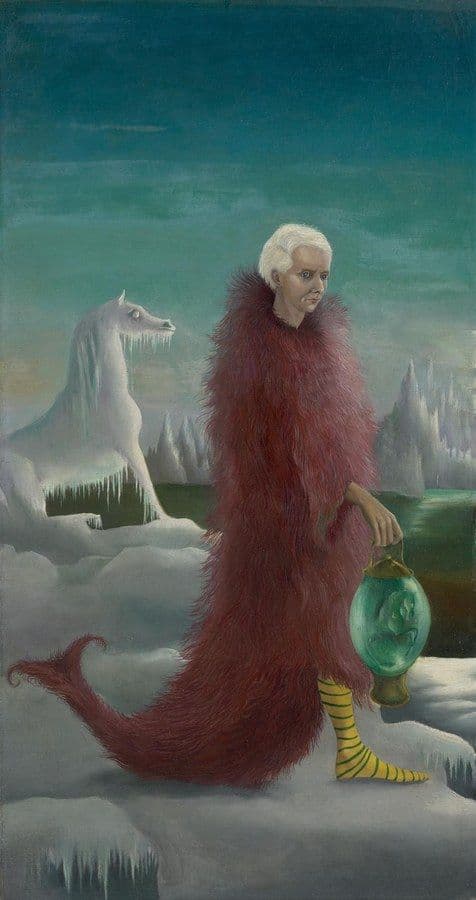
From 1938 Ernst lived at Saint-Martin-d'Ardèche in the south with the young English painter Leonora Carrington, covering their farmhouse with cement reliefs of guardian beasts. The war broke the idyll twice over: France interned him in 1939 as an 'undesirable foreigner' — a German whose work Hitler's regime had displayed as degenerate — at the Camp des Milles brickworks near Aix, and Carrington, alone as the Germans advanced, broke down and fled to Spain.

Released, re-interned, and escaped, Ernst got out through Marseille in 1941 with the help of Varian Fry's rescue network and of Peggy Guggenheim, the collector who flew him to New York and married him in 1942. The marriage lasted the war; in 1946, in a double wedding with Man Ray and Juliet Browner in Beverly Hills, he married the painter Dorothea Tanning, and the two built a house and a decade in the red rocks of Sedona, Arizona.

Return, prize, Père Lachaise

Ernst and Tanning returned to France in 1953, and the following year the Venice Biennale gave him its Grand Prize for painting — which the Surrealists, on doctrinal principle against honours, expelled him for accepting. The last two decades were sculpture, chess sets, collages and retrospectives. He died in Paris on 1 April 1976, the day before his eighty-fifth birthday, and is buried at Père Lachaise.

Life events

  1. 1891

    Born on 2 April in Brühl, near Cologne.

    Max Ernst — Wikipedia

  2. 1914

    Drafted into the German artillery. His autobiography: 'On the first of August 1914 M.E. died. He was resurrected on the eleventh of November 1918.'

    Max Ernst — Wikipedia

  3. 1919

    Founds Cologne Dada with Johannes Baargeld; one show is entered through a public lavatory.

    Max Ernst — Wikipedia

  4. 1921

    His first Paris exhibition opens at Au Sans Pareil on 2 May without him — France refuses the German a visa.

    The opening of Max Ernst's first Paris exhibition at Au Sans Pareil, 2 May 1921 — Philippe Soupault up the ladder with a bicycle, Jacques Rigaut upside down, André Breton at right. Ernst himself, refused a visa, could not attend. (Photographer unknown, via Wikimedia Commons)

    Max Ernst — Wikipedia

  5. 1922

    Enters France without papers on Paul Éluard's passport and joins the Éluard household at Saint-Brice — poet, wife and painter, by agreement.

    Max Ernst — Wikipedia

  6. 1925

    Invents frottage when a hotel floor's scrubbed grain starts yielding forests through the paper; grattage follows in paint.

    Max Ernst — Wikipedia

  7. 1934

    Publishes Une Semaine de Bonté, the collage novel cut from Victorian engravings.

    Max Ernst — Wikipedia

  8. 1939

    France interns the 'undesirable foreigner' at the Camp des Milles, ending the Saint-Martin-d'Ardèche years with Leonora Carrington.

    Max Ernst — Wikipedia

  9. 1941

    Escapes through Marseille with the help of Varian Fry's network and Peggy Guggenheim, whom he marries in New York in 1942.

    Max Ernst — Wikipedia

  10. 1946

    Marries Dorothea Tanning in a Beverly Hills double wedding with Man Ray and Juliet Browner; they settle in Sedona, Arizona.

    Max Ernst — Wikipedia

  11. 1954

    Wins the Venice Biennale's Grand Prize for painting; the Surrealists expel him for accepting it.

    Max Ernst — Wikipedia

  12. 1976

    Dies in Paris on 1 April, the day before his eighty-fifth birthday; buried at Père Lachaise.

    Max Ernst — Wikipedia

People they knew

Documented connections — every one carries its source.

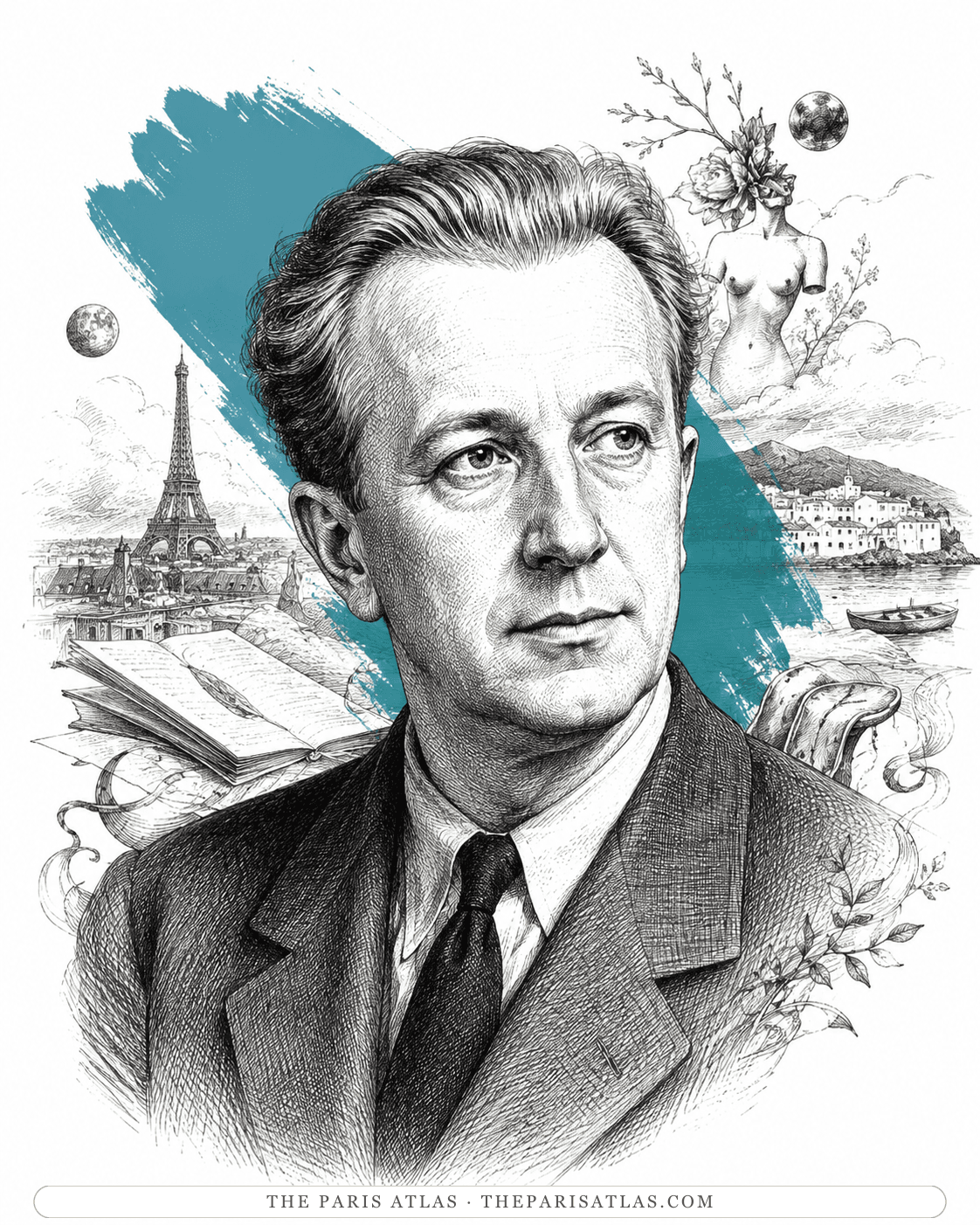
Illustrated portrait of Paul Éluard

Paul Éluard

  • Poet

Met · 1921

Met in Cologne in 1921 when Eluard sought out the Dada collagist; in 1922 Ernst entered France on Eluard's passport and lived inside the Eluard household at Saint-Brice as Gala's lover, with the poet's knowledge, for about two years.

Max Ernst — Wikipedia

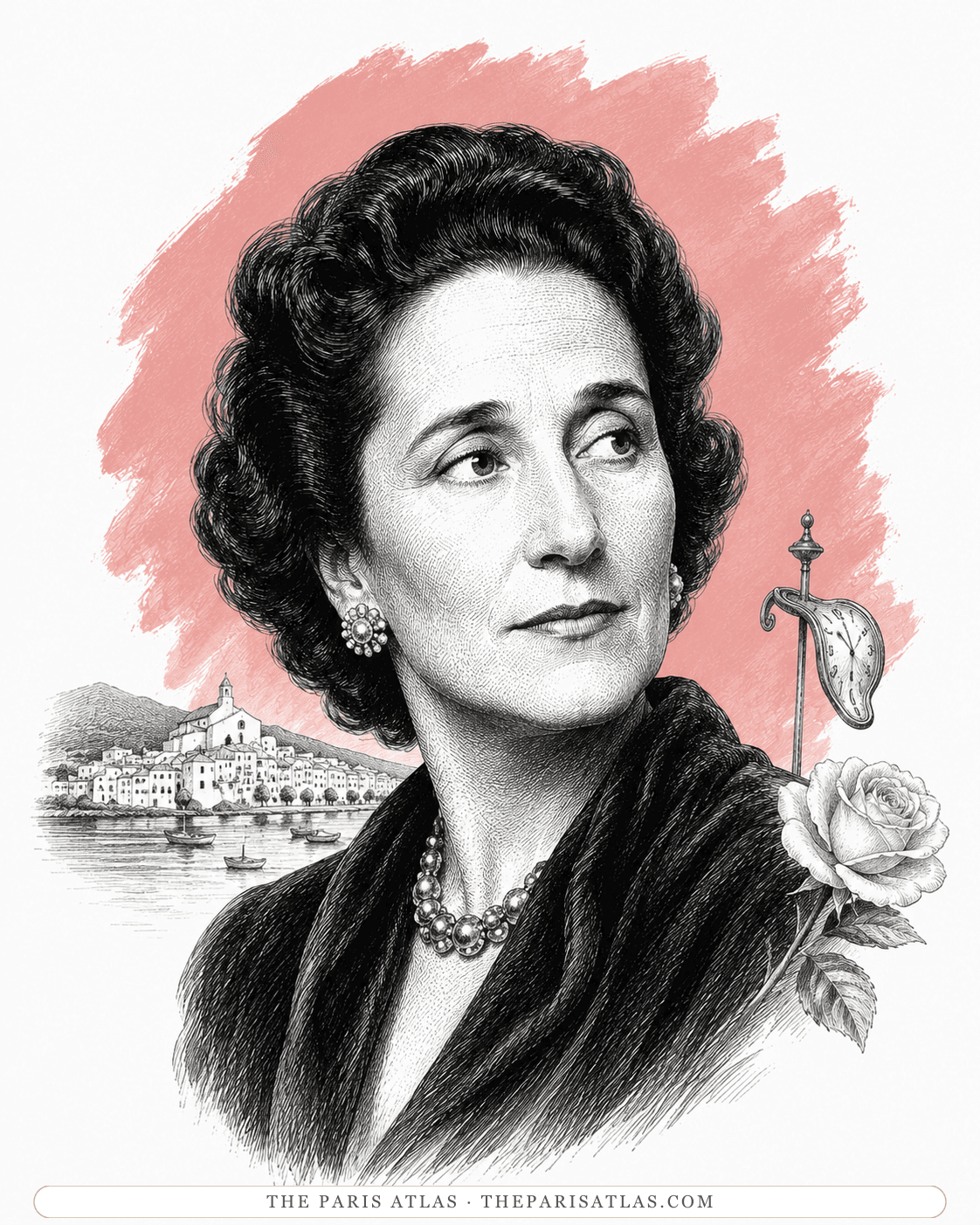
Illustrated portrait of Gala Dalí

Gala Dalí

  • Artists' model
  • Muse
  • Agent

Met · 1922

Gala and Paul Éluard met Ernst in 1922. Ernst became Gala's lover, lived with the couple at Eaubonne, and painted her as the only woman in Au rendez-vous des amis. The affair ended in 1924.

Salvador Dalí and Gala: Dual Timeline — Fundació Gala-Salvador Dalí, 1922; Estrella de Diego, Gala Salvador Dalí: A Room of One's Own in Púbol (2018), pp. 2–5; The Dalí Museum, St. Petersburg — Gala Dalí, 1922–1924

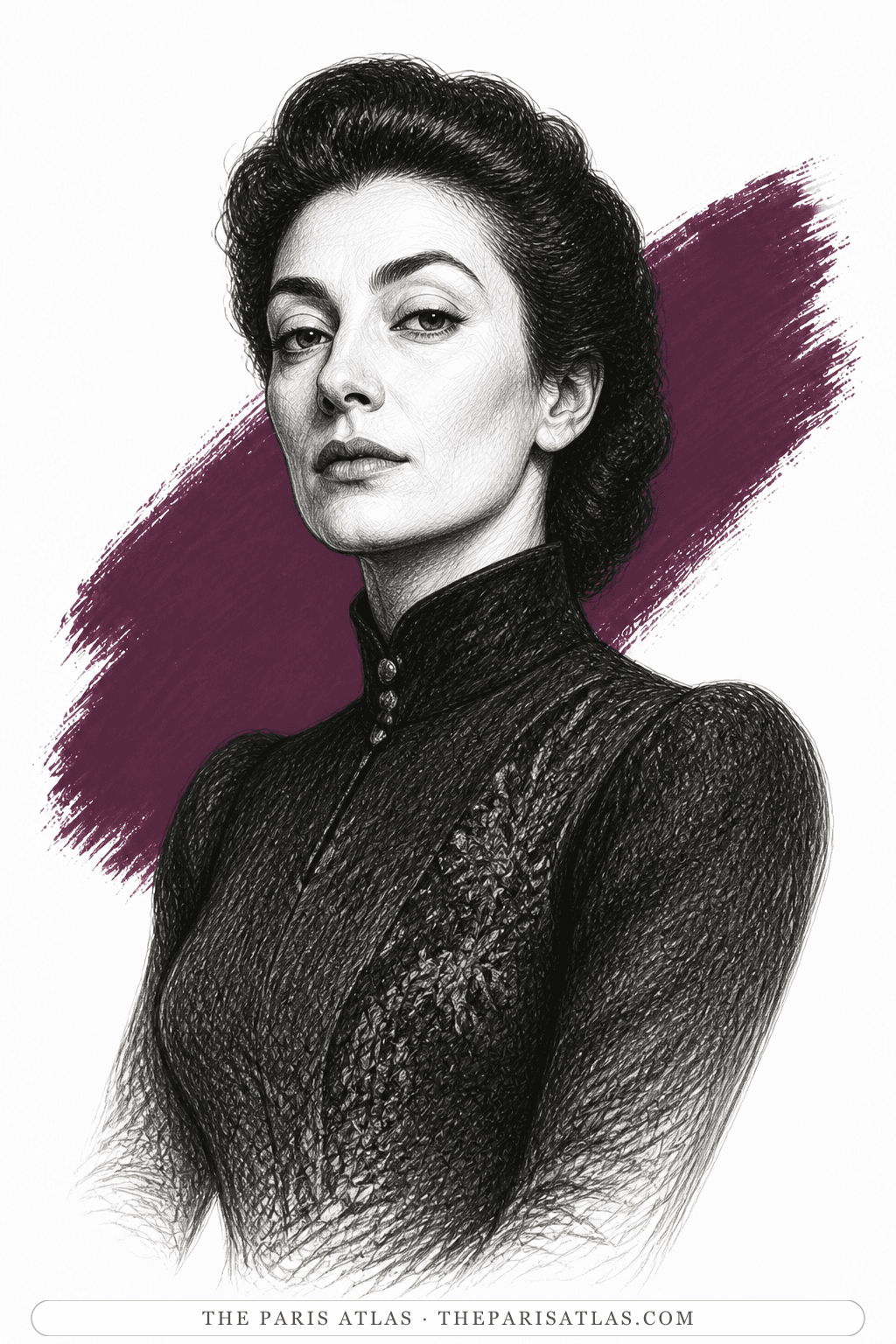
Leonora Carrington

  • Painter
  • Author

Partner of · 1937–1940

Met at a London dinner party in 1937 - she twenty, he forty-six and married - and lived together in Paris and at Saint-Martin-d'Ardeche, whose farmhouse they covered with cement beasts. The war ended it: his internment as an enemy alien, her breakdown and committal in Spain. They met again in Lisbon in 1941 and never lived together after.

Leonora Carrington — Wikipedia; Max Ernst — Wikipedia

Movements

The artistic and literary currents this life ran through.

Pen-and-ink dream collage — a classical bust with clouds for eyes, a floating eye, a door opening onto sky, fish swimming through air, and an impossible staircase

Art & literary movement · 1924–1966

Surrealism

A founding painter of the movement in 1924 and its chief inventor of techniques - frottage, grattage, the collage novel. The association ended on doctrine: the Surrealists expelled him in 1954 for accepting the Venice Biennale's Grand Prize.

Max Ernst — Wikipedia

Questions about Max Ernst

What is frottage in art?

Max Ernst's 1925 technique of placing paper over a textured surface — floorboards, leaves, sacking — and rubbing with a pencil, then developing the images the texture suggests. He invented it in a seaside hotel when the scrubbed grain of the floor began yielding forests and creatures through the paper. Grattage is its painting equivalent: paint scraped away over textured objects. Both were ways of letting images arrive by accident, which was the Surrealist point.

How did Max Ernst get to Paris?

Illegally. As a German three years after the First World War he was refused a visa — his first Paris exhibition, in May 1921, famously opened without him — so in 1922 he crossed the border carrying the passport of his friend the poet Paul Éluard and lived in France without papers, inside the Éluard household at Saint-Brice, as Gala Éluard's lover with her husband's knowledge.

What happened to Max Ernst during the Second World War?

France interned him in 1939 as an 'undesirable foreigner' at the Camp des Milles, a brickworks near Aix-en-Provence — a German whose work the Nazis themselves had exhibited as degenerate. Released and re-interned as the front collapsed, he escaped through Marseille in 1941 with help from Varian Fry's rescue network and Peggy Guggenheim, reaching New York in July 1941. His companion Leonora Carrington, left alone at their Ardèche farmhouse, broke down and fled to Spain; they never lived together again.

Who were Max Ernst's wives?

Four: the art historian Luise Straus (1918), the painter Marie-Berthe Aurenche (1927), the collector Peggy Guggenheim (1942, in New York, dissolved after the war), and the American painter Dorothea Tanning (1946, in a Beverly Hills double wedding alongside Man Ray and Juliet Browner) — a marriage of thirty years, from Sedona, Arizona to France, that lasted until his death in 1976. Between the second and third came Leonora Carrington, the English Surrealist, never married to him but central to both their stories.

What is a collage novel?

A book that tells its story entirely in collages — Ernst's invention, cut from Victorian engravings, catalogue plates and pulp illustrations. La Femme 100 Têtes (1929) and Une Semaine de Bonté (1934) are the masterpieces of the form: bird-headed men, flooded bedrooms and calm impossible violence, assembled so seamlessly the originals seem always to have contained them.

Sourced claims

Every connection the graph holds for Max, with the evidence behind it.

Associated with · 1924–1954

Surrealism

A founding painter of the movement in 1924 and its chief inventor of techniques - frottage, grattage, the collage novel. The association ended on doctrine: the Surrealists expelled him in 1954 for accepting the Venice Biennale's Grand Prize.

Max Ernst — Wikipedia

Met · 1921

Paul Éluard

Met in Cologne in 1921 when Eluard sought out the Dada collagist; in 1922 Ernst entered France on Eluard's passport and lived inside the Eluard household at Saint-Brice as Gala's lover, with the poet's knowledge, for about two years.

Max Ernst — Wikipedia

Met · 1922

Gala Dalí

Gala and Paul Éluard met Ernst in 1922. Ernst became Gala's lover, lived with the couple at Eaubonne, and painted her as the only woman in Au rendez-vous des amis. The affair ended in 1924.

Salvador Dalí and Gala: Dual Timeline — Fundació Gala-Salvador Dalí, 1922; Estrella de Diego, Gala Salvador Dalí: A Room of One's Own in Púbol (2018), pp. 2–5; The Dalí Museum, St. Petersburg — Gala Dalí, 1922–1924

Partner of · 1937–1940

Leonora Carrington

Met at a London dinner party in 1937 - she twenty, he forty-six and married - and lived together in Paris and at Saint-Martin-d'Ardeche, whose farmhouse they covered with cement beasts. The war ended it: his internment as an enemy alien, her breakdown and committal in Spain. They met again in Lisbon in 1941 and never lived together after.

Leonora Carrington — Wikipedia; Max Ernst — Wikipedia

References

References

The sources below include biographies, scholarly essays, interviews, and primary materials that informed this page. They reflect both the historical record and ongoing critical conversations about Max Ernst and his work.

  1. 1Max Ernst — Wikipedia

    Wikipedia
    View source
    i
    Why these sources are here

    These references anchor the page in the documented record and in the scholarly conversations around Max Ernst. Every claim on this page traces back to one or more of the works listed here.

    Explore more resources