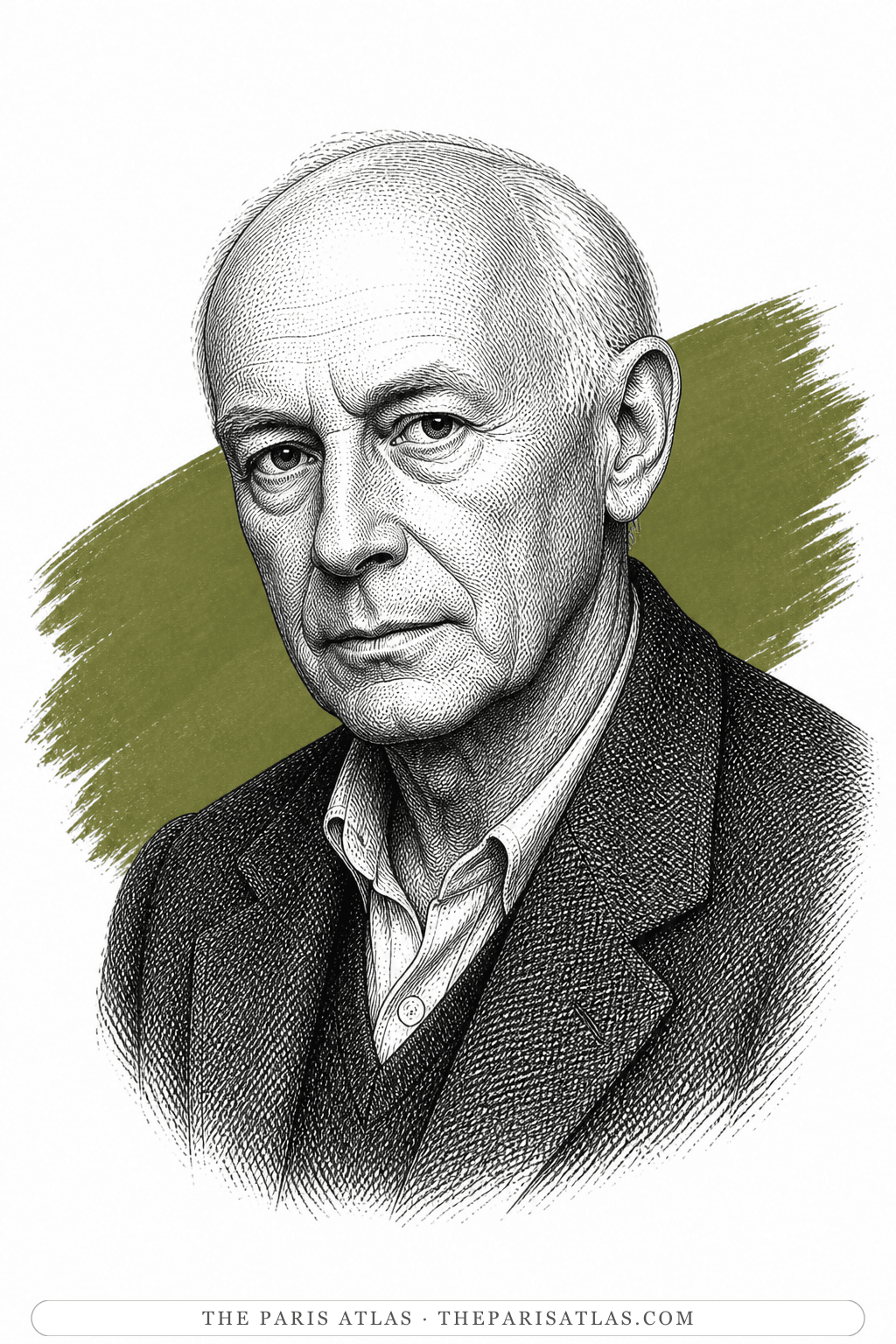
Henri Cartier-Bresson
- Photographer
- Filmmaker
- Painter
Collaborated with · 1933
Cartier-Bresson traveled through Europe with Fini and André Pieyre de Mandiargues and photographed her repeatedly during the early 1930s.
Argentine-born, Italian-raised painter, illustrator and designer whose dreamlike images of sphinxes, powerful women, androgynous men and ceremonial worlds placed her close to Surrealism without ever making her a formal member of the movement.
Leonor Fini spent much of her life surrounded by Surrealists, but she resisted becoming one of them.
She knew Max Ernst, Salvador Dalí, Paul Éluard, Man Ray, Dora Maar, Meret Oppenheim and Leonora Carrington. She exhibited alongside Surrealist artists in Paris and New York. André Breton's circle wanted to define the possibilities of the unconscious, dreams, sexuality and desire—the same territory that fascinated Fini throughout her career.
But Fini had little interest in submitting to Breton or to anyone else's program. She disliked his authoritarian manner and objected to the position women often occupied within Surrealism: celebrated as muses, lovers or embodiments of mystery while men retained the authority to define what the movement meant. Fini preferred independence. Although art history regularly places her beside the Surrealists, she repeatedly refused the label herself.[1]
Her paintings developed a mythology of their own. Women appear as sphinxes, guardians, witches, priestesses and rulers. Men are frequently beautiful but passive, sleeping or vulnerable. Cats move through the pictures as companions and mysterious doubles. Costumes, masks, feathers, bones, plants and fantastical architecture transform ordinary interiors into ritual spaces.
Fini treated her own life with some of the same theatrical imagination. She wore elaborate clothes, masks and hats, appeared at famous costume balls, lived for decades in an unconventional household with two men and numerous cats, and allowed photographers including Man Ray, Dora Maar, Lee Miller, Cecil Beaton and Henri Cartier-Bresson to turn her appearance into an extension of her art.[2]
Yet the spectacle can distract from something simpler: Fini was an exceptionally serious painter who worked for about six decades. She also designed for the Paris Opera and La Scala, illustrated more than fifty books, worked for film and theater, designed one of Elsa Schiaparelli's famous perfume bottles, and eventually wrote fiction and books about cats.[3]
Paris became the center of that life, but Fini brought several cities with her: Buenos Aires, where she was born; Trieste, where she grew up; Milan, where she entered the professional art world; and Rome and Monte Carlo, where she spent much of the Second World War.
Leonor Fini was born in Buenos Aires on 30 August 1907. Her father was Argentine and her mother, Malvina Braun, was Italian. Her parents' marriage broke down when Leonor was very young, and her mother returned with her to Trieste, then one of the most culturally mixed cities of Central Europe.[4]
The separation was bitter. Accounts preserved in later scholarship describe Fini's father attempting to regain control of his daughter, while Malvina sometimes dressed the child as a boy to frustrate attempts to recognize or abduct her. La Scala's recent account of Fini's life connects those childhood disguises with a lifelong fascination with masks, cross-dressing and the ability to alter identity through clothing.
Trieste was an unusually fertile place in which to grow up. The Braun family's social world touched the city's literary culture, which included figures such as Italo Svevo, Umberto Saba and James Joyce. Fini did not attend an art academy. Her education was largely self-directed. She studied reproductions of paintings, visited museums and became absorbed in Renaissance and Mannerist art. According to the Fini archive, she even studied anatomy by observing cadavers in a local morgue.[5]
That independence mattered later. Fini never had an academic master whose style she needed to reject. She assembled her own education from whatever fascinated her: Renaissance portraiture, Mannerist distortion, Symbolism, mythology, anatomy, literature and eventually Surrealism.
She exhibited in a group show in Trieste while still a teenager. Painting had ceased to be an experiment. It was becoming her profession.[6]
In the mid-1920s, Fini began spending increasing amounts of time in Milan, moving there around 1925 as she pursued painting seriously.
The city introduced her to artists including Achille Funi, Carlo Carrà and Alberto Savinio, the writer and painter who was the brother of Giorgio de Chirico. She also encountered the strange, carefully composed world associated with Italian Magical Realism, in which recognizable figures and objects could seem eerily still or displaced from ordinary reality.[4]
Fini's first solo exhibition was held at Galerie Barbaroux in Milan in 1929. She was only twenty-one.
The Italian painters gave Fini something important that remained visible even after she entered the Surrealist world: her paintings were often meticulously constructed. However fantastical the subject became, the human body retained weight. Faces were carefully modeled. Compositions possessed the deliberate arrangement of Renaissance painting.
Fini would eventually paint dreams without abandoning the discipline of portraiture.
Fini moved to Paris in 1931.
She was twenty-three and arrived at exactly the right moment for someone attracted to the irrational, erotic and theatrical. Surrealism was already one of the city's most visible avant-garde movements. André Breton, Salvador Dalí, Max Ernst, Man Ray, Paul Éluard and their associates were turning dreams, automatic writing, sexuality and unexpected combinations of objects into a new artistic language.
Fini entered that world rapidly. Her personality helped. Contemporary accounts consistently describe her as confident, strikingly dressed and socially fearless. Photographers were fascinated by her almost immediately. Henri Cartier-Bresson photographed her around 1931 with a stocking pulled over her face, turning what may have begun as play into an unsettling Surrealist image.
Fini was not merely a subject, however. In 1931 she painted *Femme travestie, an early work whose title can be translated as Woman in Disguise or Cross-Dressed Woman*. Centre Pompidou now holds the painting. Its subject already touches one of the ideas that would follow Fini throughout her life: identity as something that can be dressed, altered and performed.
Fini's official exhibition archive records her first Paris solo show at Galerie Jacques Bonjean, 34 rue de la Boétie, from 24 November to 7 December 1932. Jean Cassou wrote the accompanying text.
Fini showed there again in 1936 and exhibited drawings and gouaches at Galerie Les Quatre Chemins on boulevard Raspail in 1934.
Paris was no longer simply where she lived. Within a few years of arriving, she had become part of its professional art world.
Fini's position within Surrealism was unusual. She was friendly with many of its central figures and showed with them repeatedly. Max Ernst became her lover for a period. Paul Éluard wrote about her. Giorgio de Chirico, Ernst and Jean Cocteau eventually supplied texts for her exhibition catalogues.
But she refused André Breton's leadership. Breton liked movements with declarations, definitions and rules. Fini did not.
She was also suspicious of the mythology Surrealist men constructed around women. The movement could idealize women as mysterious beings with privileged access to dreams and desire while giving them surprisingly little actual authority.
Fini reversed that arrangement in her paintings. Her women are rarely passive muses waiting to be interpreted by men. They guard doors. They preside over rituals. They become sphinxes. They look directly at the viewer. Male figures, by contrast, may sleep, submit, wait or appear almost decorative.
That reversal became one of the most recognizable features of her art. AWARE describes the recurring structure as one in which sovereign women inhabit dreamlike worlds alongside ephebes, chimeras and vulnerable male figures.
Fini's reputation expanded beyond France unusually early. The American dealer Julien Levy invited her to New York in 1936, where she exhibited with Max Ernst and encountered artists including Joseph Cornell and Pavel Tchelitchew.
That same year, the Museum of Modern Art included Fini in its landmark exhibition *Fantastic Art, Dada, Surrealism*. The exhibition opened in December 1936 and assembled hundreds of objects in an attempt to map the strange genealogy of modern fantastic art. Fini was one of the artists presented within that international story of Surrealism.
She was not yet thirty. Despite refusing membership in Breton's movement, Fini had already entered the international history of Surrealism.
No creature became more important to Fini than the sphinx. Traditionally, the sphinx combines human and animal forms and possesses secret knowledge. In Greek mythology, the creature poses a riddle and destroys those unable to answer it.
For Fini, the sphinx became something different: a powerful female presence that neither explains herself nor submits to anyone else's interpretation.
In works such as *The Shepherdess of the Sphinxes (1941), Sphinx Regina (1946) and Little Hermit Sphinx (1948), the creature belongs to a specifically Finian world of female authority, ritual, erotic ambiguity and transformation. The Fini archive records The Shepherdess of the Sphinxes in the Peggy Guggenheim Collection and Little Hermit Sphinx* in Tate's collection.
Fini sometimes gave the sphinx her own features. The result was not exactly self-portraiture. It was closer to self-mythology.
Fini's treatment of men was equally unusual. Western painting contained centuries of female nudes produced primarily for male viewers. Fini frequently reversed the arrangement.
Her young men can be beautiful, languid, androgynous or asleep. They are looked at rather than doing all the looking themselves.
Among the men she painted were friends and lovers, including writer André Pieyre de Mandiargues, Italian diplomat-turned-painter Stanislao Lepri, and Polish writer Constantin Jelenski. She also painted or portrayed figures from her remarkable circle, including Jean Genet, Maria Casarès, Anna Magnani, Luchino Visconti, Meret Oppenheim and Leonora Carrington.
The reversal was not simply erotic. Fini repeatedly destabilized fixed ideas of masculine and feminine behavior. Women could be rulers; men could be beautiful objects; clothing could change identity; the same person could contain both.
Fini understood very early that an artist could construct a public identity visually. Her friends helped.
Dora Maar photographed her in Paris in 1936. Centre Pompidou now preserves one of those portraits. Man Ray produced a whole series of photographs of Fini in the later 1930s, also preserved in the Pompidou collection. Lee Miller, Brassaï, Cecil Beaton, Horst and Henri Cartier-Bresson photographed her as well.
Fini did not appear identically in these images. She might look aristocratic in one, theatrical in another, masculine, glamorous, threatening or disguised. The camera became another place in which identity could be invented.
That is why her clothes and costume-ball appearances should not be dismissed merely as eccentric behavior. They belonged to the same investigation that produced her paintings.
Fini's Paris world also crossed directly into fashion. Around 1937, she worked with designer Elsa Schiaparelli on the bottle for Schiaparelli's perfume *Shocking*. The bottle took the form of a woman's torso. The Metropolitan Museum of Art credits both Schiaparelli and Fini as designers.
It was an ideal collaboration. Schiaparelli was already bringing Surrealism into fashion through unusual objects and collaborations with artists. Fini was fascinated by bodies, costume and transformation.
The perfume bottle turned the female body itself into an object of design.
The Second World War displaced Fini from Paris. She spent part of the war in Monte Carlo, where portrait commissions helped support her. In 1941 she met Stanislao Lepri, then an Italian diplomat in Monaco. Fini encouraged him to abandon diplomacy and become a painter. He did.
They became partners and spent time in Rome during the war years.
Fini's theatrical career also began to take shape in Italy. Recent research highlighted by La Scala places her earliest documented theater work in Rome during the 1940s, including designs connected with productions of Pirandello and Carmen. When the war ended, however, Paris drew her back.
Fini returned to Paris in 1946 and resumed living in her apartment on rue Payenne, in the Marais. Photographs by Horst show her working there that year.
The postwar period became one of the busiest phases of her career. She painted, exhibited and illustrated books, but the boundary between painting and theater was increasingly disappearing.
Masks, costumes, elaborate fabrics and transformations had always fascinated her. Now major stages wanted her to make them professionally.
Fini designed costumes and sets for opera, ballet and theater in both France and Italy.
Among her most important early postwar projects was *George Balanchine's Le Palais de Cristal*** for the Paris Opera. She also worked on Roland Petit's *Les Demoiselles de la nuit* at the Théâtre Marigny and designed for productions at La Scala in Milan.
The stage was a natural extension of her paintings. Her painted worlds already looked theatrical. Figures seemed to be performing rituals. Clothes transformed bodies. Rooms behaved like sets. In theater she could make those imaginary worlds physical.
Later projects included Wagner's *Tannhäuser at the Paris Opera in 1963, Jean Genet's plays, Oscar Panizza's Le Concile d'Amour at the Théâtre de Paris, Renato Castellani's film Romeo and Juliet, and John Huston's A Walk with Love and Death*.
In 1949, Fini went even further with *Le Rêve de Leonor—Leonor's Dream*—a ballet built around her own imaginary world.
Benjamin Britten supplied music, Frederick Ashton choreographed, and Fini provided the concept and visual environment. Photographs preserved by her archive show her standing with the set in Paris.
Few projects demonstrate more clearly how wide her idea of art had become. Painting was only one possible medium. A dream could become a ballet.
In 1952, Fini met the Polish writer and intellectual Constantin “Kot” Jelenski. He became one of the central people in her life.
Fini did not leave Stanislao Lepri. Instead, Fini, Lepri and Jelenski developed an unconventional household that endured for decades. The men were not simply satellites around a famous painter. Both had independent intellectual and artistic lives, while Fini painted them repeatedly.
And then there were the cats. Fini adored them and at times lived with more than a dozen. They appear in photographs, books and art and became so closely identified with her that separating the domestic cats from the mythological animals of her paintings is almost impossible.
Her Paris home gradually became its own small world of artists, writers, animals, paintings, costumes and visitors.
In 1954, Fini discovered another place that became important to her work: a ruined former Franciscan monastery near Nonza in Corsica. She loved its isolation and returned there to paint during summers.
The setting suited her imagination. Ruins, vegetation, stone, heat and isolation all resembled elements already appearing in her pictures.
She maintained a life divided between intensely social Paris and more secluded places where she could paint.
Around 1960, Fini moved to an apartment on rue de la Vrillière, between the Palais-Royal and Place des Victoires. She remained associated with the apartment for the rest of her life. Cecil Beaton photographed her there in 1961.
The interior eventually became famous in its own right, filled with paintings, furniture, books and cats.
A reconstruction of Fini's salon from the rue de la Vrillière apartment is now preserved at the Musée de l'Hospice Saint-Roch in Issoudun, giving the room an unusual second life as a museum installation.
Fini's relationship with literature was almost as sustained as her relationship with painting.
She illustrated more than fifty books, working with texts by Shakespeare, the Marquis de Sade, Edgar Allan Poe, Charles Baudelaire, Paul Éluard, Gérard de Nerval, Jean Genet and others.
Her imagery was particularly suited to literature involving desire, dreams, cruelty, transformation and the fantastic. Among her most controversial projects were illustrations associated with *Histoire d'O — The Story of O*, the erotic novel published under the name Pauline Réage.
Her book work was never merely a side job. It allowed Fini to enter another person's imaginary world and rebuild it visually.
Fini never stopped painting even as theater, books and costume design expanded around her. Her style changed.
AWARE identifies a more hazy, translucent “mineral period” in the late 1950s, in contrast to the sharp clarity of many earlier works. Later paintings again became populated by elaborate figures, plants, witches, girls, cats and ceremonial beings. The imagery became unmistakably hers.
One reason Fini can be difficult to place in a standard history of modern art is that she never followed the expected path toward abstraction. When much of the postwar art world was moving toward Abstract Expressionism, minimalism, conceptual art and other forms that rejected traditional figurative painting, Fini continued creating imaginary people and worlds.
She did not attempt to look fashionable. That independence contributed to her later neglect, but it also explains why her paintings now seem so personal.
During the 1970s and 1980s, Fini increasingly wrote as well as painted. Her books included *Mourmour, conte pour enfants velus in 1976 and Miroir des chats* in 1977.
The titles capture two subjects that had always surrounded her: fantasy and cats.
By then she had been a professional artist for roughly fifty years. She had outlived many of the people who had formed the Surrealist world of her youth. Yet she remained difficult to categorize. That was exactly how she preferred it.
Fini continued living between Paris and her other homes, including Saint-Dyé-sur-Loire, surrounded by friends, paintings and cats.
Major retrospectives gradually recognized the scale of her career. Exhibitions were mounted in Belgium, Italy, Japan and elsewhere. In 1986, the Musée du Luxembourg in Paris presented a major Fini exhibition.
Leonor Fini died on 18 January 1996, aged eighty-eight. Centre Pompidou records her place of death as Aubervilliers, immediately outside Paris.
She had worked for approximately six decades.
Paris transformed Fini from a promising young Italian painter into an international artist, but she never allowed the city—or the Surrealist movement based there—to define her completely.
Her Paris can still be reconstructed through specific places. She arrived in 1931. Galerie Jacques Bonjean at 34 rue de la Boétie presented her first Paris solo exhibition in 1932. She exhibited on boulevard Raspail. Dora Maar photographed her in Paris in 1936, followed by Man Ray. She returned after the war to her studio on rue Payenne.
The Opéra Garnier gave physical form to her theatrical imagination. The Théâtre Marigny and later the Théâtre de Paris presented productions she designed. Around 1960 she established her long-term home on rue de la Vrillière, between the Palais-Royal and Place des Victoires.
Paris was also where her worlds overlapped. Painters met writers. Fashion met Surrealism. Jean Genet and Paul Éluard entered the same social universe as Elsa Schiaparelli and Cecil Beaton. Her paintings, costumes, photographs and private life all became parts of a single artistic identity.
The city did not make Fini a Surrealist. It gave her the stage on which she could demonstrate why she did not need to become one.
For many years, Fini occupied an awkward position in histories of twentieth-century art.
She was too closely connected to Surrealism to be ignored completely but too independent to fit neatly inside its official story. Her flamboyant appearance sometimes drew more attention than her paintings. Her theater and illustration work was sometimes treated as secondary to “serious” art. And histories centered on Breton and the male Surrealists could reduce women to muses even when those women had substantial careers of their own.
That assessment has changed significantly. Fini now appears increasingly alongside Leonora Carrington, Dorothea Tanning, Remedios Varo and Meret Oppenheim in a broader understanding of women who used Surrealism without simply submitting to its rules.
Her contribution was distinctive. She imagined a world in which female power did not need to be justified, masculine beauty could be passive, gender could shift through costume, and identity itself could function as a kind of theater.
The sphinx was an ideal creature for her. It possesses a body that does not fit one category. It knows something the viewer does not. And it refuses to explain itself.
That is very close to the position Leonor Fini maintained throughout her life.
Born in Buenos Aires on 30 August to an Argentine father and Italian mother.
Is taken by her mother, Malvina, to Trieste, where she grows up in a culturally rich household connected to the city's literary world. Accounts describe Malvina disguising Leonor as a boy amid disputes with her estranged father.
Educates herself as an artist through museums, books, Renaissance and Mannerist painting and the study of anatomy rather than attending an art academy.
Exhibits publicly in a group exhibition in Trieste while still a teenager.
Moves into the artistic world of Milan, where she encounters Achille Funi, Carlo Carrà, Alberto Savinio and artists associated with Italian Magical Realism.
Holds her first solo exhibition at Galerie Barbaroux in Milan.
Moves permanently to Paris and paints Femme travestie, now in the Centre Pompidou collection.
Holds her first Paris solo exhibition at Galerie Jacques Bonjean, 34 rue de la Boétie, with a catalogue text by Jean Cassou.
Exhibits drawings and gouaches at Galerie Les Quatre Chemins on boulevard Raspail.
Travels to New York at the invitation of dealer Julien Levy and exhibits with Max Ernst. Her work is included later that year in MoMA's landmark Fantastic Art, Dada, Surrealism exhibition.
Is photographed in Paris by Dora Maar. Man Ray creates an extended series of portraits of Fini during the later 1930s.
Works with Elsa Schiaparelli on the torso-shaped perfume bottle associated with Shocking.
Curates an exhibition of Surrealist furniture in Paris for the opening of the gallery associated with her childhood friend Leo Castelli.
Meets Italian diplomat Stanislao Lepri in Monaco. He later leaves diplomacy and becomes a painter with Fini's encouragement.
Paints *The Shepherdess of the Sphinxes*, one of the defining works of her sphinx imagery.
Spends much of the war in Monte Carlo and Rome, earning income partly through portrait commissions and beginning substantial work for the theater.
Returns to Paris and resumes living and working at her apartment on rue Payenne.
Paints *Little Hermit Sphinx*, now associated with Tate's collection.
Designs extensively for ballet, theater and opera, including *George Balanchine's Le Palais de Cristal at the Paris Opera and Roland Petit's Les Demoiselles de la nuit*.
Creates the visual world for *Le Rêve de Leonor*, a ballet choreographed by Frederick Ashton with music by Benjamin Britten.
Appears at major costume events, including Carlos de Beistegui's famous Venice ball dressed as a black angel, strengthening her reputation for treating disguise as an artistic practice.
Meets Polish writer Constantin Jelenski, who becomes her longtime partner alongside Stanislao Lepri.
Discovers a ruined former Franciscan monastery near Nonza, Corsica, and begins spending summers there painting.
Moves to rue de la Vrillière in Paris, between the Palais-Royal and Place des Victoires, where she lives surrounded by friends, artworks and cats.
Designs for Wagner's *Tannhäuser at the Paris Opera*.
Continues extensive theater, film and book work while exhibiting internationally. Her projects include illustrations for Baudelaire, Poe, Nerval and other writers.
Publishes *Mourmour, conte pour enfants velus and the cat book Miroir des chats* as writing becomes a larger part of her later career.
Receives a major Paris retrospective at the Musée du Luxembourg.
Dies in Aubervilliers on 18 January, aged eighty-eight.
Collaborated with · 1933
Cartier-Bresson traveled through Europe with Fini and André Pieyre de Mandiargues and photographed her repeatedly during the early 1930s.
Met · 1930
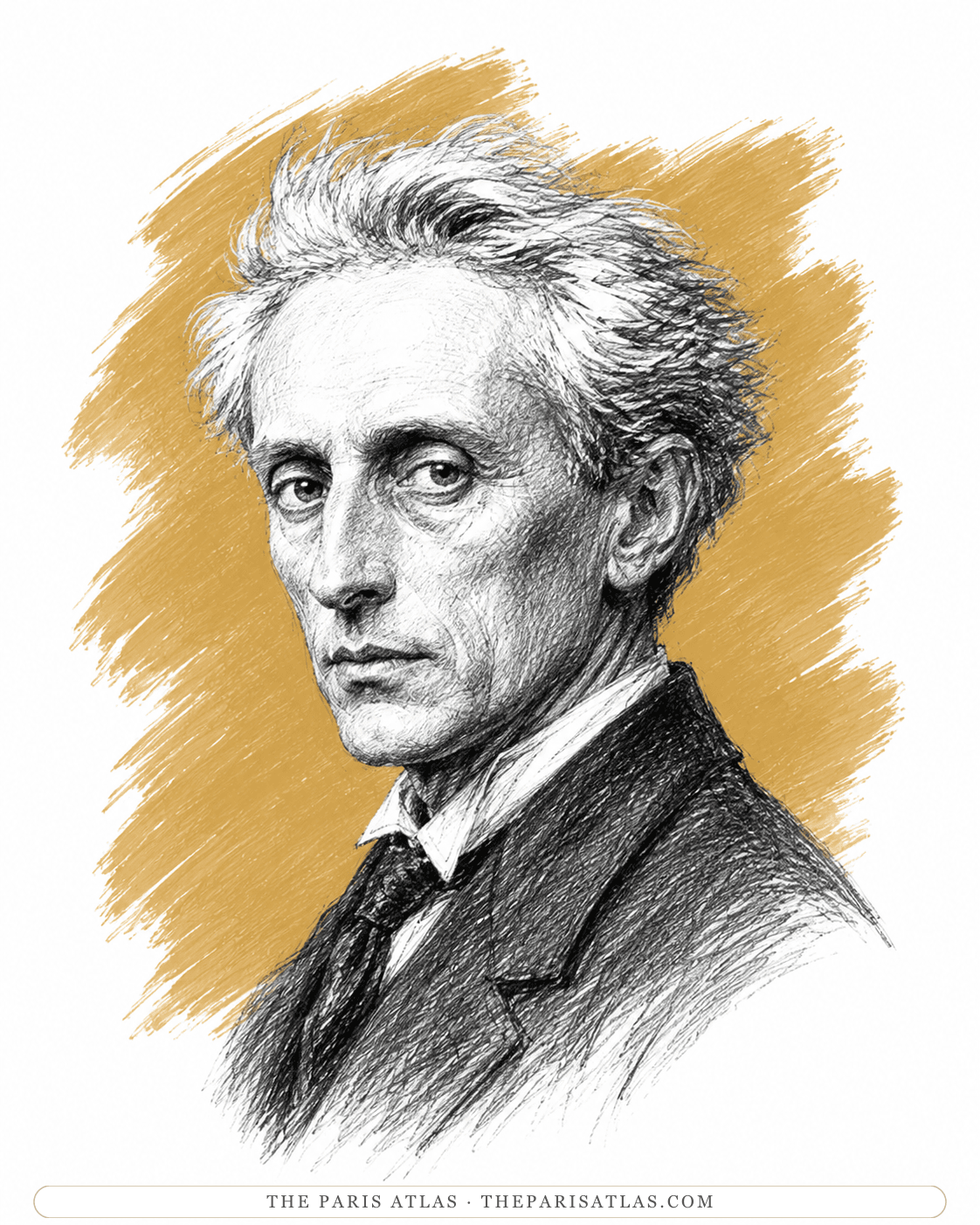
Fini met Max Ernst before settling in Paris and became part of the artistic circle around Surrealism without formally joining Breton's group.
Sat for a portrait by · 1935
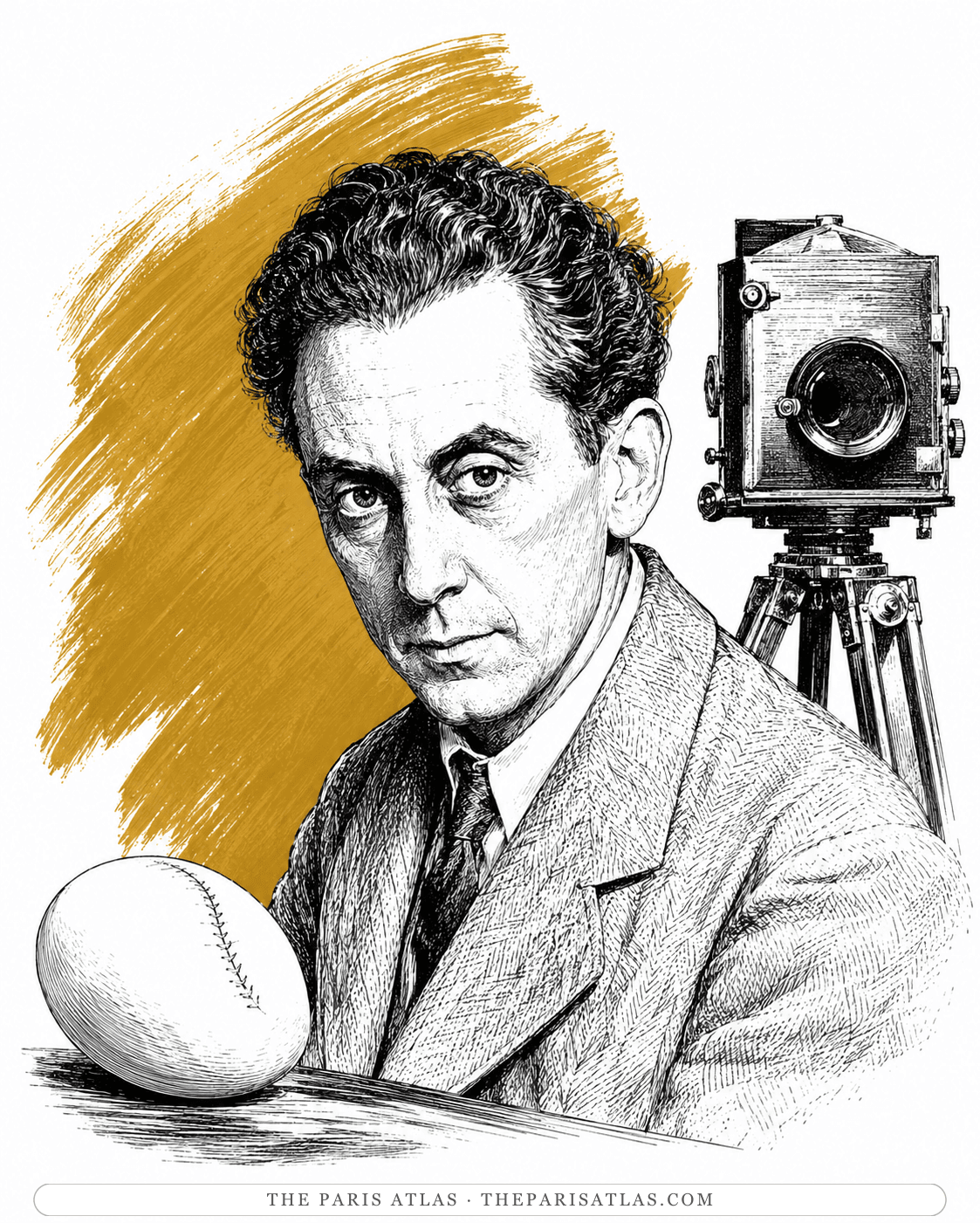
Man Ray photographed Fini repeatedly in Paris during the later 1930s. Centre Pompidou holds and records several of the portraits.
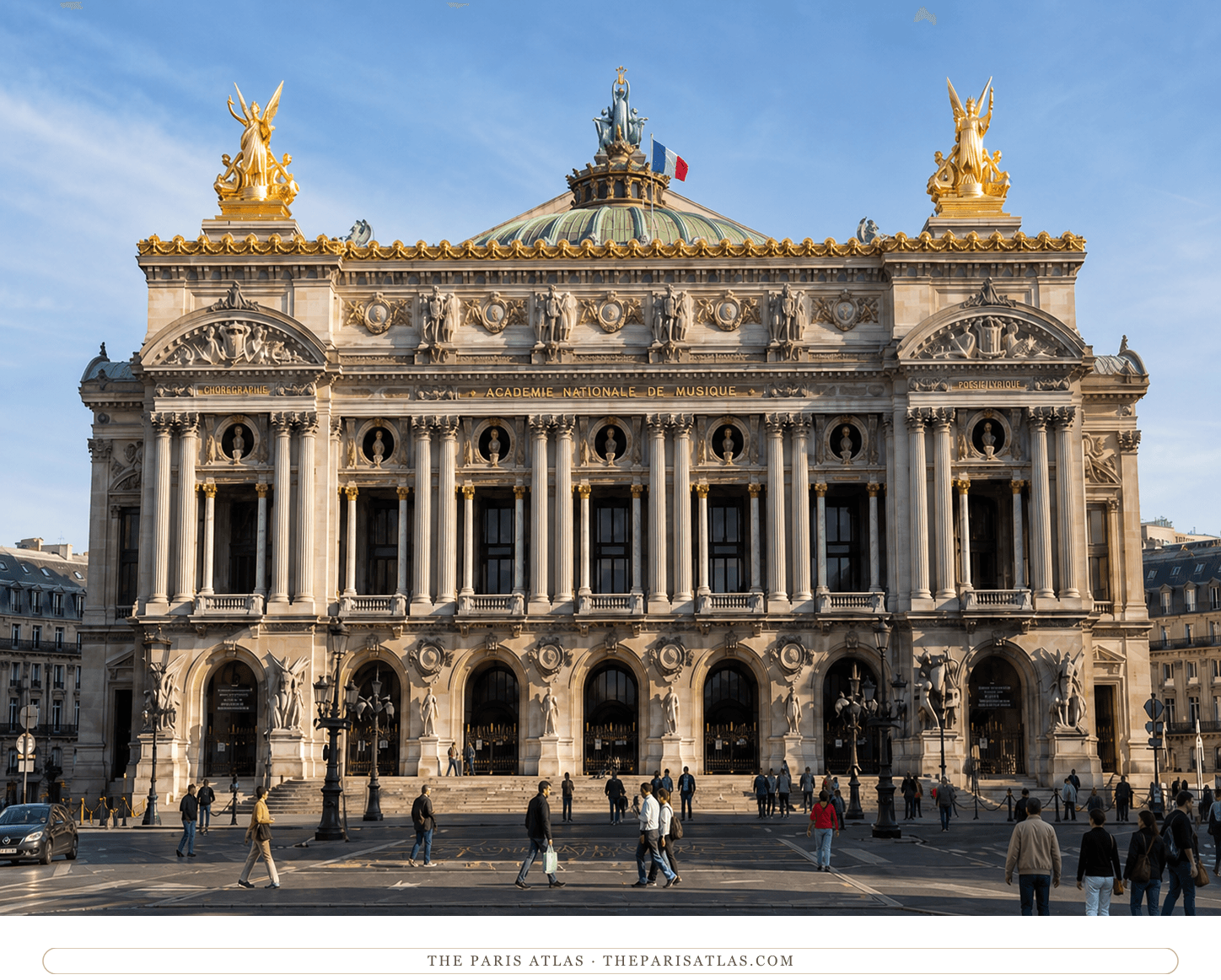
Fini designed sets and costumes for stage productions at the Palais Garnier as part of her postwar work for opera and theatre.
Visit the place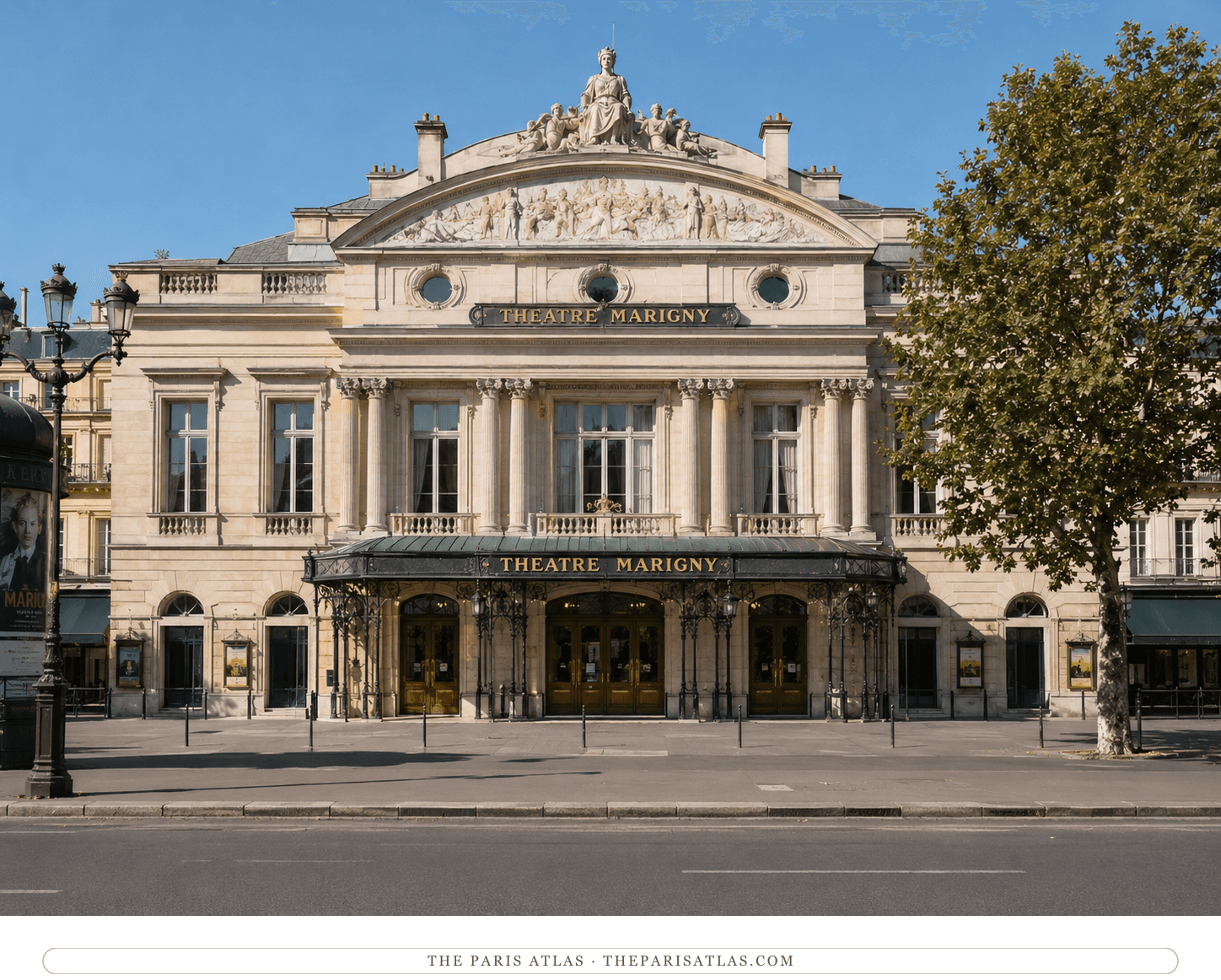
Fini designed for Roland Petit's Les Demoiselles de la nuit at the Théâtre Marigny during her postwar stage-design career.
Visit the placeCollaborated with · 1933
Cartier-Bresson traveled through Europe with Fini and André Pieyre de Mandiargues and photographed her repeatedly during the early 1930s.
Met · 1930
Fini met Max Ernst before settling in Paris and became part of the artistic circle around Surrealism without formally joining Breton's group.
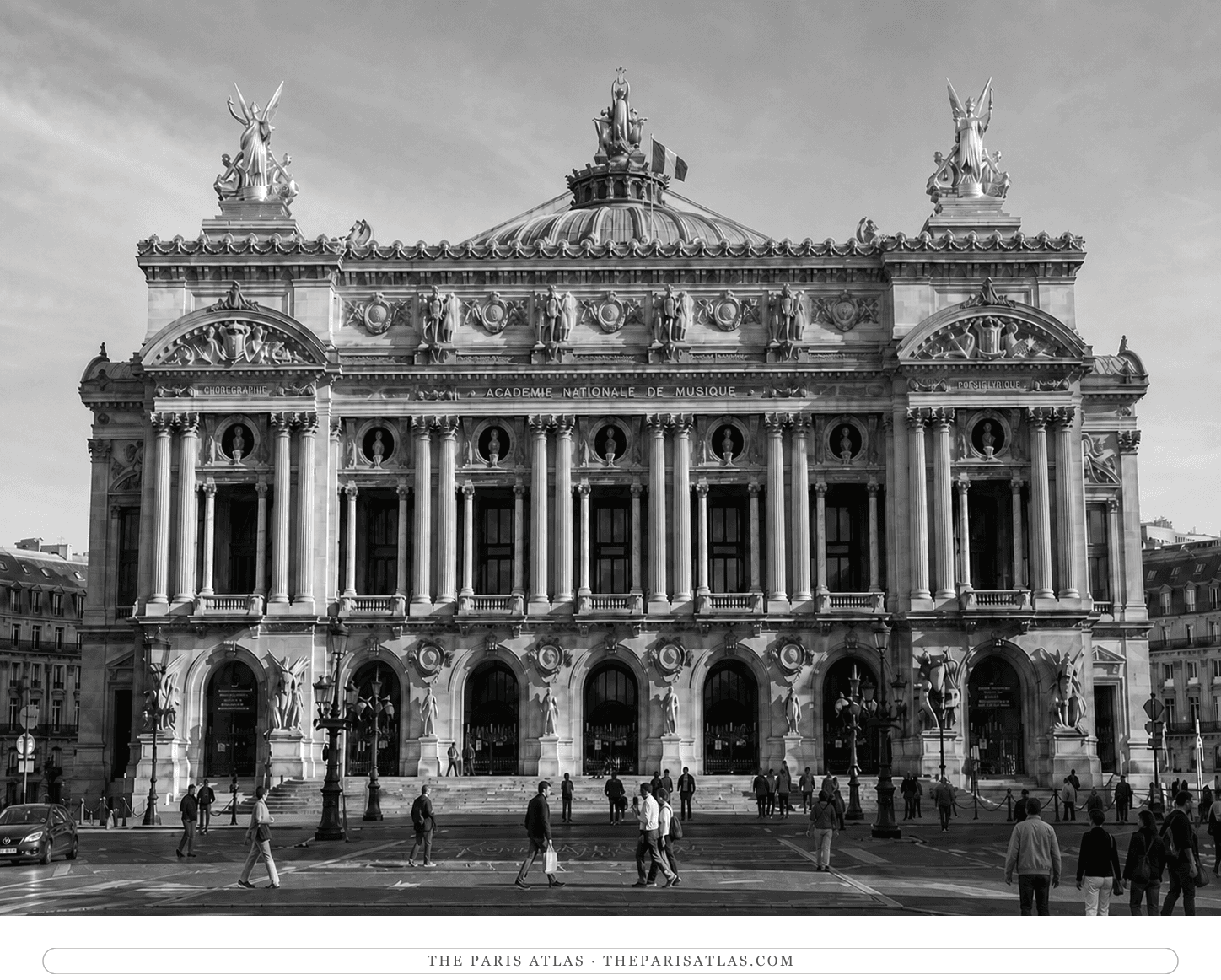
Worked at
Fini designed sets and costumes for stage productions at the Palais Garnier as part of her postwar work for opera and theatre.
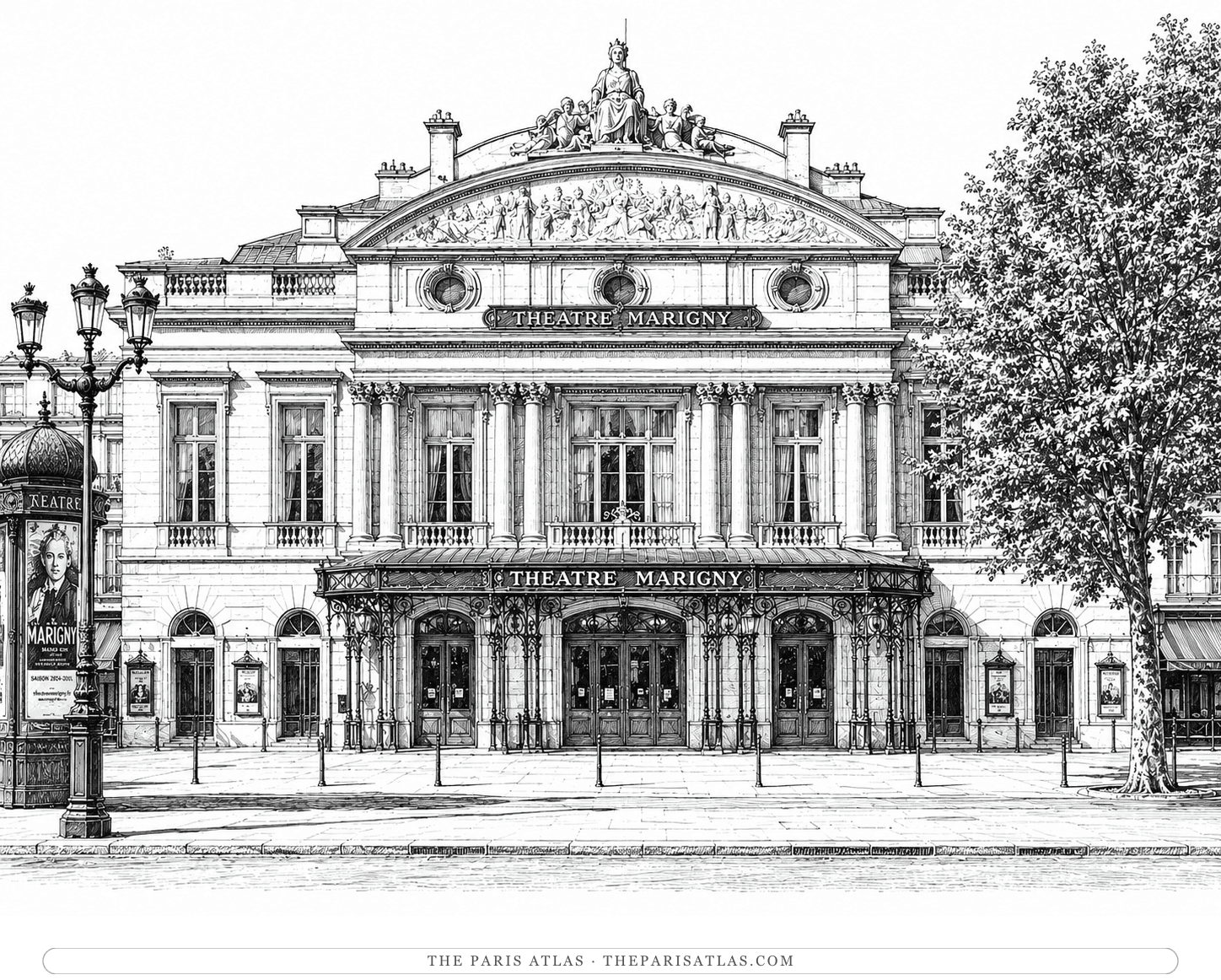
Worked at
Fini designed for Roland Petit's Les Demoiselles de la nuit at the Théâtre Marigny during her postwar stage-design career.
Sat for a portrait by · 1935
Man Ray photographed Fini repeatedly in Paris during the later 1930s. Centre Pompidou holds and records several of the portraits.
The sources below include biographies, scholarly essays, interviews, and primary materials that informed this page. They reflect both the historical record and ongoing critical conversations about Leonor Fini and their work.

Official biography covering Fini's independence from Surrealism, relationships and six-decade career.

Archive of photographs documenting Fini's constructed public image, Paris studios and Le Rêve de Leonor.
Bibliography of the more than fifty books Fini illustrated.
Scholarly overview of Fini's Italian formation, gender reversals, mineral period and writing.
Official exhibition list confirming the 1929 Milan solo show and first Paris solo exhibition in 1932.
Official group-exhibition history documenting Fini's international Surrealist context.
Museum collection list locating major sphinx paintings and the reconstruction of Fini's Paris salon.
Centre Pompidou artist record confirming Fini's death in Aubervilliers on 18 January 1996.
Museum record for Fini's 1931 Femme travestie.
Museum record for Dora Maar's 1936 portrait of Fini.
Museum record for Man Ray's late-1930s photographic series with Fini.
Museum collection record demonstrating Fini's portrait practice.
Museum record crediting Schiaparelli and Fini for the torso-shaped Shocking perfume bottle.
Museum record for Cartier-Bresson's early photograph of Fini wearing a stocking over her face.
MoMA artist record for Fini's place in the museum's collection and exhibition history.
Official record for MoMA's landmark 1936–1937 exhibition including Fini.
Institutional account connecting Fini's disguises, visual art and extensive stage-design career.
Academic biographical notice covering Fini's wartime years and relationship with Stanislao Lepri.
Contemporary obituary assessing Fini's painting, costume design and international career.
Museum biography and collection context for The Shepherdess of the Sphinxes.
Additional museum collection record retained from the earlier page research.
These references anchor the page in the documented record and in the scholarly conversations around Leonor Fini. Every claim on this page traces back to one or more of the works listed here.
 Explore more resources