The Paris AtlasCharting the artists, works, and places worth returning to.
  • Photographer
  • Painter
· French · 1907–1997

Dora Maar

Surrealist photographer — photomontages, the Père Ubu armadillo, street work in Barcelona and London — who documented the painting of Guernica stage by stage, spent eight years as Picasso's partner and the model of the Weeping Woman, and said of those portraits: they are Picassos, not one is Dora Maar.

Details

Lived
1907–1997
Born
1907
Birthplace
Paris
Died
1997
Place of death
Paris
Nationality
French
Roles
PhotographerPainter
Also known as
Henriette Théodora Markovitch

About Dora Maar

Before she was anyone's model, Dora Maar was one of the few photographers the Surrealists admitted as one of their own. Born Henriette Théodora Markovitch in Paris in 1907 and raised partly in Buenos Aires, she ran a commercial studio with Pierre Kéfer, shot street photography in the slums of Barcelona and London, and made the movement's most reproduced photographic images — the photomontage titled 29, rue d'Astorg, with its faceless figure seated in a warped vaulted corridor, and Père Ubu, the monstrous armadillo foetus that became Surrealism's unofficial mascot at its 1936 exhibitions. Her politics were as active as her camera: she signed the anti-fascist manifestos of the mid-1930s and moved in the leftist theatre of the Groupe Octobre.

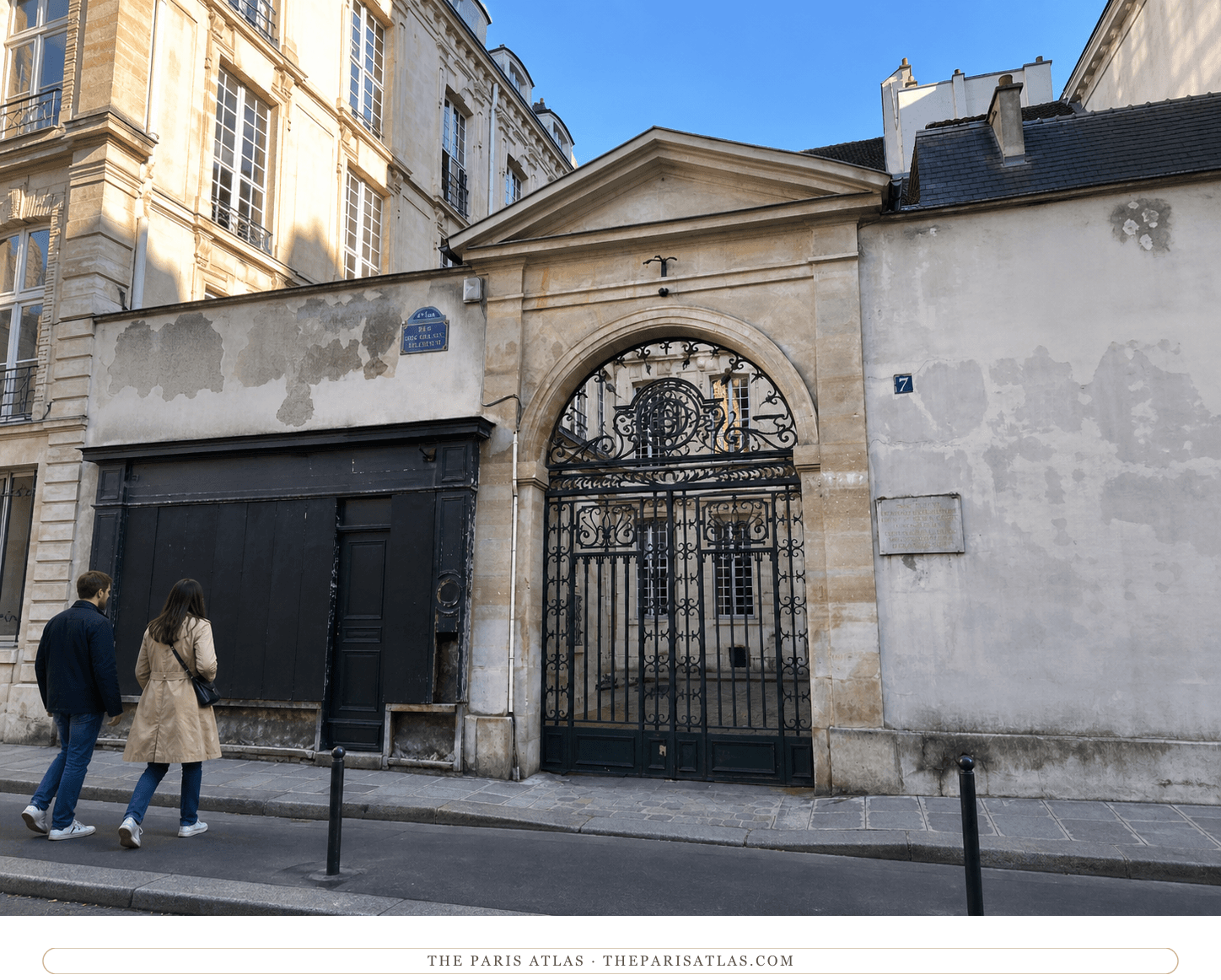
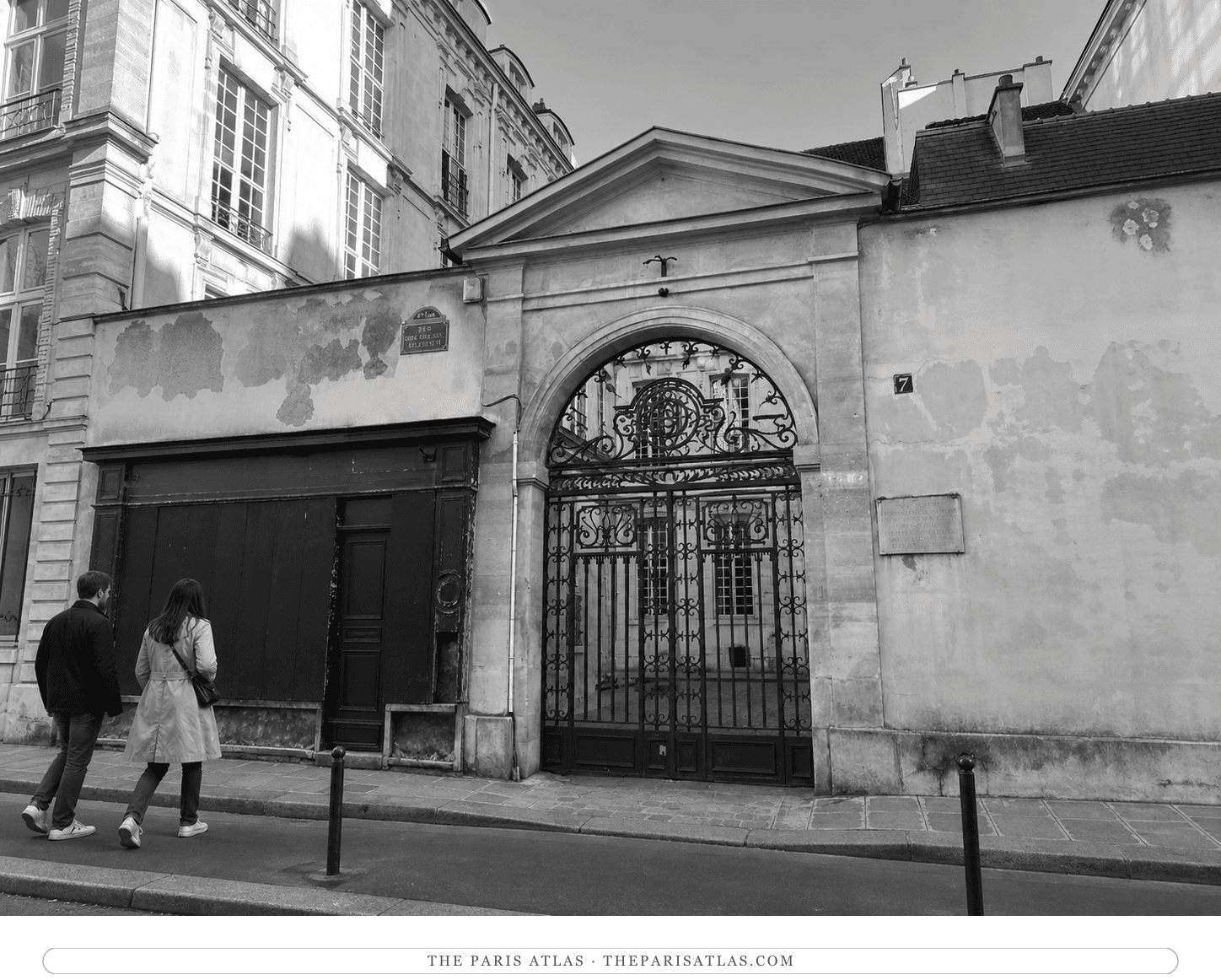
In late 1935, at Les Deux Magots, Paul Éluard introduced her to Pablo Picasso. The eight years that followed bound two bodies of work together: she found and photographed the atelier at 7 rue des Grands-Augustins where Guernica was painted, documenting the mural stage by stage in 1937 — the only such record of a Picasso masterpiece — and he painted her, over and over, as the Weeping Woman. Her verdict on those canvases, delivered years later, is the necessary caption: 'All portraits of me are lies. They're Picassos. Not one is Dora Maar.' The relationship's end left a breakdown, electroshock, treatment by Jacques Lacan, a turn to Catholic faith and to painting, and five decades of deliberate withdrawal in Paris and Ménerbes. She died in 1997; the world rediscovered the photographer in the estate sales and retrospectives that followed.

Kéfer-Dora Markovitch, photographers

Maar was born on 22 November 1907 in Paris to a Croatian architect father whose work took the family to Buenos Aires for most of her childhood. Back in Paris from 1926 she trained in photography and painting — the era's schools sent women toward the camera — and by 1931 ran a studio with the designer-photographer Pierre Kéfer out of his parents' garden at Neuilly, signing work Kéfer-Dora Maar: fashion, advertising, nudes, portraits of the avant-garde.

The personal work was harder and stranger. She photographed the unemployed and the blind in the Zone — the shantytown belt ringing Paris where its old fortifications had been demolished — and in Depression Barcelona and London; and she built photomontages that put staircases inside vaulted corridors and hands emerging from shells. Père Ubu — an armadillo foetus shot close, named for Alfred Jarry's tyrant — hung at the 1936 International Surrealist Exhibition in London and became the movement's unofficial totem. She was one of a handful of photographers the Surrealists exhibited at all, and the politics matched: her signature is on the anti-fascist tracts of 1934–36.

Guernica, week by week

Éluard made the introduction at Les Deux Magots in the winter of 1935–36 — the famous anecdote, in which Maar stabs a penknife between her gloved fingers at the café table and Picasso asks to keep the blood-flecked glove, is told in many versions and is embellishment layered on a real café meeting. She was twenty-eight, established, fluent in his native Spanish; Pablo Picasso was fifty-four. It was Maar who found him the vast attic atelier at 7 rue des Grands-Augustins, and when the Spanish Republic commissioned a mural for the 1937 Paris exposition, she photographed Guernica at every stage of its painting — the only step-by-step photographic record of a Picasso masterpiece, published that year in Cahiers d'Art and indispensable to its study since.

He painted her constantly — seated, reading, and above all weeping, in the Weeping Woman series of 1937 that fused her face with the war grief of Guernica. She rejected the equation to the end of her life: the tears were his subject, not her character, and 'all portraits of me are lies. They're Picassos. Not one is Dora Maar.' At his urging she largely set the camera aside for painting — a loss photography historians have been counting ever since.

After: Lacan, God, Ménerbes

The relationship corroded through the war — Picasso's cruelties, the arrival of his next lover, Françoise Gilot — and ended around 1943–46. Maar broke down in 1945: erratic public episodes that ended in police custody, a clinic, electroshock, then analysis with Jacques Lacan, who steered her out of the hospital and, by her account, toward the choice she made lifelong — art and God. 'After Picasso, only God,' the famous version runs. She converted to an intense Catholicism, kept the house at Ménerbes in the Luberon that had come to her from Picasso, and painted — austere abstract landscapes, a world away from both her Surrealism and his portraits.

The withdrawal lasted five decades and was a decision, not a disappearance: she showed paintings occasionally, corresponded, and refused most interviews about Picasso. She died in Paris on 16 July 1997, at eighty-nine. The estate sales of 1998–99 disgorged the photographs, negatives and Picassos she had kept, and the retrospectives that followed — Centre Pompidou, Getty and Tate in 2019–20 among them — restored the order of her biography: photographer first.

Life events

  1. 1907

    Born Henriette Théodora Markovitch in Paris on 22 November; childhood largely in Buenos Aires.

    Dora Maar — Wikipedia

  2. 1931

    Opens the Kéfer-Dora Maar studio with Pierre Kéfer — fashion and advertising outside, Surrealism and street work inside.

    Dora Maar — Wikipedia

  3. 1935

    Paul Éluard introduces her to Picasso at Les Deux Magots in the winter of 1935–36.

    Dora Maar — Wikipedia

  4. 1936

    Père Ubu, the armadillo photograph, hangs at the International Surrealist Exhibition in London and becomes the movement's totem.

    Dora Maar — Wikipedia

  5. 1937

    Photographs Guernica stage by stage at the rue des Grands-Augustins atelier she had found for Picasso; he paints her as the Weeping Woman.

    Dora Maar — Wikipedia

  6. 1945

    Breakdown after the relationship's end: clinic, electroshock, then analysis with Jacques Lacan.

    Dora Maar — Wikipedia

  7. 1946

    Turns to Catholicism and painting; the house at Ménerbes becomes her retreat.

    Dora Maar — Wikipedia

  8. 1997

    Dies in Paris on 16 July, aged eighty-nine, after five decades of chosen withdrawal.

    Dora Maar — Wikipedia

  9. 2019

    The Centre Pompidou–Getty–Tate retrospective restores the photographer to first place in her own story.

    Dora Maar — Wikipedia

People they knew

Documented connections — every one carries its source.

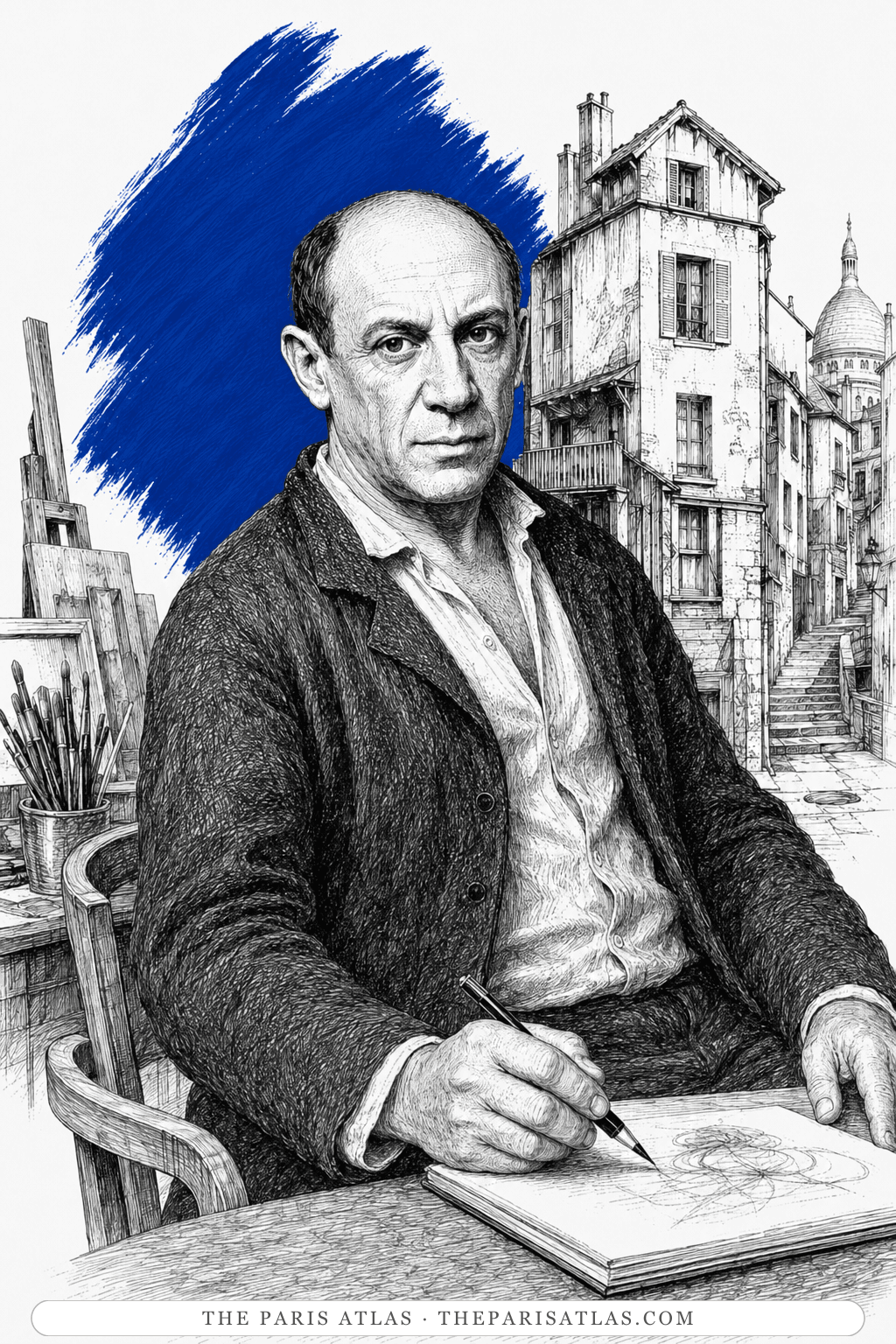
Illustrated portrait of Pablo Picasso

Pablo Picasso

  • Painter
  • Sculptor

Partner of · 1936–1943

Introduced by Paul Eluard at Les Deux Magots in the winter of 1935-36. She found him the Grands-Augustins atelier and photographed Guernica's painting stage by stage; he painted her as the Weeping Woman. Her verdict on the portraits: they are Picassos, not one is Dora Maar.
Dora Maar — Wikipedia

Movements

The artistic and literary currents this life ran through.

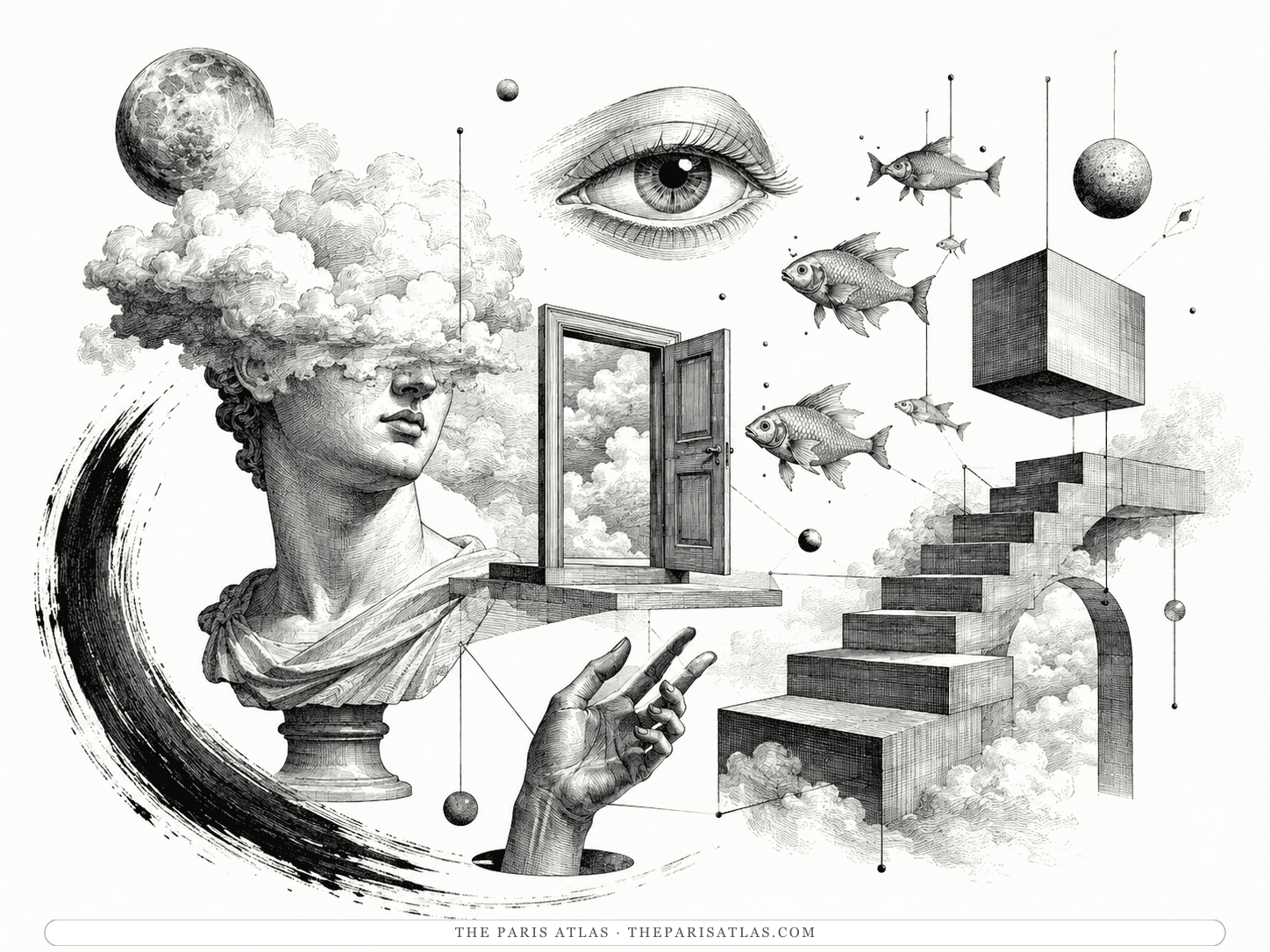
Pen-and-ink dream collage — a classical bust with clouds for eyes, a floating eye, a door opening onto sky, fish swimming through air, and an impossible staircase

Art & literary movement · 1924–1966

Surrealism

One of the few photographers the movement exhibited as its own: the 29 rue d'Astorg photomontage and Pere Ubu, the armadillo that became Surrealism's unofficial totem at the 1936 exhibitions.

Dora Maar — Wikipedia

Questions about Dora Maar

Who was Dora Maar?

A French photographer and painter (1907–1997) — one of the few photographers the Surrealists exhibited as their own, maker of the Père Ubu armadillo image and the movement's best photomontages, and a documentary photographer of Depression-era Barcelona and London. She was also Pablo Picasso's partner from 1936 to about 1943, the model of his Weeping Woman paintings, and the photographer of Guernica in progress.

Did Dora Maar photograph Guernica?

Yes — uniquely. She found Picasso the attic atelier at 7 rue des Grands-Augustins, and when he painted Guernica there for the Spanish Republic's pavilion in 1937 she photographed the mural at each stage of composition. The sequence, published in Cahiers d'Art that year, is the only step-by-step photographic record of a Picasso masterpiece and remains essential to Guernica scholarship.

Was Dora Maar the Weeping Woman?

She was its model; she refused to be its meaning. Picasso painted her through 1937 as the Weeping Woman, grief-struck faces feeding off Guernica's war mourning. Maar's own verdict, quoted for the rest of her life: 'All portraits of me are lies. They're Picassos. Not one is Dora Maar.' Friends corroborated her — the tears were his invention, not her temperament.

What happened to Dora Maar after Picasso?

A collapse in 1945 — clinic, electroshock — and then analysis with Jacques Lacan, who moved her treatment from hospital to couch. She emerged with the two commitments that filled the rest of her life, compressed in the line attributed to her: 'After Picasso, only God.' A convert to intense Catholicism, she painted austere abstract landscapes at Ménerbes in the Luberon and in Paris for five reclusive decades, dying in 1997.

Why did Dora Maar stop photographing?

Largely at Picasso's urging: he held painting above photography and pushed her toward the easel during their years together, and she set the camera mostly aside after the late 1930s. Photography historians count it among the era's real losses; the 1998 estate sales and the 2019 Pompidou–Getty–Tate retrospective put the photographic work back at the centre of her reputation.

Sourced claims

Every connection the graph holds for Dora, with the evidence behind it.

Associated with · 1934

Surrealism

One of the few photographers the movement exhibited as its own: the 29 rue d'Astorg photomontage and Pere Ubu, the armadillo that became Surrealism's unofficial totem at the 1936 exhibitions.

Dora Maar — Wikipedia

Partner of · 1936–1943

Pablo Picasso

Introduced by Paul Eluard at Les Deux Magots in the winter of 1935-36. She found him the Grands-Augustins atelier and photographed Guernica's painting stage by stage; he painted her as the Weeping Woman. Her verdict on the portraits: they are Picassos, not one is Dora Maar.
Dora Maar — Wikipedia

References

References

The sources below include biographies, scholarly essays, interviews, and primary materials that informed this page. They reflect both the historical record and ongoing critical conversations about Dora Maar and his work.

  1. 1Dora Maar — Wikipedia

    Wikipedia
    View source
    i
    Why these sources are here

    These references anchor the page in the documented record and in the scholarly conversations around Dora Maar. Every claim on this page traces back to one or more of the works listed here.

    Explore more resources