Starring — Film
- Actor
- Filmmaker
- Author
Musidora
Irma Vep of Les Vampires — the black-clad figure the surrealists took as a muse — who then founded her own film company and, at the end, helped the Cinémathèque française preserve the era she had helped invent.
In images
Details
- 1889–1957
- 23 February 1889
- Paris
- 7 December 1957
- Paris
- French
- Dr Clément Marot
- ActorFilmmakerAuthor
- Jeanne Roques
About Musidora
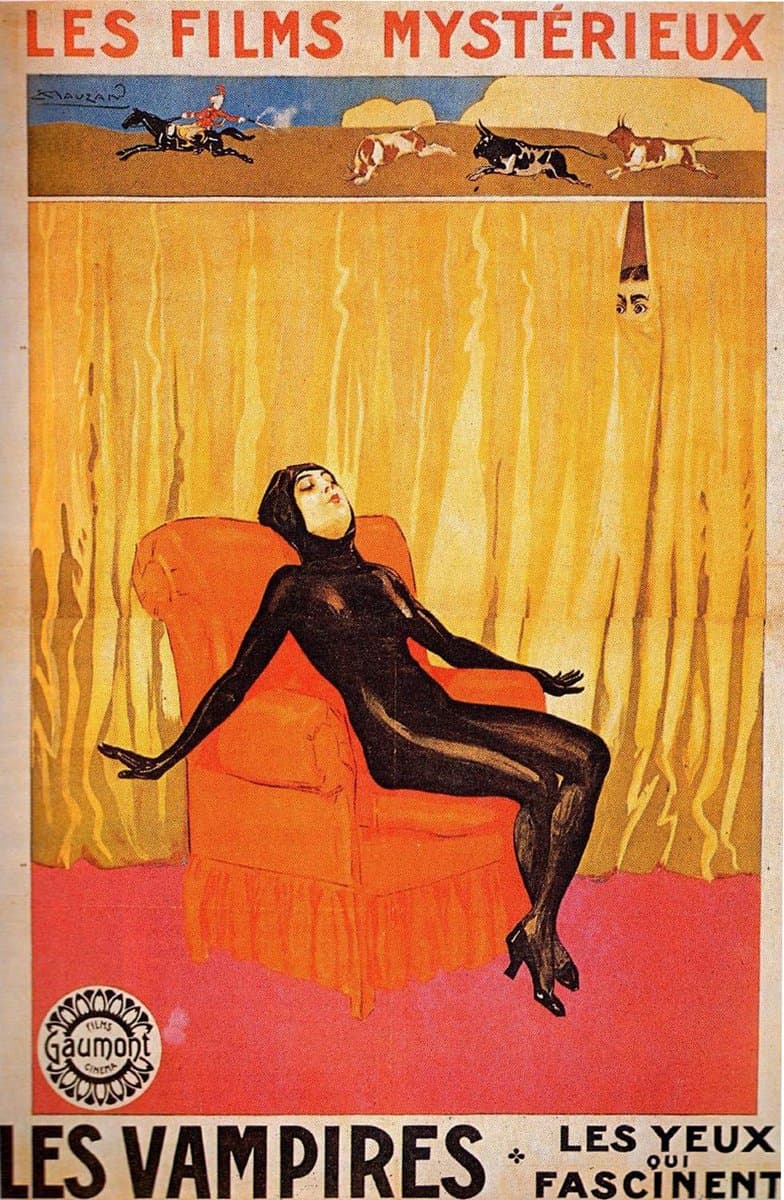
Musidora, born Jeanne Roques in Paris in 1889, was a French actor, filmmaker, and writer. She took her stage name from a character in Théophile Gautier and worked the music halls before Gaumont put her under contract in 1914. Louis Feuillade then cast her, in the third episode of Les Vampires, as Irma Vep — cabaret singer, burglar, assassin, and an anagram of vampire. The black silk maillot made her one of silent cinema's permanent images.[1]
She was more than Irma Vep almost at once. From 1916 she wrote scenarios, and in 1919 she founded her own production company, among the first women in France to run one, filming adaptations of her friend Colette and then a run of features shot in Spain. When sound cinema had no use for her she wrote novels, plays, and journalism; from 1944 she worked at the Cinémathèque française, interviewing the pioneers of the medium she had helped make. She died in Paris in 1957.
Before Irma Vep
Jeanne Roques was born in Paris on 23 February 1889 into an artistic and politically progressive family, and she worked young — writing, drawing, and performing before she was out of her teens. On stage she took the name Musidora, after a character in Théophile Gautier. By the early 1910s she was a working music-hall and revue performer, and it was in that world, around the Bataclan, that she met Colette, whose friendship would last the rest of her life.[2]
Her first screen role was not a fantasy or a crime serial. In 1913 she played Louise, a seamstress driven toward suicide by poverty, in Les Misères de l'aiguille, made by the libertarian cooperative Le Cinéma du Peuple. The film was about the exploitation of working women, and it opened in January 1914 at the Sociétés savantes with a trade-union speaker and a lecture by the anarchist writer Lucien Descaves. Musidora's career in cinema began in explicitly feminist, working-class film.
Noticed at the Folies-Bergère, she signed with Gaumont in 1914 and entered the production world of Louis Feuillade, the studio's artistic director, who cast her in dozens of pictures over the next few years.[2]
Irma Vep
The role that fixed her image arrived in 1915. In Les Vampires, Feuillade's ten-episode serial about a criminal secret society loose in wartime Paris, Musidora played Irma Vep — a cabaret singer who is also the gang's most capable thief and killer. She enters in the third episode, in a black silk maillot and darkened eyes, and takes the serial over. Her name is an anagram of vampire, a joke hidden in plain sight.[3]
Musidora did her own stunts, without a double, and that physical confidence is central to the character. She climbs, crawls, fights, and escapes with an ease that makes the male criminals around her look temporary. The era had a word for the dangerous, independent woman, the vamp, and Irma Vep became one of the French screen's foundational examples of it. When the police condemned the serial for glamorizing crime and briefly banned episodes, the bans were lifted, by most accounts, after Musidora appealed in person.
She followed Irma Vep with a second serial villain, the adventuress Diana Monti in Feuillade's Judex (shot 1916, released 1917). The two roles made her one of the most recognizable figures of French silent cinema, though the black maillot has always dominated the memory more than its actual screen time.[4]
The teenagers who would found Surrealism had discovered the marvelous in Feuillade's everyday Paris of trapdoors and disguises, and they kept Irma Vep. André Breton and Louis Aragon wrote her into their play Le Trésor des Jésuites in 1929; the movement treated her as something close to a muse.
It is in Les Vampires that one must look for the reality of this century.
C'est dans Les Vampires qu'il faudra chercher la réalité de ce siècle.
Her own films
Musidora turned her fame into authorship quickly. From 1916 she wrote scenarios, and she began adapting her friend Colette for the screen, among them Minne and La Vagabonde. In 1919 she founded her own production company, La Société des Films Musidora, in the Cinémathèque's phrase 'pour être plus libre' — to be freer. She was sole proprietor and personally liable, which was the price of the control.[5]
The clearest surviving evidence of that control is Vicenta (1919), on which she is credited as director, screenwriter, producer, editor, and star. Only one of its five reels survives, restored by the Cinémathèque in 2017. She was not the first woman to direct a film — Alice Guy had been directing since the 1890s — but running a company to write, produce, direct, and perform her own work made her unusual even so. Where financiers distrusted a woman directing alone, a man's name was often attached to the credits beside hers.
Spain
Her most ambitious productions were shot in Spain. Pour Don Carlos (1921), adapted from Pierre Benoît and filmed in the Basque country, was the largest of them; during it she met the mounted bullfighter Antonio Cañero, who became her adviser, screen partner, and lover. Soleil et Ombre (1922), which she called a romanticized documentary, and La Tierra de los toros (1924) followed, films interested as much in landscape, ritual, and filmed reality as in melodrama.
- Vicenta (1919) — written, produced, directed, edited, and performed by Musidora; one reel survives.
- Pour Don Carlos (1921) — the Basque-country feature adapted from Pierre Benoît.
- Soleil et Ombre (1922) — her self-described "romanticized documentary" of rural Spain and the bullring.
- La Tierra de los toros (1924) — the last of the Spanish features, later shown with live stage presentation.
The productions were not financially sustainable, and by the mid-1920s the company's run was over. In 1926 the Paris Mi-Carême carnival elected her its reine du cinéma, a decade after Irma Vep; the following year she married Dr Clément Marot. As the films dried up she returned to writing, publishing novels, plays, and poetry into the 1940s.
The historian of her own era
Sound cinema had little use for her, and her last transformation was from subject of film history into one of its keepers. In 1944 Henri Langlois brought her into the Cinémathèque française, where she managed documentation and helped run its historical research work alongside Jean Mitry and Georges Sadoul. She interviewed the surviving pioneers of early cinema and gathered the records of the era she had acted in.
I thought it right to catalogue, with love, in my section for historical research at the Cinémathèque française, these treasures, so perishable and so priceless: letters from Colette…
J'ai cru bon de classer, avec amour, dans ma section des recherches historiques, à la Cinémathèque française, ces si périssables et si inestimables trésors : Lettres de Colette…
In 1950 Langlois had her make La Magique Image, a short homage to Feuillade. The woman at the archive desk had been the woman on the rooftops, and visitors did not always know it.[6]
Paris, 1957
Musidora died in Paris on 7 December 1957 and was buried at Bois-le-Roi, southeast of the city. Her image kept traveling. The surrealists had made her a muse in her lifetime; a French feminist film collective took her name in 1974; and Olivier Assayas rebuilt Irma Vep twice, as a 1996 film with Maggie Cheung and a 2022 series with Alicia Vikander. The character she wore for a few episodes in 1915 no longer belongs to anyone in particular.[2]
Life events
Born Jeanne Roques in Paris on 23 February; on stage from her teens, taking her name from a character in Théophile Gautier.
Her first screen role: Louise, an exploited seamstress, in Les Misères de l'aiguille for the cooperative Le Cinéma du Peuple. It premiered in January 1914.
Signs with Gaumont; Louis Feuillade becomes her director for dozens of films.
Irma Vep in Les Vampires — the black maillot, the darkened eyes, and one of the silent screen's indelible silhouettes.
Musidora in the black silk maillot of Irma Vep, c. 1915 — the publicity image that fixed one of silent cinema's indelible silhouettes. Diana Monti in Feuillade's Judex; begins writing scenarios of her own.
Musidora as Diana Monti in Louis Feuillade's Judex (1916) — the scheming adventuress who was her second great serial villain after Irma Vep. Founds La Société des Films Musidora 'pour être plus libre'; directs, writes, produces, edits, and stars in Vicenta.
Her Spanish features — Pour Don Carlos, Soleil et Ombre, La Tierra de los toros — written, produced, directed, and performed by her.
Elected reine du cinéma at the Paris Mi-Carême carnival, a decade after Irma Vep.
Musidora rides at the Paris Mi-Carême carnival of 1926, after being elected the city's "reine du cinéma" — a decade after Irma Vep, at the height of her fame. Marries Dr Clément Marot; as film work dries up she turns to novels, plays, and poetry.
Joins the Cinémathèque française under Henri Langlois — the era's icon become its historian, classifying early cinema 'avec amour' and interviewing its pioneers.
Directs La Magique Image, a short homage to Feuillade, for the Cinémathèque.
Dies in Paris on 7 December; buried at Bois-le-Roi.
In the credits
People Musidora Knew
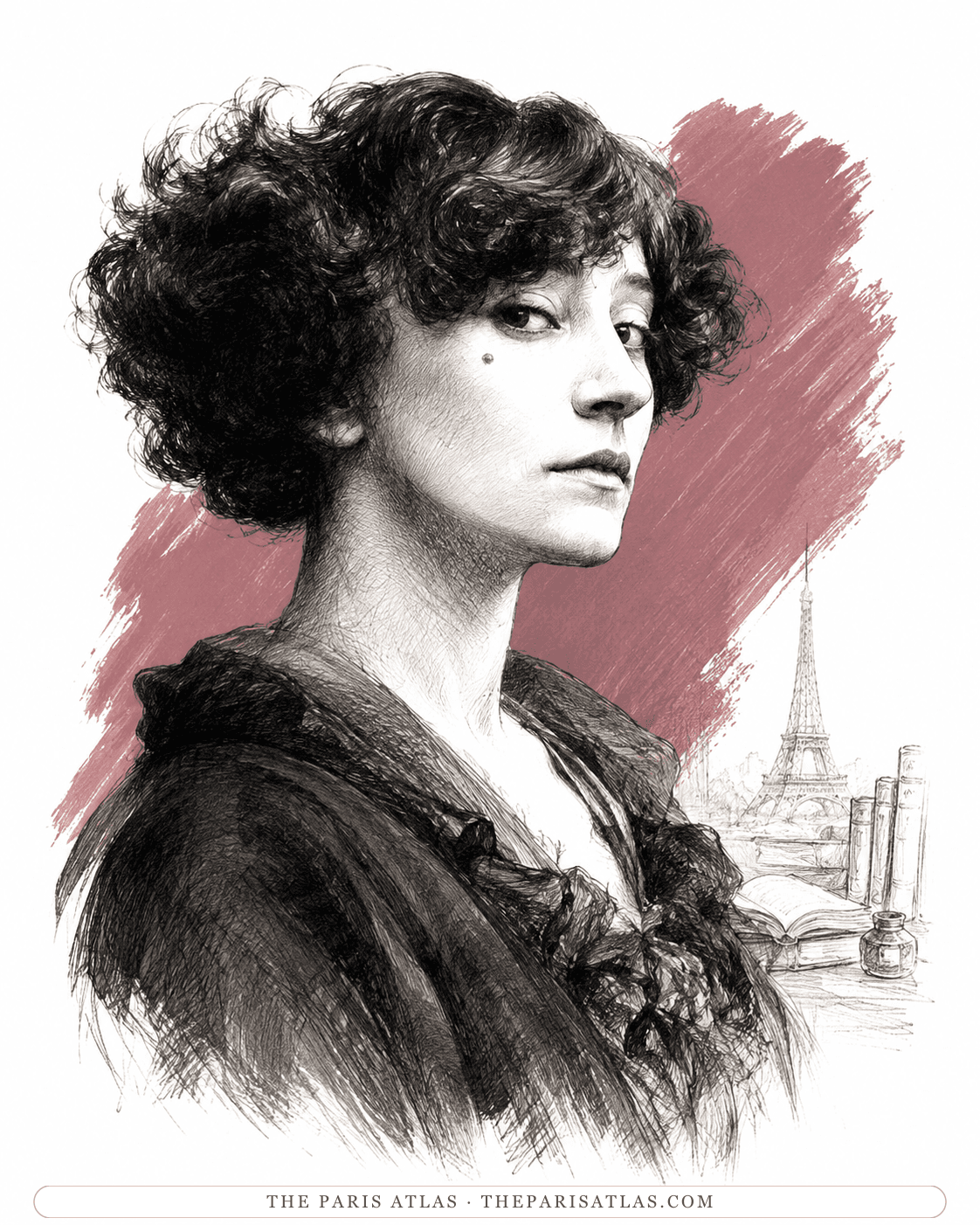
Colette
- Author
- Journalist
- Actor
- +1
Collaborated with · 1916–1920
From 1916 to 1920 Musidora adapted her friend Colette for the screen — Minne and La Vagabonde among the projects. The friendship outlasted the films by decades; their correspondence, published as Un bien grand amour, runs from 1908 to 1953.
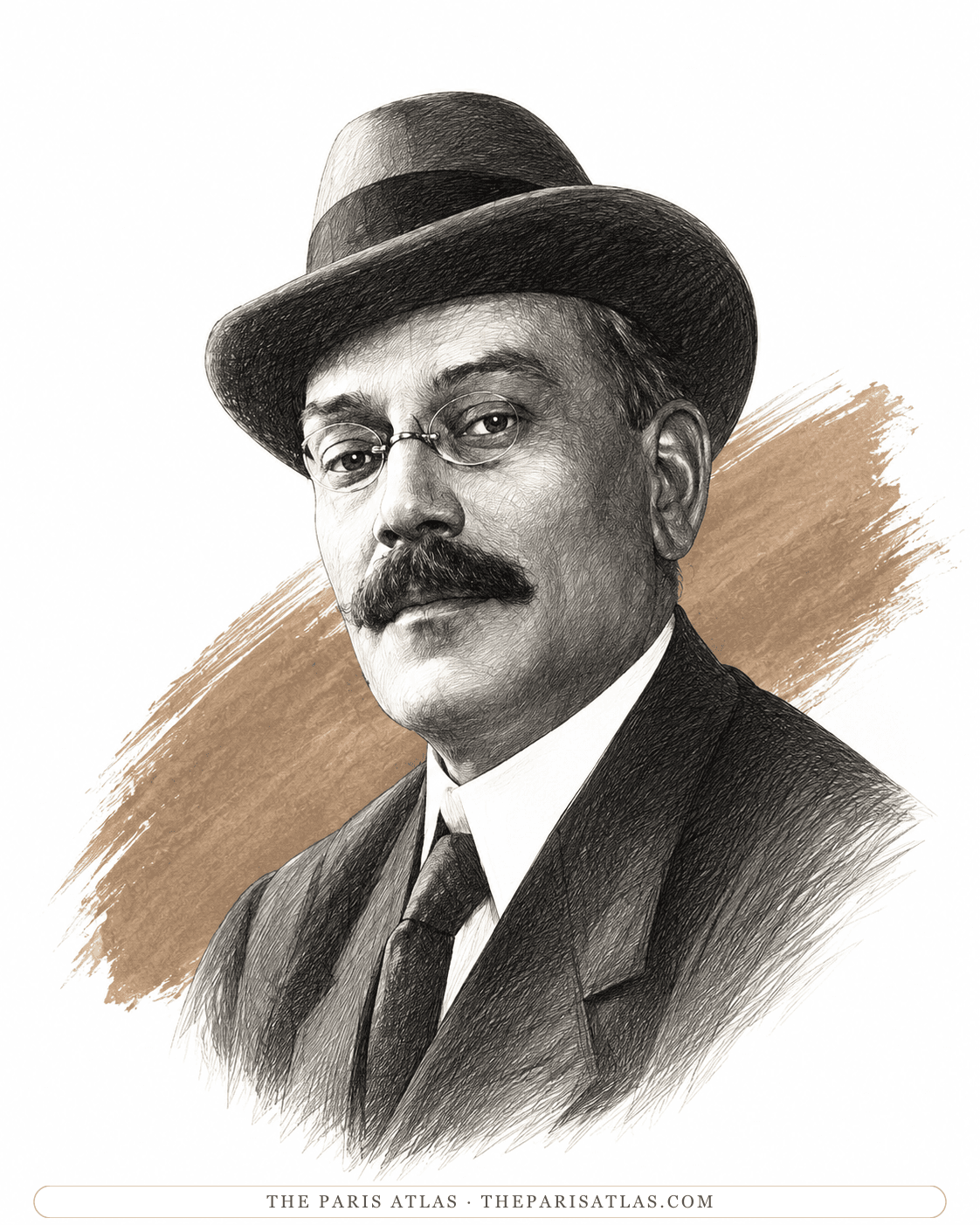
Louis Feuillade
- Filmmaker
Mentored by · 1914–1918
Her formative screen years were spent under his direction at Gaumont — Les Vampires, then the title role in Judex — and she honored the Feuillade era for the rest of her life, down to her late work preserving its history at the Cinémathèque française.
Who Musidora Inspired
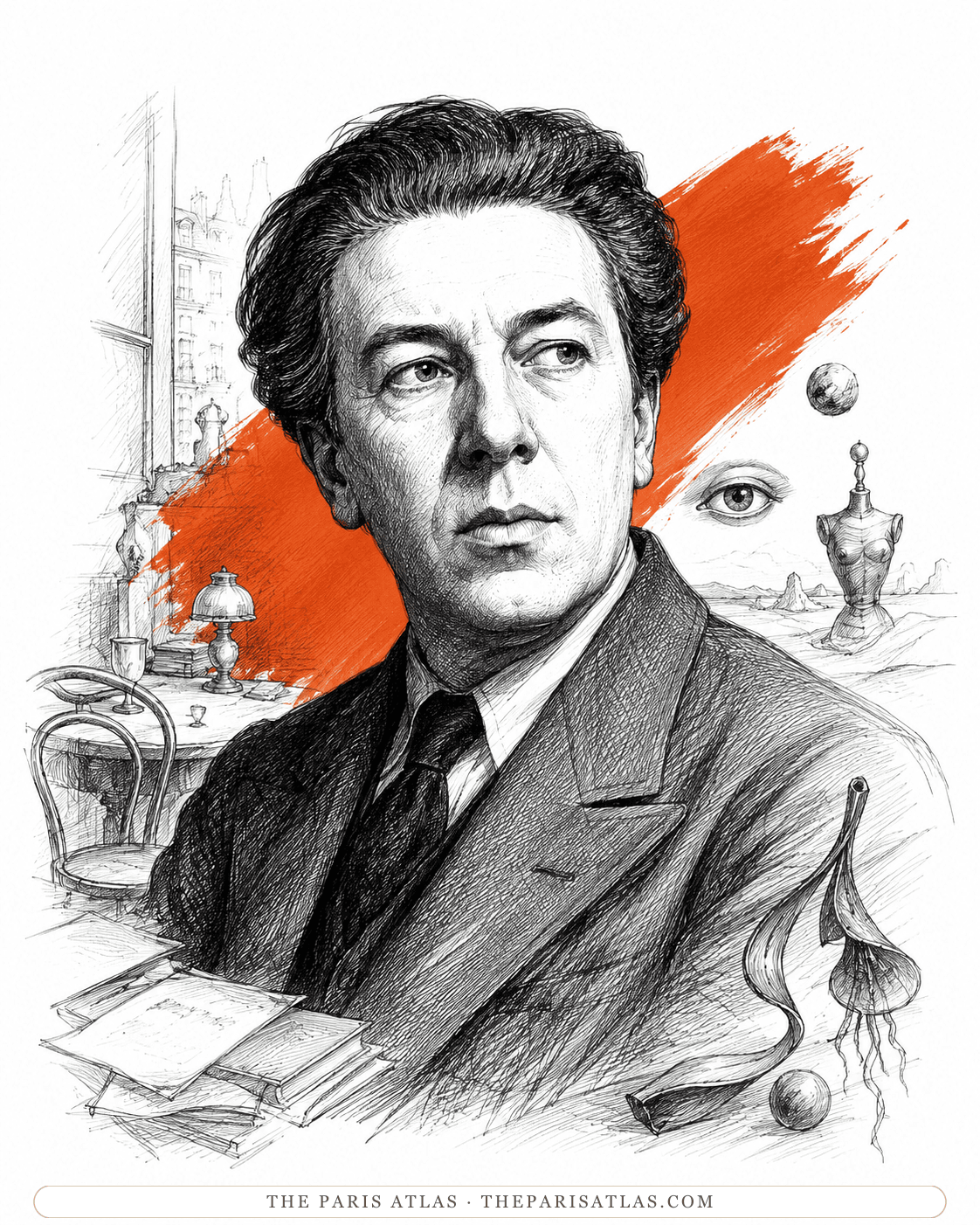
André Breton
The Surrealists took Musidora — above all the black-clad Irma Vep of Feuillade's Les Vampires — as their 'tenth muse'; Breton and Aragon paid homage to her in Le Trésor des Jésuites (1929). Connects silent serial cinema to the Surrealist circle without routing through the Cinémathèque.

Louis Aragon
With André Breton, Aragon took the black-clad Irma Vep as a Surrealist muse and wrote her into their play Le Trésor des Jésuites (1929). The schoolboys who found the marvelous in a Gaumont serial built a movement partly on its images.
Organizations
Worked for · 1914–1918
Gaumont
A Gaumont contract player through the war years — dozens of Feuillade films, with Irma Vep in Les Vampires (1915–16) the role that fixed her image for good.
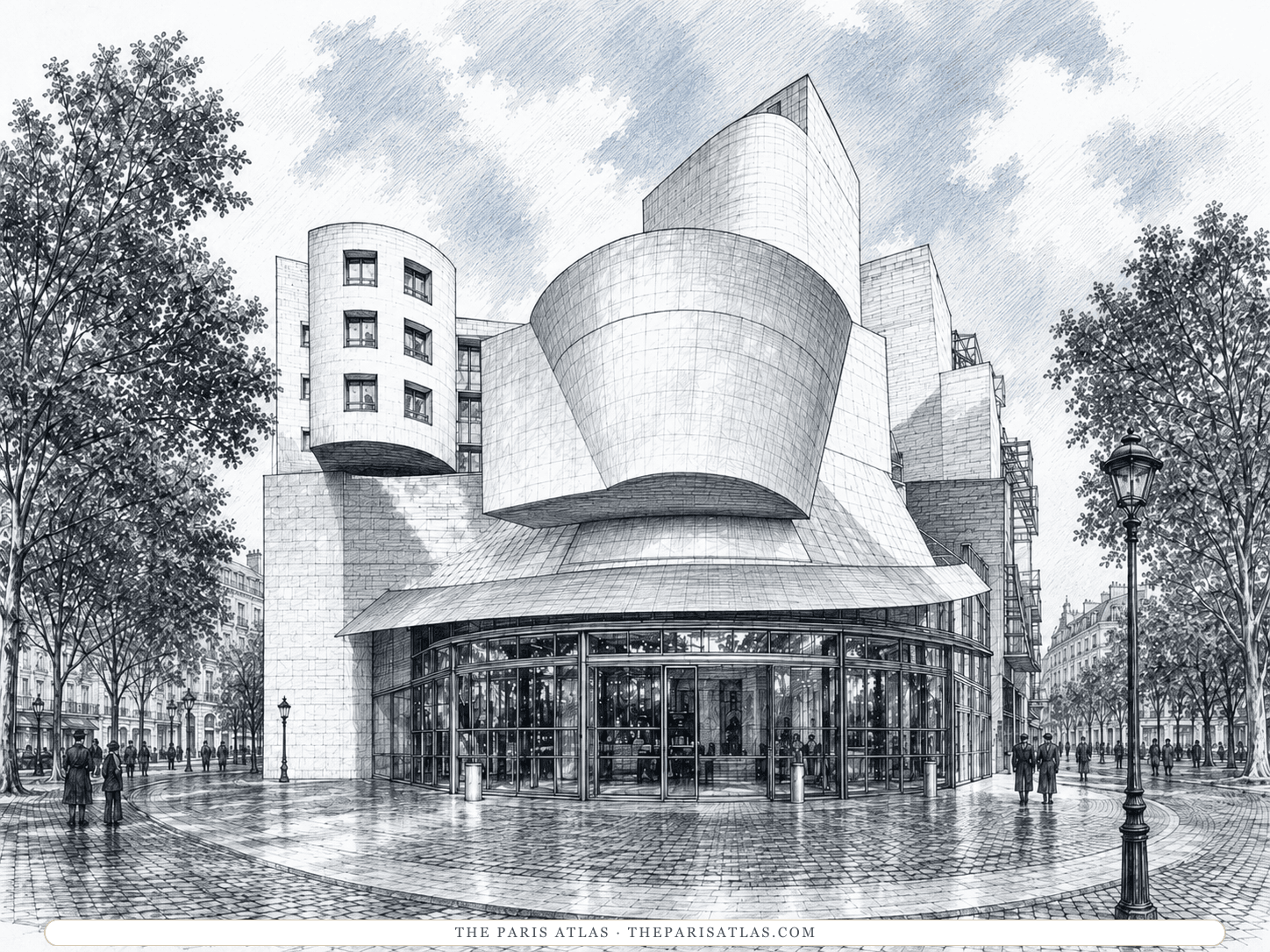
Worked for · 1944–1957
Cinémathèque française
A collaborator from 1944 to 1957 in the archive's historical research section — classifying, in her own words, 'avec amour' the perishable and inestimable treasures of early cinema.
Founded · 1919
La Société des Films Musidora
She set up the company in 1919, in the Cinémathèque's phrase 'pour être plus libre' — sole proprietor, personally liable, so that she could write, produce, direct, and star on her own terms. It carried her Colette adaptations and her Spanish features.
Worked for · 1913
Le Cinéma du Peuple
Her first screen role, before Gaumont: Louise, an exploited seamstress driven toward suicide, in Les Misères de l'aiguille (1913) for the libertarian cooperative Le Cinéma du Peuple. It premiered in January 1914 at the Sociétés savantes with a union speaker and a lecture by the anarchist Lucien Descaves. Her career began in explicitly feminist, working-class cinema.
Questions about Musidora
Who was Musidora?
A French actor, filmmaker, and writer (1889–1957), famous as Irma Vep, the black-clad thief of Louis Feuillade's serial Les Vampires — and afterward a director-producer of her own films and, at the end of her life, a researcher at the Cinémathèque française.
What is Musidora best known for?
The role of Irma Vep in Les Vampires (1915–16). Her black bodysuit fixed her image for good and made her one of early cinema's most recognizable figures. She played a second serial villain, Diana Monti, in Feuillade's Judex.
How did Musidora's film career begin?
Not with Feuillade. Her first screen role, in 1913, was Louise, an exploited seamstress, in Les Misères de l'aiguille, made by the libertarian cooperative Le Cinéma du Peuple. She signed with Gaumont the following year.
Was Musidora a film director?
Yes. In 1919 she founded her own company, La Société des Films Musidora, to write, produce, direct, and star in her own work — among the first women in France to run a production company. She was not the first woman to direct a film; Alice Guy had been directing since the 1890s.
Why did the Surrealists admire her?
They took Irma Vep — the black-clad woman of the criminal dream — as a muse. André Breton and Louis Aragon wrote her into their 1929 play Le Trésor des Jésuites.
What did Musidora do later in life?
From 1944 to 1957 she worked at the Cinémathèque française, helping preserve early cinema — classifying its treasures, in her own words, "avec amour" — and interviewing the pioneers of the medium she had helped invent.
When and where did Musidora die?
She died in Paris on 7 December 1957 and is buried at Bois-le-Roi, southeast of the city.
Connections and Sources
Worked for · 1914–1918
Gaumont
A Gaumont contract player through the war years — dozens of Feuillade films, with Irma Vep in Les Vampires (1915–16) the role that fixed her image for good.
Worked for · 1944–1957
Cinémathèque française
A collaborator from 1944 to 1957 in the archive's historical research section — classifying, in her own words, 'avec amour' the perishable and inestimable treasures of early cinema.
Influenced
André Breton
The Surrealists took Musidora — above all the black-clad Irma Vep of Feuillade's Les Vampires — as their 'tenth muse'; Breton and Aragon paid homage to her in Le Trésor des Jésuites (1929). Connects silent serial cinema to the Surrealist circle without routing through the Cinémathèque.
Collaborated with · 1916–1920
Colette
From 1916 to 1920 Musidora adapted her friend Colette for the screen — Minne and La Vagabonde among the projects. The friendship outlasted the films by decades; their correspondence, published as Un bien grand amour, runs from 1908 to 1953.
Founded · 1919
La Société des Films Musidora
She set up the company in 1919, in the Cinémathèque's phrase 'pour être plus libre' — sole proprietor, personally liable, so that she could write, produce, direct, and star on her own terms. It carried her Colette adaptations and her Spanish features.
Influenced
Louis Aragon
With André Breton, Aragon took the black-clad Irma Vep as a Surrealist muse and wrote her into their play Le Trésor des Jésuites (1929). The schoolboys who found the marvelous in a Gaumont serial built a movement partly on its images.
Worked for · 1913
Le Cinéma du Peuple
Her first screen role, before Gaumont: Louise, an exploited seamstress driven toward suicide, in Les Misères de l'aiguille (1913) for the libertarian cooperative Le Cinéma du Peuple. It premiered in January 1914 at the Sociétés savantes with a union speaker and a lecture by the anarchist Lucien Descaves. Her career began in explicitly feminist, working-class cinema.
Mentored by · 1914–1918
Louis Feuillade
Her formative screen years were spent under his direction at Gaumont — Les Vampires, then the title role in Judex — and she honored the Feuillade era for the rest of her life, down to her late work preserving its history at the Cinémathèque française.
References
References
The sources below include biographies, scholarly essays, interviews, and primary materials that informed this page. They reflect both the historical record and ongoing critical conversations about Musidora and their work.


1↑Encyclopaedia Britannica — Musidora
WebsiteUsed forWeb source consulted for documented facts and historical context presented on the Musidora page.
3↑La Cinémathèque française (Henri) — Les Vampires, notes on the serial
WebsiteUsed forWeb source consulted for documented facts and historical context presented on the Musidora page.
4↑Encyclopaedia Britannica — Les Vampires
WebsiteUsed forWeb source consulted for documented facts and historical context presented on the Musidora page.
5↑Anthology Film Archives — Musidora retrospective notes
WebsiteUsed forWeb source consulted for documented facts and historical context presented on the Musidora page.
6↑La Cinémathèque française — Musidora sur le web
WebsiteUsed forWeb source consulted for documented facts and historical context presented on the Musidora page.
7La Cinémathèque française (Henri) — Les Misères de l'aiguille (Le Cinéma du Peuple, 1913)
WebsiteUsed forWeb source consulted for documented facts and historical context presented on the Musidora page.

8Le Cinéma du peuple — restored-film corpus and history
ArchiveLa Cinémathèque françaiseUsed forArchival evidence used to document the historical record connected to Musidora.
9Les Misères de l'aiguille (Raphaël Clamour, 1913)
ArchiveLa Cinémathèque française, 1913Used forArchival evidence used to document the historical record connected to Musidora.
1028 octobre 1913 : création de la société ‘Le Cinéma du Peuple’
Essays1895, revue d'histoire du cinéma (Persée), 1993Used forPublished analysis and historical context used in preparing the Musidora page.
11La Commune (Armand Guerra, 1914)
ArchiveLa Cinémathèque française, 1914Used forInstitutional film record for the cooperative's wider surviving production.
12Gaumont — 100 Years Since Les Vampires Was Released
WebsiteUsed forWeb source consulted for documented facts and historical context presented on the Musidora page.
i
Why these sources are here
These references anchor the page in the documented record and in the scholarly conversations around Musidora. Every claim on this page traces back to one or more of the works listed here.
 Explore more resources