Film
Les Vampires
Feuillade's ten-episode serial about a criminal secret society loose in wartime Paris — and about Irma Vep, the gang's black-clad lieutenant, played by Musidora in a role the century never got over. Shot fast in real streets emptied by the war, it looks like documentary and moves like a dream, which is exactly why the surrealists claimed it as scripture.
- 1915–16
- Silent serial in ten episodes
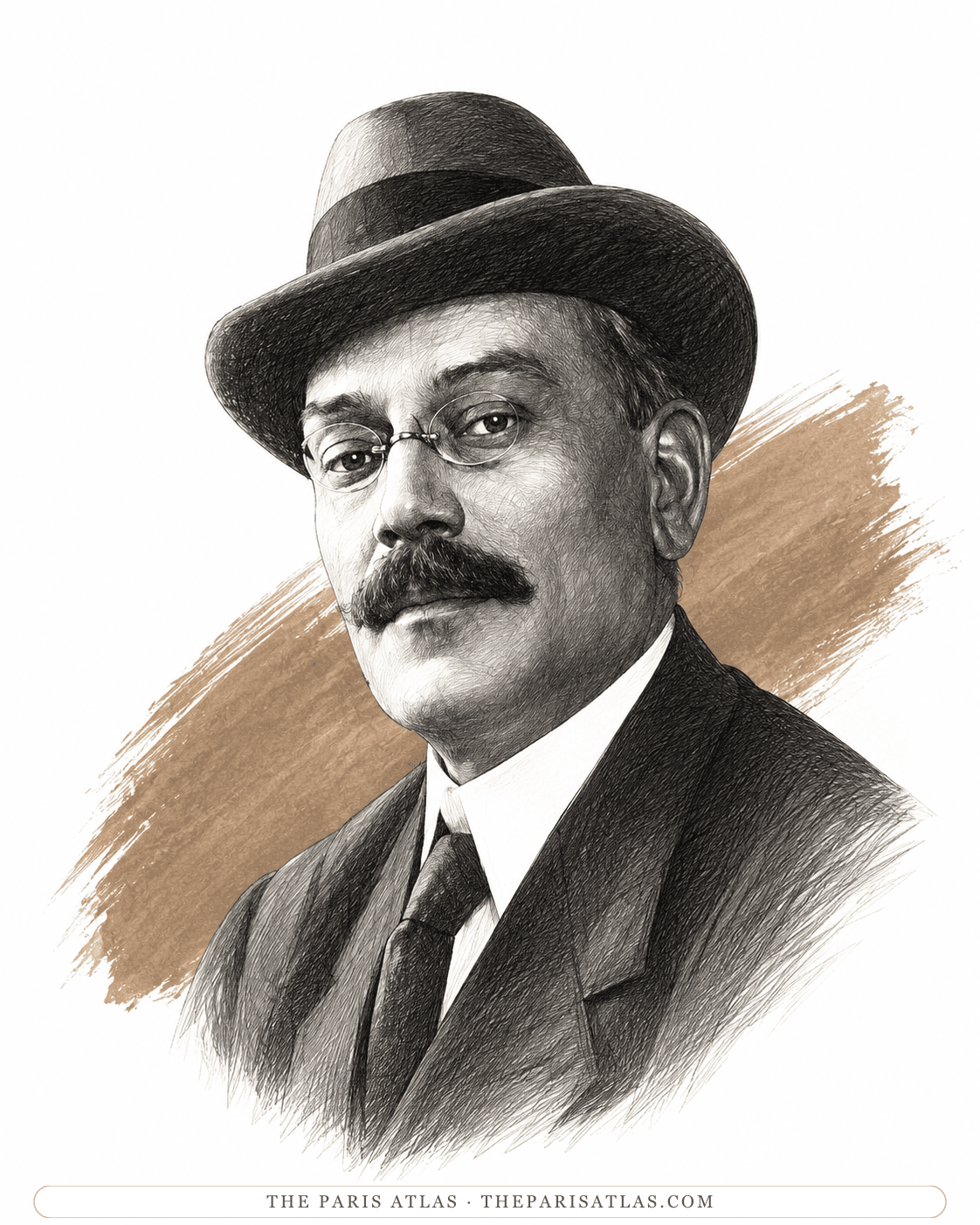
About Louis Feuillade
A city with a secret life
A severed head disappears from a police file. A dancer slips out of a respectable drawing room in a black bodysuit. Walls open, ceilings become entrances, and aristocrats, hotel guests, and policemen turn out to be criminals in disguise.
This is the world of Les Vampires, released by Gaumont in ten episodes between November 1915 and June 1916 — about seven hours of film in all. The Vampires of the title are not the fanged kind. They are a criminal secret society, and their apparently supernatural power is organization, technology, theatrical disguise, and the ability to move through the modern city without being recognized. Feuillade never takes the audience anywhere remote or fantastic.
He makes familiar Paris uncanny instead.
Ten episodes, one conspiracy
The nominal hero is Philippe Guérande (Édouard Mathé), a mild investigative journalist, helped by the reformed crook Mazamette, whose direct-to-camera mugging is the serial's comic heartbeat. Their enemies keep changing shape: the Grand Vampire moves through polite society under identity after identity, and when one chief falls another appears — Satanas, then Vénénos — as if the conspiracy could replace its own head. The gang's methods are an inventory of modern anxiety: poison rings, coded messages, hypnosis, abduction, a ballroom gassed mid-waltz, a portable cannon.
The ten episodes, as Paris first saw them:
- La Tête coupée (The Severed Head) — 13 November 1915
- La Bague qui tue (The Ring That Kills)
- Le Cryptogramme rouge (The Red Cryptogram) — Irma Vep enters
- Le Spectre (The Specter)
- L'Évasion du mort (The Dead Man's Escape)
- Les Yeux qui fascinent (The Mesmerizing Eyes)
- Satanas
- Le Maître de la foudre (The Master of Lightning)
- L'Homme des poisons (The Poisoner)
- Les Noces sanglantes (The Bloody Wedding) — June 1916
Each installment solves an immediate problem and opens a larger one. Villains die without ending the conspiracy; characters vanish and return; the plot happily contradicts itself whenever a better idea comes along. Les Vampires is not television, but its accumulative storytelling works the way a modern crime series works — an appointment kept over months, with cliffhangers doing the advertising.
Feuillade, Gaumont, and the war
Feuillade was Gaumont's artistic director, and the serial began as plain industrial competition: Pathé had announced the French release of an American serial, The Exploits of Elaine, under the title Les Mystères de New York, and Gaumont wanted an answer. Feuillade had already made the five-part Fantômas (1913–14) and knew the register — elusive villains, unstable identities, crime in the middle of ordinary life. What he delivered was not an imitation but something deeply Parisian: a story in which the city's own apartments, courtyards, offices, and rooftops are the infrastructure of conspiracy.
He shot fast, on real locations, with the war on and half the industry mobilized. The camera mostly watches from a stable position, plainly, the way a witness would. That plainness gives impossible events a documentary weight — a figure climbs a drainpipe, a body leaves through a window, and the frame declines to comment.
The serial never mentions the front. It didn't need to. Safe interiors are violated, authority is always a step behind, identities cannot be trusted, and violence arrives without warning — wartime Paris would have recognized the feeling from the inside.
Irma Vep
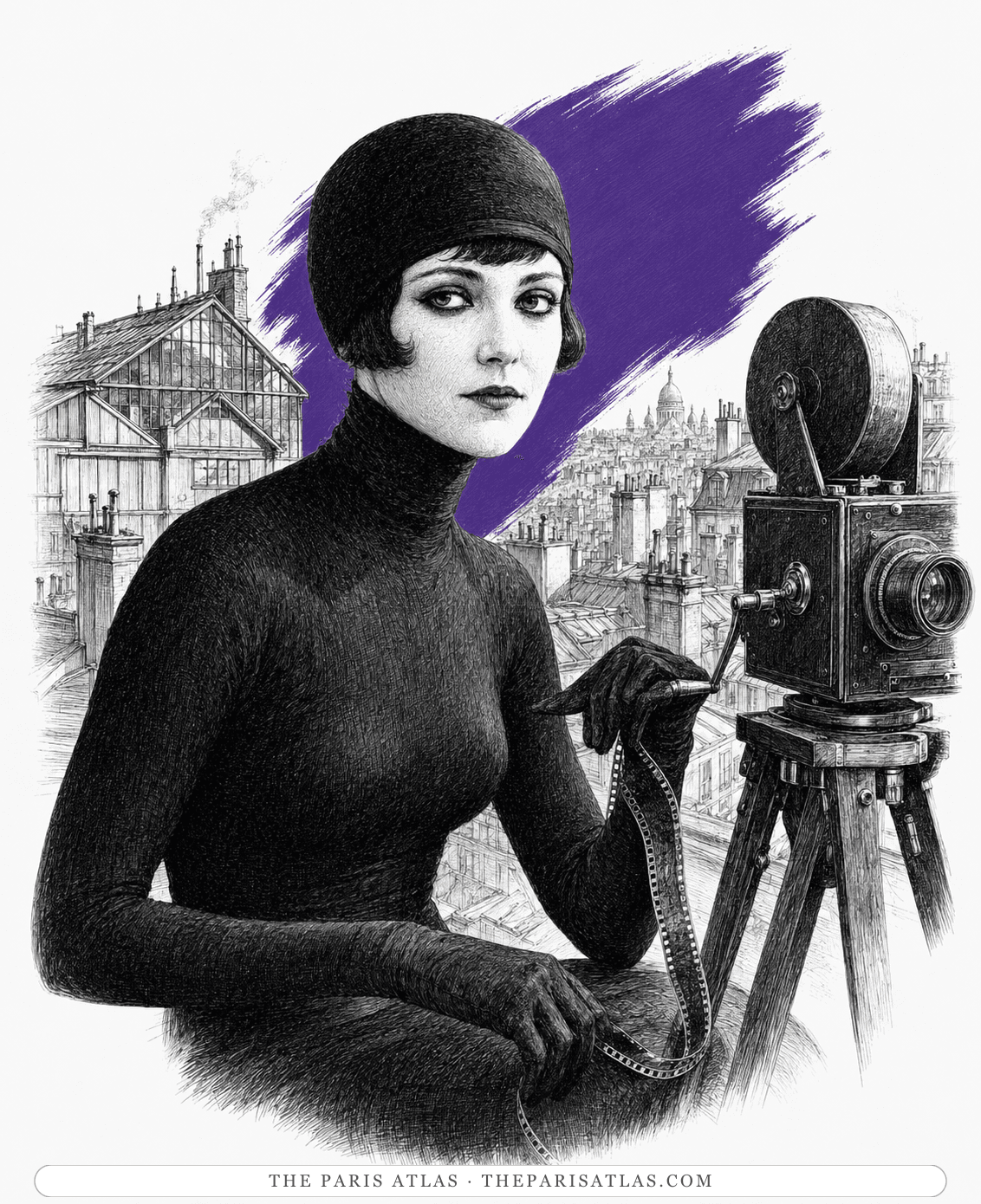
Cabaret singer, hypnotist's accomplice, cat burglar: Irma Vep enters in episode three and takes the serial over. Her name is an anagram of 'vampire' — a private joke hidden in plain sight.
In the black silk maillot, Musidora became one of silent cinema's permanent silhouettes. She did her own stunts, without a double, and that physical confidence is central to Irma's authority: she climbs, crawls, fights, and escapes with an ease that makes the male criminals around her look temporary. The era had a word for the dangerous, independent woman — the vamp — and Irma exceeds it. She is competent, funny, theatrical, violent, and capable of switching sides while remaining entirely herself.
The police condemned the serial for glamorizing crime and temporarily banned episodes; the bans were lifted, the story goes, after Musidora appealed in person. Irma Vep dies in the last episode, shot by the hero's new bride.
No one has ever quite believed it.
Paris as a character
In most crime films the city is a backdrop. Here it is the mechanism of the plot. Paris's density makes anonymity possible; its social divisions can be crossed by changing clothes; its theaters supply costumes and false identities, its grand houses supply victims, its rooftops supply escape routes. And Feuillade's Paris is both specific and strangely empty — real streets, suddenly occupied by a handful of figures, as if the rest of the population had vanished. The serial alternates between the texture of real places and the sealed logic of a dream.[1]
The teenagers who would grow up to found Surrealism — André Breton and Louis Aragon among them — took that alternation as a revelation: the marvelous did not need to be built. It only needed to be photographed.[2]
“C'est dans Les Vampires qu'il faudra chercher la réalité de ce siècle.”
It is in Les Vampires, Breton wrote, that one must look for the reality of this century. The movement's whole taste for the uncanny ordinary — the hotel corridor, the newspaper headline, the woman on the rooftop — is Feuillade's bequest.[3]
From the surrealists to Irma Vep
The serial's most direct modern afterlife is Olivier Assayas's Irma Vep (1996), in which Maggie Cheung plays a version of herself, hired for a doomed Paris remake of Les Vampires; as the production collapses she starts moving through the city in Irma's black suit, the image escaping the film meant to contain it. Assayas came back to the idea in 2022 as an eight-part series for HBO, with Alicia Vikander in the suit. Both versions circle the same conclusion: you cannot remake Les Vampires, because Irma Vep is no longer a character anyone owns.[4]
The silhouette itself went into the common stock of images long ago — Louise Brooks, Catwoman, the whole language of the masked woman in black. Gaumont restored the serial in 4K in 2014, and it still plays: slower than a modern thriller, stranger than most of them, and carrying its century more lightly than the films that tried to improve on it.
This is the door through which cinema enters the story of the Paris avant-garde — not as an art movement's experiment, but as the popular myth the experiments fed on.[5]
Timeline
1913–14
Feuillade directs Gaumont's five-part Fantômas — the register of the master criminal in ordinary Paris, rehearsed.
1914
Pathé announces Les Mystères de New York, the French release of an American serial; Gaumont assigns Feuillade a rival.
13 Nov 1915
La Tête coupée opens in Paris. Nine episodes follow over eight months of wartime.
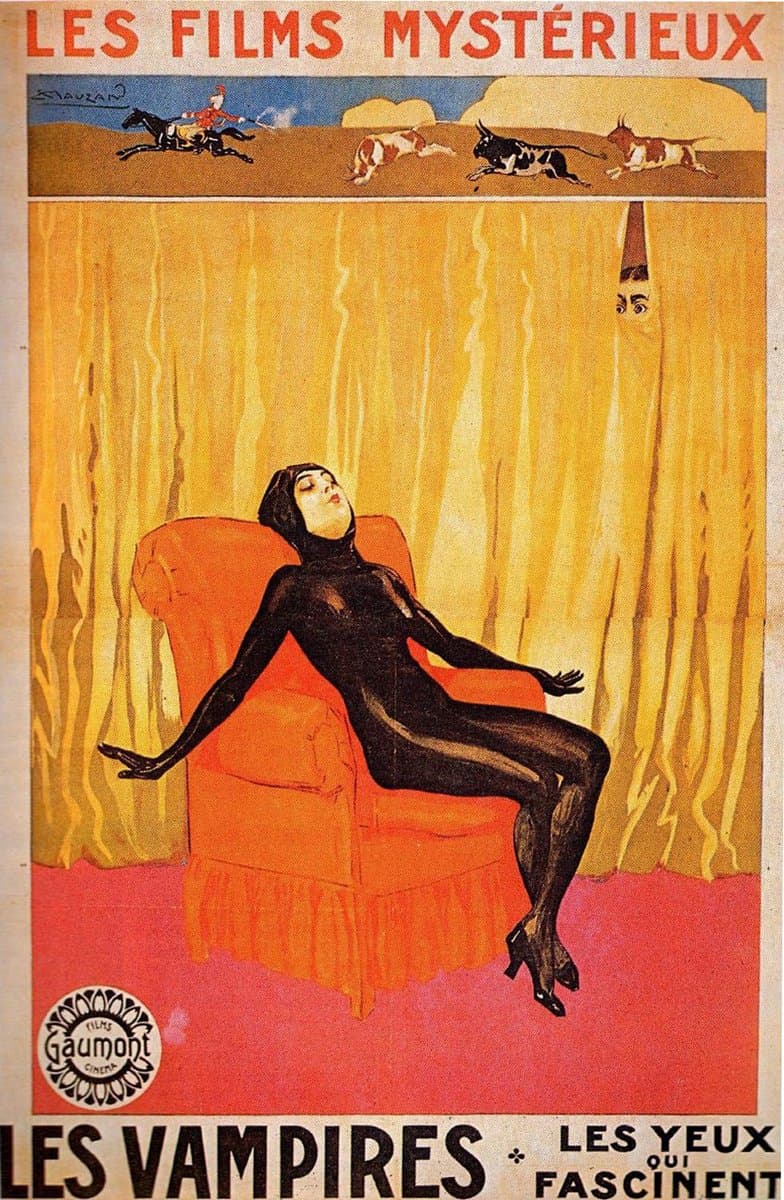
Achille Mauzan's poster for Les Yeux qui fascinent, the sixth episode of Les Vampires — Musidora's Irma Vep at full scale, the serial's publicity already knowing who its real star was. Dec 1915
Irma Vep enters in the third episode, Le Cryptogramme rouge — and takes the serial over.
Musidora in the black silk maillot of Irma Vep, c. 1915 — the publicity image that fixed one of silent cinema's indelible silhouettes. 1916
The police temporarily ban episodes for glamorizing crime; the bans are lifted, by most accounts after Musidora appeals in person.
Irma Vep at the Chat-Huant cabaret in Le Maître de la foudre, 1916 — the singer on stage in plain sight, which is exactly where the serial likes to hide its criminals. June 1916
Les Noces sanglantes closes the serial. Irma Vep is shot dead; nobody believes it.
1925
Feuillade dies at Nice, mid-career, at fifty-two.
1929
Breton and Aragon's Le Trésor des jésuites appears in the Surrealism-in-1929 issue of Variétés — the movement canonizes the serial it grew up on.
1996
Olivier Assayas's Irma Vep: Maggie Cheung in the black suit, in a film about the impossibility of remaking this one.
2014
Gaumont restores the serial in 4K from the nitrate sources, with CNC support.
2022
Assayas expands Irma Vep into an eight-part HBO series with Alicia Vikander.
Frequently asked questions
What is Les Vampires?
A ten-episode French crime serial directed by Louis Feuillade in 1915–16, about a criminal secret society — the Vampires — loose in wartime Paris.
Is it a film about actual vampires?
No. The “Vampires” are a criminal gang, not supernatural creatures; the title is simply their name.
Who is Irma Vep?
The gang's black-clad lieutenant, played by Musidora in a role the century never got over. “Irma Vep” is an anagram of “vampire.”
When and how was it made?
Shot fast in 1915–16 for Gaumont, in real Paris streets emptied by the war, which gives it a documentary look.
Why did the Surrealists admire it?
It looks like documentary and moves like a dream; its dislocations and the figure of Irma Vep made it something close to scripture for them.
What is its legacy?
Musidora's Irma Vep became a lasting icon, echoing through later cinema — including Olivier Assayas's film Irma Vep.
Related videos
Irma Vep — official teaser (HBO, 2022)
In the atlas
If you like Louis Feuillade
Explore directors from the same movements and circles.
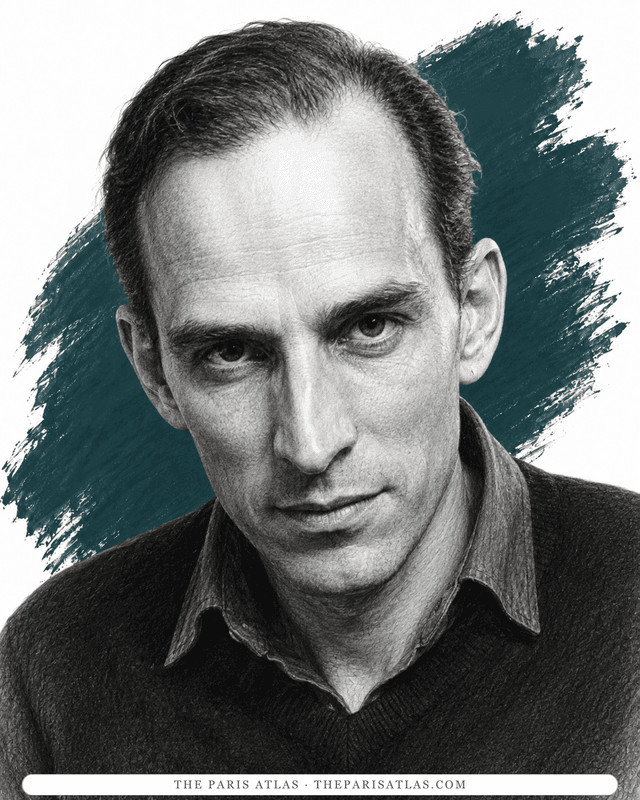
Ingmar Bergman
Swedish director of The Seventh Seal, Persona and Fanny and Alexander, whose sixty films put questions of faith, death and marriage on screen. James Baldwin profiled him in Nobody Knows My Name.
View artist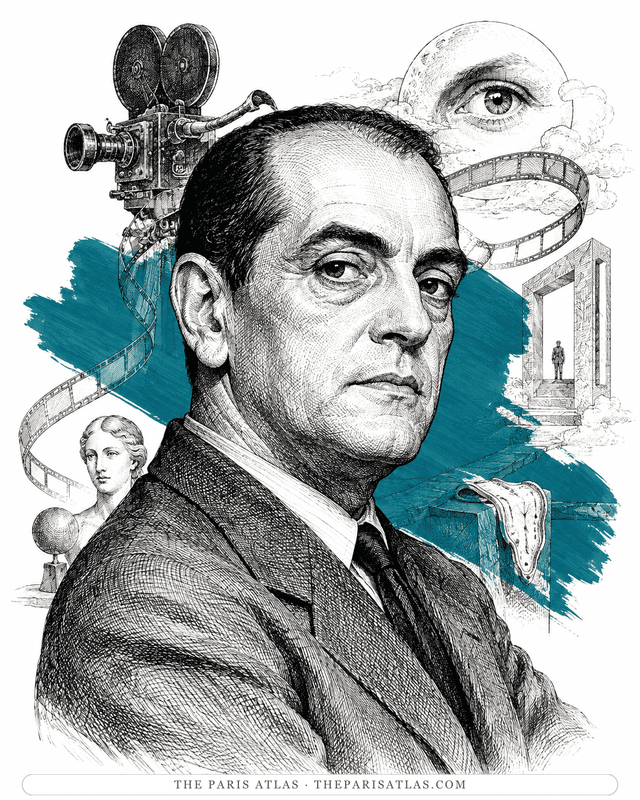
Luis Buñuel
Surrealism's filmmaker — Un Chien Andalou opened with a razor across an eye and L'Âge d'Or ended in a riot, and he kept the scandal honest across fifty years of cinema.
View artist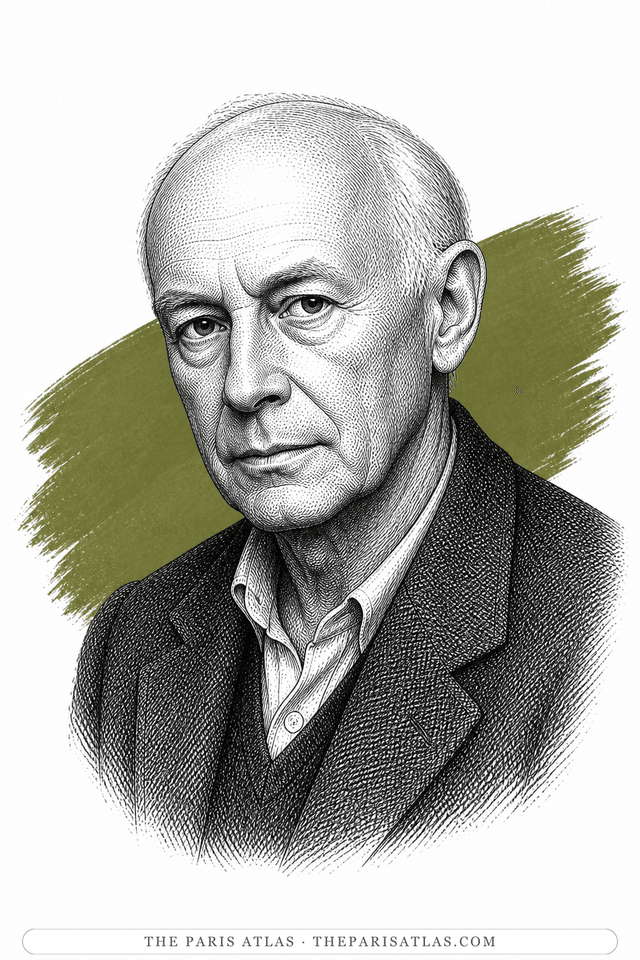
Henri Cartier-Bresson
French photographer who turned a pocket-sized 35mm camera into an instrument of split-second composition — the idea the world knows as 'the decisive moment'. He trained as a painter, was taken prisoner in 1940 and escaped on his third try, photographed the Liberation of Paris in August 1944, co-founded the photographer-owned agency Magnum Photos in 1947, gave up reporting for drawing in the 1970s, and left Paris a foundation in the Marais that deliberately hangs no permanent display of his own pictures.
View artist
In images
References
References
The sources below include collection records, catalogues, scholarly research, and primary materials that informed this page. They document Les Vampires, its making, and its place in cultural history.


1↑Encyclopaedia Britannica — Les Vampires
WebsiteUsed forWeb source consulted for documented facts and historical context presented on the Les Vampires page.
2↑La Cinémathèque française (Henri) — Les Vampires, notes on the serial
WebsiteUsed forWeb source consulted for documented facts and historical context presented on the Les Vampires page.
3↑Centre Pompidou — Les Vampires screening notes (the Breton quotation)
WebsiteUsed forWeb source consulted for documented facts and historical context presented on the Les Vampires page.
4↑Gaumont — 100 Years Since Les Vampires Was Released
WebsiteUsed forWeb source consulted for documented facts and historical context presented on the Les Vampires page.
5↑Encyclopaedia Britannica — Louis Feuillade
WebsiteUsed forWeb source consulted for documented facts and historical context presented on the Les Vampires page.
i
Why these sources are here
These references provide the documented foundation for this work's history and interpretation. Claim-level citations remain attached to the specific claims they support.
 Explore more resources