Vampire
by Edvard Munch
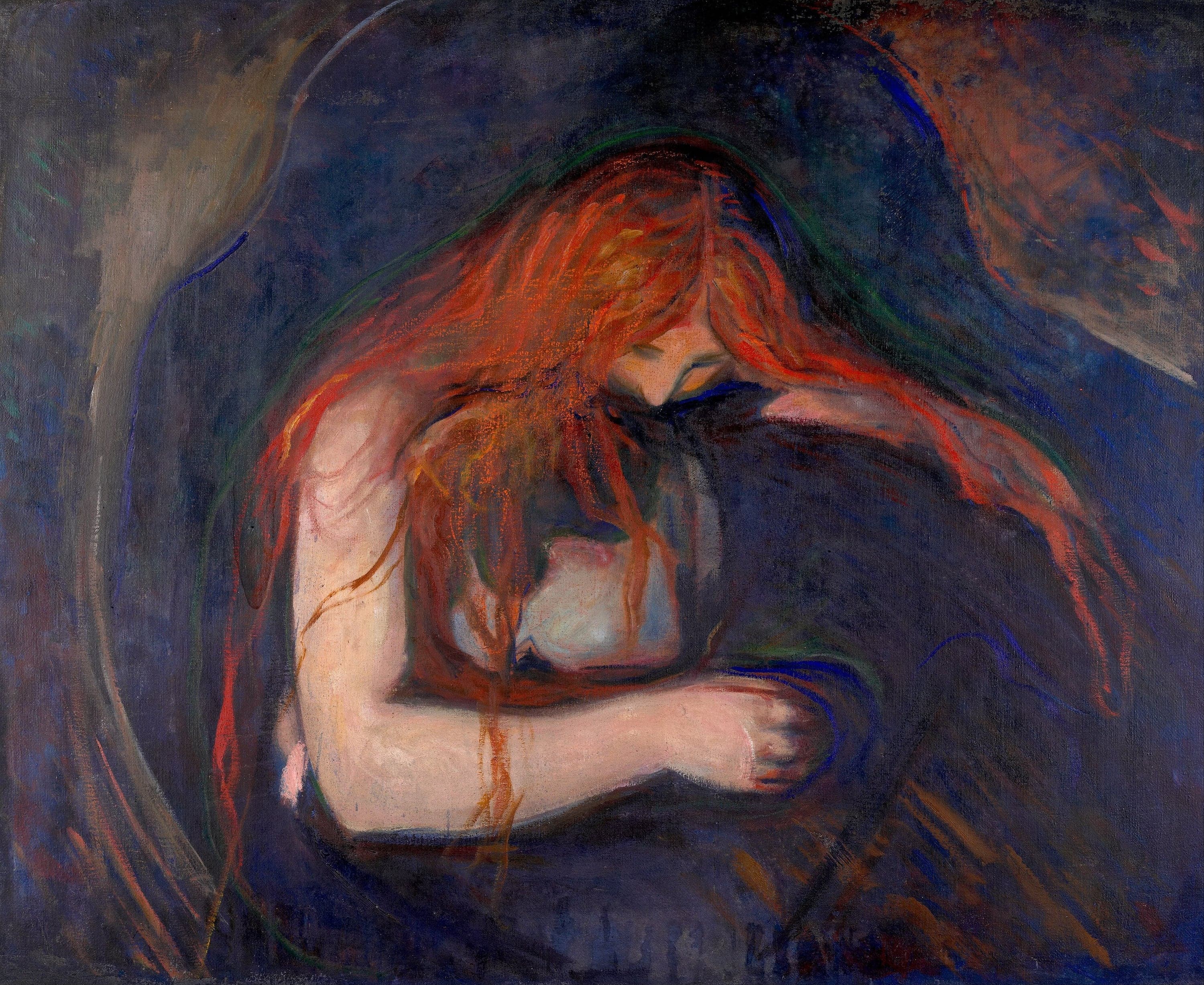
A woman with long red hair bends over a man whose face is hidden against her shoulder, her hair spilling across his neck and back. Edvard Munch called the painting Love and Pain. The name it is known by came from someone else, and it stuck. The Munch Museum in Oslo holds this version as M0679.
- 1895
- Oil on canvas
About Edvard Munch
What the painting shows
Two figures are locked together against a dark ground. The man is bent forward with his head down and his face buried at the woman's shoulder, so nothing of his expression is visible. The woman leans over him, her head lowered to the back of his neck.
Her hair does the work. It is a heavy mass of red that falls from her head and spreads over his neck, shoulders and back, covering most of the space between them. Whether she is kissing his neck, comforting him or feeding on him is left entirely open by the picture, which is why the two titles both fit.
It measures 91 by 109 centimetres, wider than it is tall.
Love and Pain, then Vampire
Munch's own title was Love and Pain. The name Vampire was attached later by others, and the painting has carried it ever since. The difference is not small: one title describes a couple, the other names a predator and a victim.
The image was read as the second from early on. In Germany in the 1930s the National Socialist authorities included Munch in their campaign against modern art. A woman bent over a man's neck, under the title Vampire, was easy material for that campaign.
Painted again and again
Munch made the composition repeatedly in oil over some three decades, and also as a lithograph and a woodcut. The versions are close, with the same two figures in the same embrace, and the differences are mostly in the handling of the hair and the ground.
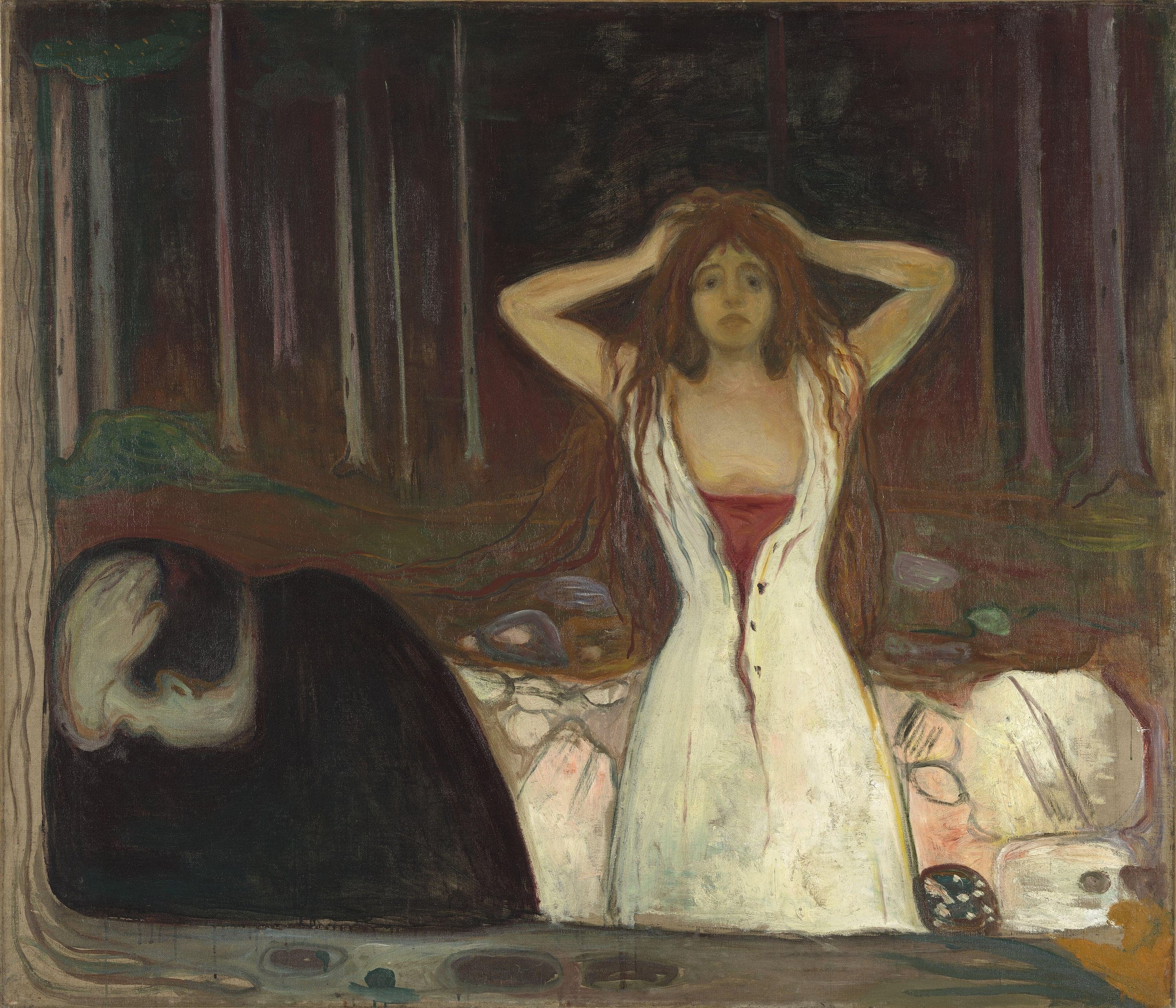
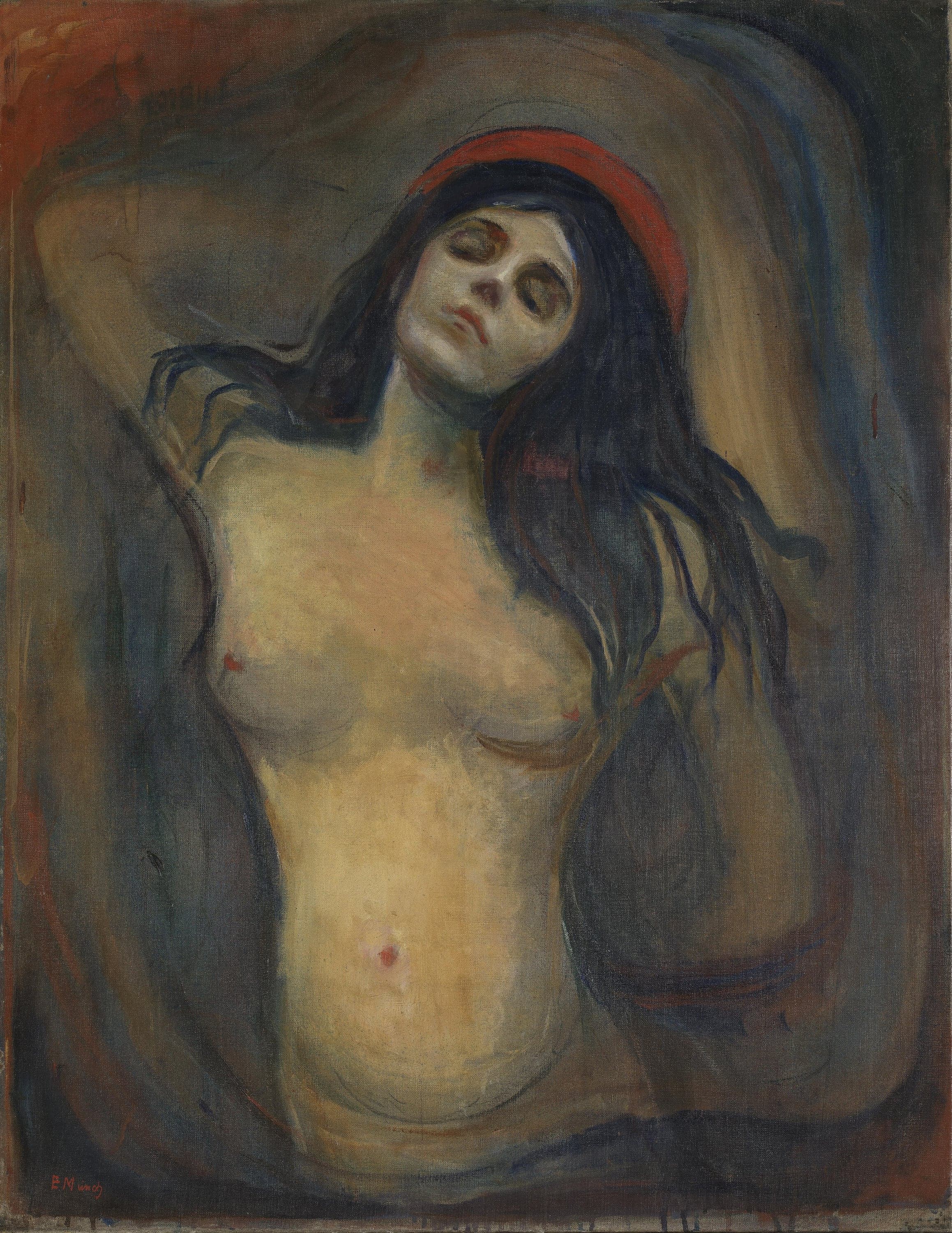
Like Madonna and Ashes, the subject belongs to the Frieze of Life, the group of paintings about love, anxiety and death that Munch exhibited together and rearranged over decades.
Close reading
Reading the work, detail by detail
Two figures are locked into one shape against a dark blue ground. Close views show how little of either face is given, and how much of the canvas is taken up by hair.
1.The hair begins as a dense stippled cap
At the crown the hair is thick, stippled orange over dark red, with a patch of yellow near the parting. From there it falls in broad wings to either side. A green line follows its upper contour against the blue ground.
2.A nose and a closed mouth, and no eye
The hair parts just enough for a pale wedge of cheek, a nose and a closed mouth. No eye is shown. The face is turned down towards the man's neck, and only a narrow strip of it is left uncovered.
3.His head has no features at all
His head is bent forward under hers and painted as dark blue-black with nothing drawn on it. Where his hair meets hers there is a black notch. Whether her mouth reaches his neck cannot be settled from the paint.
4.The hair carries on past both heads
On this side the mass thins into separate strands that run out into the dark ground, each one an unbroken stroke of red. They travel further to the right than the two heads together are wide.
5.A bare arm closes the shape along the bottom
The arm comes out from under the hair, bends at the elbow and crosses the whole lower half of the picture, enclosing the man. It is the largest area of flesh on the canvas. Thin red strands of hair run down over it.
6.The hand stops flat against the dark
The arm ends in a hand laid flat, its fingers not separated from one another. A bright blue line is drawn round the hand's outer edge and back along the forearm. That blue is the strongest contour anywhere in the picture.
Timeline
1893
Paints a first version of the composition, under the title Love and Pain.
1895
Paints this version, now in the Munch Museum as M0679. Makes the subject as a print in the same period.
1930s
Munch's work, this motif included, is caught up in the National Socialist campaign against modern art in Germany.
Where to see it
Munchmuseet, Oslo
A public viewing address has not yet been confirmed for this holding.
Frequently asked questions
Where is Munch's Vampire?
This 1895 version is at the Munch Museum in Oslo, accession number M0679. Munch painted the composition many times over about three decades, so other versions are elsewhere, including in private collections.
What did Munch call Vampire?
Love and Pain. The title Vampire was applied later by others and became the name the painting is known by. The two titles describe the same image very differently — one a couple, the other a predator and a victim.
What is happening in Vampire?
A woman with long red hair bends over a man whose face is hidden against her shoulder, her hair spreading across his neck and back. The painting does not settle whether she is kissing him, comforting him, or biting him.
How big is Vampire?
91 by 109 centimetres, oil on canvas — wider than it is tall, roughly three feet by three and a half.
How many versions of Vampire did Munch make?
Several in oil across about thirty years, plus a lithograph and a woodcut. The figures and the embrace stay the same; what changes is mostly the handling of the hair and the background.
More by Edvard Munch
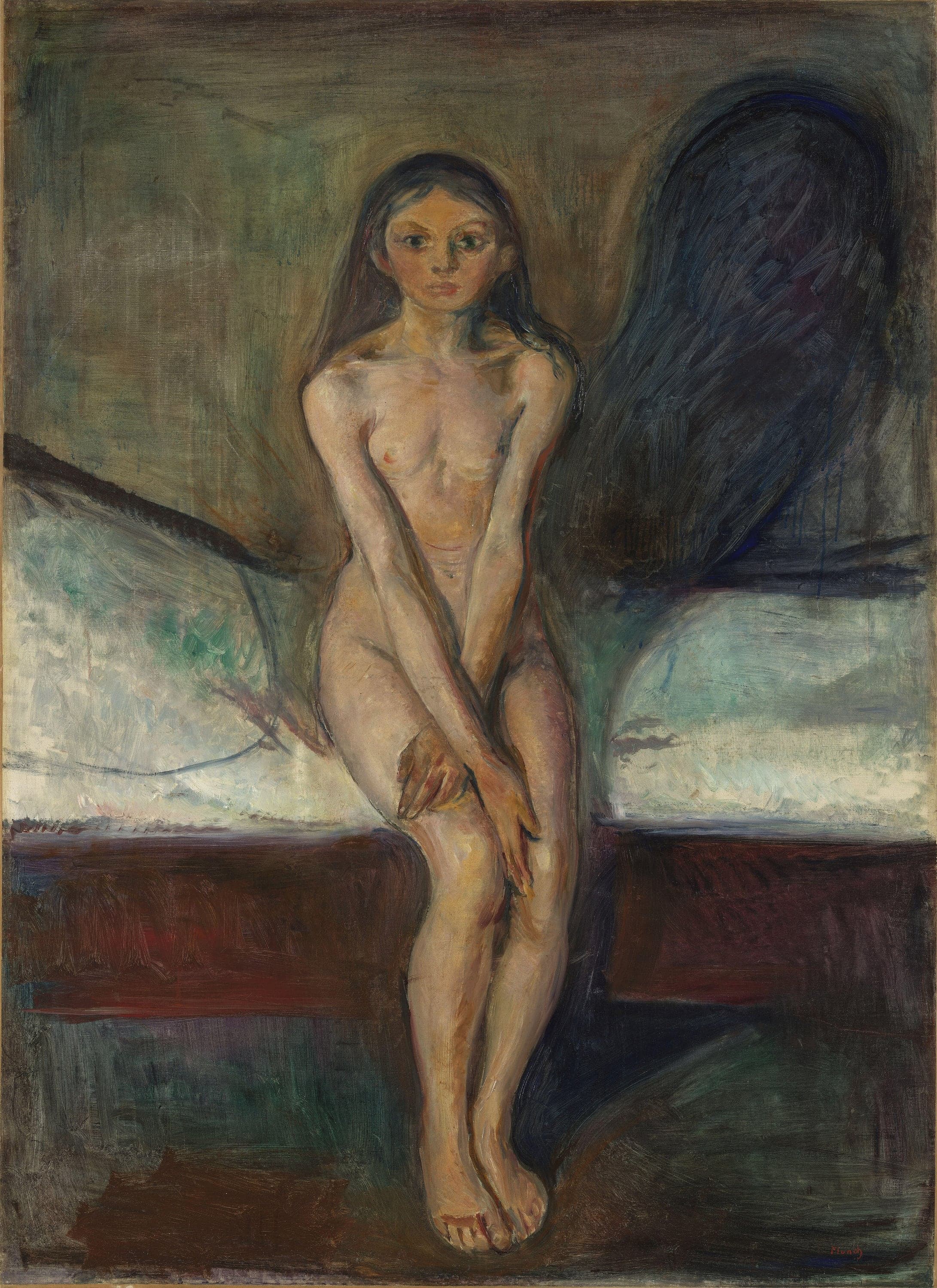
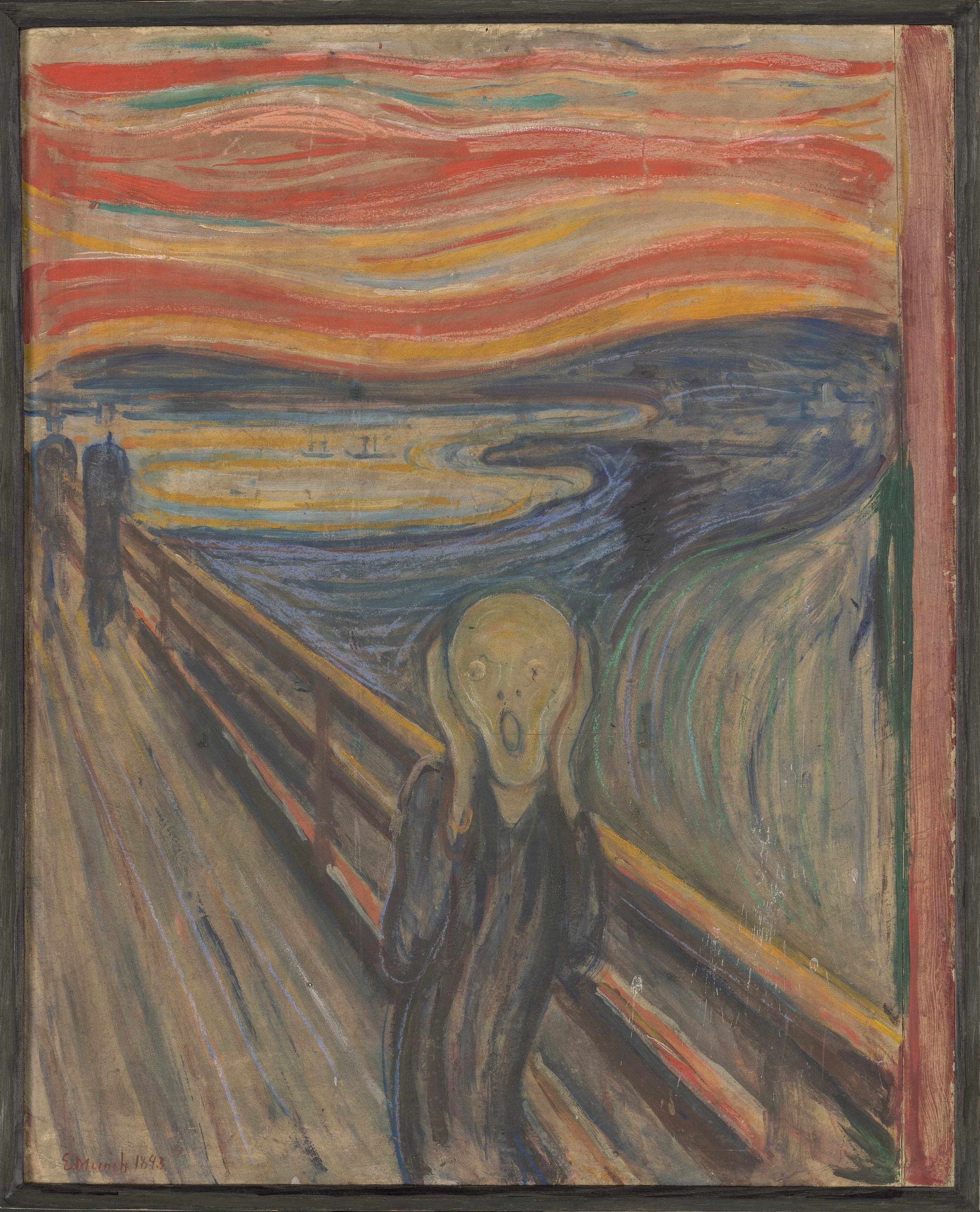
If you like Edvard Munch
Explore painters from the same movements and circles.
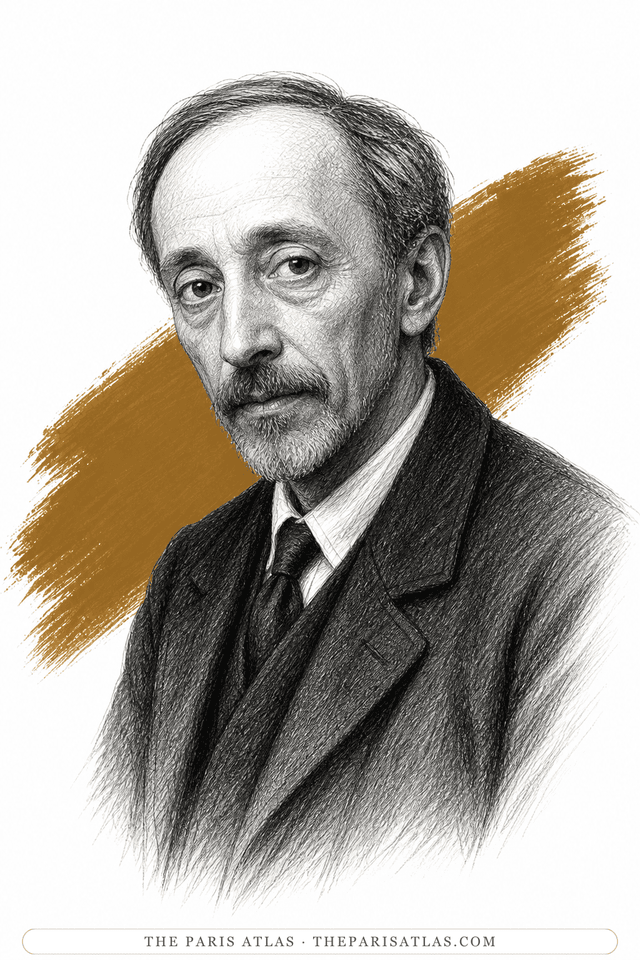
Pierre Bonnard
French painter, printmaker and illustrator whose intimate rooms, Paris streets, gardens and bathing figures transformed everyday life into complex fields of color, memory and perception.
View artist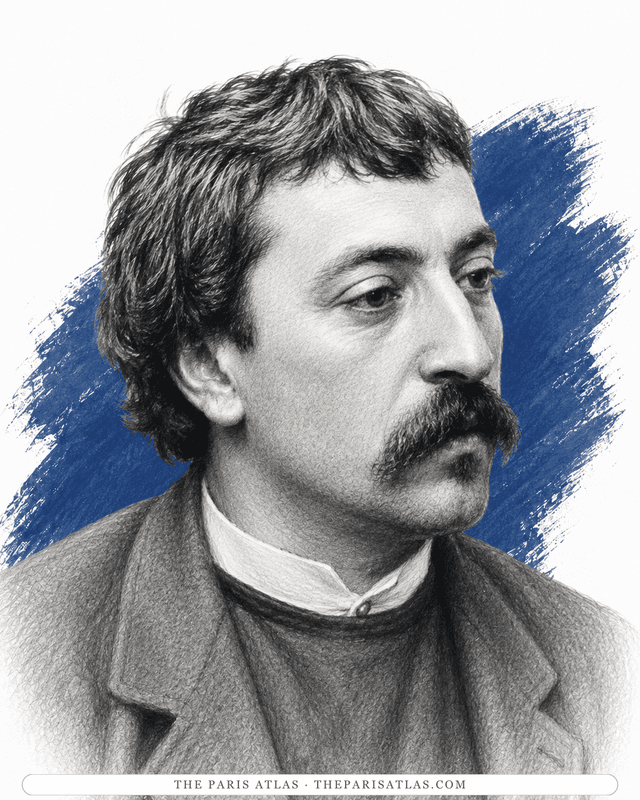
Paul Gauguin
Stockbroker turned painter who came into art through Camille Pissarro, showed with the Impressionists, and left Europe for Polynesia.
View artist
Gustave Moreau
Painter of jewelled myths — Salome, Oedipus, floating severed heads — who lived nearly his whole life in one Paris house, taught Henri Matisse and Georges Rouault at the Beaux-Arts, and turned the house into a museum before he died so the state would have to keep everything.
View artist
References
The sources below include collection records, catalogues, scholarly research, and primary materials that informed this page. They document Vampire, its making, and its place in cultural history.


1Vampire, Edvard Munch, 1895 (M0679)
Official recordMunchmuseet, OsloUsed forOfficial record used to verify names, dates, institutional details, or other factual information on this page.

2The collection
WebsiteMUNCH, OsloUsed forWeb source consulted for documented facts and historical context presented on the Vampire page.
3Edvard Munch in the collection
WebsiteNasjonalmuseet, OsloUsed forWeb source consulted for documented facts and historical context presented on the Vampire page.
4Edvard Munch: Behind the Scream
BiographyYale University Press, 2005Used forBiographical evidence used to verify chronology, relationships, and historical context connected to Vampire.
These references provide the documented foundation for this work's history and interpretation. Claim-level citations remain attached to the specific claims they support.
 Explore more resources