The Paris AtlasCharting the artists, works, and places worth returning to.
  • Painter
  • Educator
· French · 1826–1898

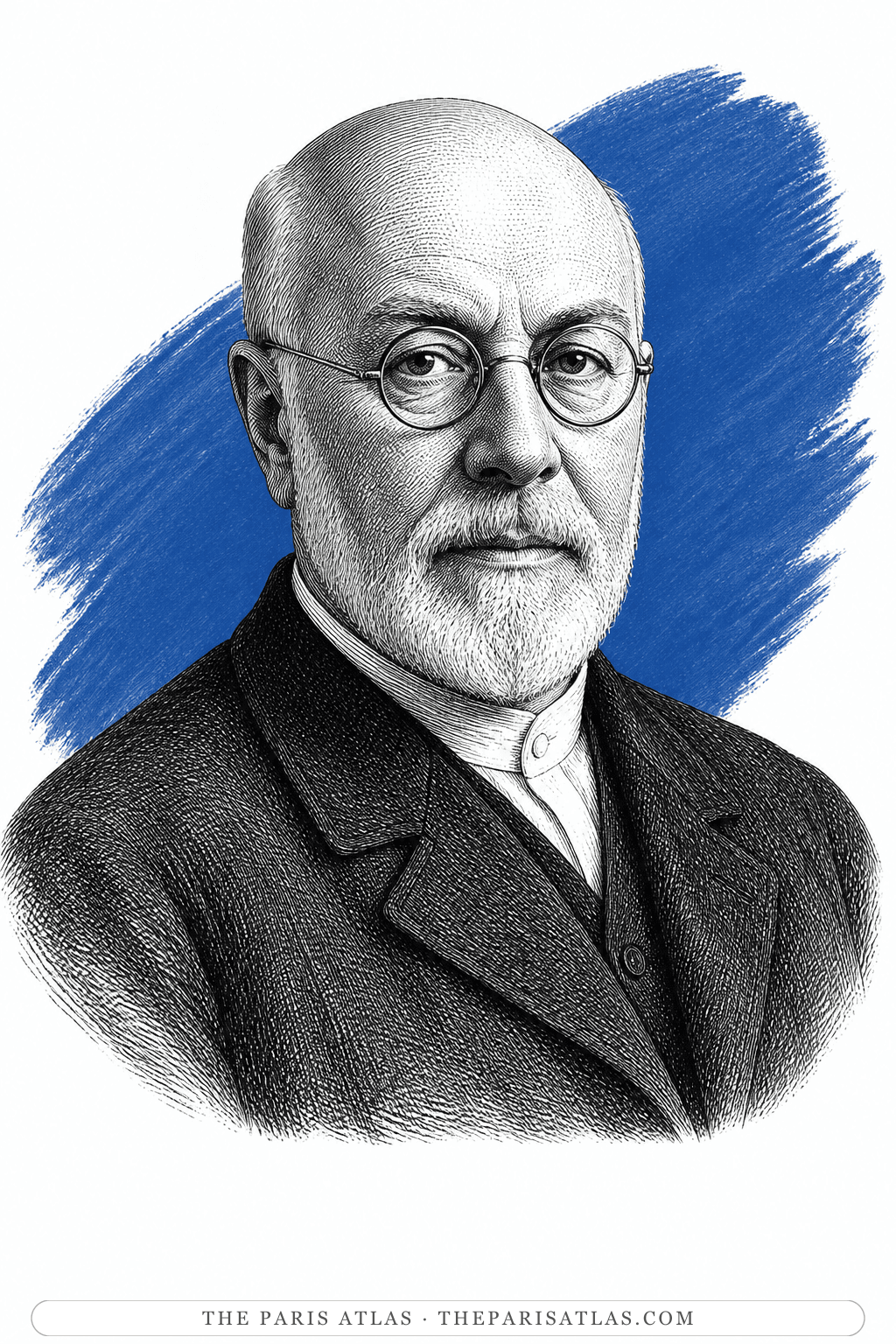
Gustave Moreau

Painter of jewelled myths — Salome, Oedipus, floating severed heads — who lived nearly his whole life in one Paris house, taught Henri Matisse and Georges Rouault at the Beaux-Arts, and turned the house into a museum before he died so the state would have to keep everything.

In images

Details

Lived
1826–1898
Born
1826
Birthplace
Paris
Died
1898
Place of death
Paris
Nationality
French
Roles
PainterEducator

About Gustave Moreau

Gustave Moreau painted mythology as treasure — Salome dancing in a wall of jewels, the severed head of John the Baptist floating in its own light — and became the painter the Symbolists claimed as a father. He was born in Paris in 1826, died there in 1898, and in between rarely left the house at 14 rue de La Rochefoucauld in the 9th arrondissement that he shared with his parents and rebuilt, at the end, into his own museum.

The second career was the surprise. Appointed professor at the École des Beaux-Arts in 1892, the reclusive Symbolist proved the rarest kind of academic teacher — one who pushed students toward themselves rather than toward him. Henri Matisse and Georges Rouault came out of his studio, and Matisse repeated his advice for decades. The house-museum opened in 1903 with Rouault as its first curator, and still holds some fourteen thousand works arranged much as Moreau left them.

One house, one obsession

Moreau was born on 6 April 1826 in Paris, the son of an architect and a musician. He trained at the École des Beaux-Arts under François-Édouard Picot, twice failed to win the Prix de Rome — the state scholarship that sent young artists to study in Italy — and educated himself instead: two years in Italy from 1857 to 1859, copying Carpaccio, Michelangelo and the Byzantine mosaics — the glittering surfaces that never left his work. Back in Paris he moved into 14 rue de La Rochefoucauld and, apart from travel, never really moved again.

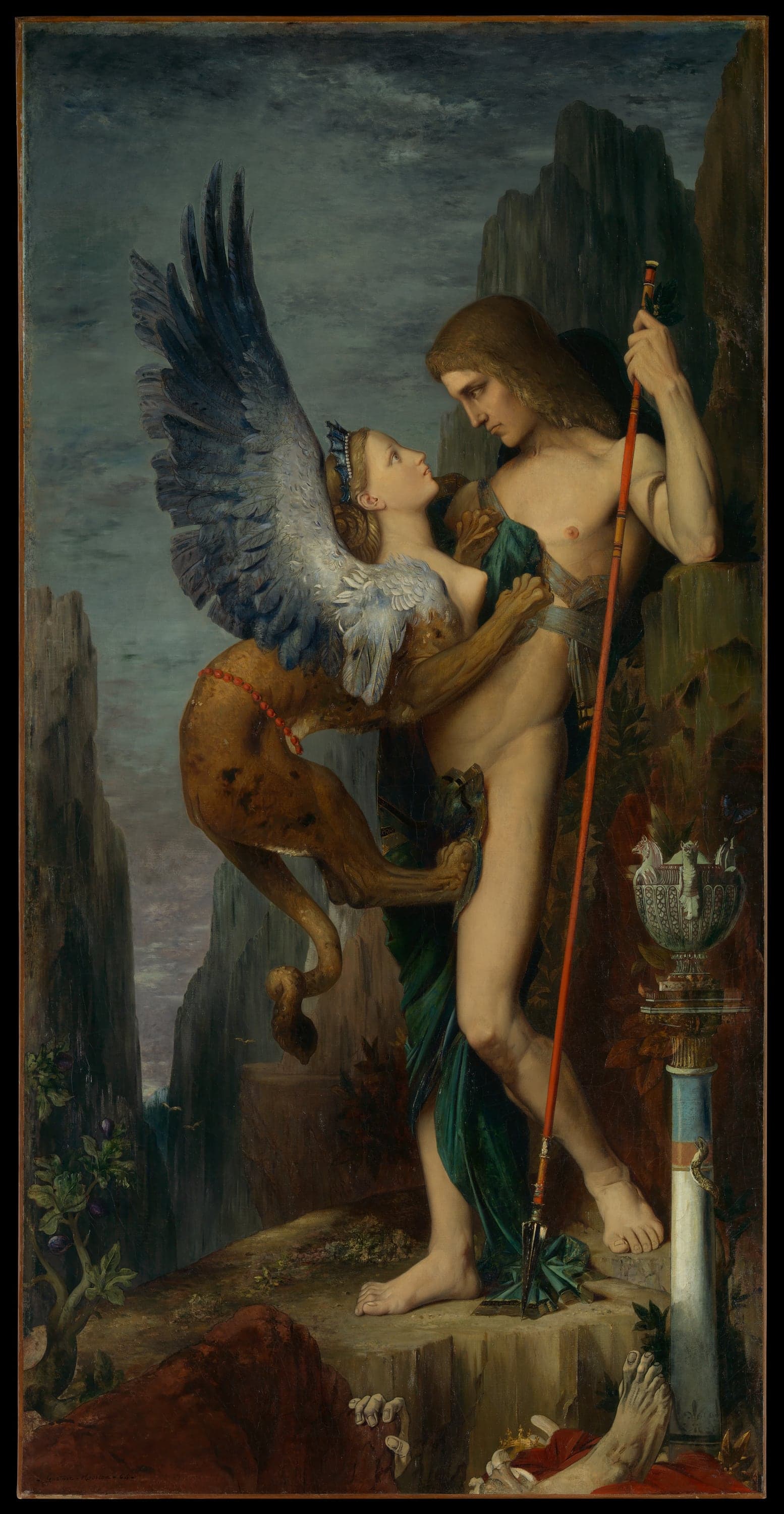
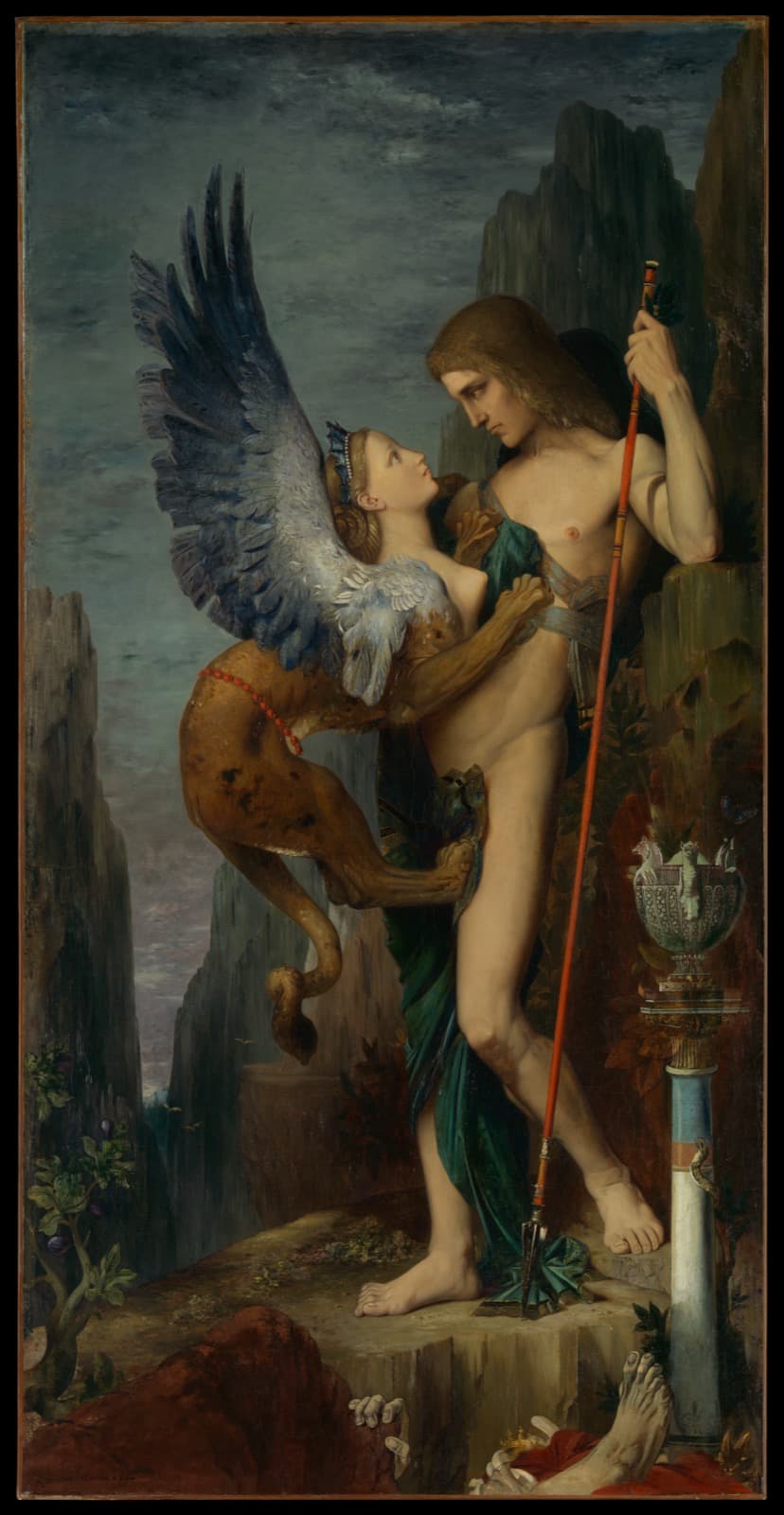
Oedipus and the Sphinx, the 1864 Salon success. Now in the Metropolitan Museum. (Gustave Moreau (Metropolitan Museum of Art), via Wikimedia Commons · CC0)

Oedipus and the Sphinx made his name at the 1864 Salon, Paris's official annual exhibition: the winged monster clinging to the hero's chest, both locked at the eyes. He showed rarely and sold reluctantly, lived with his mother until her death in 1884, and kept his one long attachment — Alexandrine Dureux, whom he called his 'best and only friend' — in an apartment nearby rather than in the house. The privacy was near total and deliberate.

Salome, and the writers

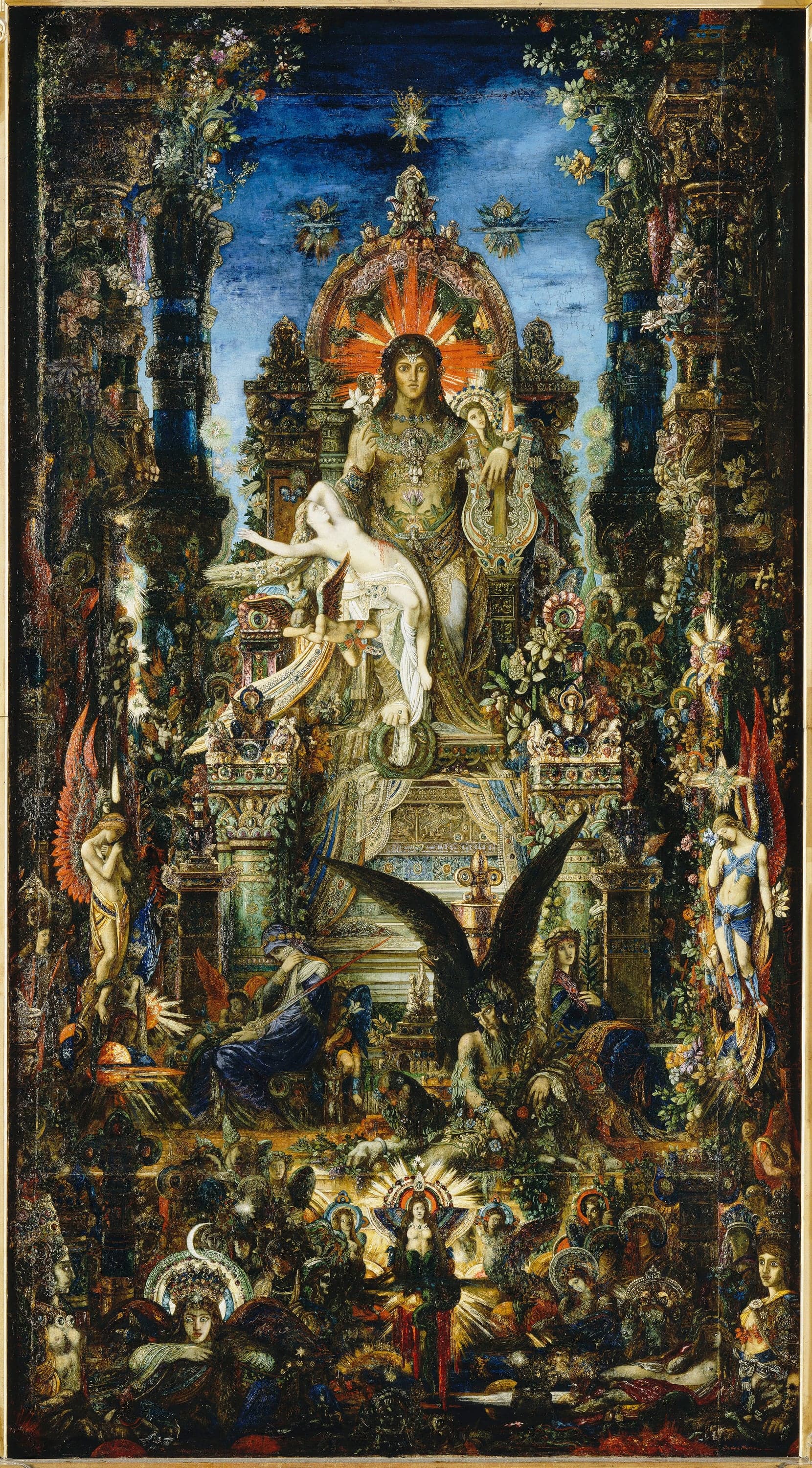
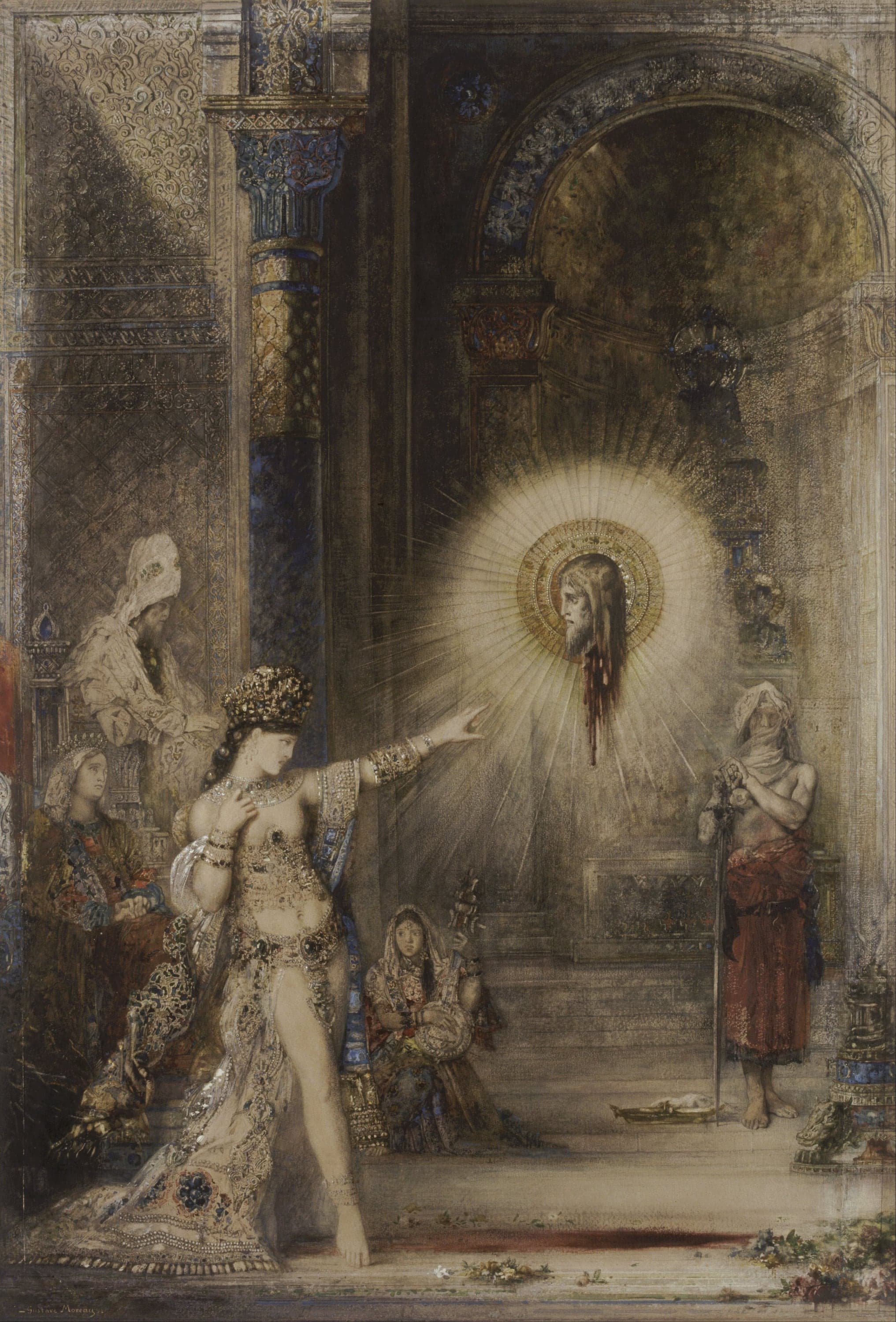
At the 1876 Salon he showed Salome Dancing Before Herod and the watercolour The Apparition: Salome mid-dance, pointing at the severed head of John the Baptist suspended in a blaze of light that only she sees. The pictures made him famous, and literature made him mythical — in Joris-Karl Huysmans's 1884 novel À rebours, the decadent hero des Esseintes owns both Salomes and reads them as the era's sacred objects, and Moreau became the painter of the Symbolist generation without ever joining anything.

The Apparition, c. 1876 — the floating head only Salome sees. Huysmans's À rebours built an altar to it in prose. (Gustave Moreau (Musée d'Orsay), via Wikimedia Commons · Public domain)

The teacher of the Fauves

In 1892, at sixty-six, Moreau accepted a professorship at the École des Beaux-Arts, and the hermetic Symbolist turned out to be the school's great liberal. He sent students to the Louvre to copy, and into the street to look; he criticized without imposing, and told them the more elementary their means, the more their sensibility would show. From his studio came Georges Rouault, Albert Marquet and Henri Matisse — half of the painters who would scandalize Paris in 1905 as the Fauves, the 'wild beasts' of violent colour, trained by a painter of jewelled severed heads who asked only that they become themselves.

Diagnosed with stomach cancer, Moreau spent his last years converting the family house into a museum — rebuilding whole floors as galleries, hanging thousands of works, drawings in swinging cabinet panels he designed himself — and left it to the French state in his will. He died on 18 April 1898; the Musée Gustave Moreau opened at 14 rue de La Rochefoucauld in 1903 with Rouault as its first curator. André Breton later called it the place he loved most in Paris, and the museum, some fourteen thousand works dense on its walls, remains arranged much as its subject left it.

Life events

  1. 1826

    Born in Paris on 6 April, to an architect and a musician.

    Gustave Moreau — Wikipedia

  2. 1857

    Two years in Italy copying Carpaccio, Michelangelo and the mosaics — the education the Prix de Rome refused him twice.

    Gustave Moreau — Wikipedia

  3. 1864

    Oedipus and the Sphinx makes his name at the Salon.

    Oedipus and the Sphinx, 1864 (Metropolitan Museum of Art) — the Salon success that made Moreau's name at thirty-eight. (Gustave Moreau (Metropolitan Museum of Art), via Wikimedia Commons)

    Gustave Moreau — Wikipedia

  4. 1876

    Salome Dancing Before Herod and The Apparition at the Salon — the floating head that made him the Symbolists' painter.

    The Apparition, c. 1876 (Musée d'Orsay) — Salome points at the floating head of John the Baptist. The watercolour made Moreau famous, and Huysmans's novel À rebours made it a Symbolist icon. (Gustave Moreau (Musée d'Orsay), via Wikimedia Commons)

    Gustave Moreau — Wikipedia

  5. 1884

    Huysmans's novel À rebours makes Moreau's Salome paintings cult objects; his fame now grows faster than the few works he actually shows.

    Gustave Moreau — Wikipedia

  6. 1892

    Appointed professor at the École des Beaux-Arts; Matisse, Rouault and Marquet pass through his studio.

    Gustave Moreau — Wikipedia

  7. 1898

    Dies of stomach cancer in Paris on 18 April, having rebuilt his house at 14 rue de La Rochefoucauld as a museum and willed it, full, to the state.

    Gustave Moreau — Wikipedia

  8. 1903

    The Musée Gustave Moreau opens, with his student Georges Rouault as first curator.

    Musée Gustave Moreau — official site

People they knew

Documented connections — every one carries its source.

Henri Matisse

  • Painter

Met · 1892

Teacher and student: Matisse trained in Moreau's studio at the Ecole des Beaux-Arts through the 1890s, beside Rouault and Marquet, and repeated Moreau's advice for decades - the studio that produced half the Fauve room of 1905.

Gustave Moreau — Wikipedia

Questions about Gustave Moreau

Who was Gustave Moreau?

A French painter, born in Paris in 1826, whose jewelled mythological pictures — above all the Salomes of 1876 — made him the presiding painter of Symbolism, and whose teaching studio at the École des Beaux-Arts from 1892 trained Henri Matisse and Georges Rouault. He spent nearly his whole life in one house in the 9th arrondissement and turned it into his own museum before dying in 1898.

What is the Musée Gustave Moreau?

Moreau's actual house and studio at 14 rue de La Rochefoucauld, which he rebuilt in his last years as a museum for his own work and left to the French state, complete — around fourteen thousand paintings, watercolours and drawings, many in the swinging display panels he designed. It opened in 1903 with his student Georges Rouault as first curator and is still arranged much as he left it. André Breton called it the place he loved most in Paris.

Was Gustave Moreau Matisse's teacher?

Yes. Henri Matisse entered Moreau's studio at the École des Beaux-Arts in the 1890s, alongside Georges Rouault and Albert Marquet. Moreau was famously unlike his own art as a teacher — he pushed students toward their own sensibilities, sent them to copy in the Louvre and look in the street, and told them that the more elementary their means, the more of themselves would show. Half the Fauves — the 'wild beasts' whose violent colour scandalized Paris in 1905 — had passed through his studio.

What is Moreau's most famous painting?

The Apparition (c. 1876) — Salome pointing at the severed, haloed head of John the Baptist floating mid-air — with its companion Salome Dancing Before Herod. Both were shown at the 1876 Salon, and Joris-Karl Huysmans's novel À rebours fixed them at the centre of the Decadent imagination. Oedipus and the Sphinx (1864, Metropolitan Museum) made his name earlier.

Was Moreau a Symbolist?

The Symbolists thought so — the writers of the 1880s adopted him as their painter, and art history files him as Symbolism's forerunner in paint. Moreau himself joined nothing, signed no manifestos and showed less and less; the affiliation was conferred on him by admirers, most influentially by Huysmans in À rebours. He preferred his own formula: he believed, he said, only in what he did not see and solely in what he felt.

Sourced claims

Every connection the graph holds for Gustave, with the evidence behind it.

Met · 1892

Henri Matisse

Teacher and student: Matisse trained in Moreau's studio at the Ecole des Beaux-Arts through the 1890s, beside Rouault and Marquet, and repeated Moreau's advice for decades - the studio that produced half the Fauve room of 1905.

Gustave Moreau — Wikipedia

References

References

The sources below include biographies, scholarly essays, interviews, and primary materials that informed this page. They reflect both the historical record and ongoing critical conversations about Gustave Moreau and his work.

  1. 1Gustave Moreau — Wikipedia

    Wikipedia
    View source
  1. 2Musée Gustave Moreau — official site

    Musée Gustave Moreau, Paris
    View source
i
Why these sources are here

These references anchor the page in the documented record and in the scholarly conversations around Gustave Moreau. Every claim on this page traces back to one or more of the works listed here.

Explore more resources