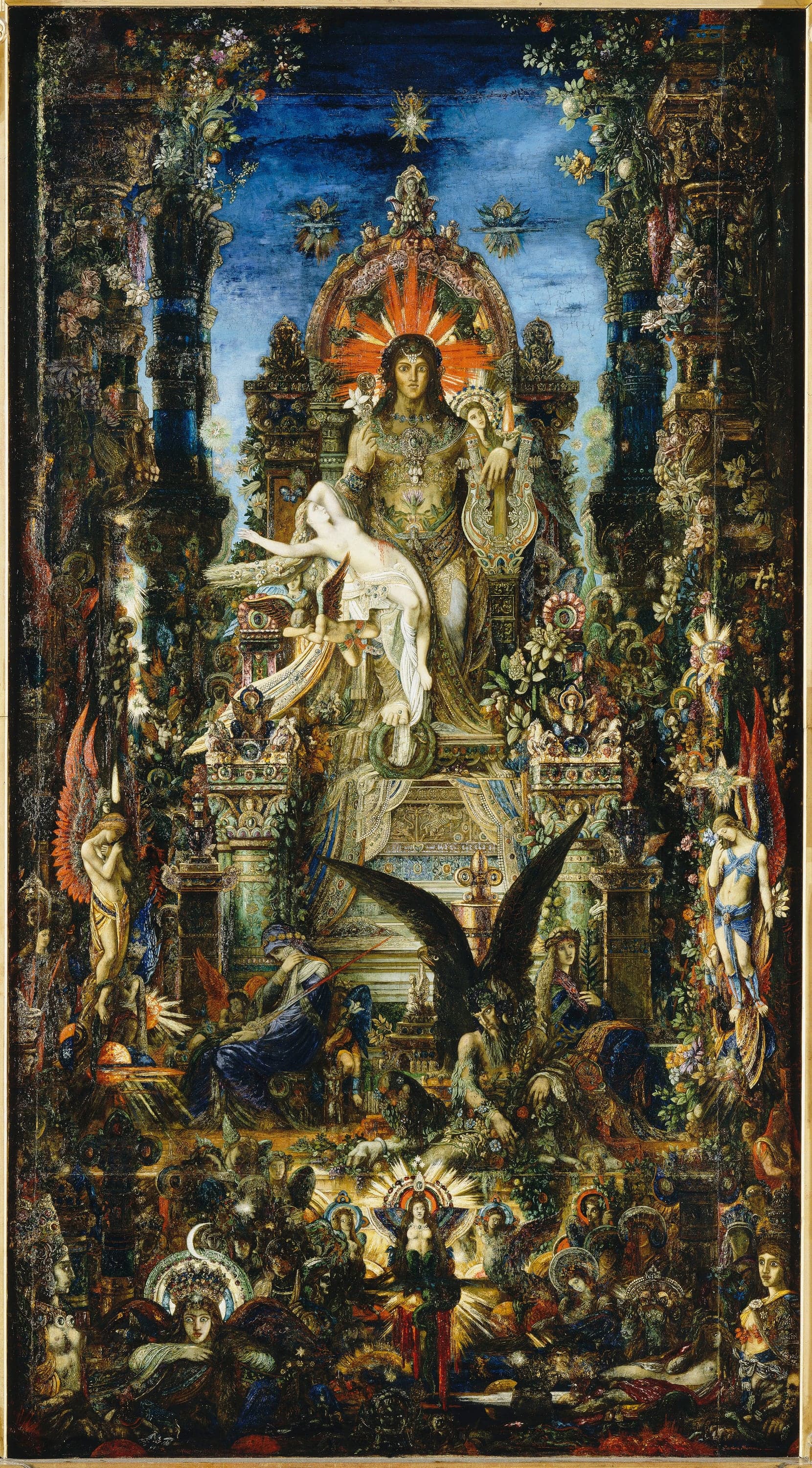
Jupiter and Semele
Jupiter sits enthroned in a wall of ornament, beardless and wide-eyed, with the mortal Semele dying across his thigh. Gustave Moreau began the picture in 1889 for Leopold Goldschmidt, who commissioned it, and delivered it in 1895. The museum he made of his own house calls it his pictorial testament. Goldschmidt gave it to the Musée Gustave Moreau in 1903, and it hangs in the third-floor studio at 14 rue de La Rochefoucauld.
- 1889–1895
- Oil on canvas
- Musée Gustave MoreauParis, France
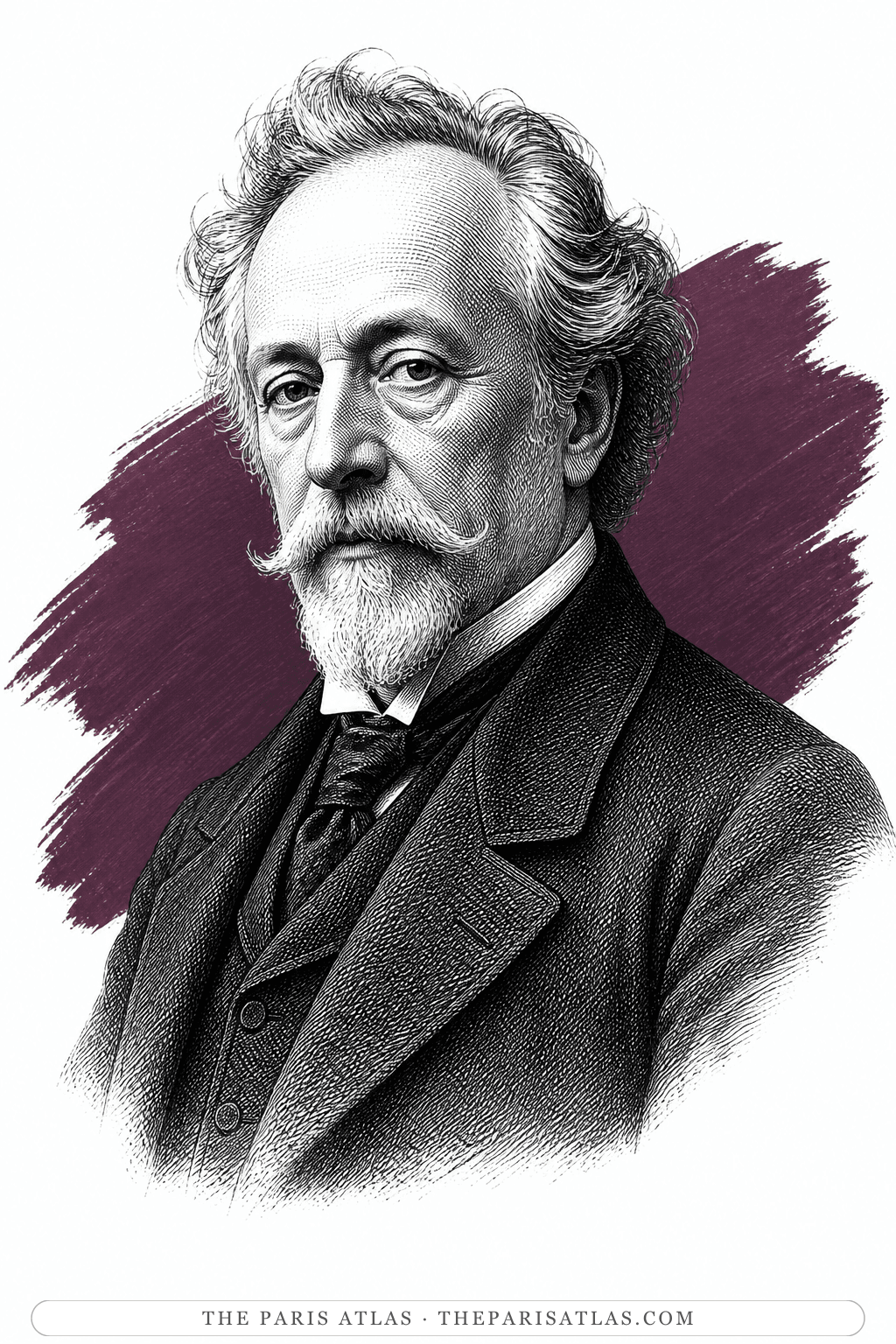
About Gustave Moreau
What the painting shows
Jupiter fills the upper half of the canvas, seated on a throne whose back is a fan of red and orange rays. He is beardless, with dark hair, wide staring eyes and a jewel on his forehead, and he raises a white lily in his right hand. A lyre rests at his left side. Semele lies across his left thigh, pale and naked, her head thrown back and her right arm flung out, with a streak of blood at her side.
Below her, a small winged child hides its face in its hands. Under Jupiter's bare foot a green serpent bites its own tail. A black eagle spreads its wings at the center of the throne steps. To the left sits a veiled figure in blue-violet with a red sword blade across her lap. To the right sit a bearded, shaggy-haired figure and a woman in a wreath who holds a white lily. At the bottom left a woman with enormous eyes wears a crescent moon above her crown, and the lower edge is packed with haloed heads, wings and a reclining nude.
Everything between the figures is ornament: jeweled columns, garlands, flowers, small winged beings in a deep blue sky, and a star above the throne. The canvas is 212 by 118 centimeters, about seven feet by four, and the Musée Gustave Moreau catalogues it as number 91.[1] The French state's Joconde database records the same size and dates the work between 1889 and 1895.[2]
What Moreau said the figures mean
The subject comes from the third book of Ovid's Metamorphoses. Semele, daughter of Cadmus and Harmonia, is Jupiter's mortal lover. Juno, his wife, takes the form of Semele's old nurse Beroe and persuades her to demand that Jupiter appear in his full divinity. No mortal can survive the sight, and Semele is struck down by his lightning.[1][3]
Moreau left written commentaries on his pictures, and the museum quotes them. The winged child hiding its eyes is, in his words, "the genius of terrestrial love, the genius with the goat hooves", though it is sometimes read as Bacchus, the child of Jupiter and Semele. The two figures at the base of the throne are Death, holding a bloodied sword, and Sorrow, crowned with thorns and holding a lily. Together, Moreau wrote, they "form the tragic basis of human life".[1]
Beside them the eagle is Jupiter's bird, and the bearded figure is Pan, with small creatures on his thighs trying to free themselves from the world. Pan links the heavens to the underworld of Hecate, goddess of the night, who appears at the bottom with a crescent moon on her head. Near her, Moreau wrote, "is piled the sombre phalanx of the monsters of Erebus". The museum reads the whole picture vertically, as the path a soul takes upward toward the spirit.[1]
Two details break with tradition on purpose. Jupiter is shown without a beard, and he holds a lyre, the instrument of Apollo or Orpheus, which makes him a poet as well as a god.[1]
Commission, delivery and gift
The first sketch is dated 1889, the year Leopold Goldschmidt commissioned the painting. Moreau delivered it in 1895, when he was sixty-nine, and the museum's chronology calls it the masterpiece of his old age.[1][4]
In April of the same year he asked the architect Albert Lafon to turn the family house at 14 rue de La Rochefoucauld into a museum. His will of 10 September 1897 left the house and everything in it to the State. Moreau died on 18 April 1898; the government accepted the bequest in 1902, and the Musée Gustave Moreau opened in 1903.[5][4]
Goldschmidt did not keep the picture. He gave it to the new museum in 1903, so the finished painting now hangs among the studies and unfinished canvases Moreau left behind.[1]
Where it hangs
The Musée Gustave Moreau is the painter's house at 14 rue de La Rochefoucauld in the 9th arrondissement of Paris, near the Trinité and Saint-Georges stations on métro line 12. Jupiter and Semele hangs in the studio on the third floor, the upper of the two north-facing glass-fronted studios Lafon built above the apartment.[1][5][6]
The museum is open every day except Tuesday from 10 a.m. to 6 p.m., with the rooms closing fifteen minutes earlier, and it is closed on 1 January, 1 May and 25 December. The ticket covers the second- and third-floor studios; the museum says the other rooms may open only at times of low attendance. Check the museum's site before a special trip.[7]
Close reading
Reading the work, detail by detail
The picture is built in tiers, from the god at the top to the goddess of night at the bottom. These nine views follow it downward, naming figures only where the Musée Gustave Moreau names them from Moreau's own notes.
1.Jupiter's face
Jupiter looks straight out of the picture, beardless, with a jewel hanging on his forehead and rows of stones at his throat. The red rays behind him belong to the throne, not the sky. The museum notes that the beardless god holding a lyre becomes a poet as much as a ruler. The white lily in his raised right hand answers the one Sorrow holds far below.
2.Semele across his thigh
Semele is the only large pale shape in the canvas. She has already been struck: her head falls back, her right arm reaches out toward nothing, and blood runs from a wound at her side. The small winged child beneath her, hiding its face, is the figure Moreau called the genius of terrestrial love, which the museum says is sometimes read as Bacchus.
3.The serpent under Jupiter's foot
Jupiter's foot rests on a green snake that curls into a circle and holds its tail in its mouth, the old sign known as the ouroboros. The museum's text does not name it, so the reading is left to the viewer. Below the foot the throne step carries carved beasts and a border of pearls and stones, painted touch by touch.
4.The eagle on the throne steps
The eagle is Jupiter's bird, and the museum places it near Death and Sorrow at the base of the throne. Its wings span the width of the steps. Above them a golden vessel stands on the step, and the carved backdrop is full of tiny lions and scrollwork. Pan sits to the right of its wing.
5.Death with the sword
This is Death, the museum says, one of two allegories at the base of the throne. She sits with her head bowed and her hands in her lap, and the sword she holds is painted red along its whole length, a blade that has just been used. The child with orange wings beside her is not named in the museum's text.
6.Pan and Sorrow
The museum identifies the bearded figure as Pan and the woman as Sorrow, crowned with thorns and holding a lily as a symbol of purity. Pan's thighs are covered with small creatures and plants, which Moreau described as beings trying to free themselves from their earthly bonds. Sorrow's crown reads as a leafy wreath in reproduction; the thorns are the museum's identification, not something the eye can confirm.
7.Hecate with the crescent moon
The museum names this figure Hecate, the goddess of night, and places her at the bottom of the painting with the crescent moon on her head. Her eyes are the largest in the picture and look straight out. Around her are the heads and wings of the beings Moreau called the monsters of Erebus, waiting, in his words, for life in the light.
8.A winged figure in rays
Below the throne a second radiant figure repeats Jupiter's halo in miniature. The museum's text does not name her. She stands in her own burst of light with wings spread, between two haloed heads, and a bare foot from the figure above rests at the top of the frame. Flowers are scattered among the heads.
9.The winged youth at the left edge
A winged figure stands on each side of the throne, at the same height as the eagle. This one, on the left, has orange wings and gold drapery and folds his hands at his chest; his counterpart at the right wears blue straps and holds a lily. Neither is named in the museum's text. Both belong to the crowd around the throne that Moreau said becomes aware of a life beyond the earth.
Timeline
1852
The Moreau family acquires the house at 14 rue de La Rochefoucauld, where the painting now hangs.
1889
First sketch, dated 1889. Leopold Goldschmidt commissions the painting.
1895
Delivered to Goldschmidt. In April Moreau asks the architect Albert Lafon to turn the house into a museum, with glass-fronted studios on the second and third floors.
1897
Moreau's will of 10 September leaves the house and its contents to the State and asks his friend Henri Rupp to complete the museum.
1898
Moreau dies in Paris on 18 April.
1902
The State accepts the bequest.
1903
The Musée Gustave Moreau opens. Goldschmidt gives Jupiter and Semele to the museum, where it is catalogued as number 91.
Where to see it
Musée Gustave Moreau
Paris, France
A public viewing address has not yet been confirmed for this holding.
Hangs in the third-floor studio of the Musée Gustave Moreau, 14 rue de La Rochefoucauld, Paris 9e. The museum is open every day except Tuesday, 10 a.m. to 6 p.m.; check its site before a special visit.
Frequently asked questions
Where is Jupiter and Semele?
At the Musée Gustave Moreau, the painter's former house at 14 rue de La Rochefoucauld in the 9th arrondissement of Paris, catalogue number 91. It hangs in the third-floor studio. The museum is open every day except Tuesday, 10 a.m. to 6 p.m., and closed on 1 January, 1 May and 25 December.
What is happening in Jupiter and Semele?
Semele, a mortal, has asked her lover Jupiter to show himself as a god. The sight kills her, and Moreau paints the instant of her death: she lies across his thigh, struck by lightning, while he sits transfigured on his throne. The story is in the third book of Ovid's Metamorphoses, and Juno's trick, disguised as Semele's nurse, sets it in motion.
Who are the figures at the bottom of the painting?
The museum names them from Moreau's own notes. At the base of the throne sit Death, with a bloodied sword, and Sorrow, crowned with thorns and holding a lily. The eagle is Jupiter's bird, the bearded figure is Pan, and the woman with the crescent moon at the bottom is Hecate, goddess of the night. Around her crowd the monsters of Erebus, guarded by two sphinxes that stand for the past and the future.
Why does Jupiter have no beard and hold a lyre?
Both are deliberate breaks with tradition. The museum notes that Moreau paints the god beardless and gives him a lyre, the instrument of Apollo or Orpheus, so that Jupiter becomes a poet-god rather than the bearded ruler of the sky.
Who commissioned Jupiter and Semele?
Leopold Goldschmidt, in 1889. Moreau delivered the finished canvas in 1895, and Goldschmidt gave it to the Musée Gustave Moreau in 1903, the year the museum opened in the painter's house.
How big is Jupiter and Semele?
212 by 118 centimeters, oil on canvas, roughly seven feet high by four feet wide. Most of that surface is ornament, so the picture reads very differently up close than in reproduction.
Is Jupiter and Semele Moreau's last painting?
It is one of the last large pictures he finished. The museum's chronology calls it the masterpiece of his old age, and the museum describes it as his pictorial testament. He went on working until his death in 1898, but mostly on canvases that stayed unfinished in the house.
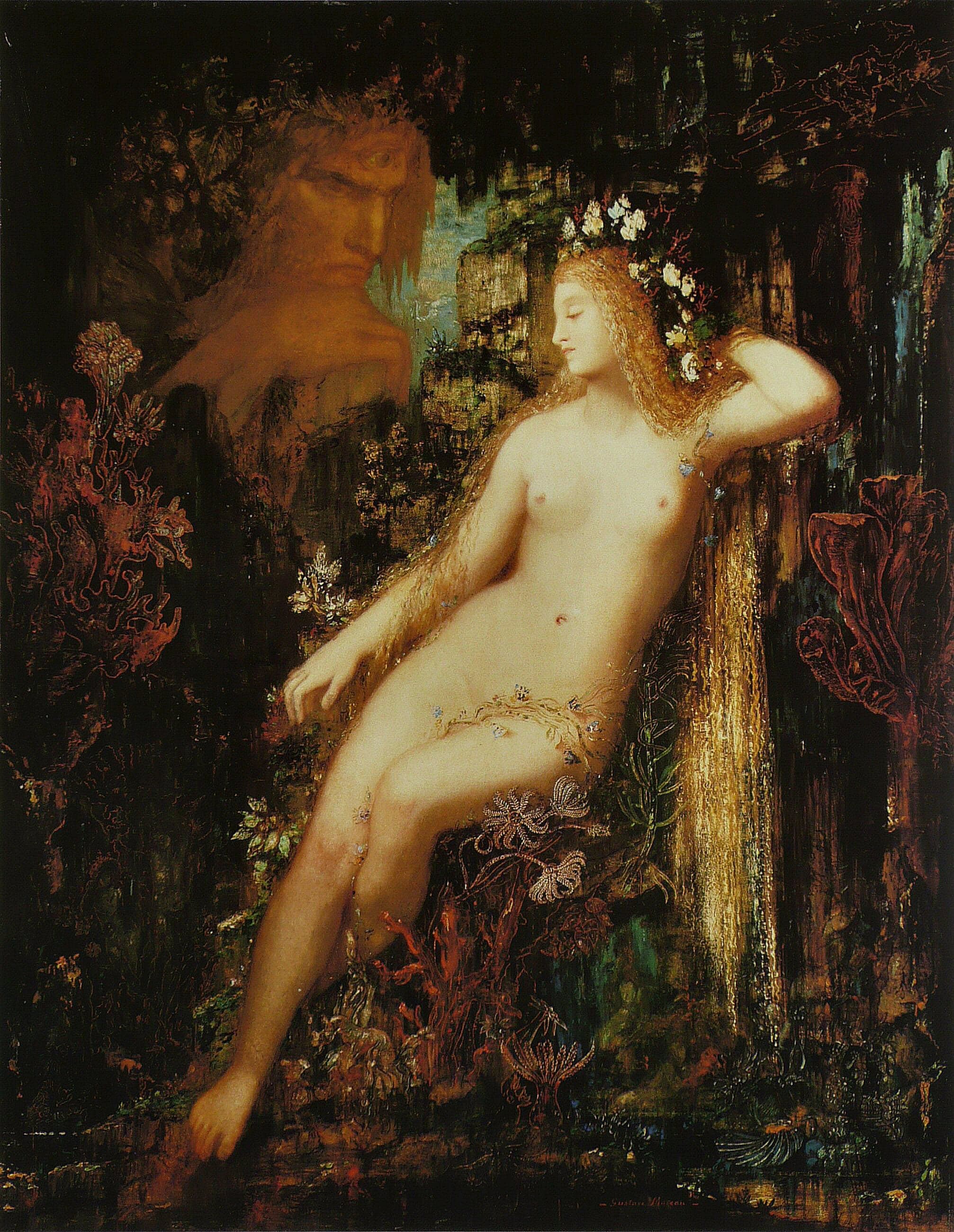
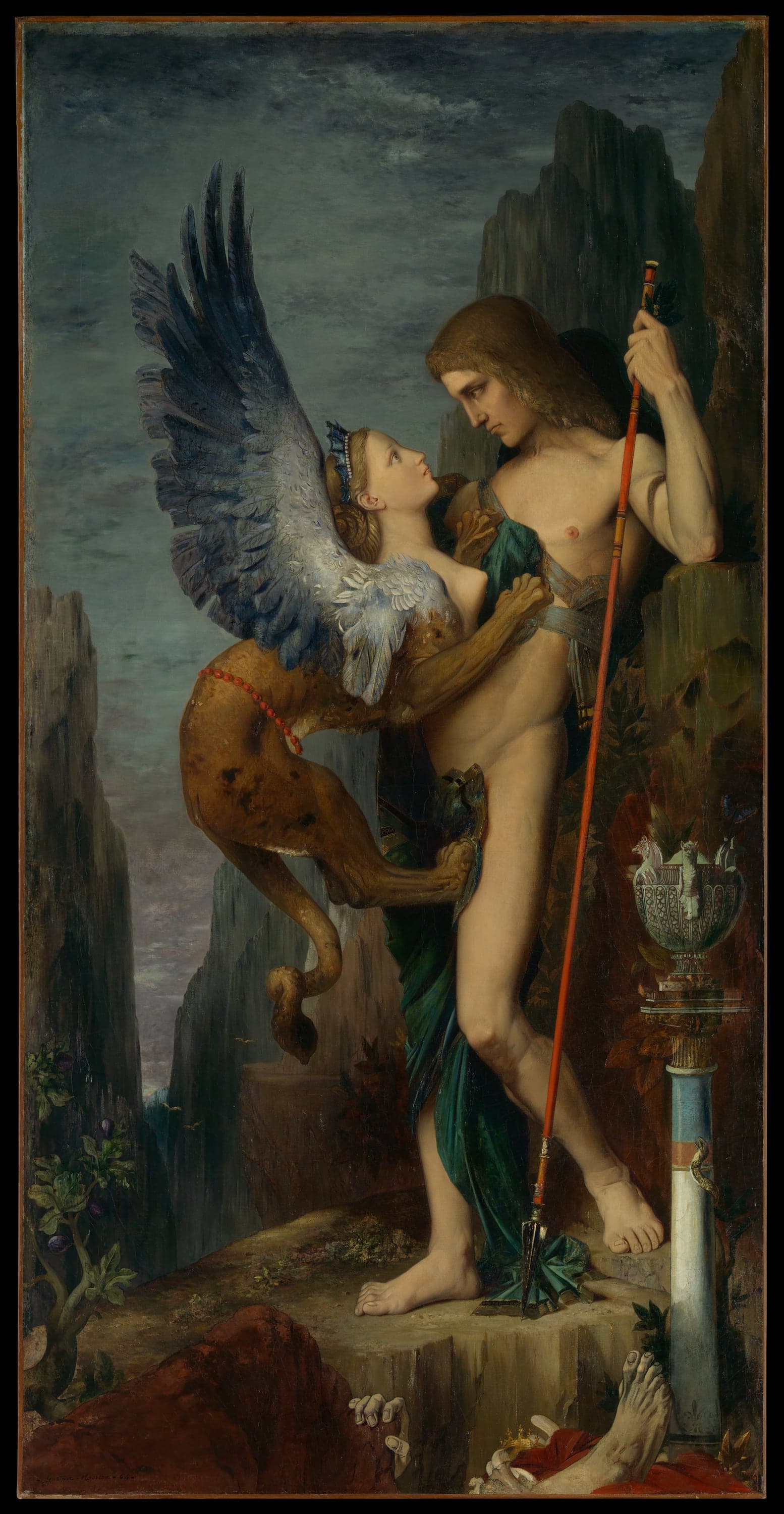
More by Gustave Moreau
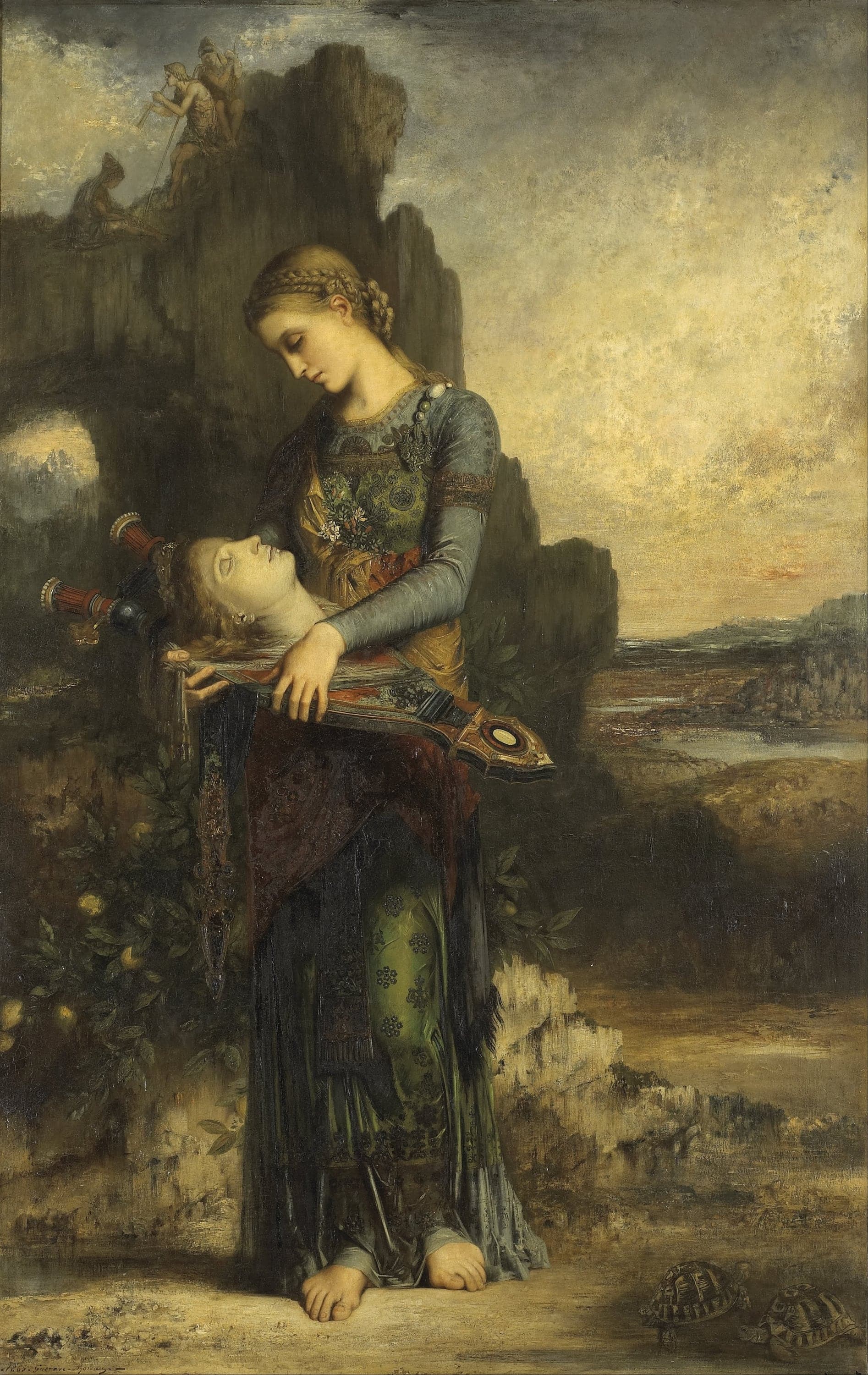
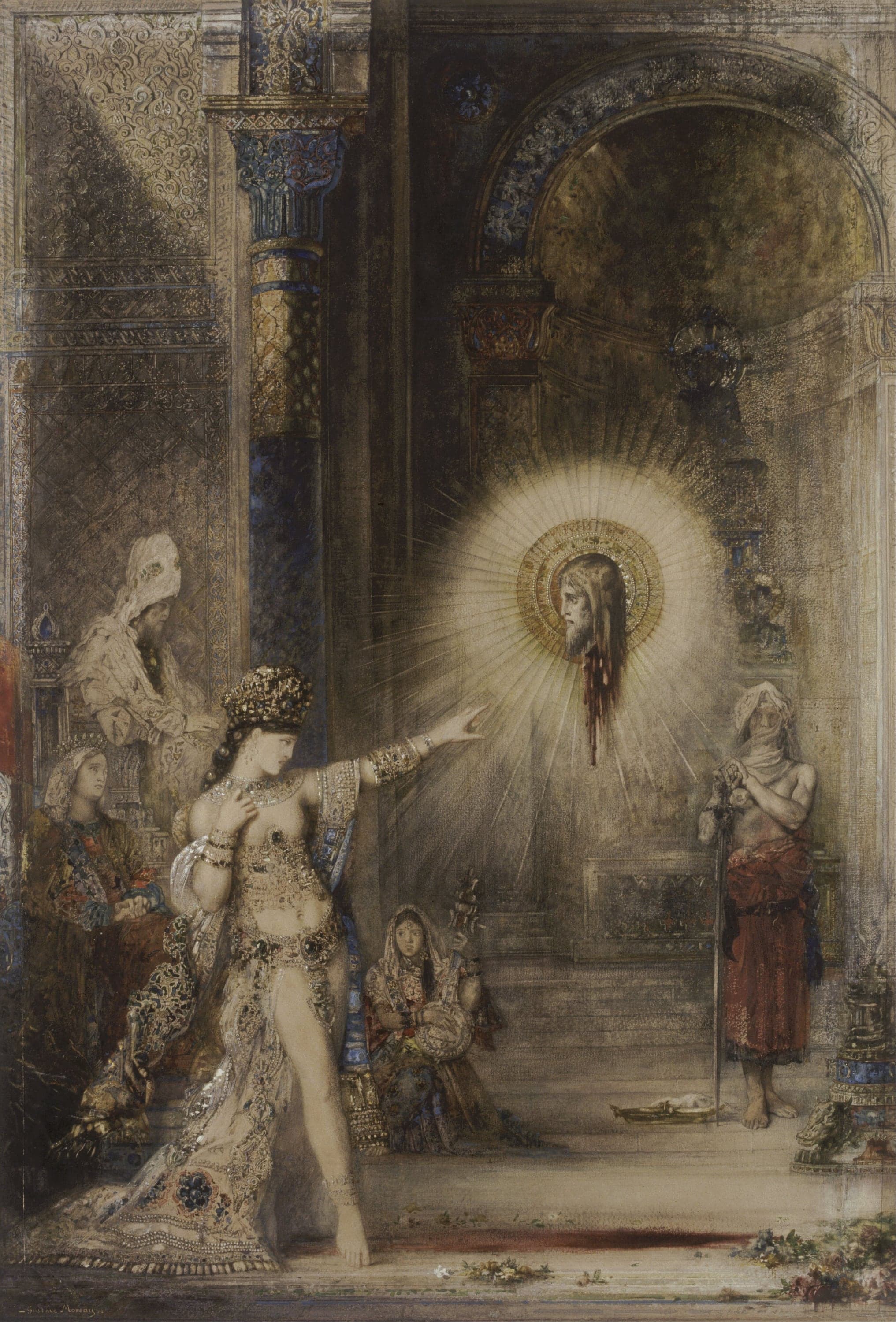
If you like Gustave Moreau
Explore painters from the same movements and circles.
Pierre Bonnard
French painter, printmaker and illustrator whose intimate rooms, Paris streets, gardens and bathing figures transformed everyday life into complex fields of color, memory and perception.
View artist
Paul Gauguin
Stockbroker turned painter who came into art through Camille Pissarro, showed with the Impressionists, and left Europe for Polynesia.
View artist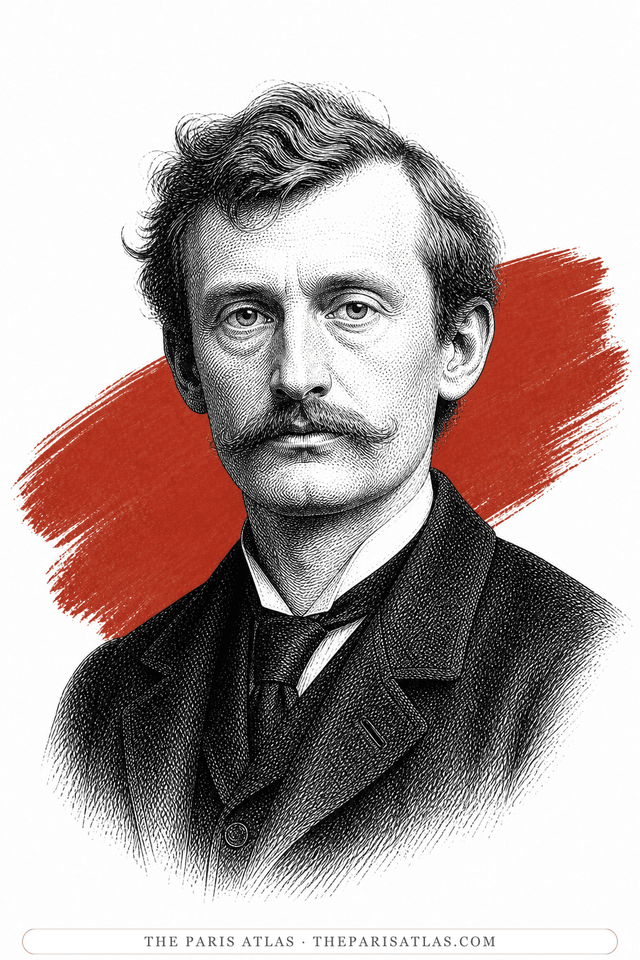
Edvard Munch
Norwegian painter of The Scream, who arrived in Paris in 1889 on a state scholarship to learn academic drawing from an anti-Impressionist professor, lost his father that November, and spent a bleak winter in the riverside suburb of Saint-Cloud writing down the vow that redirected his art — paint the moments when people are most alive, not the furniture around them.
View artist
References
The sources below include collection records, catalogues, scholarly research, and primary materials that informed this page. They document Jupiter and Semele, its making, and its place in cultural history.


2↑Jupiter et Sémélé, Gustave Moreau (Cat. 91) — Joconde notice 50410004307
Official recordMinistère de la Culture, POP: la plateforme ouverte du patrimoineUsed forOfficial record used to verify names, dates, institutional details, or other factual information on this page.

3↑The Metamorphoses of Ovid, Books I–VII, translated by Henry T. Riley
PoetryProject Gutenberg, ebook 21765Used forPrimary text included as part of the documented record for Jupiter and Semele.

6↑How do I get there? — Musée Gustave Moreau
WebsiteMusée Gustave Moreau, ParisUsed forWeb source consulted for documented facts and historical context presented on the Jupiter and Semele page.
7↑Practical information: visitor information, opening hours, admission — Musée Gustave Moreau
WebsiteMusée Gustave Moreau, ParisUsed forWeb source consulted for documented facts and historical context presented on the Jupiter and Semele page.
These references provide the documented foundation for this work's history and interpretation. Claim-level citations remain attached to the specific claims they support.
 Explore more resources