Ashes
by Edvard Munch
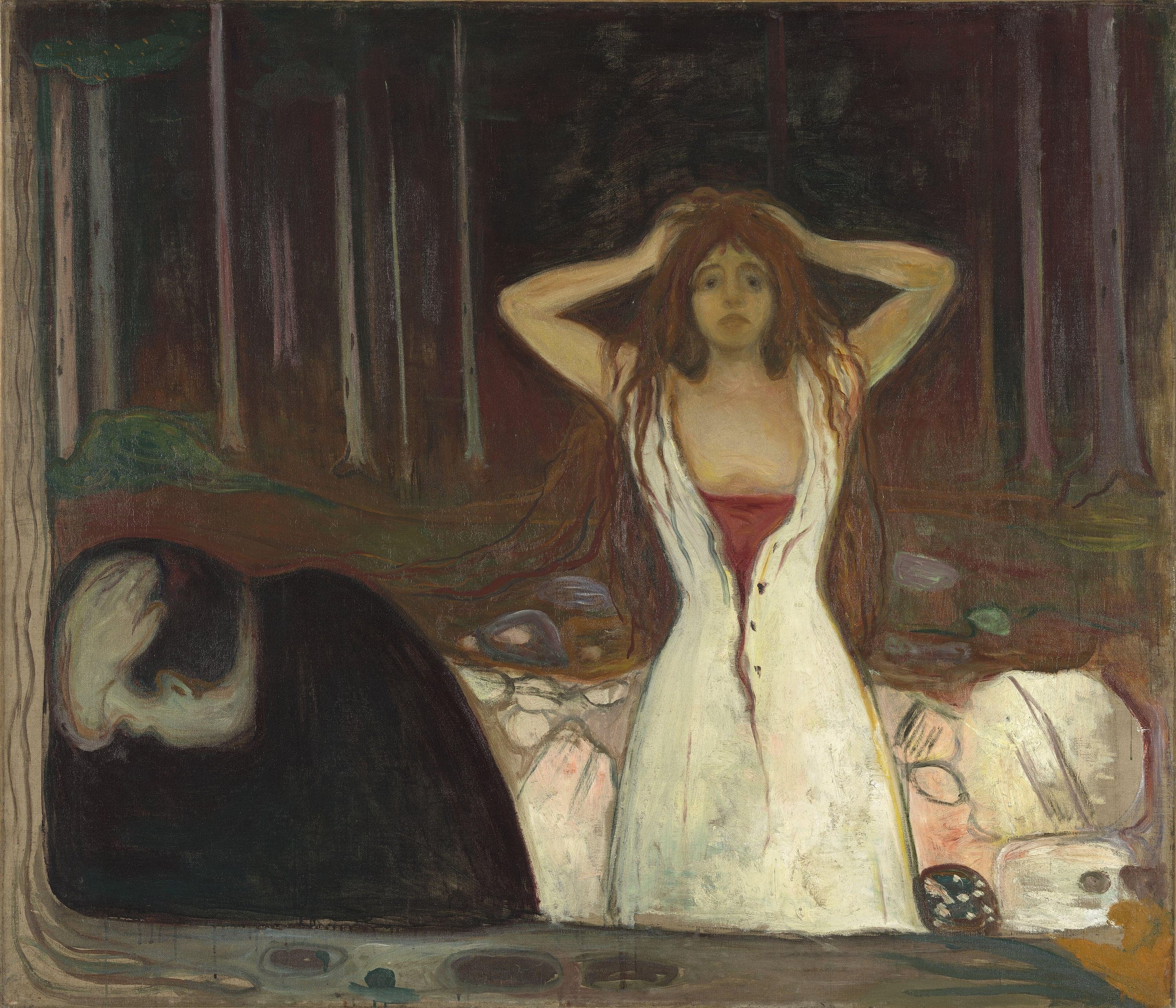
A woman in white stands facing the viewer with her hands raised to her head while a man sits hunched with his back turned in the corner of the picture. Edvard Munch painted it in 1895 and, in a letter that year, called it Adam and Eve after the Fall. He later wrote a line that gave it the title it kept: he felt their love lying on the earth like a heap of ash.
- 1895
- Oil on canvas
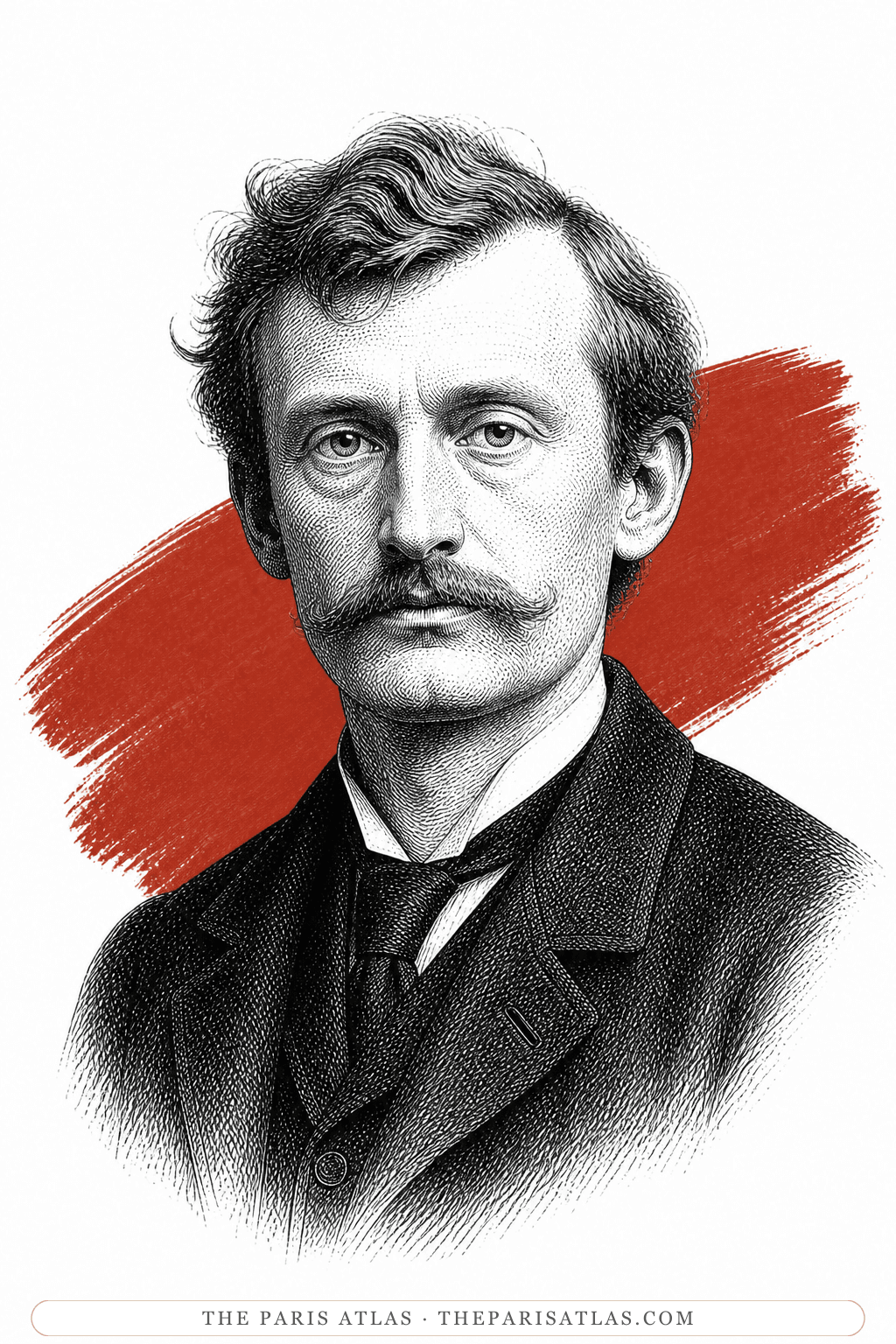
About Edvard Munch
What the painting shows
A woman stands near the centre of a dark wood, facing out. Her white shift is open down the front and her long red hair falls loose. Her eyes are wide and both hands are lifted to the sides of her head. The National Museum describes the posture as one of despair, but also of power and victory, which is a careful way of saying it can be read either way.
In the lower left a man sits with his back to her and to the viewer, head in his hands, folded in on himself. A stylised tree trunk runs down the extreme left edge of the canvas, in front of him. He and the woman are not touching and are not looking at each other.
Their only connection is her hair. It runs out from her head and sweeps down across the ground towards him, a broad brown band with thin dark red strands drawn along its curve. Nothing else in the picture crosses the gap between them.
Two titles
When Munch mentioned the painting in correspondence in 1895 he called it Adam and Eve after the Fall. That reading puts the couple in the garden after the expulsion and makes the wood a specific place.
The title it kept comes from a line he inscribed on a lithographic version: he felt their love lying on the earth like a heap of ash. The National Museum connects the same line to the stylised trunk in front of the man, which reads as a burnt thing.
Part of the Frieze of Life
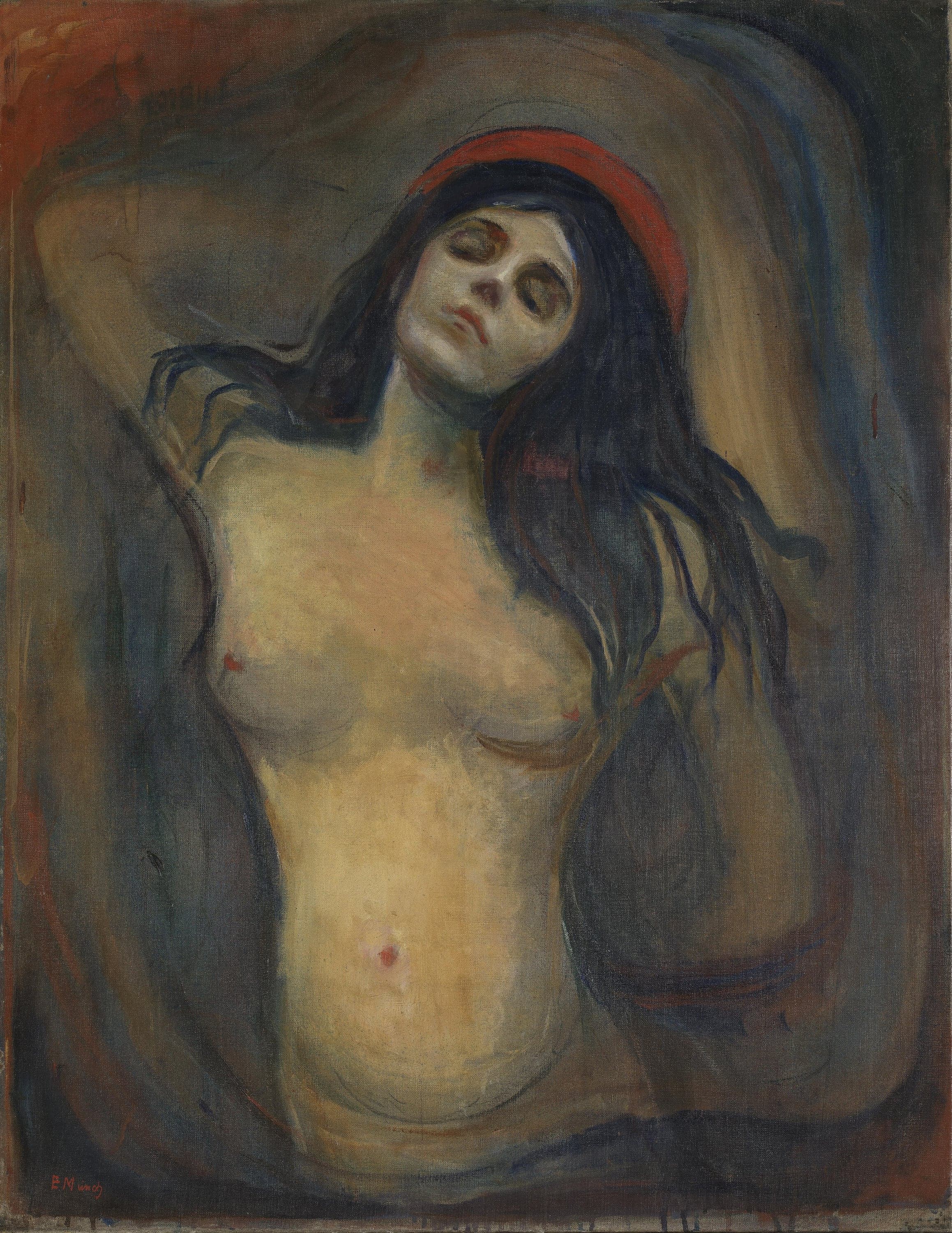
Ashes belongs to the Frieze of Life, Munch's own name for the group of paintings about love, anxiety and death that he showed together and rearranged over several decades. It hung beside Madonna at his Leipzig exhibition of 1903, where he presented the Frieze as a connected sequence.
Set next to Madonna, the pairing is plain enough: the same loose red hair, the same frontal woman, and a man who is either absent or turned away.
How Oslo got it
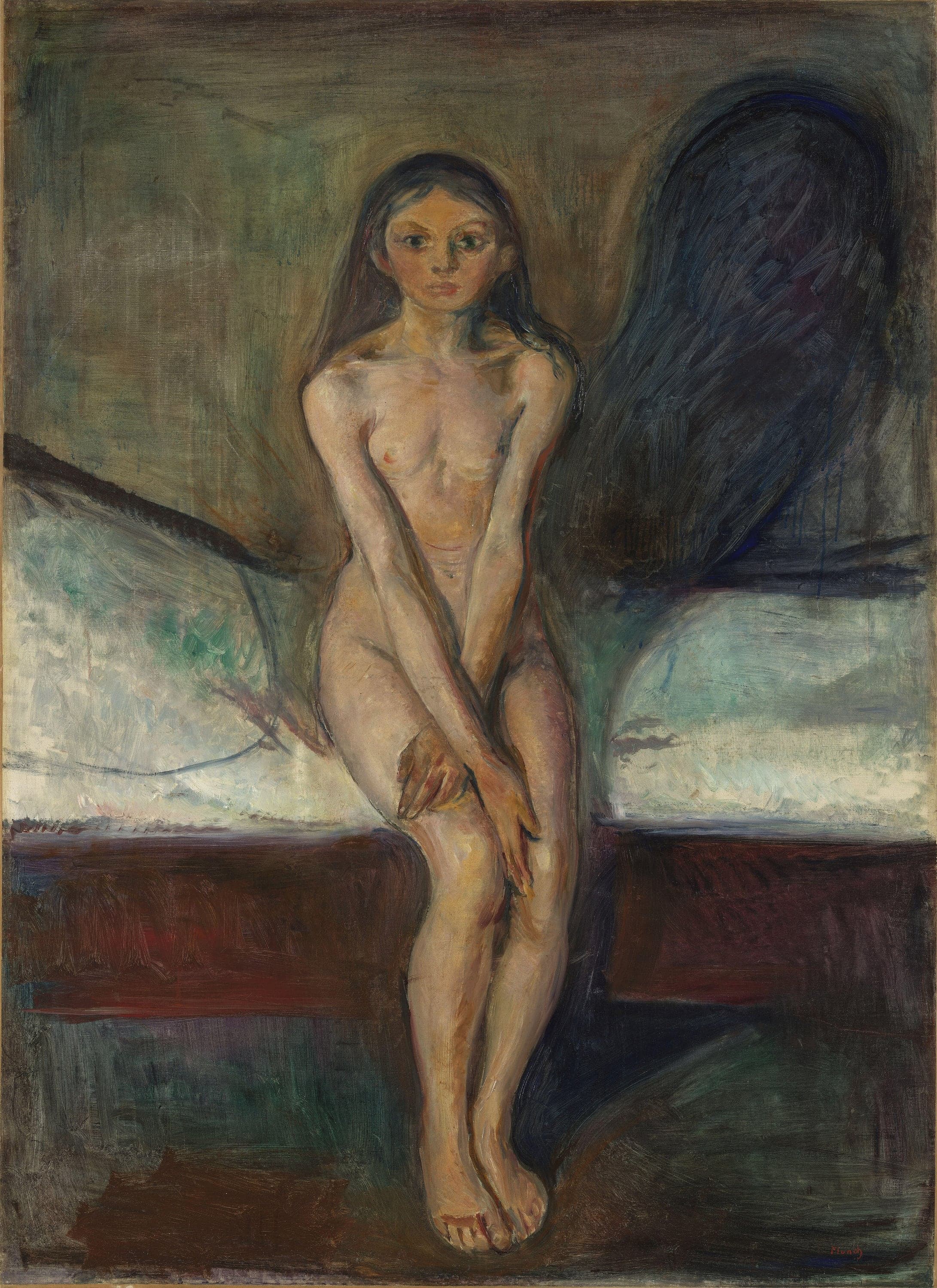
The Norwegian national collection bought the painting in 1909 with funds from the A.C. Houen Endowment, the same source that paid for Puberty. Its accession number is NG.M.00809.
Close reading
Reading the work, detail by detail
The picture rests on a contrast of two treatments. The woman stands lit at the centre, described in detail; the man is reduced to an almost unbroken black shape in the corner. Close views show what each of them is given.
1.The hands go up and the elbows go wide
Both hands are pushed up into the hair and the elbows are thrown out level with the head, so the arms frame the face in a wide triangle. The face is small inside it, eyes wide and mouth shut. Despair and triumph both fit the posture.
2.A red triangle under the open shift
The shift is open from the neck to below the waist. Bare skin shows at the top, and under it a triangle of dark red narrows into a thin red line that runs on down the opening. Small dark buttons are set along the edge of the cloth.
3.Her hair sweeps out across the forest floor
A broad brown band leaves her hair on this side and sweeps down across the ground towards the man, with thin dark red strands drawn along its curve. It is the only form in the picture that crosses the gap between the two figures.
4.The man is almost entirely black
A pale bowed head and a pale hand sit at the top of his shape, the fingers put in with a few streaks. Everything below is one black mass with no folds, legs or internal edges. He fills the lower left corner as a silhouette.
5.A stylised trunk runs down the extreme left edge
A pale band of wavering vertical lines runs the full height of the canvas at its outer left edge, in front of the seated man. It is flatter and more decorative than the trees behind him. The National Museum reads it as a burnt thing, tying it to the title.
6.Thin pale trunks against near-black
Slender trunks are laid in as single pale strokes against a ground close to black. Their bases are cut off by a bank of brown and green. No sky and no gap between the trees is shown.
Timeline
1895
Painted. Munch refers to it as Adam and Eve after the Fall in correspondence this year.
1903
Hangs beside Madonna at Munch's Leipzig exhibition, where the Frieze of Life is shown as a connected sequence.
1909
Bought for the Norwegian national collection with funds from the A.C. Houen Endowment, as NG.M.00809.
Where to see it
Nasjonalmuseet for kunst, arkitektur og design, Oslo
A public viewing address has not yet been confirmed for this holding.
Frequently asked questions
Where is Munch's Ashes?
The National Museum in Oslo, accession number NG.M.00809. The museum bought it in 1909 with money from the A.C. Houen Endowment.
What does Ashes show?
A woman in a white shift stands in a dark wood, facing the viewer with her hands raised to her head and her red hair loose. A man sits hunched in the lower left corner with his back turned and his head in his hands.
Why is it called Ashes?
From a line Munch inscribed on a lithographic version of the image: he felt their love lying on the earth like a heap of ash. In 1895 correspondence he had called the painting Adam and Eve after the Fall.
What connects the two figures in Ashes?
Only her hair. The man and the woman do not touch and do not look at each other, and a stylised tree trunk runs down the extreme left edge of the canvas in front of him. Her red hair runs out across the gap towards him.
How big is Ashes?
120.5 by 141 centimetres, oil on canvas — about four feet by four and a half, wider than it is tall.
Is Ashes part of the Frieze of Life?
Yes. The Frieze of Life is Munch's own name for a group of paintings about love, anxiety and death that he exhibited together. Ashes hung next to Madonna when he showed the Frieze as a sequence at Leipzig in 1903.
More by Edvard Munch
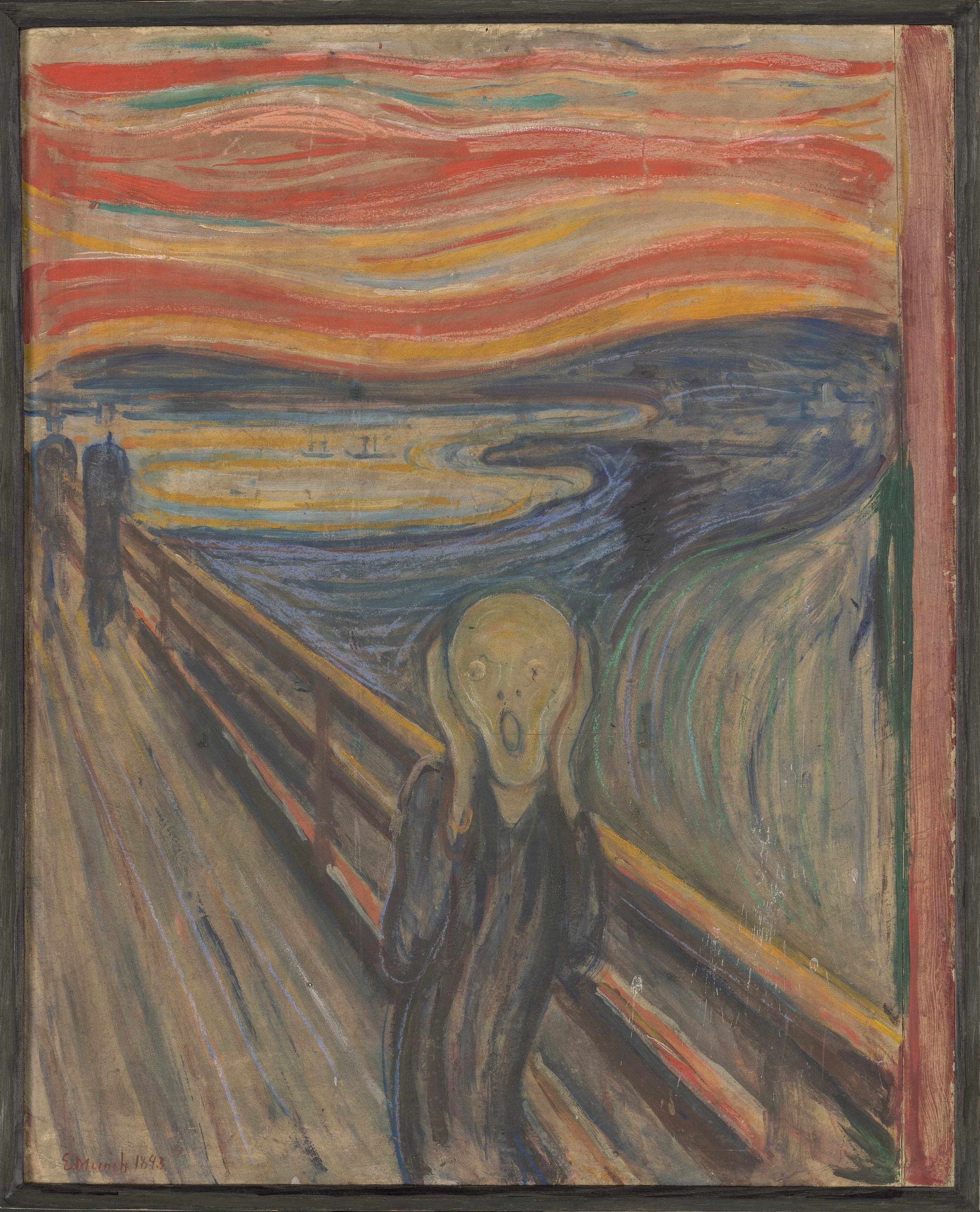
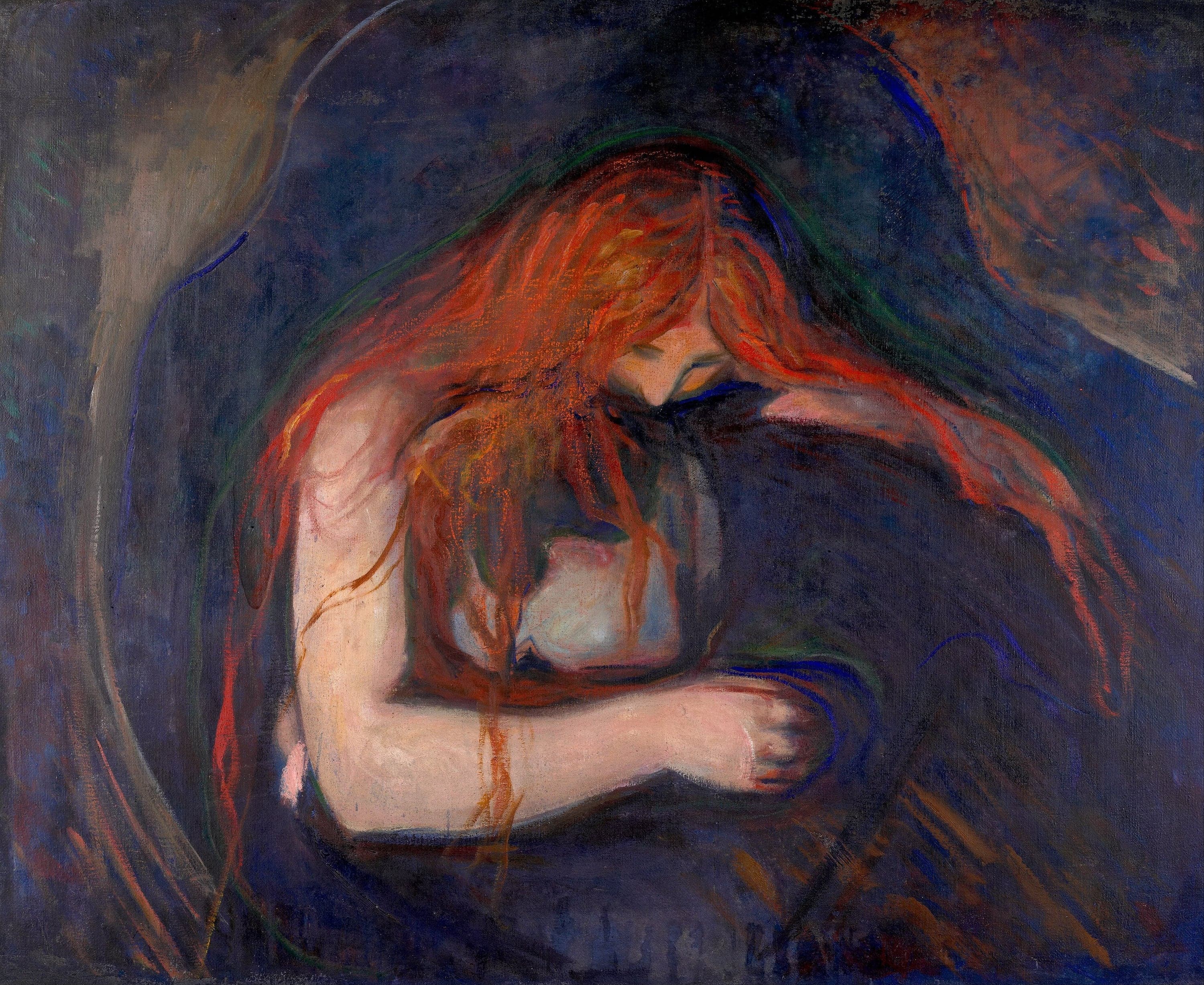
If you like Edvard Munch
Explore painters from the same movements and circles.
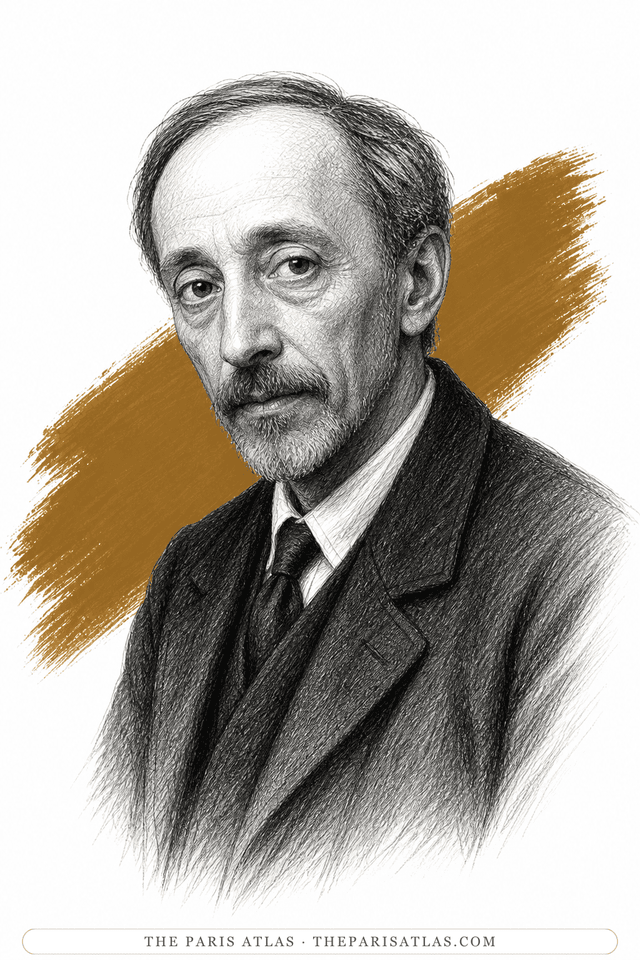
Pierre Bonnard
French painter, printmaker and illustrator whose intimate rooms, Paris streets, gardens and bathing figures transformed everyday life into complex fields of color, memory and perception.
View artist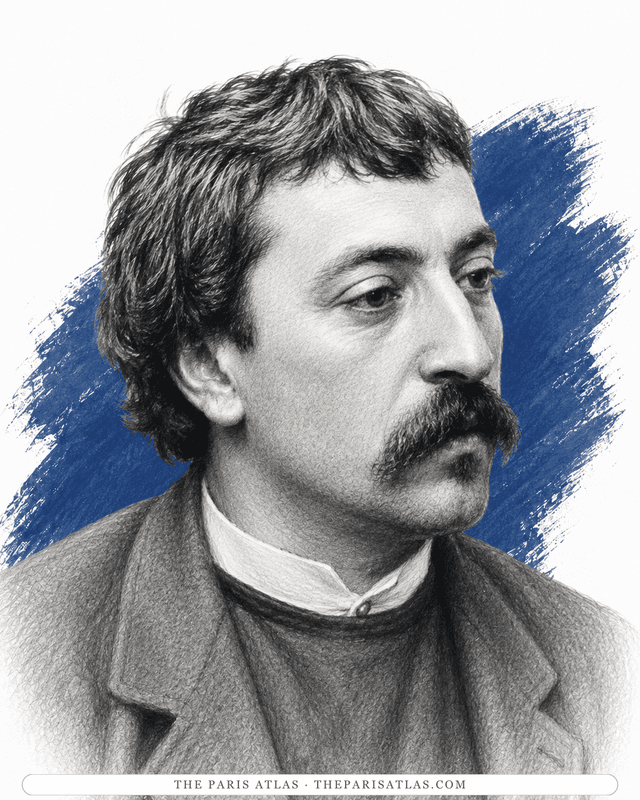
Paul Gauguin
Stockbroker turned painter who came into art through Camille Pissarro, showed with the Impressionists, and left Europe for Polynesia.
View artist
Gustave Moreau
Painter of jewelled myths — Salome, Oedipus, floating severed heads — who lived nearly his whole life in one Paris house, taught Henri Matisse and Georges Rouault at the Beaux-Arts, and turned the house into a museum before he died so the state would have to keep everything.
View artist
References
The sources below include collection records, catalogues, scholarly research, and primary materials that informed this page. They document Ashes, its making, and its place in cultural history.


1Ashes, Edvard Munch (NG.M.00809)
Official recordNasjonalmuseet for kunst, arkitektur og design, OsloUsed forOfficial record used to verify names, dates, institutional details, or other factual information on this page.

2Edvard Munch in the collection
WebsiteNasjonalmuseet, OsloUsed forWeb source consulted for documented facts and historical context presented on the Ashes page.
3eMunch — Edvard Munch's writings, digital archive
ArchiveMunchmuseet (MUNCH), OsloUsed forArchival evidence used to document the historical record connected to Ashes.
4Edvard Munch: Behind the Scream
BiographyYale University Press, 2005Used forBiographical evidence used to verify chronology, relationships, and historical context connected to Ashes.
These references provide the documented foundation for this work's history and interpretation. Claim-level citations remain attached to the specific claims they support.
 Explore more resources