
Nightwood
Another Paris book in which desire, nighttime wandering and a woman made enigmatic by others become inseparable.
Read our take
by André Breton
A chance encounter becomes a map of 1920s Paris, Surrealist wonder and the danger of turning another person into a symbol.
André Breton’s 1928 book begins with a question about identity, wanders through Paris by memory and chance, and arrives at the ten days he spent with a young woman who called herself Nadja. Photographs, drawings and documents interrupt the prose because Breton wanted evidence rather than conventional description. The result is part autobiographical narrative, part record of a meeting and part Surrealist experiment — exhilarating when the city appears charged with signs, and deeply troubling when Nadja’s own life can no longer fit the role Breton has given her. (The story is told below; its difficult ending is behind the accordion.)
Breton wrote Nadja in 1927, largely in a burst of about ten days, after his encounters the previous autumn with Léona Delcourt, the woman who used the name Nadja. The book does not begin with her. It opens with Breton asking who he is, then follows earlier coincidences, dreams, artworks and walks through Paris as if the city were a field of clues. When Nadja appears on the rue Lafayette, the encounter feels less like the start of a plot than the sudden confirmation of a method: walk without a program, attend to chance, and let ordinary streets become strange.
Its images are not decoration. Breton replaced descriptive passages with photographs of façades, signs and people, while Nadja’s drawings enter as records of the world she perceived. That documentary method makes the book look unusually modern, but it also sharpens its ethical problem. Breton presents Nadja as an embodiment of Surrealist freedom while revealing little of the economic insecurity and vulnerability of the person behind the name. Her institutionalization exposes the limit of treating a life as proof of an artistic idea.
Breton substantially revised the book for a 1963 edition, changing the text and its visual sequence while keeping the encounter at its center. The autograph manuscript, once thought lost and later classified as a French national treasure, is now held by the Bibliothèque nationale de France. That survival lets readers compare the fever of composition with the carefully constructed book that followed.
The narrator begins by asking what the people, places and coincidences that attract him might reveal about his identity. He recalls charged encounters in Paris, visits theatres and cafés, follows associations, and tests the Surrealist belief that apparently ordinary life can disclose a hidden order when habit loosens its grip.
On 4 October 1926, walking along the rue Lafayette, he meets a young woman who calls herself Nadja. Over the next ten days they roam Paris, talk, draw, exchange predictions and read meaning into streets, windows and passing events. Breton is fascinated by her ability to move between the everyday world and one alive with private signs. The book places photographs and Nadja’s drawings beside the account, asking the reader to inspect traces of the encounter rather than simply imagine them.
The first conversation reveals a disagreement beneath Breton's fascination. As Susan Rubin Suleiman points out, Nadja's sympathy for the workers she sees in the métro meets Breton's insistence that workers deserve his interest only if they revolt. Their different responses complicate the idea that she simply embodies his beliefs. Nadja notices people with whom she shares the city; Breton measures them against a demand for freedom. The encounter opens another way of seeing, but it also exposes the narrator's difficulty accepting a perspective that does not confirm his own.
Nadja's flower of the lovers replaces petals with four eyes. The Bibliothèque nationale de France identifies the surviving drawing as ink on a fragment of paper tablecloth, later incorporated into Breton's manuscript. An ordinary meal thus leaves a visual object that unsettles the distinction between seeing and being seen. The flower is not merely something to look at: it seems to look back. Her drawing supplies an invention of its own, while its preservation within Breton's account keeps open the question of who frames that invention for the reader.
The city is not scenery. Walking, coincidence and attention become instruments for discovering what ordinary routines hide.
Photographs and drawings interrupt the prose, producing a hybrid form that still feels contemporary.
The book invites wonder and skepticism at once: Nadja opens Breton’s sense of possibility, but her life cannot be reduced to what she represents for him.
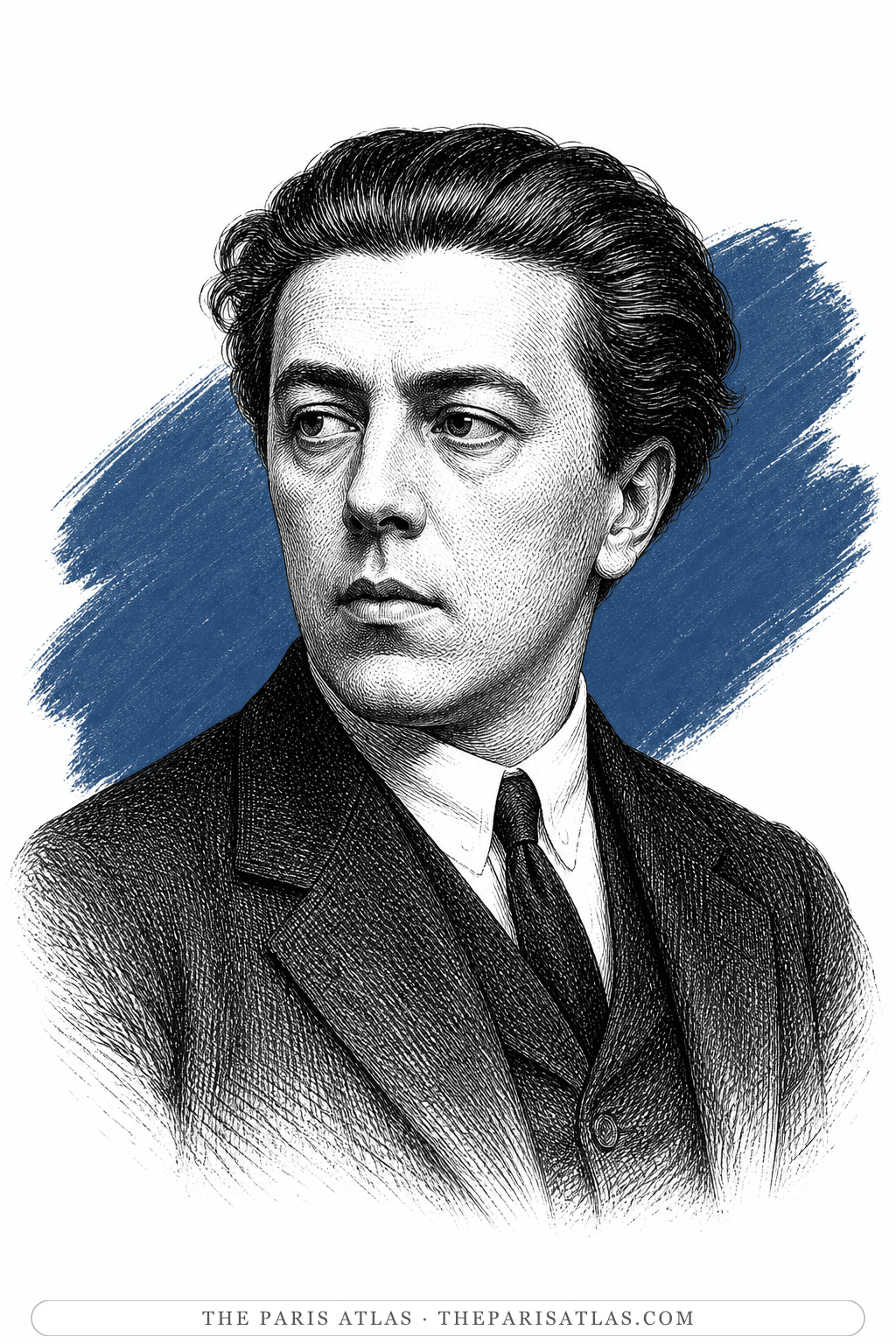
The book's 'I' — Breton at thirty, in the fourth year of the Surrealist movement he had founded with the 1924 Manifeste du surréalisme. He was married to Simone Kahn Breton throughout the ten days he spent with Nadja in October 1926.
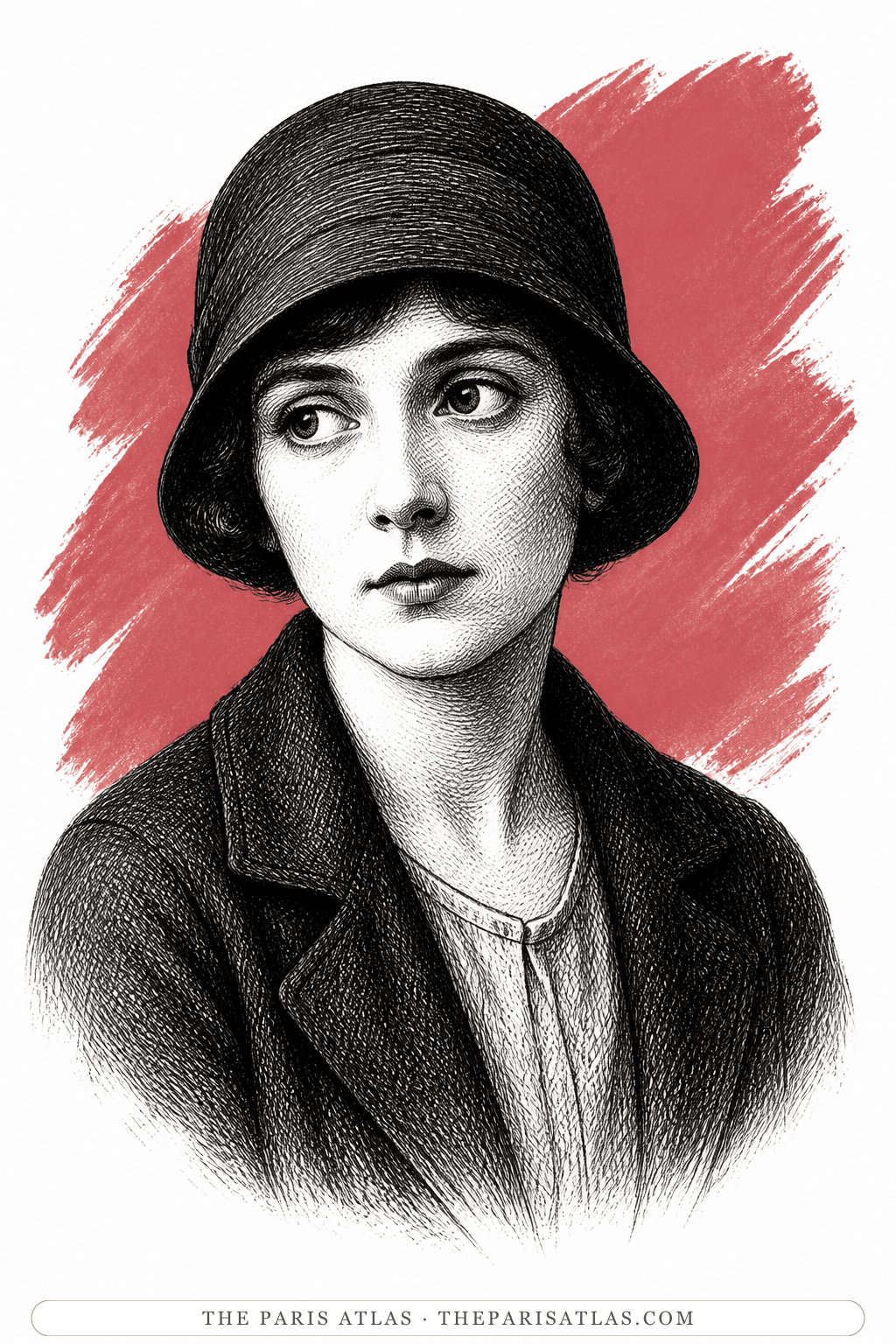
The young woman (1902–1941) who used the name Nadja — Russian for 'hope,' or its beginning, as she told Breton. She was twenty-four when she met Breton on the rue Lafayette on 4 October 1926, working in Paris under precarious circumstances. She was committed to Perray-Vaucluse asylum in March 1927 and moved between institutions until her death from cancer at Bailleul in January 1941, having been transferred there under the German occupation.
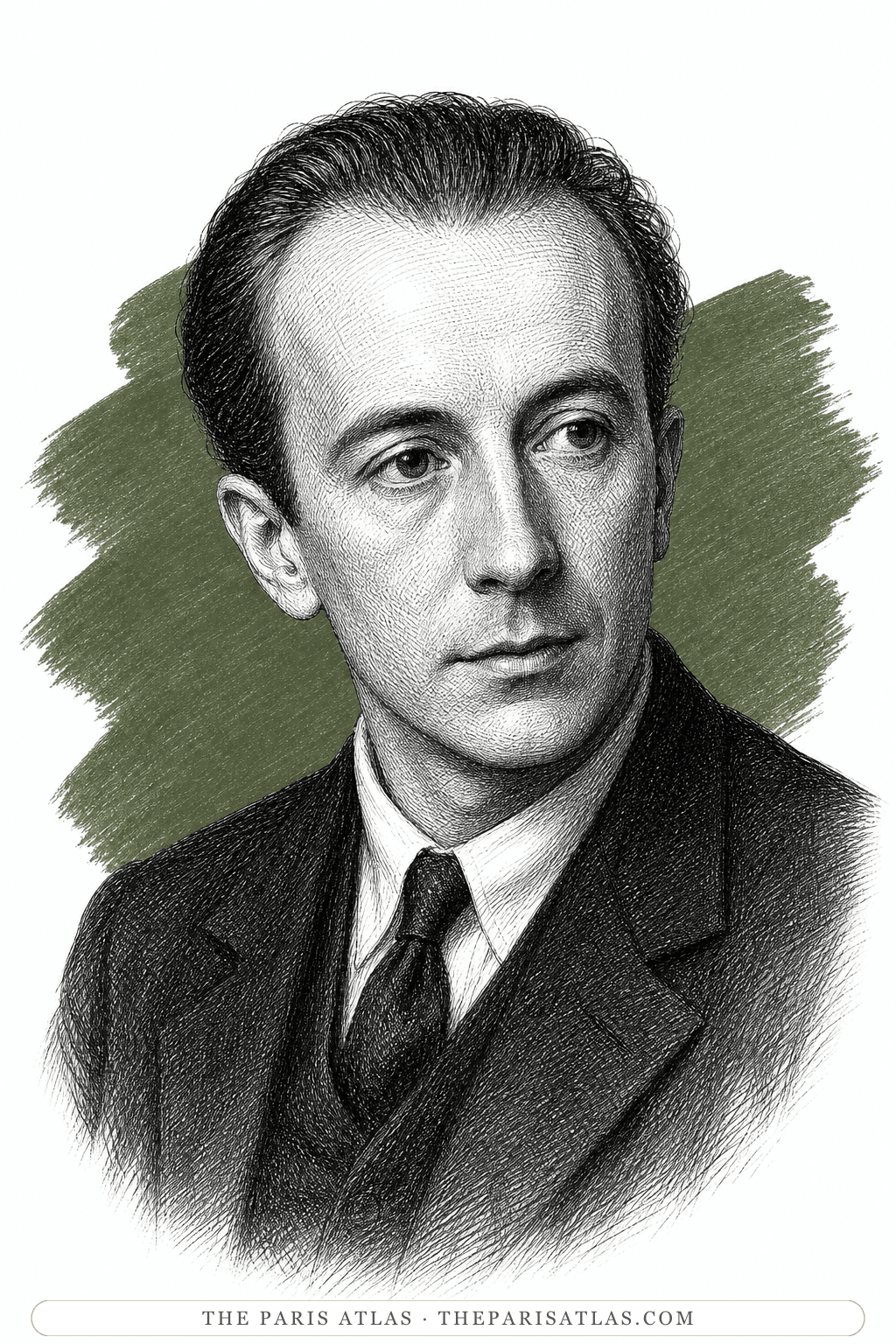
The French Surrealist poet (1895–1952), Breton's closest ally in the movement's founding years. Éluard is one of the Paris Surrealists whose walks, meals, and shared experiments appear in the book's Paris frame around the Nadja encounter.
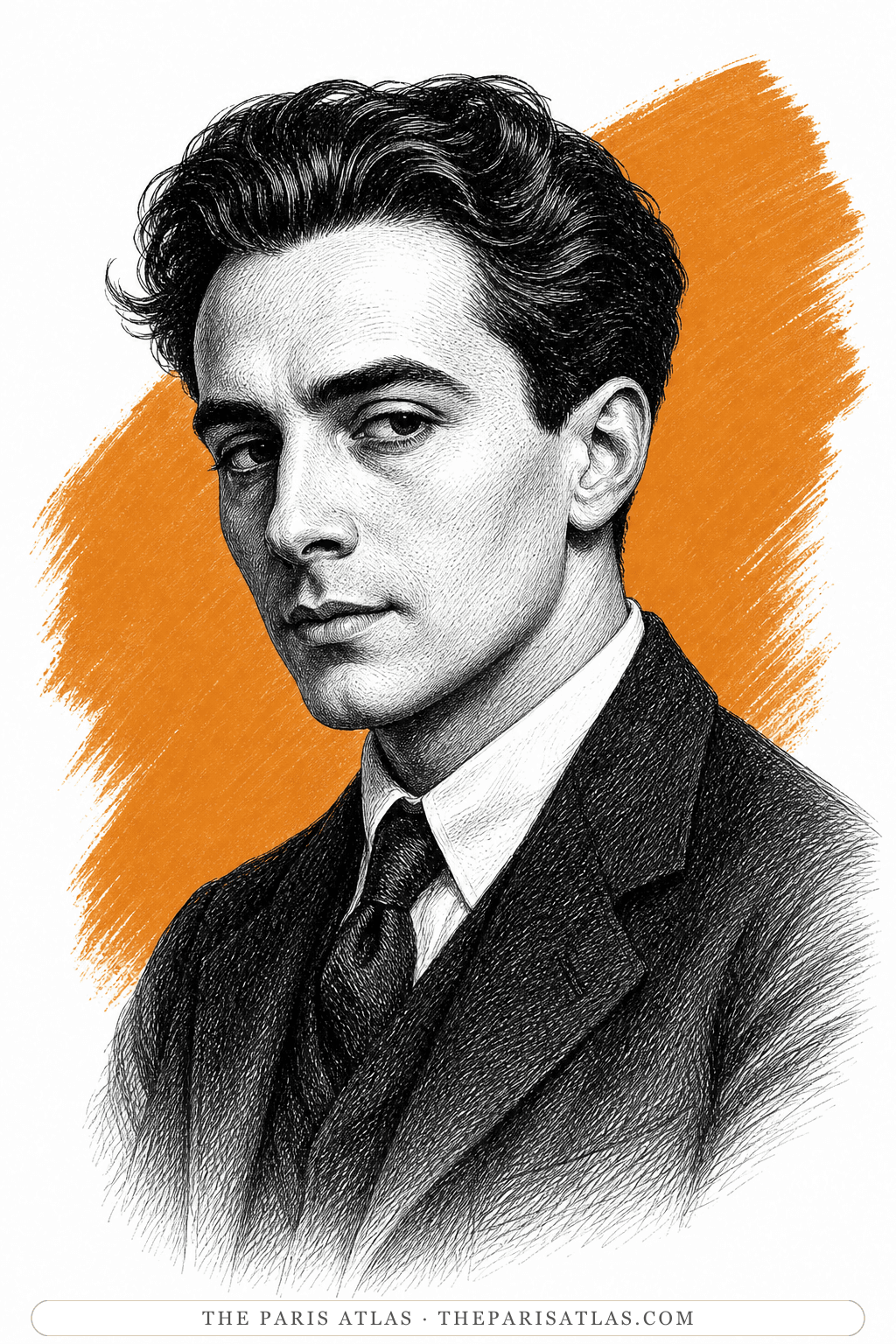
The French Surrealist poet and novelist (1897–1982), another co-founder of the movement with Breton. Aragon's 1926 book Le Paysan de Paris — with its own Paris walks and attentiveness to the marvellous in ordinary streets — is the closest precedent for the method Nadja uses.
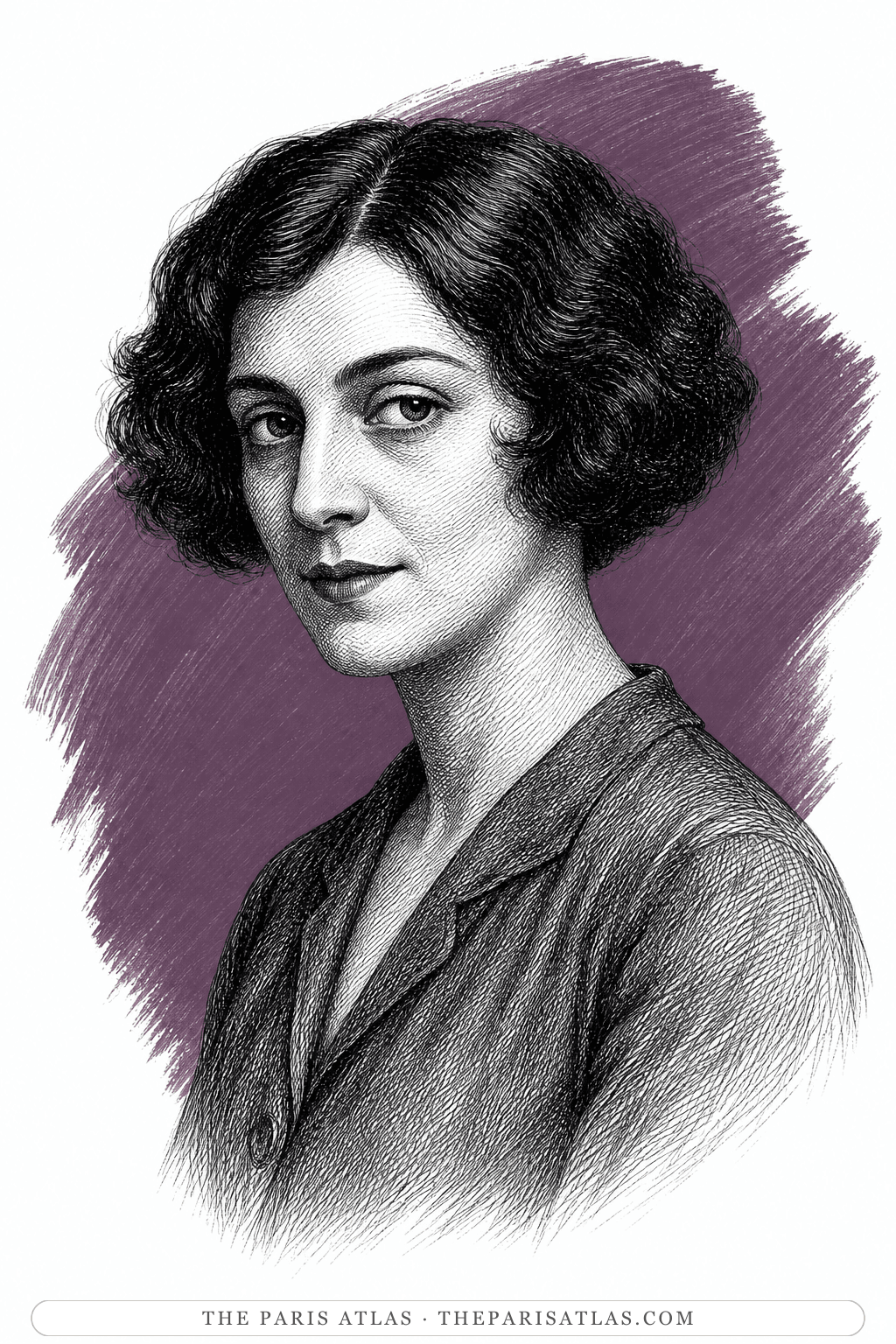
Breton's first wife (1897–1980), whom he had married in 1921. She is the unnamed woman to whom the final section of Nadja is addressed — the beloved who displaces Nadja in the book's closing pages. She and Breton would separate in 1929.
1926
Breton meets the woman who calls herself Nadja on the rue Lafayette on 4 October; their intense period of meetings lasts about ten days.
1927
Breton writes the main manuscript in a concentrated burst. Léona Delcourt is committed to a psychiatric institution in March.
1928
Éditions de la Nouvelle Revue française publishes Nadja with photographs and reproductions integrated into the text.
1963
Breton publishes a substantially revised edition, changing both the prose and the arrangement of images.
2017
The Bibliothèque nationale de France acquires the autograph manuscript after it is classified as a national treasure.


Another Paris book in which desire, nighttime wandering and a woman made enigmatic by others become inseparable.
Read our take
A city crossed on foot and remade by consciousness, though Joyce’s Dublin and Breton’s Paris use radically different machinery.
Read our take
A material counterweight to Breton’s charged streets: Orwell maps the same city through wages, hunger and work.
Read our takeIt is an autobiographical Surrealist narrative about Breton’s 1926 encounter with a young woman who called herself Nadja, framed by walks, coincidences, photographs and reflections on identity in Paris.
Yes. She was Léona Delcourt, who used the name Nadja. Breton’s book draws on their brief real-life encounter while turning her into a central figure in his account of Surrealism.
Not in a conventional sense. It combines autobiography, essay, documentary photographs, drawings and a narrated encounter, deliberately resisting ordinary fictional description and plot.
Breton wanted images to function as evidence and to replace some descriptive passages. The photographs and Nadja’s drawings are integral to the book, not optional illustrations.
Choose an edition that reproduces the full visual sequence clearly. The 2025 NYRB Classics edition offers a new translation by Mark Polizzotti and includes forty-four images; the Richard Howard translation remains widely available.
Explore authors with a similar voice, perspective, and influence.

The Brooklyn dropout who arrived in Paris broke at thirty-eight and wrote the exuberant, banned books that ended American censorship.
View author
American novelist and composer whose expatriate fiction explores dislocation, unstable intimacy, fatalism, and North Africa.
View author
The doctor of the Paris slums who wrote the century's blackest, funniest novel — and changed the sound of French prose.
View authorThe sources below include the primary text, editions, scholarship, archival materials, and other records that informed this page. They document Nadja, its publication, and its place in literary history.


The primary text represented by this page, used for descriptions of the work’s contents and for any quoted passages shown here.
Used to place Nadja within André Breton's published work and verify its bibliographic context.
Used for independent biographical, archival, or historical context surrounding André Breton's career and the period in which Nadja appeared.

Used to cross-check authorship, chronology, and the work's place in André Breton's wider catalogue.
Used to verify André Breton's bibliography and place Nadja within the broader chronology of André Breton's career.
Suleiman's passage-specific discussion supports the attributed reading of the first encounter and the disagreement about workers.
The BnF's manuscript description identifies the flower drawing's support and four eyes; the new paragraph interprets those documented features.
The primary text is the baseline reference for every book page. Additional references document publication history, interpretation, and historical context where that evidence is available.
 Explore more resources