Henry Miller’s Favorite Books and Authors
Dostoevsky gave him the soul at full voltage. Cendrars gave him movement. Lawrence made writing a test of whether he was fully alive. This is Miller’s inner library—not merely the hundred books he once listed.
The shortest answer is Dostoevsky, Blaise Cendrars, D. H. Lawrence, John Cowper Powys, Walt Whitman and François Rabelais. They did different jobs for Henry Miller: some changed his prose, some changed his idea of the artist, and some became models for how a life might be lived.
There is no honest single ranking. There is, however, a very clear inner shelf.
Henry Miller left readers a list of one hundred books that influenced him. It is tempting to treat the appendix as a ready-made canon, count the titles and call the case closed. Miller would have disliked the tidiness. He read without much respect for shelf labels, putting Russian novels beside mystical tracts, Renaissance comedy beside boys’ adventure stories, and books he admired beside writers he tried to become.[1]
A better test is repetition. Whom did he reread? Whom did he recommend for decades? Which writers did he call ancestors, masters or models? Which of them made him write a whole book in reply? By that measure, six names form the center. Another nine explain the range around them. A handful of individual books retained a special spell even when their authors did not govern his whole career.
Three Henry Millers are reading at once: the apprentice searching for a prose he can use, the restless man looking for examples of a fully lived life, and the spiritual seeker trying to understand freedom without joining an institution. The same writer can serve all three. That is why a neat numerical ranking breaks down almost immediately.
The inner six
1. Fyodor Dostoevsky
Dostoevsky is the safest answer to the question of Miller’s deepest literary influence. Miller named him among his greatest influences, described discovering him as one of the decisive events of his reading life, and returned to him as the writer who could hold degradation, comedy, cruelty, spiritual hunger and enormous tenderness in the same room.[1][2]
The useful surprise is the title. Miller’s favorite Dostoevsky was not Crime and Punishment or The Brothers Karamazov but The Eternal Husband, the shorter and blackly comic story of adultery, humiliation and a widower circling the man who betrayed him. It delivers the same psychological intensity in a shorter, more comic form.[1]
2. Blaise Cendrars
Blaise Cendrars is the key that disappears when Miller’s reading is reduced to famous names. Early in his career Miller wanted to imitate Knut Hamsun. Later, he said, the writer he most wanted to emulate was Cendrars. That is not casual admiration. It marks a change in the kind of writer Miller hoped to be.[3]
Cendrars made literature porous. Travel, war, crime, friendship, bad luck, tall stories, tenderness and self-invention all entered the sentence without waiting to be sorted. Miller began with Moravagine, reread it years later and found passages still fixed in his memory. Miller continued recommending and promoting Cendrars for decades, with unusual persistence.[1]
3. D. H. Lawrence
D. H. Lawrence cannot be treated as a footnote simply because Miller did not leave one uncontested favorite Lawrence novel. Miller placed him in his literary ancestry and spent much of the 1930s trying to write a study of him. The project grew, defeated every attempt to contain it, and finally appeared in 1980 as The World of Lawrence: not a balanced critical survey but, as the subtitle admits, a passionate appreciation.[4]
What Miller saw in Lawrence was aliveness: the body, instinct, sex, nature and the refusal to let a mechanized civilization dictate the terms of being human. Lawrence mattered less as a stylist to copy than as a rebuke. A writer could be technically brilliant and still seem half asleep. Lawrence made that condition embarrassing.
4. John Cowper Powys
John Cowper Powys was not a fashionable reference placed for effect. Miller first heard him lecture when he was young, carried the admiration for nearly fifty years, and later described it as love and reverence. Powys offered a form of wisdom that was sensual rather than systematized: weather, landscape, appetite, solitude and the cultivation of an inner life.[1]
For Miller, Powys was proof that a writer could live remotely, poorly and independently without becoming spiritually cramped. The large novels mattered, but so did the man and the smaller books of everyday philosophy. Here the boundary between favorite author and life model vanishes completely.
5. Walt Whitman
Miller identified few American writers as real influences. Walt Whitman and Ralph Waldo Emerson were the exceptions. Whitman gave him an autobiographical self large enough to contain body, city, sex, work, contradiction and the world beyond the nation. The connection was personal as well as formal: two Brooklyn writers, rejected early, presenting the book as contact with a living person rather than a polished object.[1]
The Walt Whitman Archive traces the effect directly into Tropic of Cancer, where Miller likewise builds a fictional narrative around the problem of being himself. The influence is not a matter of copying free verse. It is the larger wager that an unfettered self can become the form.
6. François Rabelais
Miller paired Rabelais with Dostoevsky as writers he continued to revere, which is a wonderfully inconvenient pairing if literature is supposed to behave. Dostoevsky brings the tormented soul; Rabelais arrives eating, laughing and refusing decorum. Both are excessive because ordinary proportions cannot hold what interests them.[1]
Rabelais gave Miller an ancient license for the comic body, the unruly list, the digression, the insult and the feast. The result is visible whenever a Miller paragraph outruns good manners and keeps going because abundance is part of the argument.
The next shelf
These nine are not consolation prizes. Miller explicitly named Nietzsche and Élie Faure among his greatest influences, called Proust enormously generative for his thinking, identified with Rimbaud strongly enough to write The Time of the Assassins, and made long campaigns for Giono. The table groups these writers by what Miller found in them; it does not rank their importance.[1]
| Writer | A place to begin | What Miller found there |
|---|---|---|
| Friedrich Nietzsche | Thus Spoke Zarathustra | Self-creation, suspicion of inherited morality and the demand to make a life rather than merely accept one |
| Jean Giono | Jean le Bleu | Earth, animals and landscape made animate; pagan sensuality without the city’s machinery |
| Knut Hamsun | Hunger | The unstable wandering outsider and a subjective voice Miller wanted to imitate before Cendrars displaced him |
| Marcel Proust | In Search of Lost Time | Memory and ordinary existence transformed by exhaustive attention to consciousness |
| Arthur Rimbaud | A Season in Hell | The prodigy, exile and deserter from literature in whom Miller saw a disturbing mirror |
| Élie Faure | History of Art | Art history written as a philosophy of civilization, rhythm and human energy |
| Ralph Waldo Emerson | Representative Men | An American language of self-reliance and spiritual independence |
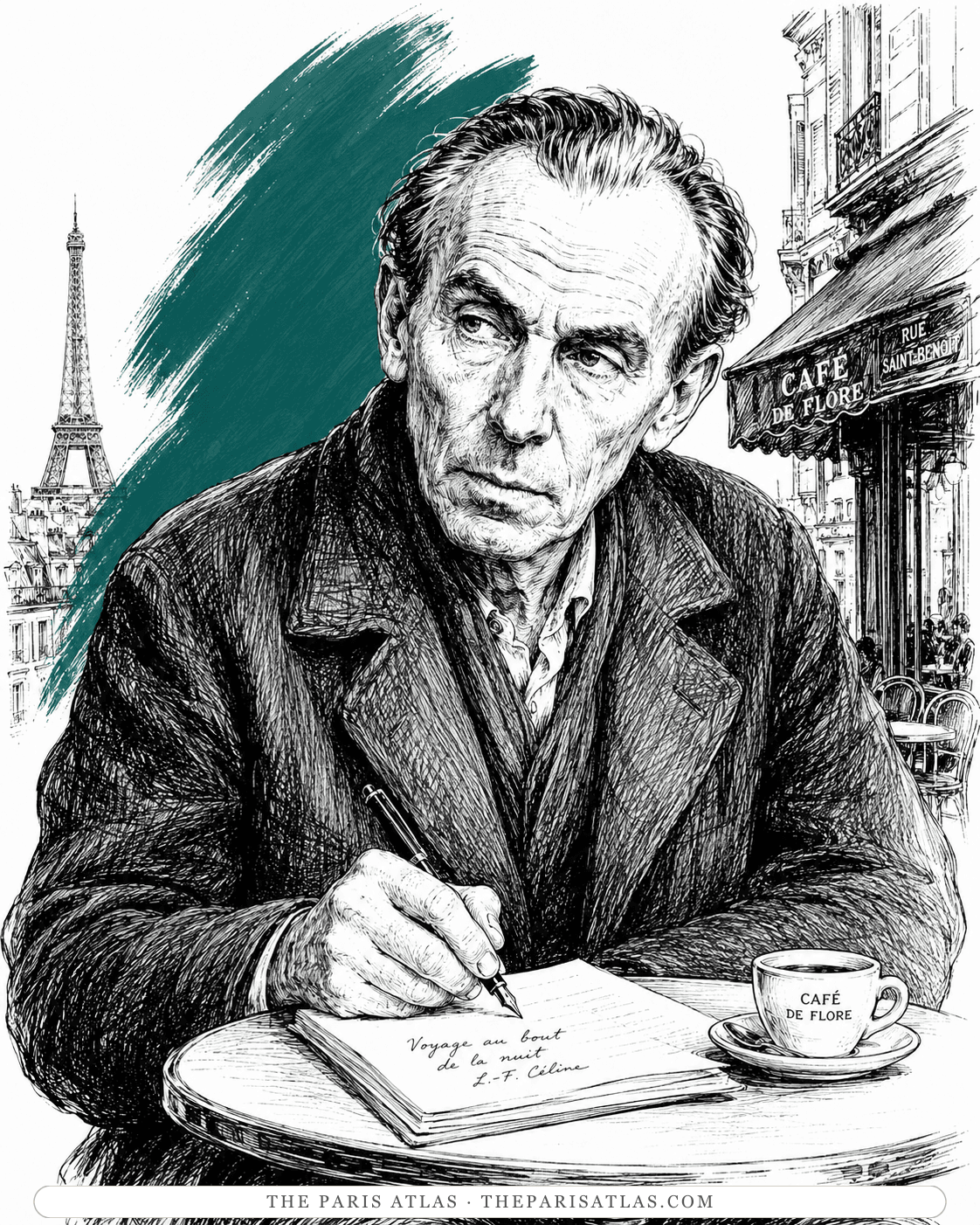
| Louis-Ferdinand Céline | Journey to the End of the Night | Spoken language, velocity, disgust and the comic music of catastrophe |
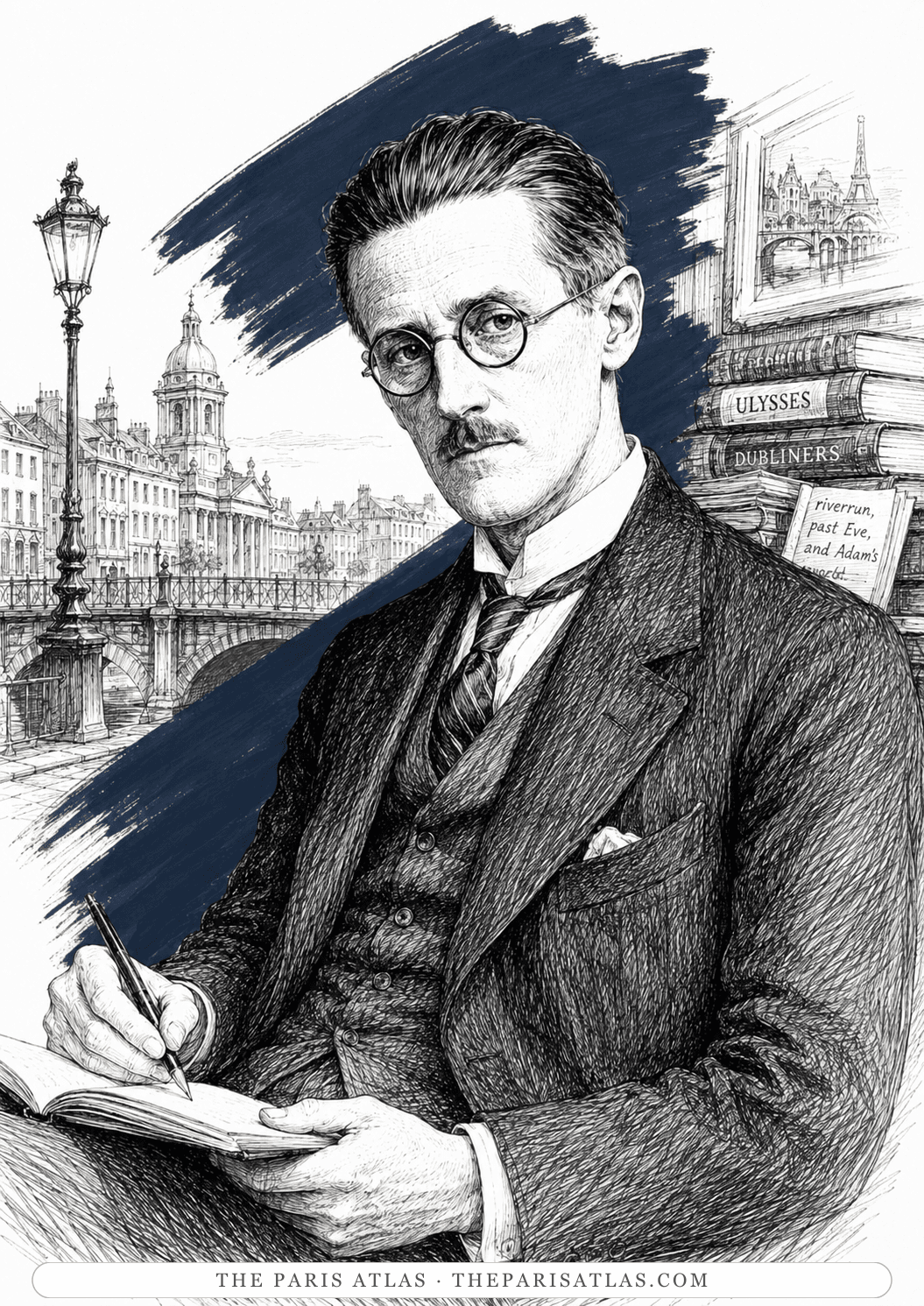
| James Joyce | Ulysses | Permission to remake narrative around the movement of a mind and the physical detail of a day |
Four of those roads lead on: Marcel Proust, Louis-Ferdinand Céline and Journey to the End of the Night, and James Joyce with Ulysses. Miller did not love them in the same way. Proust fed thought, Céline detonated language, and Joyce expanded the possible machinery of a novel.
Books that kept their spell
Miller’s library becomes more revealing when we include the unusual adventure, supernatural and childhood books alongside the recognized classics. He could admire the largest modernists and remain devoted to an adventure romance read in boyhood. He could reread Surrealism for mystery, praise nonsense as a supreme achievement, and make room for obscure travel writing beside the classics.
Three Millers in one library
The apprentice Miller reads Dostoevsky, Rabelais, Hamsun, Proust, Joyce, Céline and Cendrars to discover how much experience prose can contain. He is not assembling a tradition so much as raiding several. The common element is pressure: each writer found a form large or unstable enough to hold material that more orderly prose would exclude.
The second Miller reads people as much as books. Lawrence, Cendrars, Powys, Whitman, Rimbaud, Giono and Vincent van Gogh matter because the artist and the life cannot be cleanly separated. Poverty, wandering, solitude, bodily intensity, refusal and complete commitment become part of the work’s authority. This is the most attractive and most dangerous part of Miller’s taste: suffering can become evidence of seriousness much too easily.
The later Miller reads outward into Nietzsche, Emerson, Lao-tse, Krishnamurti, Richard Jefferies and Asian religious writing. By then the question is no longer how to become a writer. It is how to become free. Books remain useful only when they return the reader to life with a larger appetite for it.
Read Henry Miller’s library for yourself
These twelve books are a practical introduction to Miller’s reading life, not a shortened version of his full hundred-book list. Each one represents a different reason he read. Taken in order, they move from psychological extremity to movement, bodily life, appetite, the liberated self, modernist form, mystery and childhood wonder.
Read Henry Miller on the books he loved
The Books in My Life is the natural companion to this guide. It is autobiography told through encounters with books: the boyhood romances, the street-corner discovery of Dostoevsky, the campaigns for Cendrars and Giono, the people Miller considered living books, and the appendix that launched a thousand private reading projects.[1]
Its central contradiction is the best thing about it. Miller spends hundreds of pages communicating the excitement of reading, then argues that books should lead us away from books and back into experience. The list is not a syllabus. It records the reading experiences that changed his direction.[1]
That is the pattern of Miller’s favorites. The books he loved did not make life quieter, safer or more orderly. They made it harder to remain half awake.




 View source