
The Time of the Assassins
The other obsessional study — Rimbaud's he finished; Lawrence's finished him.
Read our take
by Henry Miller
The white whale of the Villa Seurat: the D. H. Lawrence book that nearly swallowed Miller in 1933, published at last in 1980.
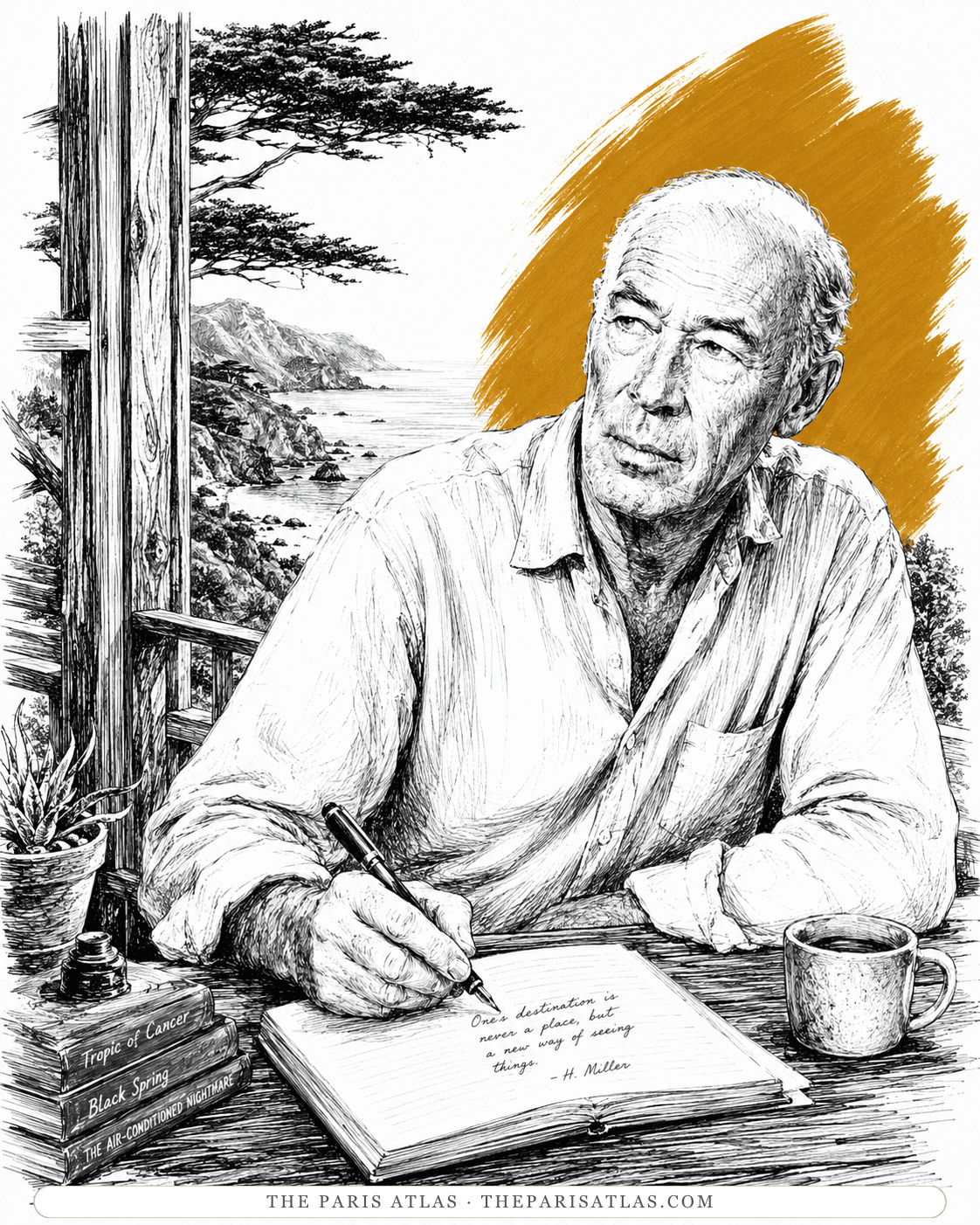
In the first flush of the Paris years Miller set out to write a little book on D. H. Lawrence — and fell in. The project ballooned into hundreds of pages, charts pinned to the walls, contradictions he could not resolve, until he abandoned it to save himself; the wreckage sat for nearly half a century before scholars carved a book from it, published by Capra in 1980, the year Miller died. What survived is exactly what its subtitle admits: not criticism but passion — one prophet of the life-force wrestling another, and losing gloriously. (A study — nothing here to spoil.)
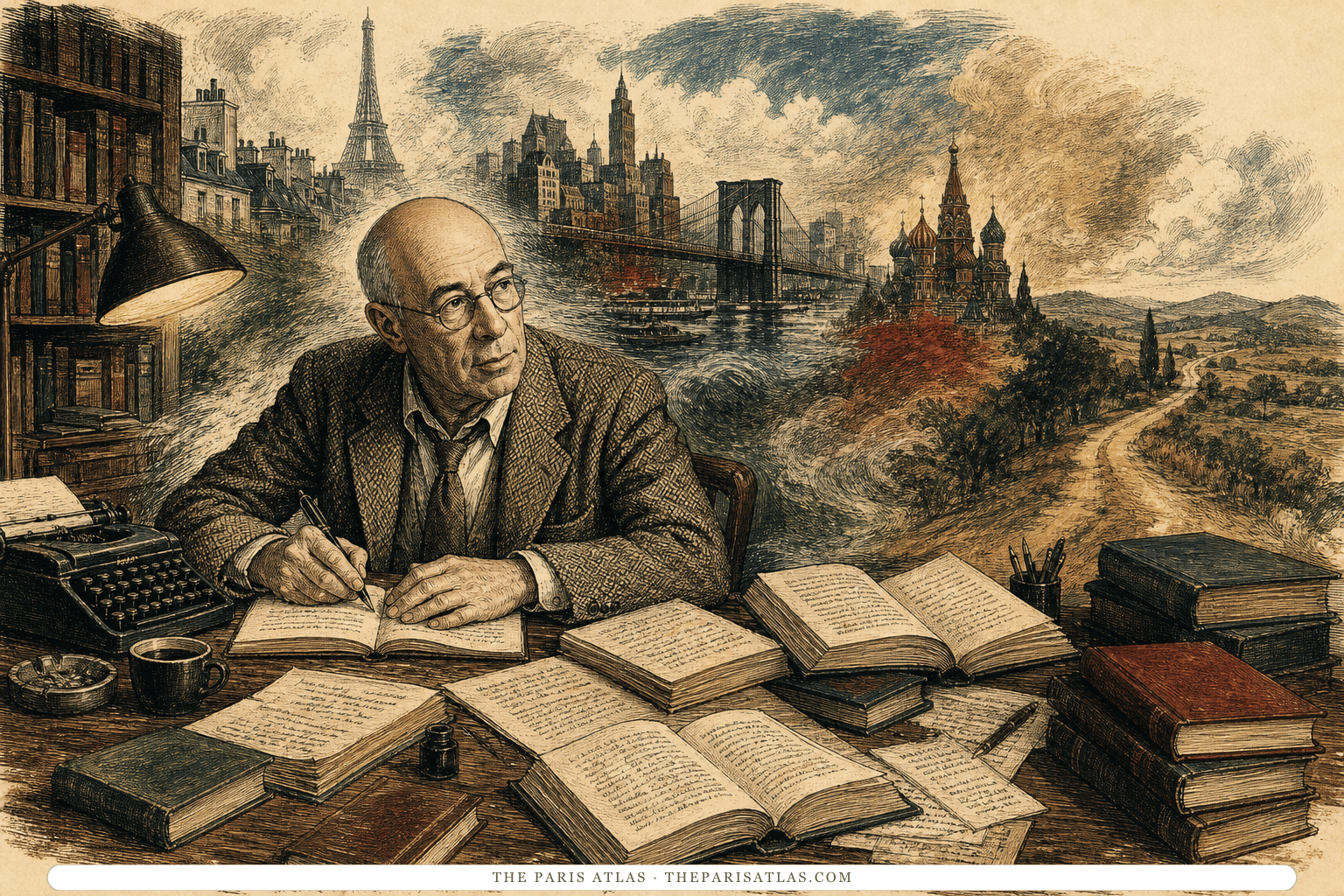
The Lawrence obsession was a fever of the early Paris years, and it was shared: Anaïs Nin had just published her own Lawrence study when she and Miller met, and Lawrence — dead in 1930, scandalous as ever — was the ground their endless first conversations kept returning to. Jack Kahane, waiting to publish Tropic of Cancer, actually wanted a Lawrence brochure from Miller first, to dress the house in respectability; the modest assignment detonated. Through 1933 Miller read, charted, and drafted at manic scale — the walls of his workroom papered with schemes and genealogies — as the little book grew into a theory of everything.
It also grew into a crisis: the deeper he went, the more Lawrence's contradictions — and his own — refused to resolve, and the manuscript became the rare project that defeated him; he cut it loose and wrote his own books instead. The hundreds of surviving pages waited until scholars Evelyn J. Hinz and John J. Teunissen edited them into the volume Capra Press published in 1980 — arriving, with terrible neatness, in the year of Miller's death. Read now, it is less a book about Lawrence than a Rosetta stone for Miller. Watching Miller define Lawrence's war — body against machine, life-force against civilization — you watch him drafting the creed the Tropics would preach as his own.
The salvaged argument, in movements: Lawrence as the age's sacrificial figure — the artist as scapegoat driven out by the civilization he diagnosed; readings of the novels and the late prophetic books; the war of flesh and machine, sex and will, that Miller takes up as his own; and throughout, the fever of the Villa Seurat years audible under the prose — appreciation at a temperature criticism is not supposed to reach.
Come to it late, after the Tropics: it is the workshop where their doctrine was forged, mislabeled as a book about somebody else.
Erica Jong's account of Miller's tree diagram places birth and burial at the same root. That arrangement makes renewal depend on accepting mortality, not escaping it: the artist recovers the force of life by recognizing its limits. The tree is therefore more than an emblem of persistence or a promise that decline will be reversed. Its growth contains the conditions of its ending. Jong also challenges the gendered logic that makes the maternal body carry so much of this symbolism. Her objection keeps Miller's image open to argument rather than treating its apparent unity as a universal truth.
Miller's machine does not break down; its disturbing feature is that it keeps working. In the passage quoted by the 1980 MANAS review, the comparison targets the minds of Proust and Joyce, whose brilliance he acknowledges but considers detached from a deeper source of life. Mechanical continuity becomes the opposite of creative transformation: stopping would be merely an interruption, not the meaningful confrontation with death he admires in Dostoevsky. This is a combative literary judgment, not a neutral assessment of either novelist. The empty workshop gives visible form to Miller's suspicion that dazzling thought can continue without renewing the thinker.
Every Tropics conviction — flesh against machine, art as life-force — appears here first, hammered out on Lawrence's anvil.
Criticism written at mania's temperature — the wall charts practically show through the prose.
The Nin conversations, the Kahane bargain, the workroom fever — the early Paris years, visible in a single project's rise and collapse.
1933
Commissioned by Jack Kahane to write a respectable Lawrence pamphlet before Tropic of Cancer, Miller instead falls in — reading, charting, and drafting at manic scale through the Villa Seurat years.
1934
The contradictions refuse to resolve; the project becomes the rare one that defeats him, and he cuts it loose to write his own books.
1980
Evelyn J. Hinz and John J. Teunissen edit the surviving pages into a book Capra Press publishes — arriving the year Miller died.
The other obsessional study — Rimbaud's he finished; Lawrence's finished him.
Read our take
The diary's early Paris pages record this very fever — Lawrence was their first shared country.
Read our take
The book he wrote instead — carrying this one's doctrine out of the wreckage.
Read our take
The novel at the center of the obsession — the scandal that made Lawrence the era's test case for what could be printed.
Read our takeHenry Miller. He drafted it in the early 1930s but abandoned it; scholars Evelyn J. Hinz and John J. Teunissen edited the surviving pages into the book Capra Press published in 1980.
Miller's passionate appreciation of D. H. Lawrence — not criticism but one prophet of the life-force wrestling another, body against machine, life against civilization.
The project ballooned out of control in 1933 and defeated him; he cut it loose to write his own books, and the hundreds of surviving pages waited nearly half a century, arriving the year Miller died.
As publisher's window dressing: Jack Kahane wanted a respectable Lawrence pamphlet to precede the scandalous Tropic of Cancer, and got a runaway obsession instead.
It is the workshop where their doctrine was forged — every Tropics conviction appears here first, hammered out on Lawrence's anvil.
Explore authors with a similar voice, perspective, and influence.
Miller's acknowledged master at making literature out of the gutter. Journey gave him permission; Cancer is what he did with it.
View author
Pound read Cancer and sent Miller a famously backhanded postcard. Both believed literature's job was to wake the reader by any means necessary.
View author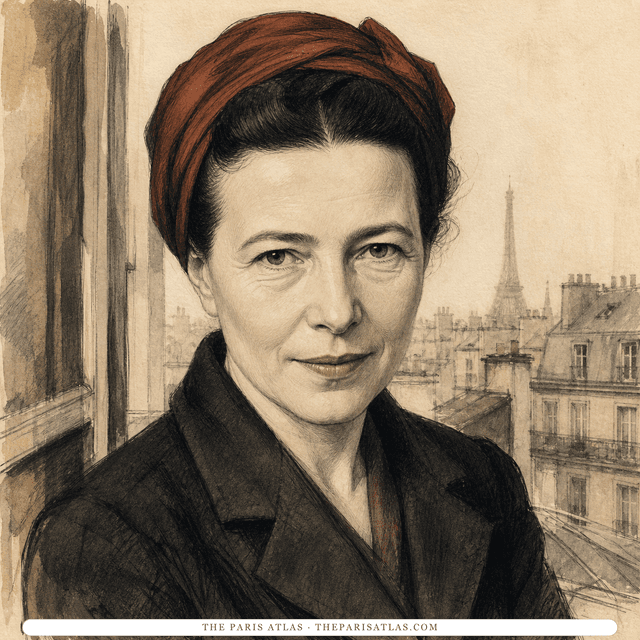
French writer and philosopher whose novels, memoirs, and social analysis examined freedom, gender, responsibility, aging, and the material conditions that shape a life.
View authorThe sources below include the primary text, editions, scholarship, archival materials, and other records that informed this page. They document The World of Lawrence, its publication, and its place in literary history.


Used to place The World of Lawrence within Henry Miller's published work and verify its bibliographic context.

Used for independent biographical, archival, or historical context surrounding Henry Miller's career and the period in which The World of Lawrence appeared.

Used to cross-check authorship, chronology, and the work's place in Henry Miller's wider catalogue.
Used to verify Henry Miller's bibliography and place The World of Lawrence within the broader chronology of Henry Miller's career.
Chapter 8 describes Miller's tree diagram and questions its gendered symbolism. The new reading attributes both the account and the objection to Jong; the original diagram was not independently collated.
The November 12 review, pages 6–8, quotes the comparison of Proust's and Joyce's minds to an abandoned machine. The new paragraph treats it as Miller's polemic, not an objective ranking of the novelists.
The primary text is the baseline reference for every book page. Additional references document publication history, interpretation, and historical context where that evidence is available.
 Explore more resources