


The Time of the Assassins
by Henry Miller
Miller on Rimbaud — the boy who invented modern poetry and walked away — in the least objective, most alive study ever written of him.
- 1956
About Henry Miller
The story, briefly
Spoiler-freeMiller's book on Arthur Rimbaud is a study the way the Colossus is a travel book: officially about its subject, actually a double portrait. Begun after an abandoned attempt to translate A Season in Hell, it reads the poet-prodigy who renounced literature at nineteen as prophet, casualty, and mirror — the patron saint of every artist who ever fled civilization, Miller included. The title is Rimbaud's own phrase: this is the time of the assassins. (A study — nothing here to spoil.)
The story, in more detail
The book began in failure: in the mid-forties Miller set out to translate A Season in Hell and found the poems wouldn't cross — so he wrote around them instead, and the essays grew through the decade into the volume New Directions issued in 1956. His Rimbaud is only lightly biographical: the vertiginous facts — all of modern poetry detonated between sixteen and nineteen, then total renunciation, gun-running and trading in Abyssinia, the amputation, the early death — are scaffolding for the real subject, which is what Rimbaud's surrender means for everyone who kept writing.[1]
Miller reads the poet as his own inverted twin — the analogies between their lives, from the domineering mothers onward, are drawn openly and without embarrassment — and reads the renunciation as the era's great open wound: the purest imagination of the age looked at literature and chose silence. Out of Rimbaud's line about the time of the assassins, Miller builds his indictment of the century that followed — the mechanized, murderous world the poets warned about. Scholars have never known what shelf to put it on; poets have kept it in print for seventy years.[1]
What's inside
Three long essays in rising temperature. First, the life and the analogy: Rimbaud's comet-arc through poetry and out of it, braided with Miller's confession of kinship — the mothers, the flights, the hatred of every harness. Second, the deep reading: what the poems actually did to language, and what the silence after them says. Third, the prophecy: the 'time of the assassins' as the twentieth century's true name, with Rimbaud as the seer who saw it coming and refused to attend.[1]
No French required — Miller quotes in translation and paraphrases freely. Come for Rimbaud; stay for the most naked self-portrait Miller ever smuggled into someone else's biography.[1]
Themes and analysis
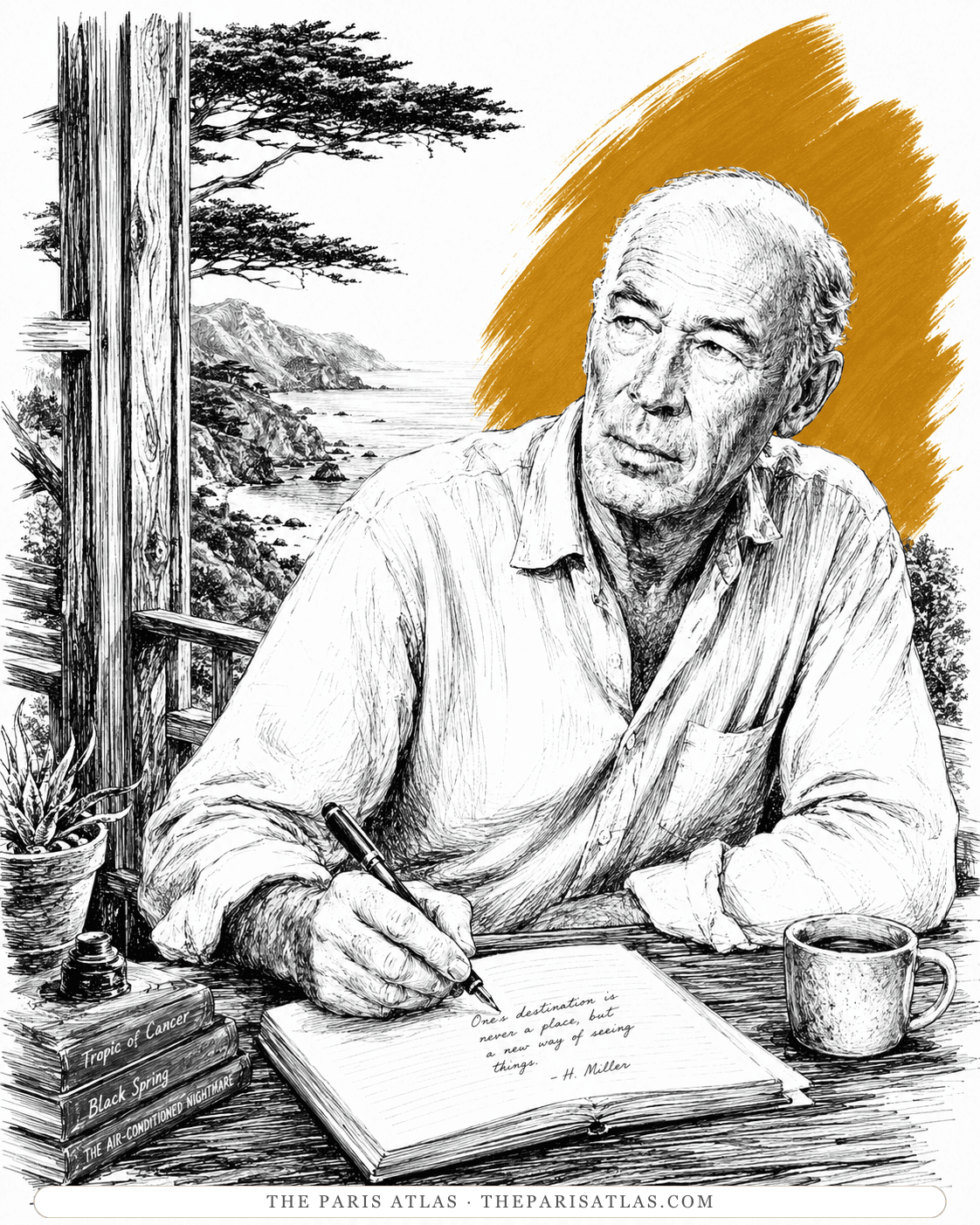
Reading Rimbaud at Big Sur
The preface makes incompletion part of the book's critical method. Miller distinguishes the possibility of translating Rimbaud from the harder task of doing him justice: his own study emerges from a translation that did not meet his ambitions, yet he still hopes to return to it. This continuing intention matters. Criticism is not presented as a final substitute that settles the poems' meaning, but as another form of engagement with an unfinished task. Read beside the imagined desk scene, the preface makes the reader's provisional work more important than any pose of mastery.
The poet turned trader
Miller treats Rimbaud's pursuit of financial security as a paradox of freedom. The amount that would supposedly make him independent keeps increasing, while the money already accumulated demands protection. In the account of illness and travel from Harar, the fortune becomes a physical and mental burden; even depositing it requires help he cannot easily obtain. This is Miller's interpretation of the poet's later life, not a neutral record of the illustrated trading scene. Possession promises an escape from dependence, but the narrative repeatedly shows security producing new obligations and fears.
Guides to this book
Why we recommend it
Criticism at body temperature
Nothing academic survives contact with this prose — it is advocacy, autobiography, and prophecy wearing a study's clothes.
The renunciation, taken seriously
Why would the century's purest poet choose silence and commerce? Miller treats the question as the era's koan.
The dark twin of the Cendrars chapters
Where The Books in My Life celebrates the writers who saved him, this reckons with the one who haunted him.
What this book explores
The people in its pages

Thelma
The preface's Rimbaud-obsessed figure — Jean Kronski, renamed. Her talk at the Henry Street flat planted the subject twenty years before Miller wrote the book; the preface also records her death, in his own words.
Timeline
mid-1940s
Miller sets out to translate Rimbaud's A Season in Hell, finds the poems will not cross into English, and writes his study around them instead; the essays grow through the decade.
1956
New Directions publishes The Time of the Assassins, its title taken from Rimbaud's line in the Illuminations — 'Voici le temps des Assassins.'
1962
New Directions publishes the paperback edition of Miller’s study of Rimbaud.
Book editions
Hardcover
- Hardcover
- New Directions
- 1956

- Paperback
- New Directions
- 9780811201155
Reader reviews
Readers may also like

House of Incest
Nin wrote her prose poem with A Season in Hell at her elbow — her prose poem is the other direct Rimbaud descendant.
Read our take
The Wisdom of the Heart
The doctrine of surrender that Rimbaud's silence both confirms and mocks.
Read our takeThe Time of the Assassins: frequently asked questions
Who wrote The Time of the Assassins?
Henry Miller. New Directions published his study of Arthur Rimbaud in 1956.
What is The Time of the Assassins about?
It reads Rimbaud — the poet-prodigy who invented modern poetry and renounced literature at nineteen — as prophet, casualty, and mirror, the patron saint of every artist who ever fled civilization, Miller included.
Where does the title come from?
From Rimbaud's own line in the Illuminations, "Voici le temps des Assassins" — this is the time of the assassins — which Miller takes as the twentieth century's prophecy fulfilled.
How did the book begin?
In failure: Miller set out to translate A Season in Hell, found the poems wouldn't cross into English, and wrote this study around them instead.
Is it a conventional biography?
No. It is only lightly biographical — a double portrait in which Miller draws the analogies between Rimbaud's life and his own openly, criticism written at body temperature.
If you like Henry Miller
Explore authors with a similar voice, perspective, and influence.

Louis-Ferdinand Céline
Miller's acknowledged master at making literature out of the gutter. Journey gave him permission; Cancer is what he did with it.
View author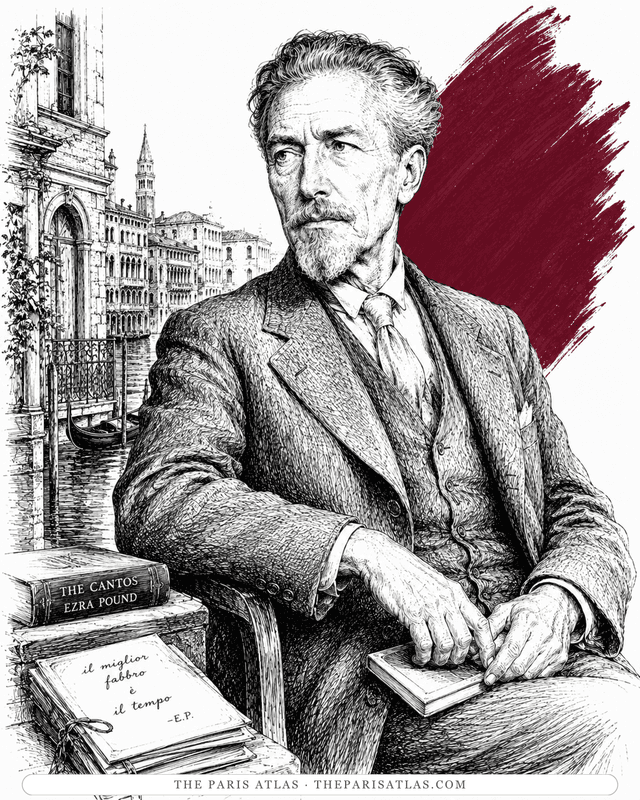
Ezra Pound
Pound read Cancer and sent Miller a famously backhanded postcard. Both believed literature's job was to wake the reader by any means necessary.
View author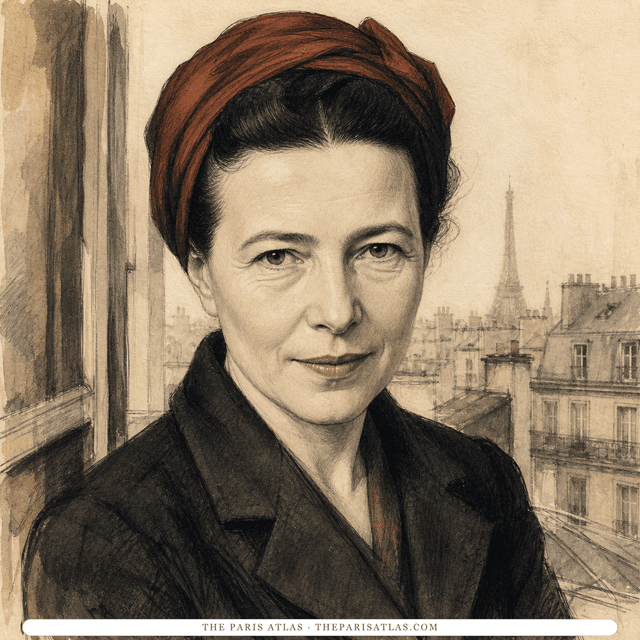
Simone de Beauvoir
French writer and philosopher whose novels, memoirs, and social analysis examined freedom, gender, responsibility, aging, and the material conditions that shape a life.
View author
References
References
The sources below include the primary text, editions, scholarship, archival materials, and other records that informed this page. They document The Time of the Assassins, its publication, and its place in literary history.


2The Happiest Man Alive: A Biography of Henry Miller
BiographySimon & Schuster, 1991Used forBiographical evidence used to verify chronology, relationships, and historical context connected to The Time of the Assassins.
3Henry Miller: A Life
BiographyW. W. Norton, 1991Used forUsed to cross-check the essay’s composition and its place in Miller’s postwar work.


4Henry Miller: New Perspectives
NonfictionBloomsbury AcademicUsed forUsed for an additional critical perspective on Miller’s reading of Rimbaud and his nonfiction method.
5the time of the assassins — edition and reception record
WebsiteNew DirectionsUsed forDocuments the dated edition or contemporary reception included in the timeline.
i
Why these sources are here
The primary text is the baseline reference for every book page. Additional references document publication history, interpretation, and historical context where that evidence is available.
 Explore more resources