
The Cosmological Eye
The first New Directions gathering — rawer, more Paris; this one is the settling.
Read our take
by Henry Miller
Essays from the turn of the decade — writing, Balzac, healers, and bums — where the Paris provocateur starts sounding like a sage.
The second New Directions gathering, published in 1941: essays and a few stories from the hinge years when Miller was leaving Paris behind and deciding what the writing had been for. The title comes from his essay on the English analyst E. Graham Howe, and the phrase names the collection's turn — away from provocation, toward the surrender-to-life doctrine the later Miller preached. Includes 'Reflections on Writing,' the closest he came to explaining his method. (A collection — nothing here to spoil.)
Assembled as the war closed one life and America began another, this is the book where Miller's readers first met the sage who would eventually eclipse the scandal: the essayist of surrender, flow, and the 'wisdom of the heart' — a phrase he took from the London psychoanalyst E. Graham Howe, whose work he reviews here as a fellow traveler rather than a patient. The best-known piece, 'Reflections on Writing,' lays out the method behind the Tropics with disarming candor: the years of imitation, the collapse, the discovery that the only way through was to write as he lived, without revision of the self.
Around the doctrine, the range: two essays on Balzac's mystical novels, a portrait of the painter-madman 'Benno, the Wild Man from Borneo,' and 'The Alcoholic Veteran with the Washboard Cranium' — a long, unsentimental encounter with a broken talker that stands with 'Max' among his best portraits. The collection catches Miller mid-metamorphosis, and the friction between the old savagery and the new serenity is exactly what keeps it alive.
Essays, portraits, and stories from roughly 1938 to 1941. The spine: 'Reflections on Writing,' Miller's own account of how the voice was found; the title essay on E. Graham Howe's psychology of acceptance; and two pieces on Balzac — Seraphita and Louis Lambert — read not as classics but as occult instructions. The flesh: 'The Alcoholic Veteran with the Washboard Cranium,' 'Benno, the Wild Man from Borneo,' 'The Eye of Paris' — the Brassaï essay carried over from the 1938 Paris collection — and shorter dispatches on art, France, and the approaching dark.
Read 'Reflections on Writing' first — ten pages, and every Miller book on this shelf reads differently afterward.
Claude's reading turns a declaration of love into a test of the narrator's performance. She notices the polished passages he has borrowed from Valéry and later corrects his grammar; he, meanwhile, wonders whether elaborating his spontaneous comparison of her to an angel has become manipulative. The exchange makes sincerity and calculation coexist rather than allowing either to explain him completely. Claude is not simply the letter's subject: as its reader, she can expose the uneven workmanship behind his eloquence. His impatience when she corrects him reveals how difficult it is to surrender control of the image he has made.
When Miller picks up Brassaï's prints, recognition runs in two directions. He finds familiar Paris streets, but also reads his own suffering and renewal into them. The photographs become fragments of an inward life without ceasing to belong to another person's vision. Earlier, the essay insists that even a minimally manipulated photograph bears its maker's individuality. The hotel-room encounter therefore complicates the idea that a camera merely copies the city: its images carry Brassaï's way of seeing and awaken Miller's memories. Their affinity emerges through different media, not through an identical account of Paris.
The skeleton key to the whole shelf — how the failed imitator of other men's novels became the voice of the Tropics.
The alcoholic veteran and Benno the wild man join Max in Miller's gallery of magnificent, ruined talkers.
This is where the angry Paris voice audibly becomes the accepting late one — the metamorphosis caught mid-molt.
1938–1941
As the war closes his Paris life, Miller writes the essays and portraits of the collection, among them 'Reflections on Writing,' the closest he came to explaining his method.
1941
New Directions publishes the volume, its second Miller gathering; the title comes from his essay on the London analyst E. Graham Howe, whose doctrine of acceptance he adopted for life.
2016
New Directions reissues the essay collection in December.

The first New Directions gathering — rawer, more Paris; this one is the settling.
Read our take
The late-Miller doctrine this collection announces, given a whole book.
Read our take
The next wartime miscellany — the same voice carried into the forties.
Read our takeHenry Miller. New Directions published it in 1941, its second gathering of his work.
Essays and a few stories from the hinge years when Miller was leaving Paris behind and deciding what the writing had been for — the collection where readers first met the essayist of surrender rather than the provocateur.
From Miller's essay on the London psychoanalyst E. Graham Howe, whose doctrine of acceptance he reviews and then adopted; the phrase names the collection's turn toward his later surrender-to-life philosophy.
The closest Miller ever came to a craft essay — his own account of the years of imitation, the collapse, and the discovery that the only way through was to write as he lived.
It follows The Cosmological Eye and catches Miller mid-metamorphosis, the angry Paris voice audibly becoming the accepting late one.
Explore authors with a similar voice, perspective, and influence.

Miller's acknowledged master at making literature out of the gutter. Journey gave him permission; Cancer is what he did with it.
View author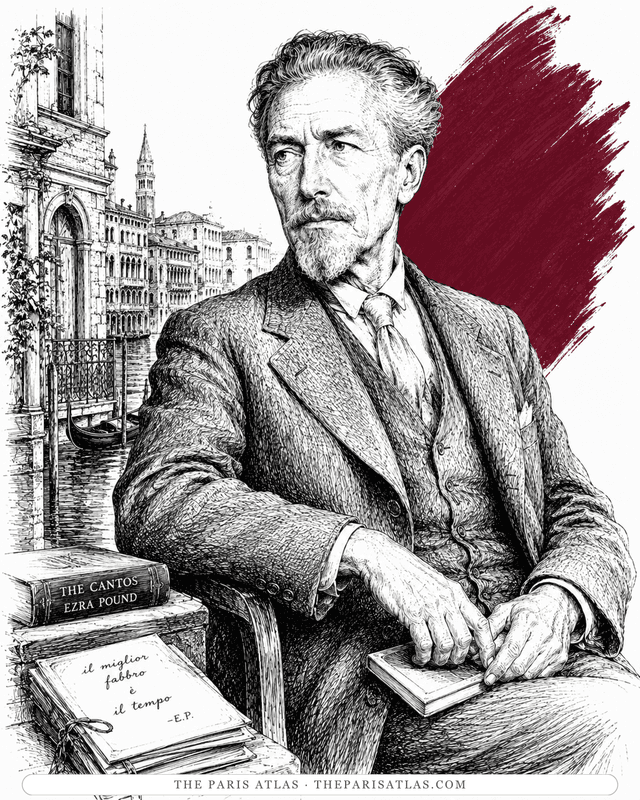
Pound read Cancer and sent Miller a famously backhanded postcard. Both believed literature's job was to wake the reader by any means necessary.
View author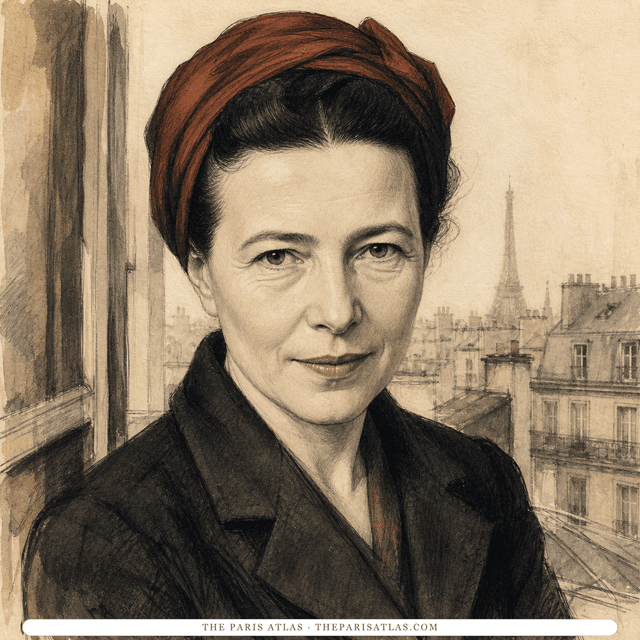
French writer and philosopher whose novels, memoirs, and social analysis examined freedom, gender, responsibility, aging, and the material conditions that shape a life.
View authorThe sources below include the primary text, editions, scholarship, archival materials, and other records that informed this page. They document The Wisdom of the Heart, its publication, and its place in literary history.


Used to place The Wisdom of the Heart within Henry Miller's published work and verify its bibliographic context.

Used for independent biographical, archival, or historical context surrounding Henry Miller's career and the period in which The Wisdom of the Heart appeared.

Used to cross-check authorship, chronology, and the work's place in Henry Miller's wider catalogue.
Used to verify Henry Miller's bibliography and place The Wisdom of the Heart within the broader chronology of Henry Miller's career.
Documents the dated edition or contemporary reception included in the timeline.
The two named pieces were read in the public transcription. Section citations identify the letter exchange and the discussion of photographic individuality and recognition; no print-edition pagination or facsimile collation is claimed.
The primary text is the baseline reference for every book page. Additional references document publication history, interpretation, and historical context where that evidence is available.
 Explore more resources