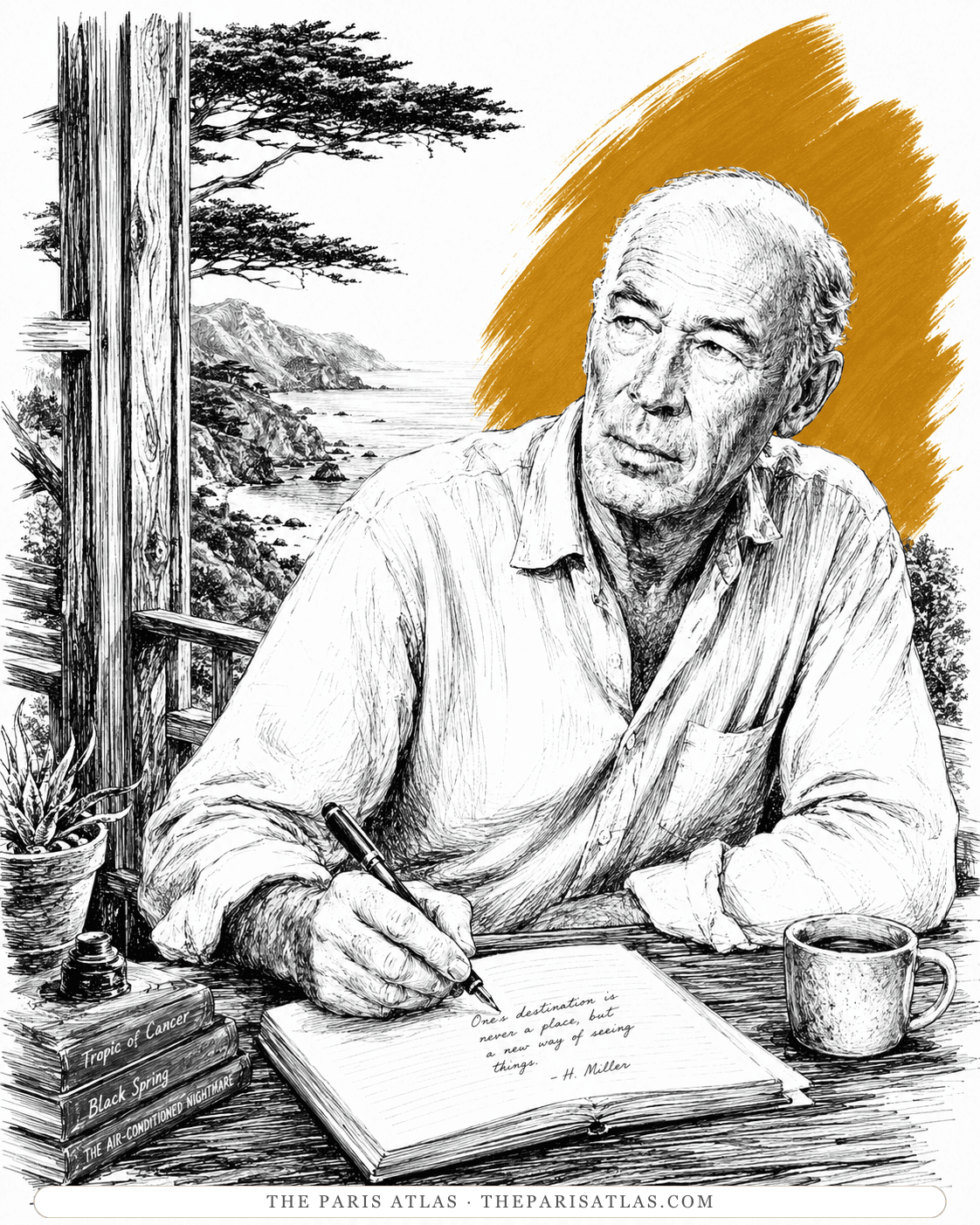

Black Spring
Several pieces here first lived there — the legal edition of an illegal book's spirit.
Read our take
by Henry Miller
The first Miller book America was allowed to read: stories and essays smuggled home from the Paris years, Tropics not included.
In 1939 the Tropics were still contraband, so James Laughlin's young New Directions did the next best thing: a collection of the Paris-years pieces that could legally cross the Atlantic. Stories, portraits, rants, and manifestos — the banned author introduced to his own country through the side door. The title piece is a portrait of a painter; the best-known story, 'Max,' may be the most compassionate thing Miller ever wrote. (A collection — nothing here to spoil.)
By 1939 Miller was famous in America mostly as a rumor — the author of books you had to smuggle past customs. James Laughlin, the Harvard student who had founded New Directions three years earlier on Ezra Pound's advice, solved the problem sideways: gather the legally printable Miller — pieces from Black Spring and the Obelisk collection Max and the White Phagocytes — into one volume and let the country meet the voice, if not yet the novels.
The gathering is the Paris workshop in cross-section: 'Max,' the story of a desperate Jewish refugee Miller half helps and half studies, and can't shake; 'Via Dieppe-Newhaven,' the deadpan account of being turned back from England as an undesirable; and the title essay, a portrait of his Villa Seurat neighbor, the painter Hans Reichel, whose watercolors seemed to Miller to look at the world with a cosmological eye. It stayed in print while the Tropics stayed banned — for two decades, for most American readers, this book was Henry Miller.
Stories, essays, and portraits from the Paris decade, arranged like a night of Villa Seurat talk. The anchors: 'Max,' Miller's unsettling, self-indicting story of a refugee he befriends in Montparnasse; 'Via Dieppe-Newhaven,' the comic-humiliating tale of his failed channel crossing, refused at the English border with francs in his pocket and no good answers; 'The Tailor Shop,' Brooklyn boyhood among his father's cutters and pressers; and the title essay on the painter Hans Reichel. Around them, shorter pieces — dream texts, polemics, an autobiographical note — that read like the novels with the plot removed and the voltage kept.
It asks to be read the way collections of this era do: not straight through, but a piece a night. 'Max' first, if you want the strongest dose.
The opening of The Tailor Shop makes deference part of the day's work. Asking customers to settle their accounts must somehow avoid offending them, while Bendix's endless complaints turn tailoring into an exercise in appeasement. Miller's piling up of grievances gives the scene its comic rhythm, but the retrospective sympathy for his father changes its weight: the joke exposes the cost of serving wealth. Across the street, George Sandusky's polished manners carry the same burden. His appearance as a customer, dignified in his own time, shows how little a person's workplace posture reveals about the life beyond it.
Via Dieppe–Newhaven makes exclusion a matter of encounters rather than an abstract argument. In his contemporary review, George Orwell singles out the contrast between the immigration officials who turn Miller away and the constable who treats him decently during detention. The distinction matters: authority does not erase the possibility of an individual response. Orwell's embarrassment at the episode shifts attention from the traveler's wounded pride to the distance between a country's declared freedoms and its treatment of a vulnerable visitor. Read through that contrast, the failed crossing measures institutions against ordinary consideration for another person.
The collection's center of gravity: a story about charity, disgust, and the limits of both, with nowhere for the narrator to hide.
'Via Dieppe-Newhaven' turns one bureaucratic humiliation into the era's best essay on being undesirable.
Read around the novels, these pieces show the machinery — the portraits and rants the Tropics were built from.
1936–1938
The pieces first appear in Miller's Paris-published volumes — Black Spring (1936) and the Obelisk collection Max and the White Phagocytes (1938).
1939
James Laughlin's New Directions gathers the legally printable Miller into his American debut, a first run of about two thousand copies, while the Tropics stay banned.
1961
With the Tropic of Cancer ban lifted, New Directions reissues it as a mass-market paperback.

Several pieces here first lived there — the legal edition of an illegal book's spirit.
Read our take

New Directions' next Miller gathering — the essays deepening as the war closed in.
Read our takeHenry Miller. New Directions published it in 1939 as his first American book.
A collection of stories, essays, and portraits from Miller's Paris years — the pieces that could legally cross the Atlantic while the Tropics remained banned in the United States.
Tropic of Cancer and Tropic of Capricorn were contraband in America, so New Directions gathered the legally printable Miller instead, introducing the banned author to his own country through the side door.
The title essay is a portrait of Miller's Villa Seurat neighbor, the painter Hans Reichel, whose watercolors seemed to Miller to look at the world with a cosmological eye.
"Max," the story of a desperate refugee Miller half helps and half studies — either his most compassionate piece or his most damning self-portrait, and readers still argue which.
Explore authors with a similar voice, perspective, and influence.
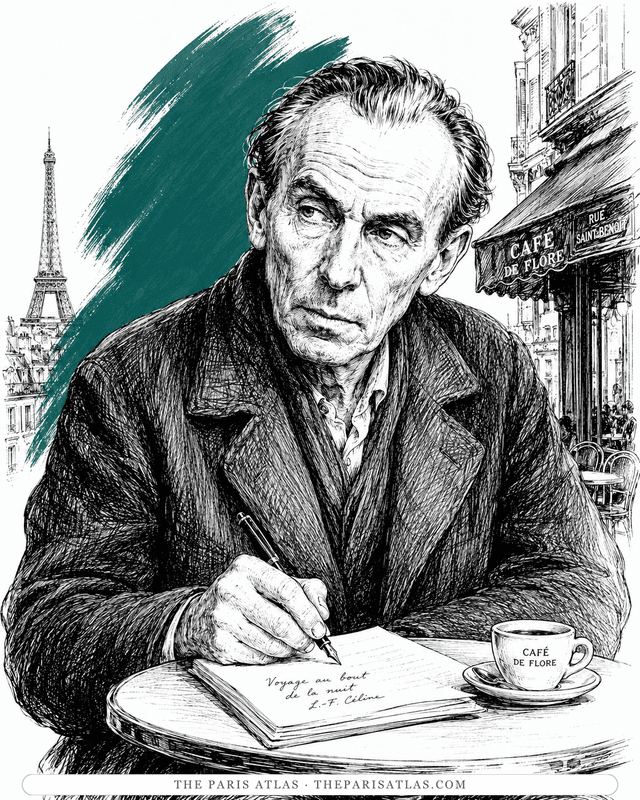
Miller's acknowledged master at making literature out of the gutter. Journey gave him permission; Cancer is what he did with it.
View author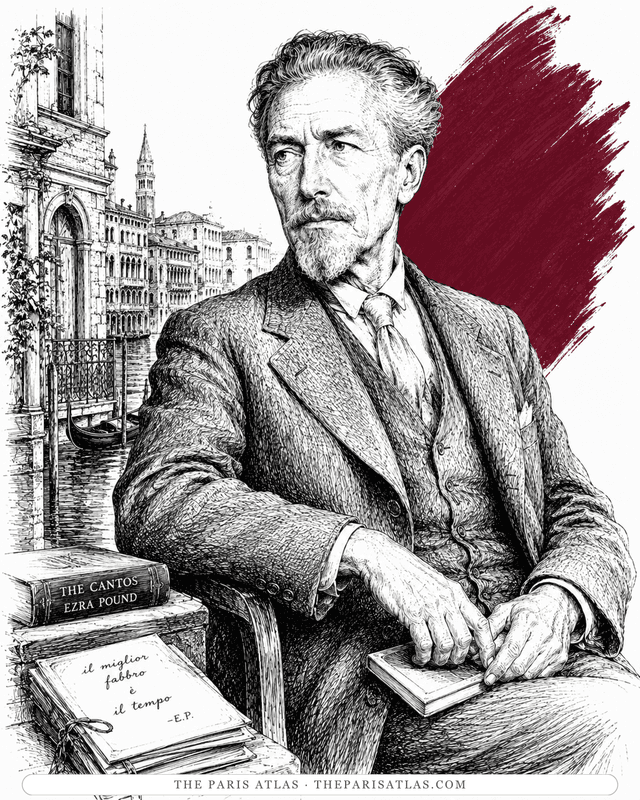
Pound read Cancer and sent Miller a famously backhanded postcard. Both believed literature's job was to wake the reader by any means necessary.
View author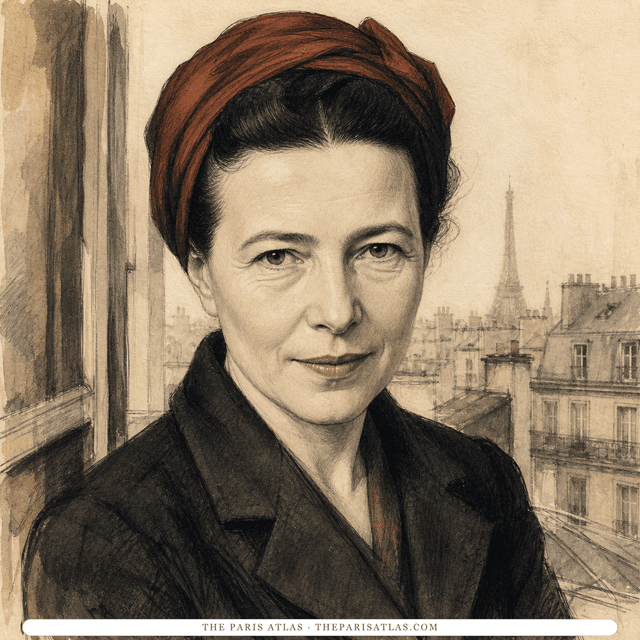
French writer and philosopher whose novels, memoirs, and social analysis examined freedom, gender, responsibility, aging, and the material conditions that shape a life.
View authorThe sources below include the primary text, editions, scholarship, archival materials, and other records that informed this page. They document The Cosmological Eye, its publication, and its place in literary history.


The primary text represented by this page, used for descriptions of the work’s contents and for any quoted passages shown here.
The new tailor-shop reading uses the opening of the story in a public Black Spring transcription; it does not claim a fresh collation of every Cosmological Eye edition.

Orwell's contemporary reading of the immigration officials and the constable is explicitly attributed; the accessible review excerpt was read, not the subscriber-only remainder.
Used to place The Cosmological Eye within Henry Miller's published work and verify its bibliographic context.
Used for independent biographical, archival, or historical context surrounding Henry Miller's career and the period in which The Cosmological Eye appeared.

Used to cross-check authorship, chronology, and the work's place in Henry Miller's wider catalogue.
Used to verify Henry Miller's bibliography and place The Cosmological Eye within the broader chronology of Henry Miller's career.
The primary text is the baseline reference for every book page. Additional references document publication history, interpretation, and historical context where that evidence is available.
 Explore more resources