

Discussed in
Inside the Whale and Other Essays
Orwell takes the essay's governing image from Miller's comparison of Anaïs Nin to Jonah in the whale's belly and develops it into a figure for protected passivity.

by Henry Miller
The Villa Seurat portfolio — portraits, surrealist manifestos, and the essay on Brassaï, gathered by Obelisk in 1938 and never quite reprinted whole.
Twelve pieces from Miller's richest Paris years, published by Obelisk in September 1938 as volume two of the Villa Seurat Series: the portrait of Max the drifter, 'The Eye of Paris' on Brassaï, 'Scenario,' 'An Open Letter to Surrealists Everywhere,' and the first appearance of 'The Cosmological Eye.' The single most concentrated record of the Villa Seurat network in book form.
By 1938 Miller had been at 18 Villa Seurat for four years, and the studio had become the hub of a small industry — the Tropics behind him, Capricorn in progress, and around him the circle of Anaïs Nin, Alfred Perlès, Lawrence Durrell, and Michael Fraenkel. Max and the White Phagocytes gathers what the industry threw off: essays, portraits, prose fantasies, and polemics, dedicated to Betty Ryan, the American painter who lived downstairs.
The range is the point. 'Max' is the collection's one sustained narrative — the portrait of a Paris drifter that New Directions still singles out among Miller's best short work. 'The Eye of Paris' fixes Brassaï, the photographer of the night city, in prose. 'An Open Letter to Surrealists Everywhere' states Miller's terms with the movement he kept being mistaken for. 'Scenario' reprints his House of Incest fantasia; 'The Cosmological Eye,' 'Glittering Pie,' and 'Un Être Étoilique' — on Nin's diary — fill out a book that is less a collection than a portfolio of every voice Miller had.
It never got a clean modern reprint under its own name: the pieces scattered — most of them into The Cosmological Eye, New Directions' 1939 American gathering — and the 1938 Obelisk original became a collector's book. We record it as the Paris object it was; readers who want the texts today will find nearly all of them one shelf over.
Twelve pieces: 'The Cosmological Eye,' 'Glittering Pie,' 'Scenario,' 'Max,' 'The Eye of Paris,' 'An Open Letter to Surrealists Everywhere,' and 'Un Être Étoilique' among them — portraits, speculative essays, travel fragments, surrealist address, and dramatic prose, written in and around the Villa Seurat studio between the Tropics.
Read 'Max' first: the story of the collection, and the reason the book's title leads with him. Then 'The Eye of Paris,' the Brassaï essay, for the clearest statement of what Miller thought seeing meant. The rest is the workshop with the doors open.
Near the end of 'Max,' the man observed by the narrator speaks through a distressed letter. Noise, sleeplessness and attempts to read Miller's book crowd into the same rush of words. Guy Stevenson contrasts this painful disorder with the creative exhilaration Miller associates elsewhere with a crowded mind. Read in that light, Max unsettles any easy claim that deprivation automatically produces artistic freedom. For the observer, another person's distress can become material; for Max, it is a night he cannot get through. Including his appeal makes that difference harder to overlook.
In 'The Eye of Paris,' Miller praises Brassaï for photographing an ordinary park chair without rearranging it or imposing a sentimental story. Yet Miller's own prose does something less restrained: the chair grows into a throne and a promise of human renewal. That tension makes the essay more than a statement of photographic neutrality. Looking faithfully at an object becomes the starting point for imaginative expansion. The photographer's refusal to embellish is celebrated through a writer's deliberately extravagant language, so simplicity and rhapsody depend on one another rather than canceling each other out.
Discussed in
Orwell takes the essay's governing image from Miller's comparison of Anaïs Nin to Jonah in the whale's belly and develops it into a figure for protected passivity.
Nin, Perlès, Brassaï, the surrealists, the studio at No. 18 — the whole network is in these pages, as subjects, dedicatees, and sparring partners.
The portrait of the drifter Max is Miller's short-form best: the comedy, the cruelty, and the pity all working at once.
'The Eye of Paris' on Brassaï and 'Un Être Étoilique' on Nin's diary are his finest critical prose — the scandal novelist revealed as a first-rate appreciator.
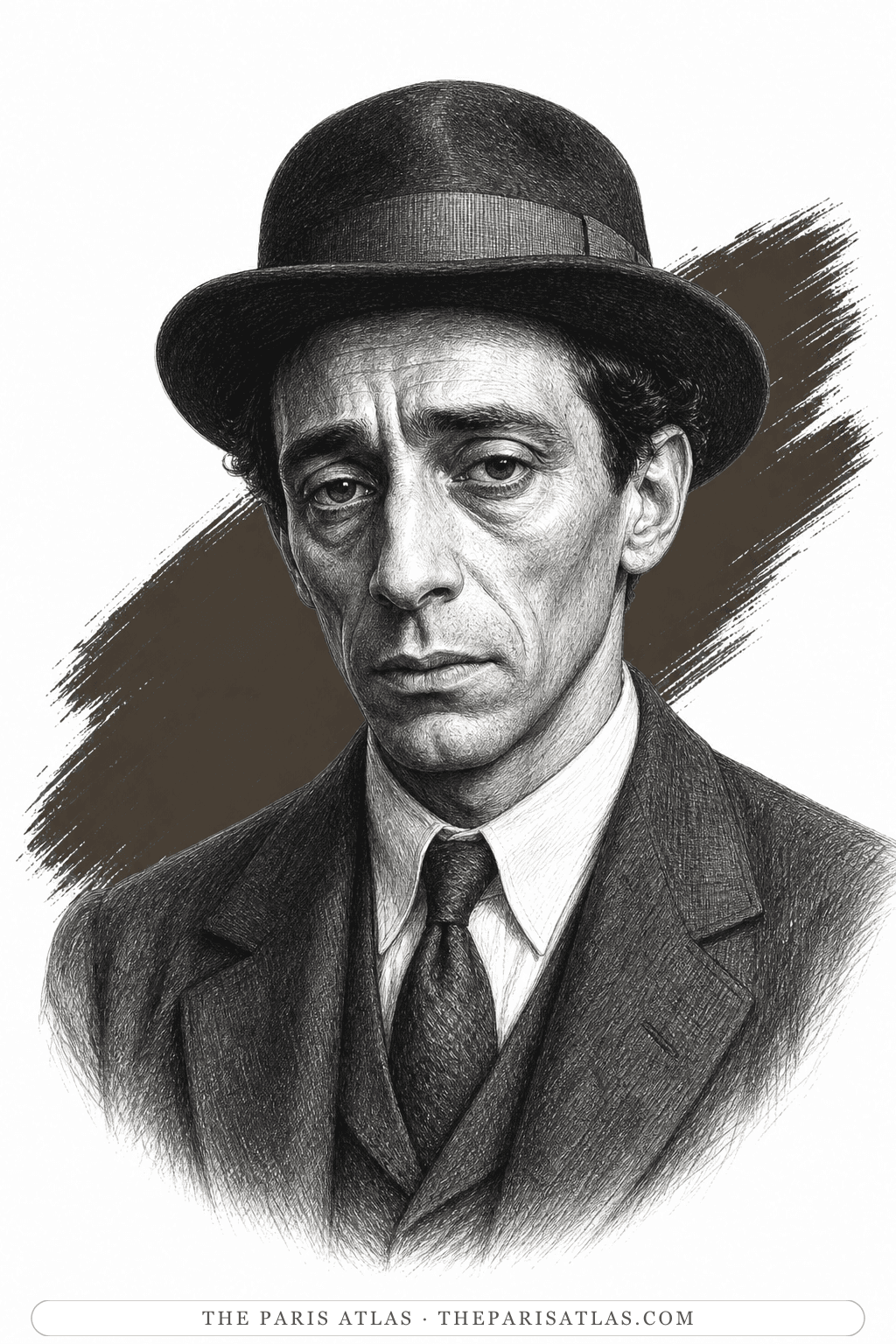
The title portrait — a garment presser from near Lemberg, adrift in Paris, whom Miller can neither help nor shake. The collection's one sustained narrative, and among his most praised short work.
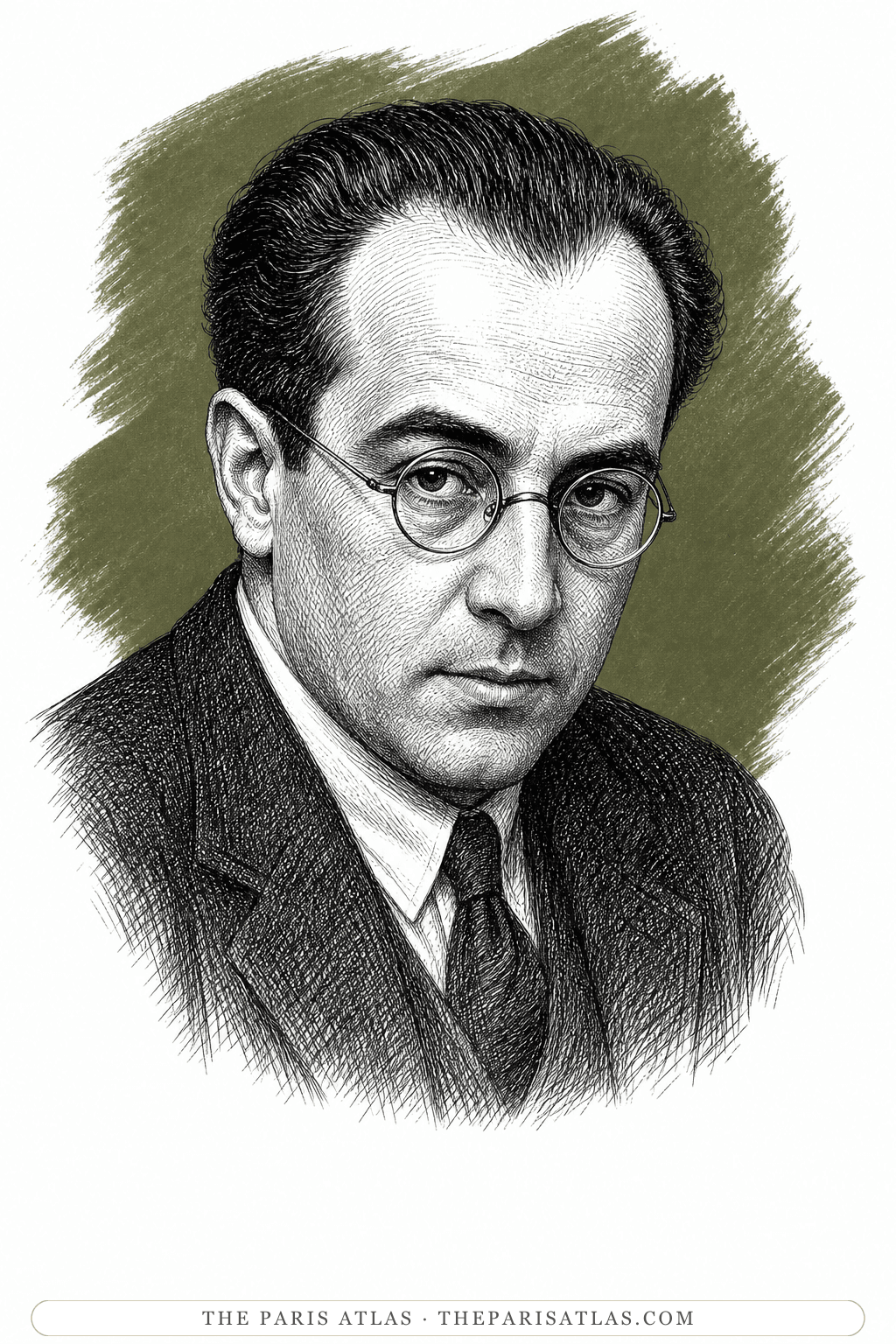
Subject of 'The Eye of Paris' — Miller's essay on the photographer of the night city, argued through particulars: a municipal park chair, a chicken plucked at midnight behind a lit window in Levallois-Perret, the prints spread across the bed of Brassaï's hotel room.
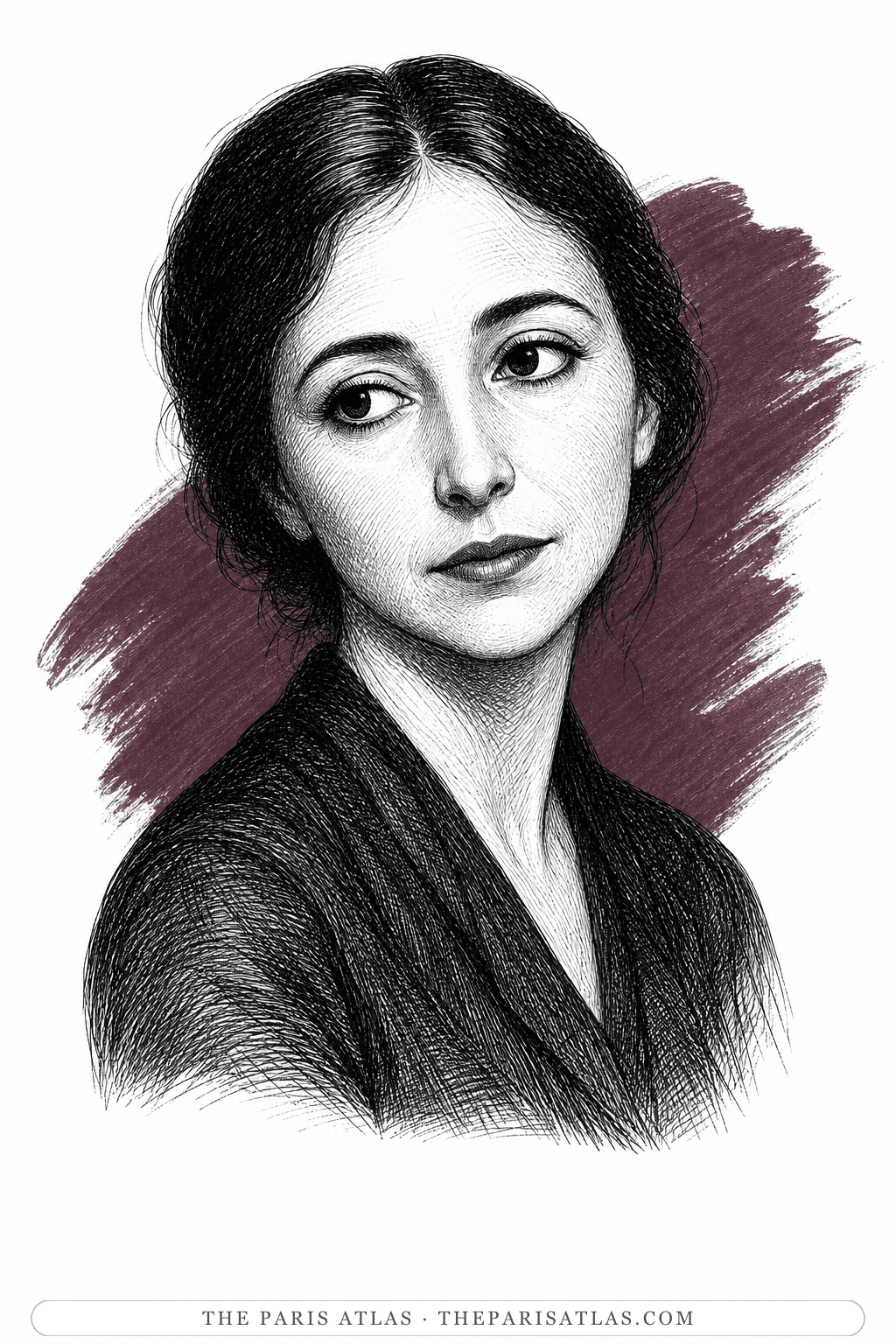
Subject of 'Un Être Étoilique' — the essay on her then-unpublished diary, decades before the diary made her famous.
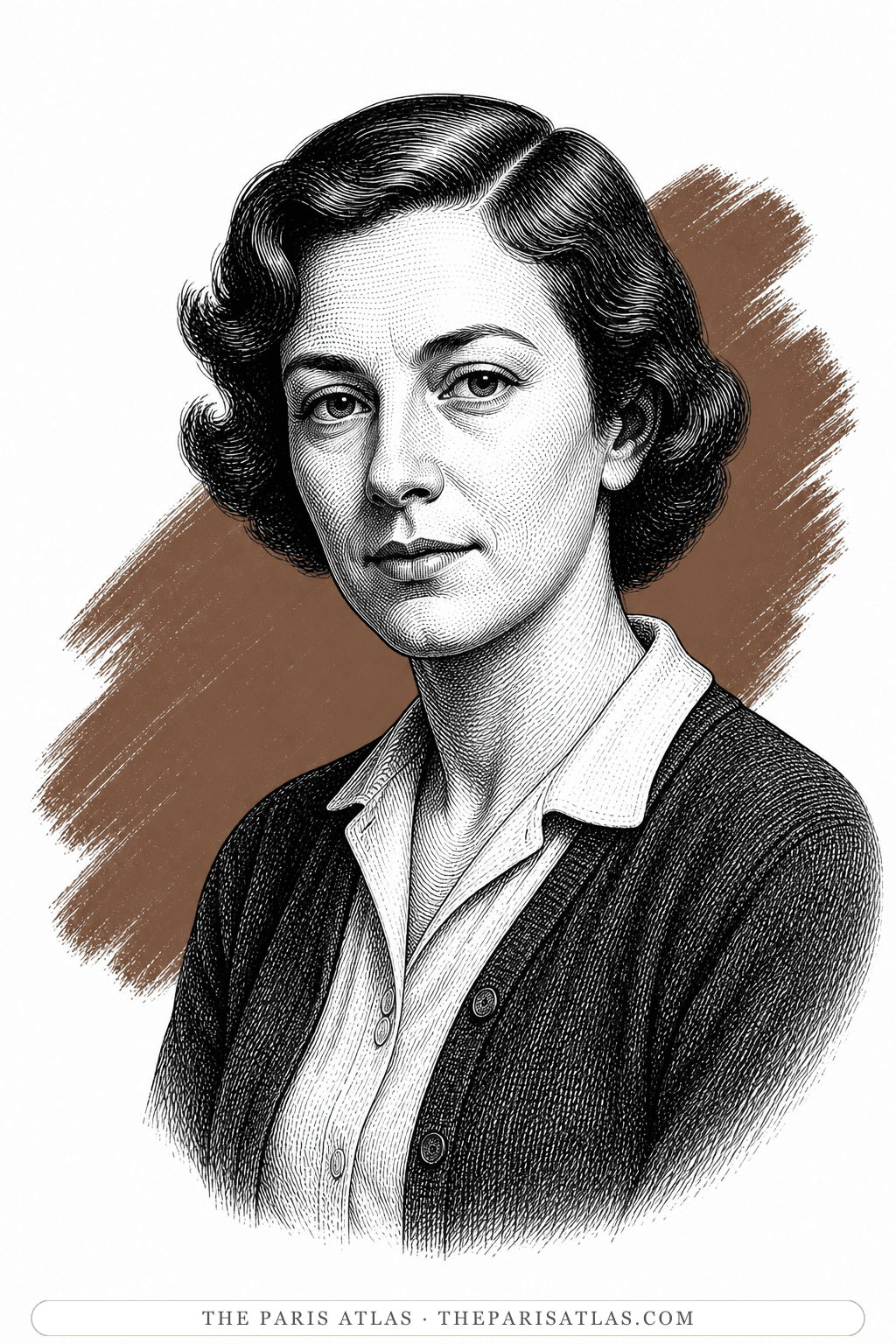
The dedicatee — the American painter on the ground floor of 18 Villa Seurat.
1938
Obelisk publishes the collection in September, volume 2 of the Villa Seurat Series, dedicated to Betty Ryan.
1939
The Cosmological Eye (New Directions) carries most of the contents to America.
1970
Calder & Boyars pairs it with The World of Sex — the title's one ISBN-bearing edition.


The 1939 American gathering that carried most of these pieces into print that lasted — the practical way to read this book today.
Read our take
Written in the same studio in the same years; the major work these pieces orbit.
Read our take

The narrative version of the same Paris poverty these essays keep touching.
Read our takeA 1938 Obelisk Press collection of twelve Miller pieces — essays, portraits, and prose fantasies from his Villa Seurat years, including 'Max,' 'The Eye of Paris,' 'Scenario,' and the first 'The Cosmological Eye.' A collection, not a novel.
Max is the book's central portrait, a Paris drifter; the white phagocytes — the blood cells that consume invaders — supply the metaphor the portrait turns on. The title pairs the man with what the world does to men like him.
Through The Cosmological Eye, the 1939 New Directions collection still in print, which absorbed most of these pieces. The 1938 Obelisk original is a collector's item, and the only ISBN under this title belongs to a 1970 Calder & Boyars pairing with The World of Sex.
Betty Ryan, the American painter who lived on the ground floor of 18 Villa Seurat — a fixture of the circle around Miller's studio.
Yes — Obelisk issued Scenario alone in 1937 in 200 copies, and this collection reprinted it the following year. It is Miller's surrealist film-in-prose, written after Anaïs Nin's House of Incest.
Explore authors with a similar voice, perspective, and influence.
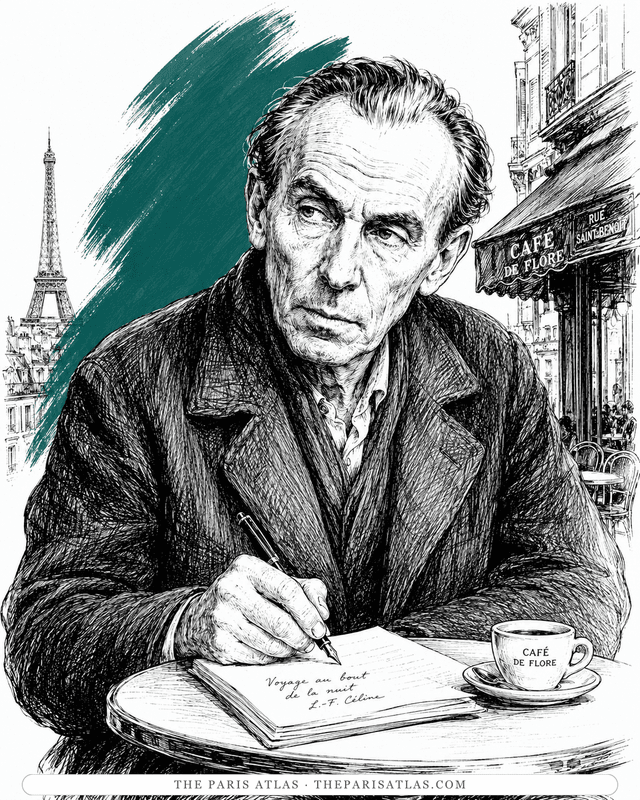
Miller's acknowledged master at making literature out of the gutter. Journey gave him permission; Cancer is what he did with it.
View author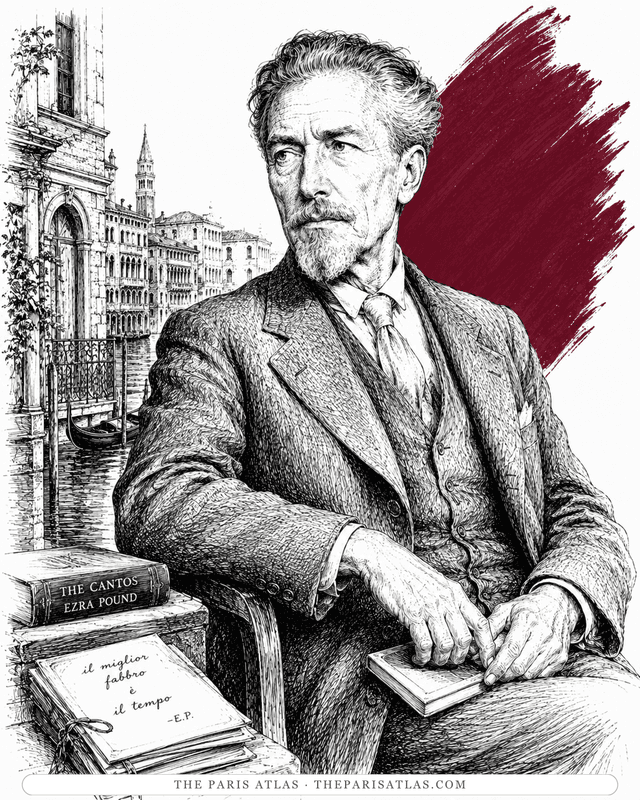
Pound read Cancer and sent Miller a famously backhanded postcard. Both believed literature's job was to wake the reader by any means necessary.
View author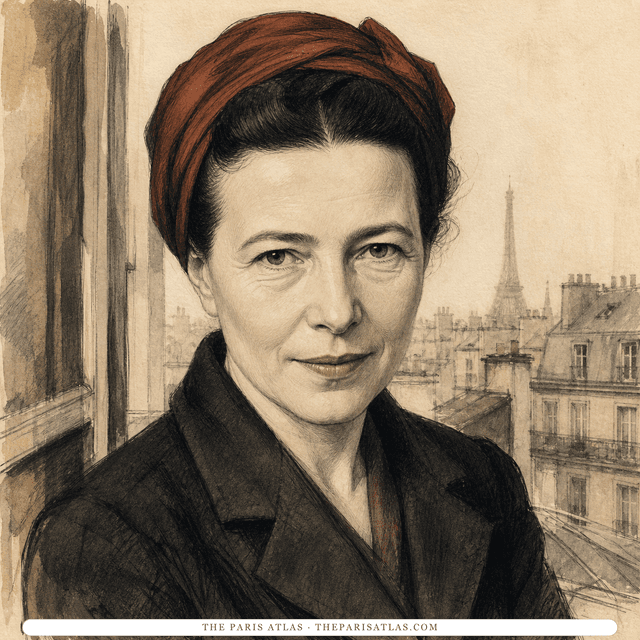
French writer and philosopher whose novels, memoirs, and social analysis examined freedom, gender, responsibility, aging, and the material conditions that shape a life.
View authorThe sources below include the primary text, editions, scholarship, archival materials, and other records that informed this page. They document Max and the White Phagocytes, its publication, and its place in literary history.


The primary text represented by this page, used for descriptions of the work’s contents and for any quoted passages shown here.

Archival evidence used to document the historical record connected to Max and the White Phagocytes.
Used to cross-check the Villa Seurat chronology and the collection’s place in Miller’s Paris work.
Used for an independent biographical account of Miller’s writing and publishing circumstances in the late 1930s.
The archival inventory supplies independent manuscript and bibliographic context for Miller’s collected pieces.

The reading of Max's letter draws on pp. 138–140 and their quoted passage; the critical contrast is attributed to Stevenson.
Reproduces the passages about Brassaï's unaltered subjects and park chair used in the second analysis paragraph.
The primary text is the baseline reference for every book page. Additional references document publication history, interpretation, and historical context where that evidence is available.
 Explore more resources