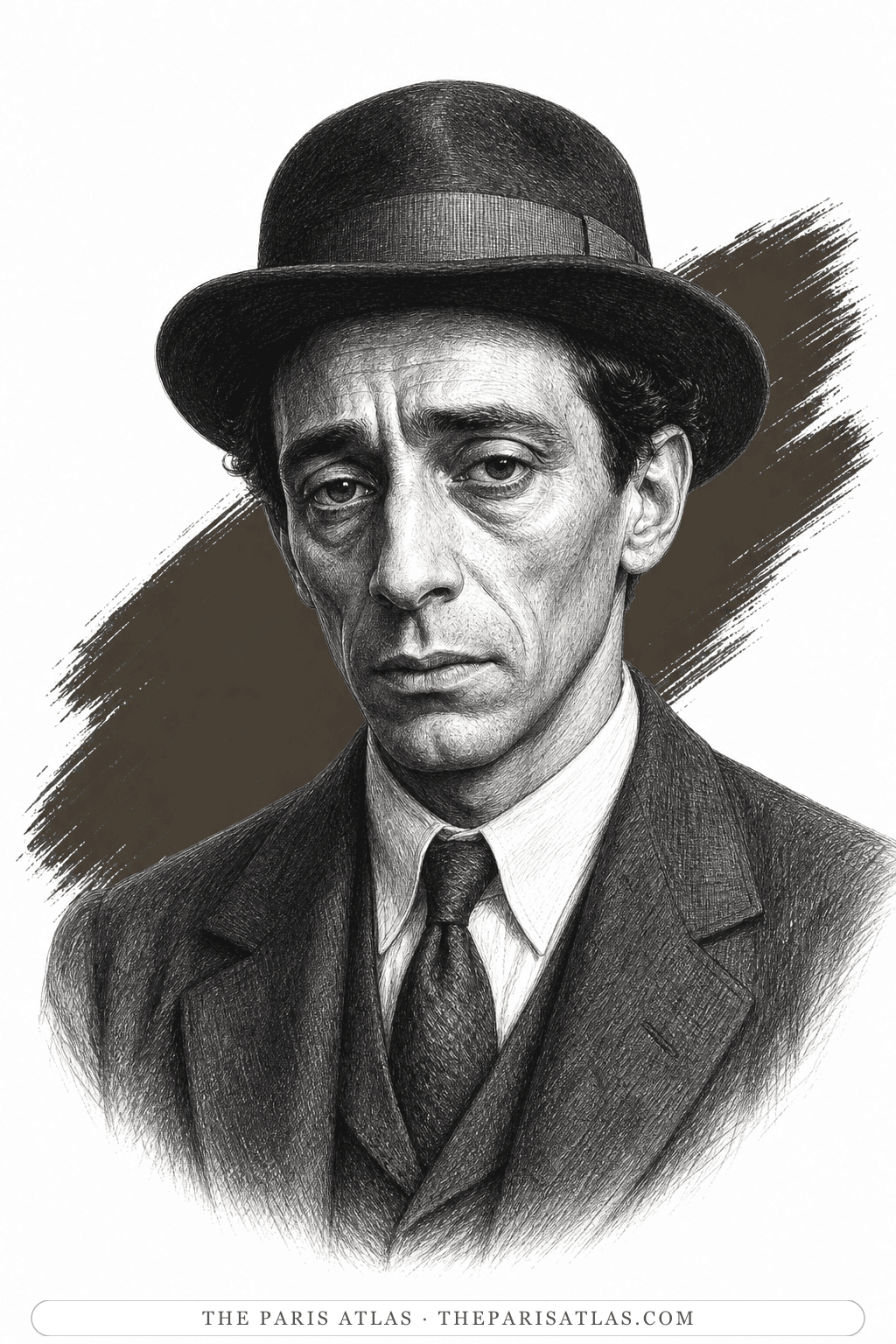
Max
The title portrait — a garment presser from near Lemberg, adrift in Paris, whom Miller can neither help nor shake. The collection's one sustained narrative, and among his most praised short work.
The book

At a glance
- Garment presser — twenty years at the iron, New York union shops to Paris piecework
- Near Lemberg, Galicia, then Austria-Hungary
- Forty-three
- A hotel room on the Rue de la Harpe, thirty-seven francs a week
- A sister last known in Coney Island, under a name he gives two ways
- A carte d'identité stamping him a 'tourist' — issued at Basle, useless for work
Who they are in the book
Spoiler-freeMax is the only figure in the collection who gets a whole piece to himself, and the piece is the reason the book leads with his name. He is a Jewish garment presser from near Lemberg in Galicia, twenty years at the iron, washed from New York to Vienna to Paris on the Depression's tide — and when the portrait opens he has attached himself to Miller, surfacing on the boulevards with a face Miller reads as a mask of sorrow put on expressly for him.
Miller presents him as a real man, not an invention, and the portrait's cruelty is that it says so: Miller studies him, avoids him, buys him sandwiches, gives him a suit, writes letters for him, and admits on the page that he is mining every meeting for material. Whether everything Max tells him is true is doubted inside the text itself — Miller calls one story fishy and lets it stand — and history records no surname for him. We therefore keep him here, as the book presents him, rather than claiming a person the record cannot document.
The profile is drawn from the text of the portrait as reprinted in The Cosmological Eye (New Directions, 1939), read in the Internet Archive scan of that edition.
How Max Is Portrayed
- The mask of sorrowHe materializes head-on out of evening crowds, always near Miller's door, wearing an expression of woe Miller is convinced is clapped on expressly for him — lit, Miller writes, by a little wax taper carried inside.
- A condition, not a manMiller inflates him into the personification of Unemployment, Hunger, Misery, Despair — a part of the landscape like rocks and flower stalls, closer than a bedbug, impossible to be rid of with a coin.
- The beautiful English suitPulled off a train at Basle and re-papered as a 'tourist,' he returns to Paris in a fine suit of English cut and a stiff velour hat — dressed too well to beg, a walking joke at his own expense that he tells himself: 'If only I shouldn't look so well!'
- The presser's bodyStripped to his underwear for a bath, he looks to Miller like a gnarled tree that has painfully learned to walk — a body twisted by twenty years over a hot iron, strong as a bull and worn out at forty-three.
- Face to face with BorisMiller stages a meeting with Boris — two Jews, two kinds of suffering: Max's physical, of hunger and hard benches; Boris's elegant and metaphysical, received from a couch as though at the opera. The scene is the portrait's center.
- The inscribed bookMiller gives him a copy of his own novel inscribed to 'the only man in Paris who really knows what suffering is' — then watches him browse it in clean linen, and wonders where the book will wander after Max.
- The pneumatiqueThe portrait closes on Max's own voice: a letter in broken English, terrified of the night, of sickness, of being done away with as a foreigner — 'I don't want no money, I'm going crazy.' Miller prints it nearly whole.
If you like Max and the White Phagocytes


If you like Henry Miller
Explore authors with a similar voice, perspective, and influence.

Louis-Ferdinand Céline
Miller's acknowledged master at making literature out of the gutter. Journey gave him permission; Cancer is what he did with it.
View author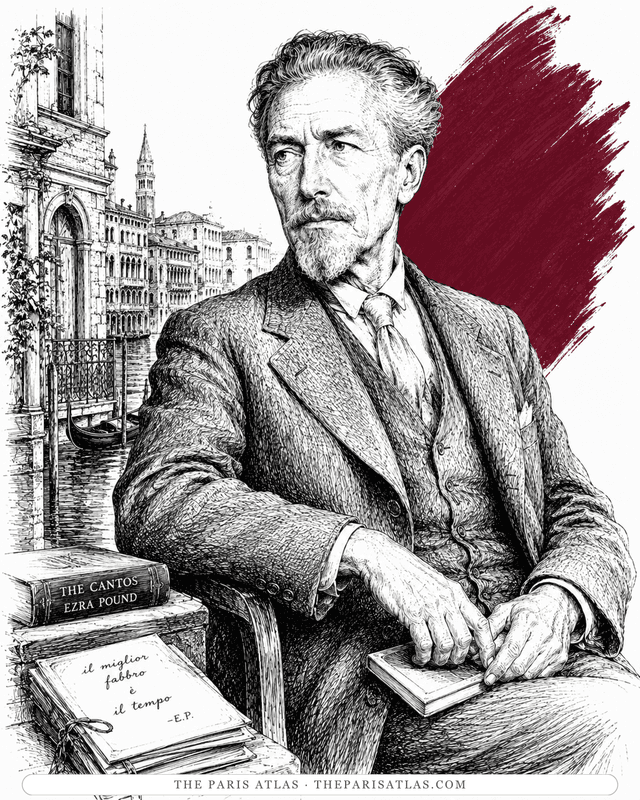
Ezra Pound
Pound read Cancer and sent Miller a famously backhanded postcard. Both believed literature's job was to wake the reader by any means necessary.
View author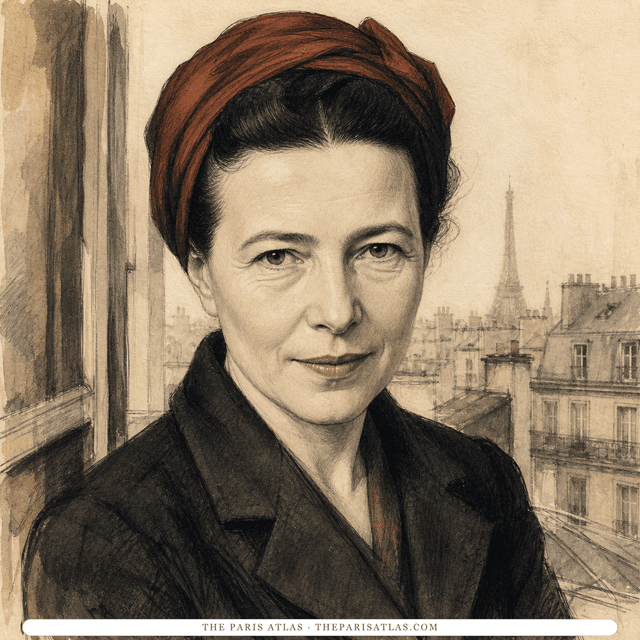
Simone de Beauvoir
French writer and philosopher whose novels, memoirs, and social analysis examined freedom, gender, responsibility, aging, and the material conditions that shape a life.
View author