The Paris AtlasCharting the artists, works, and places worth returning to.
Cover of Dateline: Toronto by Ernest Hemingway

Dateline: Toronto

by Ernest Hemingway

The complete Toronto Star files, 1920–1924: the twenty-something in Paris, learning the style on deadline for a newspaper an ocean away.

Published
1985Posthumous
Setting
Paris, Spain, Italy
Shelf rating
3.9

About Ernest Hemingway

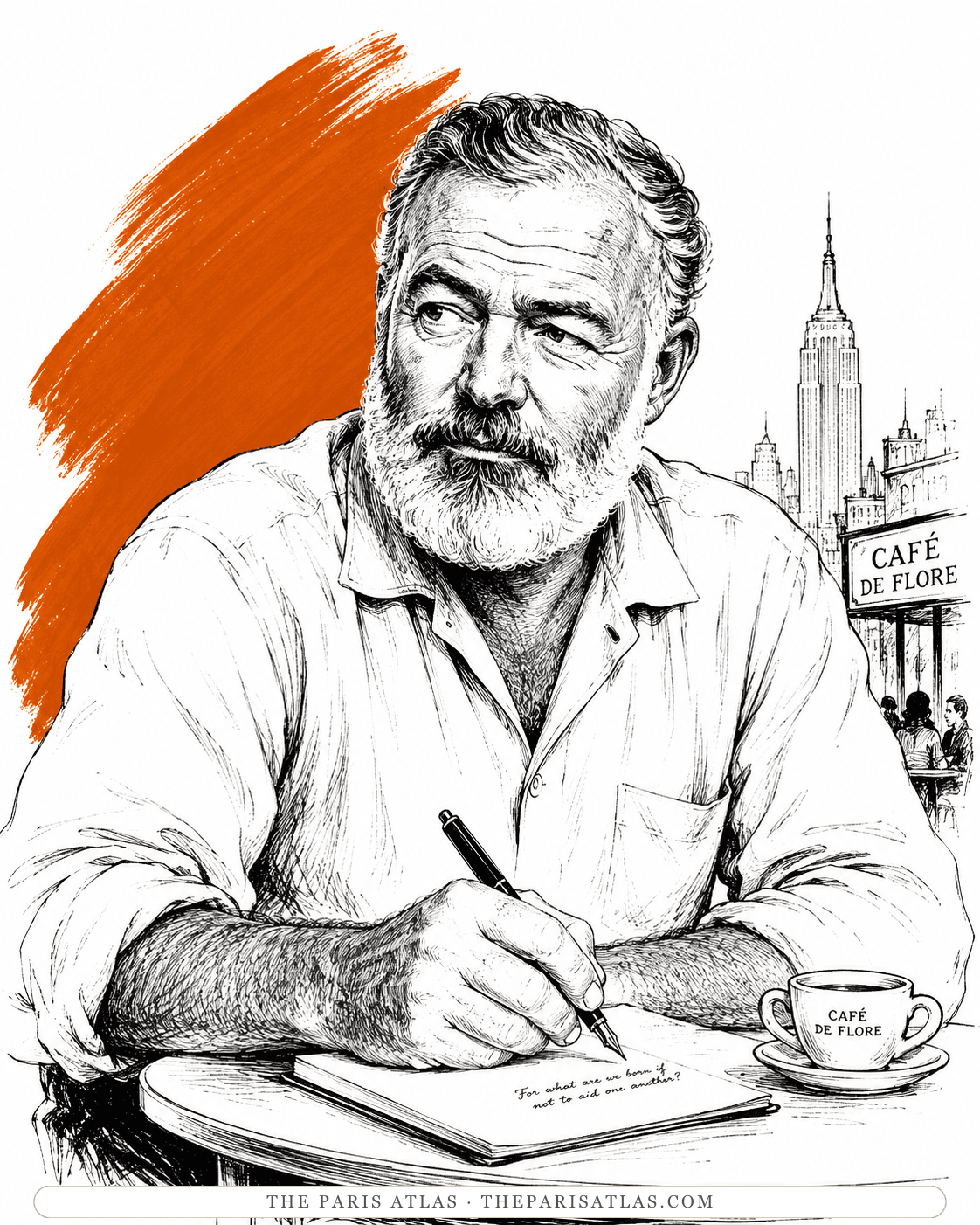
Illustrated portrait of Ernest Hemingway
Ernest Hemingway

31 books on our shelvesWhere to start

The story, briefly

Spoiler-free

Everything Hemingway wrote for the Toronto Star, complete: 172 pieces from 1920 to 1924, the great majority filed from Europe — Paris cafés and their poseurs, tips for Canadians living well on a falling franc, trout streams, Genoa and Lausanne conference politics, Constantinople's refugee roads, and the Ruhr under occupation. Published in 1985, it is the fullest record of the apprenticeship: the style of the century being worked out in weekly installments, for readers in Ontario. (Dispatches — nothing here to spoil.)

The story, in more detail

The Star was the arrangement that made Paris possible: hired as a stringer, then roving correspondent, Hemingway landed in France in December 1921 with a mandate to write whatever interested him at space rates — and the paper's files became the seedbed of everything. The famous pieces are here whole: 'American Bohemians in Paris' skewering the Rotonde's poseurs (the scum of Greenwich Village, skimmed and shipped); 'Living on $1,000 a Year in Paris'; the tuna of Vigo; the Swiss luge pieces — alongside the serious apprenticeship: Genoa's diplomacy, Constantinople's misery, the Greek refugees on the Karagatch road that became In Our Time's most indelible vignette.

Editor William White printed everything, weak with strong, which is the volume's scholarly point: you watch the style assemble itself — the cable-born economy, the eye for the exact detail, the flat sentence learning its power — and you watch the material bank itself for later withdrawal. The Star connection ended in 1924 when the paper wanted him at a desk in Toronto and literature wanted him in Paris; literature won, and these pages are the severance file. For us it is the primary source: the expatriate Paris of the memoirs, reported the week it happened.

What's inside

All 172 Star pieces, chronological: the Chicago-written early features; the Paris arrival and the expatriate-life dispatches; the 1922 conference circuit — Genoa, then the Greco-Turkish war and the refugee columns, then Lausanne — the 1923 Ruhr series on France's occupation; Spain discovered, bullfights included; Swiss winters, German inflation, Italian fascism with Mussolini met and coldly measured; and the last Toronto-desk months before the break for literature.

Read 'American Bohemians,' 'Living on $1,000 a Year,' and the Karagatch dispatch first — our Paris, the budget it ran on, and the war material that became the art.

Why we recommend it

  1. The complete apprenticeship

    Not a selection — everything, so the development is visible piece by piece, misfires included.

  2. Expatriate Paris, datelined

    Cafés, exchange rates, poseurs, and streets we map — reported the week of, not remembered from.

  3. History at ground level

    Refugee roads, occupied Ruhr, rising fascism — the twenties' catastrophes covered by an unknown of twenty-three.

What this book explores

Stories in its pages

Work inside this book that also had a life of its own.

Two Christmas Tales — standalone printing

Two Christmas Tales

The young Hemingways' holidays abroad, filed for the Star Weekly in 1923 — Christmas among the mountains and the expatriate poor, reported with the housekeeping details the fiction would later famously omit. The two pieces were revived in 1959 as a little keepsake pamphlet under this title; here they sit where they began, among the week's other dispatches.

Timeline

  1. 1921

    Hired by the Toronto Star as a stringer and roving correspondent, Hemingway lands in France in December with a mandate to write whatever interests him at space rates — Paris cafés, budget tips for Canadians, the European conference circuit.

  2. 1924

    The Star wants him at a Toronto desk; he chooses literature and Paris, ending the connection after 172 pieces filed since 1920.

  3. 1985

    Scribner gathers the complete Star dispatches as Dateline: Toronto, edited by William White.

Book editions

Hardcover
Hardcover
Scribner
1985
First edition — the complete Star dispatches, edited by William White
Paperback edition cover
Paperback
Scribner
ISBN-13
9780684854632

Reader reviews

Loading reviews…

Recommended alongside On Paris and Hemingway at Oak Park High.

Dateline: Toronto: frequently asked questions

Who wrote Dateline: Toronto?

Ernest Hemingway. Scribner published the complete Toronto Star dispatches in 1985, edited by William White.

What is Dateline: Toronto?

Everything Hemingway wrote for the Toronto Star — 172 pieces from 1920 to 1924, most filed from Europe: Paris cafés, budget tips for Canadians, conference politics, and the refugee roads of the Greco-Turkish war.

Why does it matter?

It is the fullest record of the apprenticeship — the century's style being worked out in weekly installments, for readers in Ontario, at space rates.

Which pieces are essential?

"American Bohemians in Paris," "Living on $1,000 a Year in Paris," and the Karagatch refugee dispatch that became one of In Our Time's most indelible vignettes.

Did Hemingway really size up Mussolini in it?

Yes. He met Mussolini in 1922–23 and filed him as "the biggest bluff in Europe" — one of the era's coldest early reads.