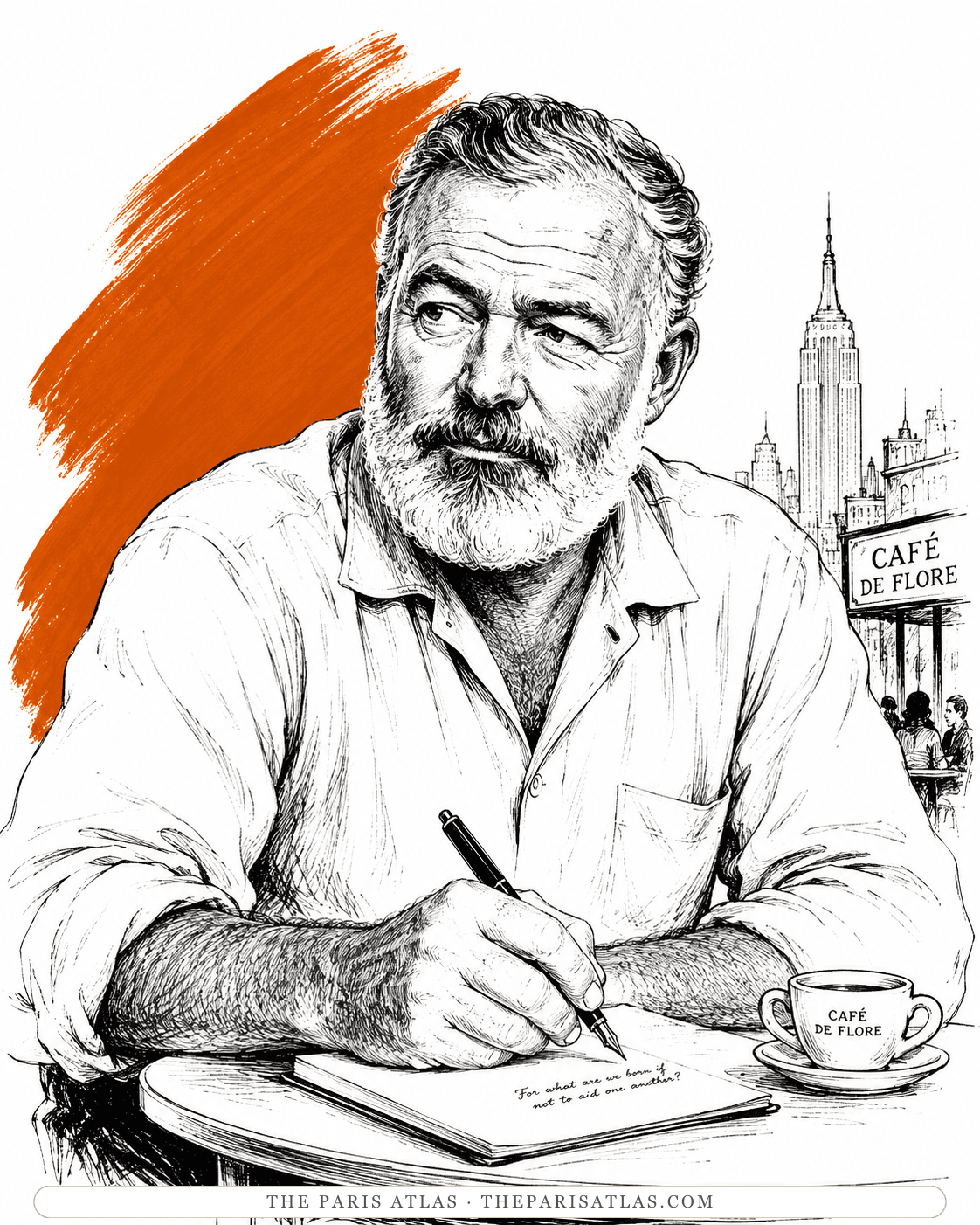

Dateline: Toronto
The complete early files this selection skims — the Star years entire.
Read our take
Four decades of journalism in one volume — Paris cafés for the Toronto Star, Madrid under shells, the Blitz, the liberation ride to the Ritz.
Published in 1967, six years after his death, By-Line collects the cream of Hemingway's journalism: seventy-odd dispatches and articles spanning 1920 to 1956 — the young Toronto Star man working Paris and Lausanne, the Esquire 'letters' from Key West and Africa, the Spanish war dispatches, and the Second World War from the Channel to the Hürtgen Forest. The reporting was the apprenticeship, the day job, and sometimes the first draft of the fiction; here it stands as a shelf of its own. (Dispatches — nothing here to spoil.)
Hemingway kept journalism at arm's length in theory — a writer, he warned, could be ruined by it after the learning years — and practiced it his whole life. Editor William White's selection catches every phase: the Star apprentice filing Paris color pieces and covering the Genoa and Lausanne conferences; the Esquire celebrity of the thirties, writing 'letters' on marlin, lions, and the coming world war with terrifying prescience ('Notes on the Next War' called the date nearly to the year); the NANA correspondent in Spain filing under fire; the middle-aged war correspondent attaching himself to the 22nd Infantry from Normandy into Germany — and, in the famous telling, liberating the Ritz bar ahead of the army.[1]
The collection's fascination is watching the two crafts feed each other: dispatches that became stories nearly verbatim, reportage rehearsing the fiction's scenes years early, and everywhere the style being invented on deadline. The Paris pieces alone — cafés, poseurs, trout streams, currency arbitrage for Canadians — are a young expatriate's guidebook to exactly the world we map. For readers who know only the novels, By-Line is the workshop with the doors open.[1]
Four movements, chronological. The Star years, 1920–24: Paris vignettes, European conference politics, the Greco-Turkish war's refugee columns — the material In Our Time compressed. The Esquire years, 1933–36: fishing, hunting, literary opinions, and the war predictions. Spain, 1937–38: Madrid, the Ebro, the retreats, filed for the wire services. The Second War, 1944–45: the Channel crossing, Normandy, the liberation of Paris, the Hürtgen Forest's meat grinder — plus late miscellany, including the account of the two African plane crashes he read his own obituaries after.[1]
Dip anywhere; the young Paris pieces and the 1944–45 run are the essential stretches.[1]
In American Bohemians in Paris, the café crowd's efforts to look individual produce a recognizable uniformity. The reporter builds that reversal through busy movement, noise and sharply unflattering portraits. His final distinction between talking about art and making it turns a colorful excursion into an argument about work. Yet the confidence of the verdict deserves scrutiny: the people described rarely answer back, and physical caricature helps dismiss them before their art is considered. The dispatch shows how memorable journalistic compression can sharpen an observation while also narrowing the reader's view.
The opening of War in the Siegfried Line refuses to settle who arrived first, then follows an advance whose apparent speed conceals danger. Time gaps shrink from half an hour to minutes, but overtaking the enemy can put hostile forces behind the column. Movement is not the same as security. When the account reaches the assault, Hemingway turns to Captain Howard Blazzard's testimony and supplies explanatory asides around it. That change of voice makes the report's construction visible: proximity provides vivid impressions, while other participants supply experiences the correspondent cannot simply claim as his own.
The Star pieces show the style being built cable by cable — economy learned at word rates.
Constantinople to the Hürtgen Forest — the century's catastrophes covered by its most influential prose.
The expatriate world reported in real time for readers in Toronto — the myth before it knew it was one.
1920–1956
The journalism the volume gathers spans four decades — Toronto Star pieces from Paris, Esquire letters from Key West and Africa, the Spanish war dispatches, and the Second World War from the Channel to the Hürtgen Forest.
1935
The Esquire piece 'Notes on the Next War' forecasts a new European war within years, close to the schedule it kept.
1967
Scribner collects some seventy dispatches as By-Line, six years after Hemingway's death, edited by William White.

The complete early files this selection skims — the Star years entire.
Read our take
The same Paris, remembered forty years later — memory against the contemporaneous record.
Read our take
The war work in its other medium — narration where these are dispatches.
Read our takeErnest Hemingway. Scribner published the collection in 1967, six years after his death, edited by William White.
A selection of the cream of Hemingway's journalism — some seventy dispatches and articles spanning 1920 to 1956, from Toronto Star Paris pieces to Esquire letters, the Spanish war, and the Second World War.
The young Paris pieces — cafés, poseurs, trout streams — and the 1944–45 run from the Channel crossing through Normandy and the Hürtgen Forest.
Yes. Several dispatches became stories nearly verbatim, and the reporting often rehearsed the fiction's scenes years early — the workshop with the doors open.
His 1935 Esquire piece "Notes on the Next War" forecast a new European war within years — grimly close to the schedule it kept.
Explore authors with a similar voice, perspective, and influence.
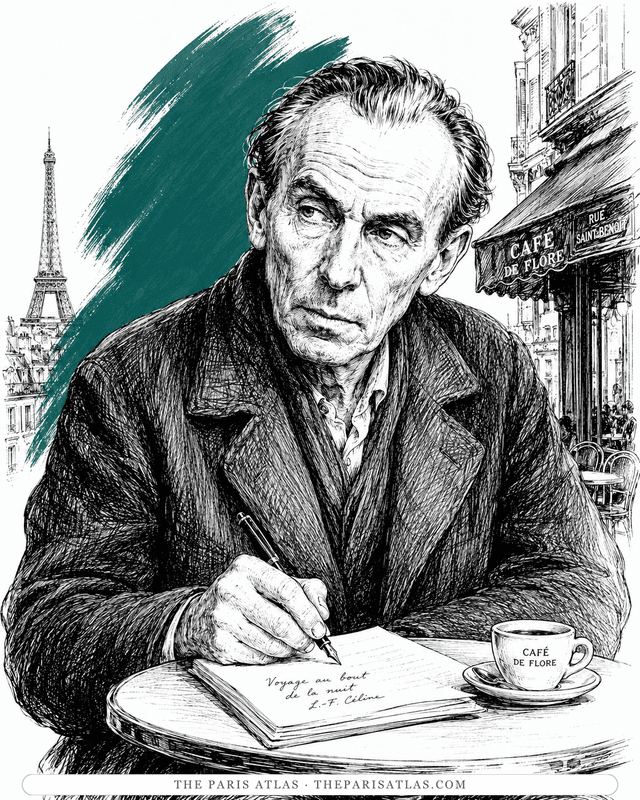
The other great stylist the Great War produced — where Hemingway cut the language down, Céline set it on fire. The same wound, opposite treatments.
View author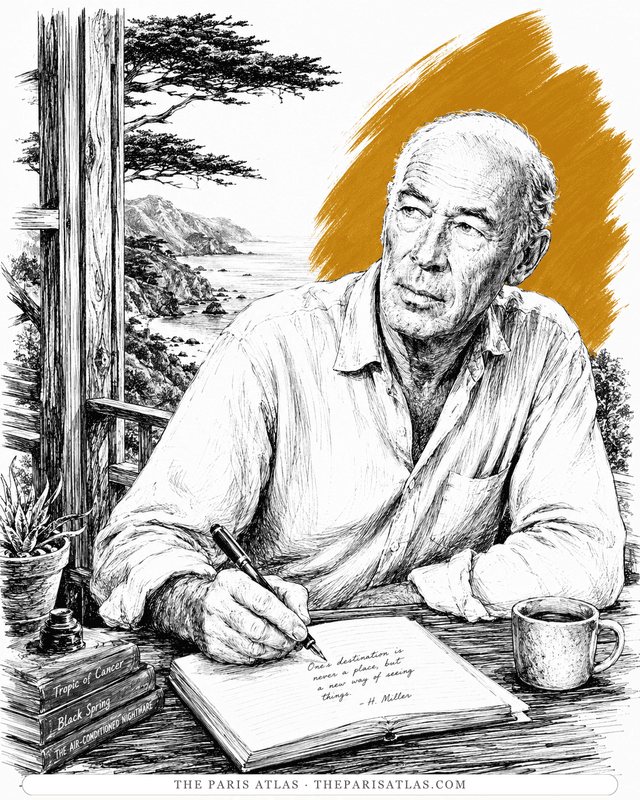
Paris on no money a decade later, with the restraint removed. Miller called Hemingway's Paris a tourist's Paris; readers get to referee.
View author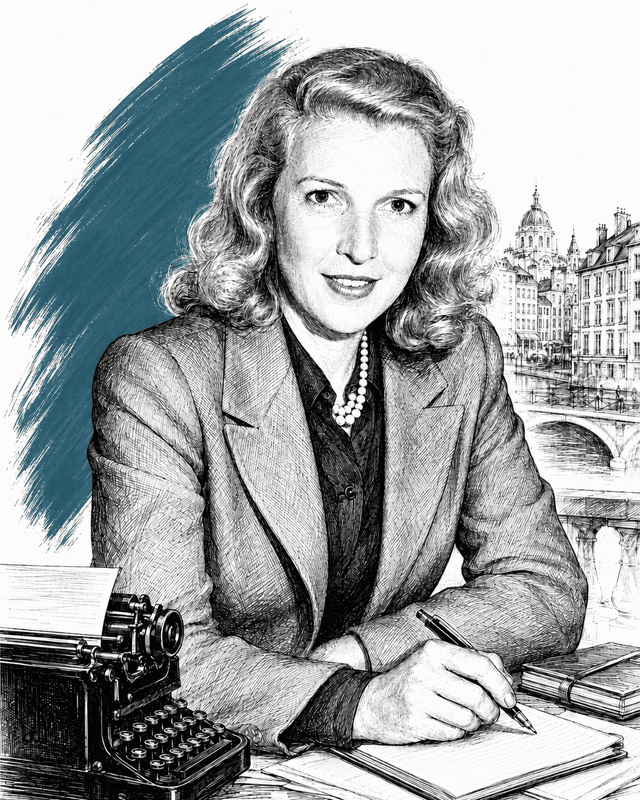
War correspondent who covered the Spanish Civil War, D-Day, and conflicts across five more decades; Hemingway's third wife, 1940–1945.
View authorThe sources below include the primary text, editions, scholarship, archival materials, and other records that informed this page. They document By-Line: Ernest Hemingway, its publication, and its place in literary history.


Complete displayed public transcription read. Used for literary analysis of the reporter's satirical stance, not to verify every biographical, numerical or historical assertion in the article.
Complete displayed 2015 transcription read; it identifies Collier's, November 18, 1944. Analysis concerns the opening advance and the handoff to Captain Howard Blazzard, not independent verification of combat claims or a collation of the magazine.

Entry 14A, printed pp. 16–20, visually checked. Confirms both selected dispatches in the 1967 By-Line contents; used for collection membership, not a collation of the magazine or book texts.
Used to place By-Line: Ernest Hemingway within Ernest Hemingway's published work and verify its bibliographic context.
Used for independent biographical, archival, or historical context surrounding Ernest Hemingway's career and the period in which By-Line: Ernest Hemingway appeared.
Used to cross-check authorship, chronology, and the work's place in Ernest Hemingway's wider catalogue.

Used to verify Ernest Hemingway's bibliography and place By-Line: Ernest Hemingway within the broader chronology of Ernest Hemingway's career.
The primary text is the baseline reference for every book page. Additional references document publication history, interpretation, and historical context where that evidence is available.
 Explore more resources