

The Spanish Earth
The words he spoke over the war: the narration of Joris Ivens's 1937 documentary, printed as a small, strange book the next year.
- 1938
About Ernest Hemingway
The story, briefly
Spoiler-freeIn 1937 Hemingway wrote and voiced the narration for The Spanish Earth, Joris Ivens's documentary of the Spanish Republic at war — a film made to raise money for ambulances, screened at the White House and in Hollywood living rooms. The next year a Cleveland admirer arranged the text's publication as this slim book: the film's spare commentary — a village, its irrigation ditch, its men at the Madrid front — preserved in print. The least typical object on the Hemingway shelf, and a pure document of his most political year. (A film's words — nothing here to spoil.)
The story, in more detail
The film was a cause before it was a work: Contemporary Historians, Inc. — Hemingway, Dos Passos, Lillian Hellman, Archibald MacLeish among them — formed to fund Ivens's camera, and Hemingway went to Spain with it, drafting commentary at the front. The narration he finally spoke himself, after Orson Welles's recorded version was judged too round for footage this raw; Hemingway's flat delivery — the writing plain as captions: the earth, the water, the men — became part of the film's power. The premiere circuit was surreal: the Roosevelts at the White House, then Hollywood, Fitzgerald in the audience, raising ambulance money by the reel.[1]
The book is its own small story: a Cleveland teenager named Jasper Wood secured the text and had it printed by J. B. Savage in 1938 in a limited edition — an act of fan-devotion Hemingway met with mixed feelings, insisting his proceeds go to Spanish relief. The volume preserves what the soundtrack can't slow down for: sentences built to walk beside images of dust, bread, and artillery, the style pared past even its own famous minimum. It is the hinge document between the correspondent of 1937 and the novelist of For Whom the Bell Tolls.[1]
What's inside
The film's narration in sequence: the village of Fuentidueña and the irrigation project that will water its dry earth; the road to Madrid and the men who go up it; the front itself — training, waiting, the attack; the city under bombardment, bread queues and broken houses; and the return to the ditch, the water finally moving, the argument of the whole film in one image — the earth defended because it feeds.[1]
Twenty minutes' reading, best taken alongside the film if you can find it — the words were built to walk at the footage's pace.[1]
Themes and analysis
Bread for the village
The loaf in the bakery is not a politically neutral prop. As the Spanish Civil War virtual museum points out, the film shows the Socialist union's initials on bread while Hemingway's narration identifies only a union label. That difference matters: a particular organization becomes an image of shared provision. The commentary asks viewers to recognize ordinary need before asking them to understand competing Republican allegiances. Its plain language therefore helps construct a united people; it does not simply record a unity already established.
Water reaches the fields
The film closes by joining the defense of the road to Madrid with water entering the village's irrigation channels. Military resistance and cultivation become mutually necessary actions: keeping a road open protects the possibility of feeding people. This ending can be read as a promise rather than a completed victory over the war itself. Stacey Guill reproduces Ivens's explanation that the film sought to persuade an indifferent audience to support the Republican cause. The restored flow gives that appeal a visible, practical result, while the wider conflict remains unresolved.
Why we recommend it
The style at absolute minimum
Prose pared to caption-weight and still unmistakable — a limit case of the whole method.
The political year, documented
1937 Hemingway — fundraiser, partisan, propagandist by conviction — preserved without the fiction's cover.
The bridge to the Bell
The earth, the bridges, the peasants under arms — For Whom the Bell Tolls is audibly seeded here.
What this book explores
Timeline
1937
Hemingway writes and records the narration for Joris Ivens’s documentary of the Spanish Civil War.
1937
The film is screened for the Roosevelts at the White House and used in fundraising for Spanish relief.
1938
Jasper Wood arranges publication of the commentary by J. B. Savage; Hemingway directs his proceeds to Spanish relief.
Book editions
Hardcover
- Hardcover
- J. B. Savage
- 1938
Reader reviews
Readers may also like

To Have and Have Not
Finished in the same political fever — he broke from its revisions for this war work.
Read our take
The Fifth Column and the First Forty-Nine Stories
The Madrid play from the same months — the war's other dispatch in dramatic form.
Read our takeThe Spanish Earth: frequently asked questions
Who wrote The Spanish Earth?
Ernest Hemingway. He wrote and voiced the narration for Joris Ivens's 1937 documentary; the text was printed as a small book in 1938.
What is The Spanish Earth?
The narration of a documentary of the Spanish Republic at war — a village, its irrigation ditch, and its men at the Madrid front — the film's spare commentary preserved in print.
What was the film for?
It was made to raise money for ambulances, and was screened at the White House for the Roosevelts and in Hollywood on its fundraising tour.
Did Hemingway narrate it himself?
Yes. Orson Welles recorded a version first, but the filmmakers chose Hemingway's flatter, harder delivery for footage this raw.
How did the book come to be published?
A Cleveland teenager, Jasper Wood, arranged the text's printing in a limited edition in 1938; Hemingway directed his share of the proceeds to Spanish relief.
If you like Ernest Hemingway
Explore authors with a similar voice, perspective, and influence.
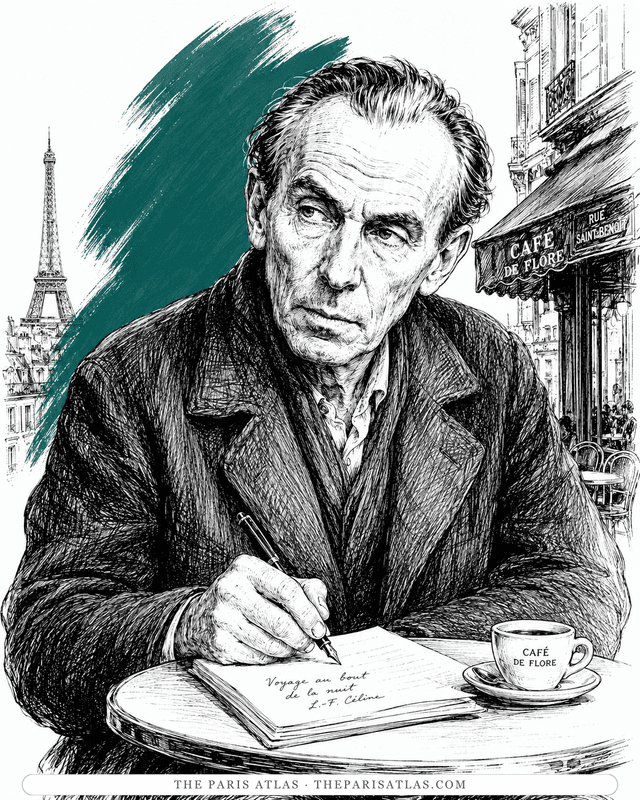
Louis-Ferdinand Céline
The other great stylist the Great War produced — where Hemingway cut the language down, Céline set it on fire. The same wound, opposite treatments.
View author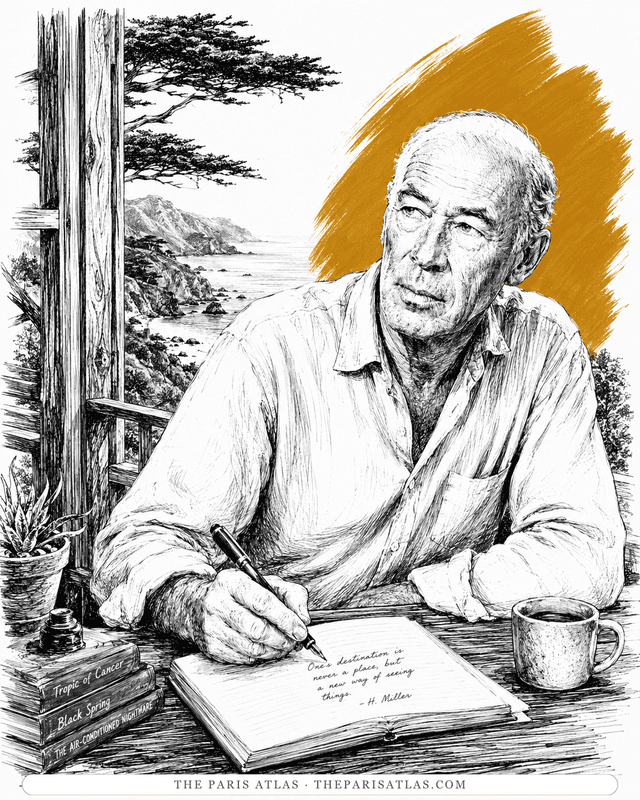
Henry Miller
Paris on no money a decade later, with the restraint removed. Miller called Hemingway's Paris a tourist's Paris; readers get to referee.
View author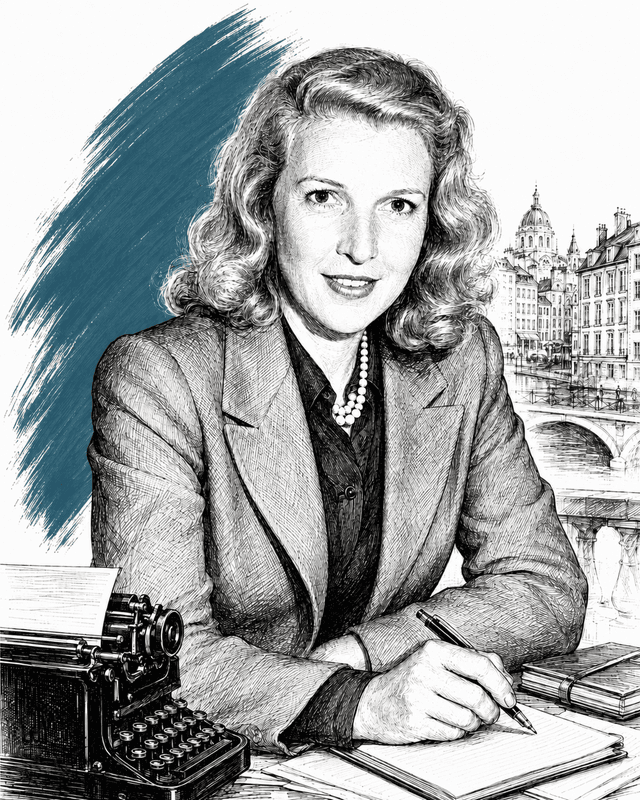
Martha Gellhorn
War correspondent who covered the Spanish Civil War, D-Day, and conflicts across five more decades; Hemingway's third wife, 1940–1945.
View author
References
References
The sources below include the primary text, editions, scholarship, archival materials, and other records that informed this page. They document The Spanish Earth, its publication, and its place in literary history.

2Ernest Hemingway: A Life Story
BiographyCarlos Baker, 1969Used forUsed to verify The Spanish Earth's bibliographic context and its place within Ernest Hemingway's published work.
3Ernest Hemingway's Life in Key West
WebsiteThe Ernest Hemingway Home & MuseumUsed forUsed for independent archival, institutional, or historical context surrounding Ernest Hemingway and The Spanish Earth.
4Max Perkins: Editor of Genius
BiographyE. P. Dutton, 1978Used forUsed to cross-check chronology, publication history, and the circumstances in which The Spanish Earth appeared.

5Ernest Hemingway, The Art of Fiction No. 21
PeriodicalThe Paris Review, Issue 18, Spring 1958, 1958Used forUsed for an additional scholarly or biographical perspective on The Spanish Earth and Ernest Hemingway's wider career.
6The Spanish Earth — film and commentary analysis
WebsiteVirtual Museum of the Spanish Civil WarUsed forMuseum analysis and quoted narration used for the bakery scene and closing sequence, not a full reading of the printed edition.
7The Spanish Earth, Guernica, For Whom the Bell Tolls and The Spanish Pavilion
PeriodicalIvens, no. 12, December 2006, pp. 14–19, 2006Used forIvens's statement of the film's persuasive purpose, quoted on p. 15; the complete article and its footnotes were read, with printed pp. 14–19 visually checked.
i
Why these sources are here
The primary text is the baseline reference for every book page. Additional references document publication history, interpretation, and historical context where that evidence is available.
 Explore more resources