
For Whom the Bell Tolls
The political anger sharpened into his greatest sustained work, written three years later.
Read our take
Key West fishing captain, rum-runner, revolutionary — Hemingway's darkest argument about how poor men survive in the Depression.
Harry Morgan runs charter fishing out of Key West in the lean years, and when a client skips his fee and strands him in Havana, one decision tips him from fishing into rum-running into worse. Stitched from two short stories into a novel, it is the angriest thing Hemingway published — not his most elegant, but the anger is deliberate: a working man's tragedy about the impossibility of surviving outside the law when the law has nothing to offer. The famous dying line became a rallying cry; in context, it is desolate.
His only novel set on home soil grew out of the Depression, magazine by magazine: 'One Trip Across' in Cosmopolitan in 1934 and 'The Tradesman's Return' in Esquire in 1936 both starred Harry Morgan, a Key West charter captain squeezed into running contraband between Cuba and the Keys. In 1936 and 1937, with Spain already pulling at him, Hemingway stitched the stories together with new material into a novel about what a man alone can and cannot do.[1]
It is his most political book almost by accident — written in his most political years, between fundraising for Loyalist Spain and filming The Spanish Earth, and it shows the strain: the 'haves' satire of the yacht basin sits oddly against Morgan's hard-luck chapters, and the reviews said so. He finished it in a hurry and knew it; Spain mattered more to him that year than revision did.[1]
Hollywood gave it the strangest afterlife on his shelf: Howard Hawks bet Hemingway he could make a picture from his worst book, hired William Faulkner to help with the script, kept little but the title and the boat, and delivered Bogart, Bacall, and 'you know how to whistle' in 1944. The novel underneath is rougher company — but Morgan's hard-won discovery about what one man alone can do is the hinge on which Hemingway's next decade turned.[1]
Harry Morgan runs a charter fishing boat out of Key West in the worst of the Depression, and the book opens with the insult that sets his course: a rich client loses Harry's expensive tackle, runs up three weeks of charter fees, and skips out without paying a cent. With a wife and daughters to feed, Harry crosses the line he had stayed on the right side of — first agreeing to smuggle Chinese migrants out of Cuba, a job that ends with him killing the double-crossing fixer rather than drowning the men, then running liquor, a trade that costs him an arm and his boat.[1]
The novel intercuts his descent with the 'haves' — the yacht-basin rich, the drunk tourists, a self-pitying novelist named Richard Gordon — whose troubles are shown in withering parallel to the Morgans'. Harry, one-armed and boatless, takes the last job available: ferrying four Cuban revolutionaries who have just robbed a bank, men he knows will not intend to leave witnesses.[1]
On the water, Harry Morgan does what he planned: he kills the four bank robbers with a hidden machine gun — but takes a bullet in the stomach in the exchange. The Coast Guard finds the drifting boat a day later, Harry barely alive among the dead. Dying, he delivers the sentence the whole novel has been building toward, the discovery that took him all of his life: that a man alone has no chance — no matter how strong, no matter how skilled. The book closes on his widow Marie, taking inventory of a future without him, in one of the era's bleakest final chapters.
Harry’s refusal turns a discussion of price into an argument about what money can replace. The prospective passengers offer enough to buy another boat; he points out that a prisoner cannot use one. His boat represents continuing work, not merely an asset with a sale value. Yet his distinction between cargo that can and cannot speak makes this practical calculation, not an innocent man’s declaration against wrongdoing. As persuasion becomes a threat, the exchange exposes the danger concealed inside an apparently generous offer.
The detailed sequence of threading, fastening and balancing the bait establishes the crewman’s expertise before Johnson questions the expense of employing him. Harry’s answer depends on speed: the man can prepare bait faster than the captain, while Eddy cannot do the job. Johnson’s wish to land a fish by himself therefore rests on labor he dismisses as unnecessary. Harry recognizes that dependence, but his racist descriptions also qualify the moment: valuing a worker’s usefulness is not the same as recognizing him without contempt.
'One man alone ain't got no bloody chance' — the sentence that defined a generation of labor writing. Read in context, after three hundred pages of Harry Morgan's incremental ruin, it is not a slogan but a verdict.
The bars, the docks, the Depression-era veterans in the camp outside of town — this is the only Hemingway novel set in the United States, and the America it depicts is not the one his other books were written from.
The novel is often dismissed as minor; it is actually Hemingway letting the seams show. The structural awkwardness is part of the record of a writer genuinely disturbed by what he was seeing.
1934
"One Trip Across" appears in Cosmopolitan, introducing the Key West charter captain Harry Morgan.
1936
"The Tradesman's Return" follows in Esquire, and Hemingway stitches the two stories together with new material into a novel.
1937
Scribner publishes it, his angriest book and his only novel set on home soil, as Spain pulls at him.
1944
Howard Hawks films it with Bogart and Bacall, William Faulkner on the script, keeping little but the title and the boat.

The political anger sharpened into his greatest sustained work, written three years later.
Read our take
Another man alone on Cuban waters — the same geography, a very different metaphysics.
Read our take
The early masterpiece this book shadows — read them to watch the same writer in two different decades.
Read our take
Cuba again, older — the same waters, the same unease, from a posthumous angle.
Read our takeErnest Hemingway. It was published by Scribner in 1937.
Harry Morgan runs charter fishing out of Key West in the lean Depression years; when a client skips his fee and strands him in Havana, one decision tips him from fishing into rum-running into worse.
Yes. It is his only novel set on home soil, moving between Key West and the waters off Cuba.
Yes. Hemingway stitched two Harry Morgan stories — "One Trip Across" (1934) and "The Tradesman's Return" (1936) — together with new material into a novel.
Written during the Depression, between fundraising for Loyalist Spain and filming The Spanish Earth, it is the one time Hemingway engaged directly with class — the working man against the idle rich.
Explore authors with a similar voice, perspective, and influence.
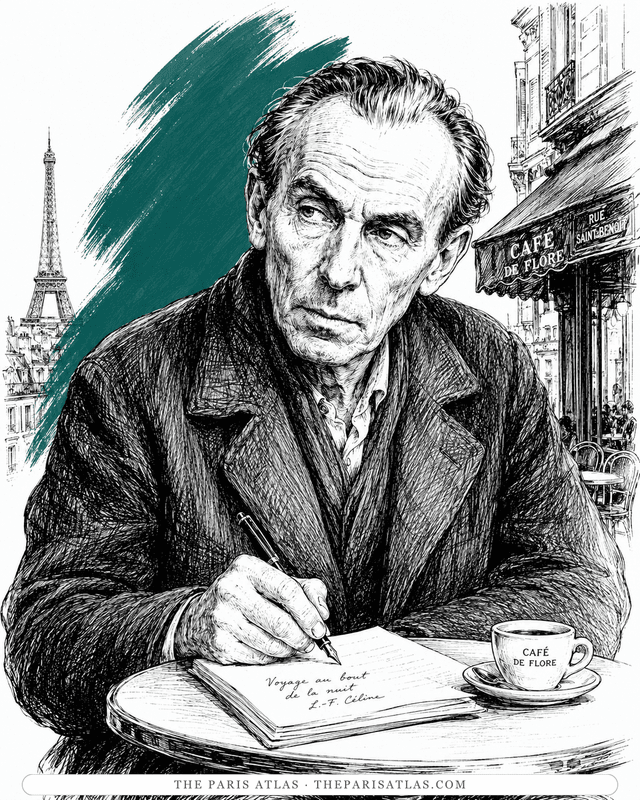
The other great stylist the Great War produced — where Hemingway cut the language down, Céline set it on fire. The same wound, opposite treatments.
View author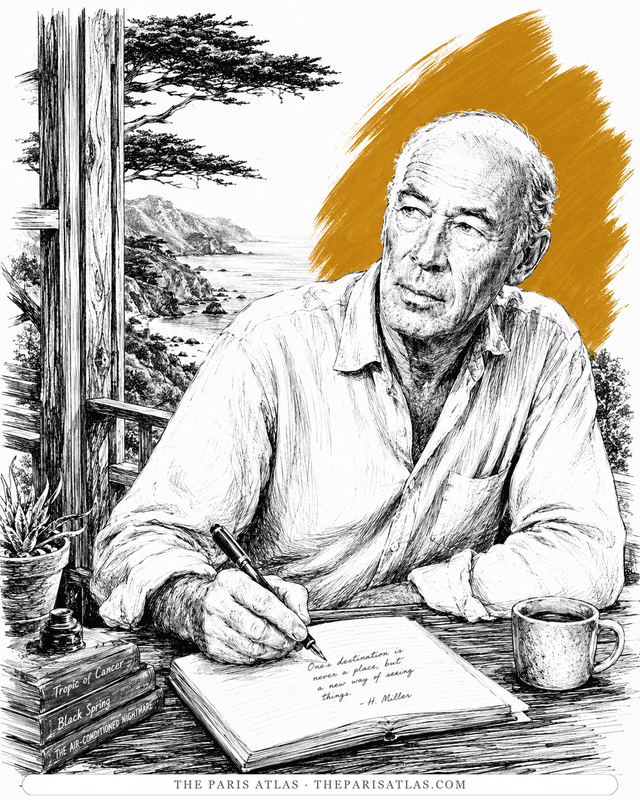
Paris on no money a decade later, with the restraint removed. Miller called Hemingway's Paris a tourist's Paris; readers get to referee.
View author
War correspondent who covered the Spanish Civil War, D-Day, and conflicts across five more decades; Hemingway's third wife, 1940–1945.
View authorThe sources below include the primary text, editions, scholarship, archival materials, and other records that informed this page. They document To Have and Have Not, its publication, and its place in literary history.


Biographical evidence used to verify chronology, relationships, and historical context connected to To Have and Have Not.
The Hemingway–Perkins correspondence supplies publication and editorial context for the Scribner novel.

Used for Hemingway’s own account of craft, compression, and working from observed material.
The Hemingway Home & Museum history supplies institutional context for the Key West years in which the Harry Morgan material was written.
The primary text is the baseline reference for every book page. Additional references document publication history, interpretation, and historical context where that evidence is available.
 Explore more resources