
What to Read This Summer
Summer reading is a matching problem, not a ranking problem. Our seasonal guide pairs the moderns to the July you're actually having.

An old Cuban fisherman, eighty-four days without a catch, and the fish of his life — the whole method in one afternoon's read.
Santiago has gone eighty-four days without a fish, and the boy who loves him has been ordered onto a luckier boat. On the eighty-fifth day the old man rows far out into the Gulf Stream alone and hooks a marlin bigger than his skiff — and the rest is a duel of endurance between one worn body and the sea itself. Written late, when the critics had counted Hemingway out, it won the Pulitzer, secured the Nobel, and remains the cleanest introduction to what his prose can do.
The story had been waiting sixteen years. In a 1936 Esquire piece about fishing the Gulf Stream, Hemingway mentioned an old Cuban commercial fisherman towed far out to sea by a giant marlin — a paragraph he knew was a book and refused to spend. He finally wrote it in Cuba in the winter of 1950–51, in eight weeks, out of the skiff world of Cojímar he had fished for two decades with his own captain, Gregorio Fuentes, and out of a career badly in need of rescue: his previous novel had been the worst-reviewed of his life.[1]
Publication was an event with no modern equivalent. Life magazine printed the entire novel in its September 1, 1952 issue and sold more than five million copies in two days; the Scribner edition and the Book-of-the-Month Club printing were queued behind it. Readers who had written Hemingway off as a self-parody found eighty-some pages with no wasted motion — an old man, a fish, and the sea, told with the iceberg fully submerged.[1]
The Old Man and the Sea won the Pulitzer Prize in 1953. Hemingway also won the Nobel Prize in 1954, and the committee who awarded him named this book specifically as the reason they chose him. The Old Man and the Sea was the last major work he published in his lifetime. Critics had called him finished after his previous novel, Across the River and into the Trees, had been the worst-reviewed book of his career. This book changed their minds, and made the literary world recognize that Hemingway still had the power to charm and captivate an audience.[1]
Santiago, an old Cuban fisherman, has gone eighty-four days without catching a fish — so long that the parents of Manolin, the boy who loves him and once fished beside him, have ordered their son onto a luckier boat. The old man lives alone in a shack, talks baseball — the great DiMaggio, who plays through pain — and refuses pity. Before dawn on the eighty-fifth day he rows his skiff far beyond the other boats, out into the deep Gulf Stream.[1]
There he hooks an enormous marlin, the fish of a lifetime, and the fish simply keeps swimming — towing the skiff out to sea for two days and two nights while Santiago braces the line across his back, eats raw bait fish to keep his strength, nurses a cramped hand, and talks to the birds, the sea, and his absent boy. What settles over the long fight is not hatred but kinship: he calls the marlin his brother even as he promises to kill him. On the third day he brings the great fish alongside and takes him, and lashes a catch bigger than the boat itself to the hull for the long sail home.[1]
The sea taxes him everything on the way in. Sharks come for the marlin — first one, then packs — and Santiago fights them with his harpoon, then a knife lashed to an oar, then a club, then the tiller itself, losing the battle a bite at a time. He reaches the harbor in the dark with only a skeleton lashed to the skiff, carries his mast up the hill like a man carrying a cross, and collapses into sleep. In the morning Manolin finds him, weeps over his ruined hands, and declares that they will fish together again no matter what his parents say; tourists at the café mistake the great skeleton for a shark. The old man sleeps on, dreaming — as he always dreams — of the lions he saw on the beaches of Africa when he was young.
Carrying the equipment together makes the relationship visible as shared work. Manolin cannot choose whose boat he fishes in, but he can help Santiago prepare for another day. Their bargaining over fresh bait lets the old man accept care without being reduced to an object of pity. Santiago, in turn, recognizes the boy as a fellow fisherman. The modest walk home therefore complicates the image of the solitary hero: independence rests partly on somebody else's loyalty. Hemingway places this practical exchange beside the narrator's insistence that humility need not mean the loss of pride.
Before the marlin appears, the line gives Santiago a way to read its movements through touch. Small changes in pressure produce guesses, hopes and adjustments rather than a complete picture of his opponent. When his strongest pulls fail to raise the fish, expertise means knowing when to yield line as well as when to hold it. He must absorb the strain with his own body, since simply fastening the line could let the fish break it. The prolonged towing turns mastery into responsiveness: Santiago remains intensely active even while another creature determines where the boat goes.
He was an old man who fished alone in a skiff in the Gulf Stream and he had gone eighty-four days now without taking a fish.
The sail was patched with flour sacks and, furled, it looked like the flag of permanent defeat.
Only I have no luck any more. But who knows? Maybe today. Every day is a new day. It is better to be lucky. But I would rather be exact. Then when luck comes you are ready.
No café chatter, no crowd — just one man, one fish, and sentences sanded down to grain. If you want to know what 'Hemingway' means, it's all here in 127 pages.
Written when the literary world had filed him under 'finished,' and it reads that way — an aging champion proving the old moves still work. His previous novel, Across the River and into the Trees, had been the worst-reviewed book of his career. He wrote this one in Cuba in about eight weeks, and it won the Pulitzer.
'A man can be destroyed but not defeated' comes from this book. Santiago says it aloud, in the boat, after he has killed the first shark and it has taken about forty pounds of the marlin with it. In the next breath he says he is sorry he killed the fish. The book earns the line, and sends you out oddly consoled.

An old fisherman in a Cuban village who has caught nothing for eighty-four days. On the eighty-fifth he rows out past every other boat and hooks a marlin bigger than the boat he is sitting in.

The boy who learned to fish from Santiago and worked in his boat until the old man's bad luck ran too long. His parents moved him to another crew; he goes on looking after Santiago anyway.
Hemingway fished these waters for twenty years out of Cojímar, and the village's fishermen — including his own boat captain — swore they knew the real Santiago.
Summer reading is a matching problem, not a ranking problem. Our seasonal guide pairs the moderns to the July you're actually having.
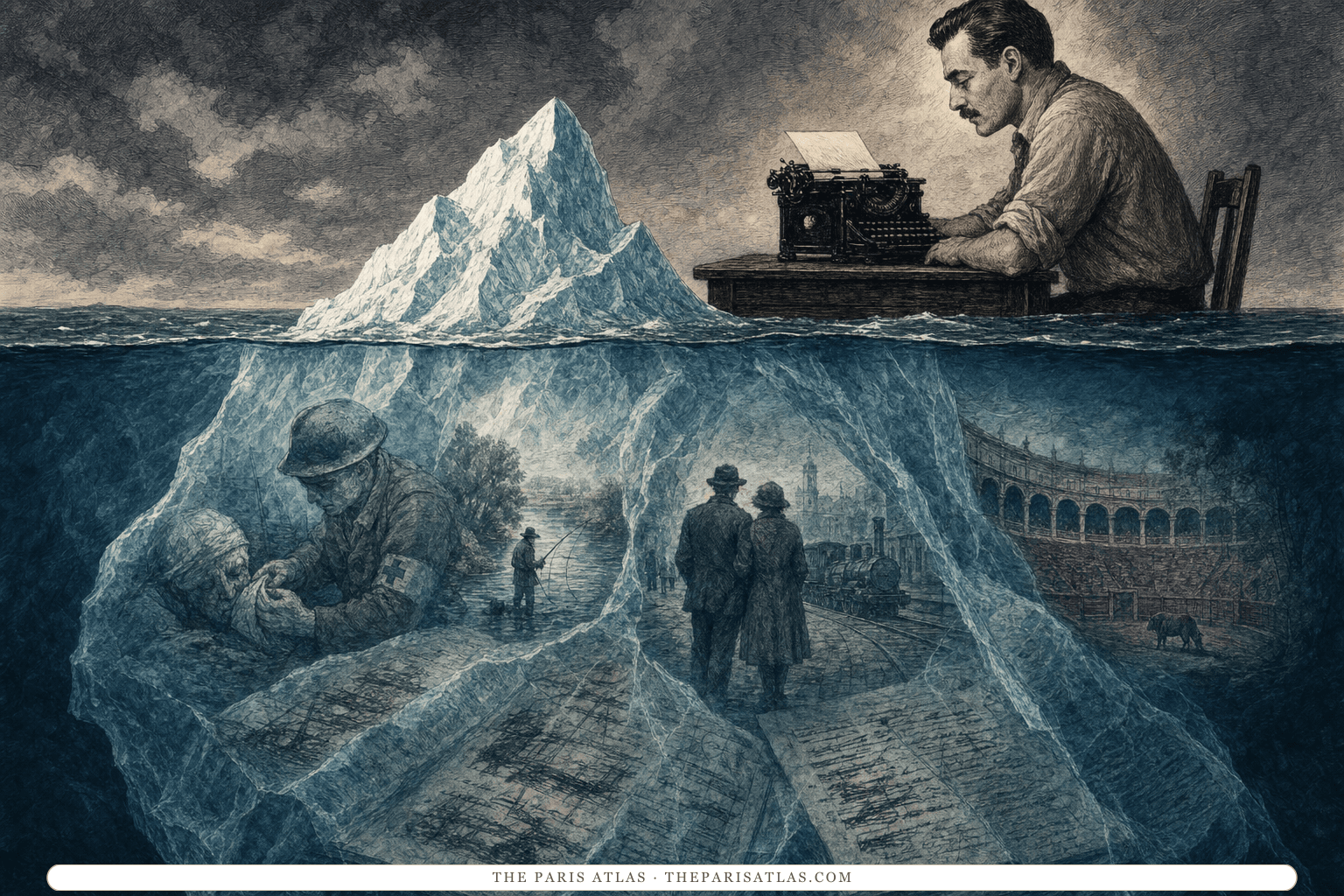
The iceberg theory is writing by informed omission: most of the writer’s knowledge stays below the surface, while selected actions and details let the reader feel it.
Methods & practice
1936
Hemingway sketches the germ of the story in an Esquire piece about fishing the Gulf Stream.
1950–1951
He writes it in Cuba over about eight weeks.
1952
Life prints the entire novel in its 1 September issue, selling over five million copies in two days; the Scribner edition follows.
1953
It wins the Pulitzer Prize.
1954
The Nobel Prize citation singles out the mastery most recently shown in this book.


The young man's book to this old man's book — read them as bookends of a career.
Read our take

Where the style was invented — the early stories that made this late clarity possible.
Read our take
Endurance without the consolation — the dark mirror of Santiago's dignity.
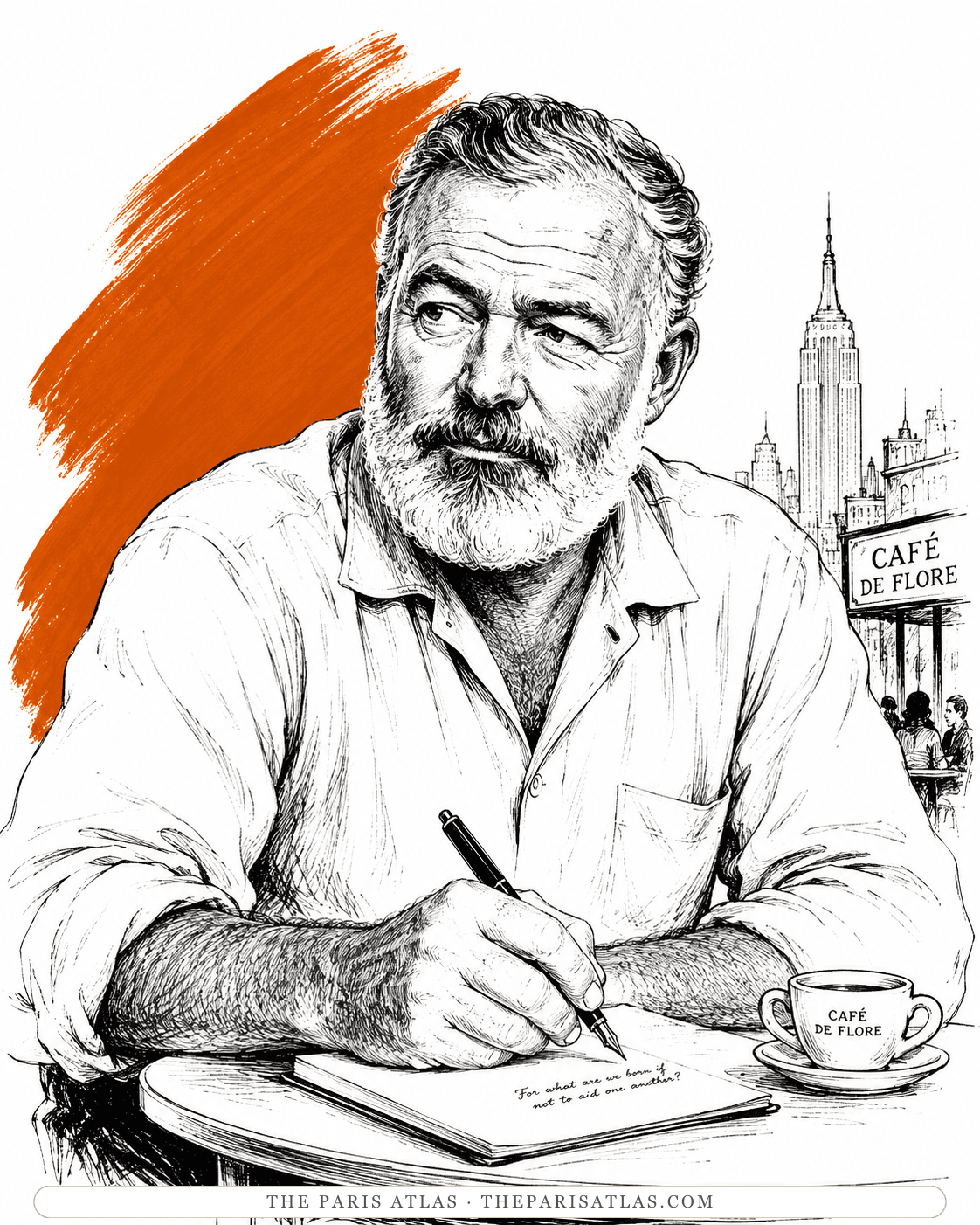
Read our takeErnest Hemingway. Published in 1952, it was the last major work he saw into print, written when critics had counted him out.
An old Cuban fisherman, Santiago, unlucky for eighty-four days, rows far out into the Gulf Stream alone and hooks a marlin bigger than his skiff. The rest is a duel of endurance between one worn body and the sea.
Yes. It won the 1953 Pulitzer Prize for Fiction and was cited prominently when Hemingway received the Nobel Prize in Literature in 1954.
It grew from a real incident. In a 1936 Esquire piece about fishing the Gulf Stream, Hemingway described an old Cuban fisherman towed far out by a giant marlin — a paragraph he saved for sixteen years.
It is short — a novella of about 127 pages — and is often the cleanest single introduction to what Hemingway's prose can do.
Explore authors with a similar voice, perspective, and influence.

The other great stylist the Great War produced — where Hemingway cut the language down, Céline set it on fire. The same wound, opposite treatments.
View author
Paris on no money a decade later, with the restraint removed. Miller called Hemingway's Paris a tourist's Paris; readers get to referee.
View author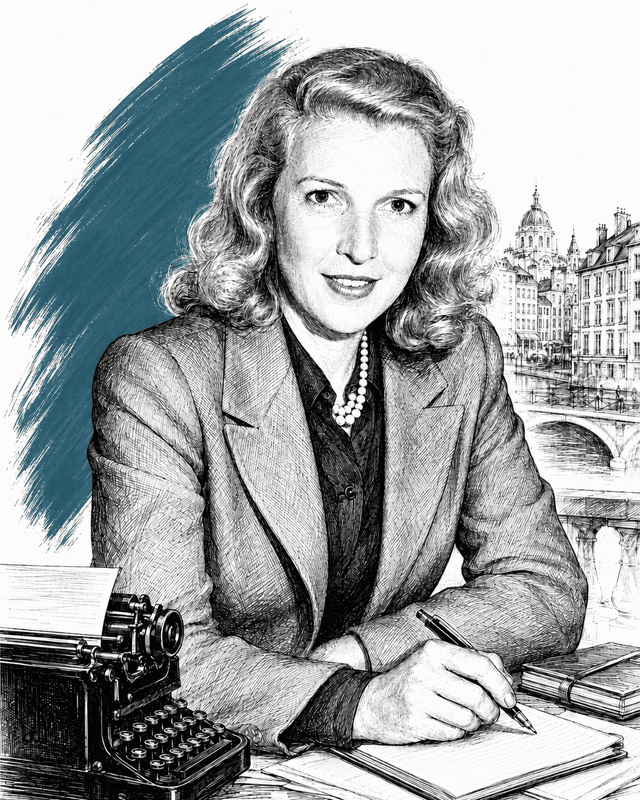
War correspondent who covered the Spanish Civil War, D-Day, and conflicts across five more decades; Hemingway's third wife, 1940–1945.
View authorThe sources below include the primary text, editions, scholarship, archival materials, and other records that informed this page. They document The Old Man and the Sea, its publication, and its place in literary history.


Al Haines's public 2012 transcription, identifying a 1952 Scribner text as its base. Analysis uses the opening Terrace/home passages and the first afternoon's hooking and towing sequence; no complete-novella or original-edition collation claim.
Biographical evidence used to verify chronology, relationships, and historical context connected to The Old Man and the Sea.

Contemporary reporting or criticism used to document the historical reception and context of The Old Man and the Sea.
The Nobel Foundation record documents the 1954 award and Hemingway's own statement about the writer's craft after the novella's success.
The Kennedy Library's Hemingway correspondence resource supplies primary archival context for his life and working practice.
The primary text is the baseline reference for every book page. Additional references document publication history, interpretation, and historical context where that evidence is available.
 Explore more resources