
Death in the Afternoon
The other treatise-adventure — Spain's book and Africa's, one obsession apart.
Read our take
A month on safari, written as an experiment: can a true book, absolutely truthful, compete with the novel? Plus the Huckleberry Finn verdict.
In 1933–34 Hemingway took a long-postponed safari in East Africa; in 1935 he published this account of a month of it, framed as a formal experiment — an 'absolutely true book' with the shape and texture of a novel, no invented characters, no improved facts. The hunting narrative — kudu, rhino, the rivalry with a luckier companion — carries the freight: campfire arguments about writers and writing, including the most quoted judgment in American criticism: that all modern American literature comes from one book called Huckleberry Finn. (A true story — nothing here to spoil.)
The safari was Pauline's uncle's money and a boyhood dream made good: Kenya and Tanganyika at the end of 1933, with the white hunter Philip Percival — the model for the book's Pop — presiding. The narrative compresses the trip to its final month and one increasingly comic obsession: the greater kudu, whose spiral horns keep not appearing while a companion the book calls Karl, hunting apart, hauls in trophy after effortless trophy. Hemingway renders his own envy with an honesty few memoirists risk — the great competitor, out-lucked in the field, taking his own temperature hourly.[1]
The experiment announced in the foreword — could truth, shaped, stand against fiction? — divided critics then and still does; the consensus took the book as a lesser thing between masterpieces, while its country descriptions stand with anything he wrote. What everyone kept is the talk: riverbank and campfire seminars with an Austrian expatriate named Kandisky and with Pop, on courage, on why American writers are destroyed — money, critics, the loss of nerve — and on the canon, settled in one swing: Twain over everybody, Huckleberry Finn the source. The safari also seeded the two great African stories, 'Snows' and 'Macomber,' written in its afterglow — fiction, as if in answer to the experiment, winning the argument.[1]
The last month of the safari, told in four movements — pursuit remembered, pursuit failing, pursuit as pleasure, pursuit rewarded. The quarry is the greater kudu; the antagonist is time (the rains coming north) and Karl, the companion whose luck is a running wound. Around the stalking: the Wanderobo and Masai guides rendered individually, Pop's professional serenity, P.O.M. — Pauline, 'Poor Old Mama' — keeping score, and the land itself, which Hemingway writes with more open love than any character on the shelf.[1]
Braided through: the seminars. Kandisky the Austrian wants literary talk in the middle of Africa and gets the famous canon-clearing; the campfire sessions take up the destruction of American writers with names named. The hunt ends as hunts end — some horns on the truck, some in the next valley — and the book closes on the shore of a different sea, the experiment complete, the argument left open on purpose.[1]
The literary judgments arrive as answers to another person's demands, not as a detached critical essay. Kandisky keeps asking for names, explanations and finally an account of Hemingway's own ambitions. Pauline's interruptions further remind us that this is a social encounter. The speaker who condemns other writers' dependence on approval must also explain why his own work matters. Reading the exchange as conversation preserves its friction: the confident declarations expose an ideal of artistic independence, while the questions make that ideal something to defend rather than a truth everybody accepts.
During the kudu search, looking does not reliably produce knowledge. The guides identify distant animals as bulls, but the hunters cannot see their horns and lose the tracks. A nearby waterbuck offers a different encounter: M'Cola holds Hemingway's wrist while they remain still and watch the animal sense a danger it cannot locate. The prose pauses over its body instead of advancing toward a shot. This shared attention does not remove the hunt's violence, but it gives the landscape a value that the missing trophy cannot entirely measure.
The African land-writing is Hemingway's most openly rapturous — the green hills earn the title.
The Karl rivalry is a self-portrait in competitiveness few writers would sign — the code applied to one's own worst feelings.
The talk about writers, money, and nerve is the era's shop-talk preserved — quotable end to end.
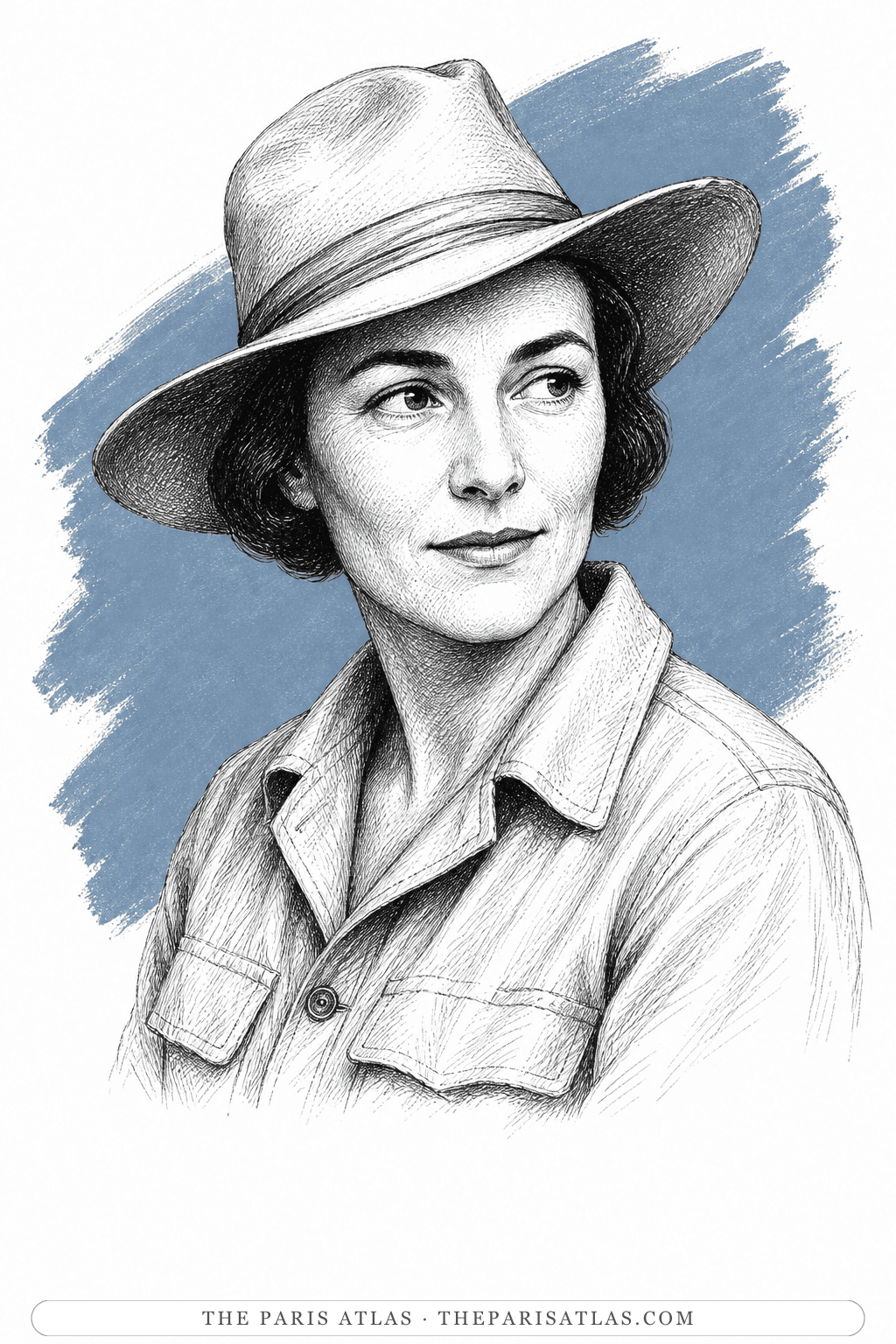
Pauline Pfeiffer, Hemingway's second wife, on the safari her uncle's money paid for. The initials stand for Poor Old Mama and the book uses almost nothing else.
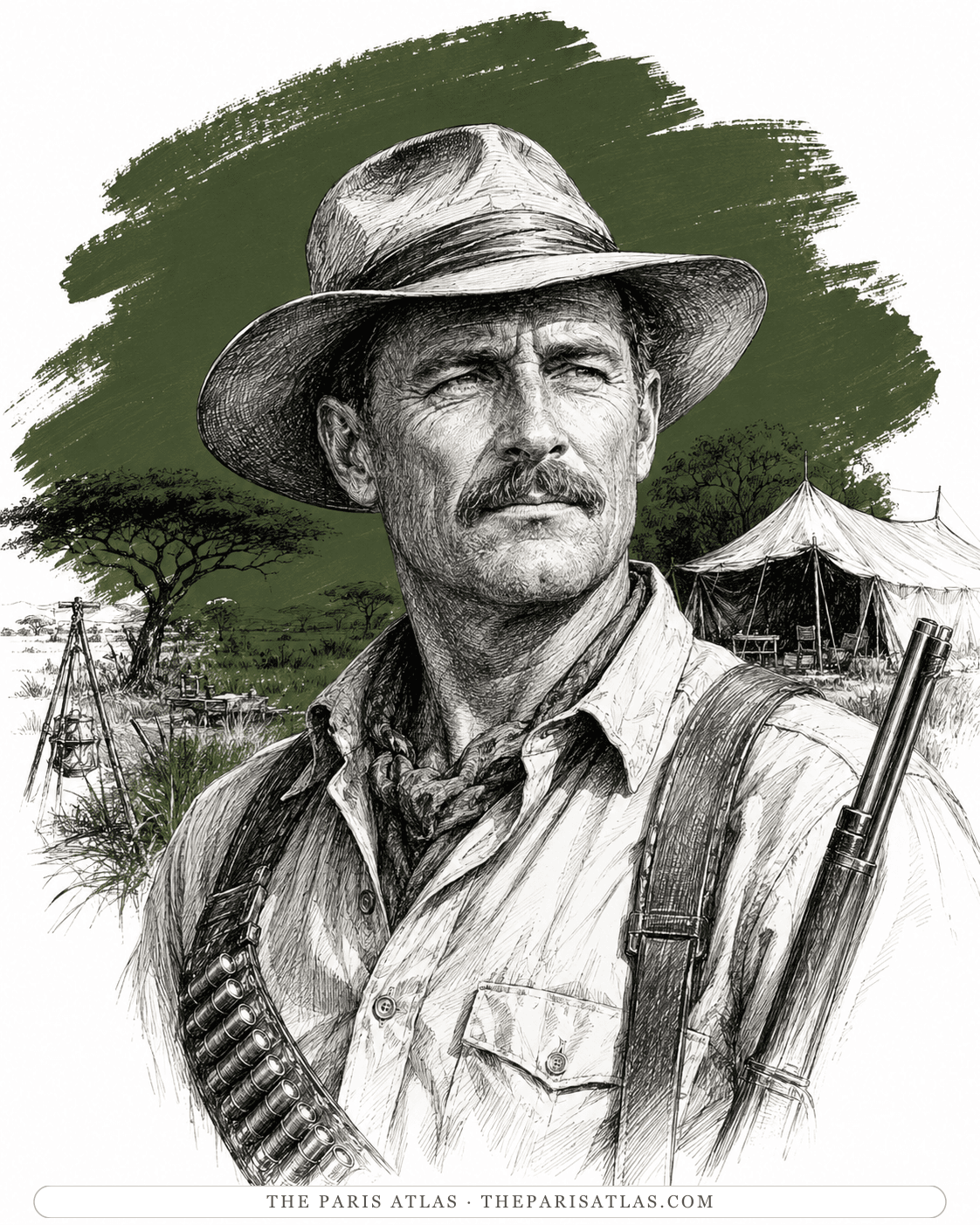
The professional hunter running the safari, unhurried and hard to impress, and the book's steadiest voice on courage and on work. Hemingway's Pop is Philip Percival.
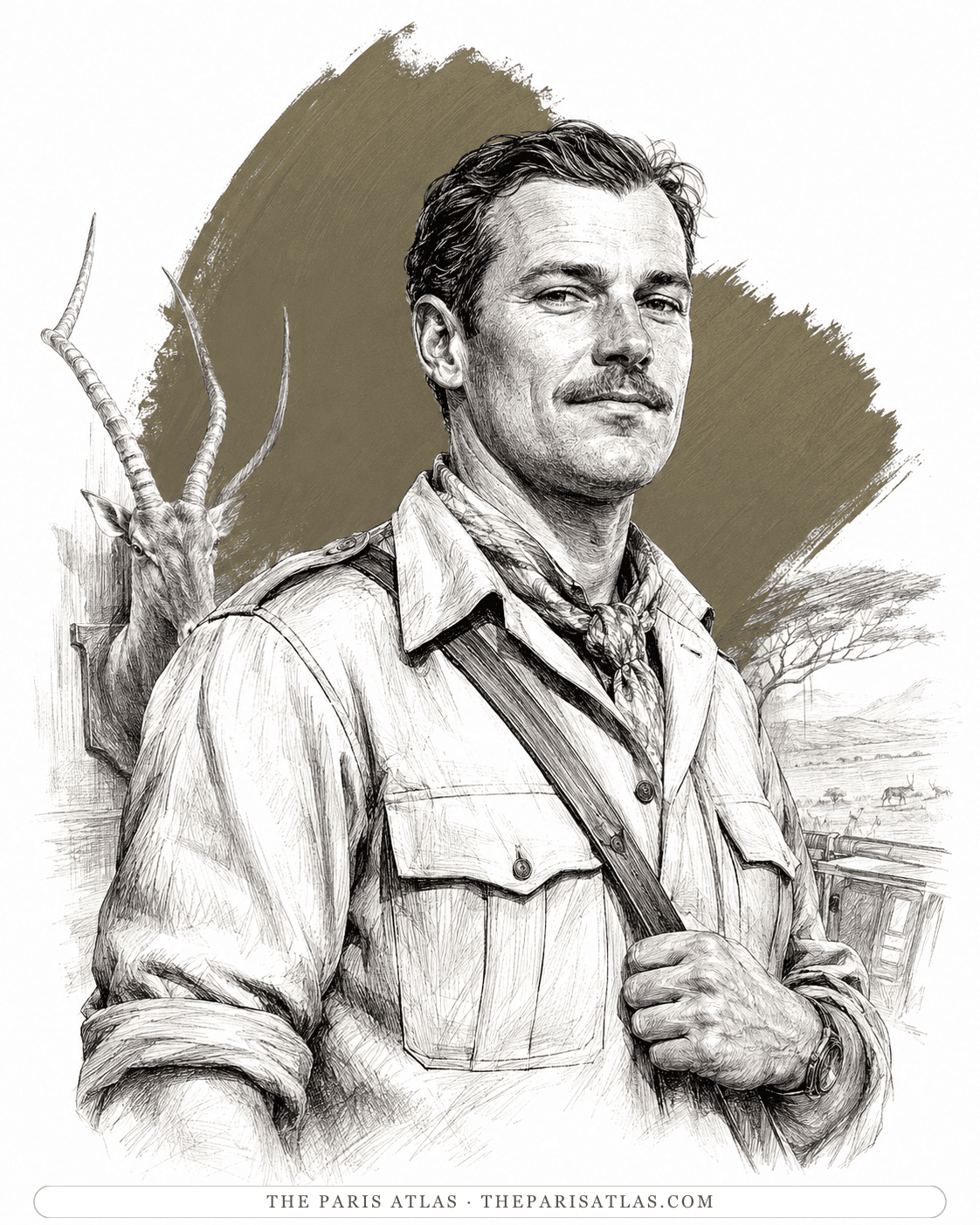
The companion hunting apart, whose trophies keep arriving without effort while the narrator's kudu does not. The envy is the book's engine, and Hemingway records his own with unusual candour.
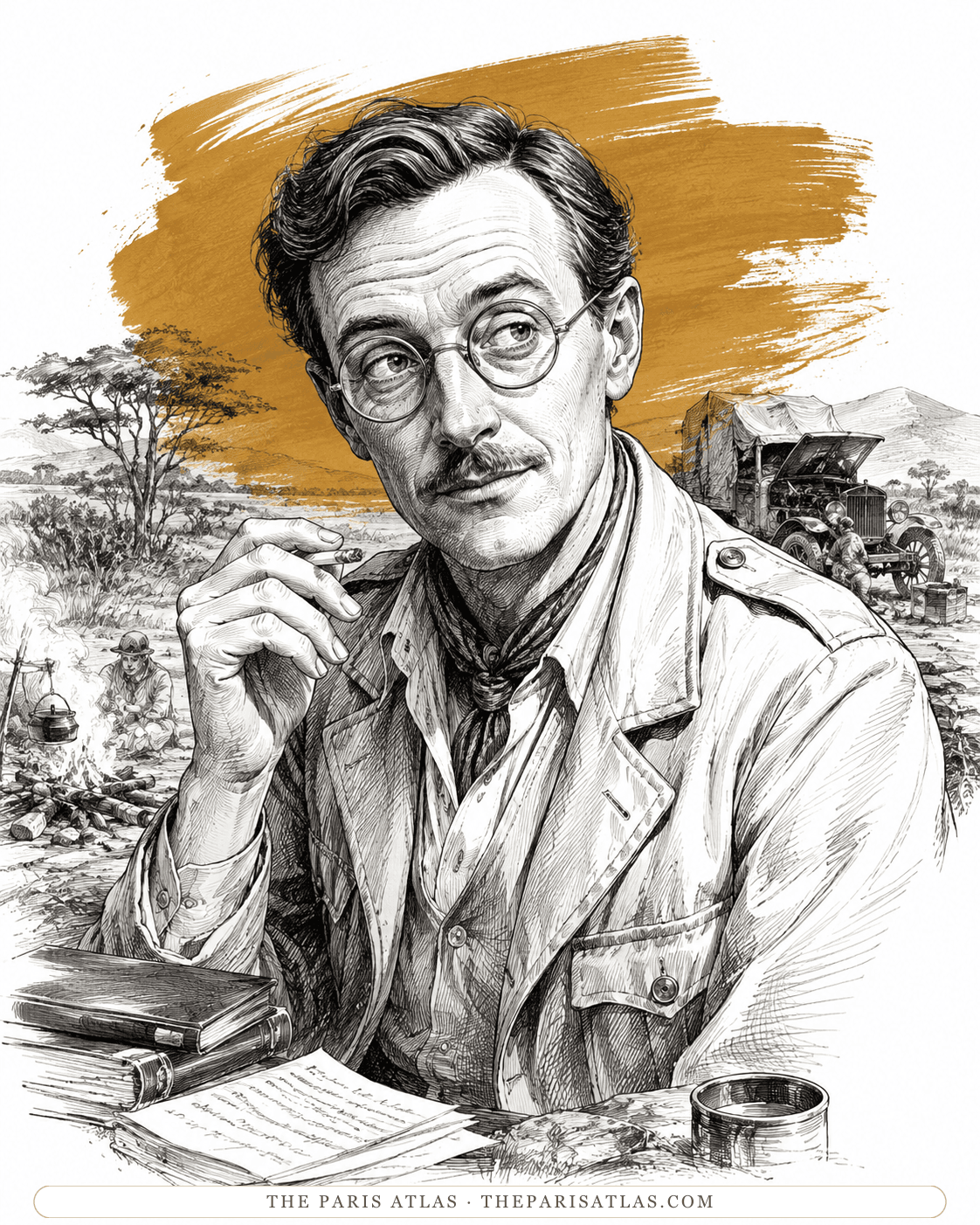
The Austrian whose broken-down lorry interrupts the hunt in the opening pages. He had read Hemingway's poems in Der Querschnitt, thinks hunting silly, and would rather talk about writers — which is how the campfire criticism starts.
1933–1934
Hemingway takes a long-postponed East African safari with the hunter Philip Percival, the book's Pop, on money from Pauline's uncle.
1935
Scribner publishes the account, framed as an experiment: an absolutely true book with the shape of a novel and no invented characters.
1935–1936
The same safari seeds the stories "The Snows of Kilimanjaro" and "Macomber," written in its afterglow.


The other treatise-adventure — Spain's book and Africa's, one obsession apart.
Read our take

The pursuit story purified — what this book's experiment became when fiction won.
Read our takeErnest Hemingway. Scribner published it in 1935, after his 1933–34 East African safari.
A month of safari in East Africa — the pursuit of the greater kudu, the rivalry with a luckier companion — framed as a formal experiment: an "absolutely true book" with the shape and texture of a novel, no invented characters.
Its foreword sets the wager: could a truthful book, shaped like fiction and with no improved facts, compete with the novel on its own ground.
Yes. The campfire criticism includes the most quoted judgment in American letters — that all modern American literature comes from one book by Mark Twain called Huckleberry Finn.
Yes. The foreword stakes the book on having no invented characters, so the companions — P.O.M. (Pauline), Pop (Philip Percival), Karl, Kandisky — are real people under the names Hemingway used.
Explore authors with a similar voice, perspective, and influence.

The other great stylist the Great War produced — where Hemingway cut the language down, Céline set it on fire. The same wound, opposite treatments.
View author
Paris on no money a decade later, with the restraint removed. Miller called Hemingway's Paris a tourist's Paris; readers get to referee.
View author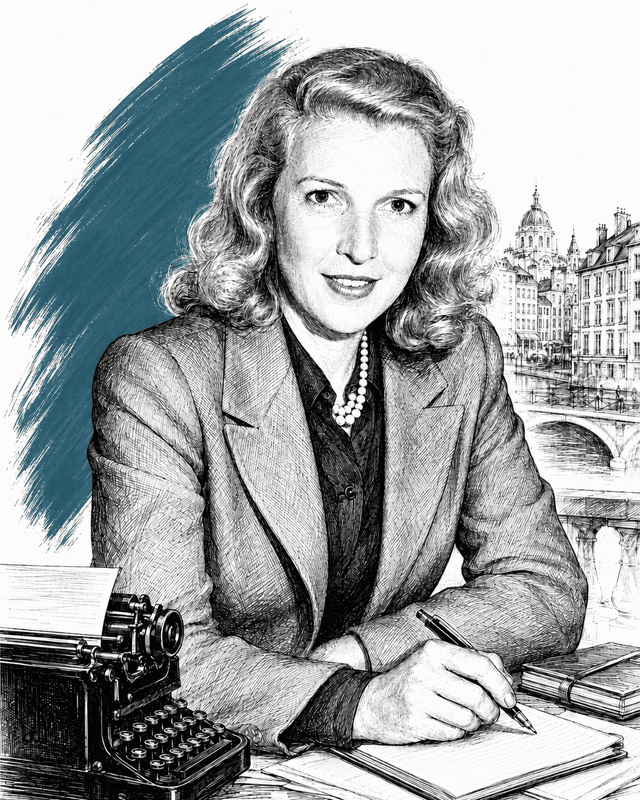
War correspondent who covered the Spanish Civil War, D-Day, and conflicts across five more decades; Hemingway's third wife, 1940–1945.
View authorThe sources below include the primary text, editions, scholarship, archival materials, and other records that informed this page. They document Green Hills of Africa, its publication, and its place in literary history.

Public 2013 transcription of a Jonathan Cape text whose front matter dates its first publication to 1936. Analysis uses Part I, chapter One's literary conversation and Part II, chapter Five's kudu-search passages; no 1935 American first-edition or whole-book collation.
Biographical evidence used to verify chronology, relationships, and historical context connected to Green Hills of Africa.
The Hemingway–Perkins correspondence supplies publication and editorial context for the Scribner book.

Used for Hemingway’s own retrospective discussion of factual writing, craft, and omission.
Publisher record used to verify the 2016 Hemingway Library Edition, ISBN, included archival material, and pagination.
The primary text is the baseline reference for every book page. Additional references document publication history, interpretation, and historical context where that evidence is available.
 Explore more resources