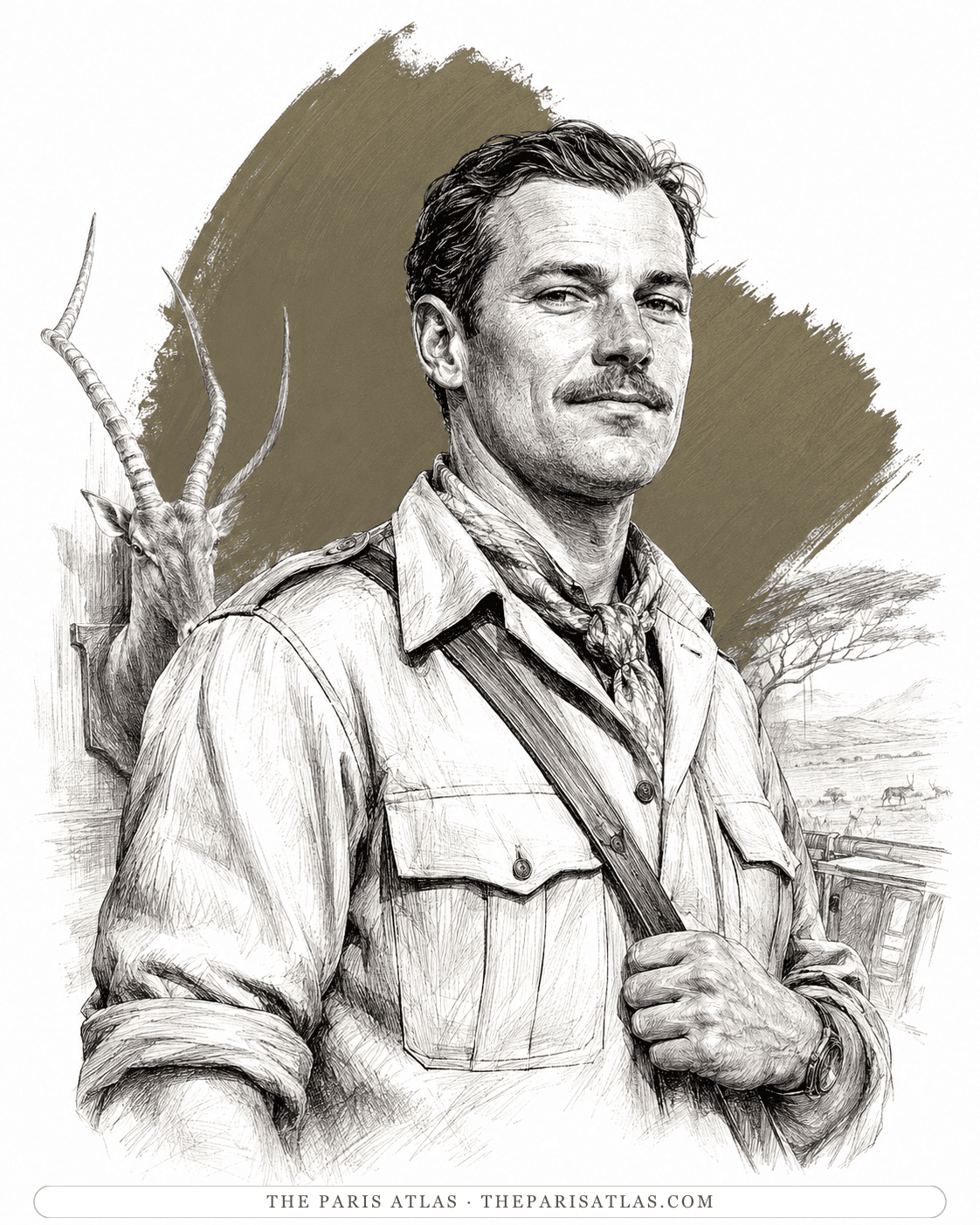
Karl
The companion hunting apart, whose trophies keep arriving without effort while the narrator's kudu does not. The envy is the book's engine, and Hemingway records his own with unusual candour.
A kudu of his own. Offered a drink at the fire on his worst evening he says he does not want a drink, he wants a kudu, and later, when the others promise him a record head, he says he would be happy with any bull at all.
The book

At a glance
- Karl; B'wana Kabor to the trackers
- The same small town as Hemingway; Key West comes up at the fire
- At home, nine thousand miles away. She joins them a month later at Haifa.
- Charo, his gun bearer, and his own guides, in a different beat
- Buffalo, rhino, waterbuck, a roan antelope, a leopard
- Never ill on the trip, while Hemingway spent part of it with dysentery
- "Whatever you say."
Who they are in the book
Spoiler-freeKarl is the other American on the safari — a friend from the small town where Hemingway lived, out with his own licence, his own gun bearer and, most days, his own stretch of country. The two of them hunt apart and compare heads at the fire in the evening. That arrangement is what gives the book its plot. Hemingway calls him Karl; the trackers call him B'wana Kabor.
He wins almost every comparison and enjoys none of them. Hemingway can outshoot him and can always outwalk him, and Karl keeps coming back with the bigger animal: the best buffalo, the best rhino, the best waterbuck, a fine roan antelope. What the book is really recording is what this does to Hemingway, who sets down his own envy in detail and is equally clear that Karl behaves better throughout than he does.
What Karl gets in exchange is exhaustion. He hunts eight days alone in the kudu hills with nobody who speaks English, comes back thin and sallow, and answers every proposal put to him with "Whatever you say." By the middle of the trip the kudu has become something he cannot discuss calmly, and every day without one is somebody's fault — the guides, the beat, the hills.
How Karl Is Portrayed
- Eight days in the hillsThe lorries bring him in from the kudu camp thin, his skin sallow, his eyes tired, seeming a little desperate. He had hunted hard for eight days with no one who spoke English, eating alone, unable to remember the Swahili word for the animal he was after, working with trackers he did not trust, his wife nine thousand miles and three months away. To every plan put to him he says the same thing: "Whatever you say. Absolutely whatever you say."
- The rhino behind the treeHe comes out of his tent washing blood off his hands. Behind the tree is a rhino head twice the size of the one Hemingway shot that morning, a fresh drop of blood standing in the corner of one closed eye like a tear. Hemingway, his wife and Pop all try to congratulate him and manage to sound like people who have taken a heavy financial loss. Karl's pleasure drains out of him, and he apologises — simply and truly, Hemingway writes, meaning it.
- How he shootsOn a range he would beat any of them, and he put two clean shots into a leopard. In the field he is another man, and Hemingway says he has watched him do some of the worst shooting at game he has ever seen. He hates stalking and firing with people watching, and being hurried rattles him — which Hemingway knows and does anyway.
- The kudu he does getHe shoots it from the salt-lick blind at first light, hits it in the leg, trails it and hits it three or four more times. The head that reaches the skinner's tent is heavy and ugly: the horns make one thick turn and then slant straight out instead of spiralling up. Hemingway's wife says plainly that it is awful looking.
- When it goes wrong, someone is at faultThe guides, the choice of beat, the hills themselves. He is sure the others have hunted into his ground and says so at the fire; he loses the draw for the better beat and takes it as a trick played on him. Hemingway, who knows exactly which of his own remarks land hardest, keeps making them.
- The row on the zebra plainTwelve hides are wanted and the two of them are out in the heat and dust to get them. The animals are too far. They are not too far. Each waits for the other to shoot, then each refuses on principle, and one of them walks off too angry to fire. By the time the car comes up and they ride in through the dust it has passed, and both of them are thinking about the duck shooting that afternoon.
- GentleHemingway says nobody can be gentler, more understanding or more self-sacrificing. Karl gives up the first shot at an oryx because he knows Hemingway wants it. He can tell what people are thinking about him and forgives it, and when there is bad feeling in camp he goes to bed early so that the others can talk about it.
- Poor KarlIt is what the others call him, and it is mostly sympathy. While Hemingway is eating himself alive over the trophies, his wife is worrying about Karl being out there without his. Karl calls her Poor Old Mama in return and promises that they will carry her through the streets on their shoulders when they are all back in Key West.
The party splits for the last days: Karl goes south to the sable country with the outfit, Hemingway drives into hills nobody has hunted.
A month later Hemingway, his wife, Karl and Karl's wife are sitting against a stone wall by the Sea of Galilee with a bottle of wine, watching grebes on the water. Looking out at the flat, stagnant-looking lake, Karl says he is not going to walk on it. "It's been done already."
If you like Green Hills of Africa


If you like Ernest Hemingway
Explore authors with a similar voice, perspective, and influence.

Louis-Ferdinand Céline
The other great stylist the Great War produced — where Hemingway cut the language down, Céline set it on fire. The same wound, opposite treatments.
View author
Henry Miller
Paris on no money a decade later, with the restraint removed. Miller called Hemingway's Paris a tourist's Paris; readers get to referee.
View author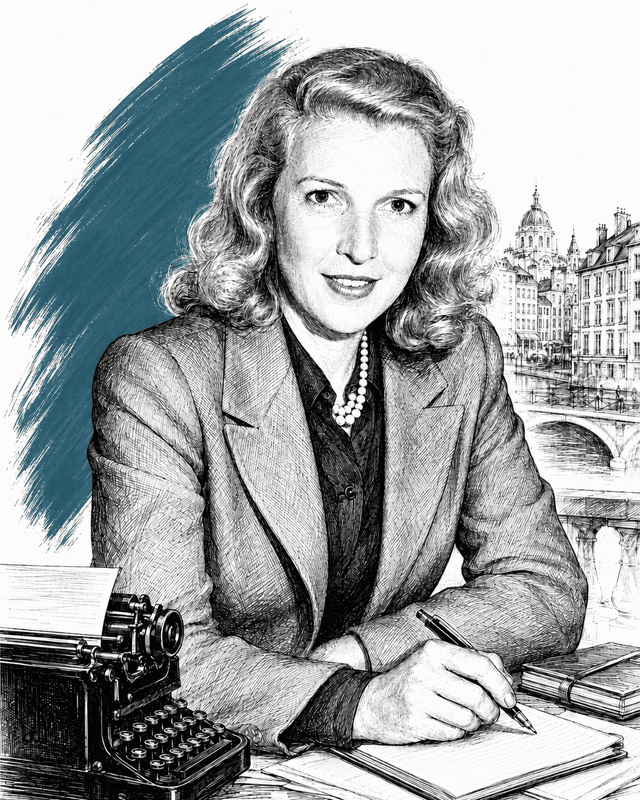
Martha Gellhorn
War correspondent who covered the Spanish Civil War, D-Day, and conflicts across five more decades; Hemingway's third wife, 1940–1945.
View author