Kandisky
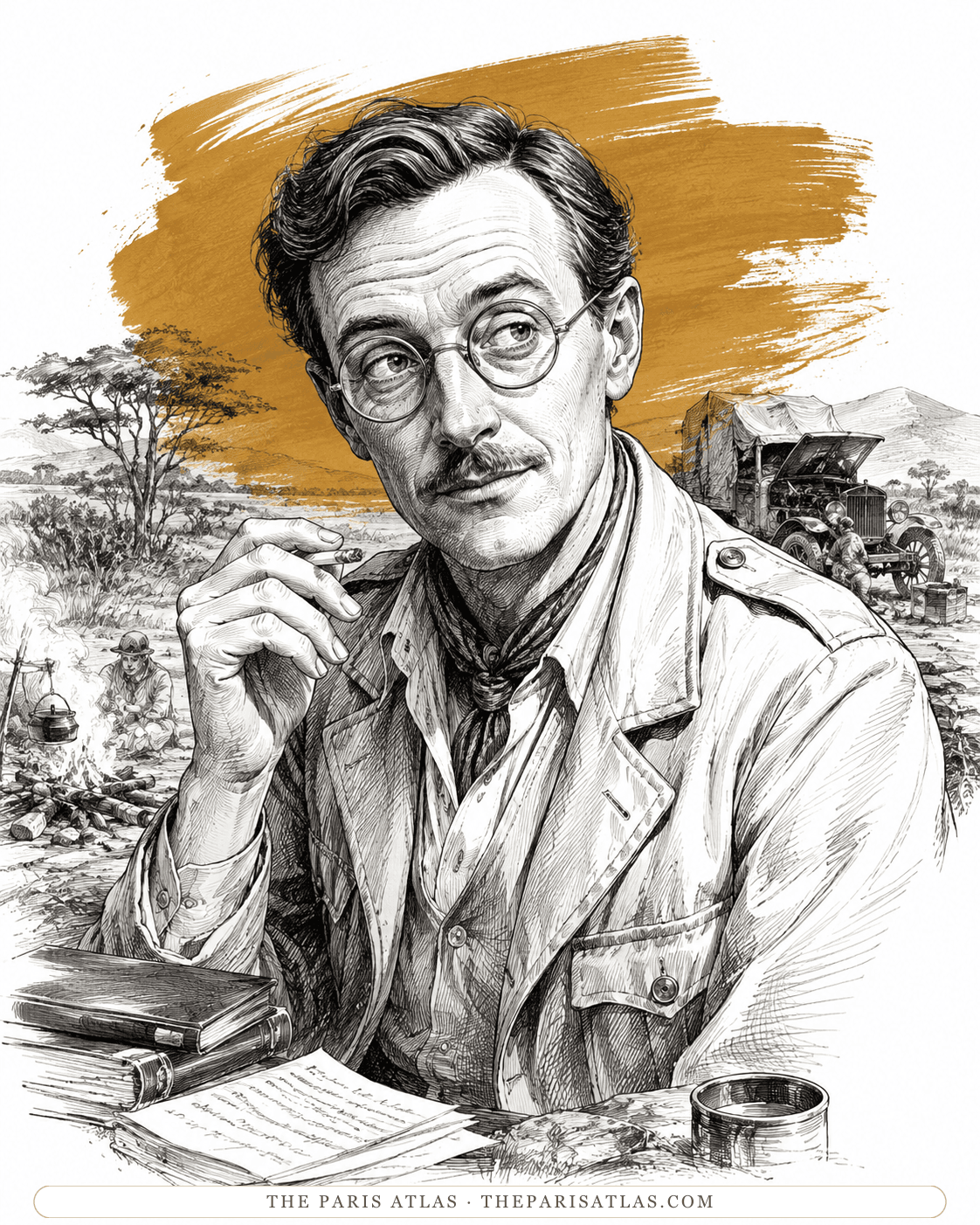
The Austrian whose broken-down lorry interrupts the hunt in the opening pages. He had read Hemingway's poems in Der Querschnitt, thinks hunting silly, and would rather talk about writers — which is how the campfire criticism starts.
Talk, and people to have it with. He tells Hemingway to keep explaining what happens to American writers because the life of the mind is the best part of life, and what he proposes for their next trip is a safari to study the people of the country and shoot nothing.
The book

At a glance
- Austrian
- A Tyrolese hat, leather shorts, an open shirt
- Manager for a rich Indian who grows sisal, recruiting labour up-country
- A wife and a daughter of thirteen, three months away
- Nothing at all
- East Africa, under von Lettow, from the start until the end
- Der Querschnitt, a German magazine
- The dichter — the poet
- His plantation. The lorry was the last of it.
Who they are in the book
Spoiler-freeKandisky is an Austrian who manages labour recruitment for a rich Indian sisal planter, and he enters the book by breaking down. His lorry clatters past the blind Hemingway is sitting in at dusk, ruins the evening's hunt, and then dies on the road twenty miles short of camp. He is the first white man the party has seen in a fortnight. He camps beside them, stays for lunch, and talks.
What he wants from them is conversation. He had read Hemingway's poems years earlier in a German magazine, recognises the name on a dark road in what was then Tanganyika, and calls him the dichter — the German word for poet. He asks what he thinks of the German poet Joachim Ringelnatz, of the novelist Heinrich Mann, of Rilke, of Valéry, of Joyce. Then he asks who the greatest writer in America is and keeps pressing until he gets the answer the book is now famous for: that all modern American literature comes from one book by Mark Twain called Huckleberry Finn.
He has lost more than the lorry. His own plantation is gone, the war he fought in got him nothing, and his wife and daughter are three months away at the house that comes with his job. He puts none of it as a complaint. He says that he has lost everything in this country and still has more here than anyone has in Europe.
How Kandisky Is Portrayed
- How he turns upA big fire beside the road at night, a lorry with the bonnet up, a crowd of men around it, and in front of the engine a short, bandy-legged man in a Tyrolese hat, leather shorts and an open shirt. Asked whether they can help, he says the trouble is not mechanical so much as personal: "It has taken a dislike to me. All engines dislike me."
- He recognised the nameHe had read Hemingway in Der Querschnitt, a German magazine that printed some obscene poems of his years before he could sell anything in America. Standing in the road he wants to know what the poet makes of Ringelnatz and of Heinrich Mann. Hemingway, who has been hunting for ten days without seeing a bull, is very pleased.
- He kills nothingHe says it at the table without apology: "I kill nothing, you understand." He thinks hunting one particular animal is nonsense, asks why an intelligent man would shoot a kudu at all, and proposes that when they come back they make a trip to study the people of the country instead, shooting nothing, or only what they eat.
- The lorry was the last of itIt was all that remained of his own plantation. When the engine is finished for good he says he is glad, because the lorry had become too much of a symbol, and now that everything is gone it is much simpler. The safari's own lorry tows him in to Handeni.
- Nobody would pay himHe fought through the war in East Africa under von Lettow, the German commander there, from the start until the end. Afterwards he went to Germany about compensation for his property and was told that as an Austrian he must go through Austrian channels. Austria asked him why he had fought at all, said it was his own affair, and told him they could not be held responsible for his noble sentiments. He got nothing from either.
- King in the morningHe describes his household to them with some pride. He puts one foot out from under the mosquito net and the boy puts the sock on it, then the other foot and the other sock, then he steps into his drawers, which are held ready for him. He asks whether they do not think that is marvellous.
- His daughterShe is thirteen and he has not seen her in three months. He says a daughter is like a second wife — someone attractive who is yours and not yours, who loves you in ignorance and is a stranger to you both — and that she is the Heinz Tomato Ketchup on the daily food.
- He does not drinkWhisky, beer and gimlets go round him all afternoon and he takes none of it: drink is bad for the mind and unnecessary. What he brings to lunch instead is fresh unsalted butter from Kandoa, much admired, and the promise of a Viennese dessert for the evening that his cook has learned to make very well.
- The danceCrouched, elbows lifting and falling, knees humping, he shuffles round the table singing. Hemingway says it was undoubtedly very fine. Kandisky says it is one of a thousand.
If you like Green Hills of Africa


If you like Ernest Hemingway
Explore authors with a similar voice, perspective, and influence.

Louis-Ferdinand Céline
The other great stylist the Great War produced — where Hemingway cut the language down, Céline set it on fire. The same wound, opposite treatments.
View author
Henry Miller
Paris on no money a decade later, with the restraint removed. Miller called Hemingway's Paris a tourist's Paris; readers get to referee.
View author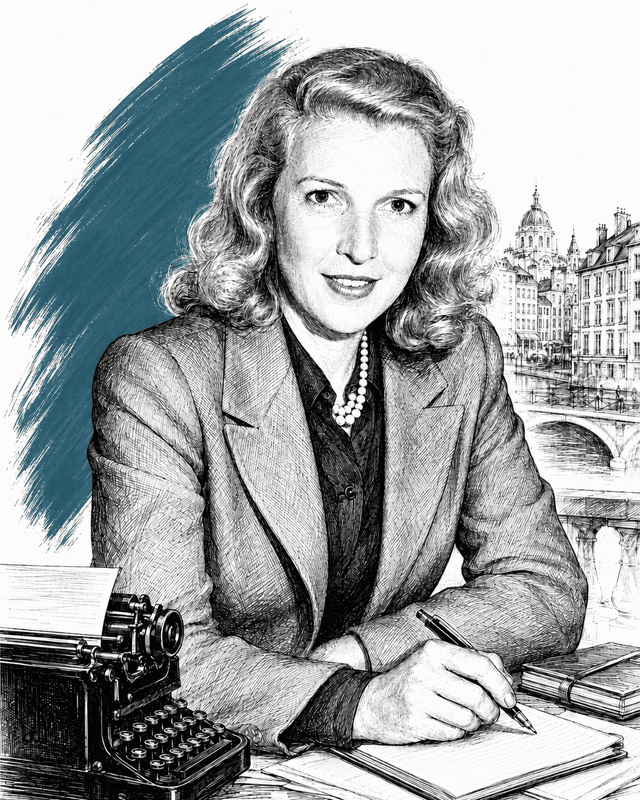
Martha Gellhorn
War correspondent who covered the Spanish Civil War, D-Day, and conflicts across five more decades; Hemingway's third wife, 1940–1945.
View author