
The Blue Lantern
The late book written from the same immobility, turning confinement into attention.
Read our take
by Colette
Twenty-two flower portraits written from memory — late Colette turning description of a rose or a poppy into a kind of self-portrait.
For a Flower Album is a late book of Colette's, a set of twenty-two short prose pieces each devoted to a flower. It began as a correspondence: her Swiss publisher, Mermod, sent her bouquets over the course of a year, and she answered with written 'portraits' of the flowers. Written in 1947, when illness kept her largely bedbound, it is not botany but imaginative description — memory, association, and close looking, turned on the rose, the lily, the tulip, the poppy. It is one of the finest late examples of Colette's descriptive intelligence. (What's inside is described below.)
The book has an unusual origin. Confined to her room, Colette could not observe flowers growing in their setting, so the pieces are written from memory and imagination as much as from the bouquets in front of her. That distance is the making of the book: unable to describe a flower 'in context,' she reaches for association, recollection, and metaphor, and the flower portrait keeps turning, quietly, into a self-portrait.
The twenty-two pieces move across a wide garden — 'La rose,' 'Lys,' 'Tulipe,' 'Anémone,' 'Muguet,' 'Pavot,' and more, down to the difficult and the strange. Each is short and exact, and together they show how much Colette could make of a single object by the end of her life, when the world had shrunk to what could be brought to her bedside.
For a Flower Album belongs with the late books written from the same immobility — The Blue Lantern and The Evening Star — and shares their method of turning a narrow vantage into abundance. It was translated into English under this title by Roger Senhouse.
There is no plot. The book is a sequence of twenty-two short prose pieces, each a portrait of a single flower — the rose, the lily, the tulip, the anemone, the lily of the valley, the poppy, and others. Colette wrote them in 1947, largely bedbound, in answer to the bouquets her publisher sent her over a year.
The pieces are not botanical description. Unable to observe the flowers growing in their setting, Colette works from memory and association, so each portrait drifts toward reflection and, often, toward self-portrait. The pleasure of the book is watching a late writer make so much of so small an object.
“La Rose” begins by resisting the flower's apparent supremacy: other blossoms arrive first, and the perfected florist's rose has become painfully expensive. Colette misses the damaged petals, insects and excessive leaves removed to make it immaculate. Her address to the flower is therefore affectionate without being obedient to its prestige. Even the magnificent Palais-Royal roses receive a teasingly modest compliment at the end: they are almost as beautiful as those covering humble houses and gardens. Description becomes a reply to commercial perfection, finding abundance in weather, chance and ordinary human care.
In “Muguet,” lily of the valley opens into a whole social landscape: Parisian good-luck customs, a market's fixed arrangement of leaves and flowers, and a solitary gatherer returning from the woods. The narrator admires that knowledgeable figure but recoils from the crowds stripping the forest. A nesting pheasant brings the cost of gathering into focus, and she calls her dog away. The remembered outing ends in scent, pleasure and fatigue rather than an uncomplicated pastoral triumph. The flower portrait holds enjoyment beside the disturbances that accompany taking beautiful things home.
Each flower portrait keeps turning into something about the writer looking at it — Colette's late manner at its most concentrated.
Bedbound and working from memory, she makes more of a single flower than most writers make of a whole garden.
The book began as answers to the bouquets her publisher sent, which gives it the intimacy of a correspondence.
1947
Colette writes the flower portraits, largely bedbound, in answer to the bouquets sent by her publisher.
1948
Pour un herbier is published by Éditions Mermod in Lausanne.
1991
Fayard publishes a new edition whose preface recounts Mermod’s commission of flower portraits.
The late book written from the same immobility, turning confinement into attention.
Read our take

Colette's memoir of a childhood full of gardens, the same eye turned on family and place.
Read our takeColette. Pour un herbier was written in 1947 and published around 1948, a set of twenty-two short prose portraits of flowers.
It is a sequence of flower portraits — the rose, the lily, the tulip, the poppy, and others — written not as botany but as imaginative description that keeps turning toward memory and self-portrait.
Colette's Swiss publisher, Mermod, sent her bouquets over the course of a year, and she answered with written portraits of the flowers, composing them largely from her bed.
No. It is a collection of short descriptive prose pieces, one per flower, without a continuous plot.
Yes. It was translated into English under this title by Roger Senhouse.
Explore authors with a similar voice, perspective, and influence.
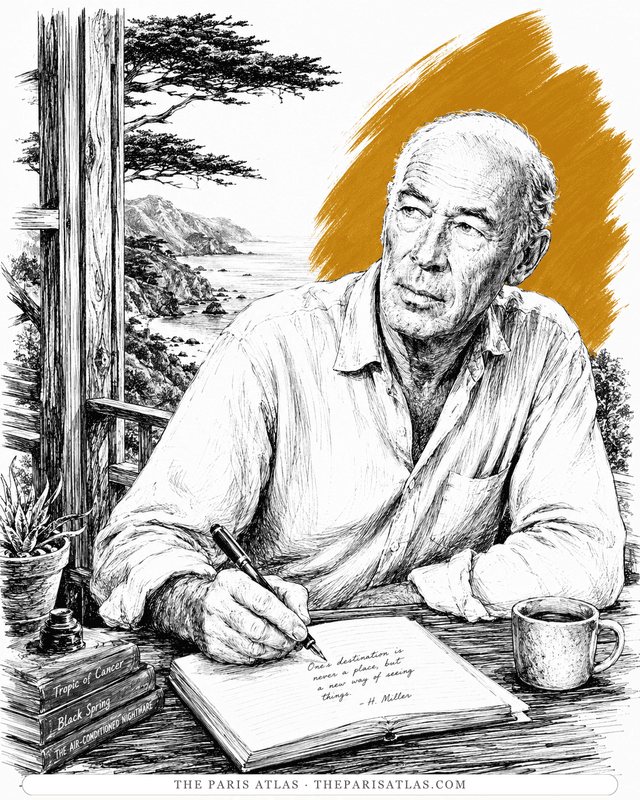
The Brooklyn dropout who arrived in Paris broke at thirty-eight and wrote the exuberant, banned books that ended American censorship.
View author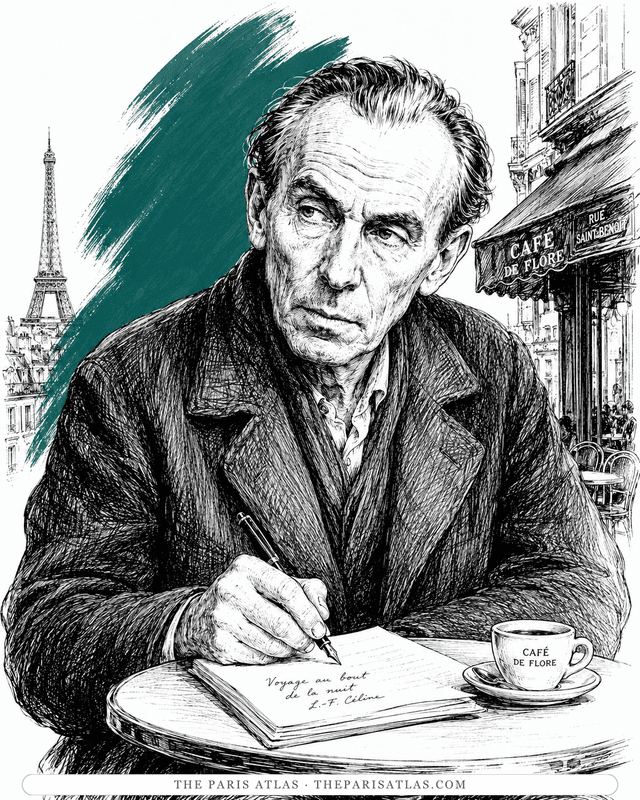
The doctor of the Paris slums who wrote the century's blackest, funniest novel — and changed the sound of French prose.
View author
War correspondent who covered the Spanish Civil War, D-Day, and conflicts across five more decades; Hemingway's third wife, 1940–1945.
View authorThe sources below include the primary text, editions, scholarship, archival materials, and other records that informed this page. They document For a Flower Album, its publication, and its place in literary history.

The primary text represented by this page, used for descriptions of the work’s contents and for any quoted passages shown here.
Complete La Rose, pp. 11–15, in the French Mermod 1951 transcription. Used for the contrast between perfected florist roses and cultivated or accidental abundance. The original 1948 edition, English translation and Dufy's illustrations were not collated.
Complete Muguet, pp. 165–167, in the French Le Fleuron 1950 collected transcription. Read for customary flower selling, gathering and the remembered disturbance of nesting birds. No botanical safety advice, complete-volume or cross-edition verification is claimed.
The Société des amis de Colette bibliography verifies the original edition's publisher and publication date.
Used to place For a Flower Album within Colette's published work and verify its bibliographic context.

Used for independent biographical, archival, or historical context surrounding Colette's career and the period in which For a Flower Album appeared.
Used to cross-check authorship, chronology, and the work's place in Colette's wider catalogue.
Used to verify Colette's bibliography and place For a Flower Album within the broader chronology of Colette's career.
Publication and revision history used for the timeline.
The primary text is the baseline reference for every book page. Additional references document publication history, interpretation, and historical context where that evidence is available.
 Explore more resources