Pop
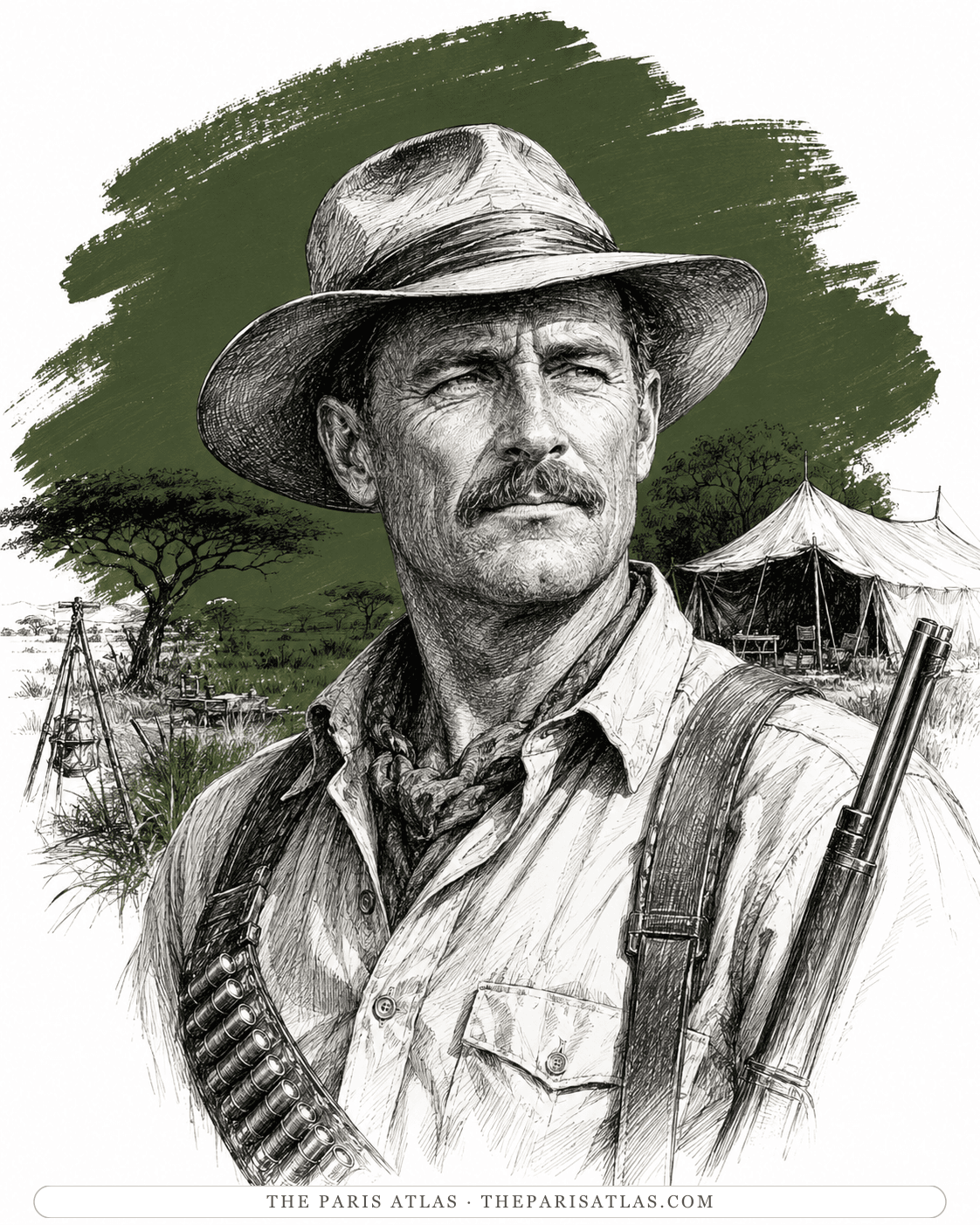
The professional hunter running the safari, unhurried and hard to impress, and the book's steadiest voice on courage and on work. Hemingway's Pop is Philip Percival.
To bring his clients home with the animals they came for, killed cleanly. Hemingway writes that Pop allows a kill only when getting the animal is necessary to his being first in his trade, and the advice he gives before every stalk is to take the time and make the shot certain.
The book

At a glance
- Mr. Jackson Phillips — Pop to Hemingway, Mr. J. P. to his wife
- The safari's professional hunter, called a white hunter at the time
- None. He corrects a guest who calls him Colonel.
- A sleeveless corduroy jacket faded almost white, a big Stetson
- A pipe
- Whisky and soda, gimlets — never before lunch, except by mistake
- Fought in East Africa; admires von Lettow, who led the German side
- Richard Carvel, which he had read before and wished he hadn't
- A diary of a trip to Alaska. He says he is no writer.
- The book is dedicated to him
Who they are in the book
Spoiler-freePop is the professional hunter the party has hired to run the safari, and the safari is his business. He picks the camps, decides what may be shot, walks behind the client carrying the heavy rifle, and is answerable for getting everyone home. The book calls him Mr. Jackson Phillips. Hemingway calls him Pop, Hemingway's wife calls him Mr. J. P., and when a visitor to camp addresses him as Colonel Phillips he corrects it at once: "I'm a Mister, by the way. We use these military titles as nicknames."
He is a big, thick man in a sleeveless corduroy jacket washed almost white, and he talks in a husky whisper, mostly in jokes. Nearly all the praise in the book comes from him, and he takes most of it back in the next sentence: he will tell Hemingway a shot was extraordinary and then tell him never to mention it to anybody. He is also the book's authority on how to behave — about killing only the animal you came for, about not arguing with a guest at your own table, and about what competing does to people who are supposed to be enjoying themselves.
The book is dedicated to him, in a joking letter addressed to Mr. J. P. that tells him to say he is a fictional character if anyone objects to the language Hemingway has put in his mouth. The last line of it is straight: "Anyway the book is for you and we miss you very much."
How Pop Is Portrayed
- The look of himBig and thick, in a sleeveless corduroy jacket that washing and the sun have faded almost white, a big Stetson, a pipe. He talks in a husky whisper. Watching him asleep one hot afternoon, Hemingway notices how the body has thickened and how the pouches under his eyes have settled, and thinks that inside he is still the young man who galloped after lion on the plain below Wami.
- What he says before a shotThe advice never changes and is never complicated: "Take your time and kill him." He gives it again on the last night, when there is one morning of the hunt left. Days later, when a kudu bull finally stands in the open in front of Hemingway at dusk, what Hemingway is repeating to himself is Pop telling him to take his time.
- Only the animal you came forHe hates anything killed on the side — nothing shot for ornament, nothing shot for the sake of shooting. So when he tells Hemingway to go ahead and shoot a rhino they have no particular need of, Hemingway understands that he is being handed a present.
- He will not let a good shot standHemingway kills a running rhino across three hundred yards of valley. Pop tells him twice never to admit it to anyone, because nobody will believe him, and when Hemingway asks for a written certificate says it would only make them both liars.
- Manners at the tableAn Austrian visitor spends lunch explaining that Indian settlers are taking the country over from the Europeans. Pop says nothing at all while the man is eating with them. After he has gone, Pop tells Hemingway not to believe a word of it.
- A gimlet before lunchHe does not drink before lunch except by mistake, so when he calls for gimlets in the middle of a morning Hemingway understands he is being rescued from a conversation that has turned into an interview. In the evening it is whisky and soda, and afterwards: "He moved toward his tent carrying himself with comic stiffness, walking in the dark as carefully as though he were an opened bottle."
- He fought in this countryHe asks the Austrian whether he served under von Lettow, who commanded the German forces in East Africa in the First World War, and is told that he did, from the start to the end. Asked whether he fought himself, Pop says yes and nothing more. He calls von Lettow a great fighter and says he has great admiration for him.
- Not good enough for the little MemsahibHe refuses to take Hemingway's wife into reeds five feet over their heads after a wounded buffalo, and is furious when she follows them in anyway. For the last chase of the book he sends Hemingway off alone with two guides and stays behind to move the camp and look after her.
- What he thinks of competingWhen Hemingway's hunting companion comes back with a rhino twice the size of Hemingway's, Pop congratulates him badly and says afterwards that it was like a kick in the stomach. His summary, delivered on the last morning of the safari: "We have very primitive emotions. It's impossible not to be competitive. Spoils everything, though."
- Literary anecdotesHe needles Hemingway into telling stories about writers, insists that Homer wrote Ulysses, and asks whether he would make a writer himself. Then he produces one of his own, which is better than any of Hemingway's: he had admired Stewart Edward White's books for years, met the man in Nairobi, and took an instant dislike to him.
If you like Green Hills of Africa


If you like Ernest Hemingway
Explore authors with a similar voice, perspective, and influence.

Louis-Ferdinand Céline
The other great stylist the Great War produced — where Hemingway cut the language down, Céline set it on fire. The same wound, opposite treatments.
View author
Henry Miller
Paris on no money a decade later, with the restraint removed. Miller called Hemingway's Paris a tourist's Paris; readers get to referee.
View author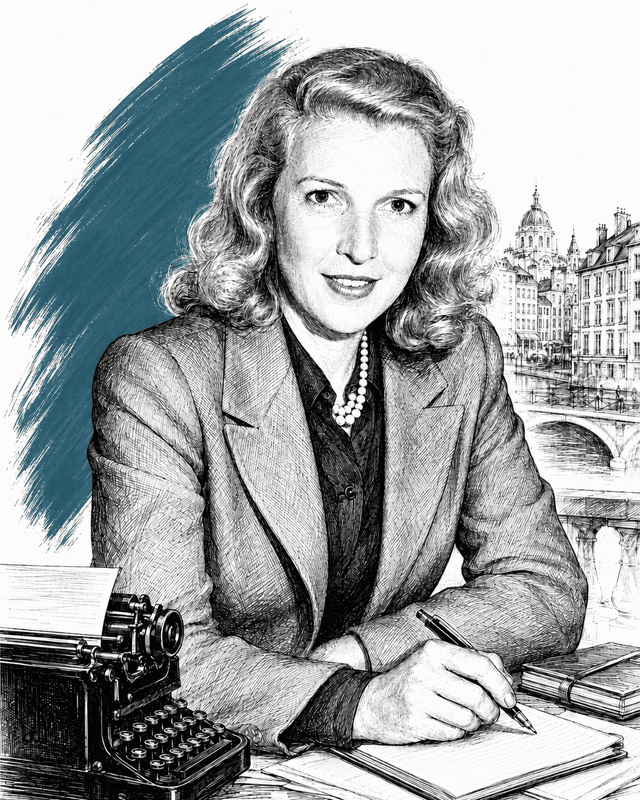
Martha Gellhorn
War correspondent who covered the Spanish Civil War, D-Day, and conflicts across five more decades; Hemingway's third wife, 1940–1945.
View author