
The Old Man and the Sea
Written at almost exactly the same time — the two projects run parallel in the Finca Vigía years.
Read our take
Kenya, 1953 — the safari that became a marriage story, a meditation on belonging, and Hemingway's most contentious posthumous publication.
Based on his 1953–54 safari with Mary Hemingway, True at First Light was cut from roughly 200,000 words to 318 pages by his son Patrick — more than half the manuscript excised. (A later edition, Under Kilimanjaro, restored most of it.) What survives is an account of living among Wakamba people on the slopes of Kilimanjaro, the complicated marriage at its center, and Hemingway's feeling about Africa as the one place where he had not yet entirely failed himself. An essential document for the biography; a difficult but rewarding experience as a novel.
The last big manuscript came out of the last big safari: Kenya, 1953–54, a trip that ended with Hemingway surviving two plane crashes in two days and reading his own obituaries. Back in Cuba he wrote some two hundred thousand words about the safari's daily life — Miss Mary's months-long hunt for a black-maned lion, the Kamba girl Debba, the game wardens, the gin — then abandoned the untitled 'African book' in 1956 and never returned to it.[1]
For the centennial of his birth in 1999, his son Patrick — himself a professional East Africa hand — cut the manuscript roughly in half and published it as True at First Light, labeled a 'fictional memoir': Hemingway plays himself, more or less, and the line between diary and invention is left deliberately blurred. A fuller scholarly text, Under Kilimanjaro, followed in 2005 for readers who want the uncut version.[1]
Reception was really an argument about the vault: five posthumous books in, critics asked openly whether the estate was publishing Hemingway or excavating him. But the book holds real rewards — the tender, funny marriage portrait of Mary, the night-watch meditations, Africa rendered with the old exactness — and its title sentence, about truth at first light and lies by noon, may be the best thing salvaged from the ruins.[1]
Kenya, the winter of 1953–54: Hemingway and his wife Mary run their own safari camp in the shadow of Kilimanjaro, and this 'fictional memoir' — he plays himself, improved — records the season. The spine is Miss Mary's hunt for a great black-maned lion, pursued for months with a devotion the camp arranges itself around; the comedy is daily life — the game wardens, the gin, the visiting dignitaries; and the delicate thread is Debba, the young Kamba woman the narrator courts in a shadow-engagement his wife tolerates with varying grace.[1]
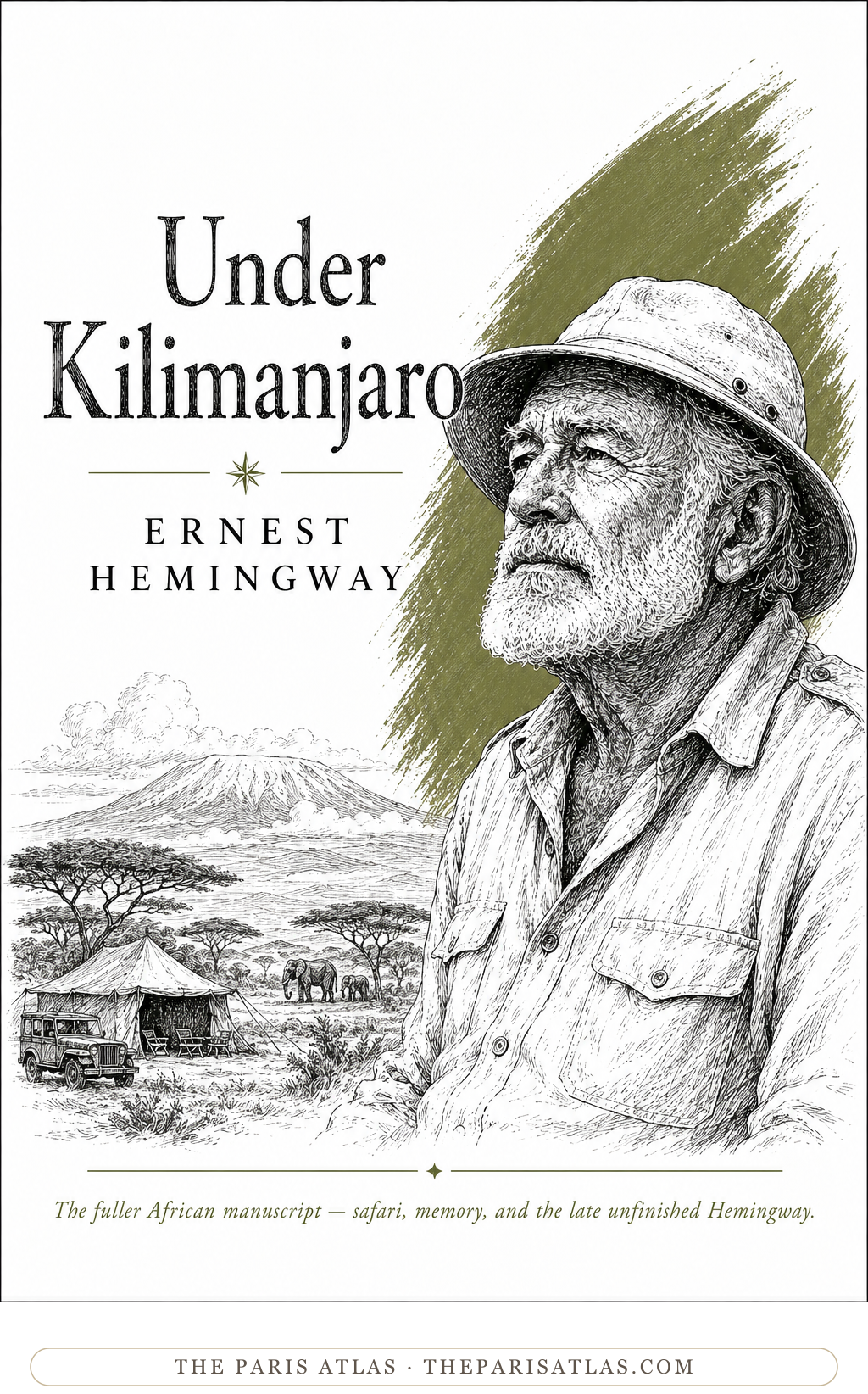
Around the hunts, the book is a meditation written at first light: on Africa changing, on the old safari world ending, on religion improvised out of landscape, and on truth-telling itself — the title comes from the narrator's observation that in Africa a thing is true at first light and a lie by noon. His son Patrick carved the book from a much longer unfinished manuscript for the 1999 centennial; readers who want the uncut version can find it as Under Kilimanjaro, and the pleasures of both are the same: late Hemingway, loose, funny, and unguarded.[1]
The hunt resolves: after months of misses, bad light, and camp politics, Mary Hemingway finally kills her great black-maned lion, and the camp erupts into a celebration the narrator records with equal parts pride and relief. The season winds down from there — a leopard the narrator owes and finally takes, the shadow-courtship of Debba left gracefully unresolved — and the book closes the way the abandoned manuscript did: mid-life, mid-season, with the safari packing up and no ending in the novelistic sense at all. What remains is the last sustained thing Hemingway ever wrote about the country he loved most after Spain.
The bent pole looks damaged, but the narrator's hand finds it solid. That small correction makes the inspection more than a picturesque pause: judgment depends on testing appearances. Even his confidence in the windsock remains conditional on the breeze returning. Set against the mountain's scale, the improvised equipment gives human command a modest, provisional form. Later in the passage, his pleasure in the morning coexists with unfinished business and responsibilities briefly put aside. The landscape offers delight without releasing him from the work of attending to what might change.
As Mary and Charo watch the waterbuck, the narrator imagines the animals looking back at them. The familiar hunting perspective reverses: the observers become an odd spectacle themselves. Yet their supposed harmlessness and the animals' curiosity remain his interpretation, not access to what the waterbuck think. This playful shift lets the passage enjoy the encounter while exposing the storyteller's role in making it meaningful. His certainty that something will happen each morning turns waiting into anticipation, even though he cannot decide in advance whether the event will be welcome.
Hemingway went to Africa twice; both times it restored something he couldn't find elsewhere. True at First Light is the closest he came to explaining why — and the most direct account of what that restoration actually felt like.
The relationship between the narrator and his wife is more honestly complicated than in any of his published novels — a portrait of two people who love and exasperate each other in equal measure.
Reading this alongside Under Kilimanjaro — the unexpurgated edition — raises important questions about what editing a posthumous manuscript means and who has the authority to do it.
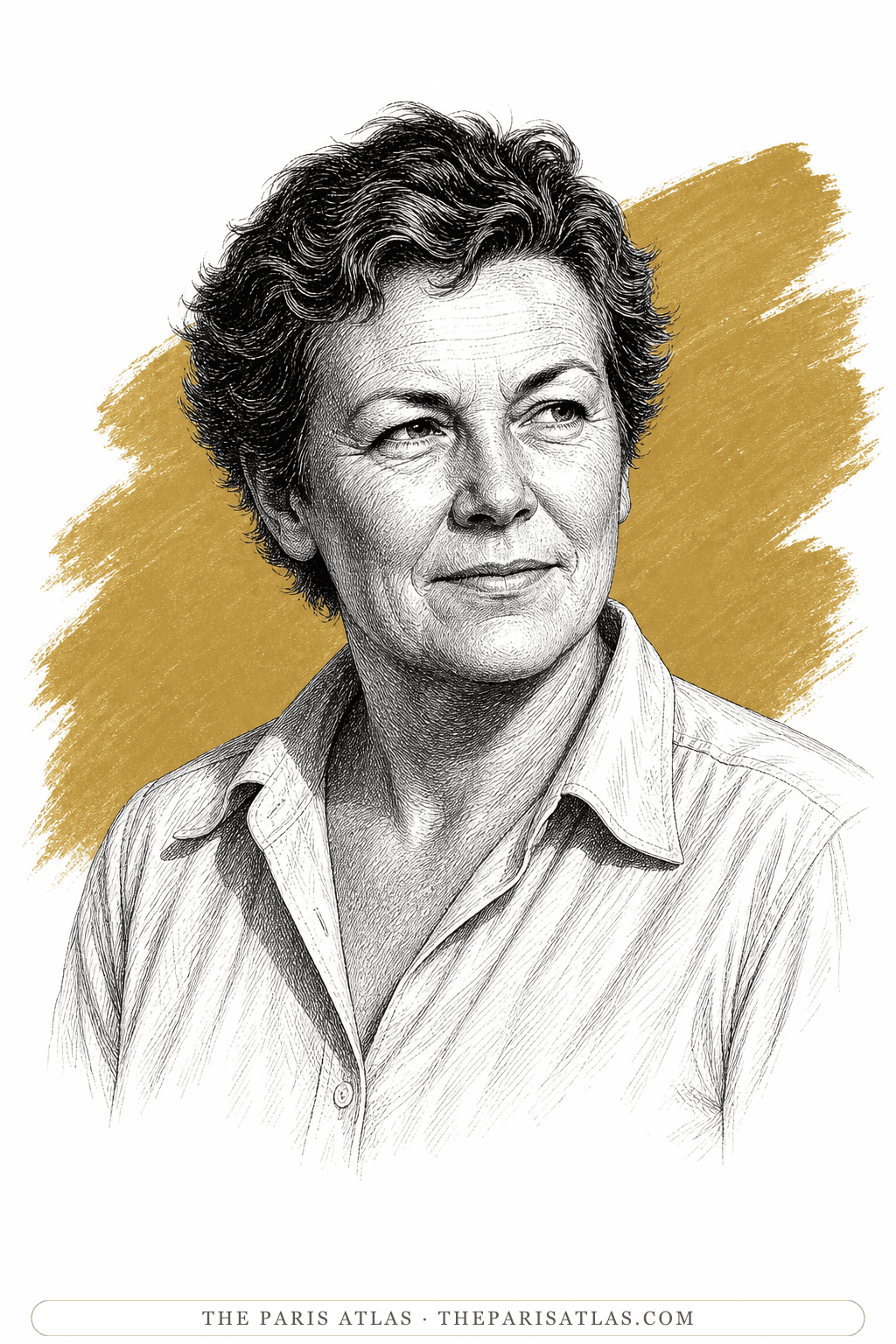
Hemingway's fourth wife, the safari's “Miss Mary” — set on taking her black-maned lion before Christmas.
1953–1954
Hemingway's Kenya safari with Mary ends with him surviving two plane crashes in two days.
1954–1956
Back in Cuba he writes some two hundred thousand words about the safari, then abandons the untitled "African book."
1999
For the centennial of his birth, his son Patrick cuts the manuscript roughly in half and publishes it as True at First Light, labeled a "fictional memoir."
2005
A fuller scholarly text, Under Kilimanjaro, restores most of the cuts.


Written at almost exactly the same time — the two projects run parallel in the Finca Vigía years.
Read our take
The other late memoir, the other late reckoning — Paris versus Africa as the place of restoration.
Read our take
The other late posthumous novel: each represents a different avenue Hemingway was exploring in the 1950s.
Read our take
The third major posthumous work — read all three to see the full scope of what was left unfinished.
Read our takeErnest Hemingway. His son Patrick Hemingway edited the manuscript into print for the 1999 centennial of his father's birth.
Based on Hemingway's 1953–54 safari with his wife Mary, it recounts living among Wakamba people on the slopes of Kilimanjaro, the complicated marriage at its center, and Africa as the one place where Hemingway felt he had not entirely failed himself.
It is labeled a "fictional memoir": Hemingway plays himself, more or less, and the line between diary and invention is left deliberately blurred.
Yes. Patrick Hemingway cut the roughly 200,000-word manuscript to 318 pages. A later edition, Under Kilimanjaro (2005), restored most of what was removed.
From the narrator's observation that in Africa a thing is true at first light and a lie by noon.
Explore authors with a similar voice, perspective, and influence.
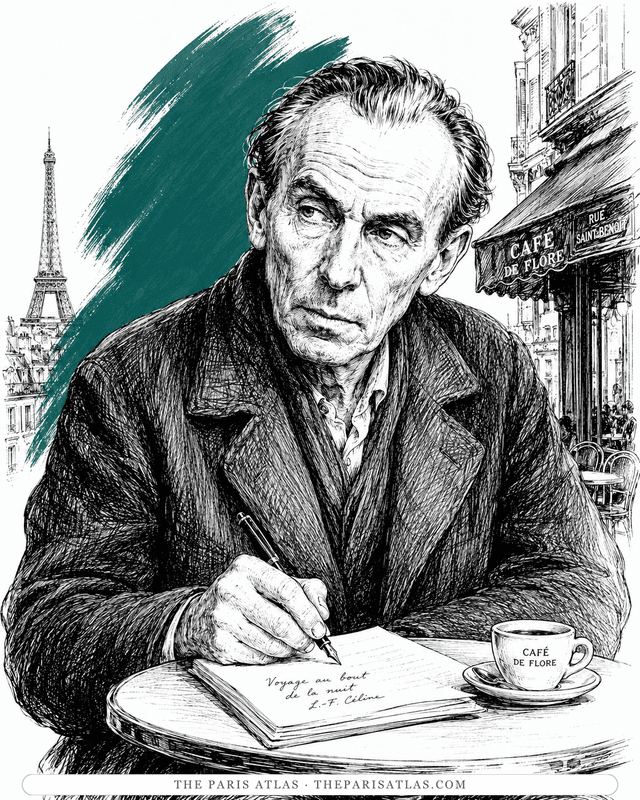
The other great stylist the Great War produced — where Hemingway cut the language down, Céline set it on fire. The same wound, opposite treatments.
View author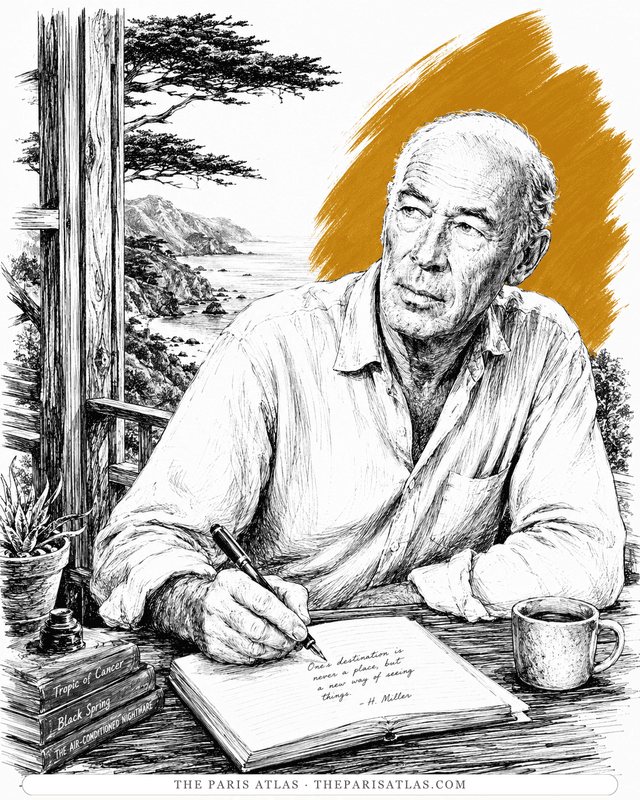
Paris on no money a decade later, with the restraint removed. Miller called Hemingway's Paris a tourist's Paris; readers get to referee.
View author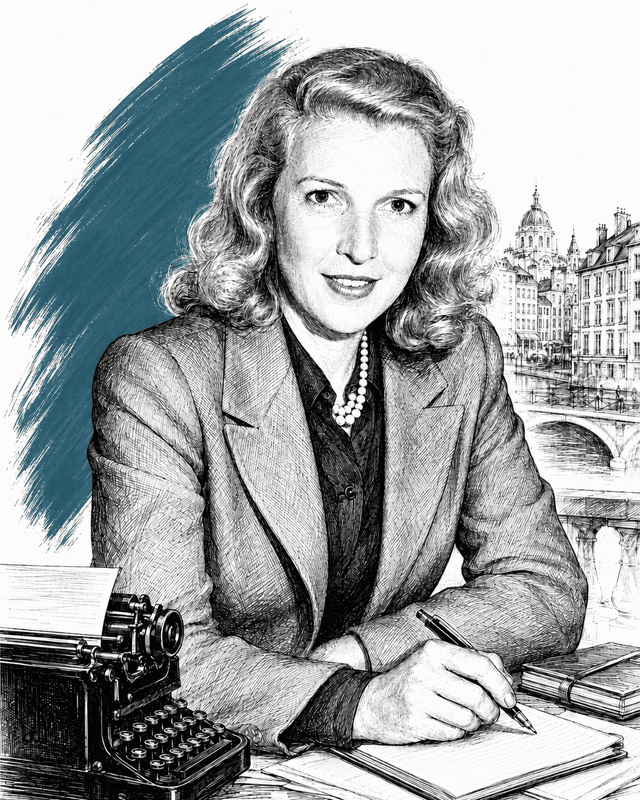
War correspondent who covered the Spanish Civil War, D-Day, and conflicts across five more decades; Hemingway's third wife, 1940–1945.
View authorThe sources below include the primary text, editions, scholarship, archival materials, and other records that informed this page. They document True at First Light, its publication, and its place in literary history.


Publisher-permission-marked excerpt from chapter One, displayed page 3. Analysis uses the windsock check and the narrator's imagined animal perspective on Mary and Charo. Page 4 read for surrounding context; not a complete-chapter, whole-volume or manuscript collation.
Web source consulted for documented facts and historical context presented on the True at First Light page.
Used for the 1953–54 safari, the African manuscript, and its place in Hemingway’s final working years.
Used to cross-check the safari chronology and the biographical circumstances behind the manuscript.

The JFK Library’s archival presentation of Hemingway’s correspondence supplies primary-document context for the late manuscripts.
The primary text is the baseline reference for every book page. Additional references document publication history, interpretation, and historical context where that evidence is available.
 Explore more resources