

The Old Man and the Sea
Ernest Hemingway's old fisherman is the colonel's closest relative in modern fiction, according to Charles E. May. Both old men hold out against hopeless odds.
Read our takeNo One Writes to the Colonel
Gabriel García Márquez
Gabriel García Márquez wrote this short novel in a Paris attic while waiting for money that never came. An old colonel waits fifteen years for a pension letter, with a fighting rooster as his last hope.
No One Writes to the Colonel is a short novel about an old army veteran in a small Colombian town. He has waited fifteen years for the pension the government promised him. His only valuable possession is the fighting rooster that belonged to his murdered son.[1] Gabriel García Márquez wrote it in 1956 and 1957 in an attic hotel room in the Latin Quarter of Paris.[2] The novel appeared first in the magazine Mito in 1958 and as a book in Medellín in 1961.[2][3]
The story takes place between October and December 1956 in an unnamed Colombian village. Colombia is in the middle of La Violencia, the civil war between Liberals and Conservatives that ran from the late 1940s into the 1960s. The town lives under martial law.[1]
The colonel fought in an earlier war and was promised a pension. Every Friday he goes down to meet the mail boat, and every Friday there is nothing for him. He has been waiting fifteen years.[1]
Nine months before the story begins, his son Agustín was killed at a cockfight for handing out secret political leaflets. The son left behind a fighting rooster. The colonel and his wife are going hungry, and the rooster eats corn they cannot spare.[1]
The colonel is poor but proud, and very funny. He does not wear a hat, he says, so that he never has to take it off to anyone. His wife, who suffers from asthma, is more practical. She wants to sell the bird.[1]
The colonel waits for the pension letter, and it does not come. He has hired a lawyer to chase the claim, and the lawyer does nothing useful. His wife goes around the village trying to barter household things for food. The colonel keeps his pride and hides how poor they are.[1]
The town's doctor treats the colonel's wife and is secretly part of the resistance. The mayor is corrupt. The priest, Father Angel, gives the town no real moral lead. Don Sabas, the only leader of the colonel's party who escaped persecution, has made his peace with the government and grows rich on other people's hunger.[1]
The rooster is meant to fight in the January cockfights. The colonel's wife keeps pressing him to sell it. In the end he agrees to sell it to Don Sabas, who then pays much less than he first promised.[1]
Some villagers take the rooster to the practice fights, and the colonel sees that it really is a champion. He decides to give Sabas's money back and keep the bird, which he now sees as belonging to the whole town.
His wife asks what they are supposed to eat until January. The colonel answers with a single curse word, and the story ends.
In 1955 García Márquez was a reporter in Europe for the Bogotá newspaper El Espectador. He then stayed on as a freelance journalist based in Paris until 1957. Colombia's military ruler, General Gustavo Rojas Pinilla, shut down El Espectador and El Independiente, the papers he wrote for. He was left poor and out of work.
He lived on the seventh floor of the Hôtel de Flandre, at 16 rue Cujas in the Latin Quarter. The room was a tiny attic with no heating. The landlady, Madame Lacroix, let him fall behind on the rent without complaint.
In June 1956 he was working on another novel, the book later published as La mala hora (In Evil Hour). The colonel's story pushed in. He put the unfinished draft in a drawer and started on the old man waiting for his pension.
He was waiting for money himself, a check from friends in Barranquilla that never came. In a 1977 interview he described the routine. He would walk down seven floors with no elevator, find no letter, climb back up and write another page. Somewhere along the way he realized the letter would never come.
He wrote it in winter, he said, with snow outside and a coat on in the cold room. He still wanted the book to feel as hot as Aracataca, the town where he was born.
The story started with his grandfather, Colonel Nicolás Márquez, a Liberal veteran of the Thousand Days' War. He died still waiting for the pension the Conservative government owed him. The Nobel biography says he grew up with his mother's parents, and that his grandfather was a colonel from the civil war at the turn of the century.
He mixed that memory with another. As a young reporter for El Heraldo in Barranquilla, he had seen a sad old man waiting for a boat at the market with silent anxiety. Years later in Paris, waiting for a letter himself, he recognized the feeling.
He had always thought the pension story would make a comedy. Then his own money ran out in Paris, and the comedy turned into something darker.
García Márquez rewrote the book many times. In 1977 he said nine times. In 1985 he said eleven drafts. In one early version the colonel wrings the rooster's neck and makes a stew of it.
He threw that ending out. Killing the rooster was an easy way out for the writer, he said, but it did not fit a colonel who was a fighter prepared to hold out to the end.
Critics have read the rooster as a symbol of the people's struggle. García Márquez disagreed. He told the story of his son at a school in Mexico, who was asked what the rooster symbolized. The boy answered that, according to the author, the rooster was just a rooster, and he failed the question.
For years he called this his best book. He changed his mind only after Chronicle of a Death Foretold came out in 1981.
He finished the book in Paris in 1957 and sent it to his friend Germán Vargas. Vargas passed it to Jorge Gaitán Durán, who published it in the magazine Mito in the May–June 1958 issue.
The book edition came about by chance. At a hotel pool in Barranquilla, the Medellín publisher Alberto Aguirre offered him 500 pesos for the story that had run in Mito, and García Márquez sold on the spot. Aguirre Editor published it in Medellín in 1961.
The French translation arrived before the English one. The Paris publisher Julliard brought out Daniel Verdier's translation, Pas de lettre pour le colonel, in 1963. J. S. Bernstein's English translation followed from Harper & Row in 1968, together with the stories of Big Mama's Funeral.
I don't have to take it off to anyone.
Life is the best thing that's ever been invented.
You should realize that you can't eat dignity.
You can't eat it, but it sustains you.
The first French edition ran to 123 pages. García Márquez himself called the book traditional realism, and the story is easy to follow.
García Márquez was broke in a Latin Quarter attic, waiting for a check, while he wrote about a man waiting for a letter.
Starving and proud, he answers every hardship with a wisecrack. Charles E. May's EBSCO summary compares him with Hemingway's old fisherman Santiago.
A poor, proud veteran who has waited fifteen years for his army pension and meets the mail boat every Friday.
Ill with asthma and more practical than her husband. She wants to sell the rooster so they can eat.
The one leader of the colonel's party who escaped persecution. He has sided with the government and profits from the town's hunger.
A kind physician who treats the colonel's wife and belongs to the secret resistance.
The colonel's son, killed at a cockfight nine months before the story for handing out secret political leaflets. He left the rooster behind.
The town priest, who offers no real moral lead.
1956
In June, in his attic at the Hôtel de Flandre in Paris, García Márquez sets aside another novel and starts the colonel's story.
1957
He finishes the novel in Paris and sends it to his friend Germán Vargas in Colombia.
1958
The novel appears in the May–June issue of the magazine Mito.
1961
Aguirre Editor publishes the first book edition in Medellín.
1963
Julliard publishes the French translation, Pas de lettre pour le colonel, in Paris.
1968
Harper & Row publishes J. S. Bernstein's English translation in New York, with the stories of Big Mama's Funeral.
1980
Grasset publishes a new French edition of Daniel Verdier's translation, revised by the author.
1999
The soundtrack of Arturo Ripstein's film version is issued in France.

Ernest Hemingway's old fisherman is the colonel's closest relative in modern fiction, according to Charles E. May. Both old men hold out against hopeless odds.
Read our take
The book García Márquez came to rank above this one. Another short novel about a small Colombian town.
Read our takeOne Hundred Years of Solitude
Gabriel García Márquez
The long novel he wrote a decade later. Its colonel, Aureliano Buendía, fights the same kind of civil war.
Read our take
George Orwell's account of being poor in Paris in the late 1920s. García Márquez was just as broke in the Latin Quarter while he wrote this.
Read our takeAn old army veteran in a small Colombian town who has waited fifteen years for his pension. He and his wife are hungry, and their only valuable possession is the fighting rooster left by their murdered son. The story is about whether to sell the bird.
In Paris, in 1956 and 1957. He lived in an unheated attic on the seventh floor of the Hôtel de Flandre, 16 rue Cujas, in the Latin Quarter. The newspaper that employed him had been shut down by Colombia's military government, and he was broke.
Partly. García Márquez said he started from his grandfather, Colonel Nicolás Márquez, who died still waiting for his veteran's pension. He mixed that memory with an old man he once saw waiting anxiously for a boat in Barranquilla.
García Márquez said it symbolizes nothing. He told of his son being asked the question at school, answering that the rooster was just a rooster, and failing. Critics have still read it as a sign of the town's hope and its resistance.
The novel first appeared in the magazine Mito in May–June 1958. Aguirre Editor published it as a book in Medellín in 1961. The English translation by J. S. Bernstein came out in 1968.
For many years, yes. In 1977 he called it his masterpiece, because he had been writing down the reality of each day as it happened. He changed his mind after Chronicle of a Death Foretold appeared in 1981.
Explore authors with a similar voice, perspective, and influence.
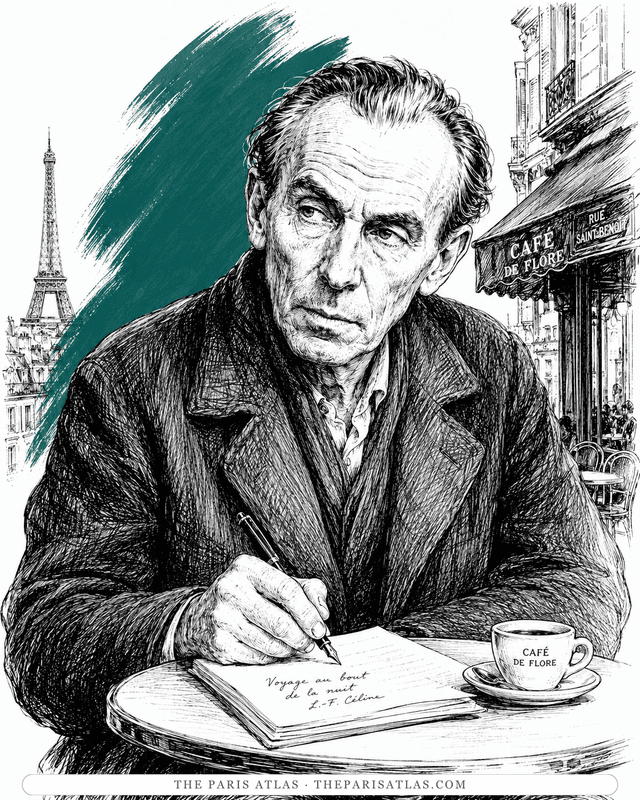
The doctor of the Paris slums who wrote the century's blackest, funniest novel — and changed the sound of French prose.
View author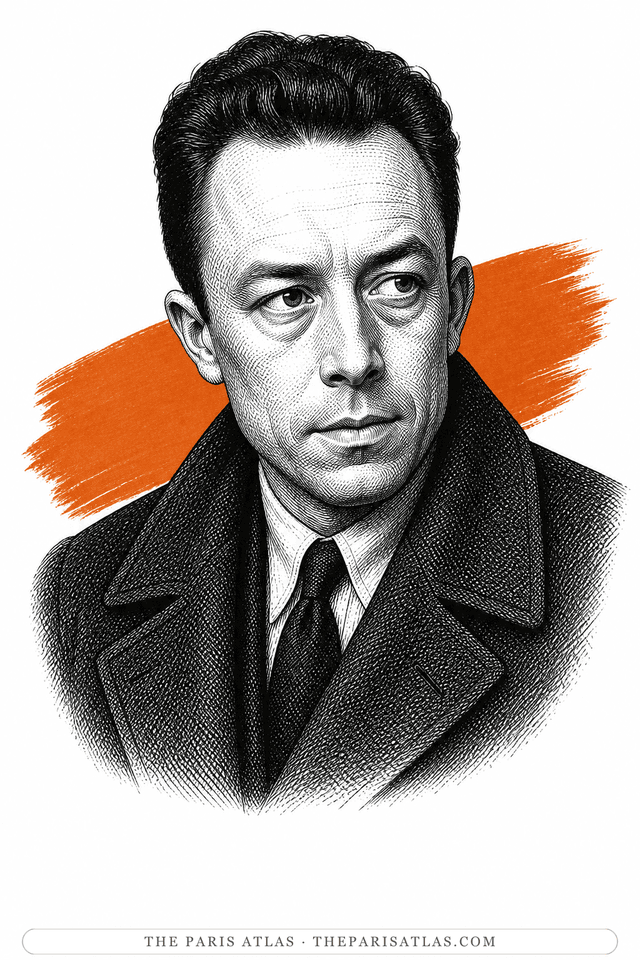
French Algerian novelist, essayist, journalist and playwright who used the absurd and revolt to ask how people should live without false consolation.
View author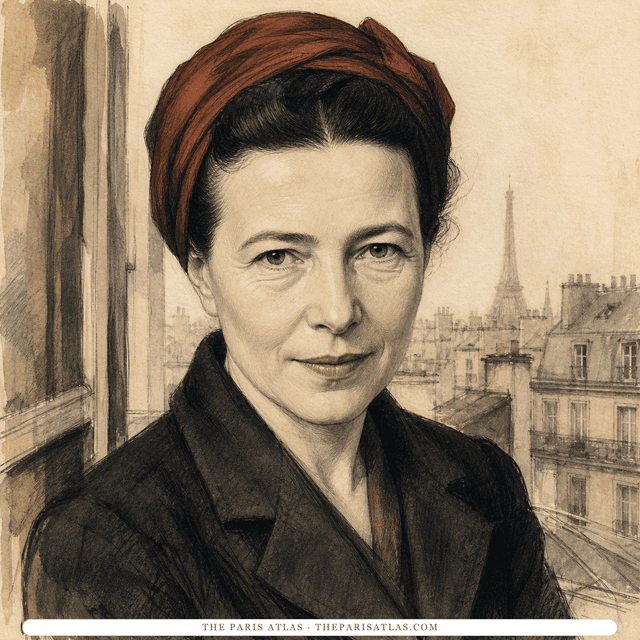
French writer and philosopher whose novels, memoirs, and social analysis examined freedom, gender, responsibility, aging, and the material conditions that shape a life.
View authorThe sources below include the primary text, editions, scholarship, archival materials, and other records that informed this page. They document No One Writes to the Colonel, its publication, and its place in literary history.


The first book edition, Aguirre Editor, Medellín, 1961.

Harry Ransom Center finding aid: Europe and Paris, 1955 to 1957, and the two novels written there.
The Nobel Prize bibliography: Medellín, Aguirre Editor, 1961; Bernstein's translation, Harper & Row, 1968.
The Nobel biographical note: raised by his grandparents; his grandfather a pensioned colonel from the civil war.
Library of Congress catalog record for the Harper & Row first English edition, with its contents.
French national library catalog record for the first French edition, Paris, 1963.
French national library catalog record for Grasset's 1980 edition, revised by the author.
French national library record for the soundtrack of Arturo Ripstein's 1999 film.
Open Library edition records, used to confirm that each ISBN listed resolves to this book.
The primary text represented by this page, used for descriptions of the work’s contents and for any quoted passages shown here.
The primary text is the baseline reference for every book page. Additional references document publication history, interpretation, and historical context where that evidence is available.
 Explore more resources