

Chronicle of a Death Foretold
García Márquez's short 1981 novel about a murder that a whole town sees coming. Shorter, and much easier to follow than the Buendía saga.
Read our takeOne Hundred Years of Solitude
Gabriel García Márquez
Gabriel García Márquez's 1967 novel follows seven generations of the Buendía family in Macondo, the invented town they found, from its first sight of ice to its last day.
One Hundred Years of Solitude is the novel that made Gabriel García Márquez famous. Editorial Sudamericana published it in Buenos Aires in 1967.[1] The story follows seven generations of the Buendía family and Macondo, the invented town they build in a valley cut off by mountains.[2] The story runs from roughly the 1820s to the 1920s, through civil wars, a railroad, a foreign banana company and a massacre of striking workers.[3] The Swedish Academy named the book first when it gave him the Nobel Prize in Literature in 1982.[4]
The novel opens with a man facing a firing squad. Colonel Aureliano Buendía, about to be shot, remembers the afternoon his father took him to see ice for the first time.[2] The ice belonged to a band of traveling gypsies. José Arcadio Buendía, the father, calls it the great invention of their time.[3]
José Arcadio Buendía and his wife, Úrsula Iguarán, are cousins. They avoid sleeping together for a long time because their two families once produced a child with a pig's tail. When a man named Prudencio Aguilar accuses José Arcadio of impotence, José Arcadio kills him. The couple leave their village with a group of friends and found Macondo.[3]
Early Macondo is a village of wonders. The gypsies bring one astonishing invention after another, and José Arcadio Buendía throws himself into each one. A wise gypsy named Melquíades becomes a friend of the family and leaves behind a manuscript nobody can read.[3]
Then the outside world arrives, one piece at a time. A magistrate arrives from the government, and civil war follows. Later comes a railroad, then electric light, moving pictures and phonographs, then an American banana company.[3]
The Swedish Academy said his great novels remind readers of William Faulkner's. García Márquez built a whole world around one imaginary town, and the same people turn up again and again across his stories.[4] The impossible is reported as calmly as the ordinary. A girl rises to heaven while hanging laundry on the line, and the family simply goes on.[3]
José Arcadio Buendía and Úrsula Iguarán found Macondo after he kills Prudencio Aguilar and the dead man's ghost starts to haunt them. They have two sons, José Arcadio and Aureliano, and a daughter, Amaranta. They also take in Rebeca, an orphan who turns up at their door carrying her parents' bones in a canvas sack. Both sons father children with a woman named Pilar Ternera, and the elder son runs off with the gypsies.[3]
A plague of sleeplessness sweeps the town and wipes out people's memories for a while. Melquíades, who has died, comes back to Macondo because he could not bear the solitude. An Italian named Pietro Crespi arrives to tune the pianola and courts Rebeca, and Amaranta turns jealous for life. José Arcadio Buendía tries to photograph God, starts speaking Latin, and is tied to a chestnut tree in the yard.[3]
Aureliano marries Remedios, the magistrate's very young daughter, and she dies pregnant with twins. The elder son, José Arcadio, comes home huge and tattooed and marries Rebeca. Aureliano becomes Colonel Aureliano Buendía and leads thirty-two uprisings against the government. He loses every one of them and fathers seventeen sons by seventeen different women.[3]
Amaranta turns Pietro Crespi down, and he kills himself. José Arcadio dies mysteriously, and his blood runs in a stream across town to the Buendía house. When José Arcadio Buendía dies, yellow flowers fall from the sky. His grandson Arcadio rules the town as a dictator for a while and is executed.[3]
The next generation brings twins, Aureliano Segundo and José Arcadio Segundo, and their sister, Remedios the Beauty. Aureliano Segundo marries Fernanda del Carpio, a proud woman who never fits in with the family. Their daughter Meme falls for a mechanic named Mauricio Babilonia, who is always followed by yellow butterflies. The colonel goes back to making little gold fish in his workshop, melting them down and making them again.[3]
The train comes, and with it the banana company. Remedios the Beauty rises to heaven while hanging laundry on the line. The colonel's seventeen sons are hunted down and killed. Amaranta sews her own burial shroud and dies the day she finishes it. The banana workers go on strike. Soldiers fire on the crowd and kill about three thousand people. José Arcadio Segundo survives, but afterward no one will admit the massacre happened.[3]
Rain falls on Macondo for nearly five years. Úrsula dies at well over a hundred. Rebeca, the twins and Fernanda die too. Meme's son Aureliano shuts himself away with Melquíades's manuscript. Fernanda's son José Arcadio comes home from Rome and is murdered by boys he has taken in, who steal his gold.
Amaranta Úrsula, Fernanda's youngest child, comes home from Belgium with a husband. She falls in love with her nephew Aureliano. Their son is born with a pig's tail, the thing the family had feared from the start. Amaranta Úrsula dies, and ants carry off the baby.
At that moment Aureliano can finally read the manuscript. Melquíades wrote down the whole history of the family and the town before it happened. The history ends with Aureliano's own death and the destruction of Macondo, and it is complete as soon as he finishes reading.
The strike in the novel has a real model. In 1928 banana workers in Colombia went on strike against the United Fruit Company. The strike ended in what Colombians call the banana massacre. García Márquez had been born the year before, in Aracataca, a small town in the tropical north of Colombia.
In the novel about three thousand people die, and the survivors cannot find anyone who remembers. The historian Eduardo Posada Carbó points out that the novel's figure of three thousand is now widely accepted in Colombia as the real death toll.
García Márquez himself said otherwise. In a British television documentary in 1990 he told the journalist Julio Roca that only a few people, perhaps three, five or seventeen, had died in the strike. Posada Carbó wrote his 1998 essay about that gap between the novel and the record.
The family keeps reusing its own names. The founder is José Arcadio Buendía. His elder son is José Arcadio, a grandson is Arcadio, and a great-grandson is José Arcadio Segundo. The same goes for Aureliano, the colonel, his seventeen sons, Aureliano Segundo and the last Aureliano.
The family also keeps repeating its fears. The founders are cousins who dread a child with a pig's tail, and a century later the last Buendía is born with one. The ending shows the whole pattern was written down from the start. Keith H. Brower's summary for EBSCO names the repetition of events as the idea at the center of the novel.
Úrsula, the family's matriarch, runs the house for most of the book. She lives past a hundred and outlasts nearly everyone she raised.
The words of the title come back only at the very end. The Fundación Gabo, the foundation that carries his name, quotes the final sentence in Spanish: families condemned to a hundred years of solitude did not get a second chance on earth.
Fifteen years later García Márquez turned that sentence around. His Nobel lecture of 8 December 1982 ends by hoping for a new world “where the races condemned to one hundred years of solitude will have, at last and forever, a second opportunity on earth.”
García Márquez moved to Mexico City with his family in 1961. He earned his living writing film scripts and working for magazines, and his letters show he did not expect to become a professional writer. In 1965 he wrote to Francisco Porrúa at Editorial Sudamericana in Buenos Aires, offering the manuscript. Sudamericana took it.
The Harry Ransom Center in Austin, Texas, which holds his papers, has a corrected typescript page dated 1966. The center also holds two typescript drafts of the novel, a carbon copy and a photocopy with the same light corrections.
The book appeared in Buenos Aires in 1967 and was an immediate international success. The French translation, by Claude and Carmen Durand, came out in Paris from Éditions du Seuil the next year. Gregory Rabassa's English translation followed from Harper & Row in New York in 1970.
García Márquez kept revising. A 1987 Mondadori edition in his archive carries his changes, and he made more for the commemorative edition that the Real Academia Española, the Spanish language academy, published in 2007.
Netflix released the first part of a Spanish-language series on 11 December 2024. The eight episodes were directed by Alex García López and Laura Mora. The whole series was filmed in Colombia, with García Márquez's sons Rodrigo García and Gonzalo García Barcha among the executive producers.
Netflix set Part Two, seven episodes, for 5 August 2026. A feature-length final episode directed by Laura Mora was set for 26 August 2026. Two episode titles point to events in the novel: “More than Three Thousand of Them” and “It Rained For Four Years, Eleven Months and Two Days.”
Many years later, as he faced the firing squad, Colonel Aureliano Buendía was to remember that distant afternoon when his father took him to discover ice
The first sentence sets up the whole book. A man in front of a firing squad remembers the day his father took him to see ice.
Macondo goes from a handful of houses to a railroad town with a banana company and back to nothing. Every stage is told through one family.
Yellow flowers fall when a man dies, and a girl rises to heaven with the laundry. The narrator reports these things as calmly as the weather.
The massacre of striking banana workers has a real model in the 1928 strike against the United Fruit Company in Colombia.
Founder of Macondo and head of the family. Obsessed with the gypsies' inventions, he ends his life tied to a chestnut tree, speaking Latin.
José Arcadio Buendía's wife and cousin. She runs the house for more than a century and outlives most of her descendants.
The younger son. He leads thirty-two uprisings and loses them all, then spends his last years making little gold fish.
A wise gypsy who brings wonders to Macondo and leaves the family a manuscript nobody can read.
The founders' daughter. She turns down every man who loves her and sews her own burial shroud.
An orphan who arrives carrying her parents' bones in a sack. The Buendías raise her, and she marries the elder son, José Arcadio.
A great-granddaughter so beautiful that men lose their minds. She rises to heaven one afternoon while folding sheets.
Aureliano Segundo's wife, a proud woman from the highlands who never fits in with the family.
1961
García Márquez moves to Mexico City with his family and works as a scriptwriter and magazine writer.
1965
He writes to Francisco Porrúa at Editorial Sudamericana in Buenos Aires, offering the manuscript.
1966
A corrected typescript of the novel, now at the Harry Ransom Center in Austin, Texas, is dated this year.
1967
Editorial Sudamericana publishes Cien años de soledad in Buenos Aires.
1968
Éditions du Seuil publishes the French translation, Cent ans de solitude, in Paris.
1970
Harper & Row publishes Gregory Rabassa's English translation in New York.
1982
García Márquez wins the Nobel Prize in Literature. The Swedish Academy's announcement names this novel first.
2007
The Real Academia Española publishes a commemorative edition with further revisions by the author.
2024
Netflix releases the first eight episodes of a Spanish-language series, filmed in Colombia, on 11 December.
2026
Netflix sets Part Two for 5 August and a feature-length finale for 26 August.


García Márquez's short 1981 novel about a murder that a whole town sees coming. Shorter, and much easier to follow than the Buendía saga.
Read our takeLove in the Time of Cholera
Gabriel García Márquez
His other most-read novel. A love story that runs for more than fifty years in a Caribbean port city.
Read our takeNo One Writes to the Colonel
Gabriel García Márquez
The short novel he wrote in Paris a decade earlier. The old colonel's war is the same kind of civil war the Buendías fight.
Read our take
Franz Kafka's story of a man who wakes up as an insect. García Márquez said that reading it at nineteen showed him how his grandmother told stories.
Read our takeThe rise and fall of the Buendía family and Macondo, the town they found, over about a hundred years. The book covers seven generations, with civil wars, a railroad, an American banana company and a massacre of striking workers. Strange things happen in it, and the narrator reports them as ordinary facts.
No. Macondo is invented. The Swedish Academy described it as García Márquez's imaginary town, and it turns up in several of his books. He was born in Aracataca, a small town in the tropical north of Colombia, between the mountains and the Caribbean Sea.
Something like it did. In 1928 banana workers in Colombia went on strike against the United Fruit Company, and the strike ended in what Colombians call the banana massacre. The novel's figure of three thousand dead is now widely accepted in Colombia. García Márquez himself said in 1990 that only a few people had died.
Gregory Rabassa. Harper & Row published his translation in New York in 1970, three years after the Spanish original. The French translation by Claude and Carmen Durand had already appeared in Paris in 1968.
Yes. Netflix made a Spanish-language series filmed entirely in Colombia, with García Márquez's sons among the executive producers. The first eight episodes came out on 11 December 2024. Netflix set Part Two for 5 August 2026, with a feature-length finale on 26 August.
No. The Fundación Gabo, the foundation that carries his name, says that passage is a fake that circulates online. No character in the novel says anything like it. The words “one hundred years of solitude” appear only at the very end of the book.
In Gregory Rabassa's translation it begins: “Many years later, as he faced the firing squad, Colonel Aureliano Buendía was to remember that distant afternoon when his father took him to discover ice.”
Explore authors with a similar voice, perspective, and influence.
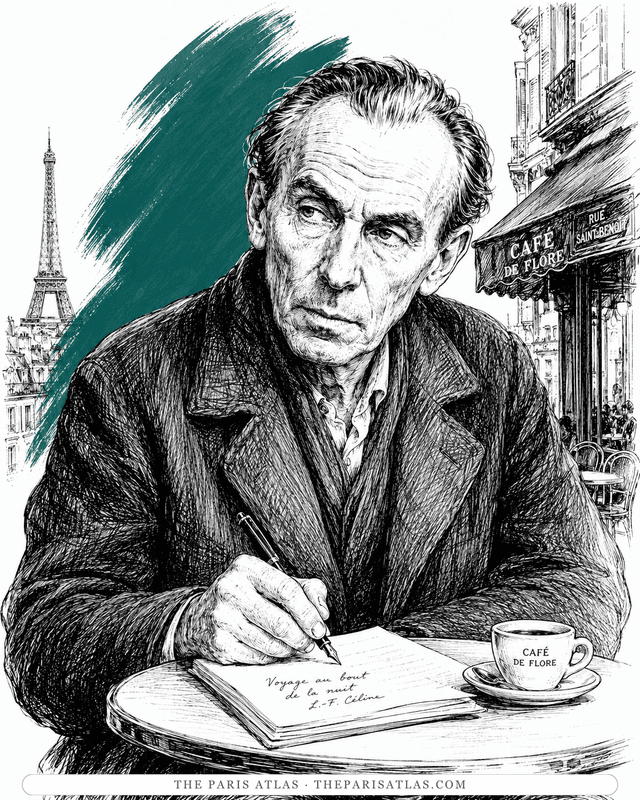
The doctor of the Paris slums who wrote the century's blackest, funniest novel — and changed the sound of French prose.
View author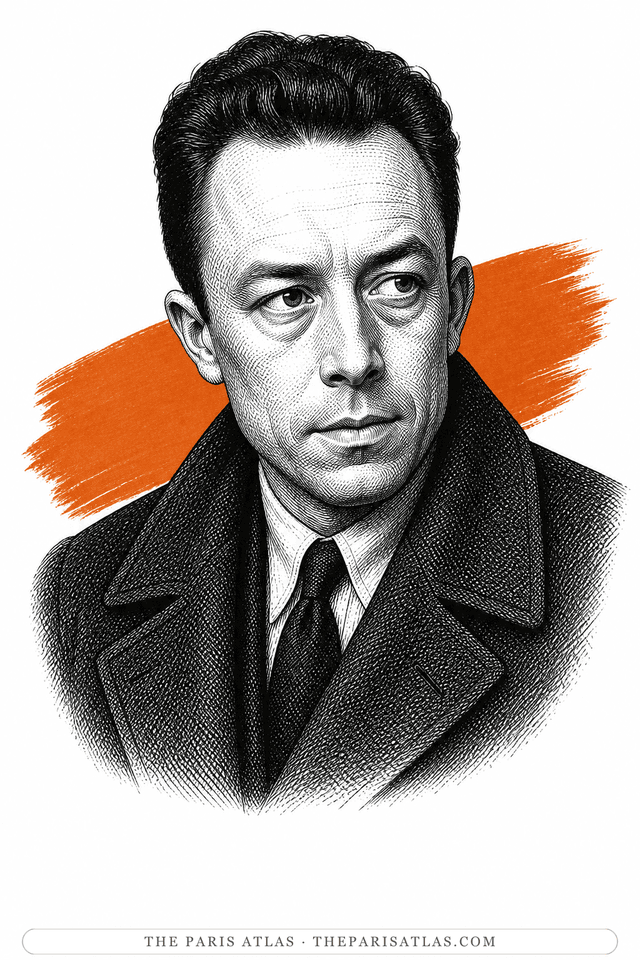
French Algerian novelist, essayist, journalist and playwright who used the absurd and revolt to ask how people should live without false consolation.
View author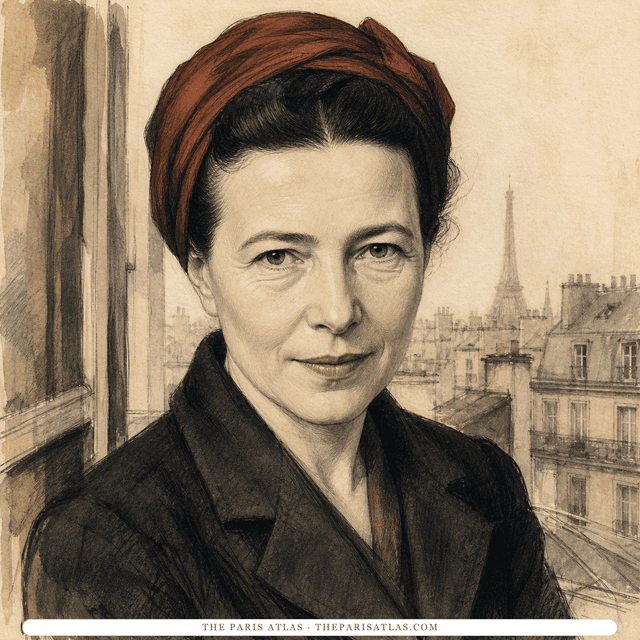
French writer and philosopher whose novels, memoirs, and social analysis examined freedom, gender, responsibility, aging, and the material conditions that shape a life.
View authorThe sources below include the primary text, editions, scholarship, archival materials, and other records that informed this page. They document One Hundred Years of Solitude, its publication, and its place in literary history.

The Nobel Prize bibliography: Buenos Aires, Editorial Sudamericana, 1967; Rabassa's translation, Harper & Row, 1970.
The Nobel Prize biographical note: born 1927 in Aracataca, a small town in the tropical north of Colombia, between the mountains and the Caribbean Sea.

The official English translation of the Nobel lecture, whose last sentence echoes the novel's last line.
Eduardo Posada Carbó's 1998 essay on the novel and the 1928 banana strike.
Harry Ransom Center finding aid: the 1965 letter to Sudamericana, the typescripts, and the 1987 and 2007 revised editions.
Harry Ransom Center exhibition guide: Mexico City from 1961, the 1966 typescript page, and the novel's immediate success.
French national library catalog record for the first French edition, Paris, 1968.
Fundación Gabo on a fake passage attributed to the novel, quoting its real last sentence in Spanish.
Netflix announcement of Part One: premiere date, directors, producers and filming locations.
Netflix announcement of Part Two and the finale, with episode titles.
Thomas Pynchon's 1988 review, which retells García Márquez's account of reading Kafka at nineteen.
Open Library edition records, used to confirm that each ISBN listed resolves to this novel.
The primary text represented by this page, used for descriptions of the work’s contents and for any quoted passages shown here.
The primary text is the baseline reference for every book page. Additional references document publication history, interpretation, and historical context where that evidence is available.
 Explore more resources