
Love in the Time of Cholera
Gabriel García Márquez
Love in the Time of Cholera
The 1985 novel J. M. Coetzee saw behind this one. Its hero also keeps a list of lovers and finds love late in life.
Read our takeMemories of My Melancholy Whores
Gabriel García Márquez
Gabriel García Márquez's last novel published in his lifetime: on his ninetieth birthday, an old newspaper columnist falls in love for the first time.
Memories of My Melancholy Whores is a short novel told by a bachelor newspaper columnist on the eve of his ninetieth birthday. He asks a brothel keeper to find him a young virgin for the night. The fourteen-year-old she brings him is so worn out that she simply sleeps, and he finds himself falling in love.[1] The book came out in Spanish in October 2004, García Márquez's first novel in ten years.[2] Edith Grossman's English translation followed from Alfred A. Knopf in 2005.[3]
The narrator never gives his name.[4] He lives alone in the colonial house where he was born, on the sunny side of San Nicolás Park. From the balcony he can see the cathedral, a statue of Christopher Columbus and, far off, the Great Magdalena River.[1]
His mother, Florina de Dios Cargamantos, played Mozart and was, in his words, the most beautiful woman who ever lived in the city. He has sold off almost everything in the house except his books and his pianola rolls.[1]
For forty years he was the cable editor at El Diario de La Paz, rewriting the world news that came in by shortwave radio and Morse code. He also taught Spanish and Latin grammar. For more than half a century he has written a Sunday column for the paper.[1]
The book opens on the morning of his ninetieth birthday, a Friday in August. He is writing a column in praise of old age. Then he picks up the phone and calls Rosa Cabarcas, the owner of a brothel, whom he has not spoken to in twenty years.[1] He says he is writing these memories to ease his conscience.[1]
The narrator has never married. By the age of fifty he had paid for sex with 514 women, and he has kept a list.[4][5] For his ninetieth birthday he asks Rosa Cabarcas for a virgin. She finds him a fourteen-year-old girl who works sewing buttons and looks after her brothers and sisters.[1]
When he goes to the room, the girl is asleep. He barely touches her. He sings to her instead, calling her Delgadina after the girl in the song, and leaves at dawn.[5] He goes back again and again over the following year. He reads to her and never sees her awake.[4]
On the way home one night a great storm hits the old house. Rain pours in through the roof, and he fights to save his books. He feels that Delgadina is there beside him, helping. After that he is sure this is the first love of his life.[5]
His Sunday columns turn into hymns to love, and his readers go wild for them.[4][5] He decorates her room in the brothel with paintings and books.[5]
A client is stabbed at the brothel, the police come, and the girl has to be hidden away. The narrator searches the city for her without success. When she comes back she looks older, and he flies into a jealous rage.
Months pass. His ninety-first birthday comes and goes, and he makes peace with Rosa Cabarcas. The two of them agree to leave everything they own to the girl, who, Rosa says, has fallen in love with him. He ends the book happy and full of plans for the future.
Pirated copies of the novel reached the streets of Bogotá before the official release in October 2004. The launch was moved forward a week in every Spanish-speaking country. The first printing was one million copies.
The pirate copies were printed before García Márquez made his final changes to the ending. His editor, Braulio Peralta, said the changes were made for artistic reasons. Colombian police seized thousands of the unofficial copies, and within hours the real one was the best-selling book in Colombia.
His papers at the Harry Ransom Center in Austin show how much he reworked it. The center holds ten numbered versions of the novel, plus an early draft, two sets of proofs and loose fragments.
The novel owes a clear debt to the Japanese writer Yasunari Kawabata, who won the Nobel Prize in 1968. Kawabata's 1961 novella House of the Sleeping Beauties is about old men who pay to spend the night beside drugged, sleeping girls.
García Márquez had used the idea before. In a 1982 story, Sleeping Beauty and the Airplane, a man on a flight across the Atlantic sits beside a beautiful young woman who sleeps the whole way. He thinks of Kawabata's book.
J. M. Coetzee compared the two books in The New York Review of Books in 2006. Kawabata's old man finds only regret and anguish in the secret house, and his last girl dies beside him. García Márquez's narrator finds a new joy there, and his girl seems ready to wake up and love him back.
Reviewers split. The publisher quotes John Updike in The New Yorker calling the book a love letter to the dying light. The New York Times named it a Notable Book.
Kirkus Reviews called the setup disturbing for any reader who expects both people in a relationship to be awake and of age. The reviewer found no sign that García Márquez meant it as the parody of macho foolishness it seemed to be.
Coetzee judged it a slight book. He read it as a second try at a story from Love in the Time of Cholera, where the old lover Florentino Ariza seduces his fourteen-year-old ward, América Vicuña. In the later book, Coetzee wrote, the man who betrayed a child's trust becomes her faithful worshiper instead.
The year I turned ninety, I wanted to give myself the gift of a night of wild love with an adolescent virgin.
Morality, too, is a question of time.
I don't have to say it because people can see it from leagues away: I'm ugly, shy, and anachronistic.
I never have thought about age as a leak in the roof indicating the quantity of life one has left to live.
He calls himself ugly, shy and old-fashioned, and he tells his story with a comic frankness about age, memory and his own body.
The narrator shares a great deal with Florentino Ariza, from his list of women to his late first love. J. M. Coetzee read the two books as a pair.
García Márquez went through at least ten numbered drafts, then made last changes to the ending that the pirated copies did not have.
A ninety-year-old bachelor, former cable editor and Sunday columnist, who falls in love for the first time.
The name the narrator gives the fourteen-year-old girl, who works sewing buttons and sleeps through his visits.
The brothel owner who has known the narrator for decades and finds the girl for him.
The narrator's late mother, a player of Mozart and, in his words, the most beautiful woman who ever lived in the city.
2004
Memoria de mis putas tristes is released a week early across the Spanish-speaking world in October, after pirated copies appear in Bogotá. The first printing is one million copies.
2005
Grasset publishes Annie Morvan's French translation in Paris.
2005
Alfred A. Knopf publishes Edith Grossman's English translation in New York, 115 pages.
2006
J. M. Coetzee reviews the novel in The New York Review of Books on 23 February.
2006
Vintage International publishes the paperback, ISBN 9781400095940, on 14 November.


Love in the Time of Cholera
Gabriel García Márquez
The 1985 novel J. M. Coetzee saw behind this one. Its hero also keeps a list of lovers and finds love late in life.
Read our takeOne Hundred Years of Solitude
Gabriel García Márquez
The novel that made García Márquez famous, written almost forty years earlier.
Read our takeNo One Writes to the Colonel
Gabriel García Márquez
Another short novel about an old man, a small Colombian town, and a long wait.
Read our takeA ninety-year-old bachelor journalist who, for his birthday, asks a brothel keeper to find him a young virgin. The girl sleeps through his visit, and he falls in love with her. The book follows the year that changes his life.
Memories was the last novel he published in his lifetime. The Harry Ransom Center, which holds his papers, calls it his last work of fiction. En agosto nos vemos (Until August) was published after his death in 2014.
Pirated copies were being sold on the streets of Bogotá in October 2004, so the launch was moved forward a week. The pirate copies were printed before García Márquez made his final changes to the ending, so they did not match the real book.
Edith Grossman, who also translated Love in the Time of Cholera. Alfred A. Knopf published her translation in New York in 2005.
Very short. The Knopf first English edition has 115 pages, and the Spanish edition had 109. The current Vintage paperback runs to 128 pages.
The story answers Yasunari Kawabata's 1961 novella House of the Sleeping Beauties, about old men who pay to lie beside drugged, sleeping girls. J. M. Coetzee called the debt conspicuous and compared the two books in The New York Review of Books.
Explore authors with a similar voice, perspective, and influence.
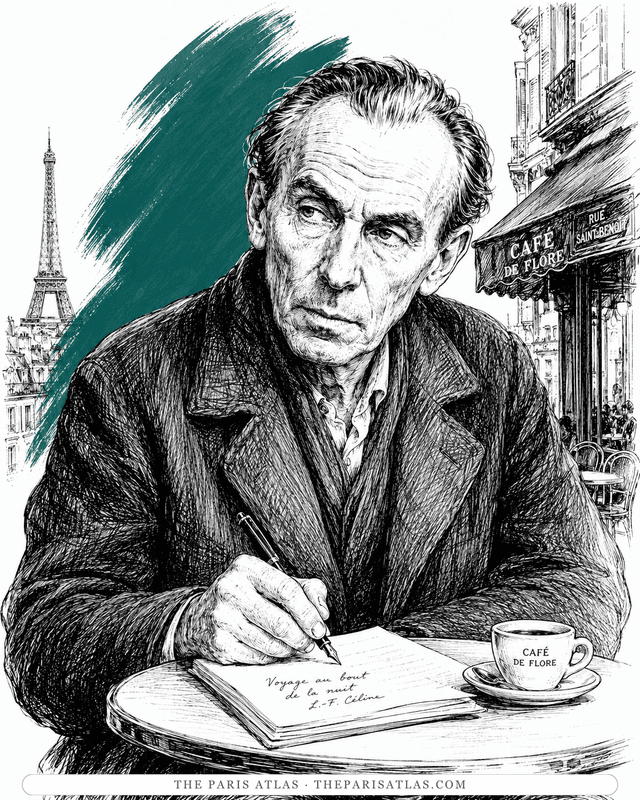
The doctor of the Paris slums who wrote the century's blackest, funniest novel — and changed the sound of French prose.
View author
French Algerian novelist, essayist, journalist and playwright who used the absurd and revolt to ask how people should live without false consolation.
View author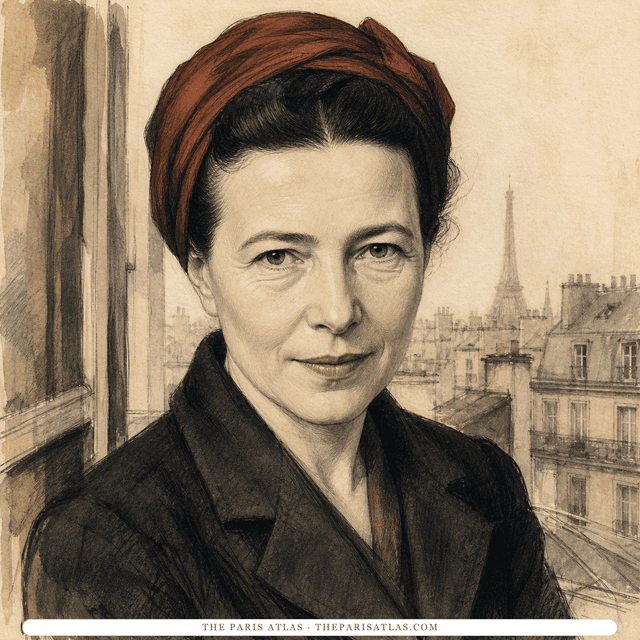
French writer and philosopher whose novels, memoirs, and social analysis examined freedom, gender, responsibility, aging, and the material conditions that shape a life.
View authorThe sources below include the primary text, editions, scholarship, archival materials, and other records that informed this page. They document Memories of My Melancholy Whores, its publication, and its place in literary history.


Jornal de Notícias, 23 October 2004: the pirated edition, the early release, the changed ending and the first printing.
Library of Congress catalog record for the Knopf first English edition.
Harry Ransom Center finding aid: the drafts and proofs, and the book as his last work of fiction.
French national library catalog record for the first French edition, Paris, 2005.
Open Library edition records, used to confirm that each ISBN listed resolves to this book.

The primary text represented by this page, used for descriptions of the work’s contents and for any quoted passages shown here.
The primary text is the baseline reference for every book page. Additional references document publication history, interpretation, and historical context where that evidence is available.
 Explore more resources